Oxycirrhites typus
Spot the longnose hawkfish perched on sea fans in the Maldives and Philippines. Tips on ID, best seasons, and where divers most commonly log sightings.
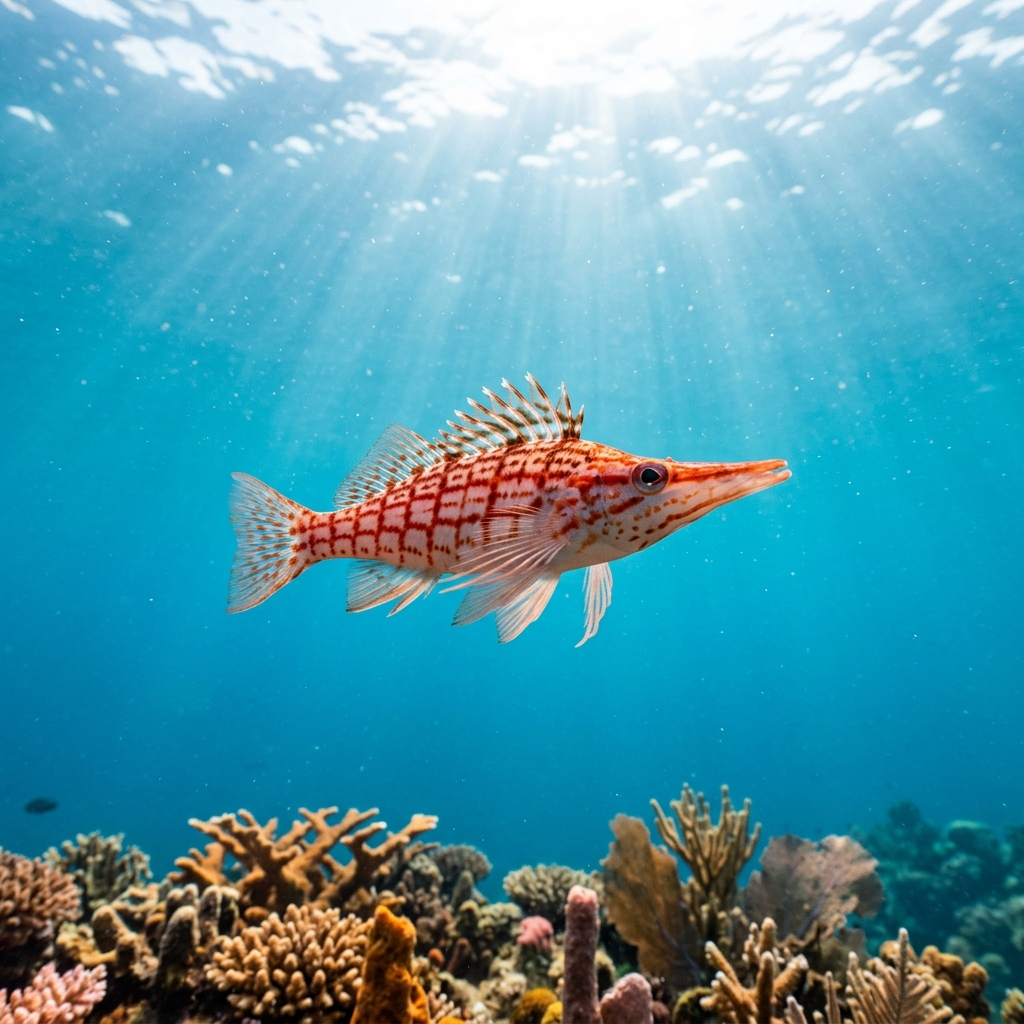
That elongated snout is the giveaway, no other small reef fish carries a beak-like nose quite like this. Look for a pale body overlaid with a bold red-and-white grid or crosshatch pattern, giving it an almost tartan appearance. It perches motionless on gorgonian sea fans or black coral, gripping the branches with its thickened lower fin rays, a perching adaptation shared by all hawkfish. Typically encountered as a solitary individual, sitting very still and staring back at you.
Almost always seen stationary, wedged into the branches of a gorgonian sea fan or black coral at depth, where its crosshatch colouring blends surprisingly well with the coral's busy texture. It holds its position confidently when approached, typically allowing a close look before making a short dart to another perch rather than fleeing the reef entirely. It is a sit-and-wait predator, watching the water column for small crustaceans and fish that drift within striking range.
Longnose hawkfish are protogynous hermaphrodites, they begin life as females and the dominant individual in a group can transition to male. A single male typically holds a small harem of females on neighbouring sea fans, patrolling between them at dusk.
In Northern Hemisphere destinations such as the Maldives, Philippines, and Japan, sightings concentrate between September and February. In Southern Hemisphere locations, the productive window runs from February through June.
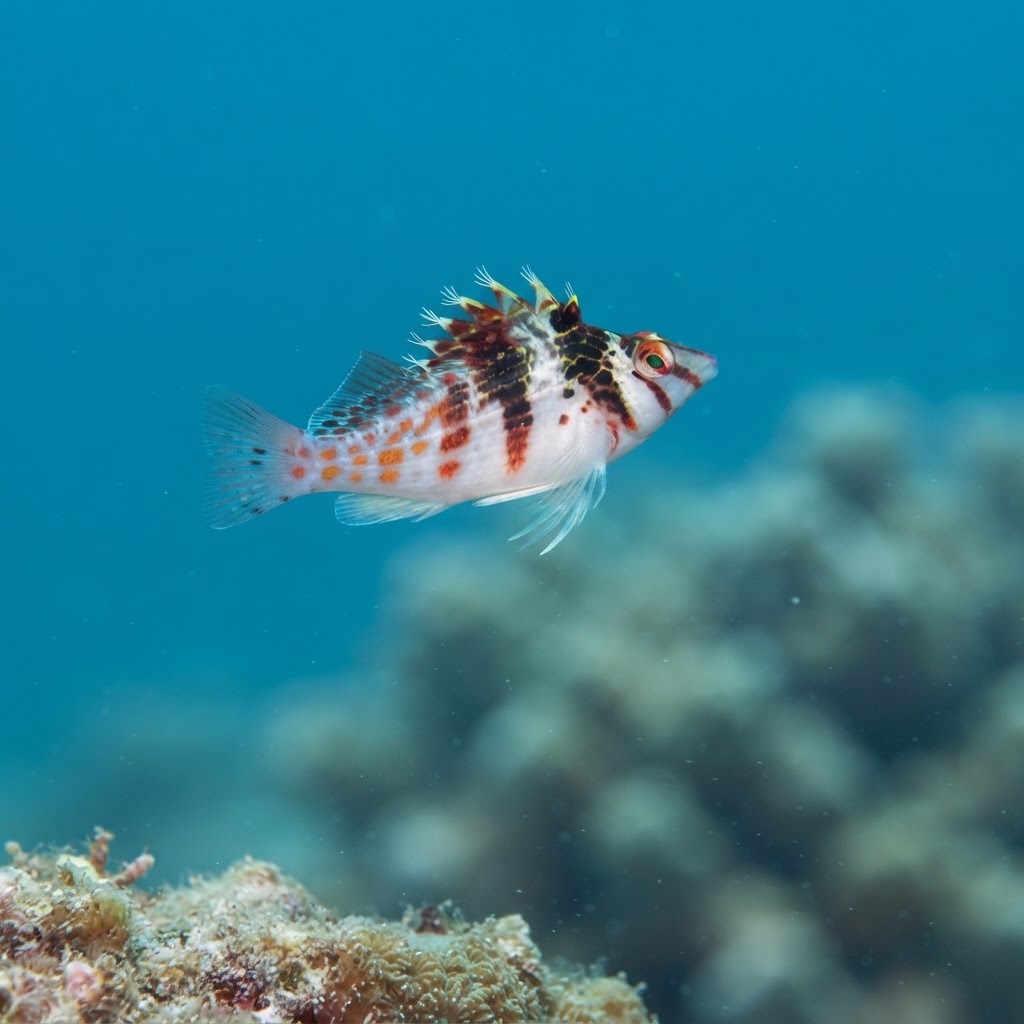
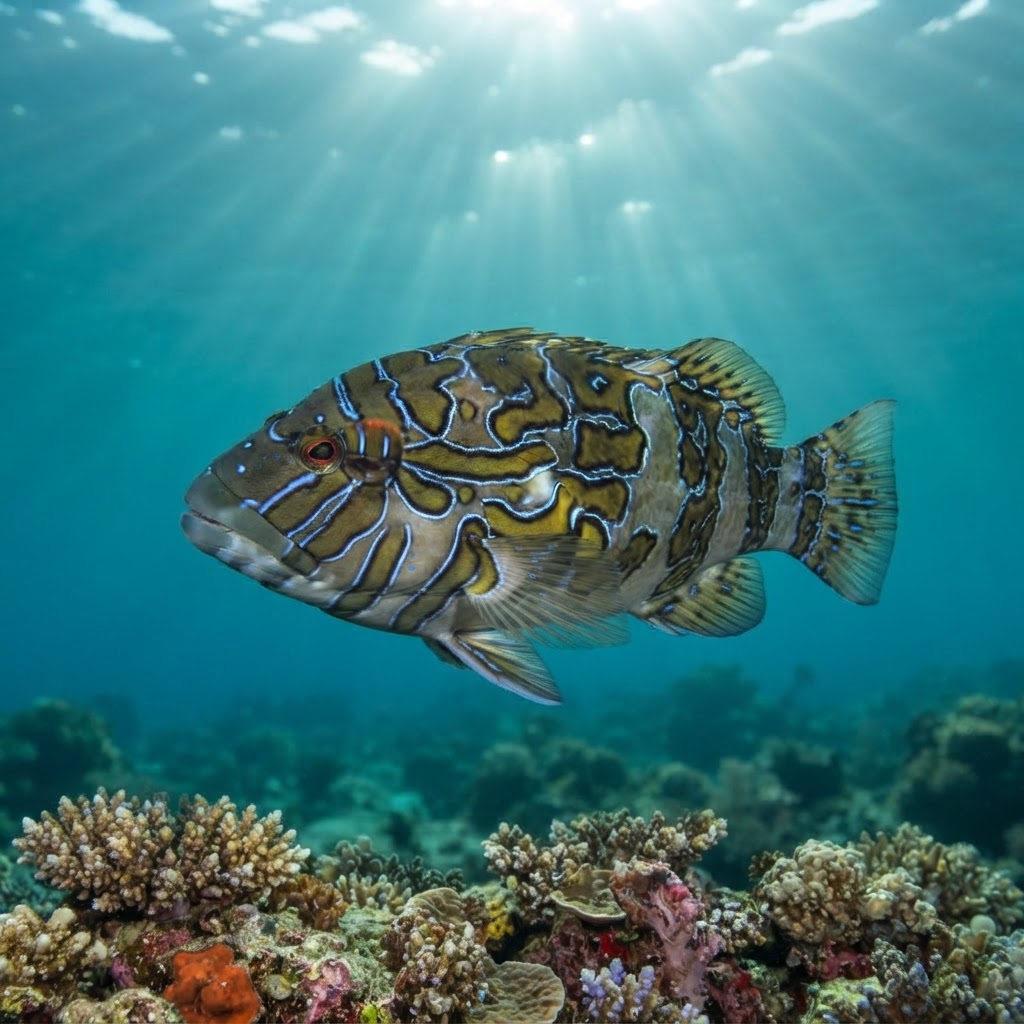
Reef neighbours a diver could mistake it for. Use the identification notes above to tell them apart.
Most commonly logged in the Philippines and the Maldives, with particularly strong records from the North and Central Atolls of the Maldives, and across the Visayas and Palawan regions of the Philippines. Indonesia (especially Maluku and Papua) and Sipadan in Malaysian Borneo are also reliable destinations, and the species has a broad Indo-Pacific range that extends as far as Japan and Mexico's Pacific coast.
Mapping where Longnose Hawkfish is logged…
The strongest sighting records come from the Maldives (especially the North and Central Atolls), the Philippine Visayas and Palawan, and Indonesian Papua and Maluku. Malaysia's Sipadan and Japan's reefs also feature regularly in diver logs, and the species appears on Pacific Mexico's reefs too.
In Northern Hemisphere destinations the peak window is September to February, covering the Maldives, Philippines, and Japan. Divers heading to Southern Hemisphere sites should aim for February through June. The species favours water between roughly 25 and 29 °C, keeping it tied to tropical reef systems year-round.
The long, pointed snout is unmistakable. Pair that with the red-and-white crosshatch pattern across the body and a habit of perching motionless on sea fans rather than swimming, and ID is usually straightforward. No other common hawkfish shares both the elongated snout and the grid colouring.
Longnose hawkfish are small reef fish, typically reaching around 10 to 13 cm in length. Underwater they appear slim and elongated, partly because of that distinctive extended snout, but they are not a large or bulky species.
Yes. Longnose hawkfish are protogynous hermaphrodites, meaning individuals start as females and the dominant fish in a social group can become male. A single male typically maintains a harem of females spread across nearby sea fans, visiting each at dusk. If the male disappears, the dominant female can transition to take his place.
Site and sighting data is aggregated from diver logs, iNaturalist and GBIF. For taxonomy and conservation status:
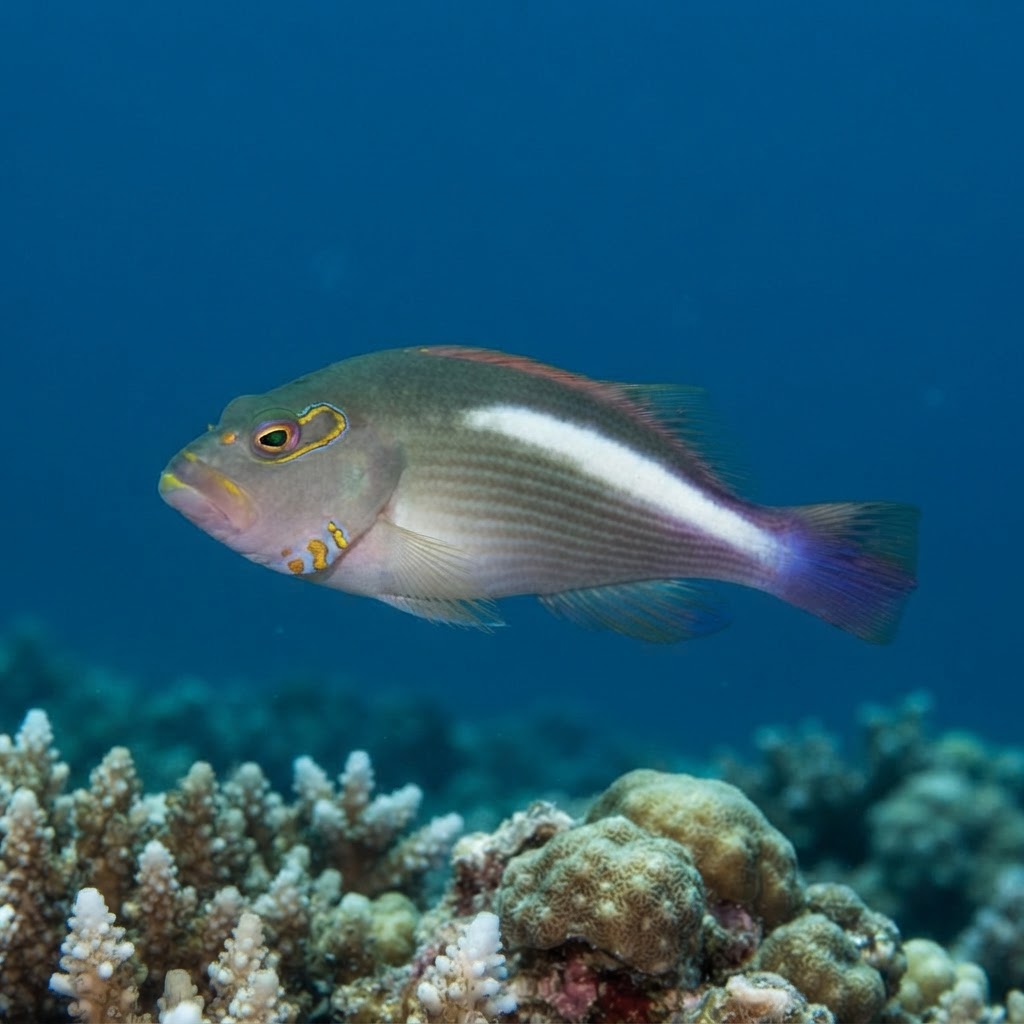
Arc-eye Hawkfish
651 sites