Cirrhitichthys oxycephalus
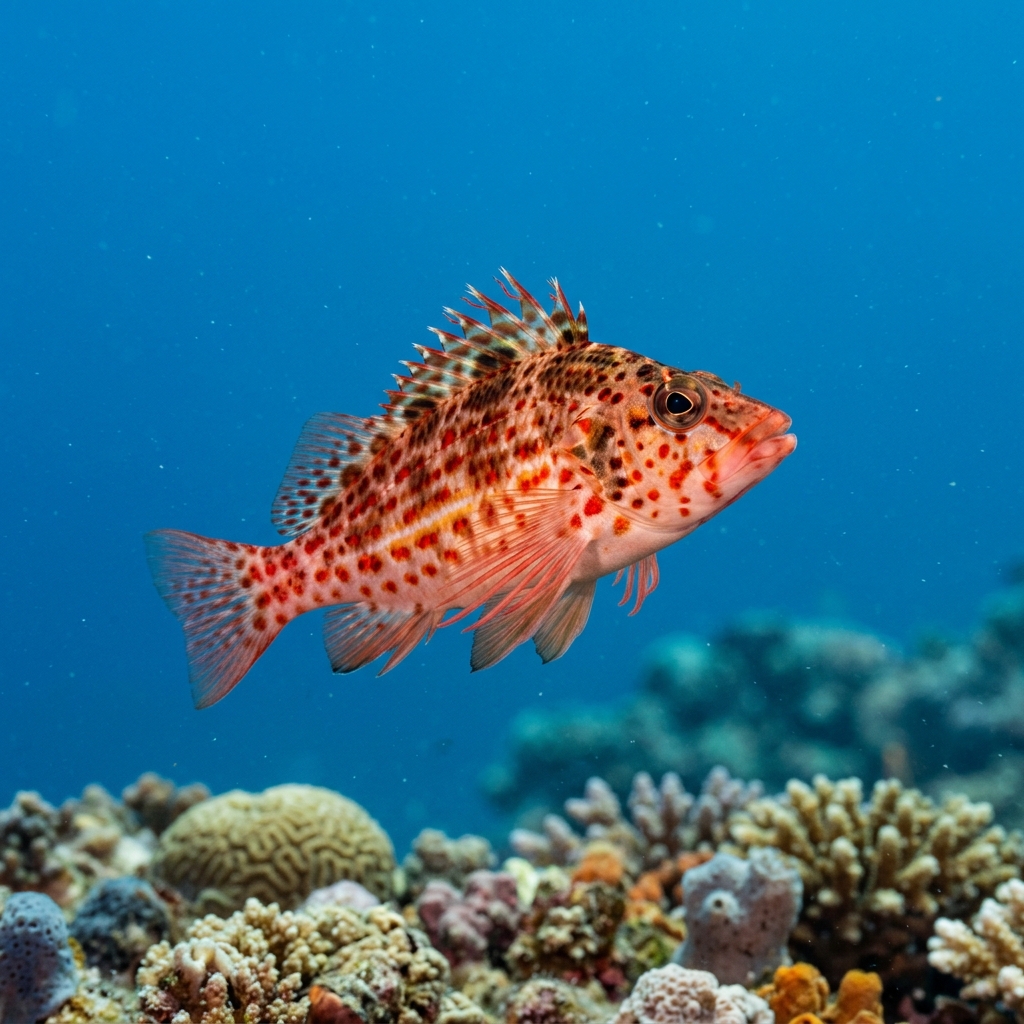
Spot the Pixy Hawkfish perched on coral across the Maldives, Bali and Baja California. Recognise it by its red-spotted body and bold, unblinking stare.
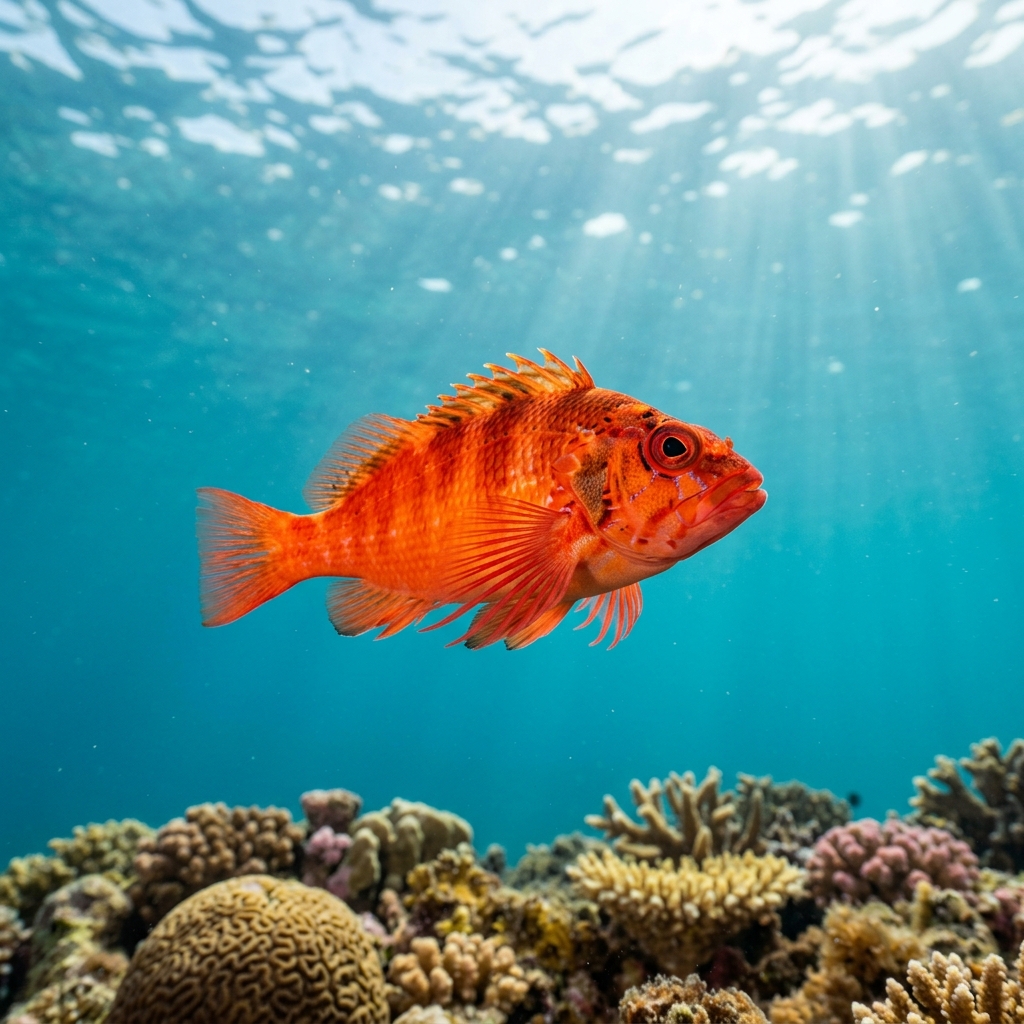
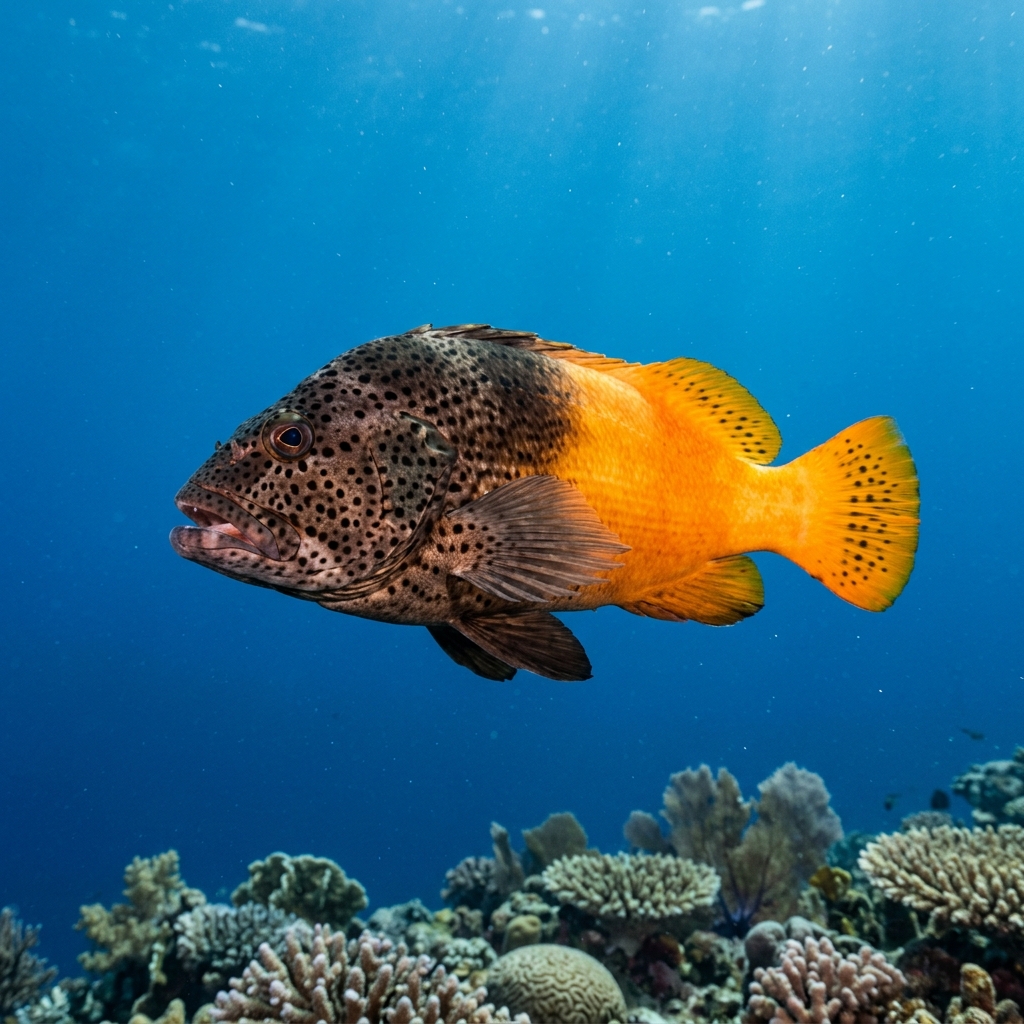
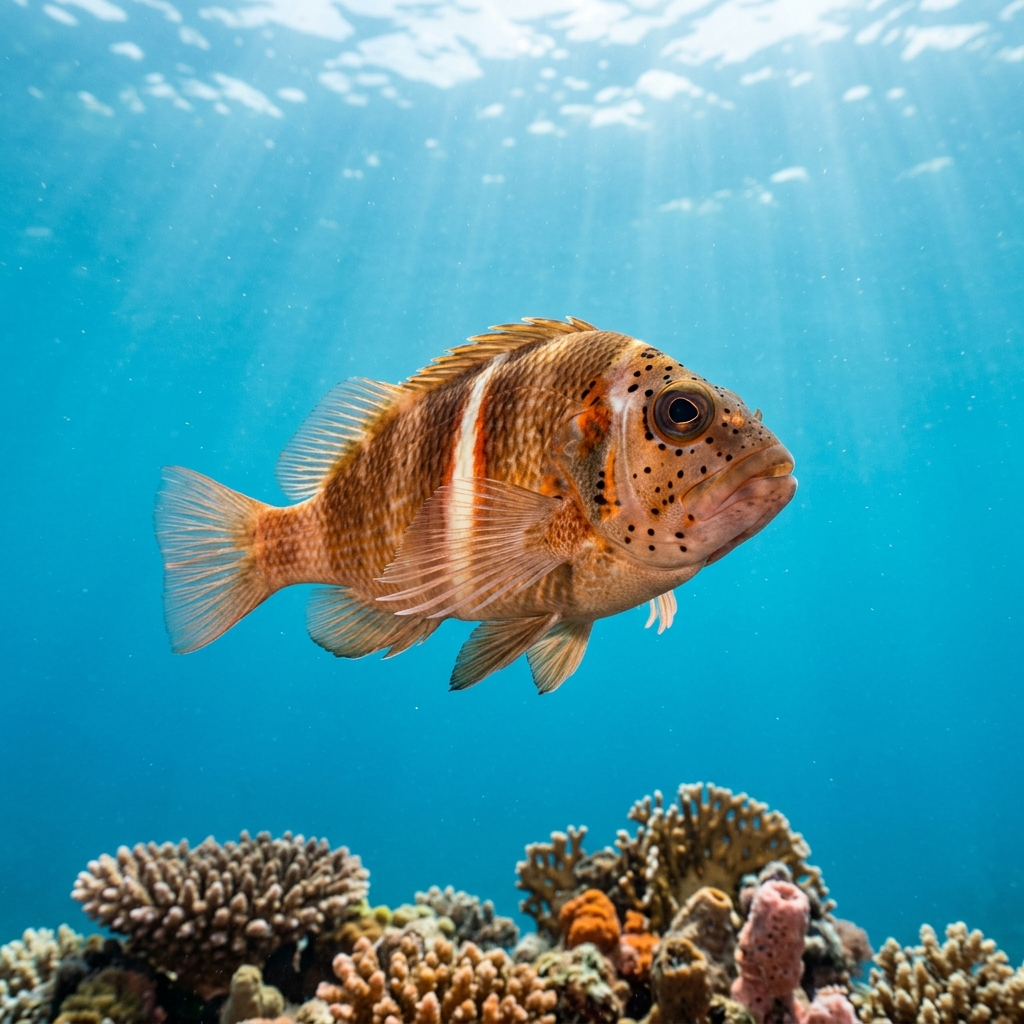
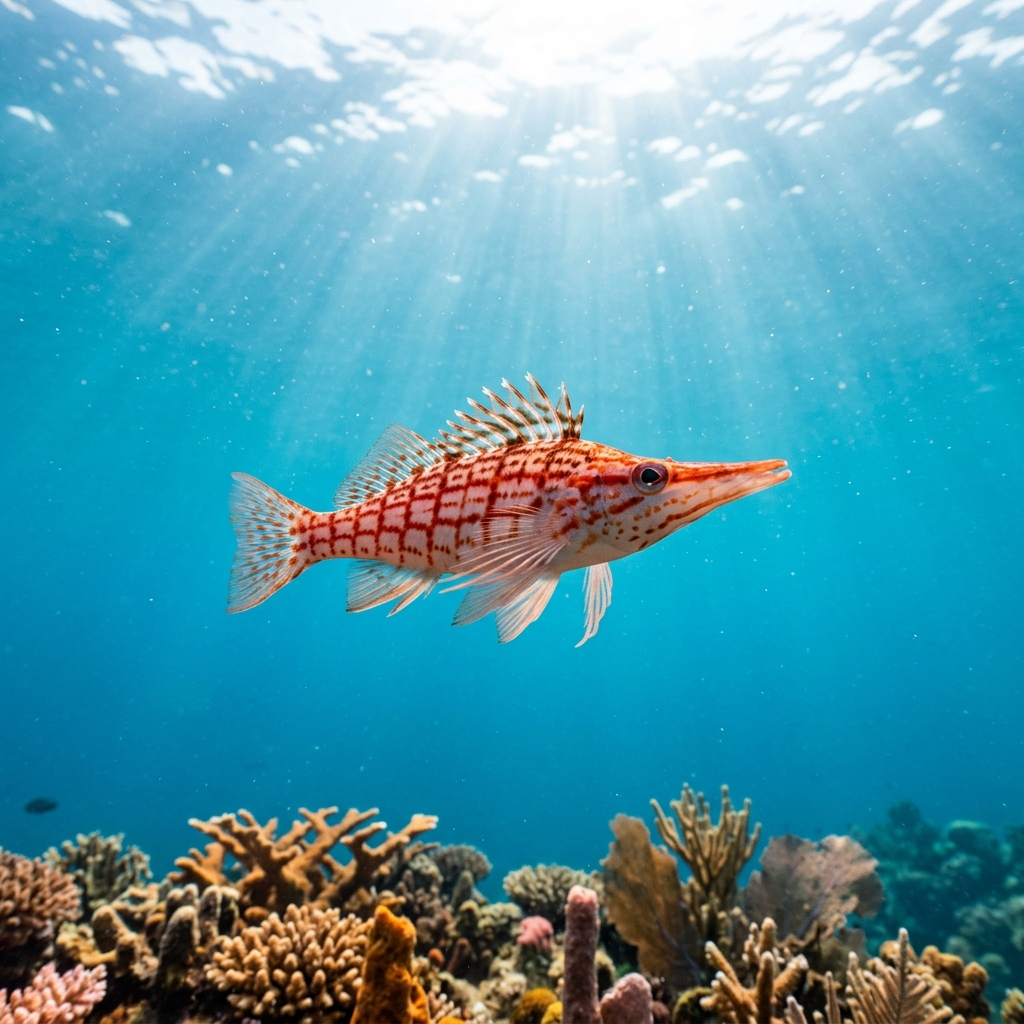
At around 7 cm, this is a palm-sized fish you find sitting still rather than swimming, look for a compact, slightly flattened body coloured white or pale cream and covered in a dense scattering of red-brown to orange spots that extend across the head and fins. The squared-off snout and large, alert eyes give it a distinctive wide-eyed look that is hard to mistake once you have seen it. Tufted cirri (small hair-like filaments) along the dorsal fin spines are a hawkfish family hallmark and are visible on close inspection.
You will almost always find one perched motionless on a coral head or rocky outcrop, propped up on its thickened pectoral fins and scanning the water column with those large eyes. It holds its position confidently when approached, not fleeing, but not inviting contact either, which makes it a rewarding subject to photograph slowly and carefully. Watch long enough during daylight hours and you may catch it launching a quick dart to snatch a small crustacean before returning, almost immediately, to its exact perch.
Like all hawkfish, the pixy hawkfish is a protogynous hermaphrodite, females can transition into males, with dominant males typically holding a harem of females on a home reef patch.
In northern-hemisphere destinations such as the Maldives and Baja California, sightings concentrate between October and May. For southern-hemisphere sites including New South Wales and Mozambique, August through April sees the most reliable encounters.
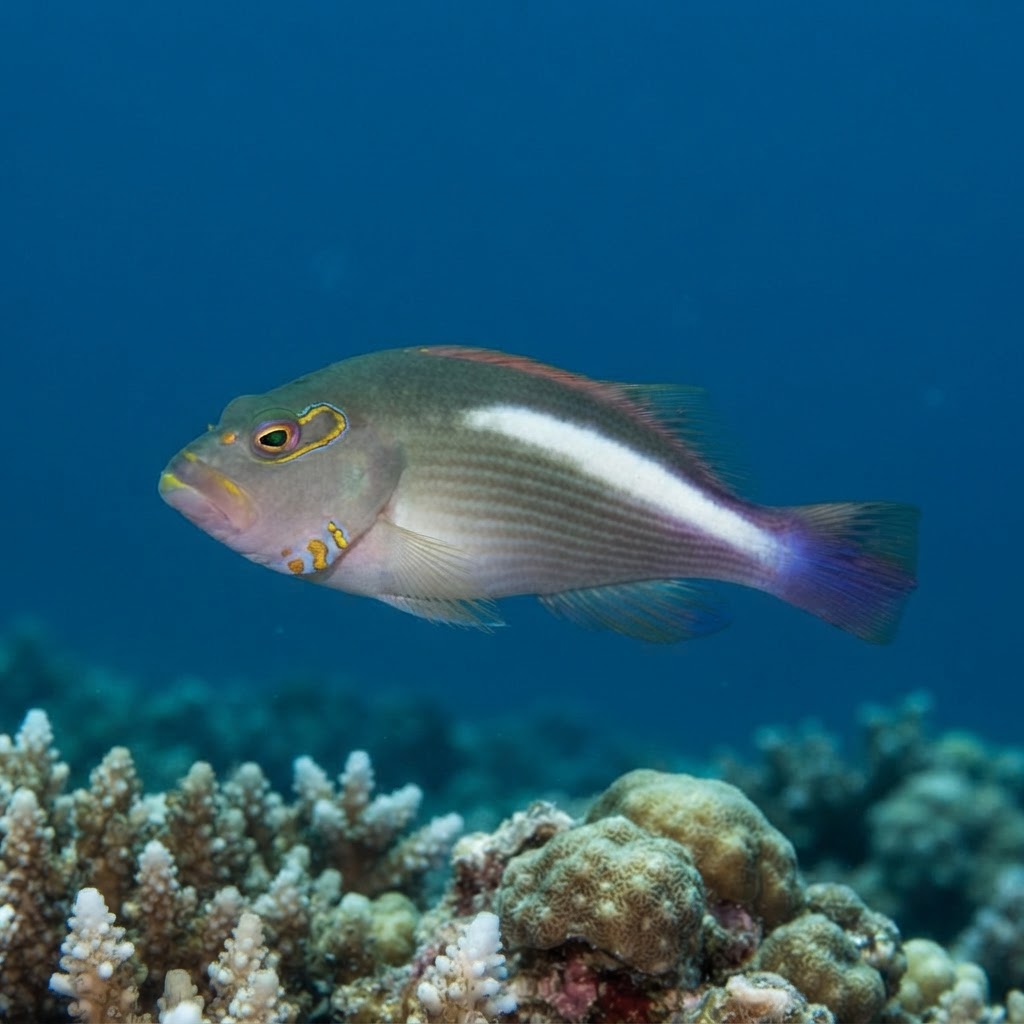
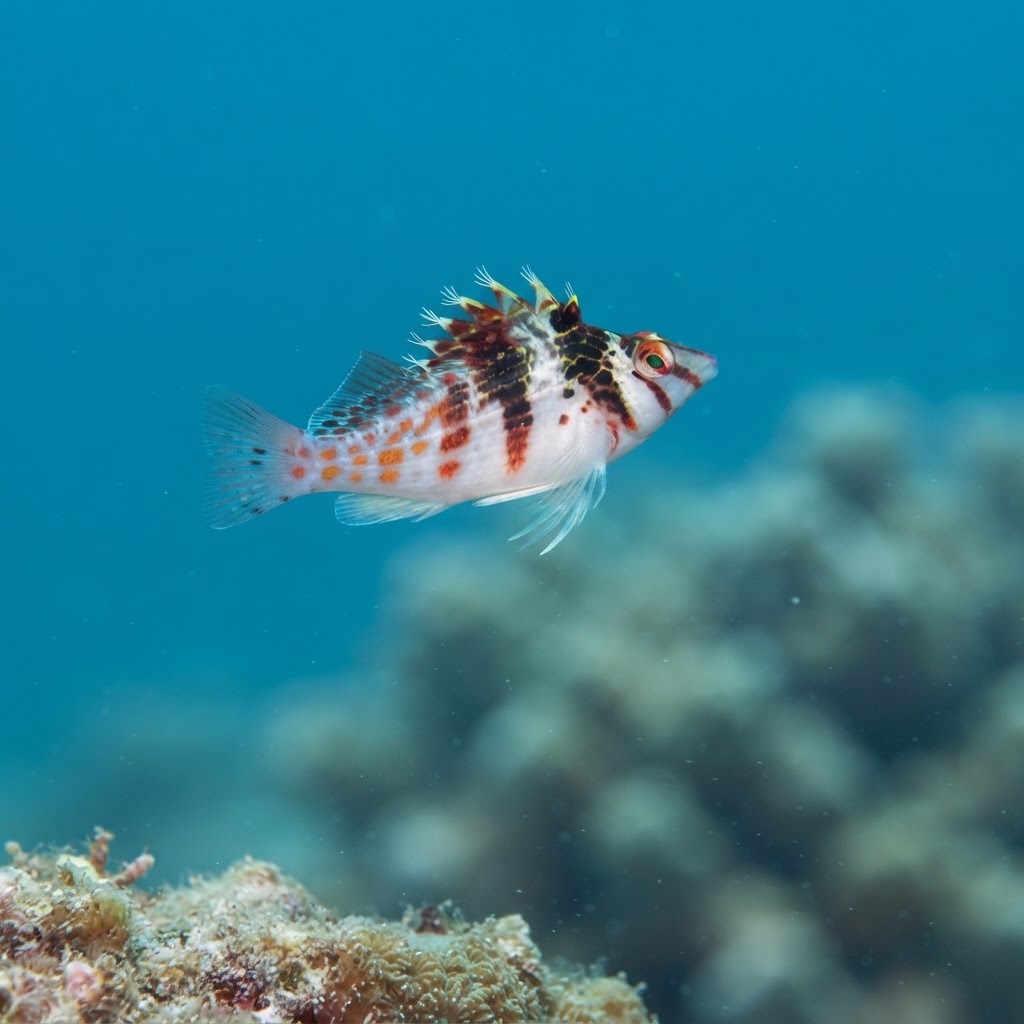
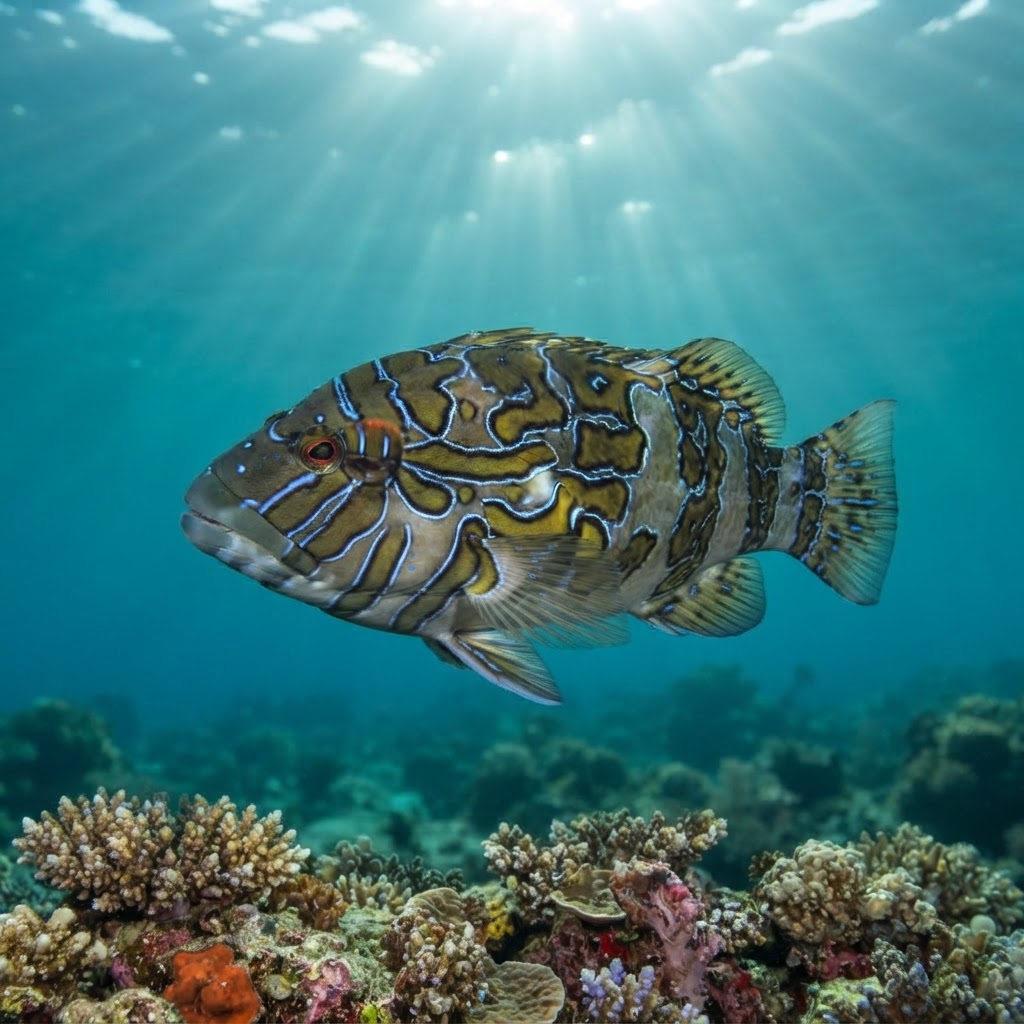
Reef neighbours a diver could mistake it for. Use the identification notes above to tell them apart.
Most commonly logged in the Maldives and Indonesia, with strong populations recorded across Australia, the Philippines, and Mozambique. In the Americas, Baja California in Mexico and the Papagayo Gulf in Costa Rica are reliable areas, and the Galapagos Islands offer sightings at some distance from the main Indo-Pacific range. South Africa's Durban and North Coast also features consistently, making this one of the wider-ranging hawkfish species divers encounter.
Mapping where Pixy Hawkfish is logged…
The pixy hawkfish is most reliably logged across the Maldives, Indonesia, and the Philippines in the Indo-Pacific, and along the coasts of Mexico and Costa Rica in the eastern Pacific. Divers also report it regularly in South Africa, Mozambique, and the Galapagos Islands, making it one of the more cosmopolitan hawkfish species.
In the northern hemisphere, including the Maldives and Baja California, sightings peak between October and May. Southern-hemisphere destinations such as New South Wales in Australia and Mozambique are most productive from August through April.
Look for a small, pale fish about 7 cm long sitting completely still on coral, covered in red-brown or orange spots from snout to tail. The wide-set eyes and habit of perching motionless on a chosen coral head are the quickest field marks. The spotted pattern distinguishes it from the flame hawkfish, which is red with a dark saddle and no spots.
Pixy hawkfish are small, typically reaching around 7 cm. Their compact size means they are easy to overlook among coral branches, so slowing down and scanning coral heads carefully pays off.
No. Pixy hawkfish pose no threat to divers. They may hold their ground rather than flee, but that confidence is simply their natural perching behaviour and makes them easier to observe, not a risk.
Site and sighting data is aggregated from diver logs, iNaturalist and GBIF. For taxonomy and conservation status:
Arc-eye Hawkfish
651 sites