Cirrhitichthys falco
A 5cm reef sitter with red-brown blotches, most reliably found perched in Visayas and Sulawesi hard coral, year-round in 25-29C water.
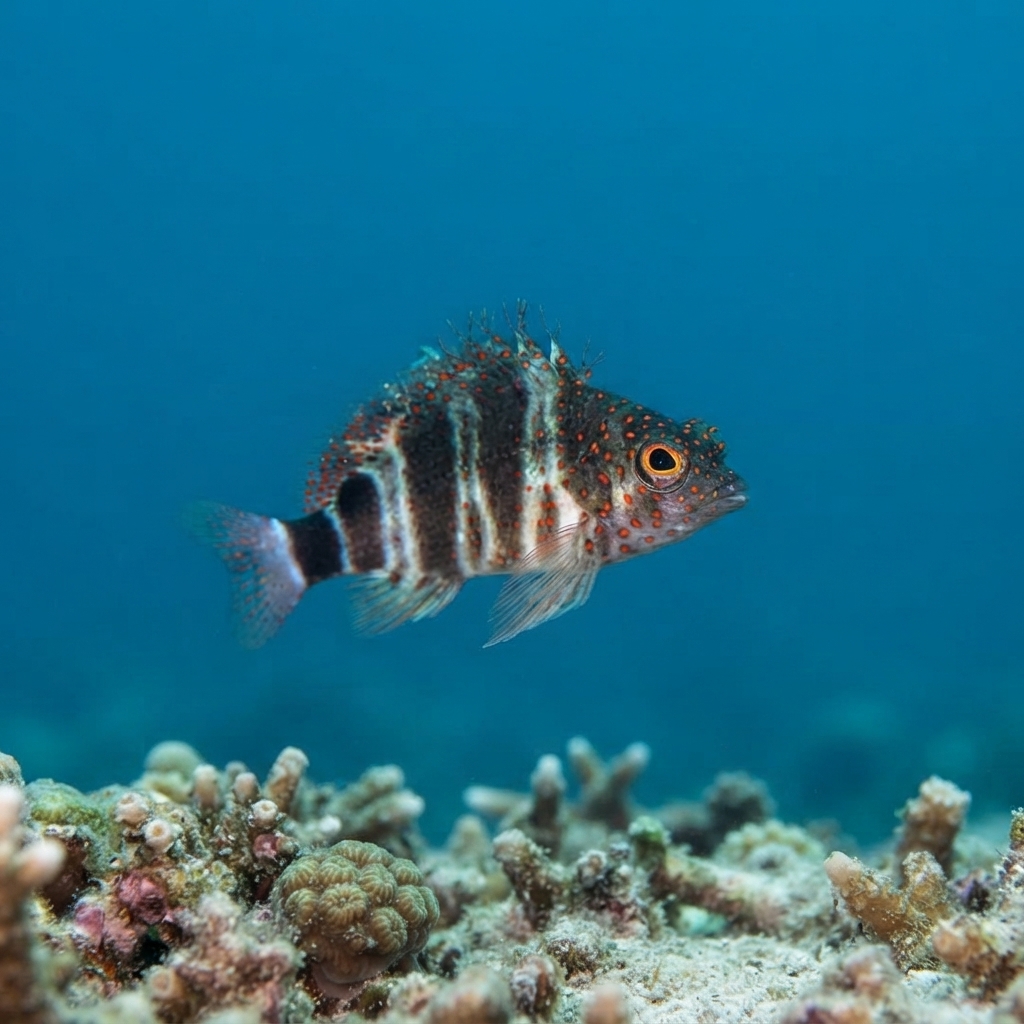
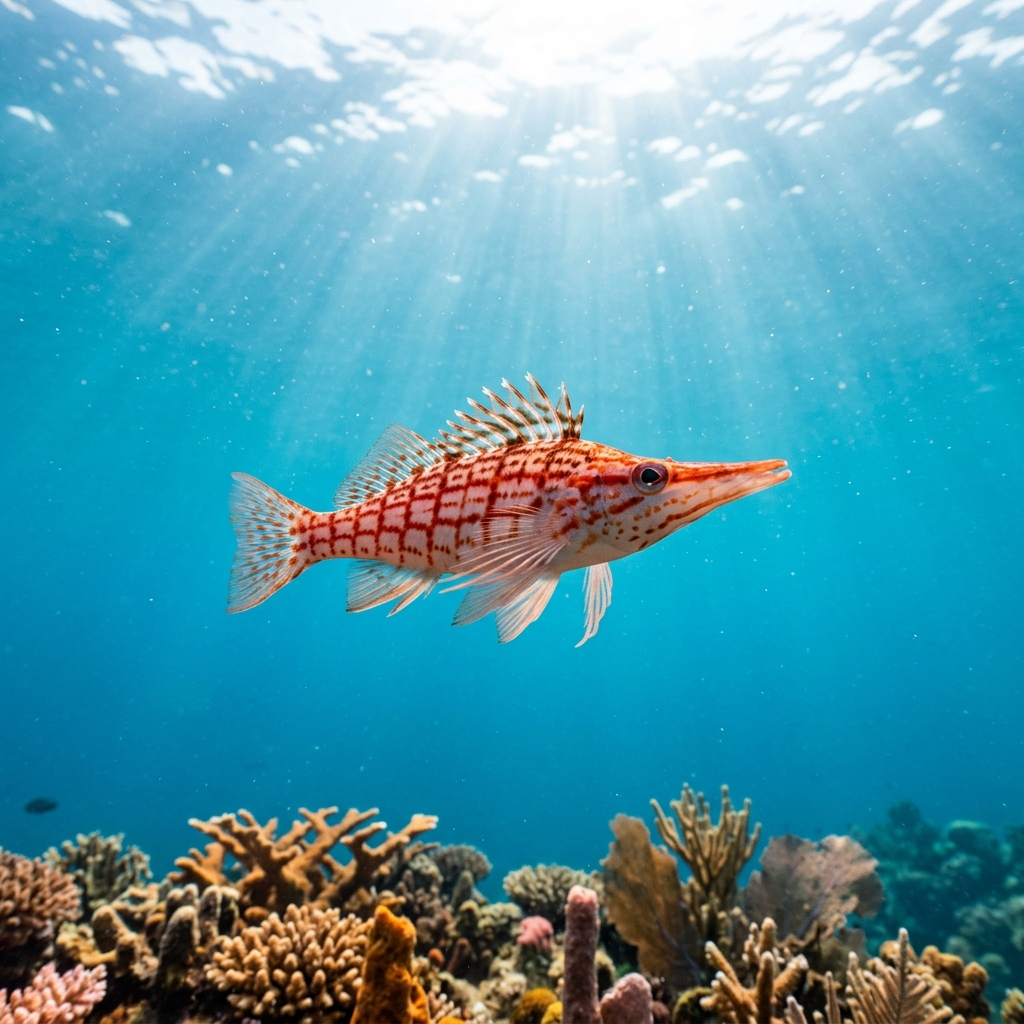
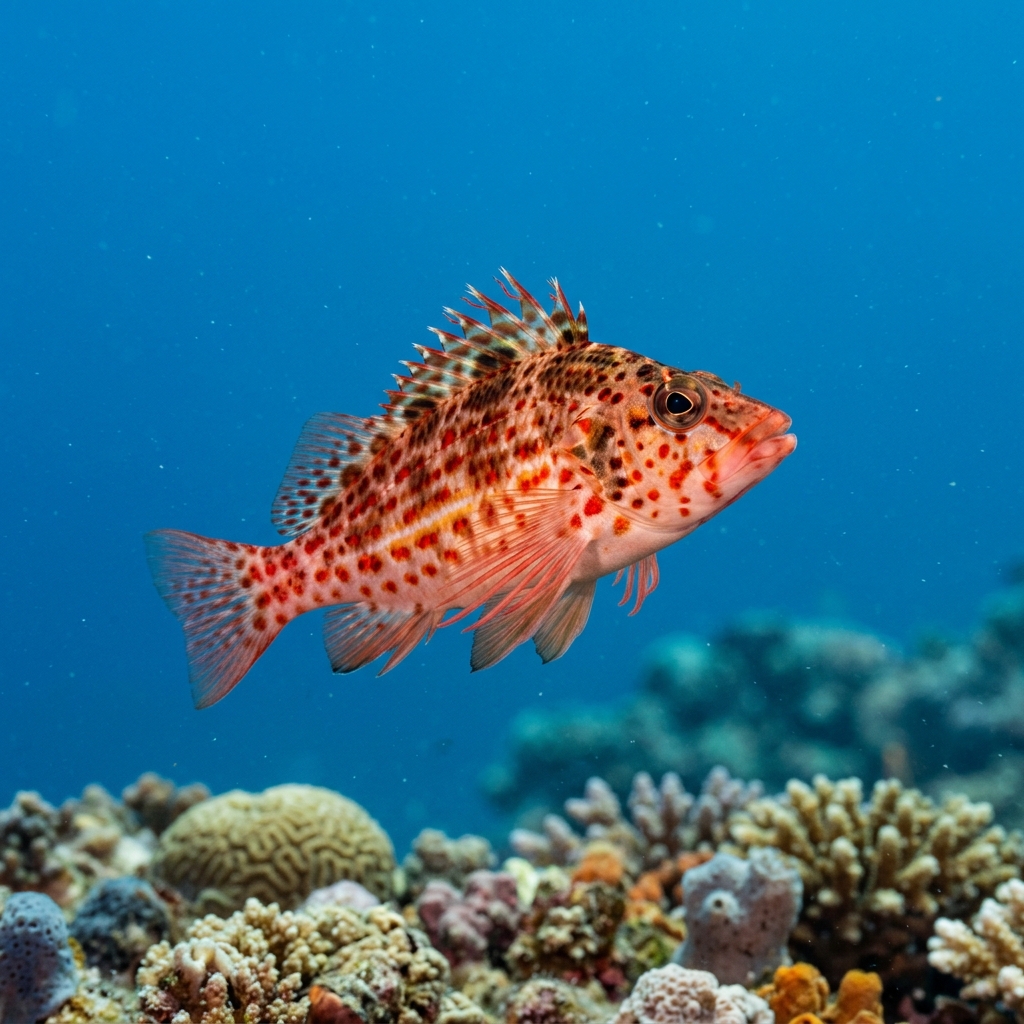
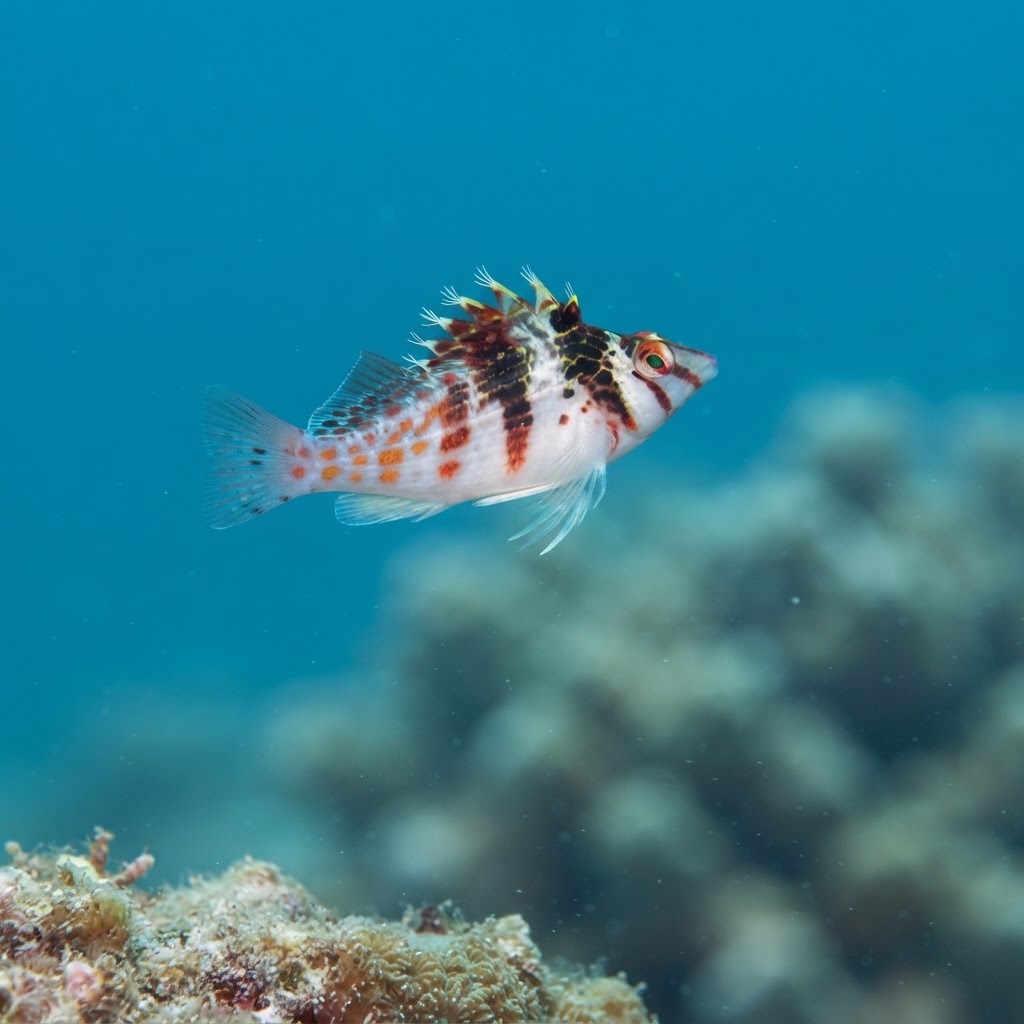
A tiny fish, barely 5 cm, that sits motionless on top of coral heads rather than swimming in open water. Look for a white to pale pink body covered in irregular red-brown blotches arranged in a rough cross-hatch pattern, plus tufted cirri (small hair-like filaments) on the tips of the dorsal spines, visible on close approach. Its short, stocky body and habit of propping itself up on its lower fins, like a bird perched on a branch, is the giveaway.
Expect to find it wedged into the branches of a coral head or resting on a sponge, staying almost completely still and relying on camouflage rather than fleeing. It only really moves to dart out and snatch a passing shrimp or small crustacean before returning to the same perch. Divers who slow down and scan coral heads closely, rather than swim past, get the best looks, since it rarely draws attention on its own.
Like other hawkfish, it lacks a swim bladder, which is exactly why it perches on coral instead of hovering in midwater like most reef fish.
No clear seasonal pattern shows up in the data, and its comfort range of roughly 25 to 29C matches tropical reefs all year, so it's a fair sighting on any dive to suitable coral habitat regardless of month.
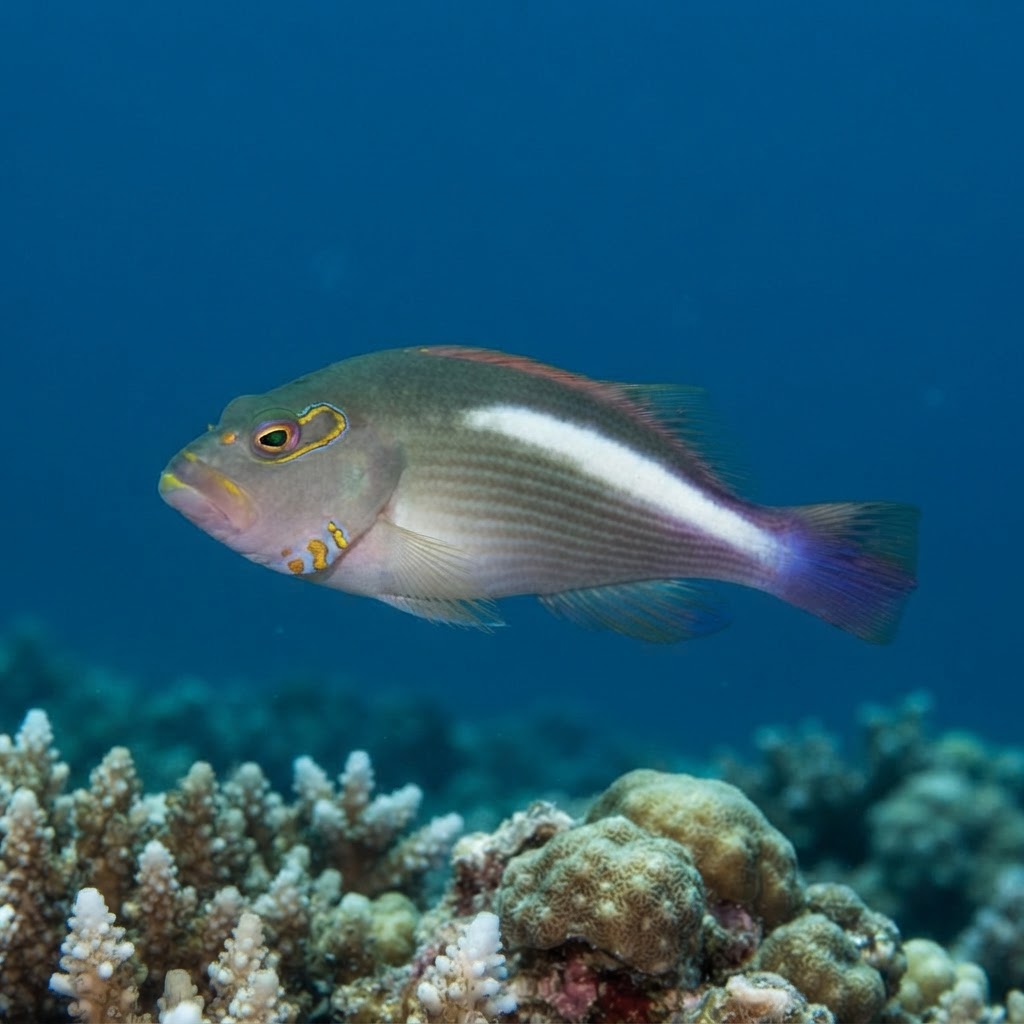
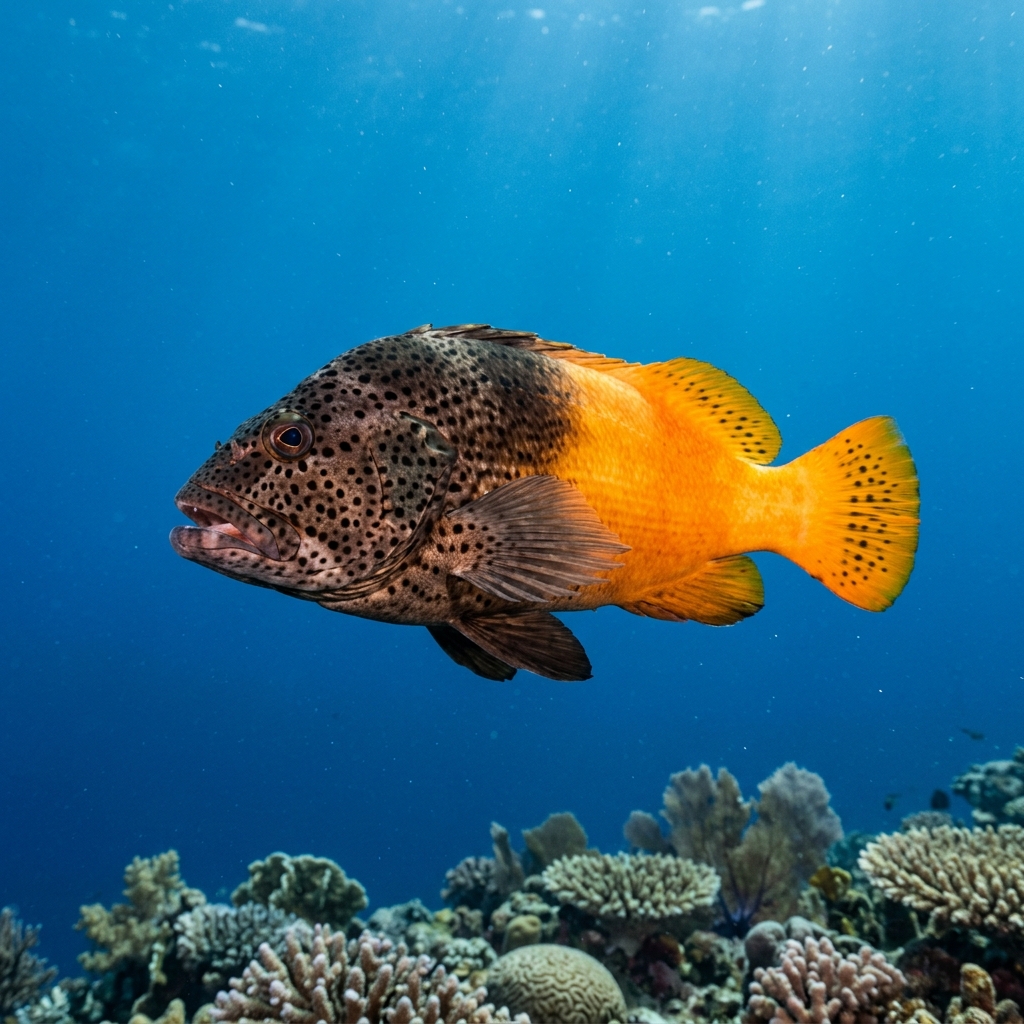
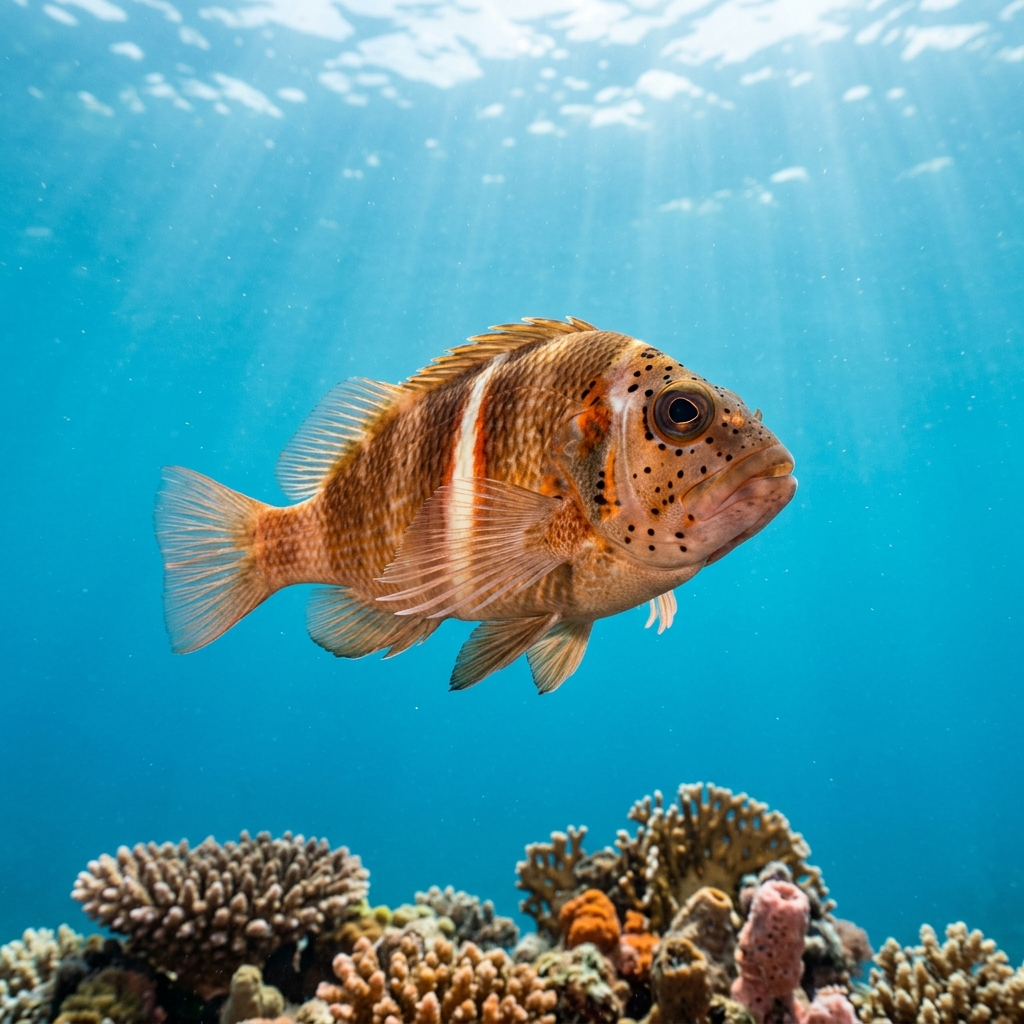
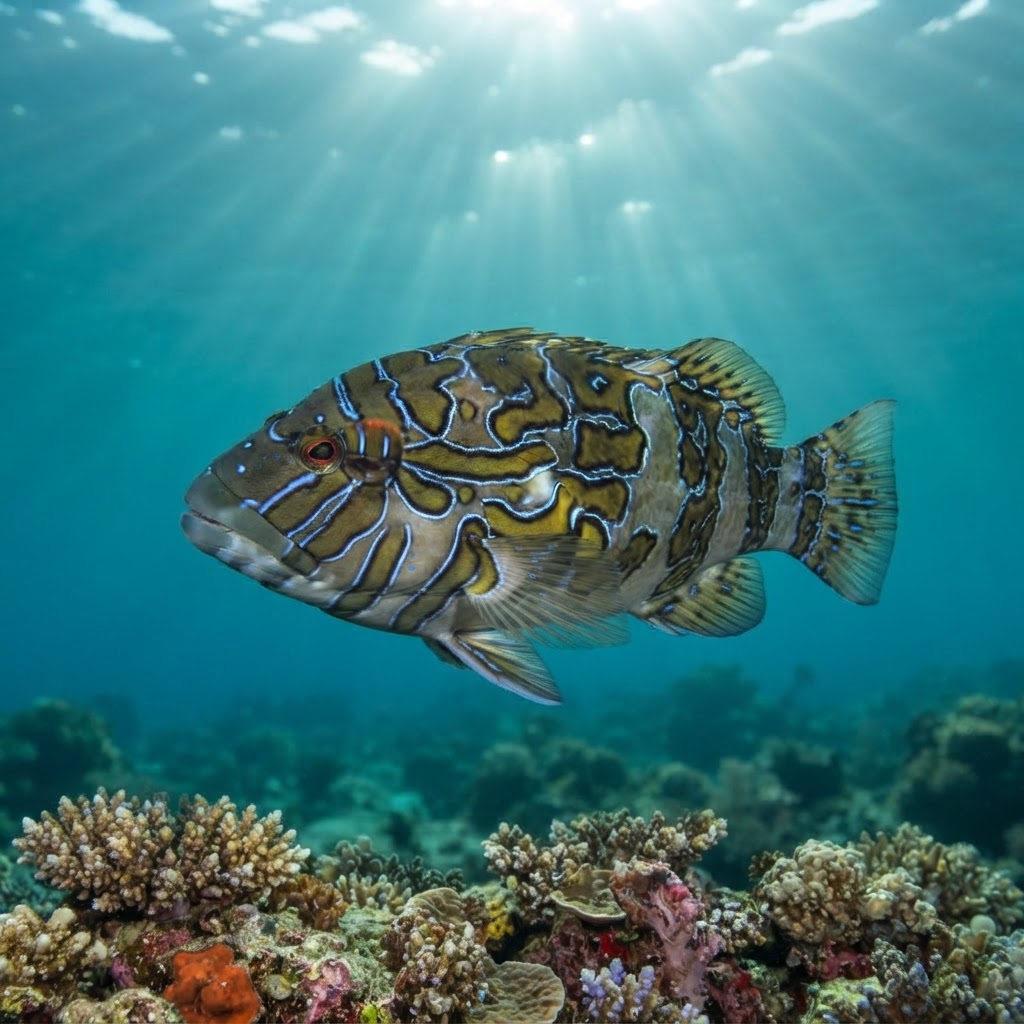
Reef neighbours a diver could mistake it for. Use the identification notes above to tell them apart.
Most reliably logged across the Philippines, especially Visayas and Luzon, where it turns up on hard coral reef year after year. Strong secondary populations sit in Sulawesi, Indonesia and Queensland and New South Wales in Australia, with further sightings across Fiji, Vanuatu, Timor-Leste, New Caledonia and Vietnam. Atauro Island in Timor-Leste and Efate in Vanuatu are worth checking if you're island-hopping through Melanesia or the Coral Triangle.
Mapping where Dwarf Hawkfish is logged…
The Philippines, particularly the Visayas and Luzon regions, produces the most sightings, with further reliable populations in Sulawesi, Indonesia and Queensland, Australia. It also turns up across Fiji, Vanuatu, Timor-Leste and New Caledonia.
There's no strong seasonal pattern in sightings, and it tolerates a broad tropical temperature range, so it's seen on coral reefs throughout the year rather than during a specific season.
Look for a small, stocky fish around 5 cm long perched motionless on coral, with a white body covered in red-brown blotches and small tufted cirri on its dorsal spines. It behaves like a lookout, sitting propped on its fins rather than swimming freely.
They stay small, topping out at around 5 cm, which makes them easy to miss unless you're looking closely at coral heads.
They have no swim bladder, the organ most fish use to stay buoyant in open water. That's why they perch on coral instead of hovering, ambushing small prey from a stationary position.
Site and sighting data is aggregated from diver logs, iNaturalist and GBIF. For taxonomy and conservation status:
Pixy Hawkfish
762 sites