Plectorhinchus playfairi
Uncommon reef fish logged across KwaZulu-Natal, South Africa, in water 25-28C year-round. Here's how to spot one on your dive.
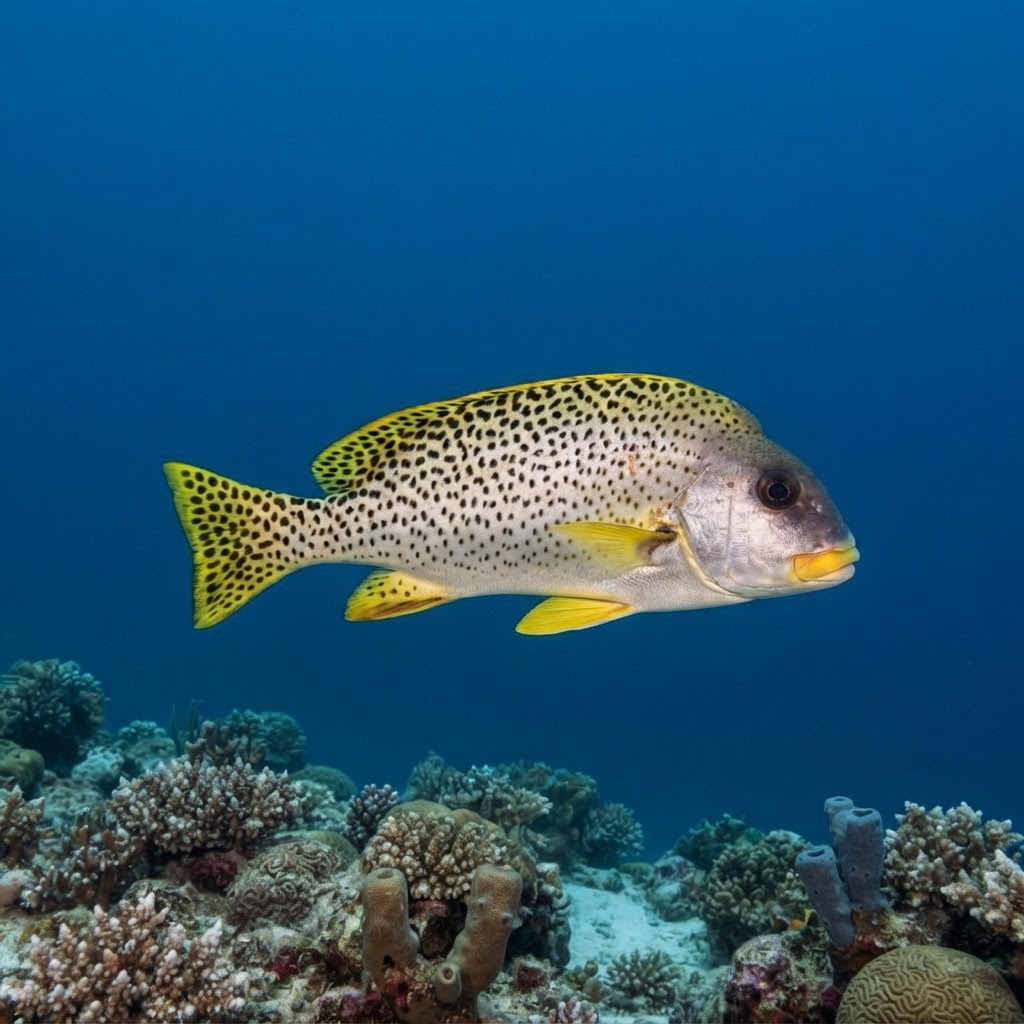
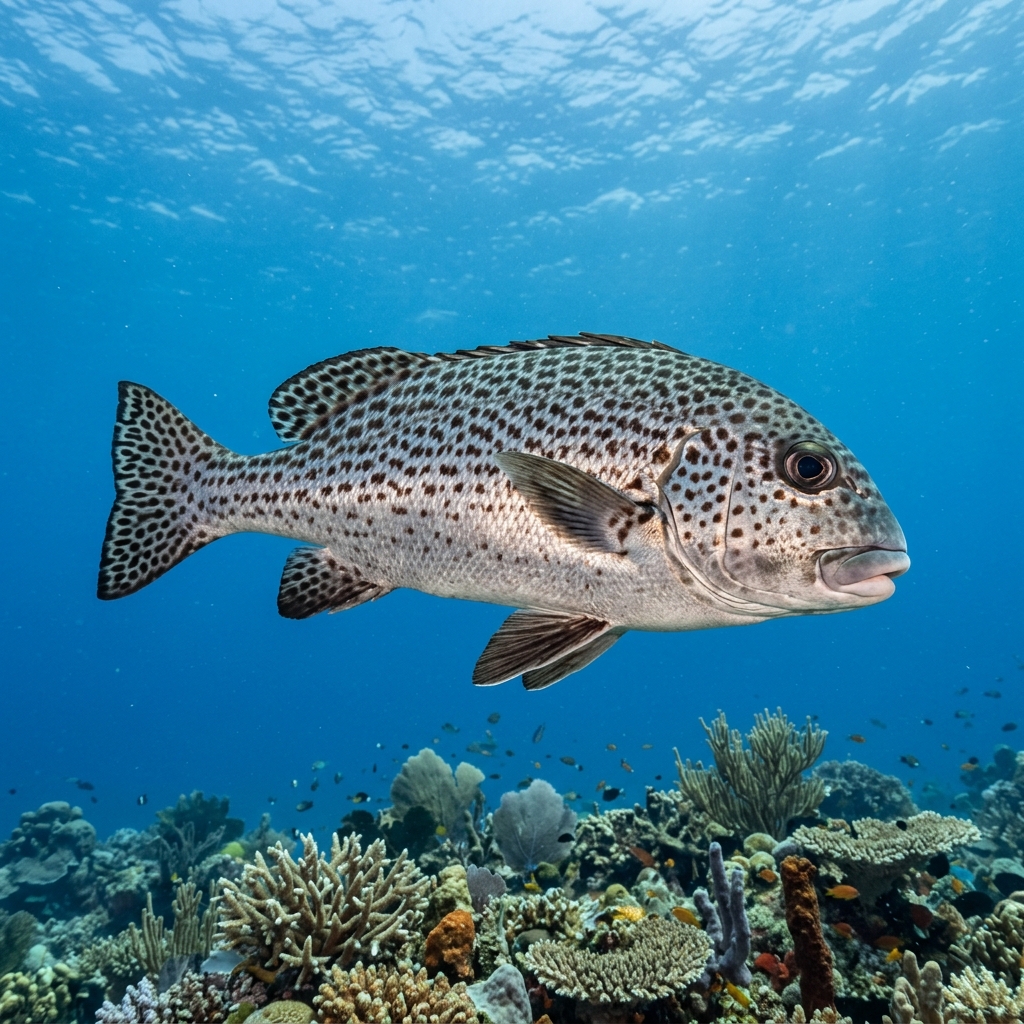
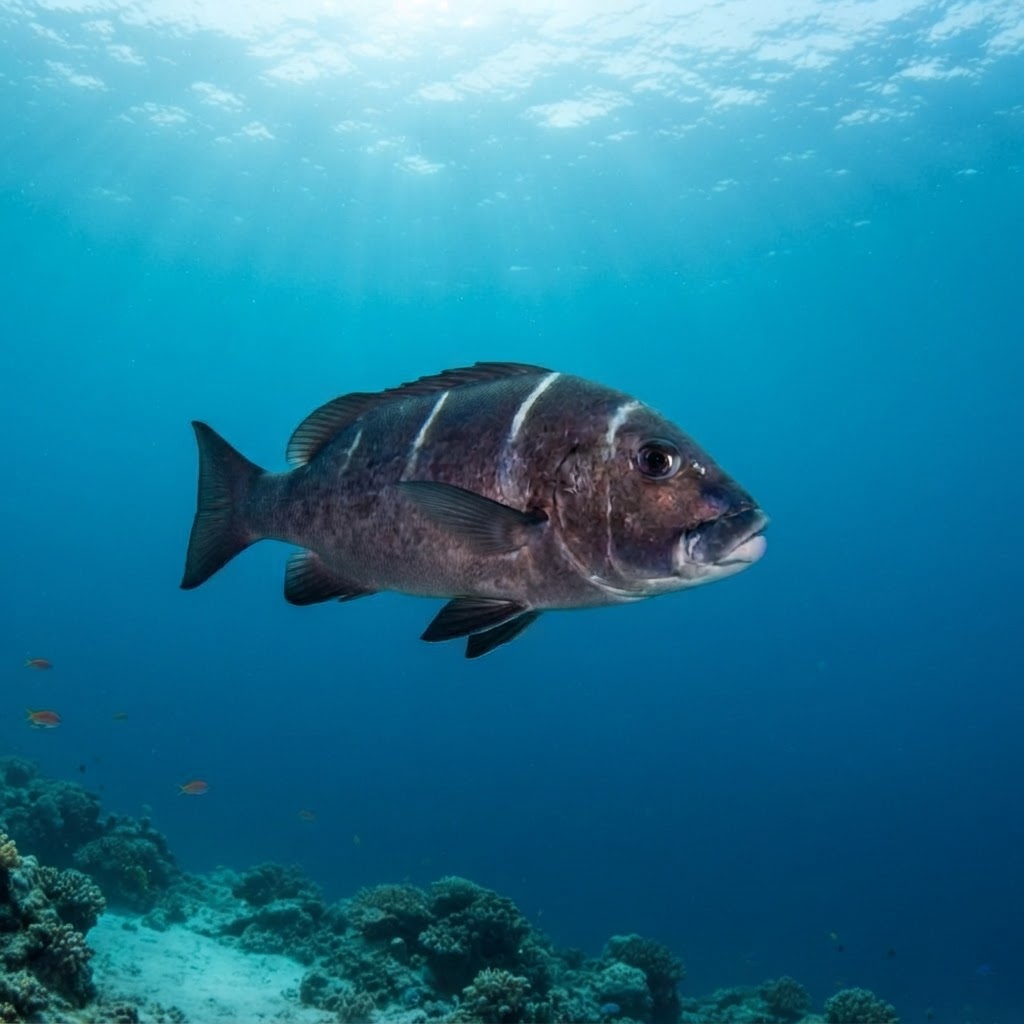
A heavy-bodied grunt reaching around 63 cm, with a pale grey to silvery body crossed by dark, irregular vertical bars that fade with age. Look for the thick, fleshy lips that give the whole rubberlip group its name, and a stout, slightly humped profile compared to slimmer reef fish nearby. It often hovers close to structure rather than swimming in open water, which helps separate it from more mobile species on the reef.
Divers typically find it holding station under ledges or around reef structure rather than cruising in the open, often solo or loosely associating with other grunts. It tends to be unbothered by divers at a respectful distance, more likely to hold its position than bolt for cover. Most logs describe it as an uncommon but steady find rather than something that shoals in numbers.
Those thick lips are a real feeding tool: rubberlips use them to work crevices and rubble for hidden invertebrates rather than chasing prey in open water.
Sightings show no clear seasonal pattern, and with water temperatures logged between 24.7 and 28.3C, conditions stay comfortable for this fish across the year. Plan around good general diving conditions in KwaZulu-Natal rather than a specific month.
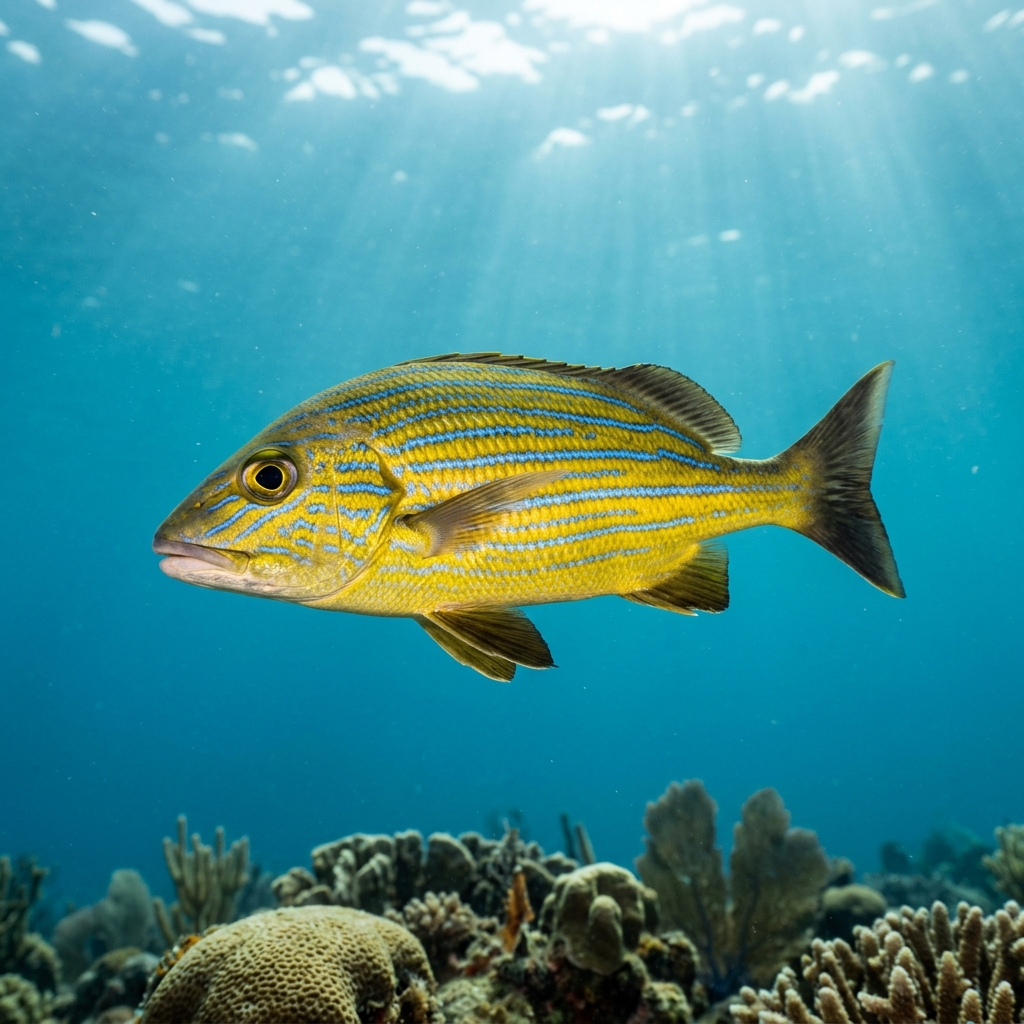
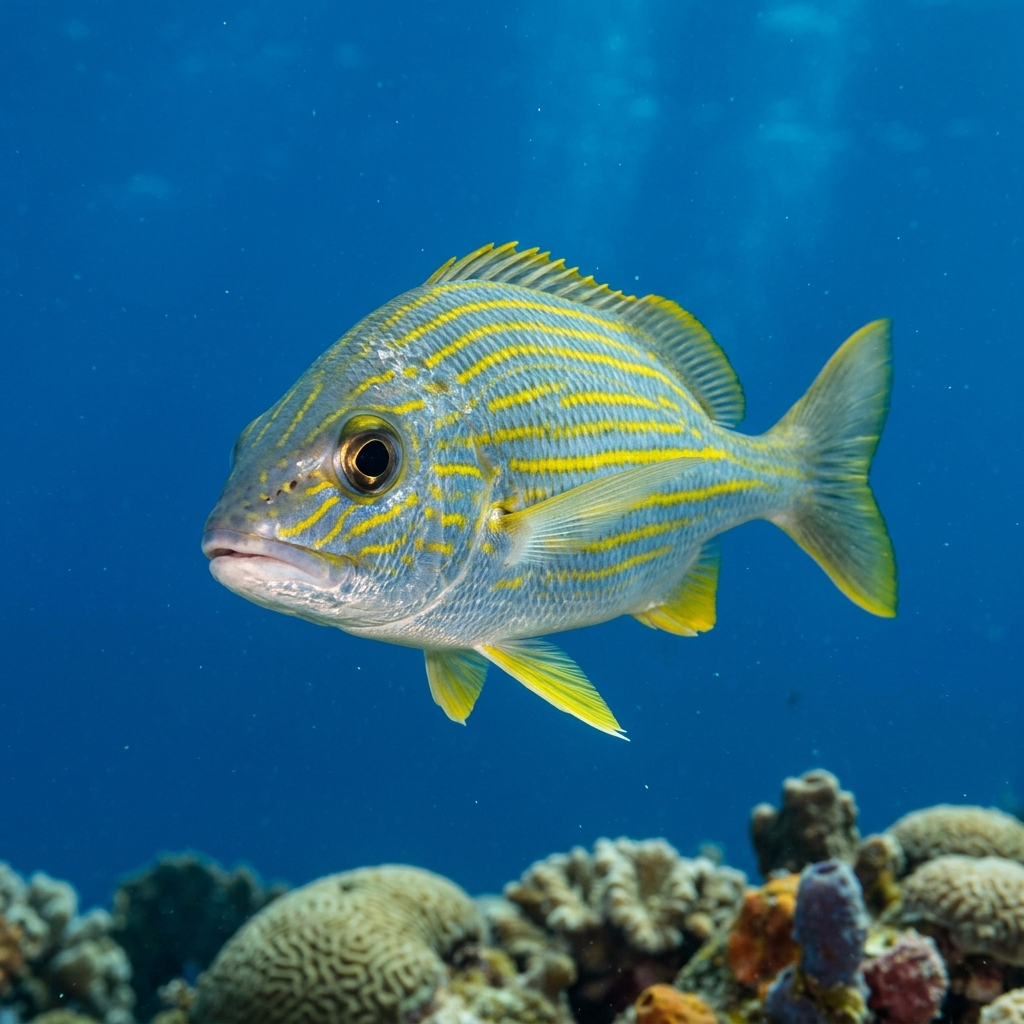
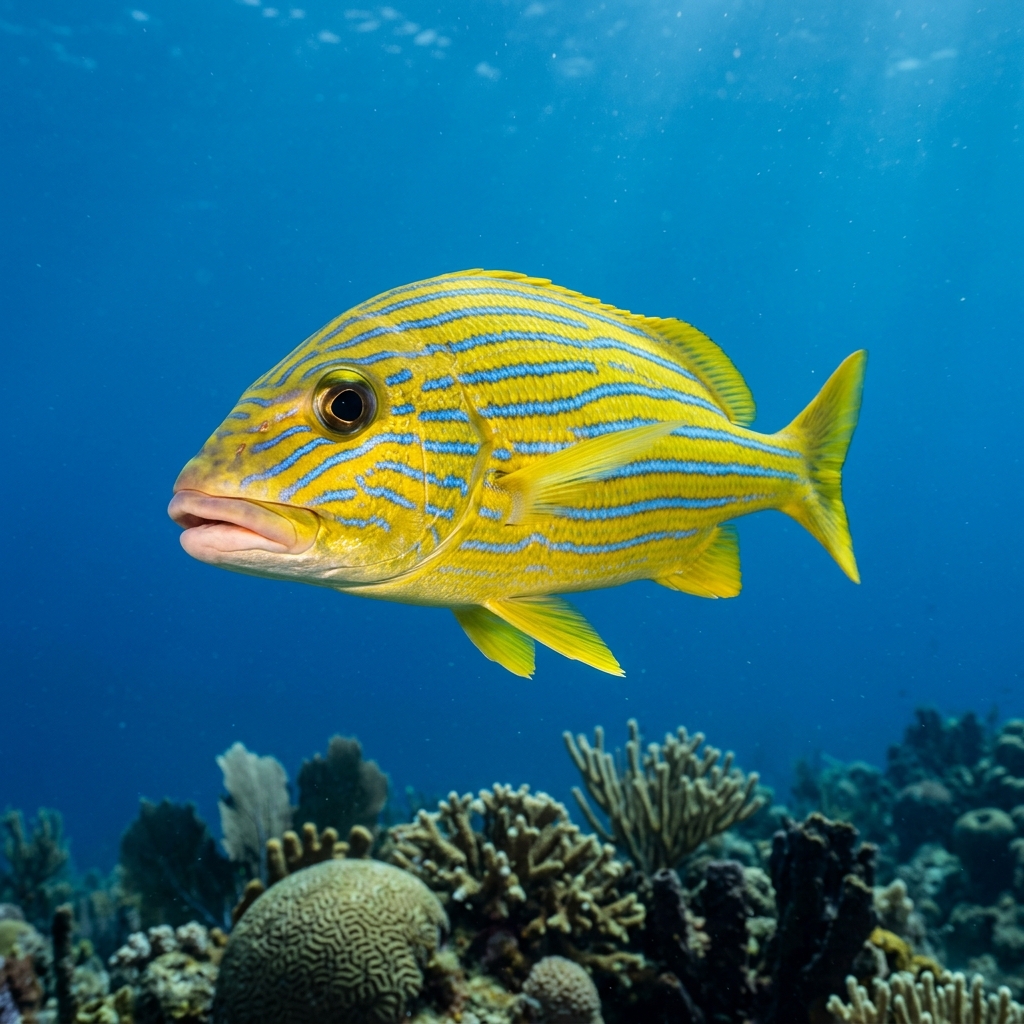
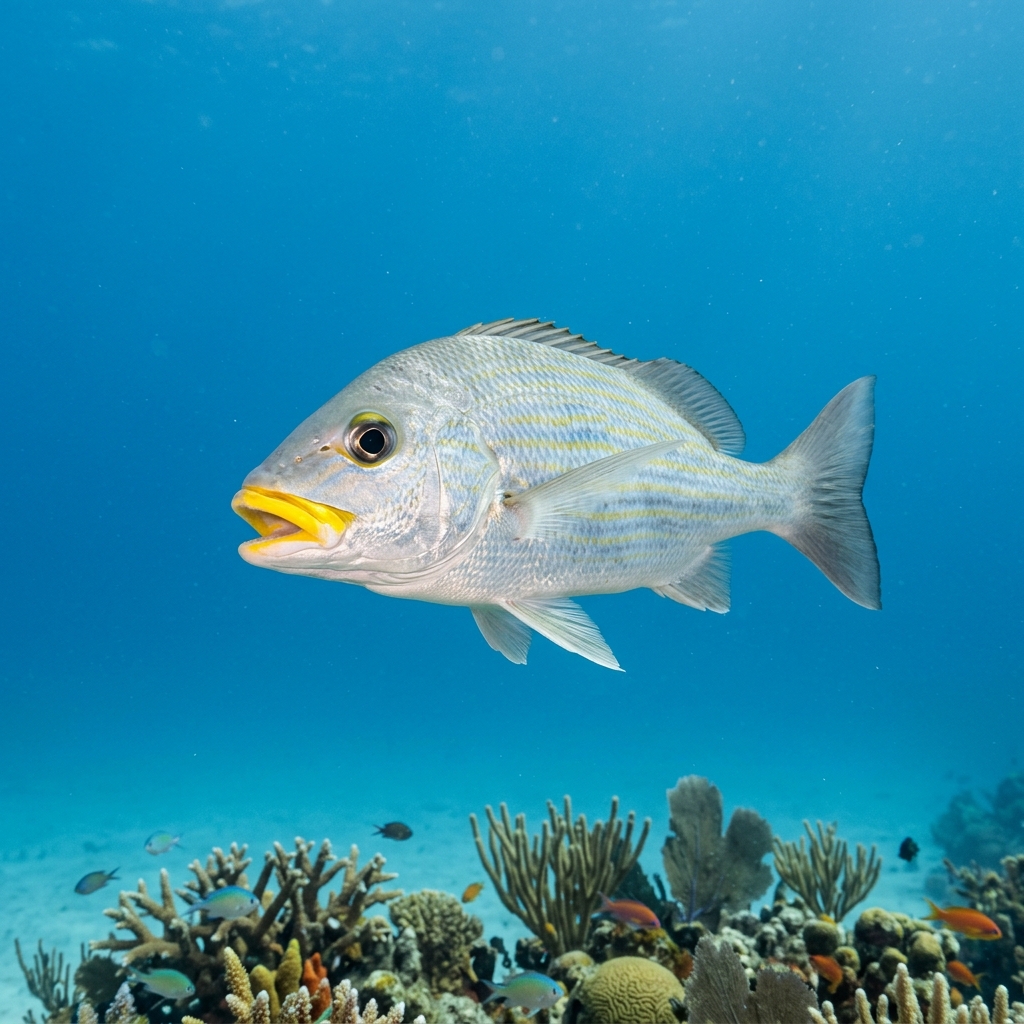
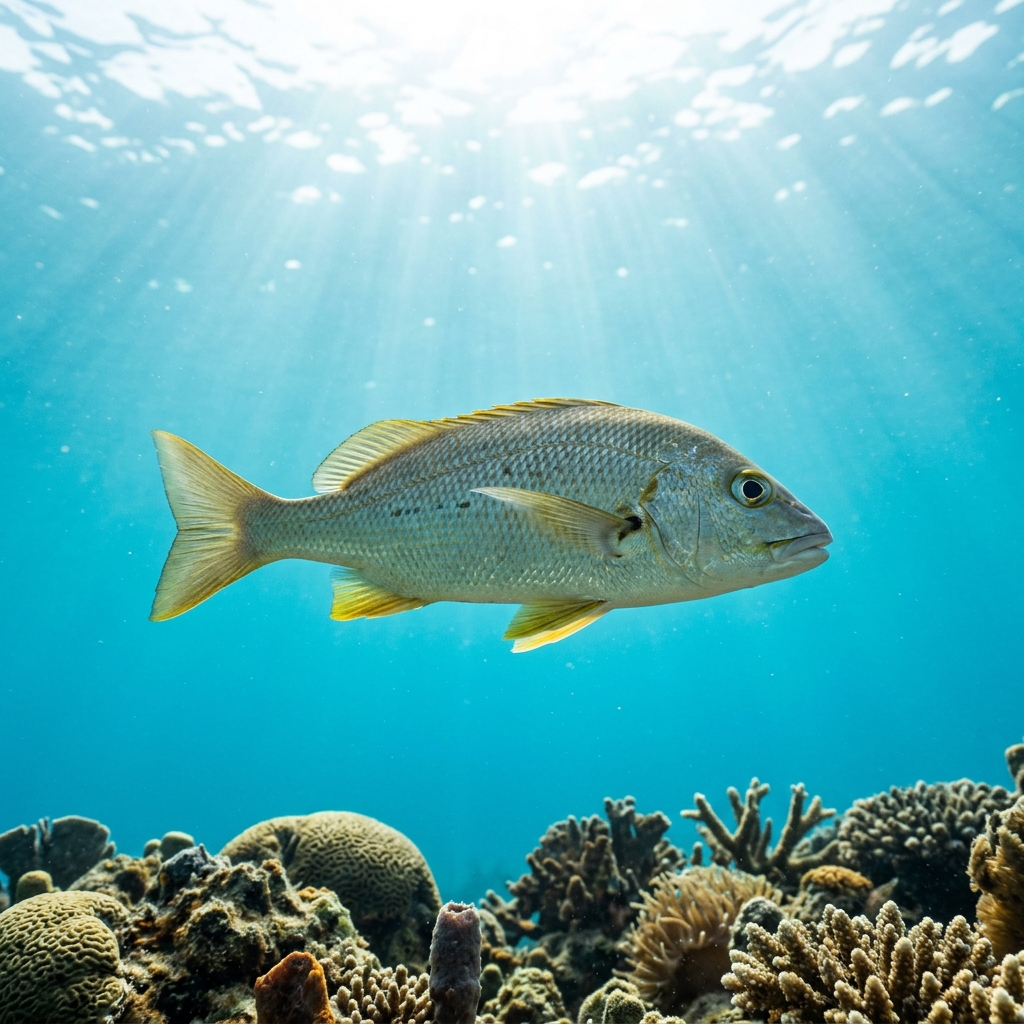
Reef neighbours a diver could mistake it for. Use the identification notes above to tell them apart.
This one is very much a South African speciality, with the strongest and most consistent sightings logged along KwaZulu-Natal's reefs. A single confirmed site in Watamu, Kenya, shows it turns up further north too, but KwaZulu-Natal is by far the reliable bet.
Mapping where Whitebarred Rubberlip is logged…
KwaZulu-Natal in South Africa is the reliable region, with a large spread of sites reporting it. A lone site in Watamu, Kenya, is the only other confirmed location so far.
There's no detected season, it's logged year-round in water between roughly 25 and 28C. Any time you're diving KwaZulu-Natal in decent conditions is a fair shot.
Look for a heavy grey-silver body with dark, uneven vertical bars, thick fleshy lips, and a stocky profile. It's usually seen holding near reef structure rather than swimming in open water.
They reach around 63 cm, making them a solidly sized reef fish rather than a small one. Most divers will notice the bulk and the lips before the exact length.
No, they're considered harmless to divers. They tend to hold their ground near structure rather than react defensively, so simply give them space and observe.
Site and sighting data is aggregated from diver logs, iNaturalist and GBIF. For taxonomy and conservation status:
Bluestriped Grunt
1,907 sites