Plectorhinchus gaterinus
Common on South Sinai reefs in 25-29 C water, the blackspotted rubberlip is a year-round Red Sea regular divers often overlook.
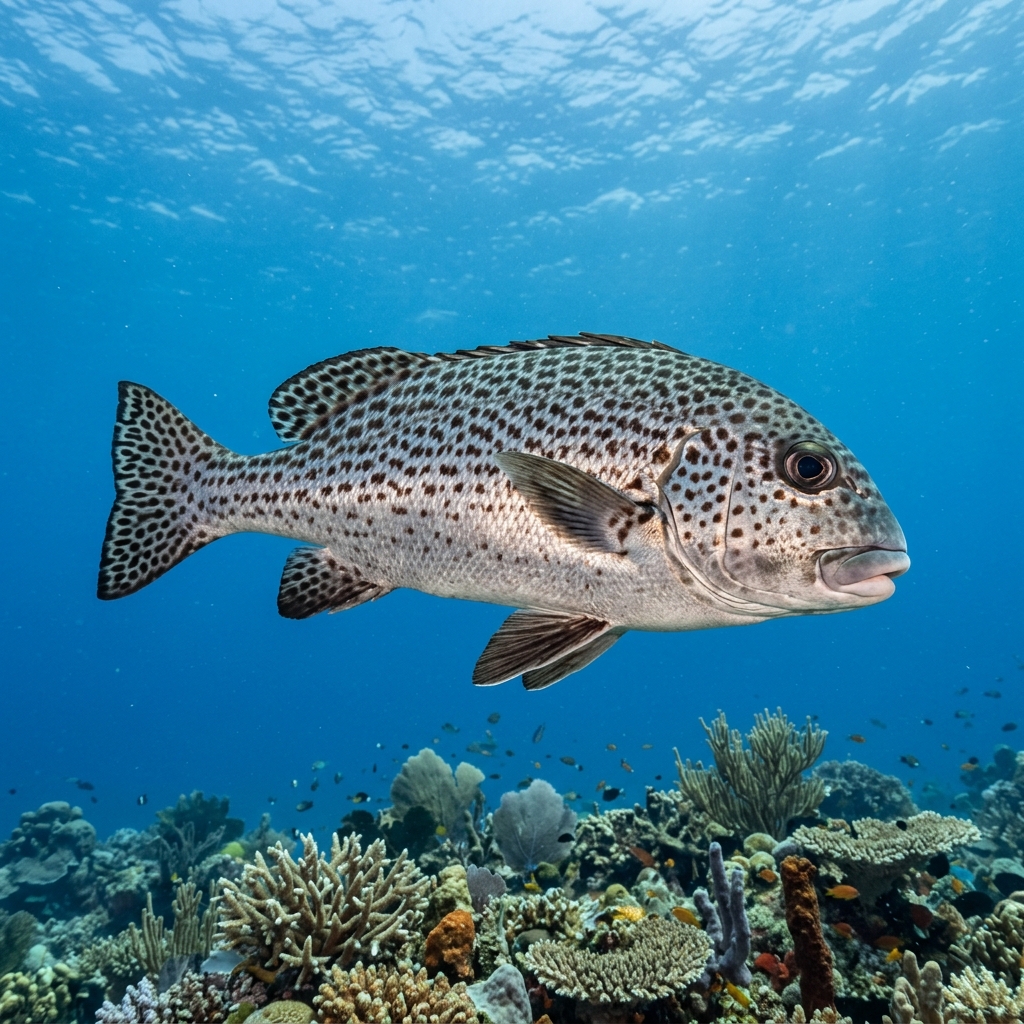
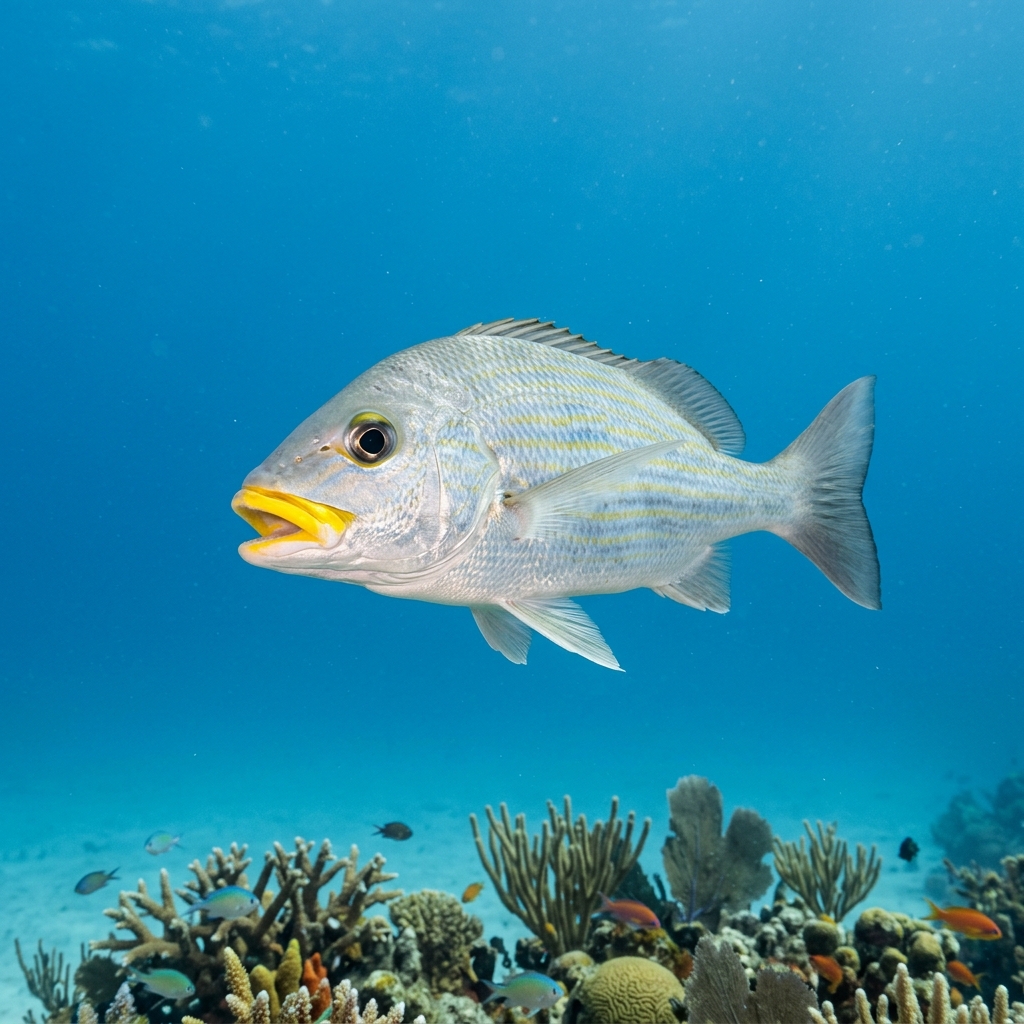
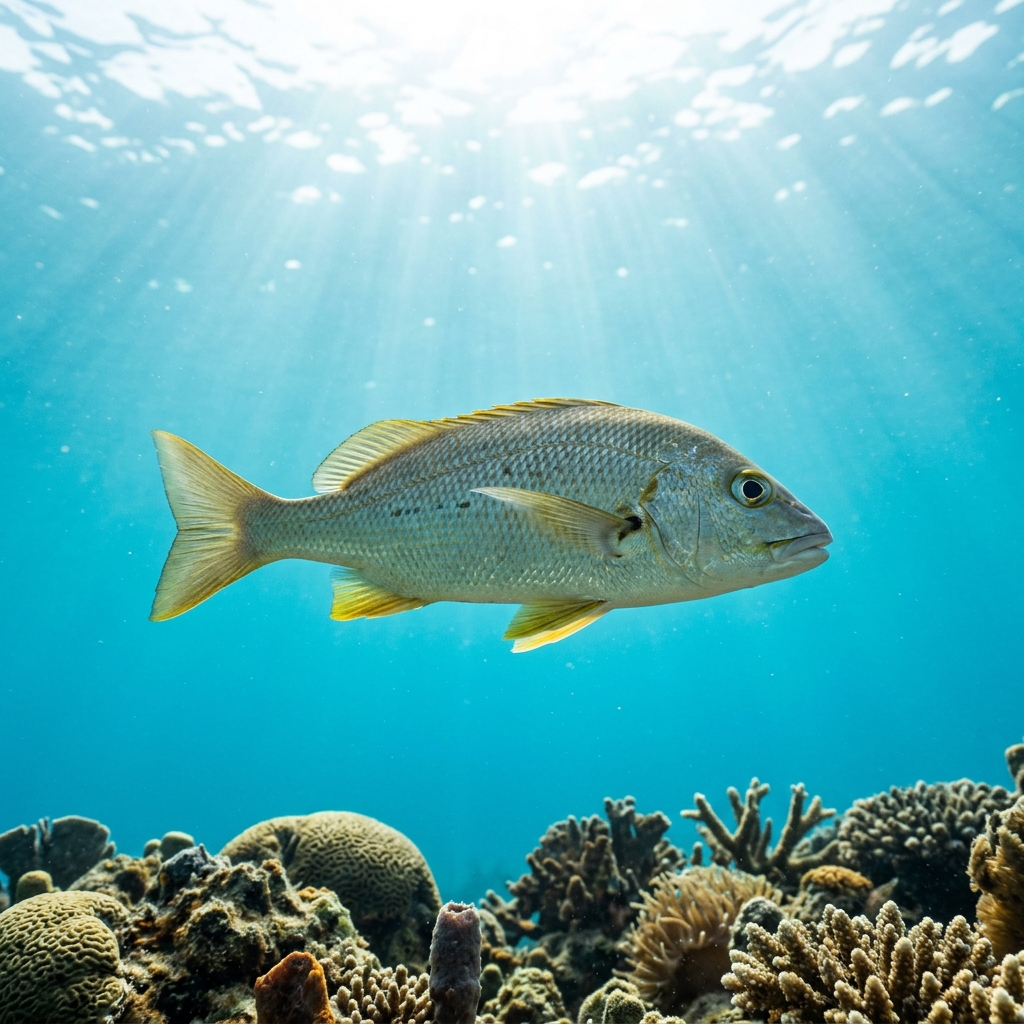
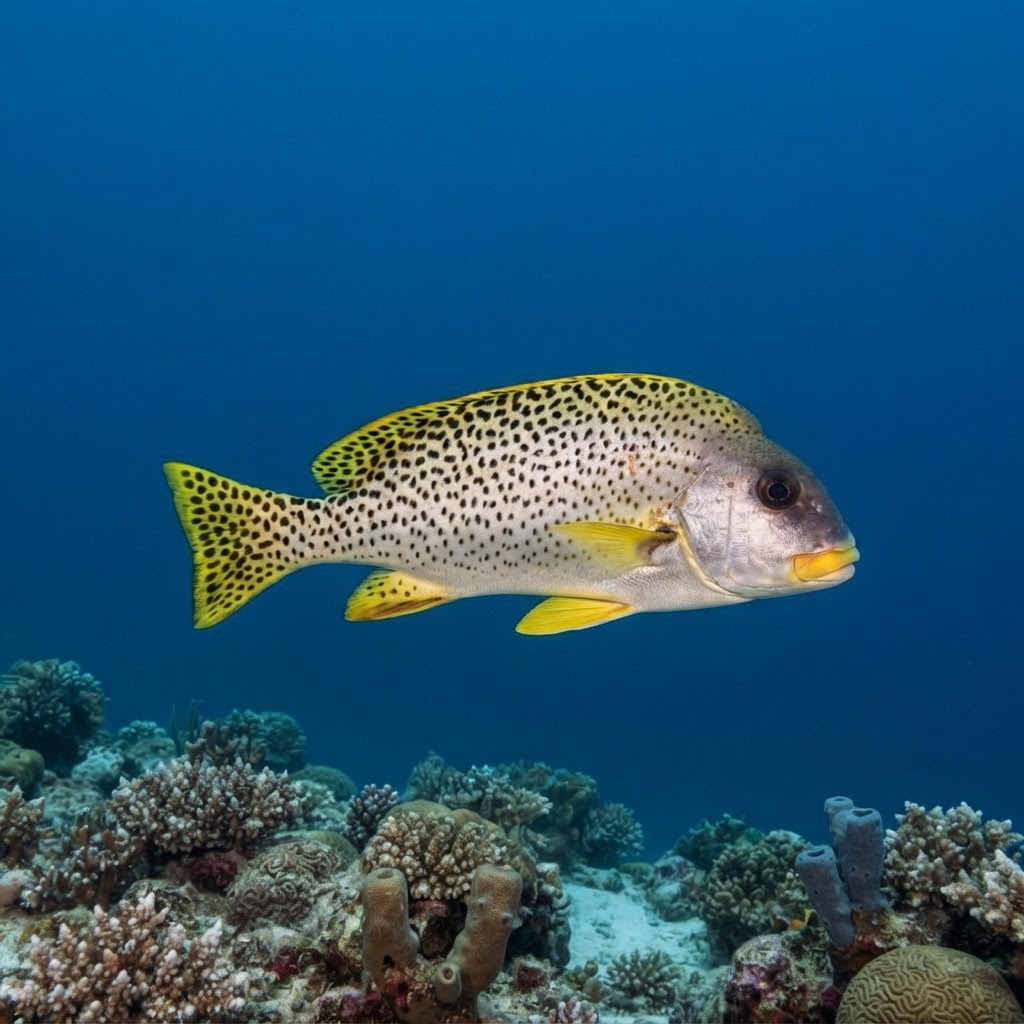
Look for a stocky, deep-bodied fish around 35 cm with a pale grey to silvery flank scattered with dark, irregular spots that thicken toward the tail. The thick, fleshy lips that give the whole rubberlip group its name are obvious face-on, and the fins often carry a yellowish tinge against the spotted body. It tends to hang motionless just off the reef structure rather than out in open water, which makes the spot pattern easy to study at a stop.
Divers usually find it parked close to a reef wall or under an overhang, sitting still or moving slowly rather than schooling in open water. It is generally unbothered by a diver holding a reasonable distance, letting you get a good look at the spotting pattern before it eases deeper into cover. Sightings lean toward daylight hours on the reef structure itself rather than out over sand.
Those thick lips are a feeding tool: rubberlips use them to suck small invertebrates and crustaceans out of crevices and sand pockets rather than biting prey outright.
No strong seasonal pattern shows up in the sightings, and the water-temperature niche of 25 to 29 C matches the reefs it lives on year-round, so any month works for a dive trip. In South Sinai and Marsa Alam it is logged consistently across the diving calendar rather than clustering into a short window.
This is a Red Sea fish first and foremost, most heavily logged across South Sinai, Marsa Alam and the Deep South, and the wider Red Sea Riviera in Egypt. Outside Egypt it turns up reliably in Oman's Daymaniyat Islands, and in smaller numbers along the East African coast in Zanzibar, the Bazaruto Archipelago, Nosy Be and the Red Sea coast of Saudi Arabia.
Mapping where Blackspotted Rubberlip is logged…
The strongest populations are in Egypt's Red Sea, especially South Sinai, Marsa Alam and the Deep South, and the Red Sea Riviera. Oman's Daymaniyat Islands is another reliable spot, with smaller numbers off Tanzania, Mozambique, Madagascar and Saudi Arabia.
There is no clear seasonal spike in sightings, and it lives in a fairly steady 25 to 29 C temperature range, so it is a year-round sighting on the reefs where it occurs. Plan around general Red Sea or Indian Ocean dive conditions rather than a specific rubberlip season.
Check for a grey to silvery, deep-bodied fish around 35 cm with dark irregular spots scattered across the body and thick, fleshy lips. It typically sits still near reef structure rather than swimming in open water, which gives you time to check the spot pattern.
They typically reach around 35 cm in length, a mid-sized reef fish rather than a giant. That size, combined with the spotted body, makes them easy to pick out against plain reef backdrop.
No, they are not considered dangerous to divers. They tend to hold near the reef and tolerate a diver at a reasonable distance without any defensive display.
Its thick, fleshy lips are built for sucking small invertebrates and crustaceans out of crevices and sediment, a feeding style shared across the sweetlips and grunt family rather than an active-hunting bite.
Site and sighting data is aggregated from diver logs, iNaturalist and GBIF. For taxonomy and conservation status:
Bluestriped Grunt
1,907 sites