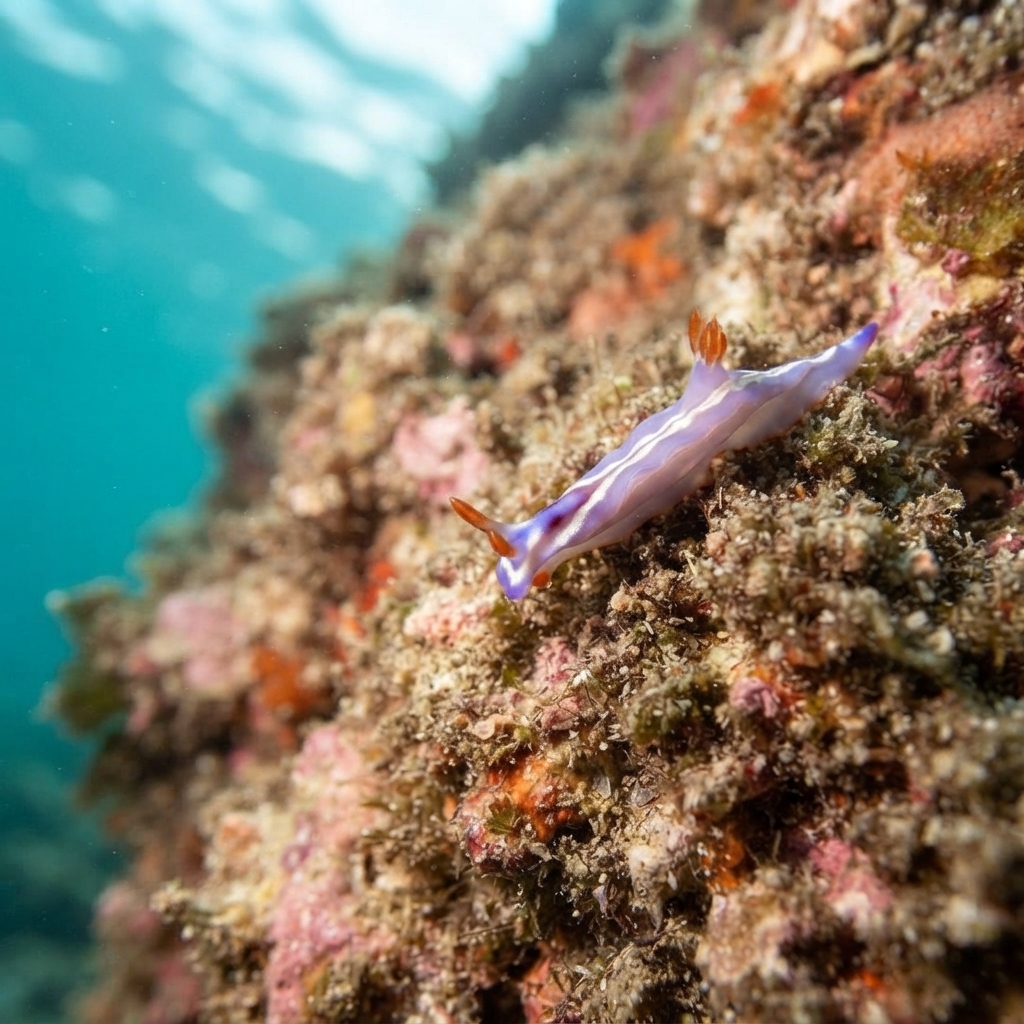
Thuridilla albopustulosa
A small, uncommon sea slug logged across Luzon and Bali, spotted year-round on warm Indo-Pacific reefs from 25 to 31 C.
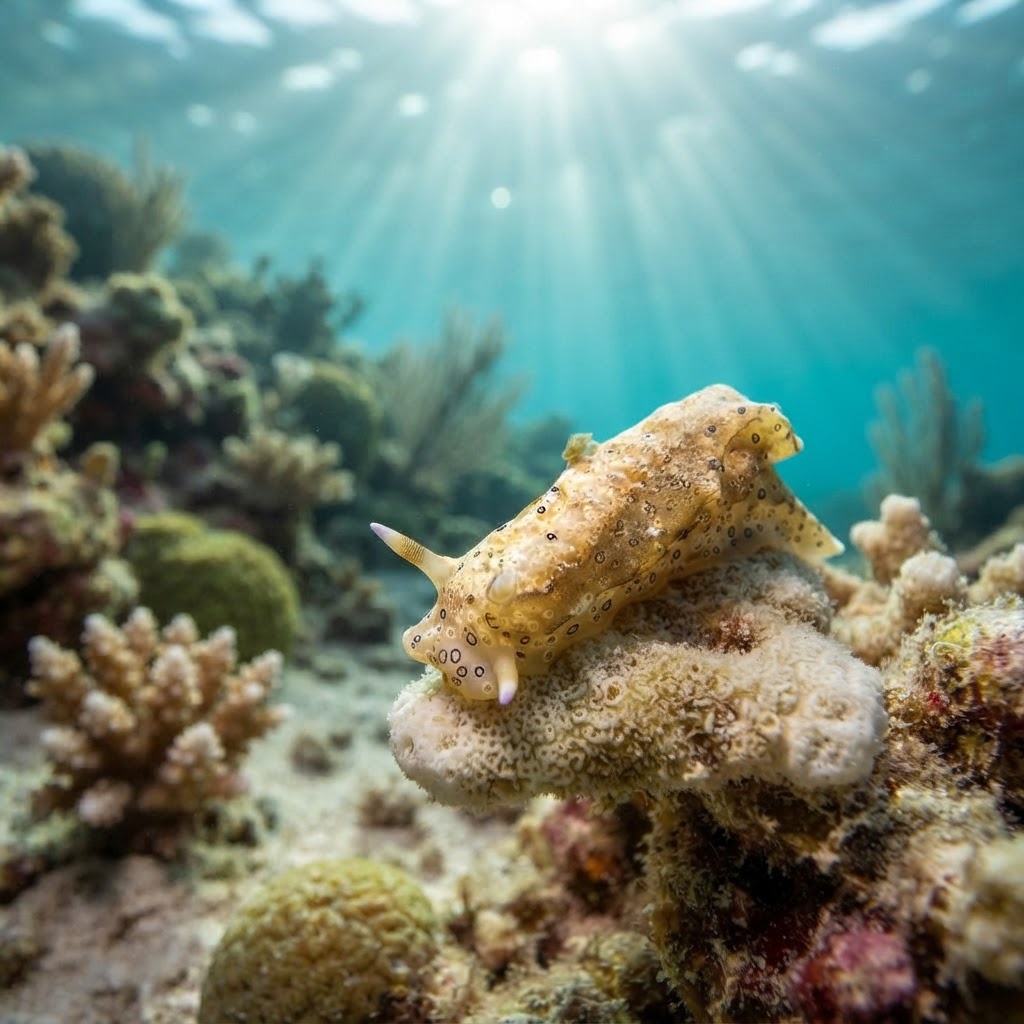
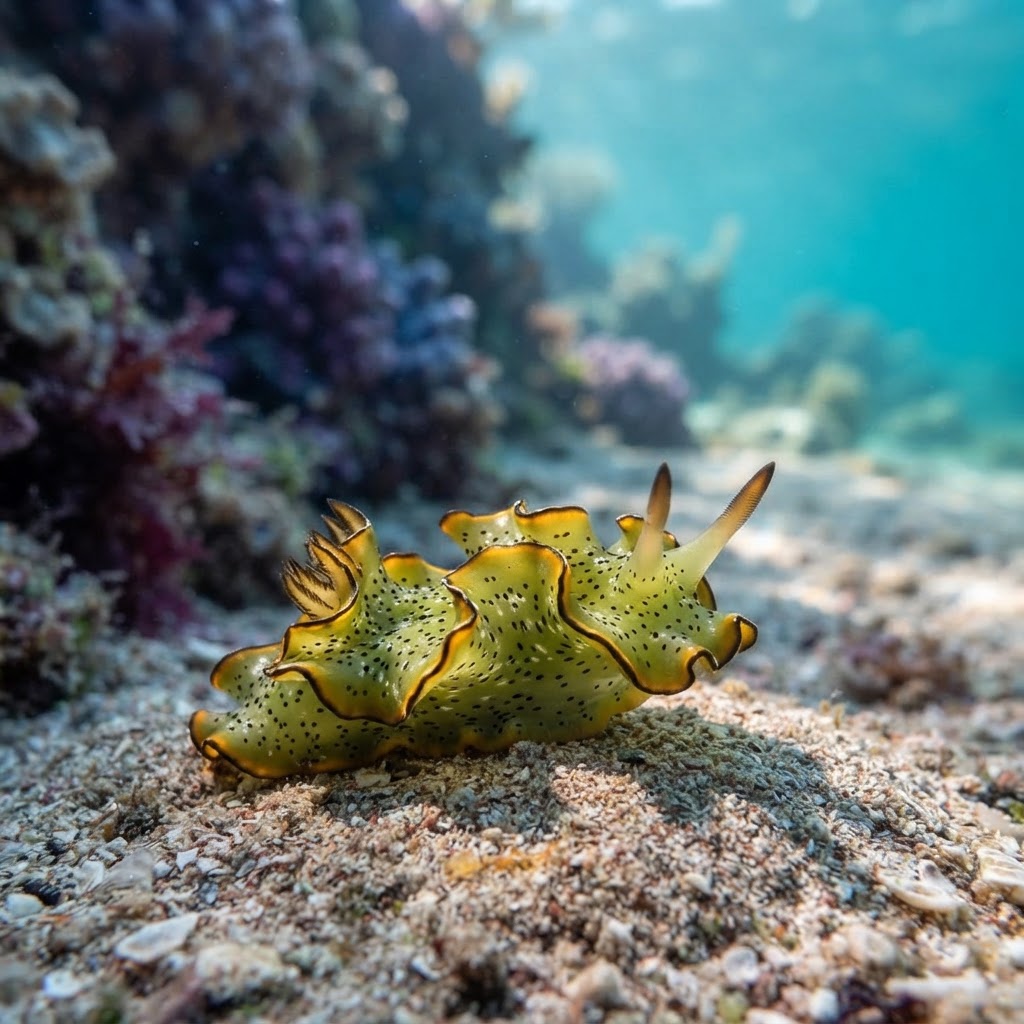
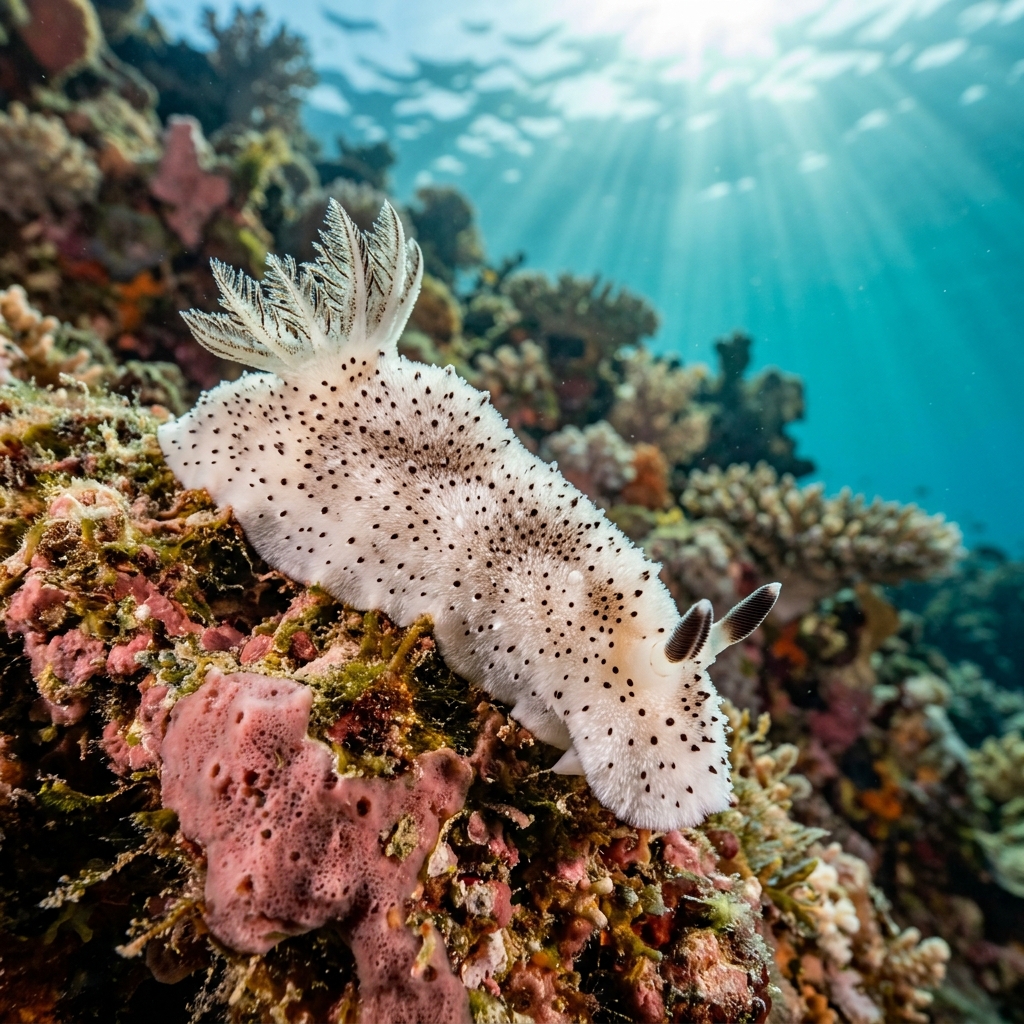
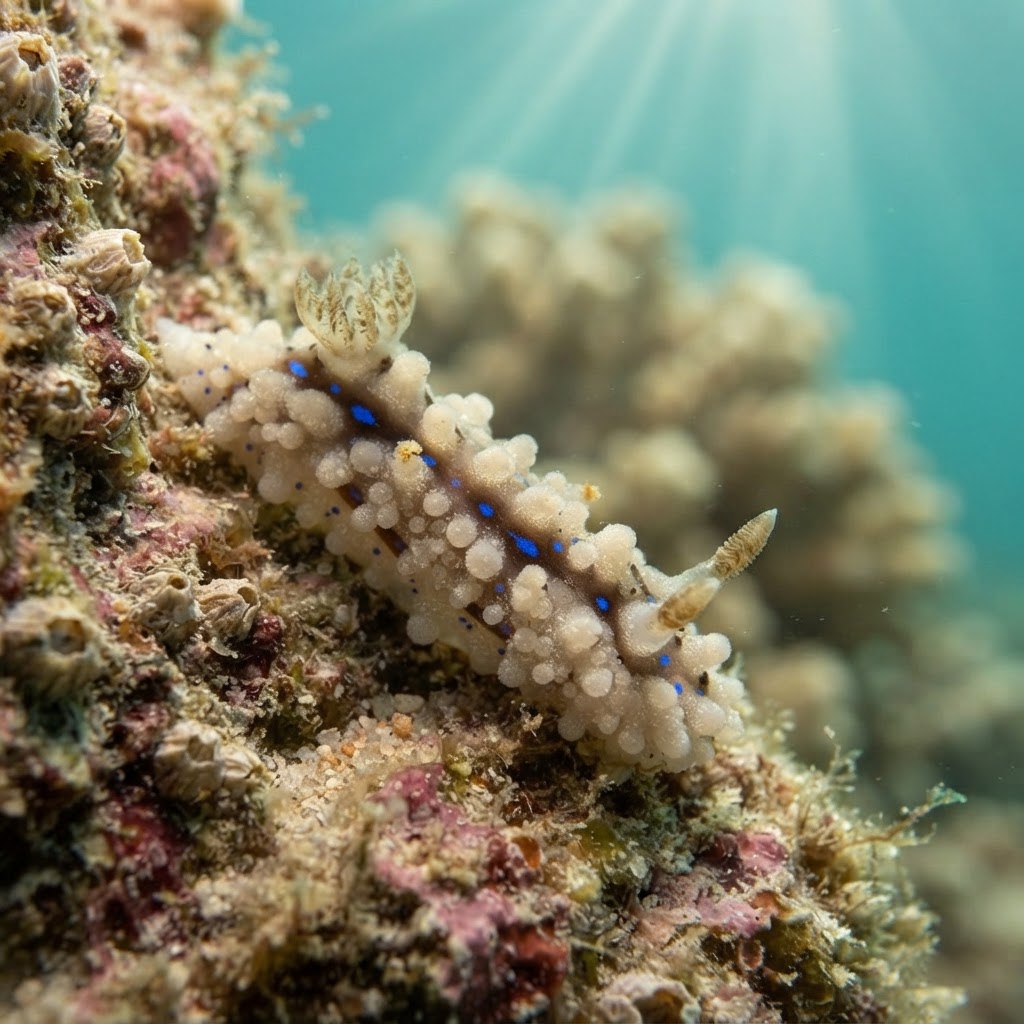
A slender, elongated sea slug with a dark body scattered with small white or pale spots, plus the raised, wing-like flaps (parapodia) along its back typical of the sap-sucking slug family. It stays small, easy to miss against rubble or algae unless you're looking closely for the spot pattern. Colour intensity can vary between individuals, but the white speckling over a dark base is the key giveaway underwater.
Divers typically find it grazing slowly over rubble, rock, or algal turf on the reef floor, moving at the unhurried pace typical of sap-sucking slugs as it feeds. It shows no reaction to divers beyond continuing to crawl, so a close, patient look with a torch or macro lens is the best way to appreciate the spotting pattern.
Like other members of the sap-sucking slug family, it likely feeds on algae and can retain functional chloroplasts from its food in its tissue, a trick called kleptoplasty that lets some relatives photosynthesise for a while after feeding.
Sightings show no clear seasonal pattern, and with a comfortable range of 25.4 to 31.4 C it's a year-round find on the warm reefs where it occurs.
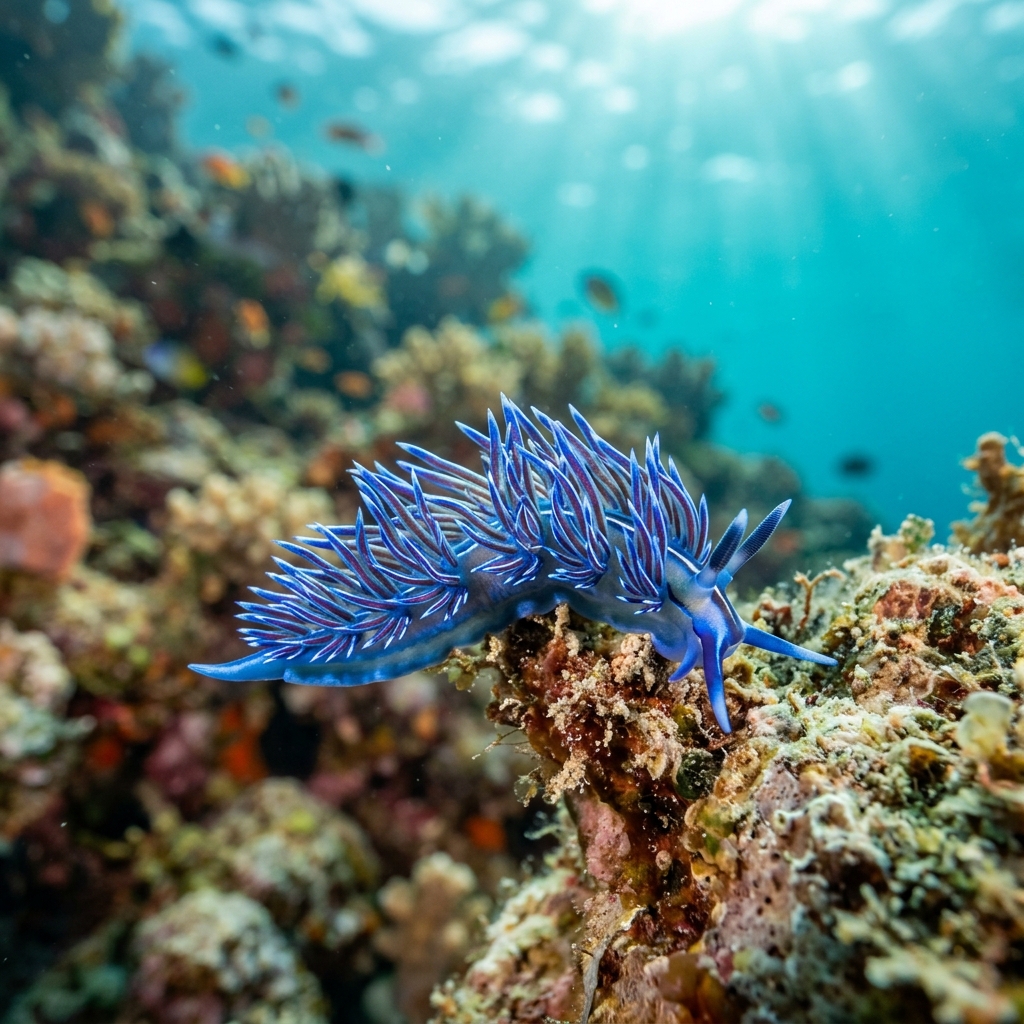
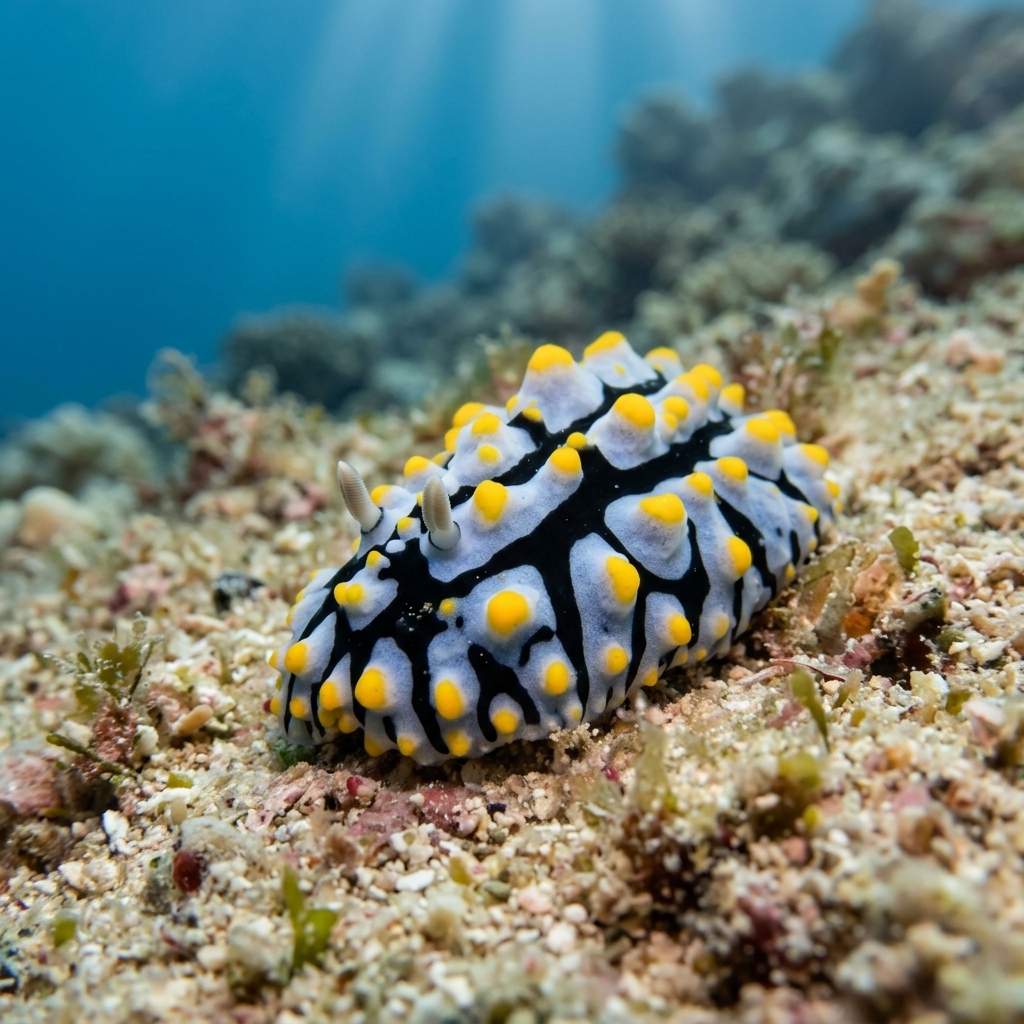
Reef neighbours a diver could mistake it for. Use the identification notes above to tell them apart.
Most reliably logged in the Philippines, especially around Luzon, with strong numbers also coming out of Bali in Indonesia. Smaller but consistent sightings come from Central Japan, Sulawesi in Indonesia, Dili in Timor-Leste, and Longdong in Taiwan, making it a wide but thinly-spread Indo-Pacific find.
Mapping where White-spotted Thuridilla is logged…
It's most commonly logged in the Philippines, particularly Luzon, and in Bali, Indonesia. Smaller populations turn up in Central Japan, Sulawesi, Timor-Leste, and Taiwan.
There's no strong season in the data. It's comfortable across a 25.4 to 31.4 C range, so it's seen year-round on the tropical and subtropical reefs where it lives.
Look for a small, slender slug with a dark body covered in white spots and raised wing-like flaps along its back. It's usually found crawling slowly over rubble or algae rather than swimming.
Exact size data isn't available, but like most members of its family it stays small, likely just a few centimetres, and is easy to overlook without a close look at the reef floor.
It belongs to a slug family known for kleptoplasty, where they retain chloroplasts from the algae they eat and may use them to photosynthesise for a period afterwards.
Site and sighting data is aggregated from diver logs, iNaturalist and GBIF. For taxonomy and conservation status:
Light-spotted Aegires
3,168 sites