Elysia marginata
Look for this lettuce-like sea slug on reefs in Visayas and Luzon, Philippines, in warm water from 23.6 to 29.7 C, year-round.
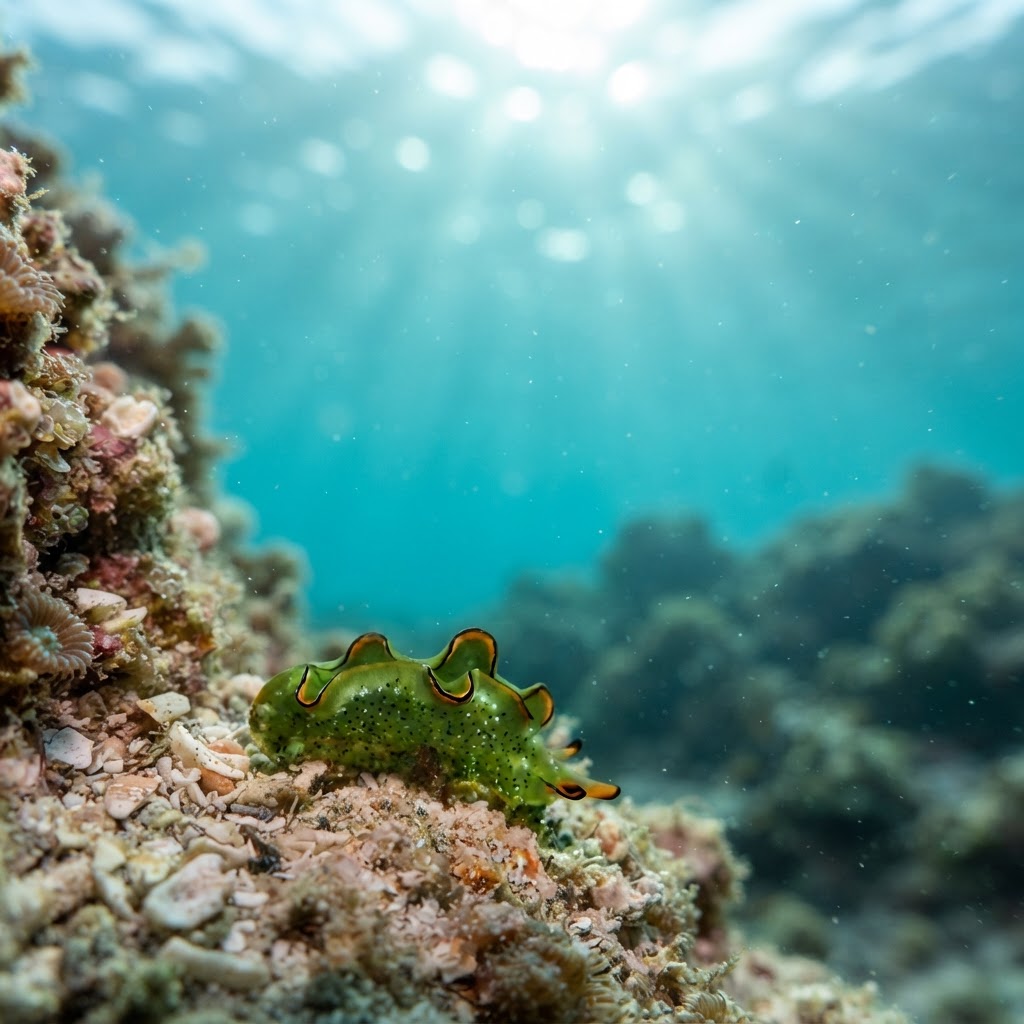
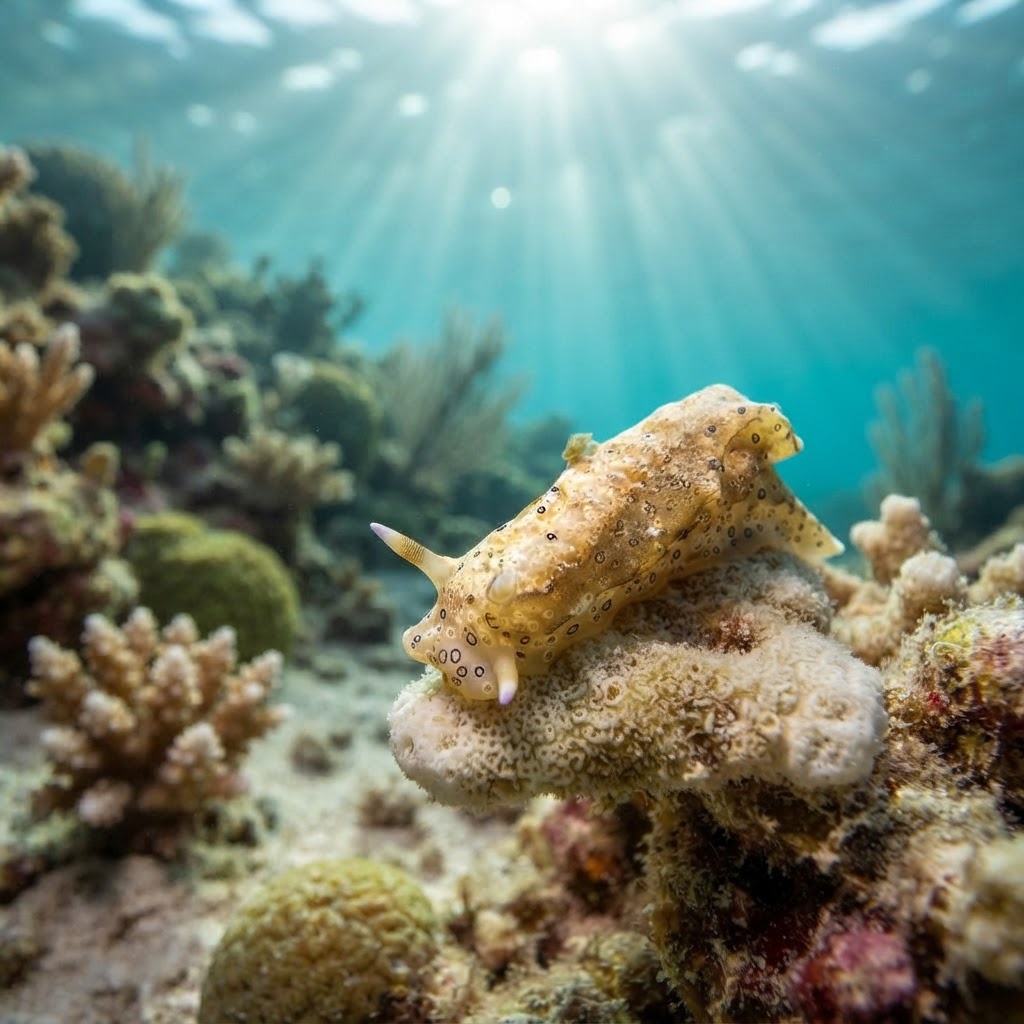
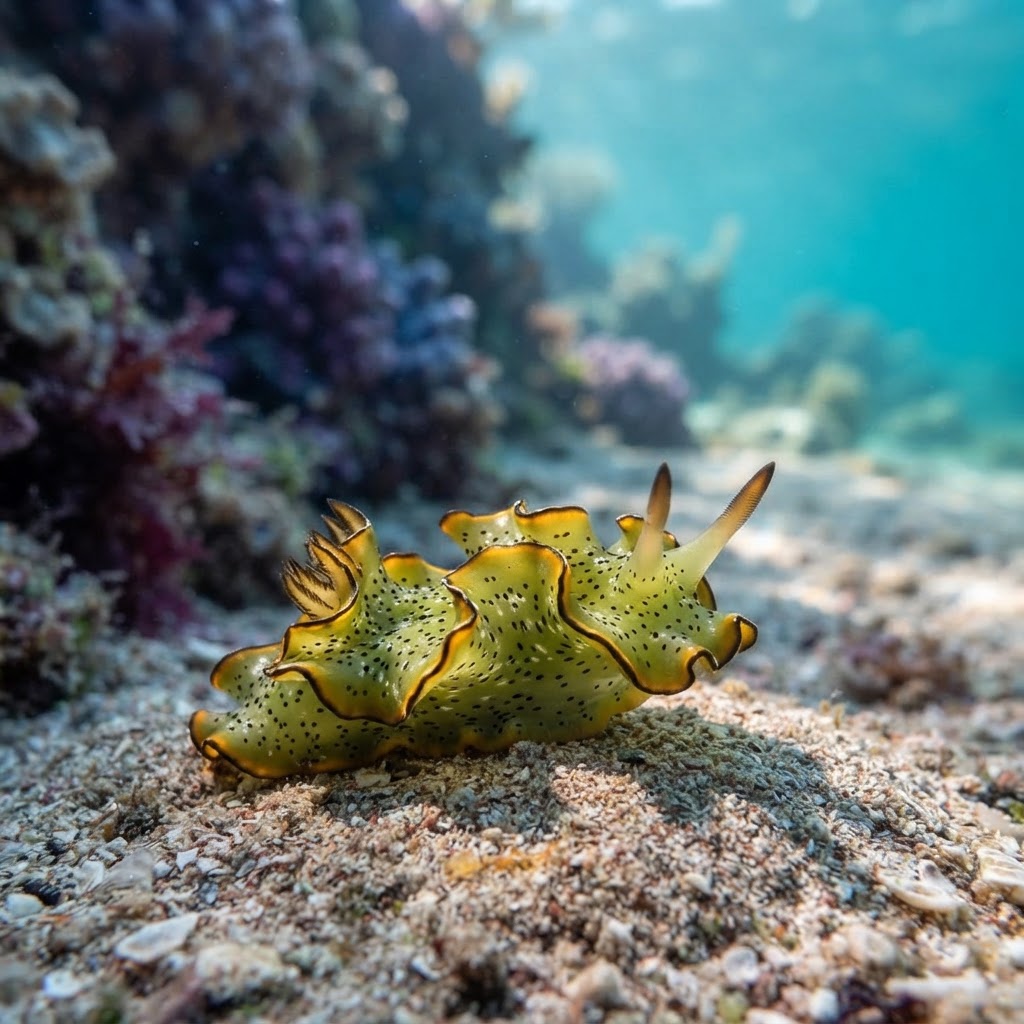
Recognisable by its ruffled, leaf-like side flaps (parapodia) that fold up over the body like a taco shell, usually marked with alternating pale and dark bands running along the edges. Adults are small, soft-bodied, and move slowly across rubble or algae mats, often blending in until the banding catches the light. There's no reported difference between juveniles and adults in the data, so size is your main scale cue rather than pattern change.
Divers usually spot it parked on rubble, algae-covered rock, or sponge patches, grazing slowly and paying no attention to torches or cameras hovering close by. It's a benthic (bottom-dwelling) grazer, so most sightings happen on slow macro-focused dives rather than mid-water cruising, and it rarely moves far during an encounter. Most logs describe it as uncommon rather than a guaranteed find, so it rewards divers who take time scanning the substrate.
Like other sap-sucking slugs in its family, it feeds on algae and can retain the algae's chloroplasts in its own tissue, effectively running on a bit of borrowed photosynthesis between meals.
No clear seasonal pattern shows up in the sightings, and with a comfortable range of 23.6 to 29.7 C it turns up on tropical reefs across the Philippines, Indonesia, and Malaysia year-round.
Reef neighbours a diver could mistake it for. Use the identification notes above to tell them apart.
Most reliably logged in the Philippines, especially across Visayas and Luzon, with strong secondary populations in Bali, Indonesia and along Malaysia's Peninsular East Coast. Divers also report it consistently in Goa, India, and around Longdong and Kenting in Taiwan, with smaller but steady numbers in Tanzania's Mafia Island and sites in Australia and Singapore.
Mapping where Tri-banded Taco Slug is logged…
The Philippines is the strongest bet, particularly Visayas and Luzon, with good numbers also logged in Bali (Indonesia), Malaysia's east coast, Goa in India, and Taiwan's Longdong and Kenting sites.
There's no detected season in the sightings, and it tolerates warm tropical water from roughly 23.6 to 29.7 C, so it's a fair year-round find on reefs within its range.
Look for a small, soft-bodied slug with frilly side flaps folded up like a taco shell, banded in alternating light and dark tones along the edges. It moves slowly over rubble or algae and rarely reacts to divers.
No, it poses no threat to divers and can be observed and photographed up close without any risk.
It's part of a slug family known for pinching chloroplasts from the algae it eats and keeping them alive in its own tissue for a while, letting it draw a bit of extra energy from sunlight.
Site and sighting data is aggregated from diver logs, iNaturalist and GBIF. For taxonomy and conservation status:
Light-spotted Aegires
3,168 sites