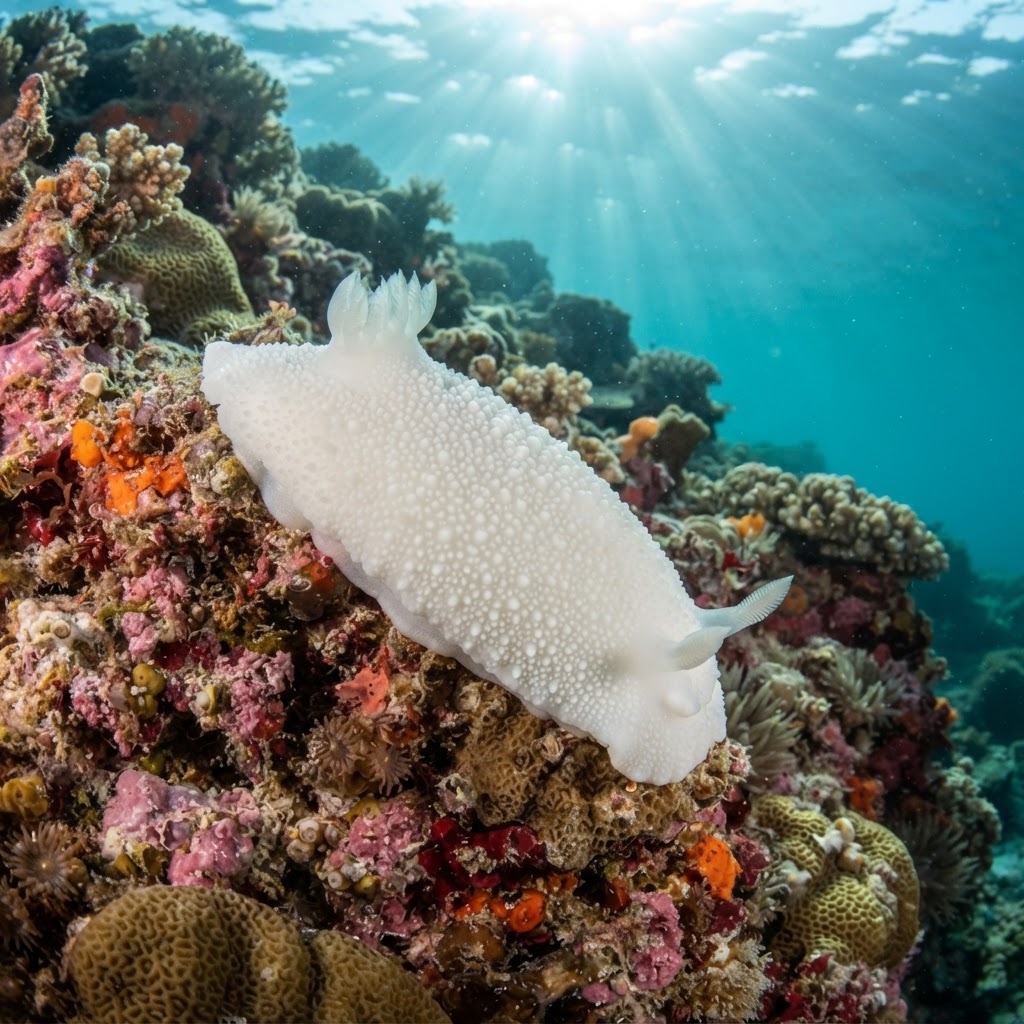
Doris odhneri
Cold-water nudibranch found on cool British Columbia dives around 8.5 to 14.5C, logged uncommonly year-round on Pacific coast reefs.
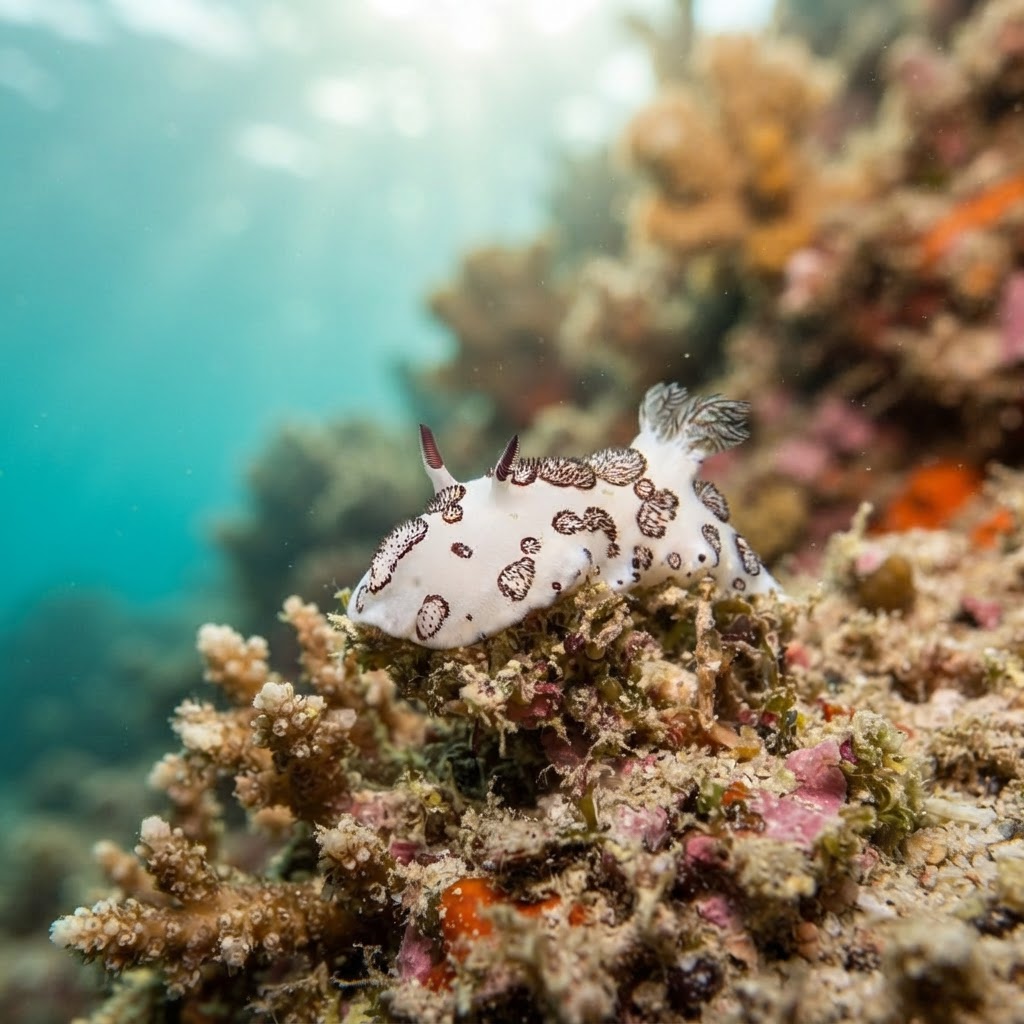
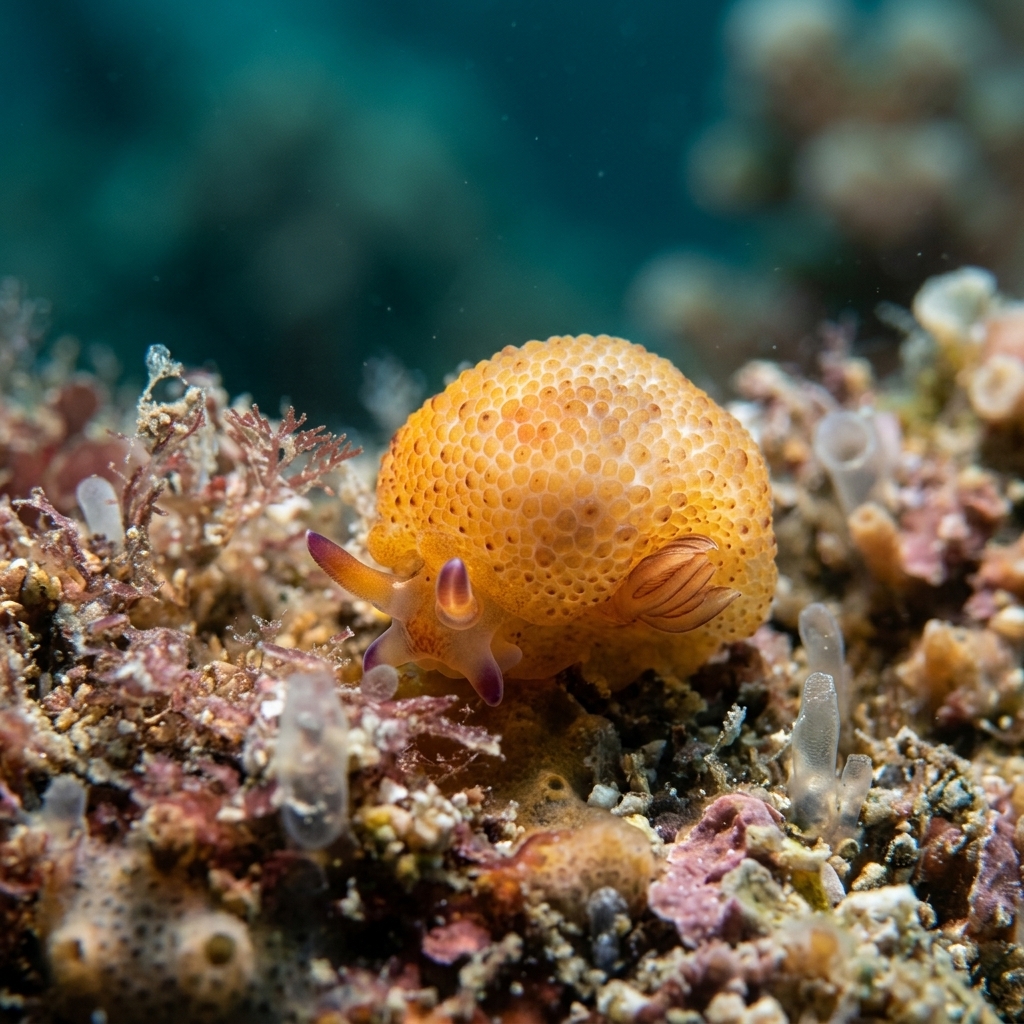
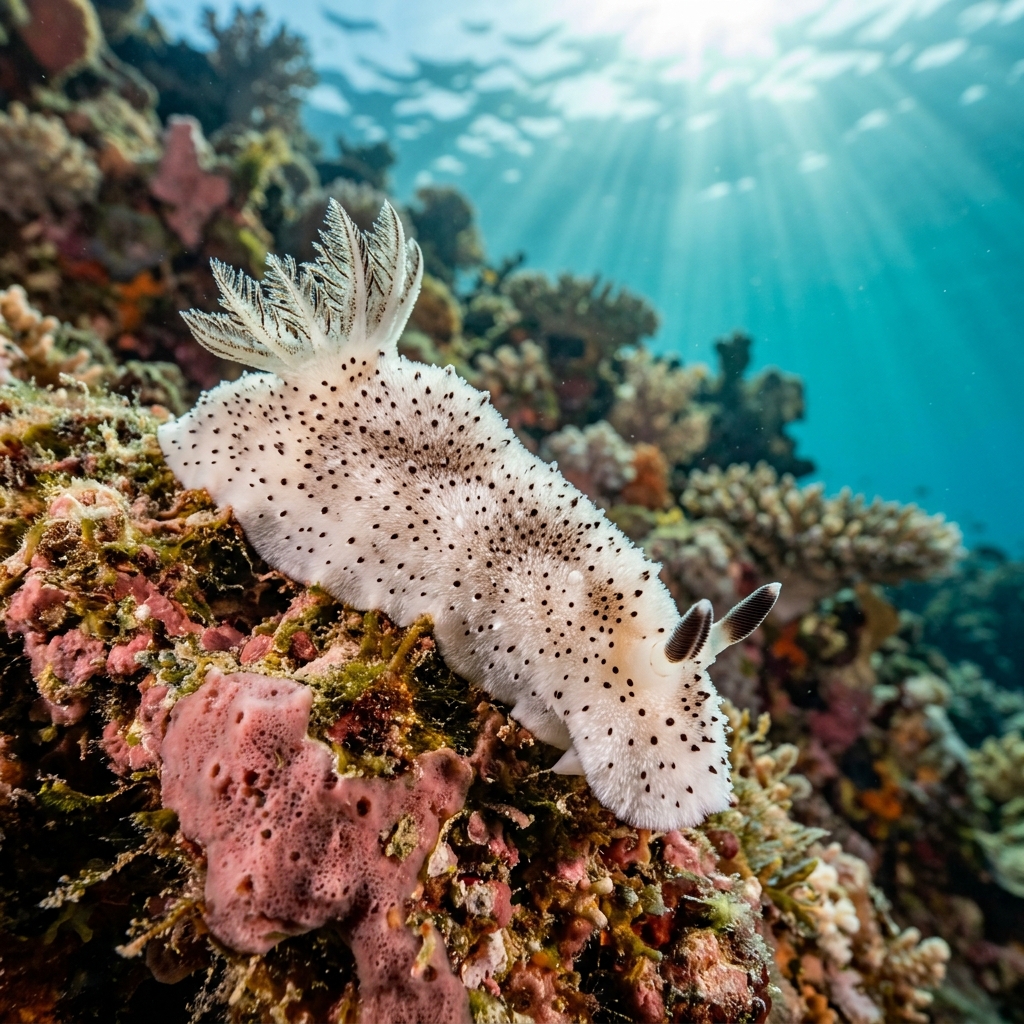
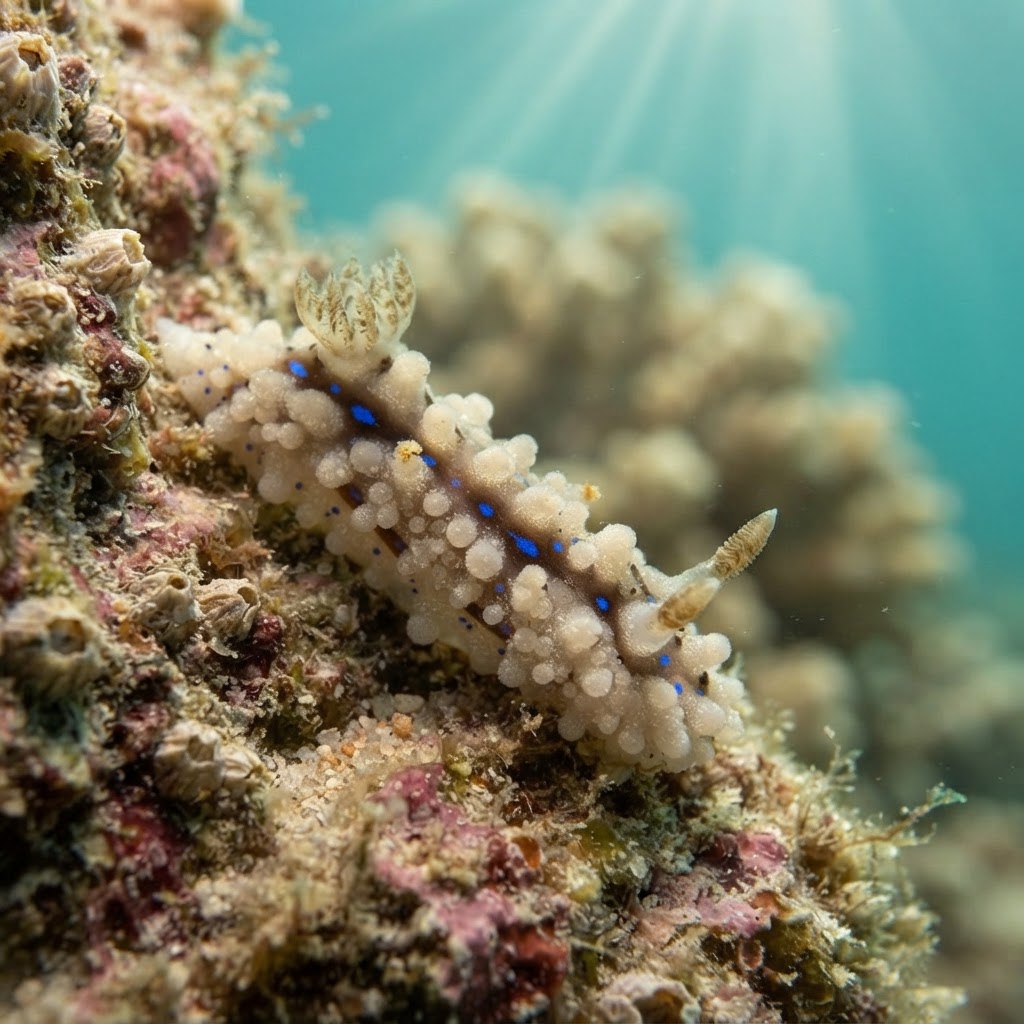
Look for a stocky, pale white to cream body up to 14 cm long, covered in small rounded bumps (tubercles) that give it a rough, velvety texture rather than a smooth slug-like surface. A tuft of feathery gills sits toward the rear on top of the body, usually the same pale colour as the rest of it, which keeps this species looking almost ghostly against dark rock or gravel. There is no bold contrasting stripe or spot pattern here, so its plainness combined with the bumpy skin is itself the tell.
Divers find this nudibranch parked on rocky substrate, moving at the unhurried pace typical of dorid nudibranchs as it grazes over the reef surface. It shows no reaction to divers beyond ignoring them entirely, making it an easy subject for a close macro shot once you spot one against the rock. Expect single, scattered individuals rather than groups, since it's logged as uncommon even at the sites where it's known to occur.
Like other dorid nudibranchs, it almost certainly feeds on sponges, using that diet to help produce the chemical defences that keep predators from bothering a soft-bodied animal with no shell.
Sightings don't show a clear seasonal pattern, so treat it as a year-round find on the sites where it turns up. Its comfort range of roughly 8.5 to 14.5C matches the cold water typical of British Columbia and Pacific Northwest diving through most of the year.
Reef neighbours a diver could mistake it for. Use the identification notes above to tell them apart.
This is a cold-water Pacific species, most reliably logged along British Columbia, Canada, with additional sightings in the Pacific Northwest and California in the United States. Divers doing temperate reef and rocky wall dives on the North American west coast have the best shot at finding one.
Mapping where White Night Doris is logged…
British Columbia, Canada, is the strongest area for this species, with further sightings in the Pacific Northwest and California in the United States.
There's no strong season in the sighting data, so it's considered a year-round find in the cold waters where it lives, generally between 8.5 and 14.5C.
Look for a pale white to cream, bumpy-skinned body up to about 14 cm long with a plain, unpatterned appearance and a tuft of pale gills near the rear. Its rough tubercled texture separates it from smoother, brightly patterned nudibranchs.
They reach around 14 cm in length, a solid size for a nudibranch and easy to spot once you know its pale, bumpy look.
No, they pose no danger to divers. Like most nudibranchs, any chemical defences they carry are aimed at predators, not people.
Site and sighting data is aggregated from diver logs, iNaturalist and GBIF. For taxonomy and conservation status:
Nudibranch
3,168 sites