Glossodoris buko
Uncommon Philippine nudibranch with a white mantle edged in colour, best searched for on Luzon reefs at 26-32C year-round.
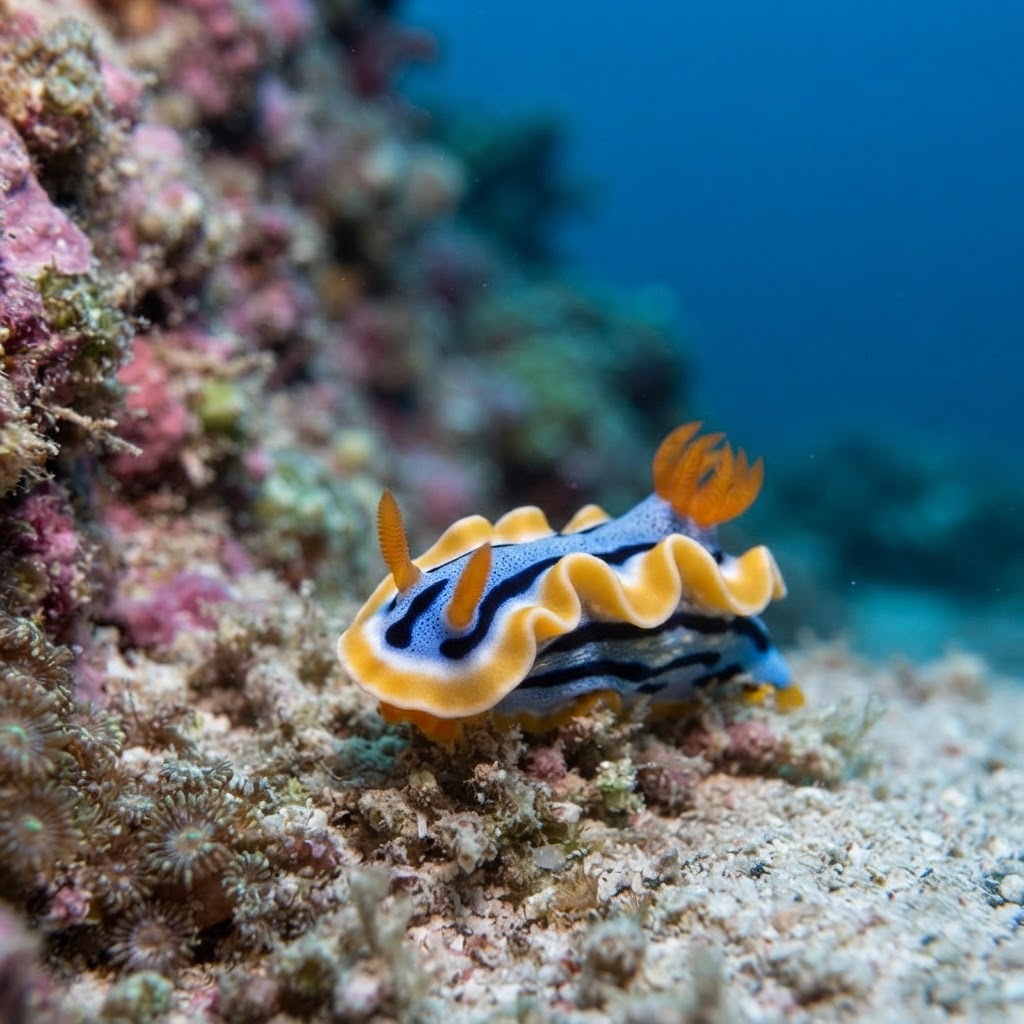
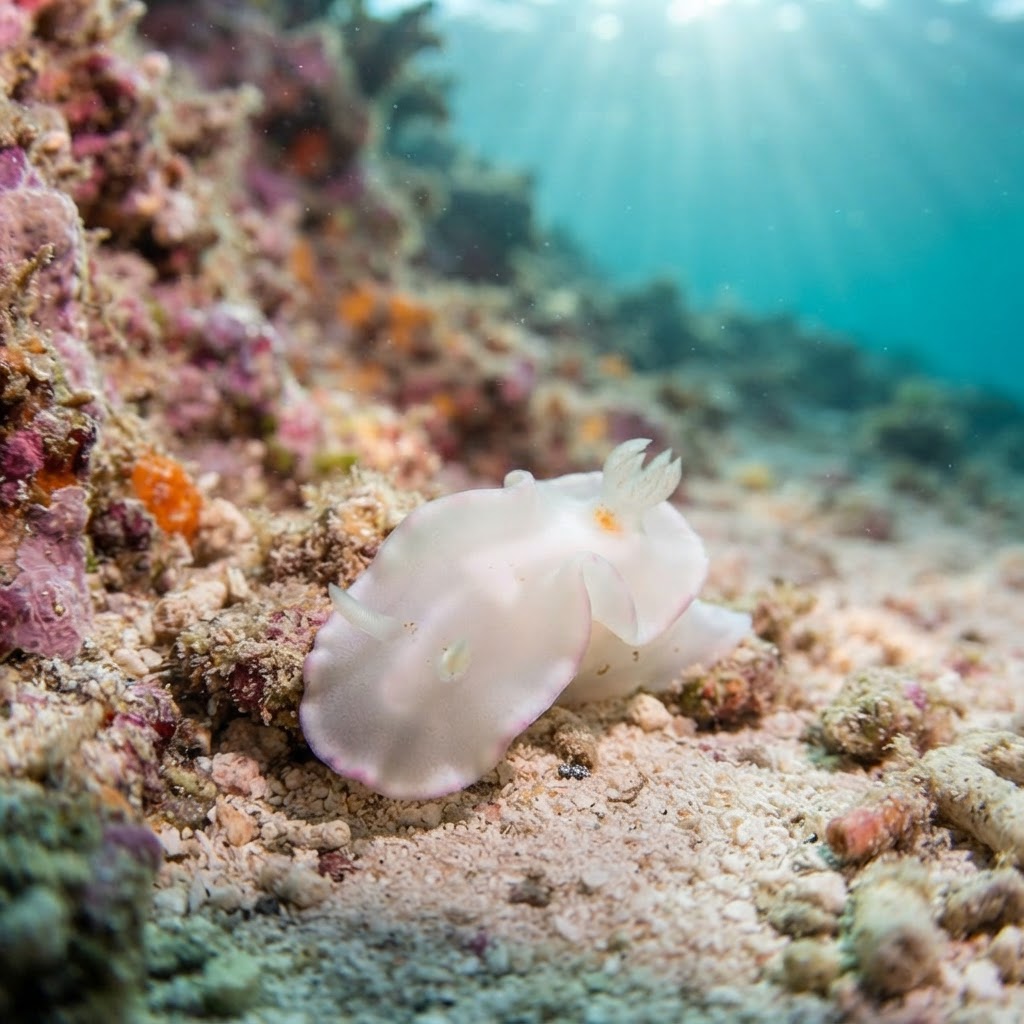
A small nudibranch with a smooth white mantle bordered by a thin coloured line running the full edge, giving it a clean, two-tone look against reef rubble. The body is elongate and low-slung like other Glossodoris species, with a pair of rhinophores (sensory horns) at the front and a feathery gill cluster near the tail. Its plain white centre makes it stand out from the more heavily patterned Chromodoris species it shares reef space with.
Found grazing slowly across rubble and low reef structure, where it feeds on sponges much like other Glossodoris nudibranchs. It pays no attention to divers and won't react to a light or a close look, so a slow, patient scan of the substrate is the best way to spot one given how uncommon it is at any single site.
Like other chromodorid nudibranchs, its bright edging and lack of a shell are a visual warning to predators, its diet of sponges makes it distasteful rather than defenceless.
Sighting records don't show a concentrated season, and with a water-temperature niche of 25.6 to 31.6C it's likely present on these reefs year-round rather than tied to a particular month.
Reef neighbours a diver could mistake it for. Use the identification notes above to tell them apart.
Most reliably logged in the Philippines, especially across Luzon with additional sightings in the Visayas, making it the strongest bet for this species. Smaller numbers turn up in Sulawesi in Indonesia, plus single logged sites in Okinawa, Japan, and Nha Trang, Vietnam.
Mapping where White Mantle Glossodoris is logged…
Luzon in the Philippines is the most consistent region, with further sightings across the Visayas, Sulawesi in Indonesia, Okinawa in Japan, and Nha Trang in Vietnam.
There's no clear seasonal pattern in sightings, and its comfort range of roughly 26 to 32C means it's likely on these reefs year-round rather than during a specific month.
Look for a smooth white mantle edged with a thin coloured border, a low elongate body, rhinophores at the front, and a feathery gill tuft near the tail. The plain white centre is the easiest tell against more heavily patterned reef nudibranchs.
Exact size data isn't confirmed for this species, but like most Glossodoris nudibranchs it's a small reef animal typically measured in centimetres rather than something you'd spot from a distance.
No, it poses no risk to divers. It has no means of stinging or biting and simply grazes on sponges across the reef surface.
Site and sighting data is aggregated from diver logs, iNaturalist and GBIF. For taxonomy and conservation status:
Blue Dragon
3,163 sites