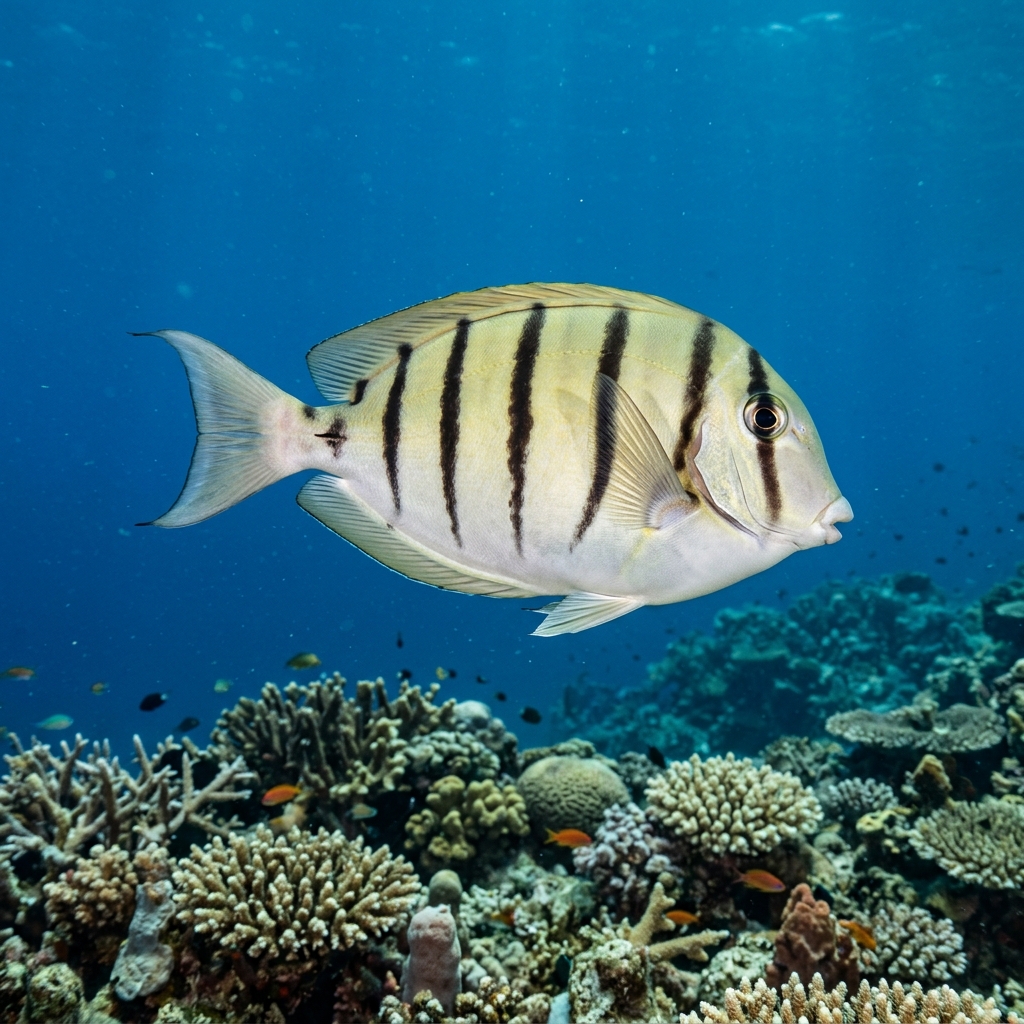
Acanthurus japonicus
That black-and-white masked tang on Philippine and Indonesian reefs: find it in Sulawesi and the Visayas year-round in warm 25-29 C water.
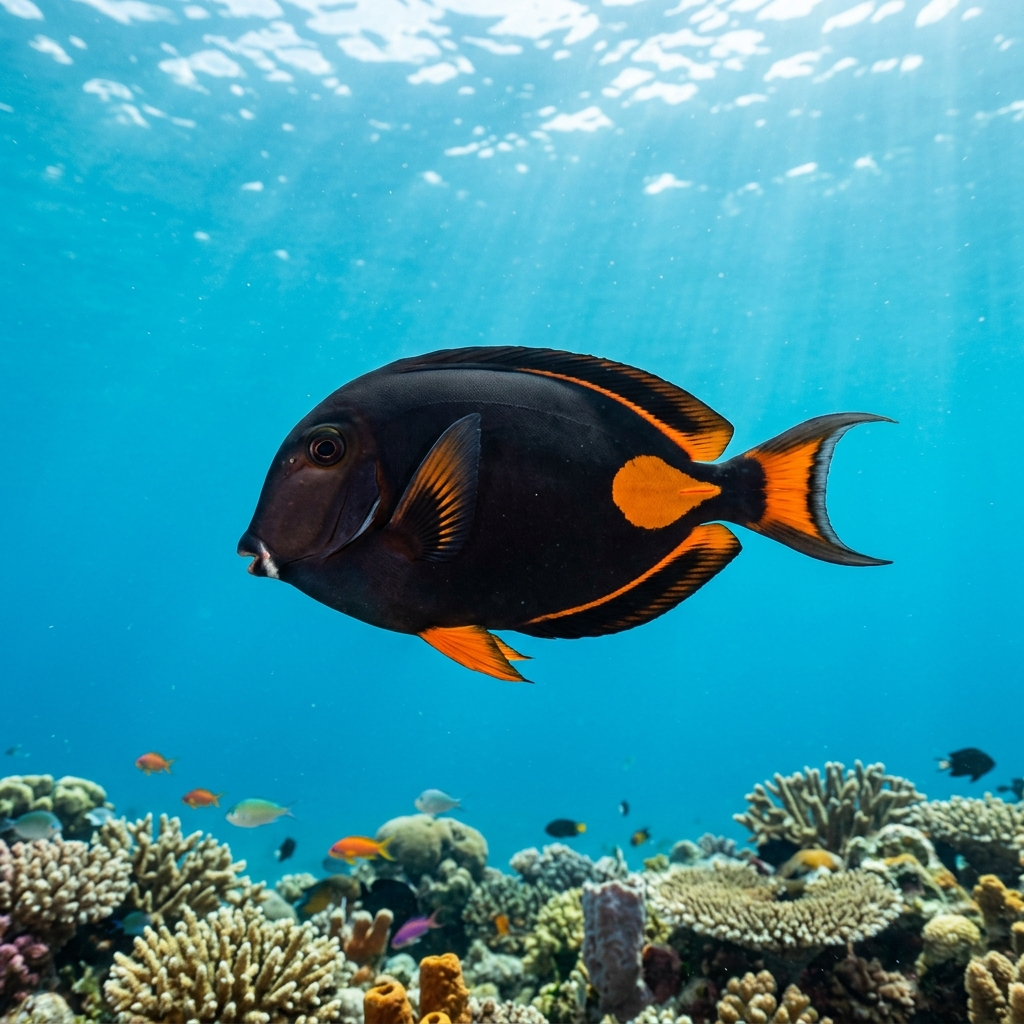
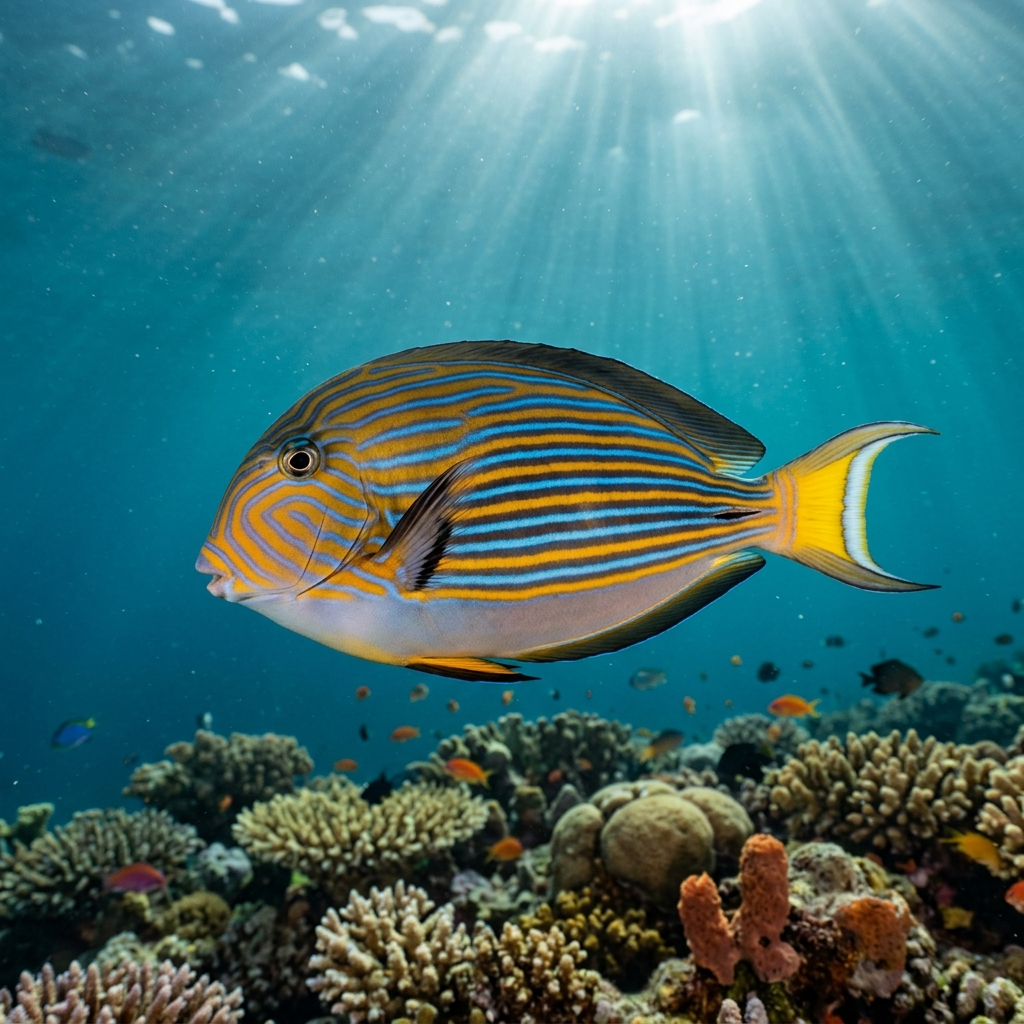
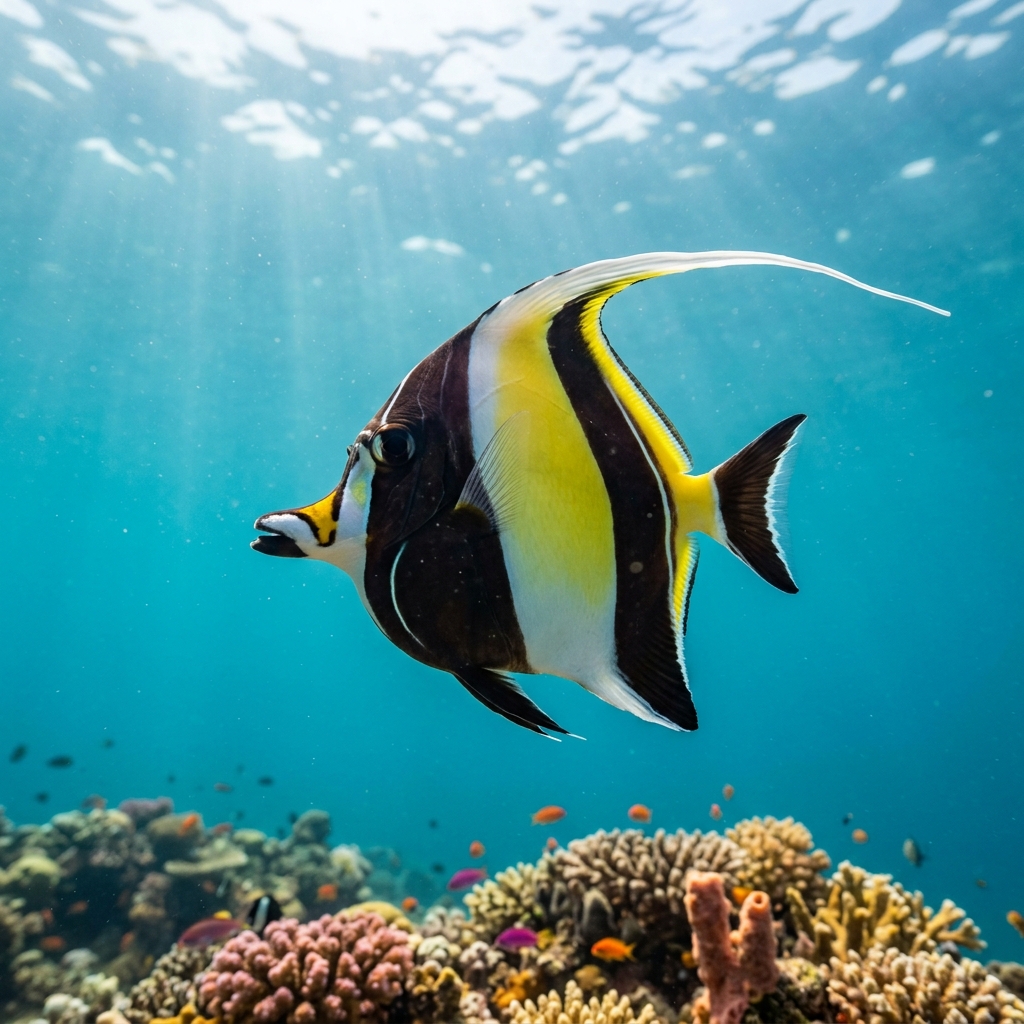
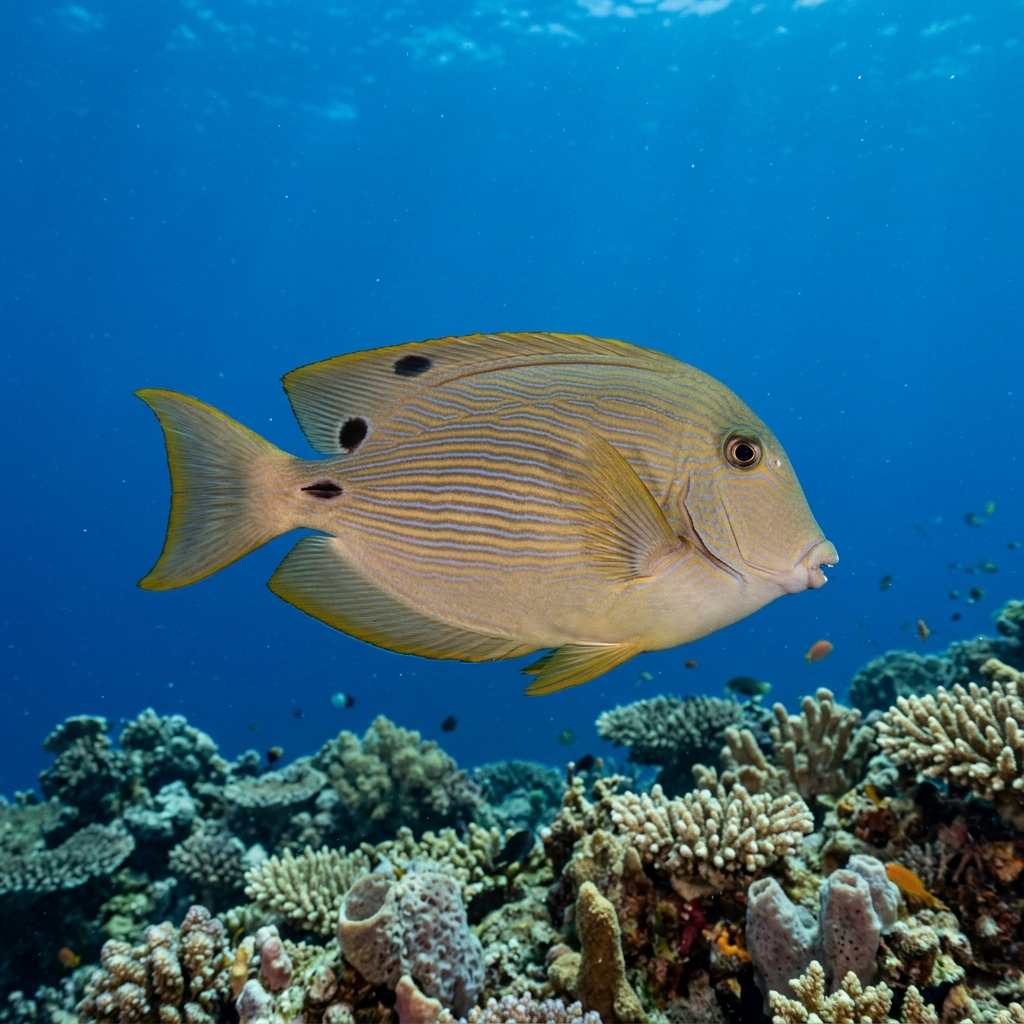
Small oval-bodied tang around 16 cm, easy to pick out thanks to the bright white patch covering the front half of its face, sharply cut off just behind the eye. The rest of the body is charcoal to black, with a yellow patch at the base of the tail and a fine white line running along the tail fin edge. Like other surgeonfish it carries a scalpel-like spine at the base of the tail, usually folded flat and invisible unless it's stressed or displaying.
Usually seen picking algae off rock and rubble on shallow reef flats and slopes, often solo or in loose small groups rather than tight schools. It keeps a cautious distance from divers, drifting off into cover rather than approaching, and is most active during daylight hours when grazing pressure on algae is highest. Logged as uncommon at most sites where it turns up, with a smaller number of locations reporting it as a common, consistent sighting.
That tail spine is a real defensive weapon, it locks upright when the fish feels threatened and can slice a predator (or a careless hand) if brushed the wrong way, which is where the surgeonfish family gets its name.
Comfortable in water between roughly 25 and 29.5 C, which covers these reefs all year, so there's no strong seasonal pattern in the sighting data. Turn up any month and check reef edges and rubble slopes in the 1-20 m range.
Reef neighbours a diver could mistake it for. Use the identification notes above to tell them apart.
Most reliably found on reefs across the Philippines and Indonesia, with strong numbers in Sulawesi, the Visayas, Luzon, Palawan and Mindanao. Also a regular sighting in Sabah (Malaysia), around Pattaya in Thailand, and on reefs in Japan's Okinawa and Ryukyu Islands, plus Taiwan and Vietnam.
Mapping where White-faced Surgeonfish is logged…
Best chances are in the Philippines and Indonesia, especially Sulawesi, the Visayas, Luzon and Palawan. It also turns up reliably in Sabah, Malaysia, around Pattaya in Thailand, and on reefs in Okinawa, Japan.
There's no strong season in the data. It sits comfortably in 25 to 29.5 C water, which describes these reefs year-round, so any month works.
Look for a small dark tang with a bright white patch covering the front of its face, cut off sharply behind the eye, plus a yellow patch near the tail base. Body shape is the typical flattened oval of a surgeonfish, around 16 cm long.
They average around 16 cm, a small, compact reef fish that's easy to overlook against busier coral backgrounds.
No, they're not considered dangerous. They carry a sharp defensive spine at the tail base like all surgeonfish, but it's only a risk if you handle or corner the fish, not from normal diving.
Site and sighting data is aggregated from diver logs, iNaturalist and GBIF. For taxonomy and conservation status:
Striped Surgeonfish
3,289 sites