Parma microlepis
Chunky grey-brown damselfish with a pale ear spot, most reliably logged around New South Wales reefs in water from 15 to 23C.
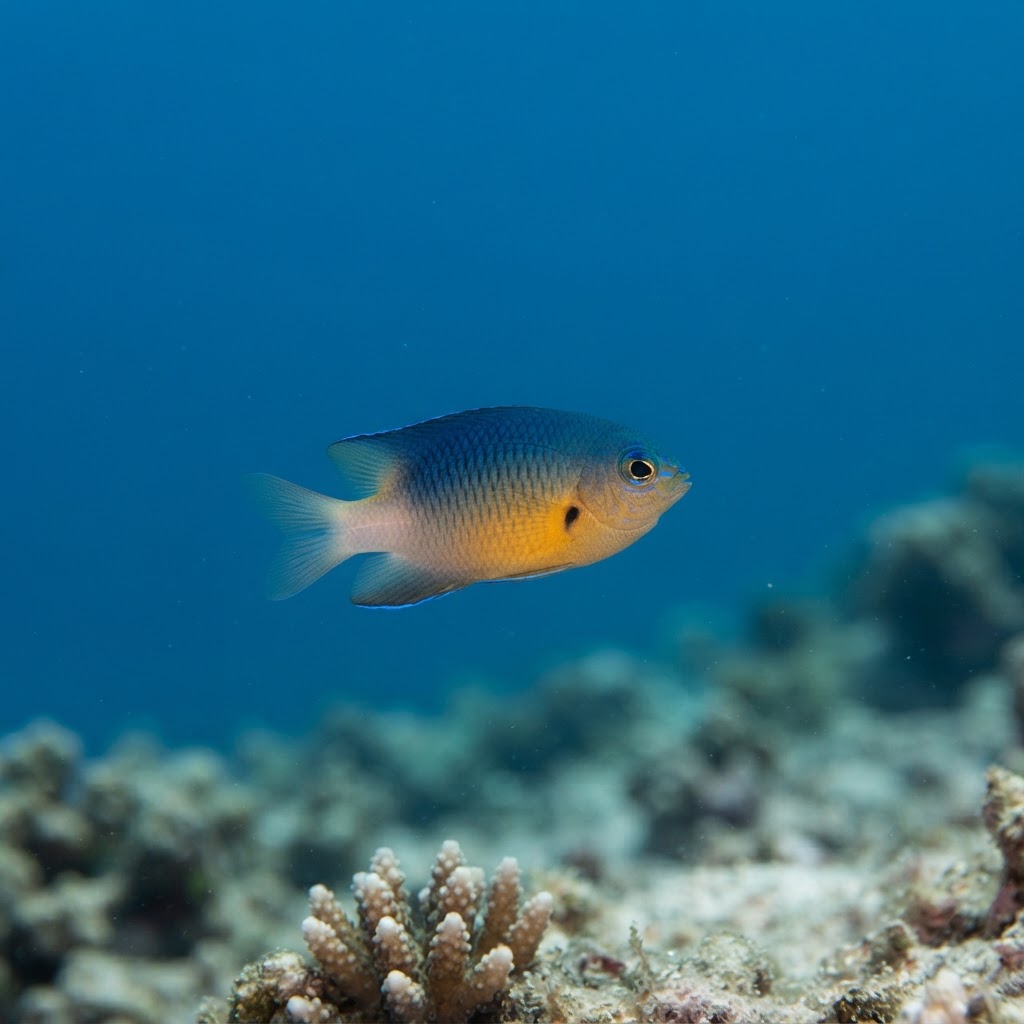
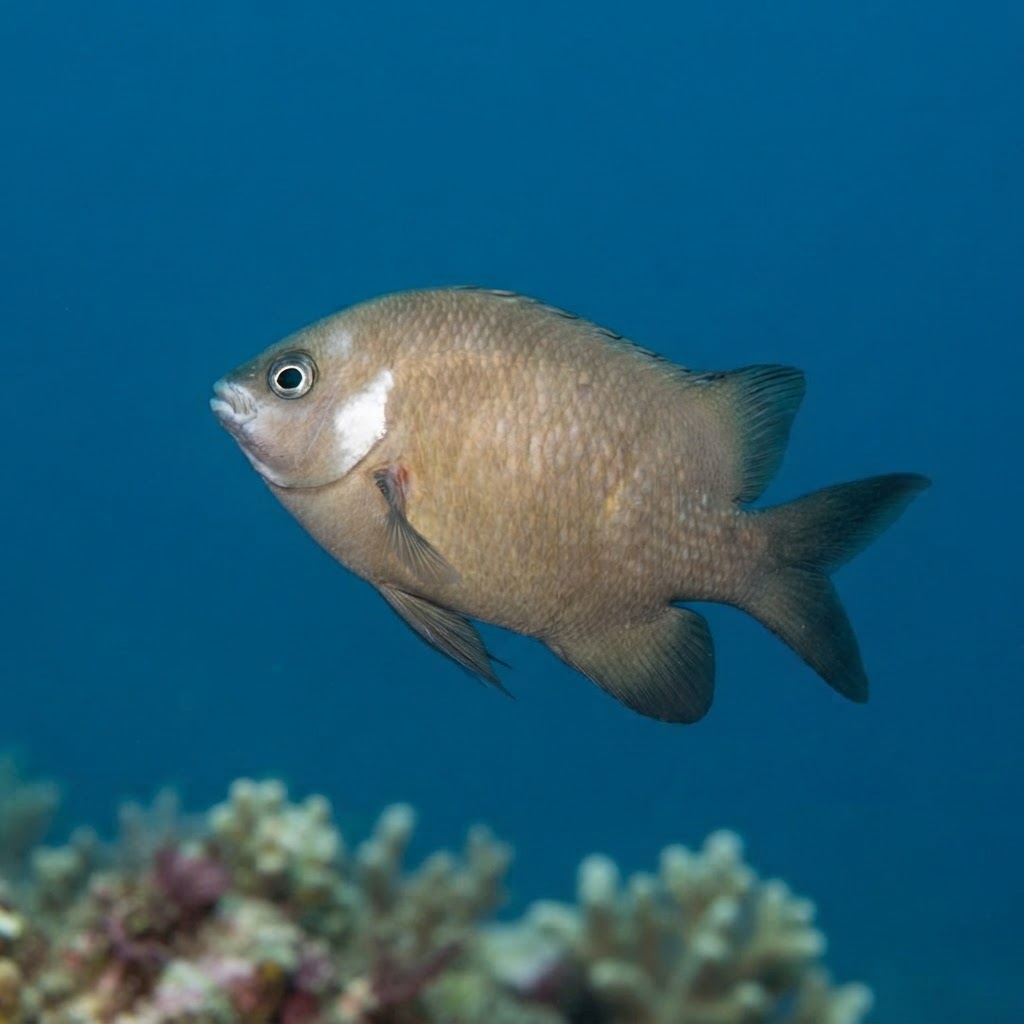
A stocky, oval damselfish around 9 cm, coloured grey-brown to dusky olive with a noticeably pale, whitish patch just behind the eye that gives it the name. The body is deep and slightly compressed, with a blunt head and a single continuous dorsal fin typical of damselfish. It lacks the bold stripes or bright orange tones of tropical reef damsels, so on temperate NSW reefs it reads as a plain, solid-bodied fish until you spot that ear mark.
Expect to find it holding a patch of rocky reef rather than roaming, often hovering just above its chosen territory and darting back to it if displaced. It is territorial around algal patches it tends and will approach or shadow divers with curiosity rather than fleeing, though most encounters are logged as uncommon rather than guaranteed. Look for it on exposed reef faces and boulder slopes rather than deep sand or rubble.
Like several damselfish, it cultivates and defends small patches of algae on the reef, effectively farming its own food supply and chasing off other grazers that wander in.
No clear seasonal pattern shows in the data, so treat it as a year-round resident rather than a seasonal visitor. Its observed range of roughly 15 to 23C spans the typical swing of NSW temperate waters across the year, which fits with divers logging it in every season.
Reef neighbours a diver could mistake it for. Use the identification notes above to tell them apart.
Almost every logged sighting comes from Australia, and within that overwhelmingly from New South Wales, where it is a reliable find on rocky reefs from Sydney down the coast. Tasmania holds a smaller but real population, so it is worth watching for there too, though sightings are far less frequent than in NSW.
Mapping where White-ear is logged…
New South Wales, Australia is by far the strongest location, with rocky reef sites logging it regularly. Tasmania also holds a smaller population worth checking on southern Australian dives.
There is no strong seasonal pattern in the sighting data, so it is present year-round on NSW and Tasmanian reefs. Its comfort range of roughly 15 to 23C covers the normal seasonal temperature swing in those waters.
Look for a stocky grey-brown damselfish around 9 cm with a pale patch behind the eye, the feature that gives it its name. It lacks bright stripes or orange tones, so the ear mark is the main giveaway against similar-shaped reef damsels.
They reach around 9 cm as adults, a fairly typical size for a damselfish, making them a modest but noticeable presence on rocky reef.
It tends and defends small algae patches on the reef almost like a garden, chasing off other fish that try to graze there. This territorial farming behaviour is common among damselfish but easy to observe once you spot a fish repeatedly returning to the same rock.
Site and sighting data is aggregated from diver logs, iNaturalist and GBIF. For taxonomy and conservation status:
Dascyllus
3,697 sites