Ardeadoris angustolutea
Look for this white-and-orange nudibranch on reef rubble in Hawaii or Taiwan's Longdong, year-round in warm 23-29C water.
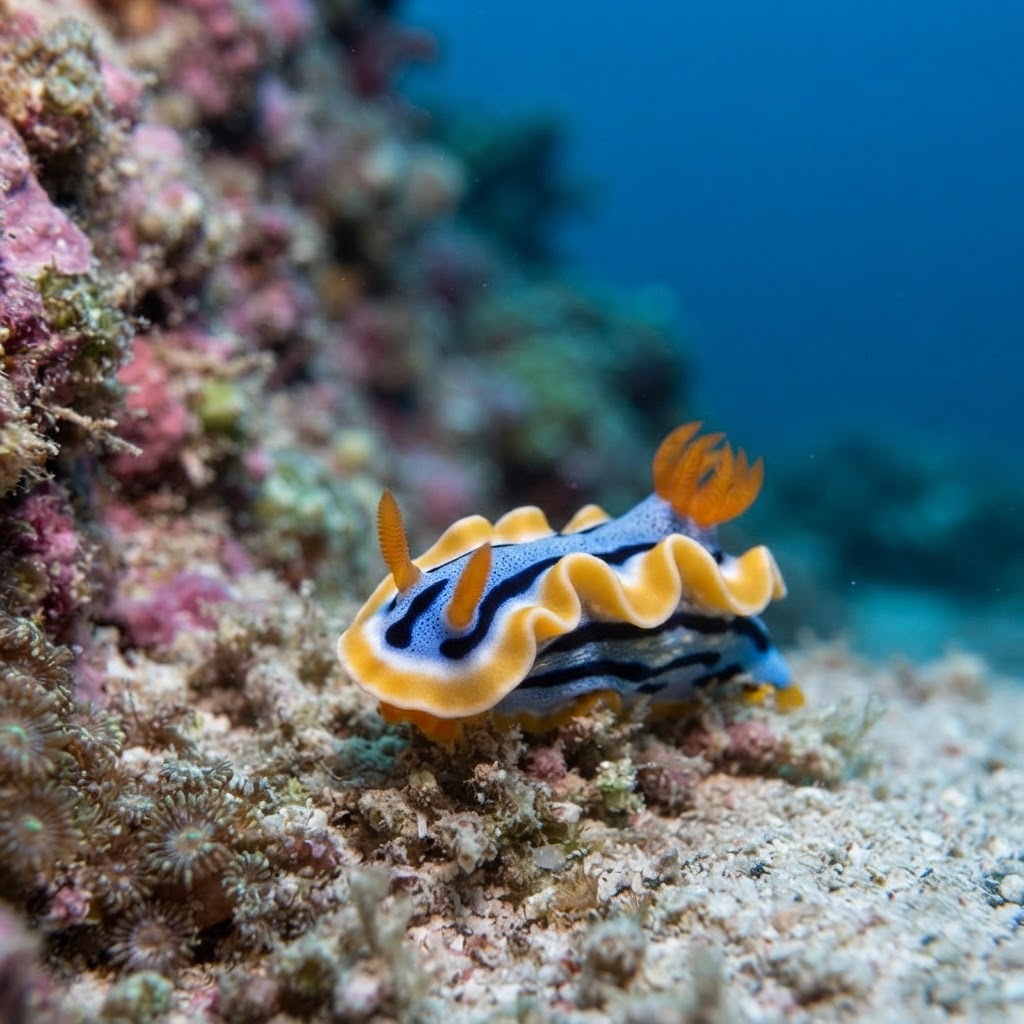
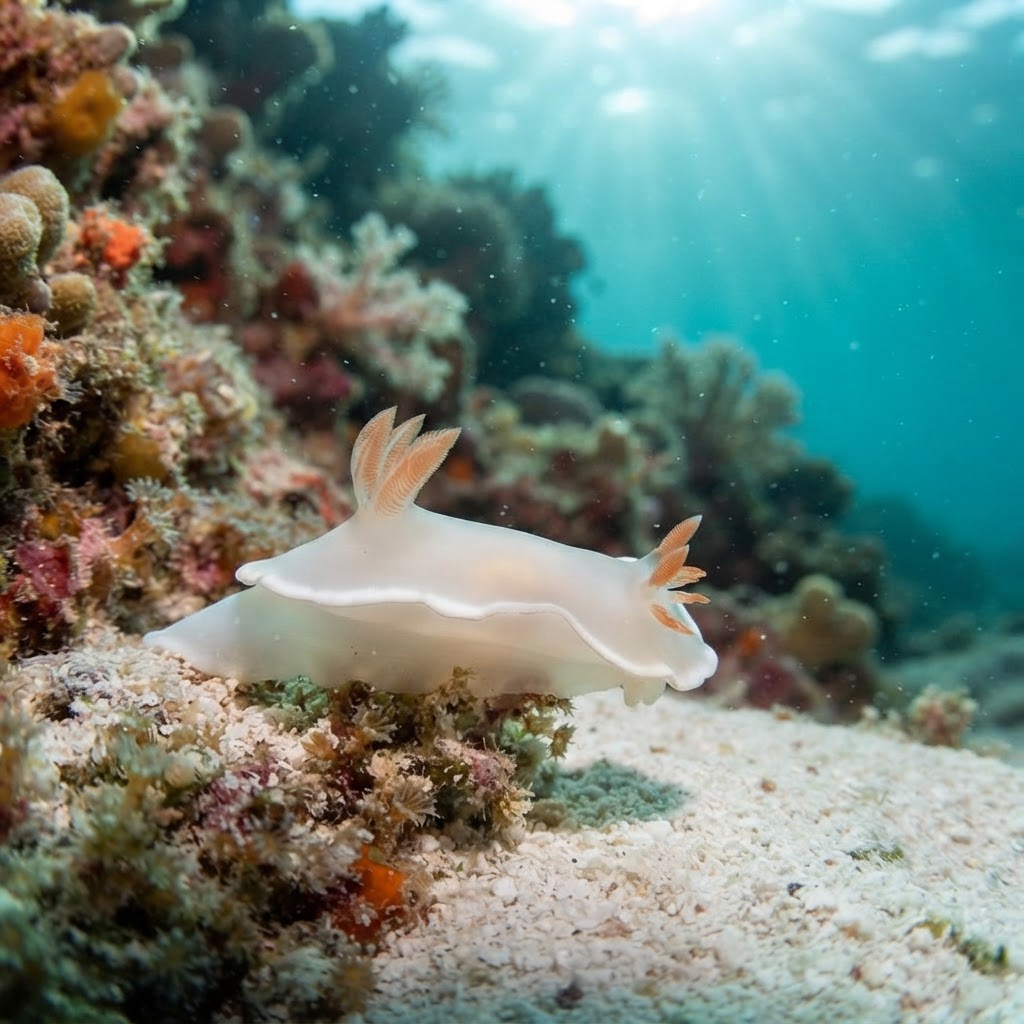
A small oval-bodied nudibranch with a pale, white to cream stripe running down the centre of the back, bordered by a rich orange or yellow mantle margin. The gills and rhinophores (the paired sensory horns on the head) at the rear typically show the same warm orange tone, giving a clean two-tone look against the reef. It moves slowly across hard bottom and rubble, so once you spot the white stripe it is hard to mistake for reef debris.
Found grazing slowly over rocky and rubble-strewn bottom, usually solo, using its rhinophores to track sponge scent along the reef surface. It pays no attention to divers and will not stop moving or hide when a torch or lens gets close, which makes it an easy macro subject once located. Most sightings are logged as uncommon finds rather than a guaranteed spot on any given dive, so it rewards divers who slow down and scan the substrate closely.
Like other chromodorid nudibranchs, its bright colouring is a warning rather than decoration: it feeds on sponges and can sequester their chemical defences into its own tissue, making it distasteful to predators.
No clear seasonal pattern shows up in the sightings, and its comfortable range of roughly 23 to 29C matches warm reef water year-round, so any month is worth a look.
Reef neighbours a diver could mistake it for. Use the identification notes above to tell them apart.
Most reliably logged in Hawaii, where it turns up across a broad spread of sites, with a second solid population at Longdong in Taiwan. Outside these two regions it has not been well documented, so Hawaiian reefs are the strongest bet for a planned search.
Mapping where White-centred Rainbow Dorid is logged…
Hawaii has the strongest and most consistent record of sightings, spread across many sites. Longdong in Taiwan is the other reliable region for finding one.
There is no detected season, it is logged across the year in water between roughly 23 and 29C, so timing your trip around season is not necessary.
Check for a small oval body with a white to cream stripe down the back and an orange or yellow mantle border. The rhinophores and gill cluster at the rear usually pick up the same orange tone, giving a neat contrast against the reef.
No, it poses no risk to divers. It has no sting or bite of concern and simply grazes the reef surface, ignoring anyone who stops to look.
It feeds on sponges and can store the sponge's own chemical defences in its skin, turning its bright colours into a real warning sign to predators rather than just camouflage-breaking decoration.
Site and sighting data is aggregated from diver logs, iNaturalist and GBIF. For taxonomy and conservation status:
Blue Dragon
3,163 sites