Orectolobus hutchinsi
Rare, camouflaged and easy to swim right past on Western Australia's reefs at 18-23C. Here's how to actually spot one.
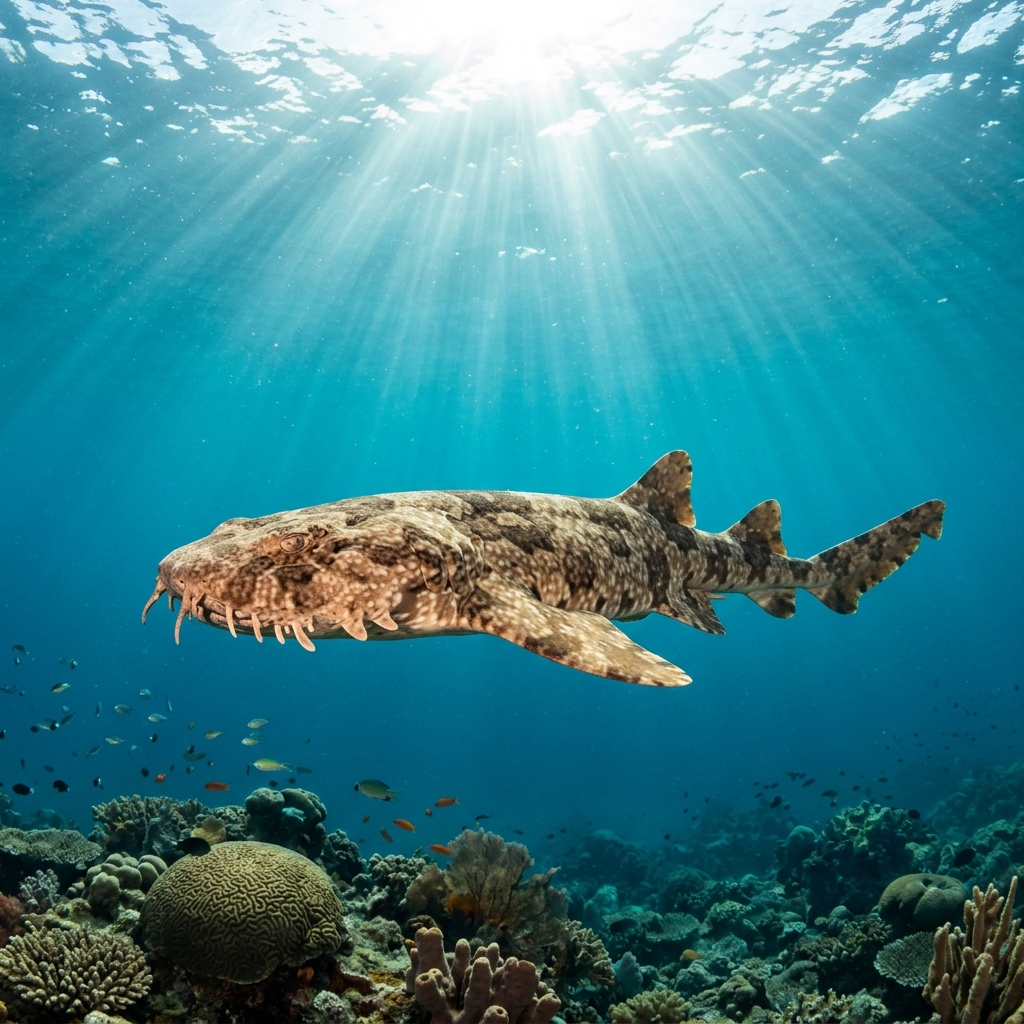
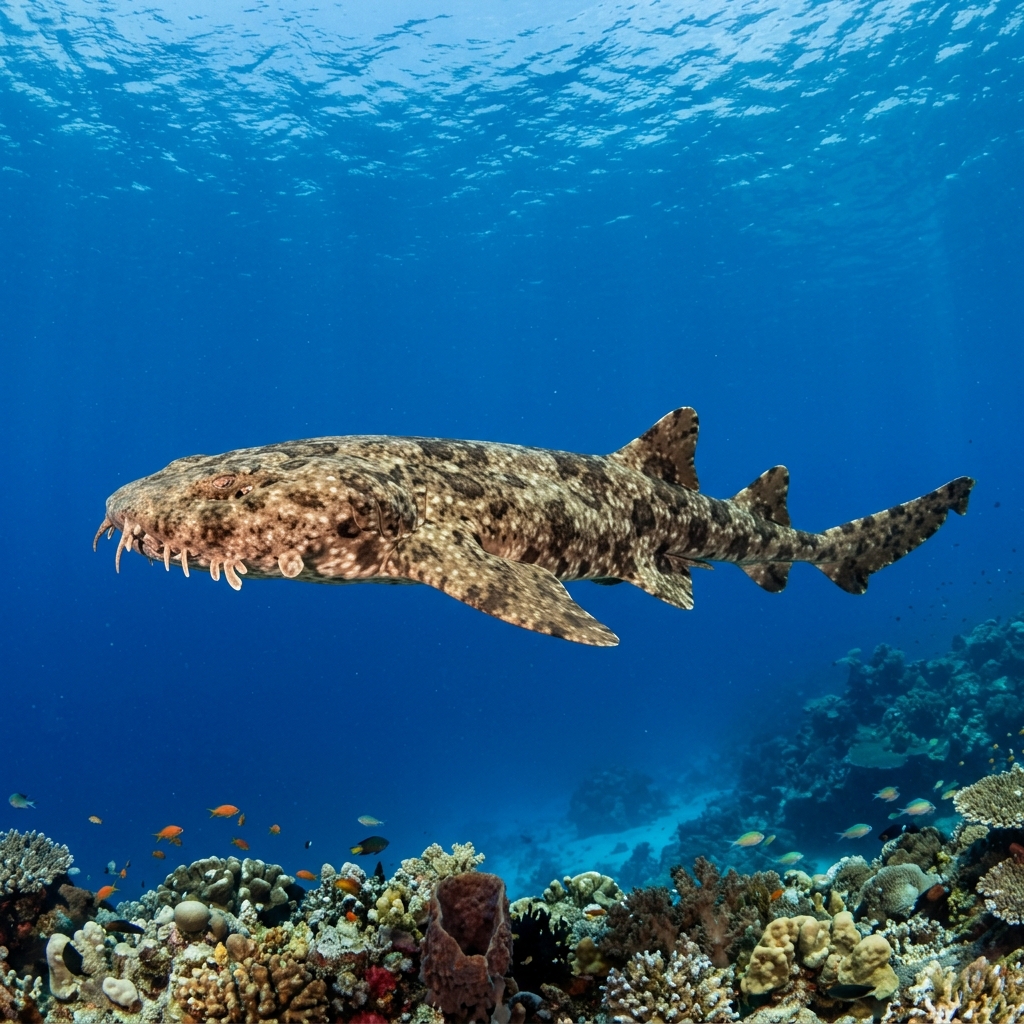
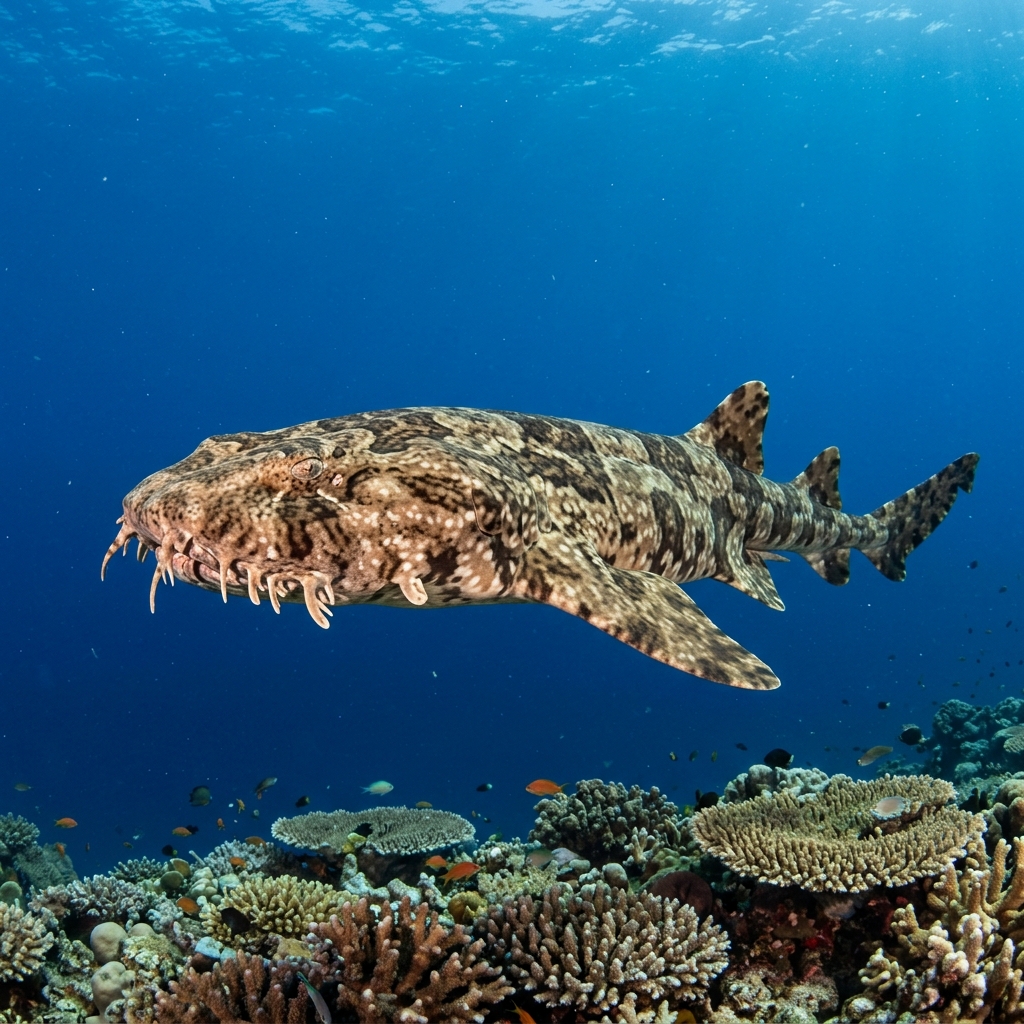
Flattened, mottled brown and tan body that breaks up against rock and reef, growing to just over a metre. Look for the fringe of skin flaps (dermal lobes) around the jaw that disguise its outline, and the fact that it lies motionless on the bottom rather than swimming in open water. Its blotchy carpet-like pattern is the main giveaway once you know to scan ledges and sand patches rather than midwater.
Spends most of its time flattened against rock ledges or wedged under overhangs, relying on camouflage rather than movement to stay hidden. Divers who log it describe it as staying put even when approached closely, which makes it a species you find by looking carefully into gaps rather than one that comes to you. Logged as rare to uncommon at the sites where it's been recorded, so patient reef-scanning pays off more than a quick swim-by.
Wobbegongs are ambush predators: that flattened, mottled body isn't just for hiding from divers, it lets them lie invisible on the bottom until a fish swims within striking range.
There isn't enough seasonal data to call a peak month, so treat it as a year-round possibility. Observed water temperatures of 18.3 to 23.3C suggest it tolerates the cooler end of Western Australia's reef conditions, so a winter dive shouldn't put you off looking.
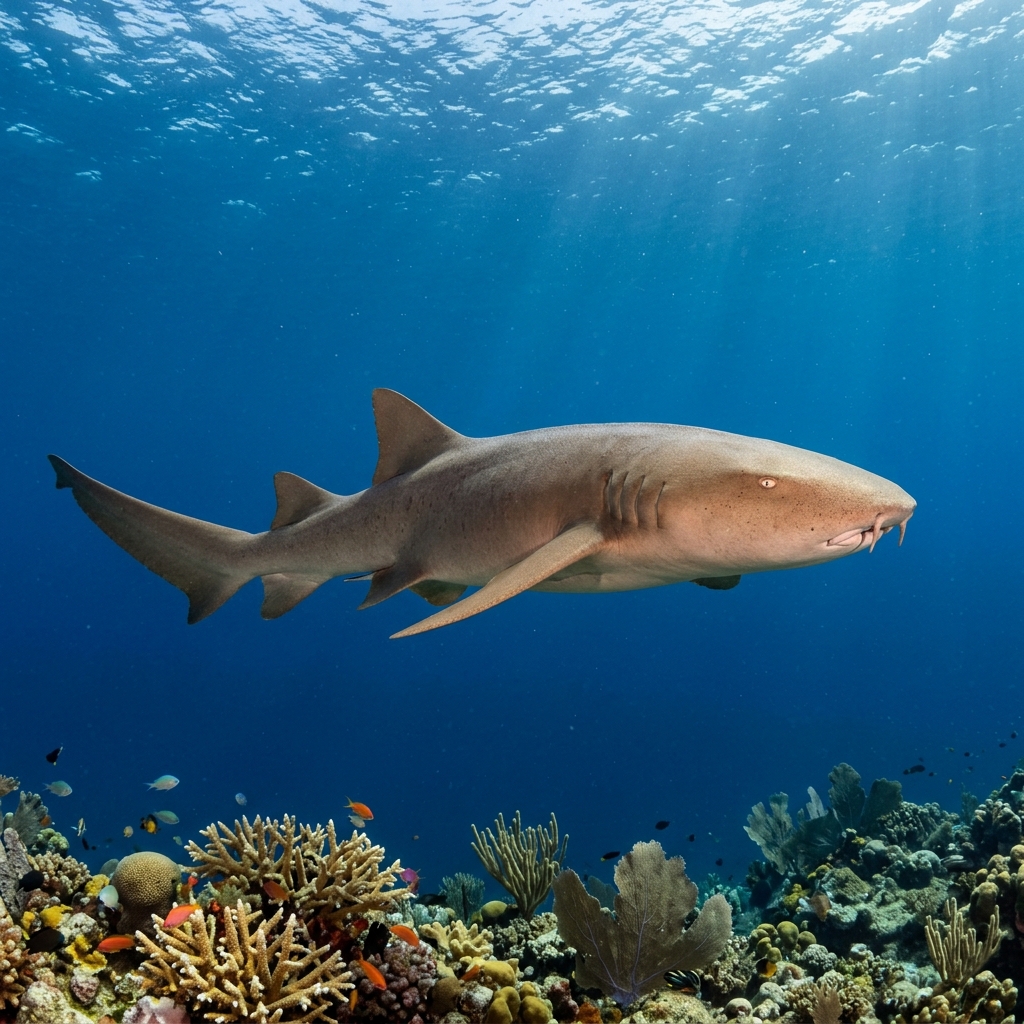
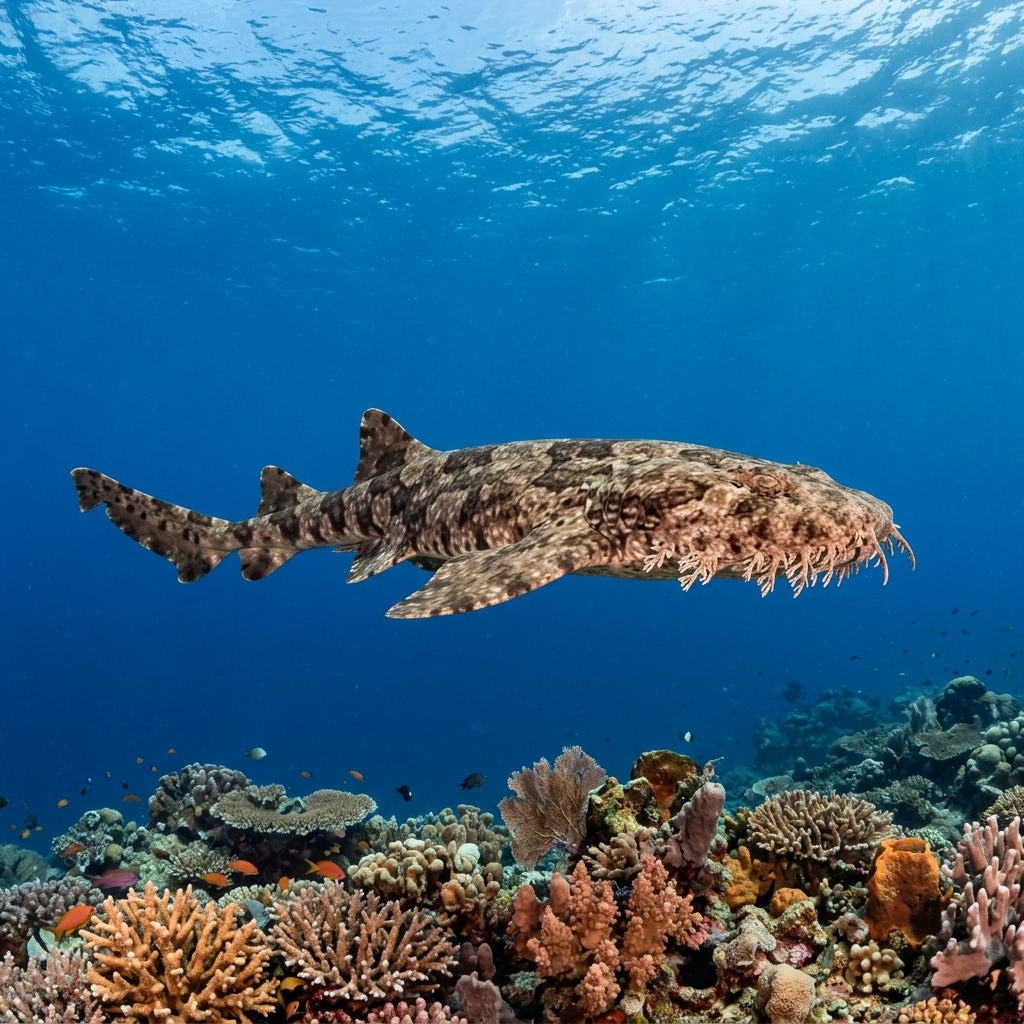
Reef neighbours a diver could mistake it for. Use the identification notes above to tell them apart.
Logged almost exclusively in Western Australia, making it the region to target if you want a real shot at one. Sightings so far are concentrated on Western Australian reef and ledge sites rather than spread across the country, so this is a state speciality rather than a widespread Australian find.
Mapping where Western Wobbegong is logged…
Sightings are concentrated in Western Australia, with no reliable records reported from elsewhere in Australia so far. If you're diving reef ledges and rocky overhangs in that region, keep an eye on the bottom rather than the water column.
There's no clear seasonal pattern in the data, so it's treated as a year-round sighting. It's been observed in water from about 18 to 23C, which covers a good chunk of the Western Australian dive season.
Look for a flattened, mottled brown body around a metre long lying still on rock or reef, with fringed skin flaps around the jaw breaking up its outline. It won't be swimming, so scan ledges and shaded gaps rather than open water.
They typically reach around 104 cm, making them a modest-sized member of the carpet shark family compared to some of their larger wobbegong relatives.
No, they're not considered dangerous to divers. They rely on camouflage and stillness rather than aggression, so the main risk is accidentally putting a hand down near one you didn't see.
It's an ambush predator that relies almost entirely on staying still and camouflaged, letting prey swim close before striking rather than chasing anything down.
Site and sighting data is aggregated from diver logs, iNaturalist and GBIF. For taxonomy and conservation status:
Ornate Wobbegong
291 sites