Petroscirtes variabilis
A small, sharp-toothed blenny spotted in Sulawesi, Indonesia, on reefs between 26-29 C, uncommon but worth the search.
Safety warning
A bite from the fang-like lower teeth can happen if you handle or corner one, and while it's not a serious medical risk, it can sting and may need cleaning like any small puncture wound. Simplest approach: observe and photograph from a short distance, don't reach into burrows or crevices where one might be sheltering.
If you're bitten
Venomous bite (mild)General first-aid guidance, not a substitute for professional medical care. In an emergency, call your local emergency number.
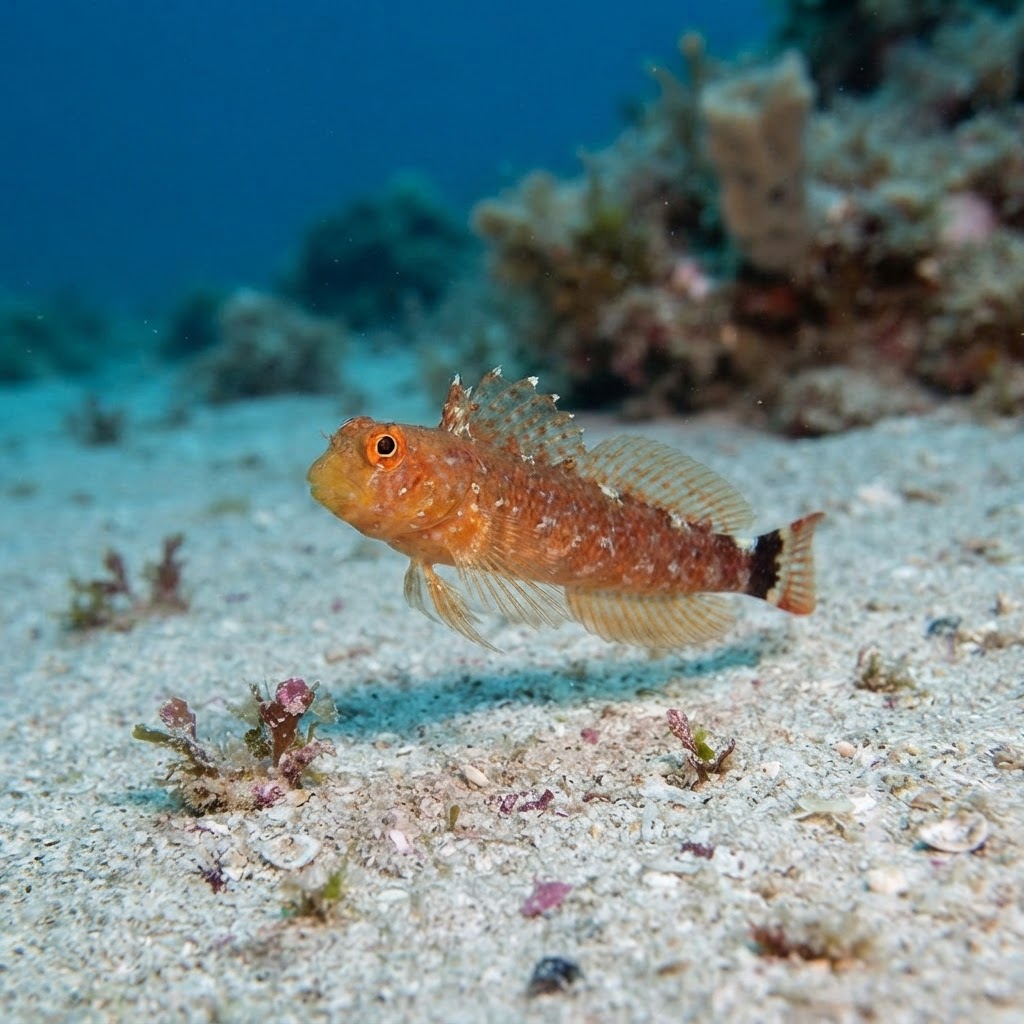
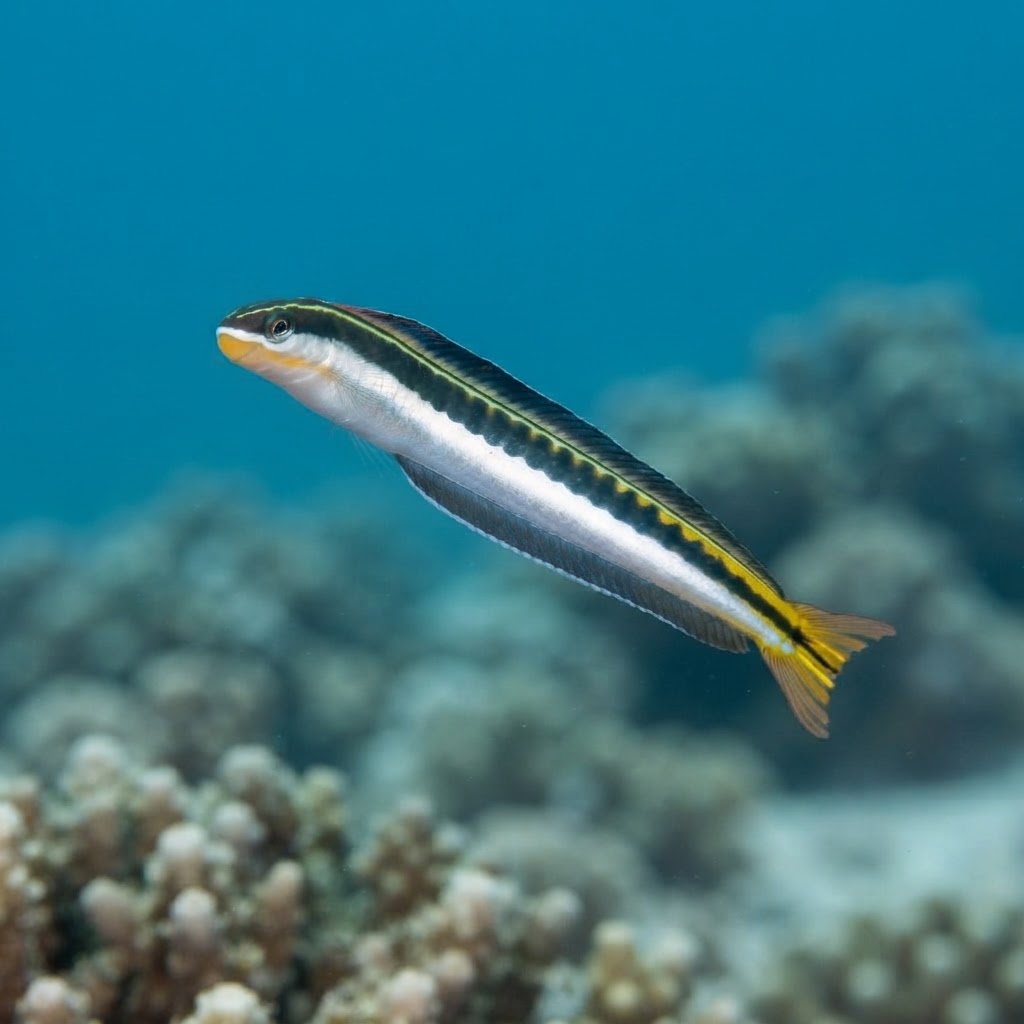
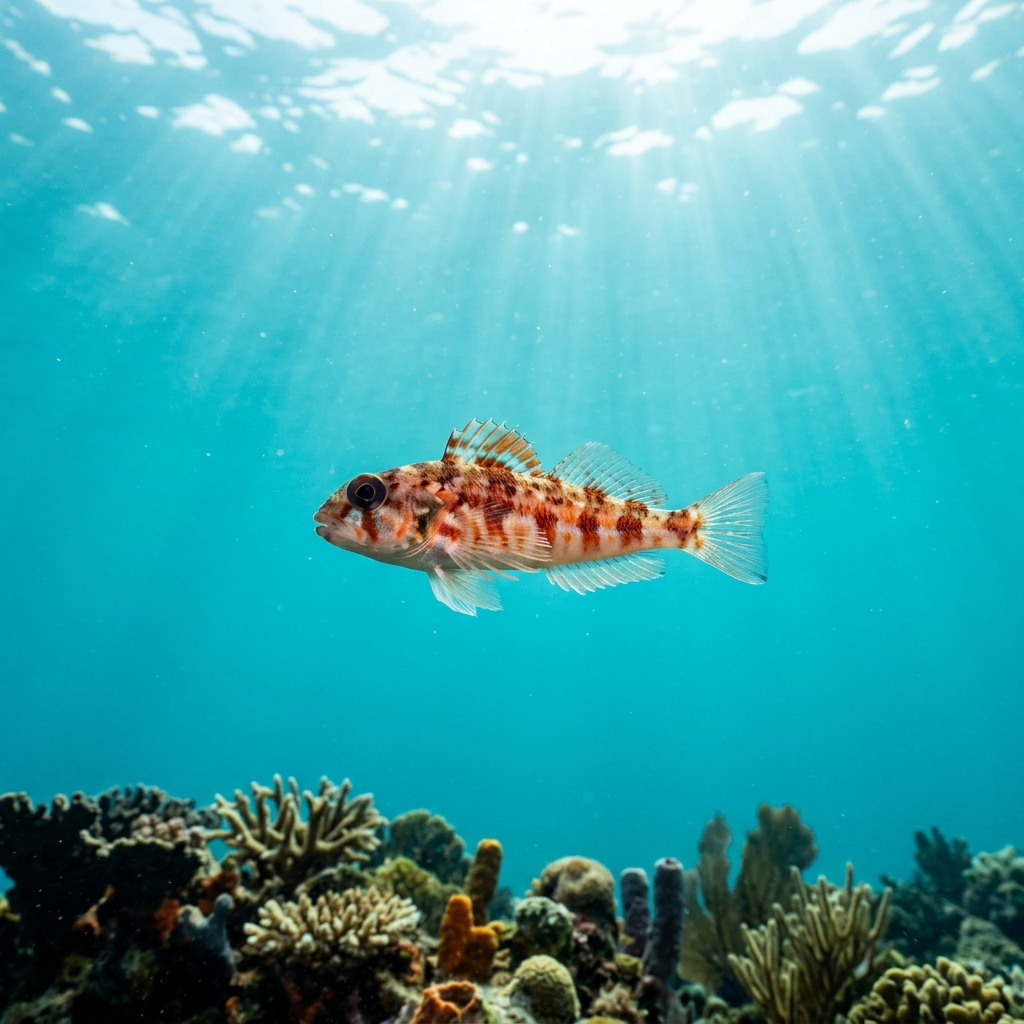
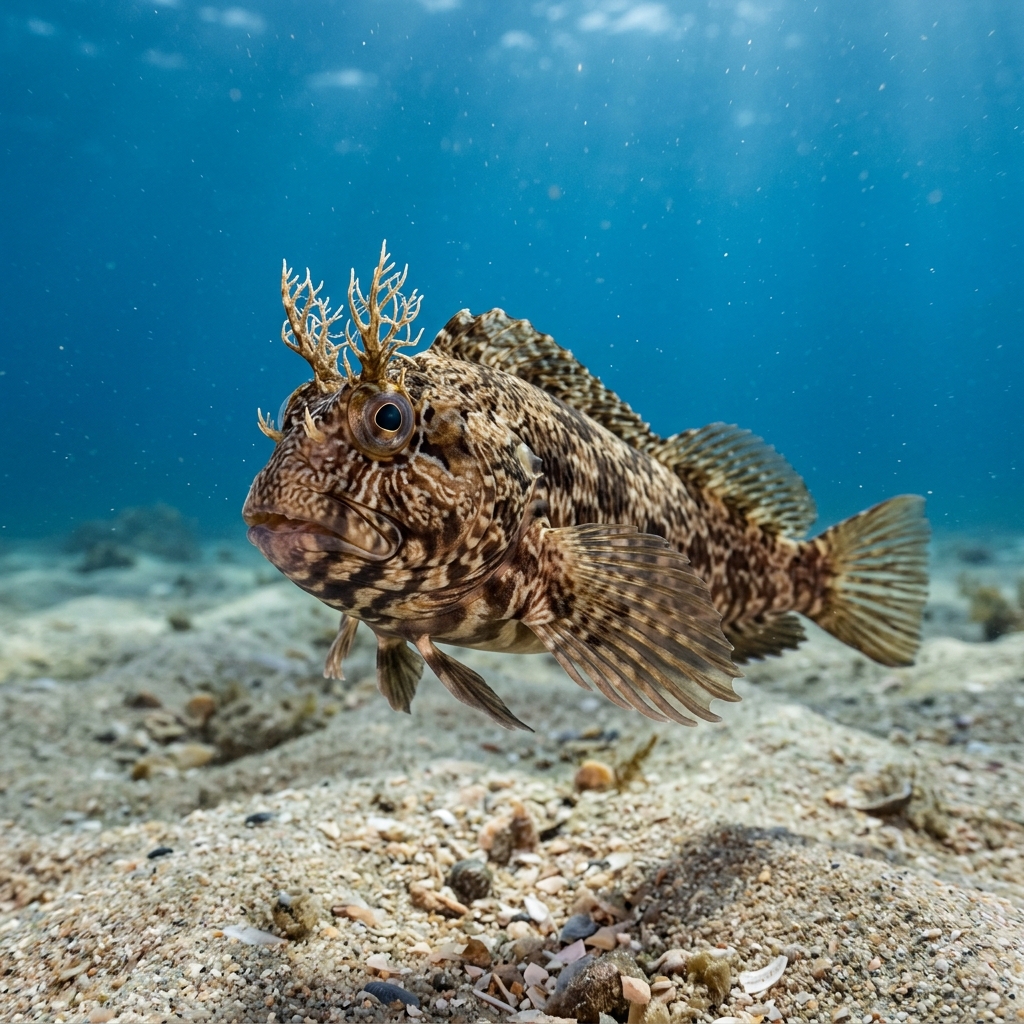
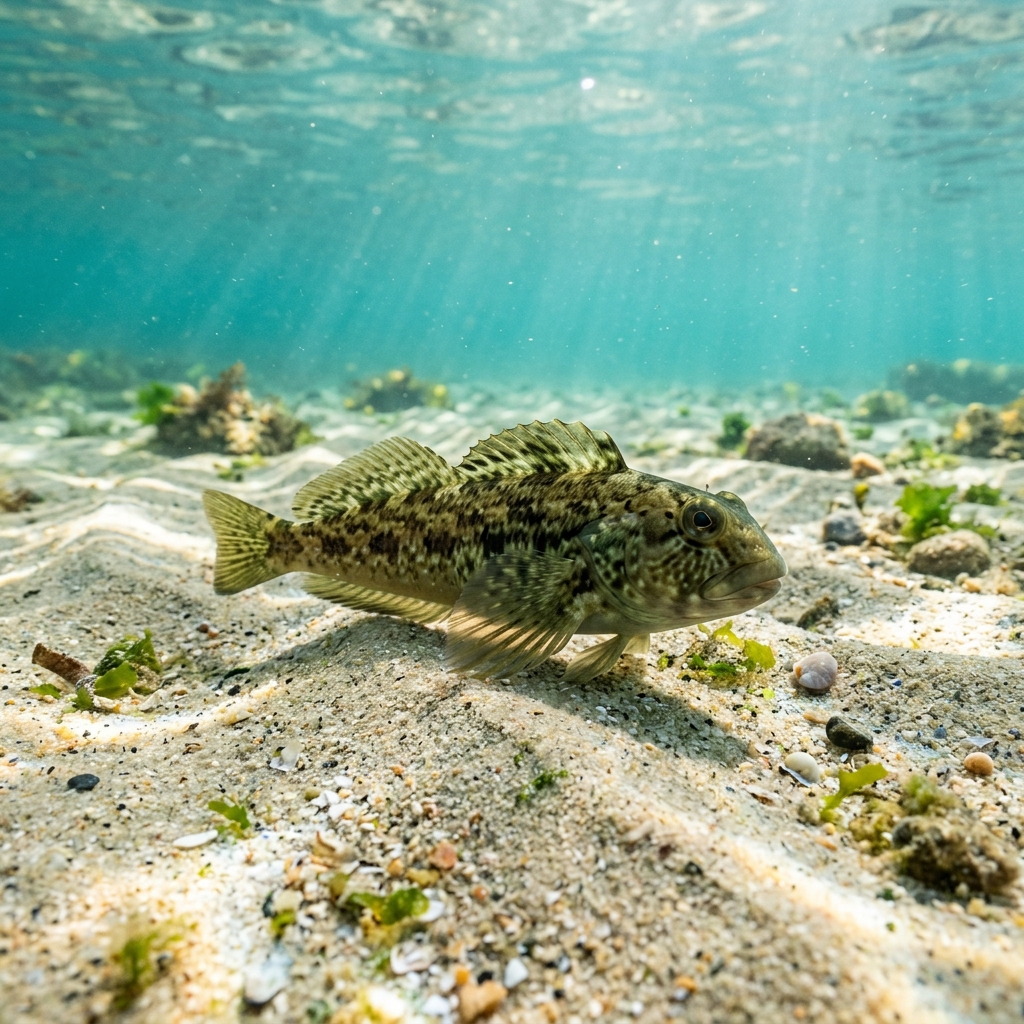
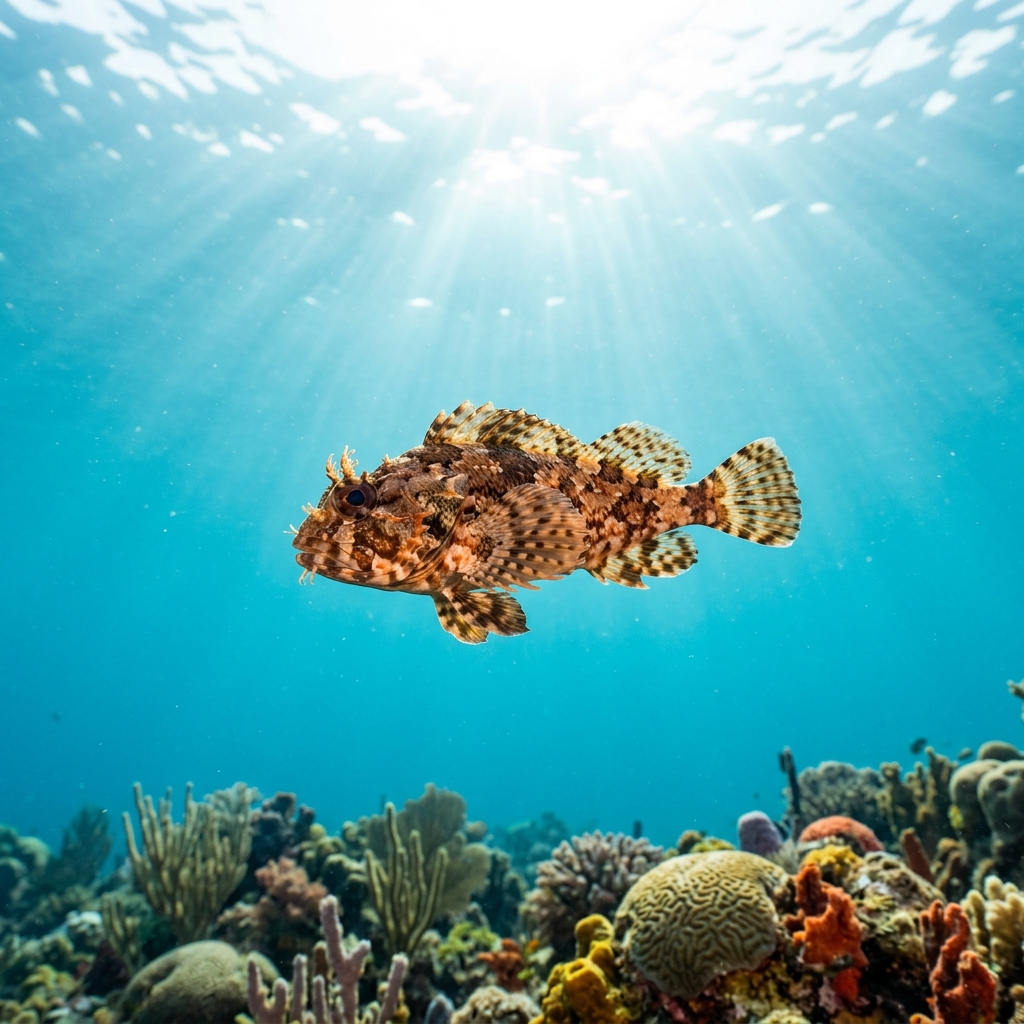
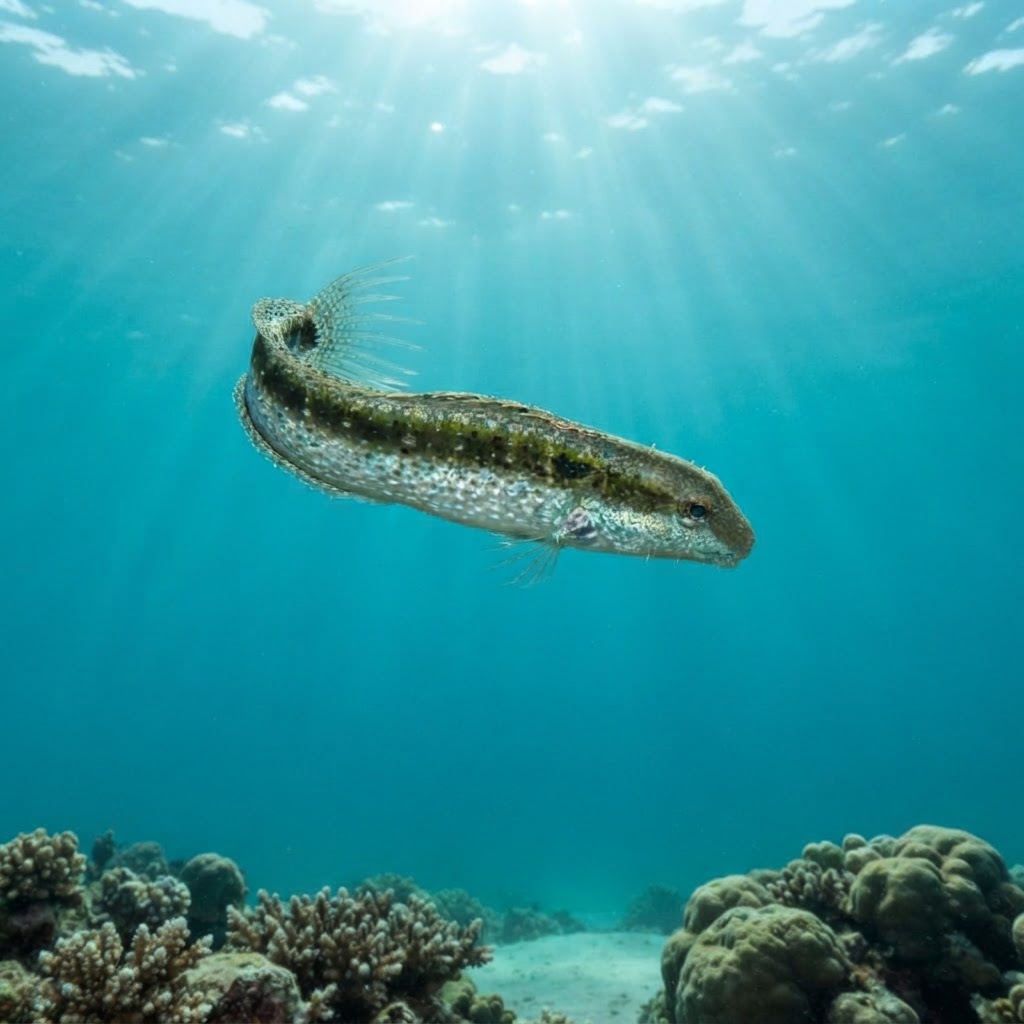
A small, elongated blenny reaching around 10 cm, with a tapered eel-like body and a blunt head that sits low over the substrate. Colouring is variable (hence the name), ranging through mottled browns, greys and olive tones that shift with the background, making it easy to overlook against rubble or sand. Look for the pair of enlarged, fang-like teeth in the lower jaw if it gapes at you, and the way it holds still near a burrow entrance rather than swimming freely over open reef.
Divers tend to spot this blenny resting near a burrow or discarded shell on rubble and sand patches rather than out swimming over reef structure. It stays low and still, relying on its mottled colouring to blend in, and will often hold its ground rather than bolt when a torch or camera gets close. Best picked up on slow, close-focus muck dives where you're already scanning the substrate rather than the water column.
Sabretooth blennies get their name from a pair of curved, venom-groove fangs in the lower jaw, used purely in defence rather than for feeding, since this genus mostly grazes on algae and detritus.
Sightings don't show a clear seasonal pattern, and with a comfortable range of 26 to 29.3 C, Sulawesi's reefs stay within its niche all year, so it's realistically a year-round find rather than a seasonal one.
Reef neighbours a diver could mistake it for. Use the identification notes above to tell them apart.
Logged so far on reefs in Sulawesi, Indonesia, where it turns up as an uncommon but real find on muck and rubble dive sites. Indonesia is currently the only confirmed country for this species in diver sightings, so Sulawesi is the place to focus a search.
Mapping where Variable Sabretooth Blenny is logged…
The only confirmed diver sightings so far are from Sulawesi, Indonesia, where it's logged as an uncommon find on rubble and muck sites. It may well occur more widely across the Indo-Pacific, but Sulawesi is the region with real dive records.
There's no detected seasonal pattern in sightings, and water temperatures on its home reefs stay within its comfortable range of 26 to 29.3 C throughout the year, so it's best treated as a year-round possibility rather than tied to a season.
It carries small fang-like teeth in the lower jaw that can deliver a mildly venomous nip if handled or cornered, but it poses no real threat if left alone. Give it space and avoid reaching into burrows where it might be sheltering.
Look for a slender, eel-shaped body around 10 cm long with variable mottled brown or olive colouring that blends into rubble and sand. It tends to hold still near a burrow entrance rather than swim in open water, and shows a pair of fang-like lower teeth if it gapes.
They typically reach around 10 cm in length, making them one of the smaller reef blennies divers might spot on a close-focus muck dive.
Despite the name, it isn't a predatory hunter with its fangs, those enlarged lower teeth are strictly for defence. Most sabretooth blennies feed on algae and detritus, saving the fangs for anything that gets too close.
Site and sighting data is aggregated from diver logs, iNaturalist and GBIF. For taxonomy and conservation status:
Rusty Blenny
2,605 sites