Naso brevirostris
Spot the Spotted Unicornfish across the Maldives, Philippines and Indonesia. Learn how to ID it underwater and when sightings peak in top tropical dive regions.
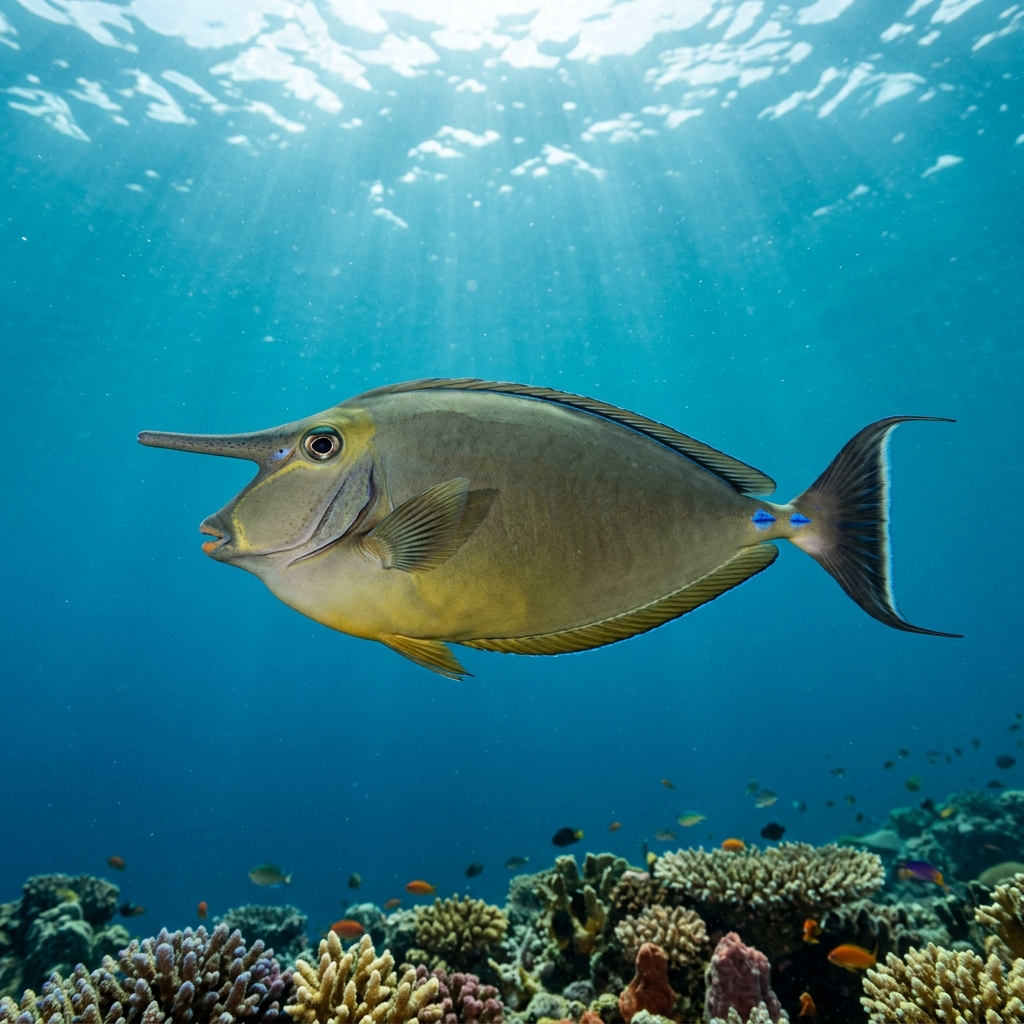
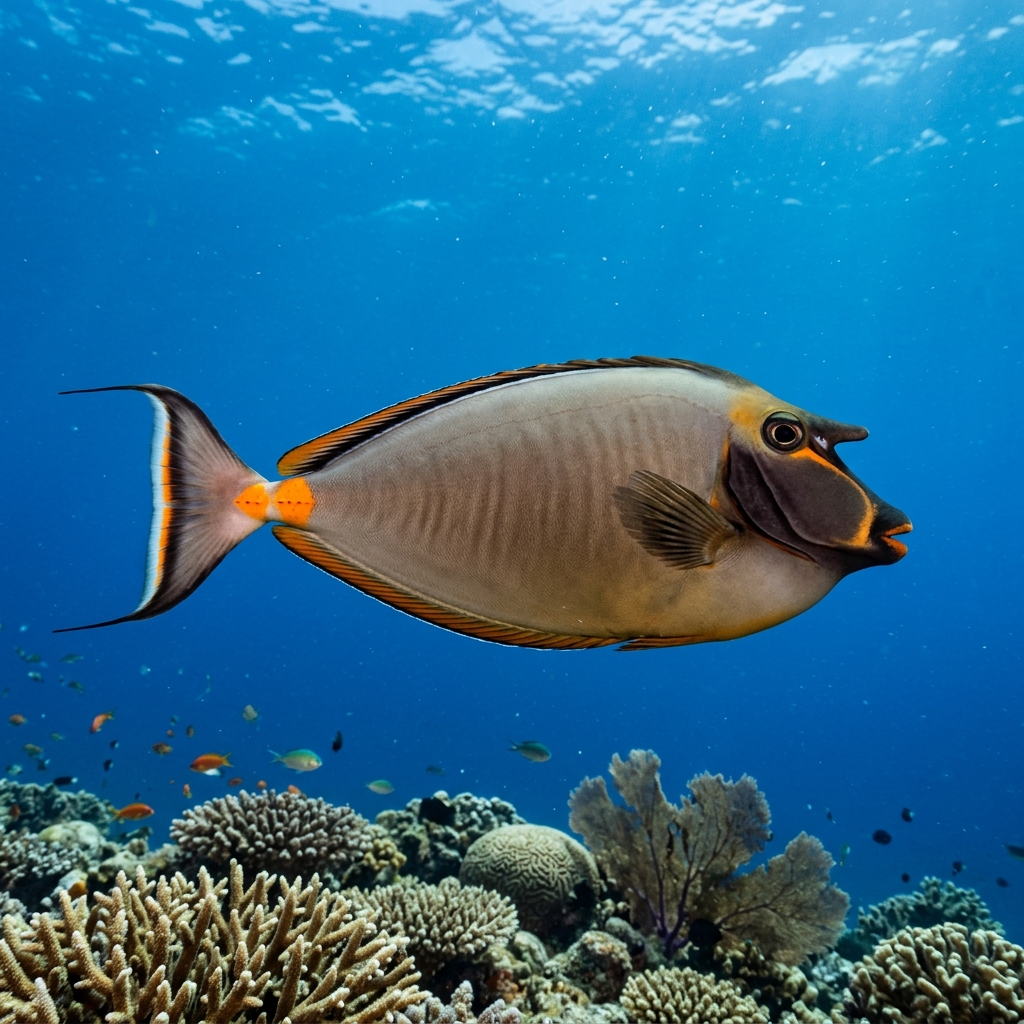
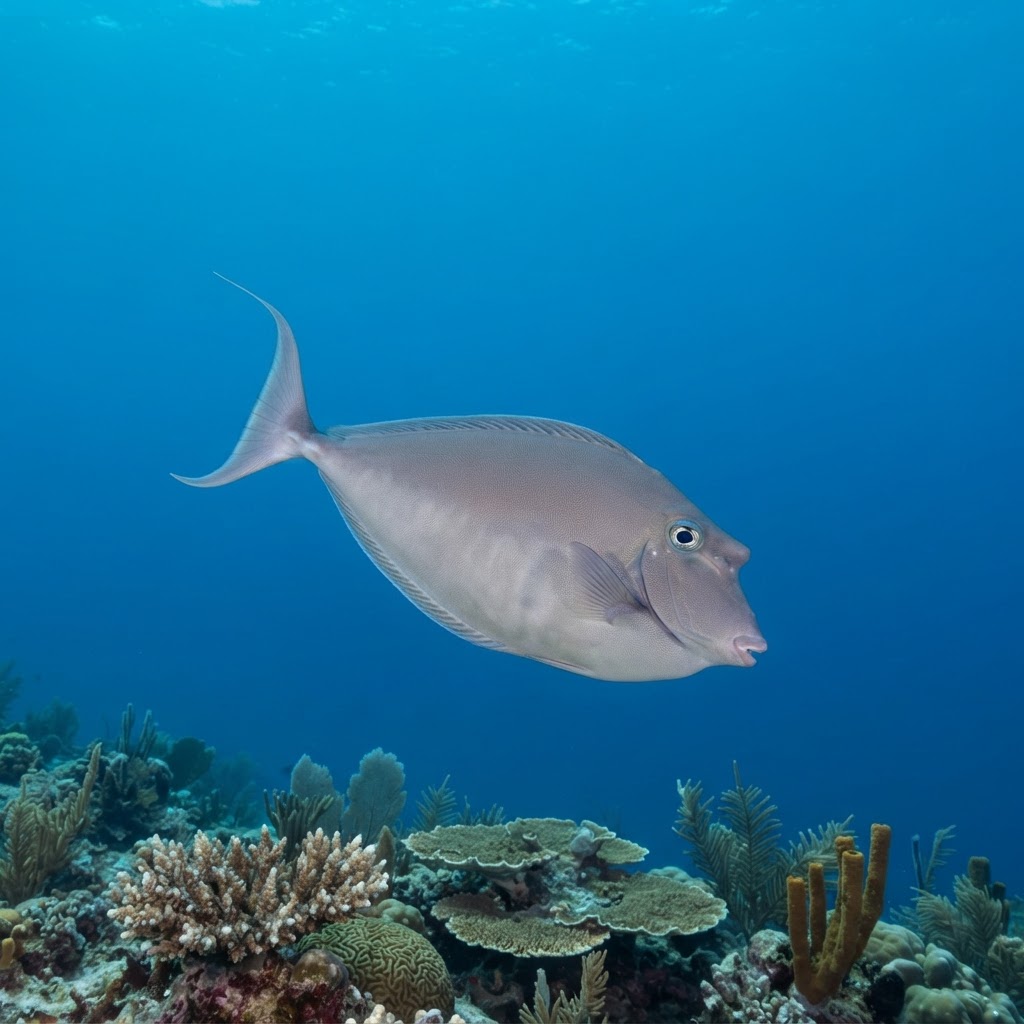
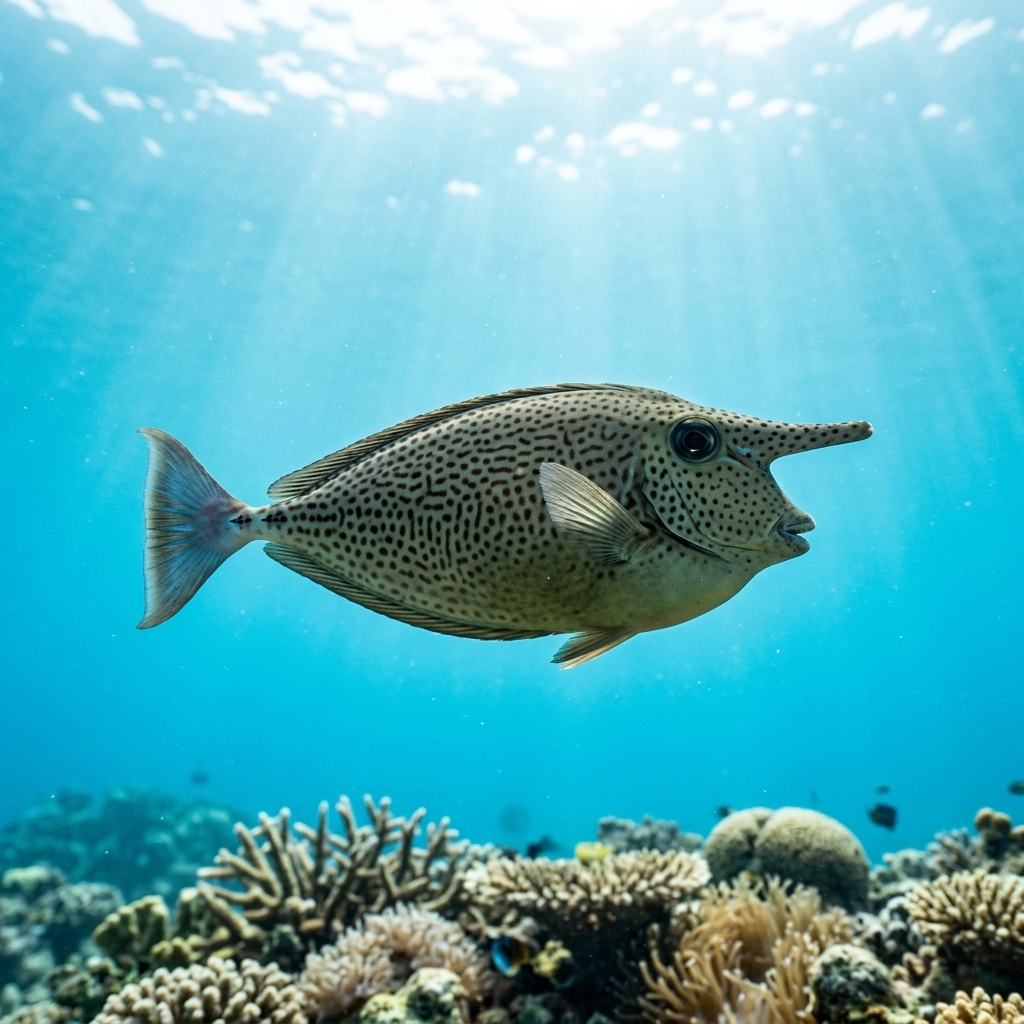
Look for a mid-sized surgeonfish with an elongated, laterally compressed body in muted grey to olive-brown, paling towards the belly. The short, stubby horn projecting from the forehead above the snout is the key field mark, it appears in adults but is only a bump in juveniles. Dark spots and scrawling marks pattern the face and forward part of the body, and two small keeled spines (caudal peduncle plates) sit at the base of the tail rather than the long trailing filaments of some relatives.
Spotted unicornfish tend to cruise open water just above or alongside reef walls and slopes, often appearing in loose groups or small schools rather than tight formations. They are generally unfazed by divers and will continue foraging or drifting steadily rather than bolting, making them fairly easy to approach for a close look. Sightings happen across daylight hours; the fish move purposefully and change depth as they browse, so following along at a respectful distance usually rewards you with a longer encounter.
Juveniles lack the distinctive horn entirely and look like a generic surgeonfish until the rostral protrusion begins growing, a fact worth bearing in mind if you notice a spotted, plain-looking acanthurid that does not quite fit any other species you know.
In Northern Hemisphere locations such as the Maldives and Philippines, sightings concentrate from May through March, making almost the entire year productive with a quieter window around April. The species is comfortable in water temperatures of 24 to 29 °C, so it is present on tropical reefs year-round wherever those conditions hold.
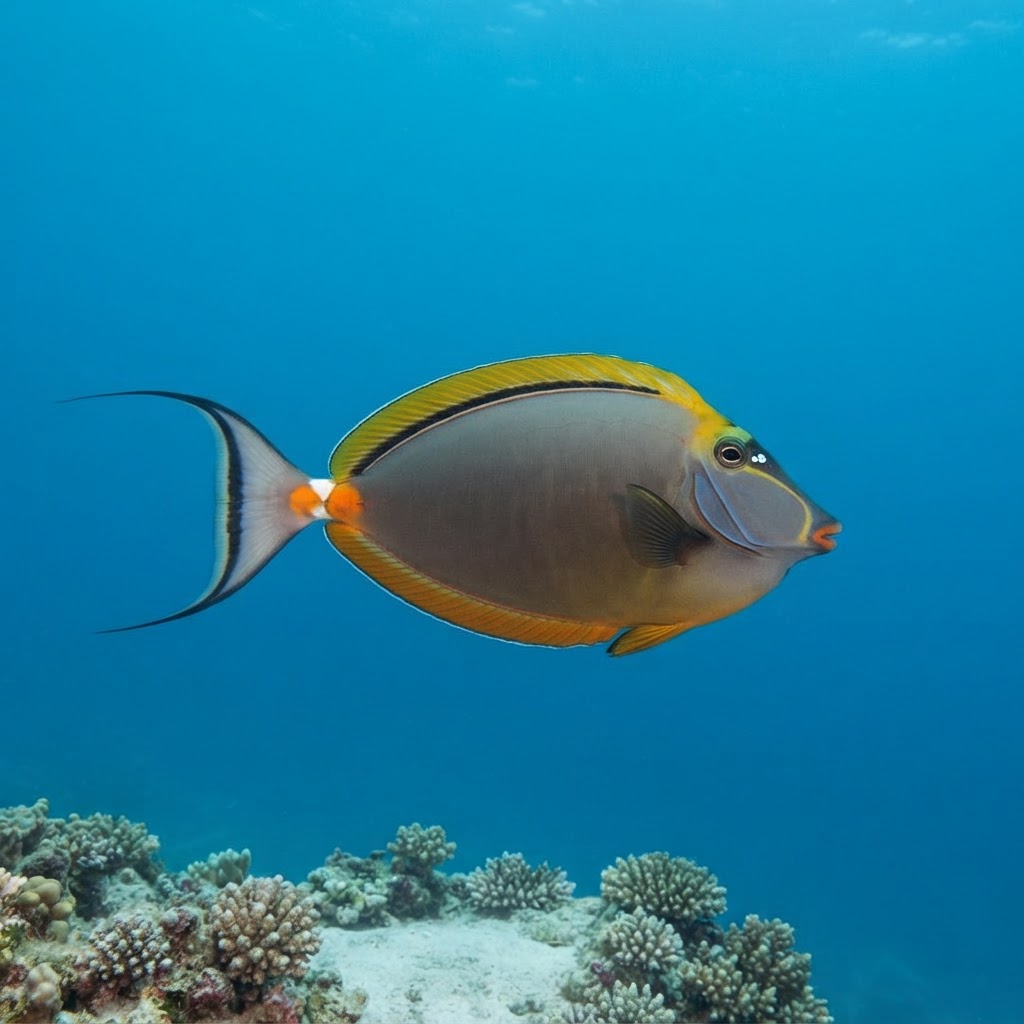
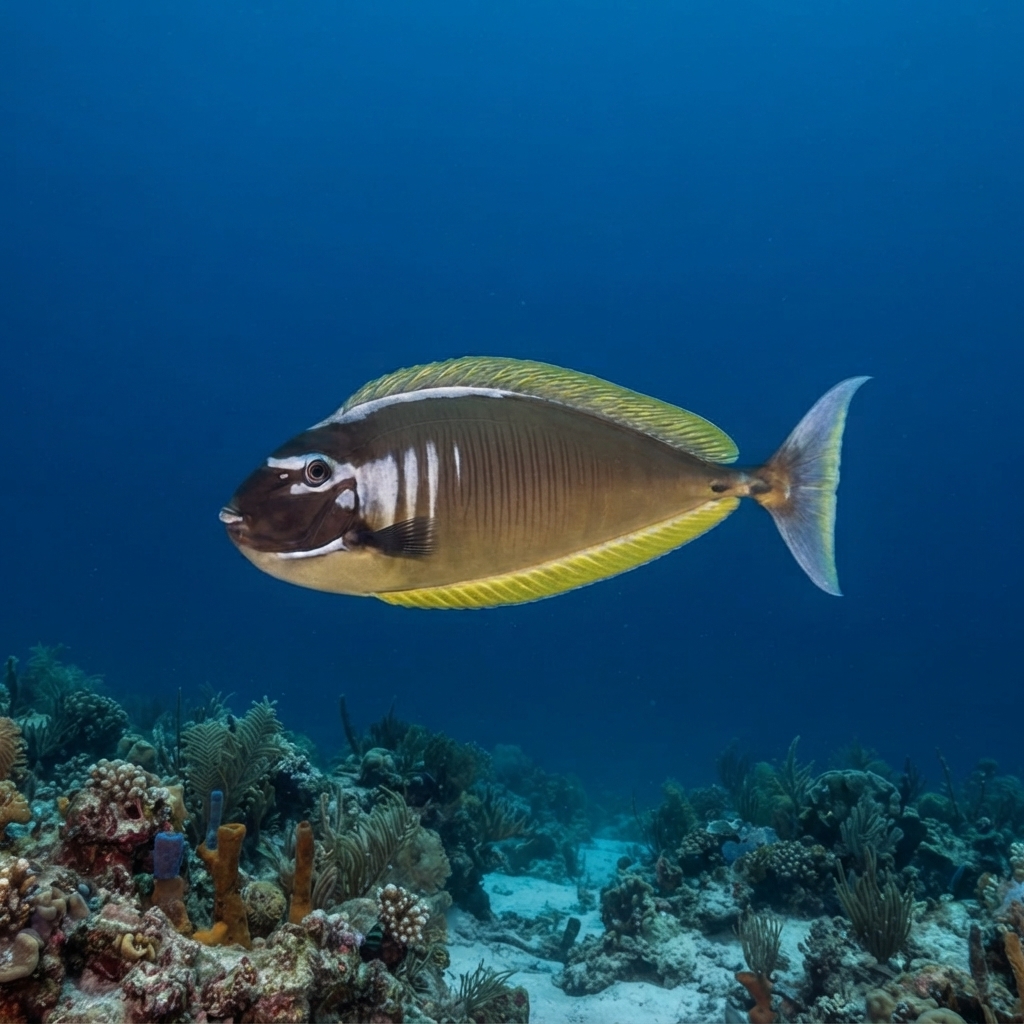
Reef neighbours a diver could mistake it for. Use the identification notes above to tell them apart.
Most commonly logged across the Indo-Pacific, with by far the strongest representation in the Maldives, particularly the Male & Ari Atolls and the North & Central Atolls. Strong populations are also recorded across the Philippines (especially Palawan & Apo Reef and the Visayas), Indonesia (Bali, Lombok & Java and Maluku & Papua), and Queensland, Australia.
Mapping where Spotted Unicornfish is logged…
They are most reliably encountered in the Maldives, particularly around the Male & Ari Atolls and North & Central Atolls. The Philippines (Palawan & Apo Reef, Visayas), Indonesia (Bali and Maluku), and Queensland in Australia are also strong destinations across their wide Indo-Pacific range.
In the Maldives, Philippines, and other Northern Hemisphere sites, sightings concentrate from May through March. The species tolerates water temperatures of 24 to 29 °C, so it is present on tropical reefs for most of the year wherever those temperatures are maintained.
The short, blunt horn on the forehead above the snout is the defining feature in adults. Pair that with a grey-brown body, darker spotting and scrawling on the face, and two small bony plates at the tail base rather than long streamers, and you have a solid ID. Juveniles lack the horn, which complicates things for smaller fish.
At sites where they are recorded, spotted unicornfish are most often logged as uncommon, meaning you may or may not see them on a given dive even at a good site. They are logged as common at a smaller portion of sites, so choosing high-frequency locations in the Maldives or Philippines improves your odds.
No. Spotted unicornfish pose no threat to divers. Like other surgeonfish they carry small keeled spines at the tail base, but these are a passive defence and not used aggressively. They generally ignore divers and go about their business.
Site and sighting data is aggregated from diver logs, iNaturalist and GBIF. For taxonomy and conservation status:
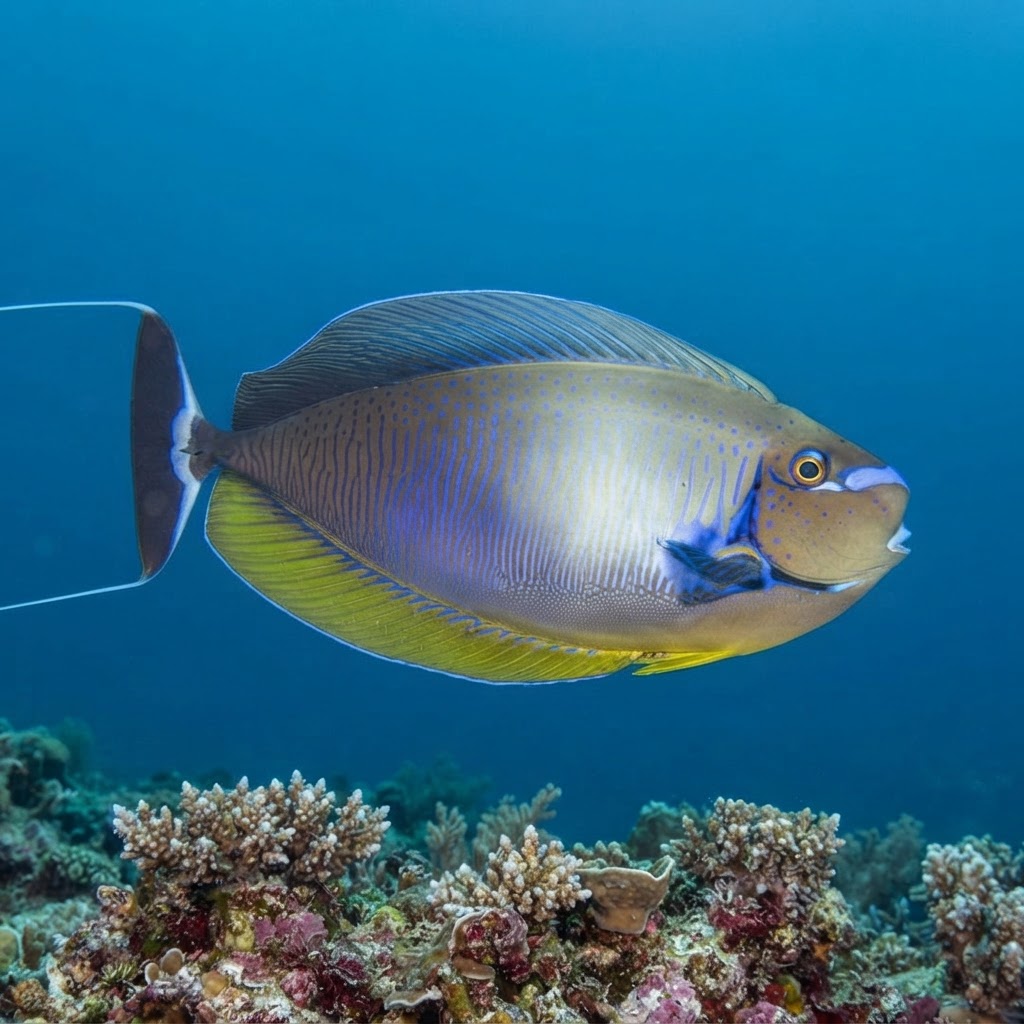
Bignose Unicornfish
727 sites