Naso brachycentron
Bony-humped surgeonfish common across the Maldives' Central Atolls, found year-round in warm reef water between 25.7 and 29C.
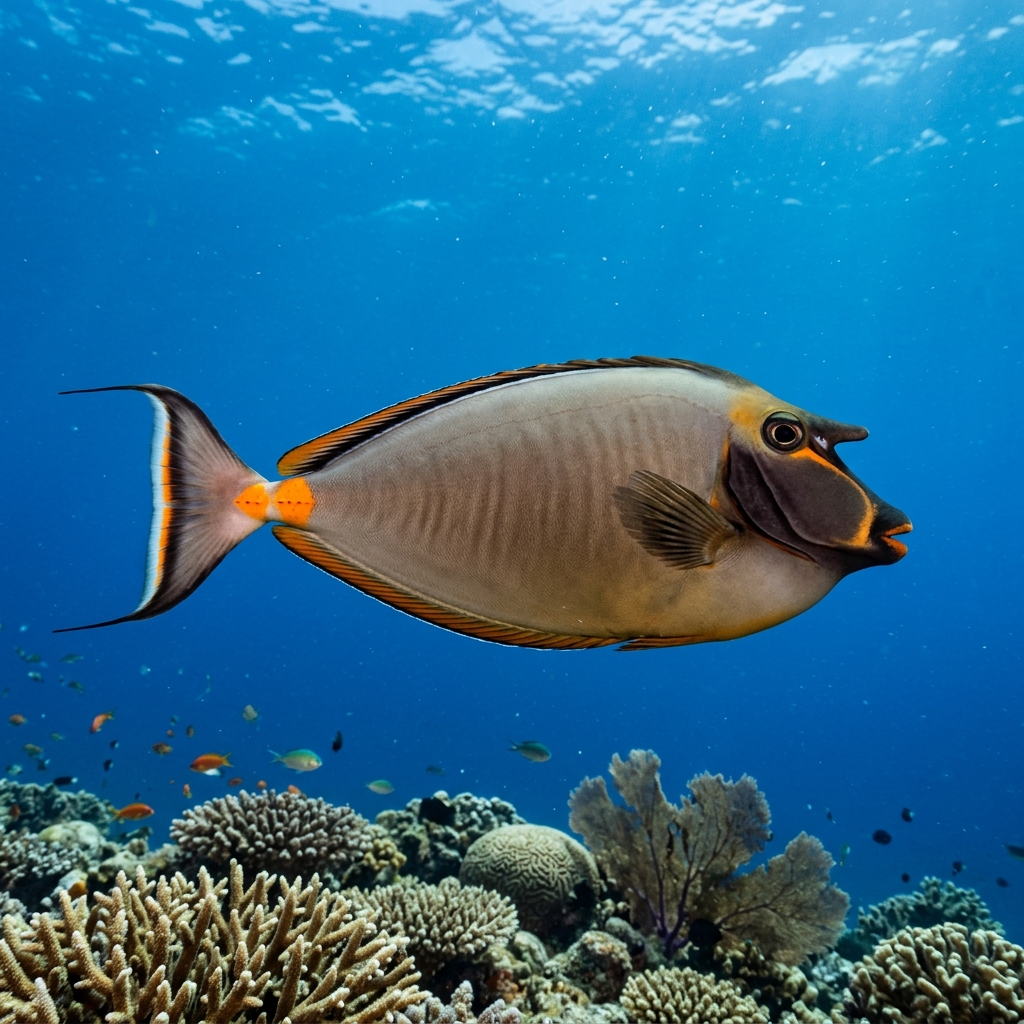
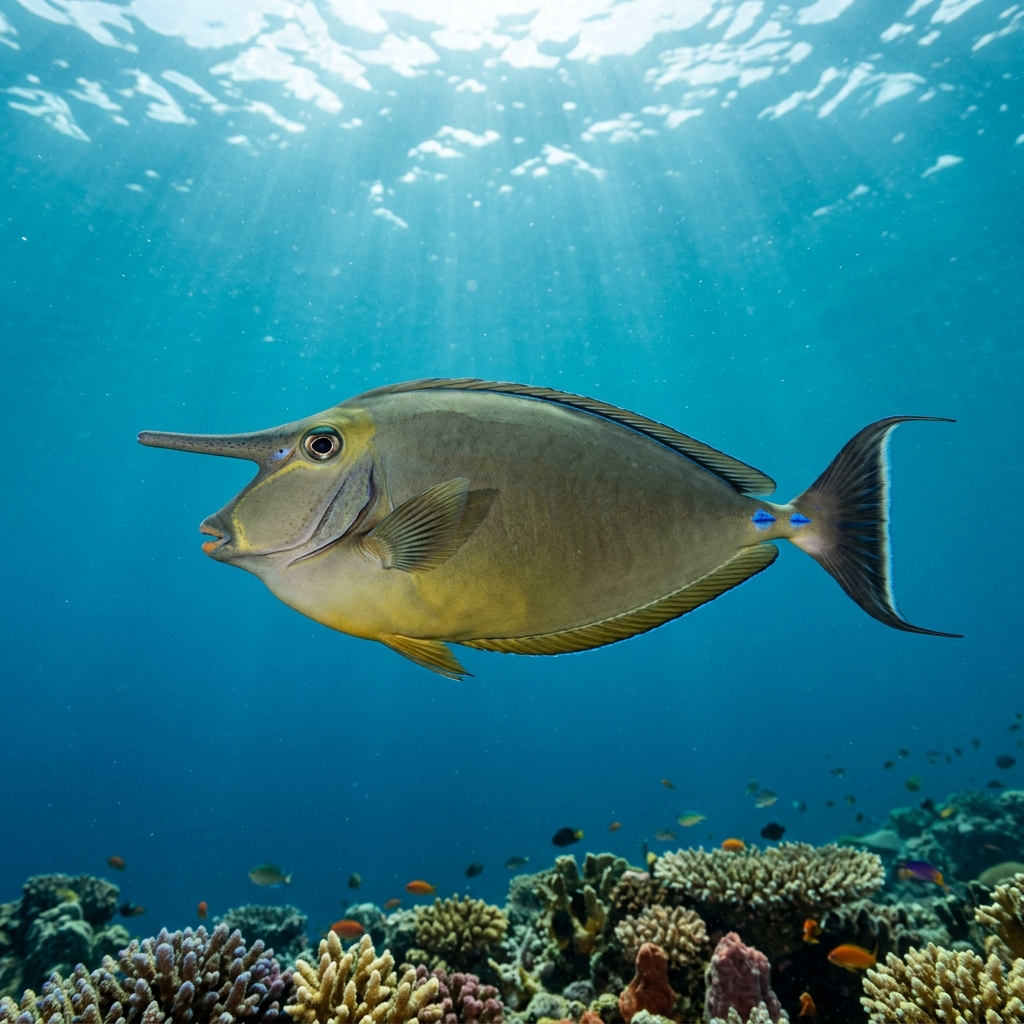
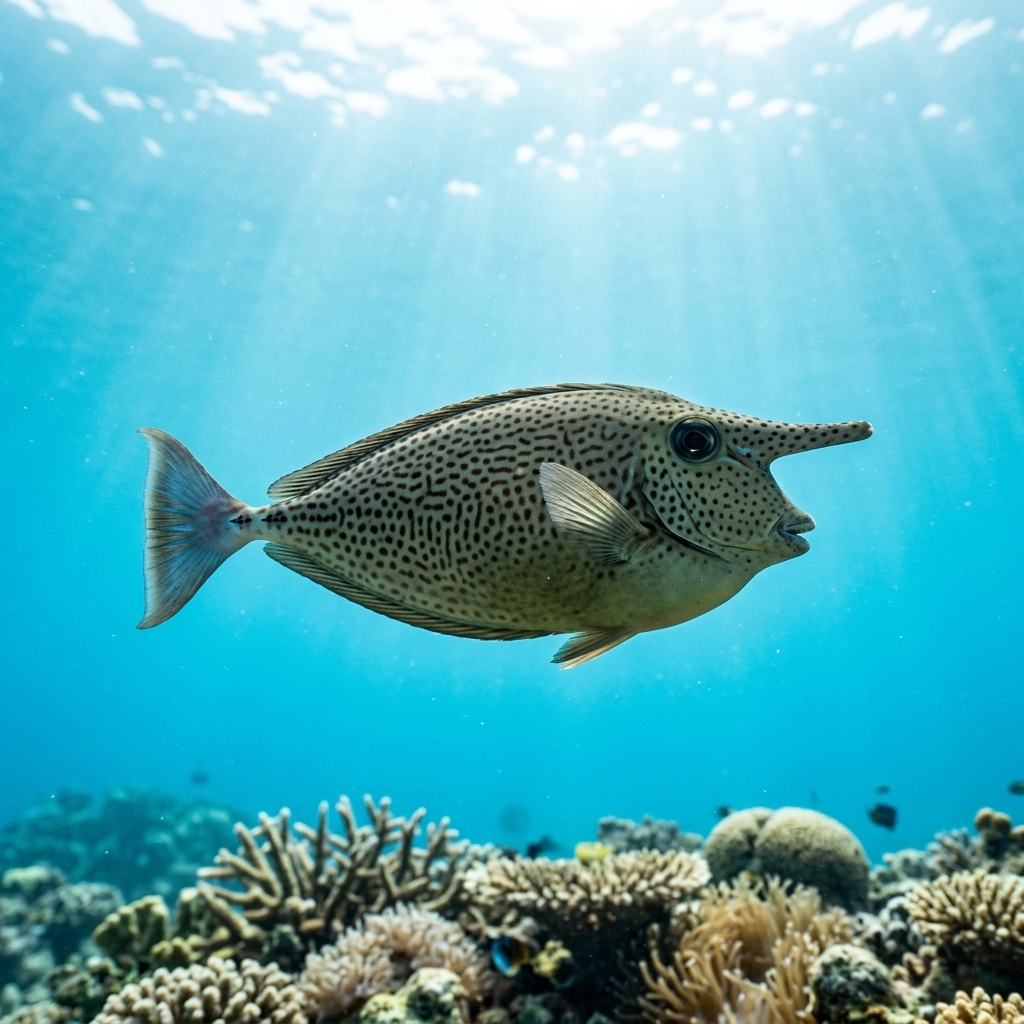
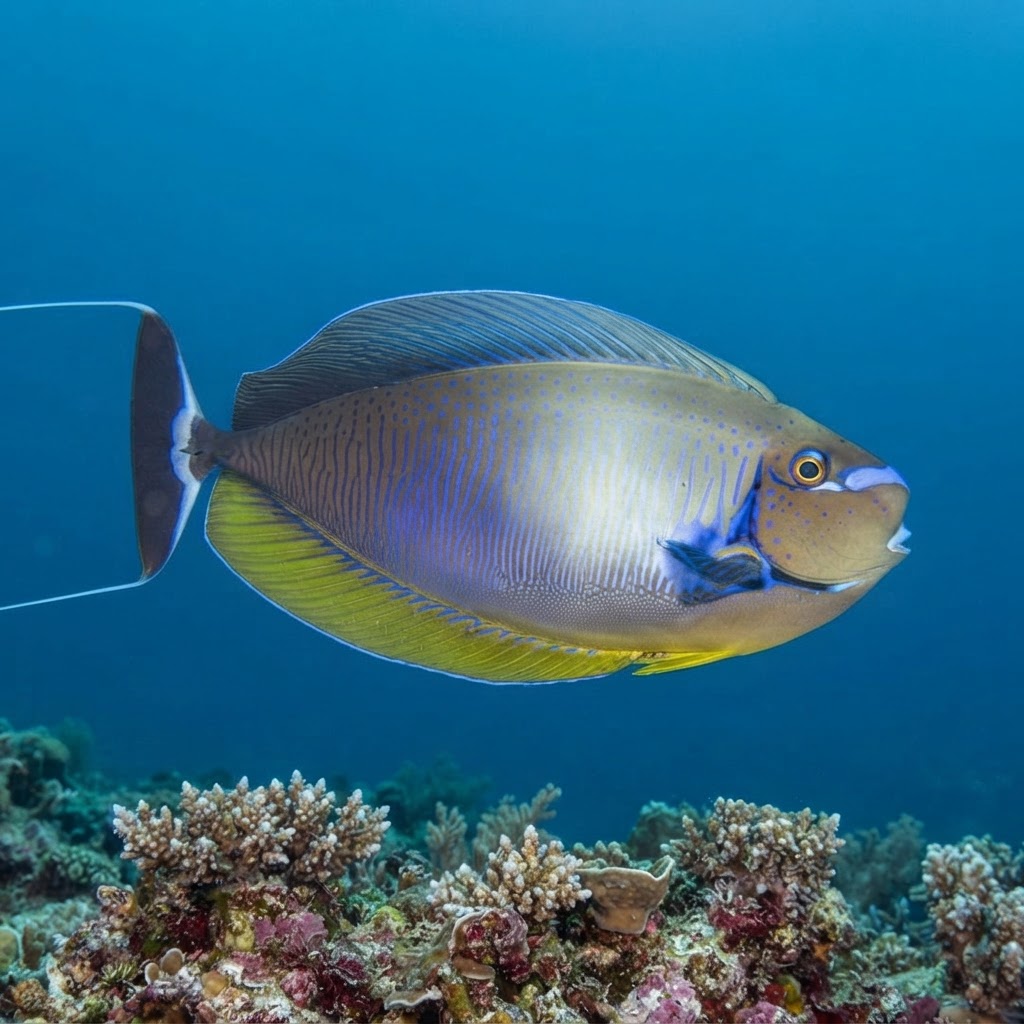
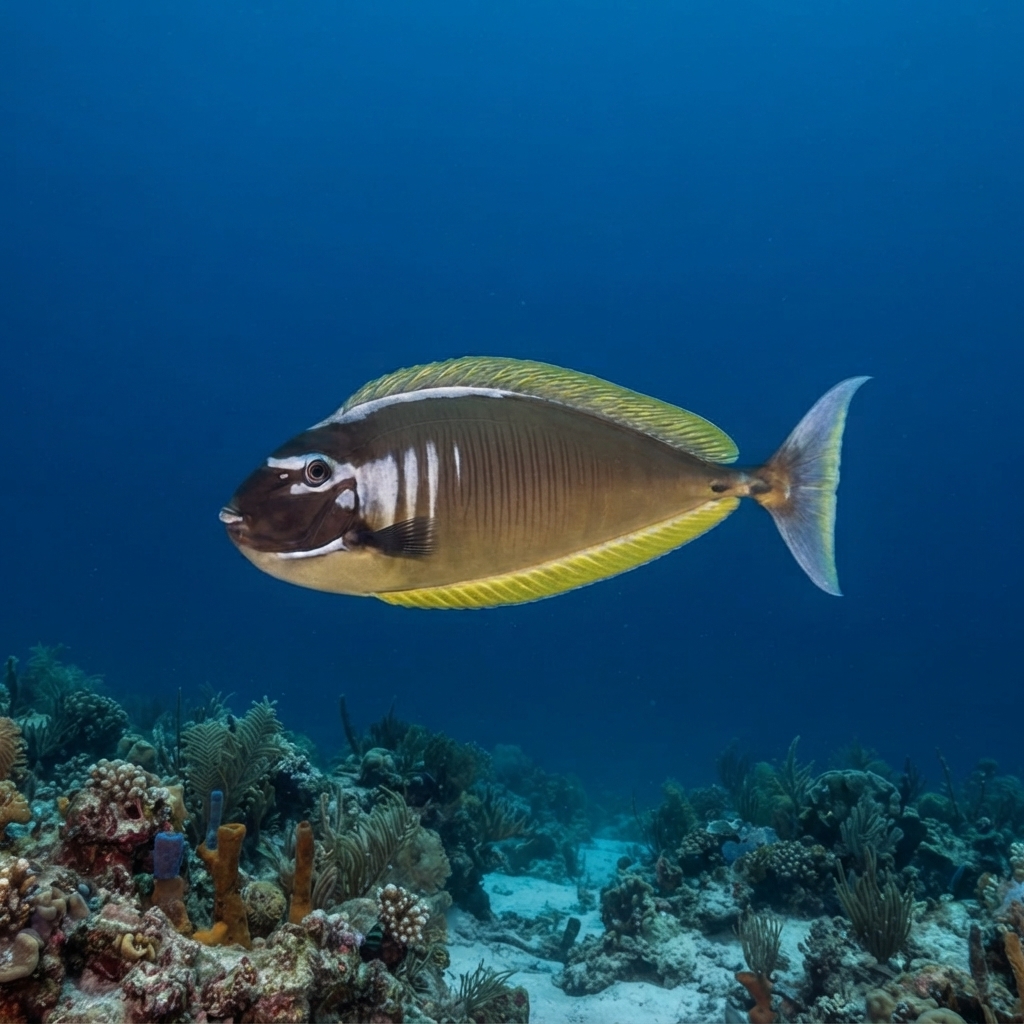
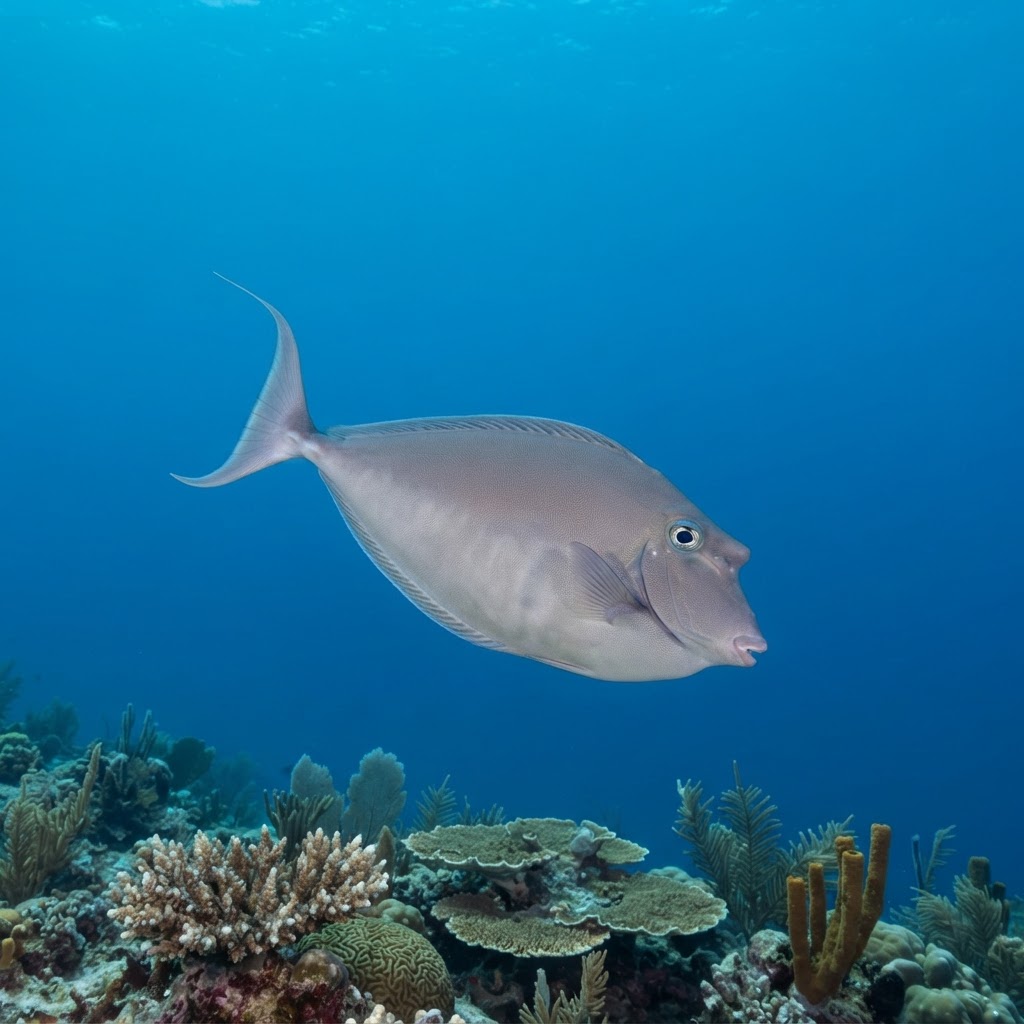
The giveaway is the pronounced bony hump rising off the forehead, far more swollen than in other unicornfish, giving the whole head a lumpy, almost cartoonish profile. Body colour runs grey to olive-brown with a deep, laterally compressed shape typical of surgeonfish, and adults reach around 62 cm, making them one of the larger fish on a reef flat. Unlike some Naso species there's no elongated horn spike, just that swollen forehead mass, which is the single feature to key on underwater.
Usually seen cruising alone or in small loose groups over reef slopes and flats, grazing on algae and picking at the reef surface rather than schooling in open water like some of its unicornfish relatives. Divers report it as an uncommon-to-common find rather than a guaranteed one, generally unbothered by a slow approach but not a fish that comes looking for attention. Most sightings sit in the 8 to 30 m range, so it's as much a mid-water reef fish as a shallow one.
That forehead hump is unusually large even by unicornfish standards, thought to be a purely structural feature rather than a horn used in combat, which sets it apart from spike-nosed relatives like the orange-spine unicornfish.
No clear seasonal pattern shows up in the data, so treat this as a year-round sighting on any dive in its range. Comfortable in water from roughly 25.7 to 29C, which covers tropical reef temperatures for most of the year across the Maldives, Indonesia and the Seychelles.
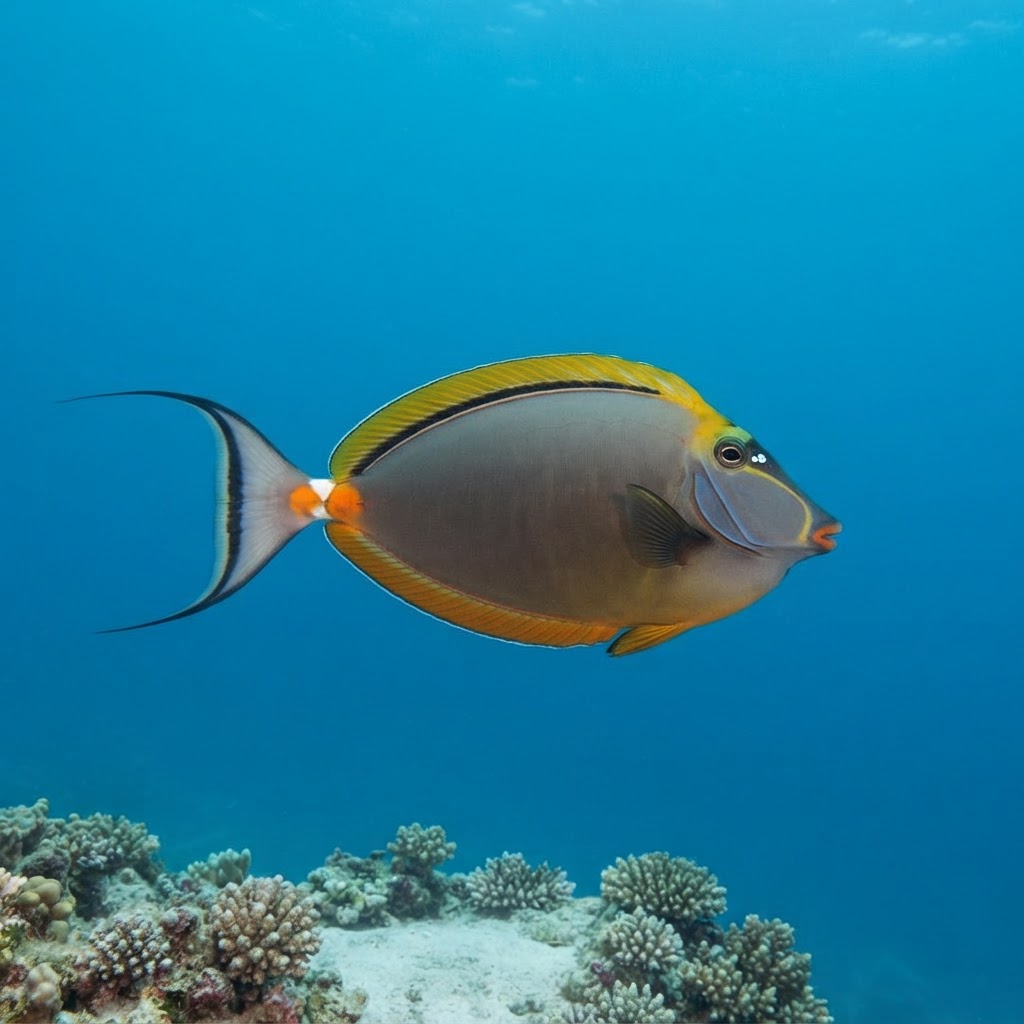
Reef neighbours a diver could mistake it for. Use the identification notes above to tell them apart.
Most reliably logged in the Maldives, especially across the Central Atolls, which accounts for the bulk of sightings worldwide. Solid secondary populations turn up in Indonesia (Raja Ampat and Bali), Seychelles' Inner Islands, and South Africa's KwaZulu-Natal coast, with smaller but consistent numbers in Palau's Rock Islands and Taiwan's Kenting region.
Mapping where Humpback Unicornfish is logged…
The Maldives' Central Atolls are the most consistent spot, with further sightings across Indonesia's Raja Ampat and Bali, the Seychelles' Inner Islands, and South Africa's KwaZulu-Natal coast.
There's no strong seasonal signal in sighting data, so they're a year-round find on reefs within their range, comfortable in water from about 25.7 to 29C.
Look for a grey-brown surgeonfish around 60 cm long with a swollen, bony hump on the forehead rather than a pointed horn. The deep, flattened body shape is typical of the surgeonfish family.
They typically reach about 62 cm in length, making them one of the larger unicornfish divers encounter on Indo-Pacific reefs.
No, they pose no threat to divers and are generally unbothered by a calm, slow approach while grazing on the reef.
Its forehead carries an oversized bony hump, more pronounced than in related unicornfish species, believed to be a structural feature rather than a weapon used in fights.
Site and sighting data is aggregated from diver logs, iNaturalist and GBIF. For taxonomy and conservation status:
Orangespine Unicornfish
961 sites