Naso vlamingii
Blue-grey unicornfish with a bulging forehead, most reliably seen in the Maldives' Central Atolls and Bali in 25.5 to 29 C water.
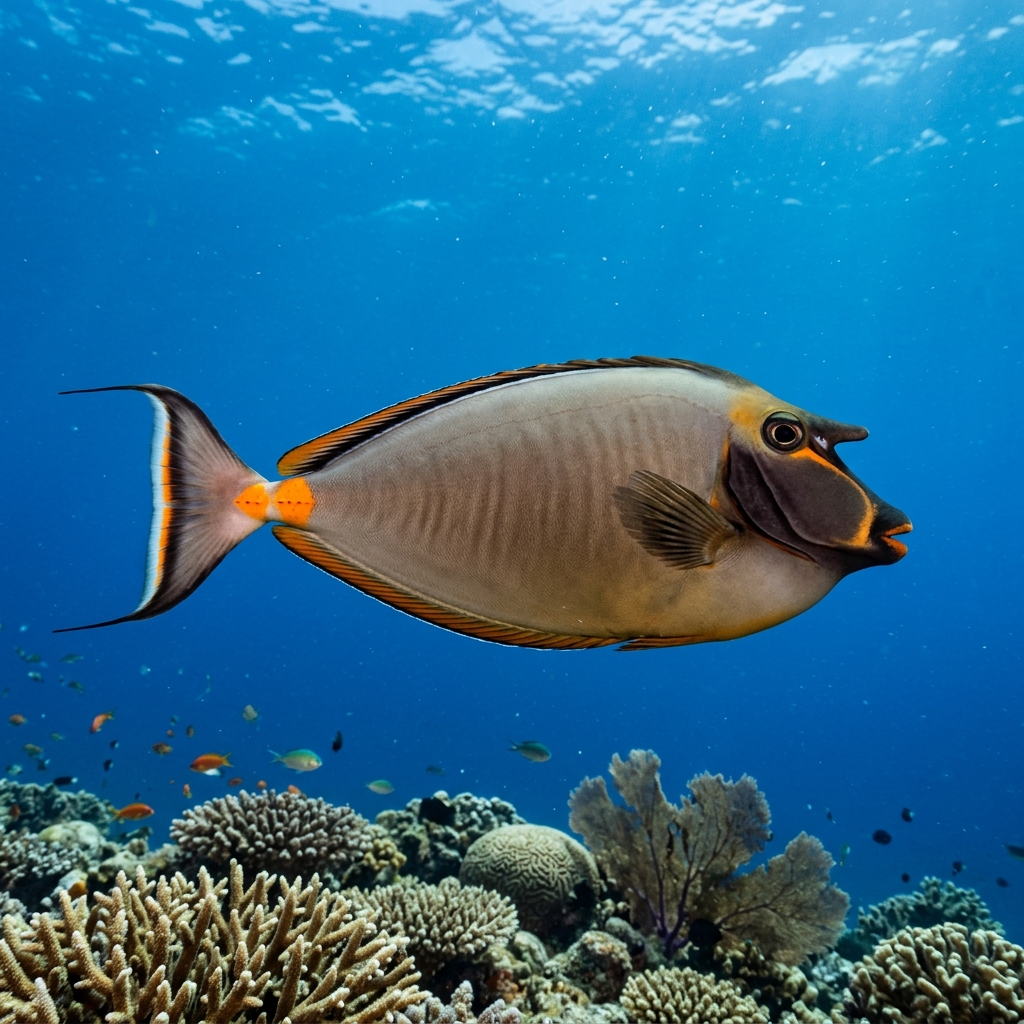
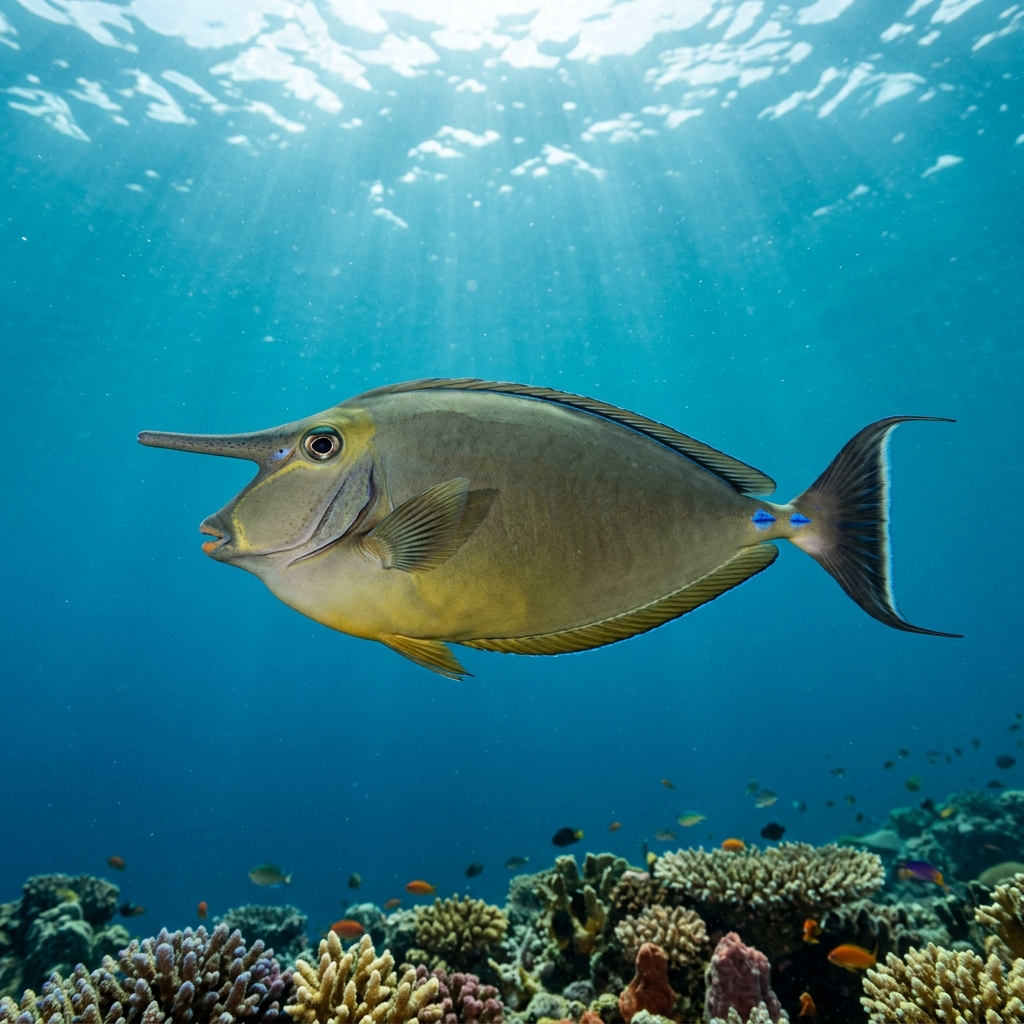
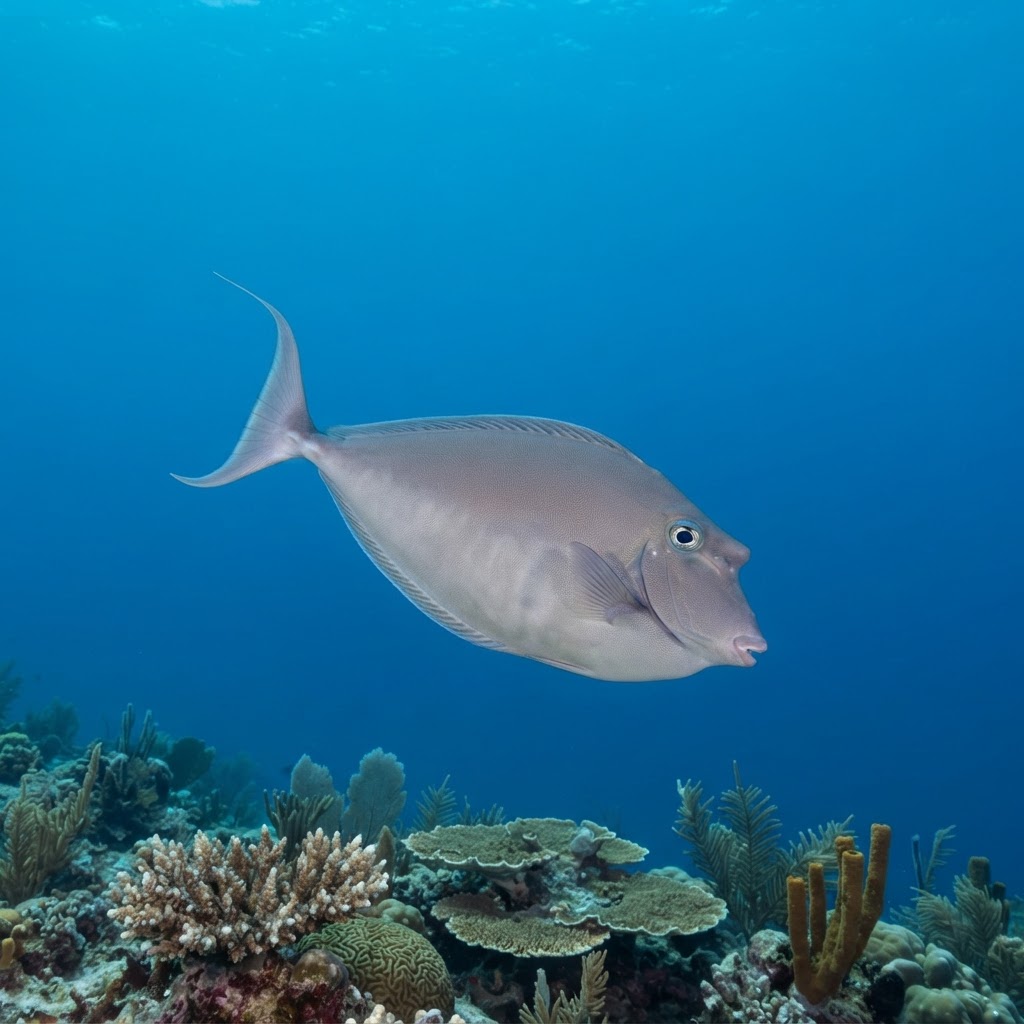
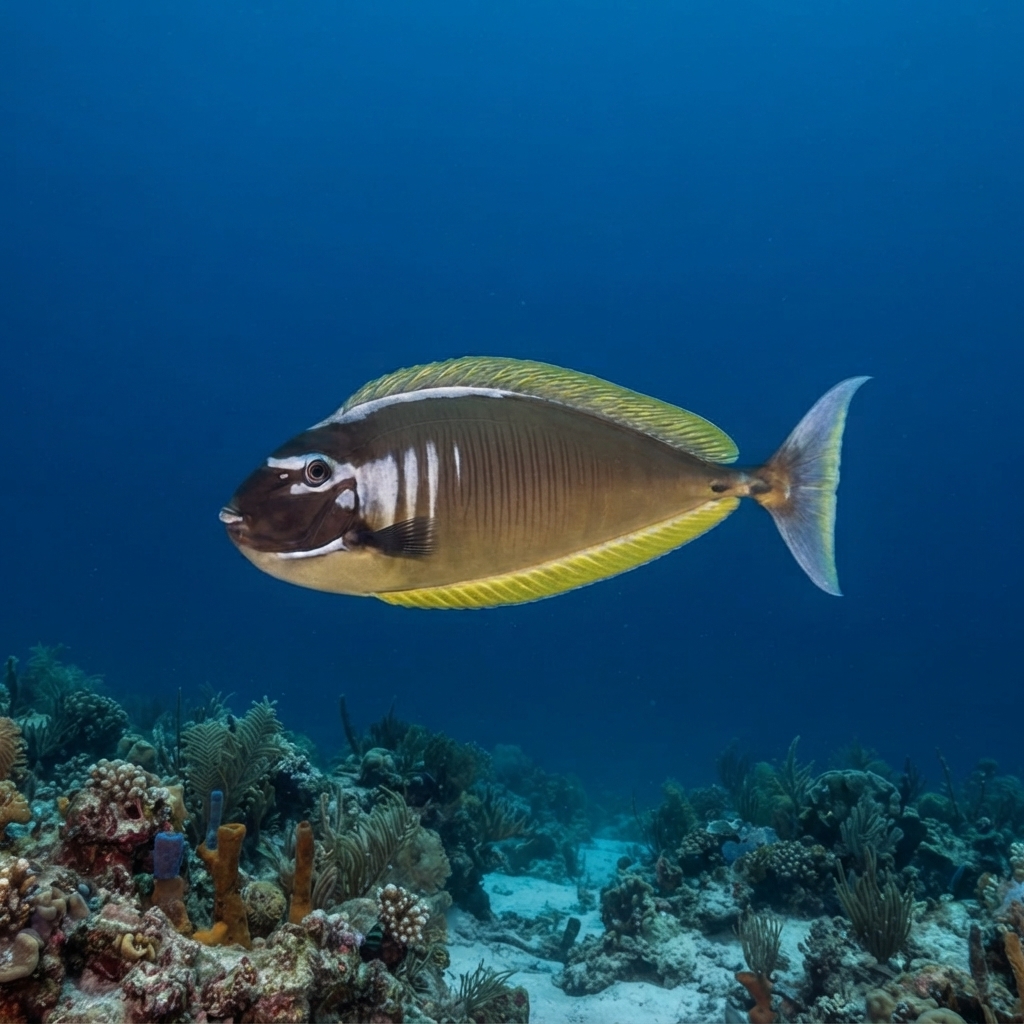
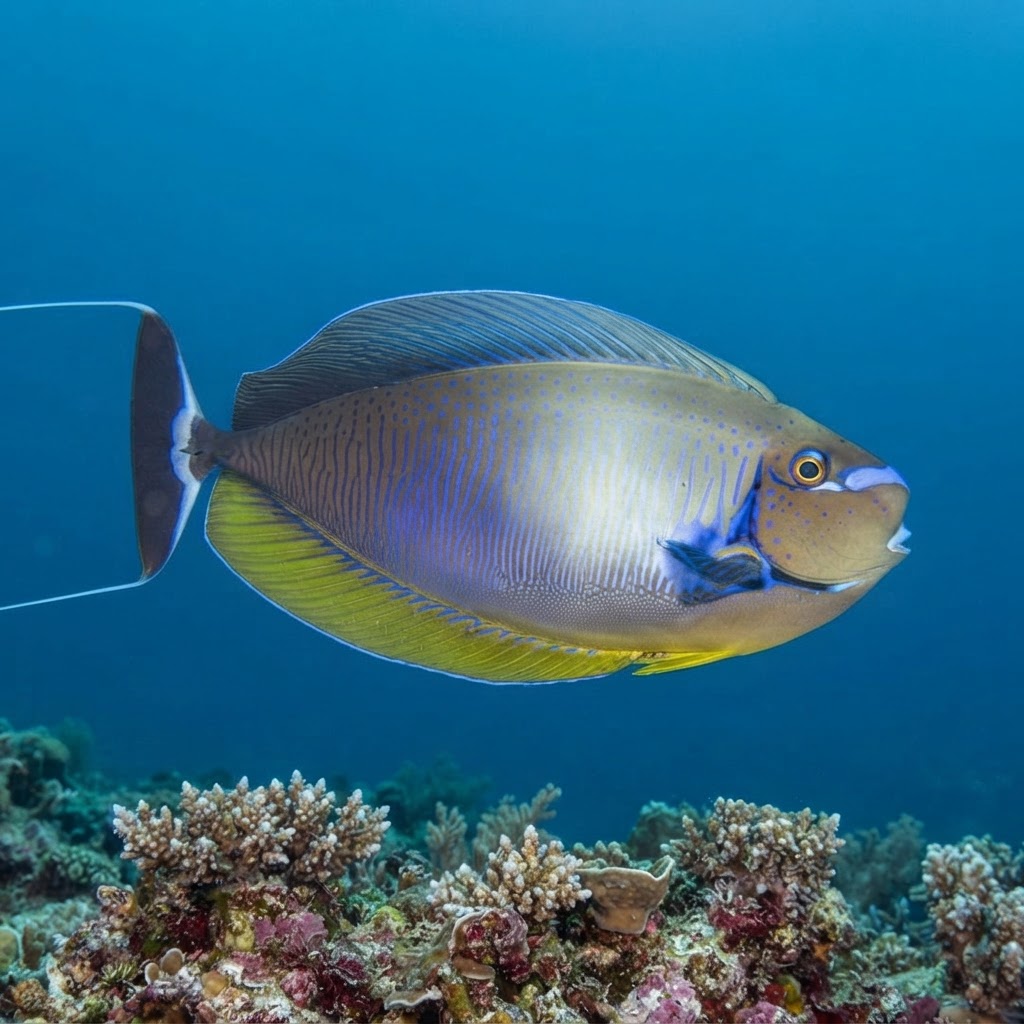
Look for a stocky, blue-grey to purplish body with a distinct bulging bump on the forehead that grows more pronounced with age, giving the species its common name. The tail base often shows a pale or yellowish wash, and faint blue lines can run along the face and body. At around 42 cm it is a mid-sized surgeonfish, usually seen hanging in loose groups off the reef rather than tight to the bottom.
Typically spotted hovering in loose aggregations in midwater off the reef face, drifting well above the bottom rather than grazing directly on it like many surgeonfish. Divers usually find it unbothered by their presence, holding station in the current at drop-offs and channel edges. Most sightings come from open reef slopes rather than shallow lagoons, matching its wide 1 to 50 m depth range.
Unlike most surgeonfish that scrape algae directly off rock and coral, this species feeds mainly on zooplankton picked from the water column, which is why you'll often see it holding position in midwater current rather than nose-down on the reef.
No clear seasonal pattern shows up in the data, and with a comfortable range of 25.5 to 29 C this fish is present on Indo-Pacific reefs year-round.
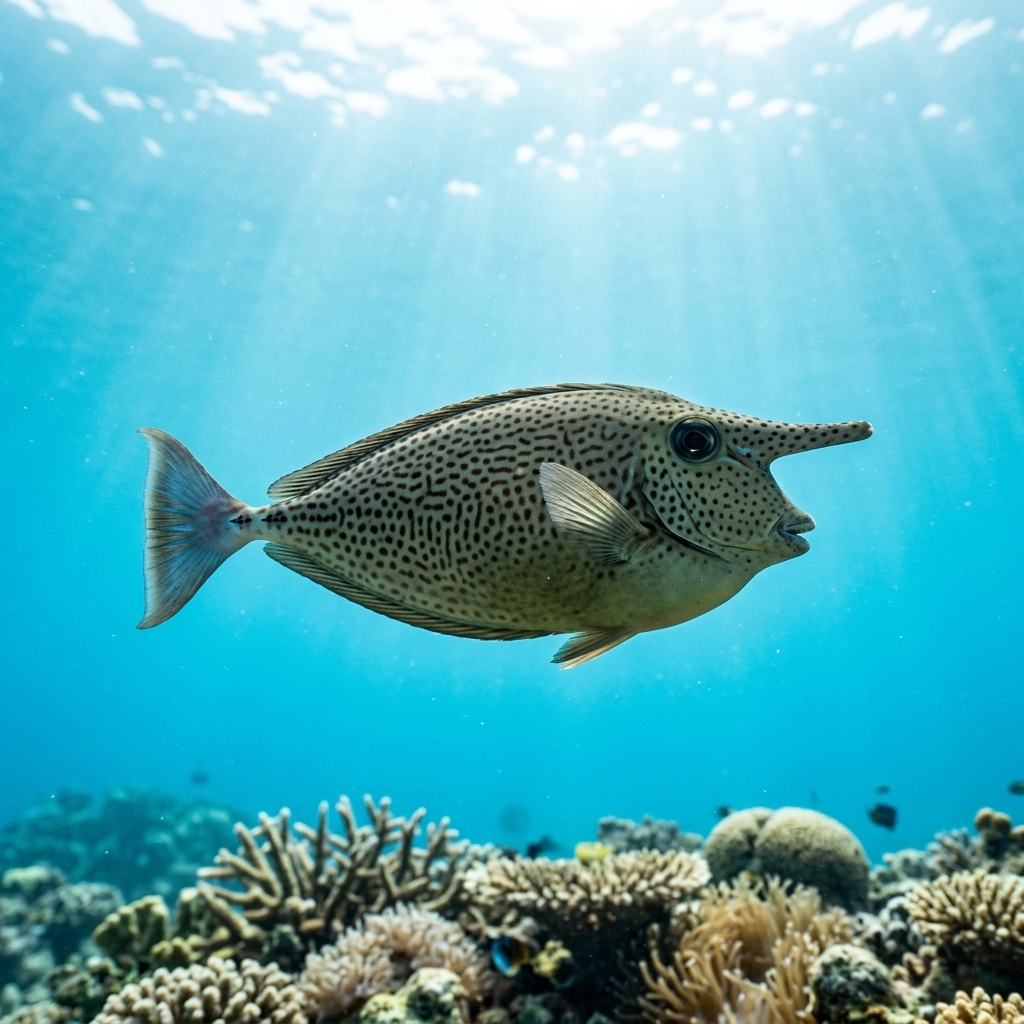
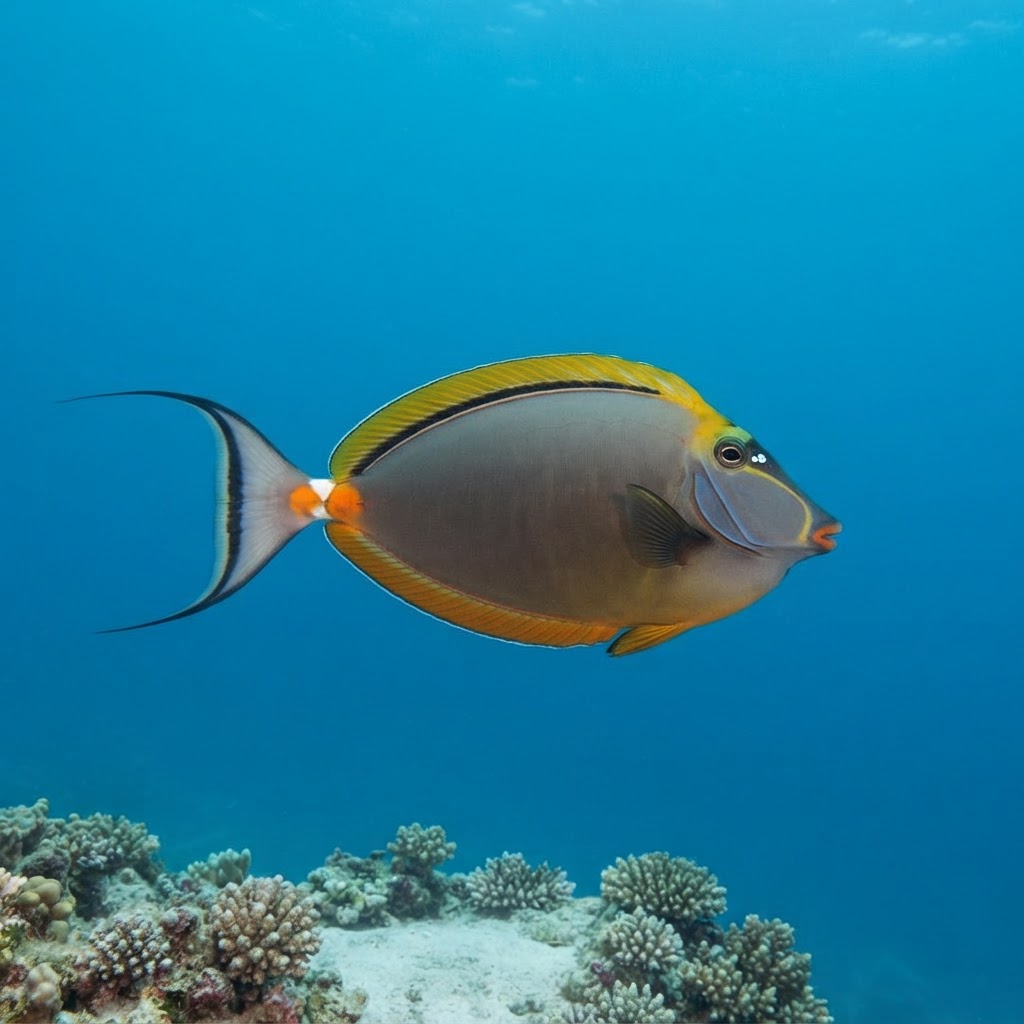
Reef neighbours a diver could mistake it for. Use the identification notes above to tell them apart.
Most reliably logged in the Maldives, especially the Central Atolls, with strong numbers across Indonesia in Bali, Sulawesi, and Raja Ampat, and further sightings in the Philippines' Visayas region. Palau's Rock Islands, Taiwan, Malaysia, Vanuatu, and French Polynesia's Tuamotu Islands also produce regular records.
Mapping where Bignose Unicornfish is logged…
The Maldives' Central Atolls produce the most sightings by far, with further strong populations in Bali, Sulawesi, and Raja Ampat in Indonesia, and the Visayas in the Philippines. Palau, Taiwan, and Malaysia also offer regular encounters.
There's no strong seasonal signal in the sighting data, and the species tolerates a wide 25.5 to 29 C range, so it's seen on tropical reefs throughout the year.
Check for a blue-grey body, a rounded bump on the forehead that thickens with age, and a pale or yellow-tinged tail base. It's usually seen hovering in loose groups off the reef rather than grazing on the bottom.
They typically reach around 42 cm, making them a mid-sized member of the surgeonfish family, noticeably bulkier through the head than smaller reef tangs.
Rather than scraping algae off the reef like most surgeonfish, this species feeds on zooplankton it picks straight out of the water column, which is why it's so often seen hovering above the reef instead of grazing on it.
No, they're harmless herbivorous plankton-feeders that pay little attention to divers and pose no threat.
Site and sighting data is aggregated from diver logs, iNaturalist and GBIF. For taxonomy and conservation status:
Orangespine Unicornfish
961 sites