Tyrannodoris luteolineata
An uncommon nudibranch find logged from North Island, New Zealand to Sabah, Malaysia and Île des Pins, New Caledonia year-round.
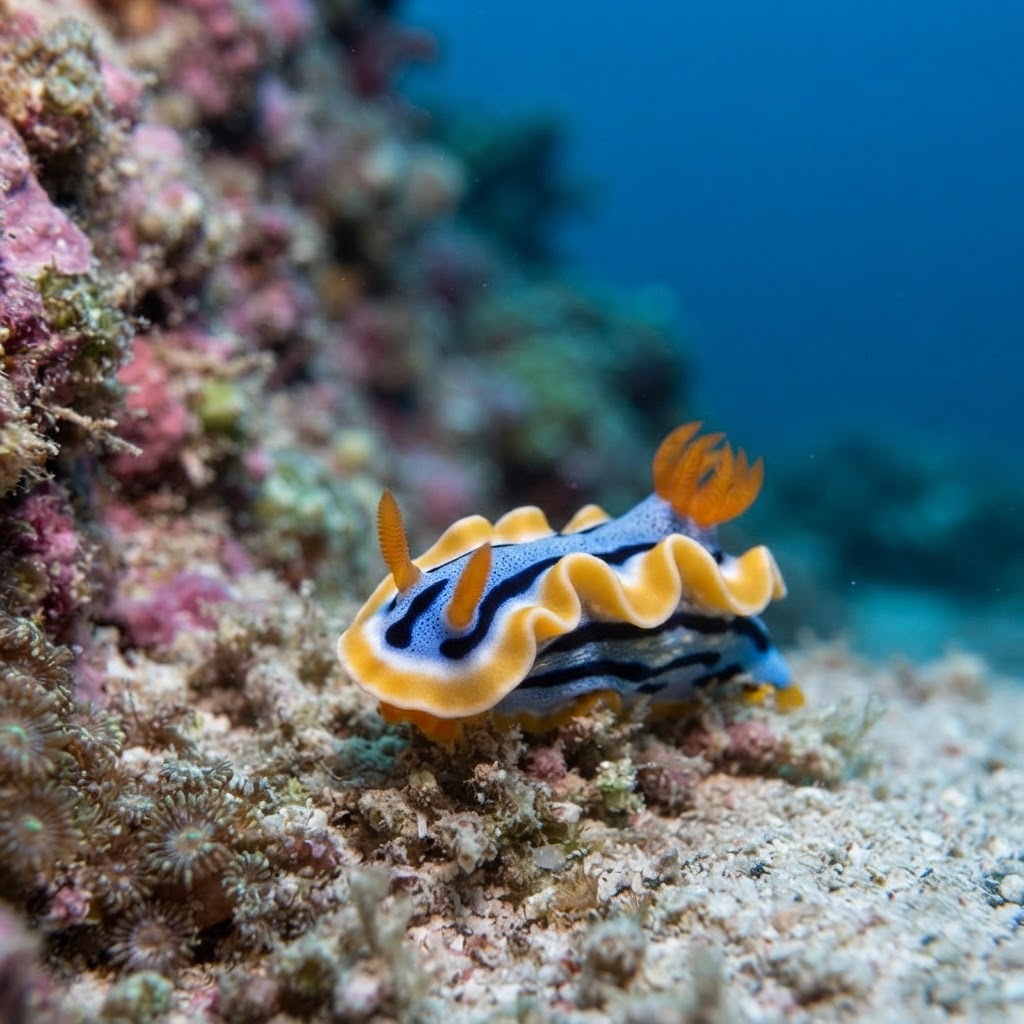
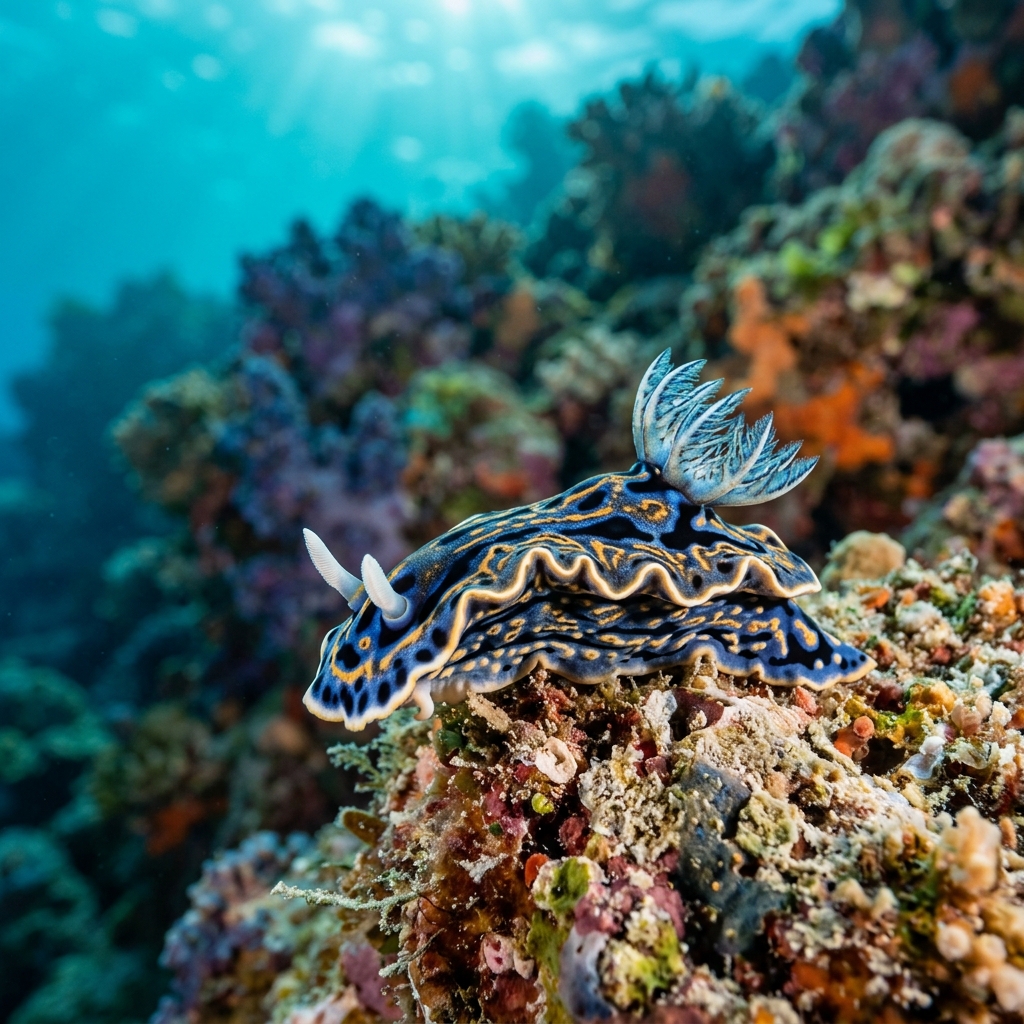
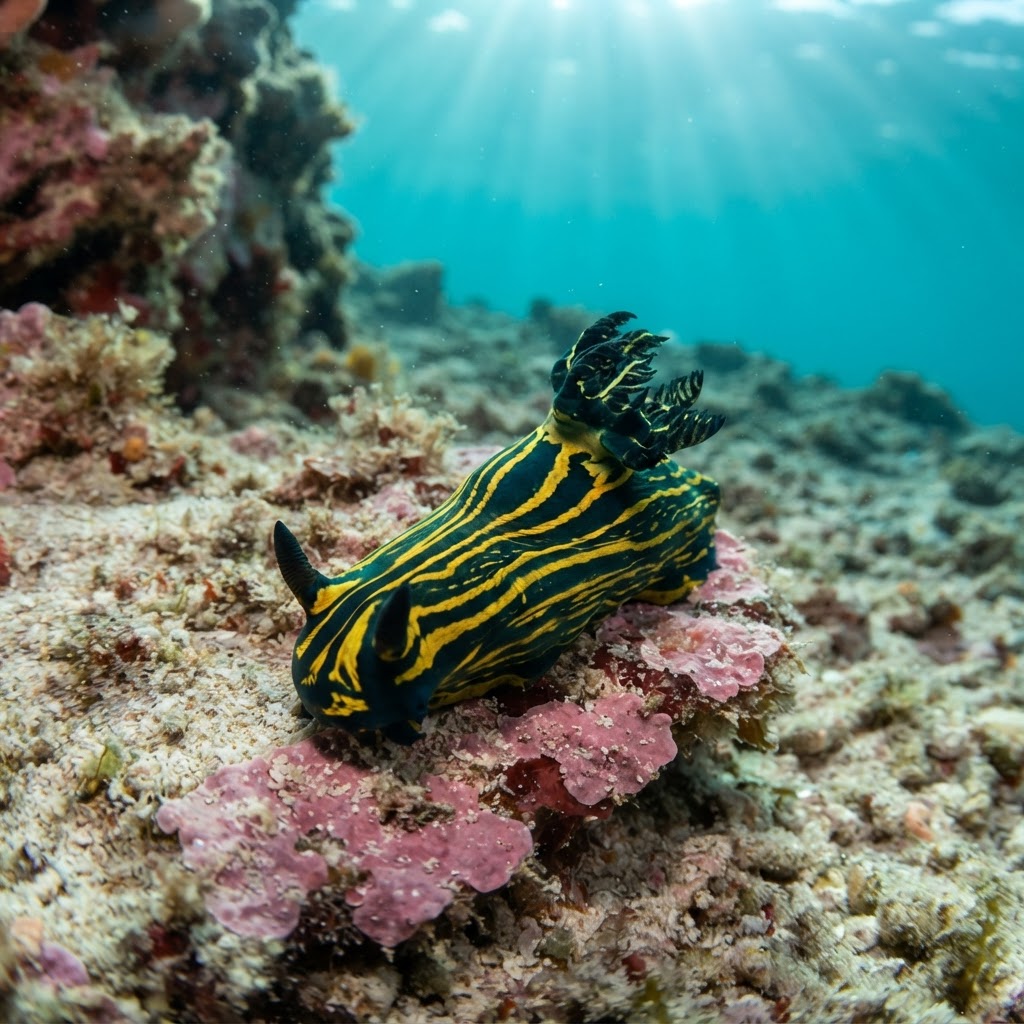
A slug-bodied nudibranch identified underwater by the yellow lines running along its mantle, set against a darker base colour. Look for the pair of rhinophores (sensory horns) up front and the feathery gill cluster on the back third of the body, both typical of the dorid nudibranchs. Size in the water tends toward small to modest, so slow, close-focus scanning of rubble and reef surfaces is usually how divers find it.
Divers typically find it moving slowly across hard substrate or rubble patches while grazing, usually spotted on a close macro-focused pass rather than mid-water. It shows no reaction to divers beyond continuing its unhurried crawl, and like most nudibranchs it is most active when the reef is calm and undisturbed.
Like other dorid nudibranchs, it likely relies on chemical defences absorbed from its diet rather than speed or camouflage to avoid predators, which is part of why it can sit exposed on open substrate without much concern.
Sightings are spread across the year with no detected season, and the observed water-temperature range of 17.1 to 30.0 C spans cool temperate to warm tropical conditions, so it turns up on dives in any month at these sites.
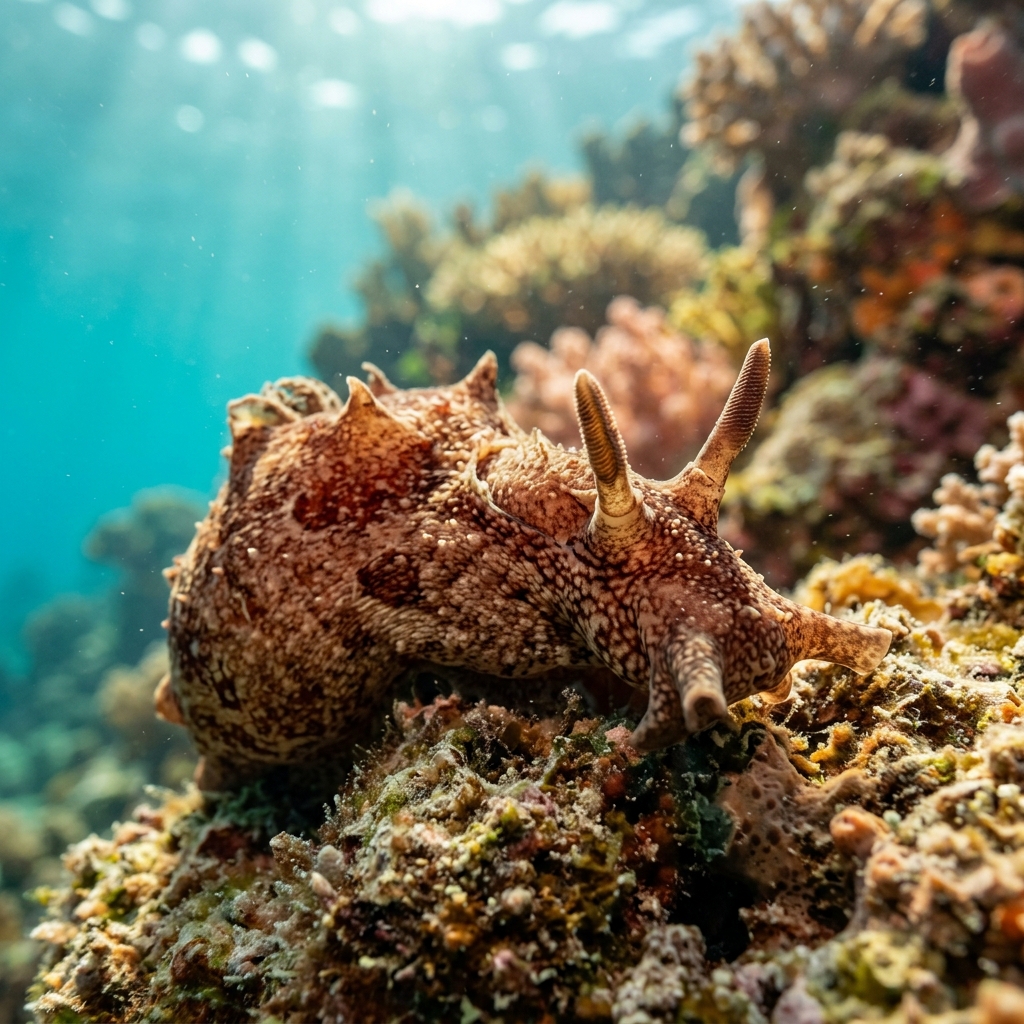
Reef neighbours a diver could mistake it for. Use the identification notes above to tell them apart.
Most reliably logged around North Island, New Zealand, and a strong presence in Sabah, Malaysia and Île des Pins, New Caledonia. Divers also report it from Santiago in Cape Verde, New South Wales and Western Australia in Australia, and Longdong in Taiwan, making it a widespread but never abundant find.
Mapping where Yellow-lined Tyrannodoris is logged…
North Island in New Zealand turns it up most consistently, with further sightings in Sabah, Malaysia, Île des Pins in New Caledonia, and sites in Cape Verde, Australia and Taiwan.
There is no clear peak season in the sighting data, and it has been recorded in water from 17.1 to 30.0 C, so it is a year-round possibility at the sites where it occurs.
Check for yellow lines running along the mantle against a darker body, paired rhinophores up front, and a feathery gill tuft near the tail. It moves slowly over hard substrate, which gives divers time for a close look.
No, it poses no danger to divers. Like most nudibranchs, its defences are chemical and aimed at predators, not people, so it can be safely observed and photographed without disturbance.
It is logged as uncommon at nearly all the sites where divers have found it, so spotting one usually takes a deliberate slow search of the substrate rather than a chance sighting.
Site and sighting data is aggregated from diver logs, iNaturalist and GBIF. For taxonomy and conservation status:
Light-spotted Aegires
3,168 sites