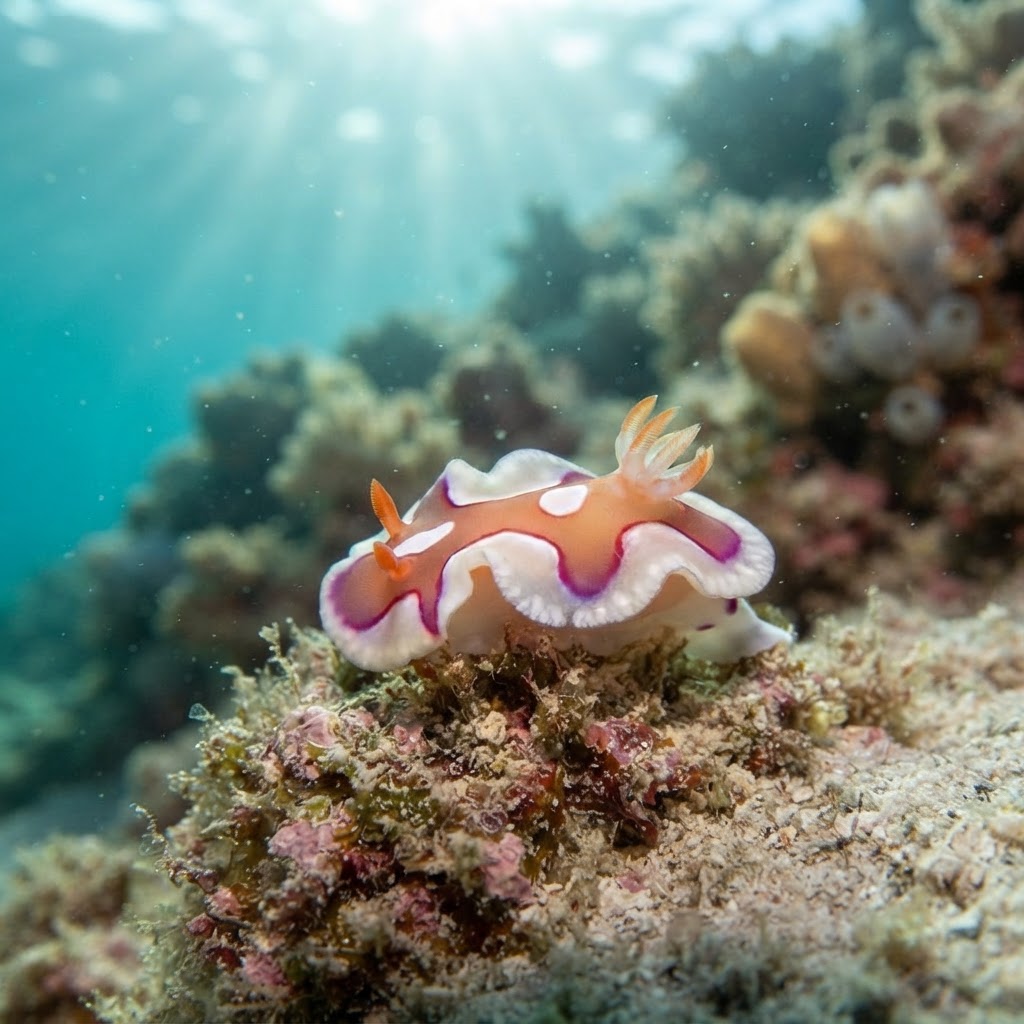
Mexichromis pusilla
A small, uncommon nudibranch logged on reefs in Luzon, Philippines and Queensland, in warm water between 25 and 31C.
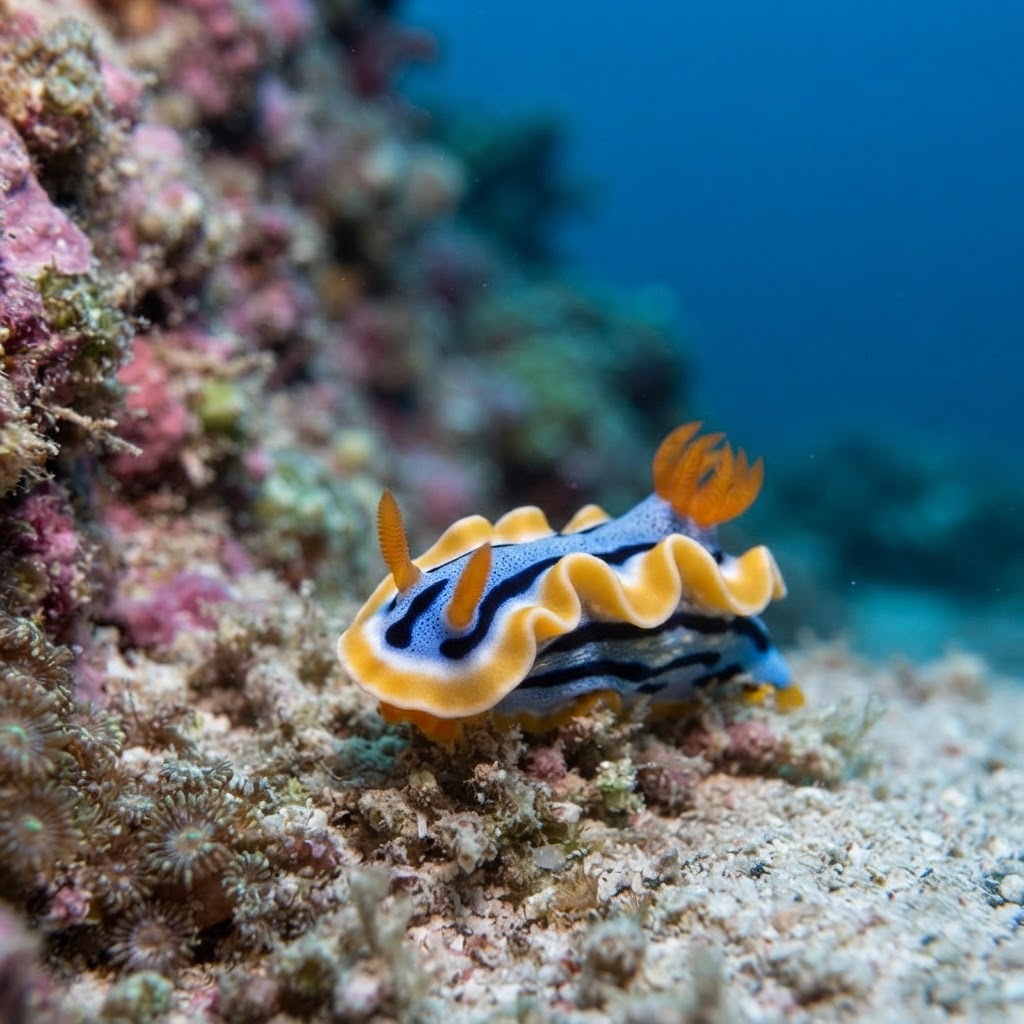
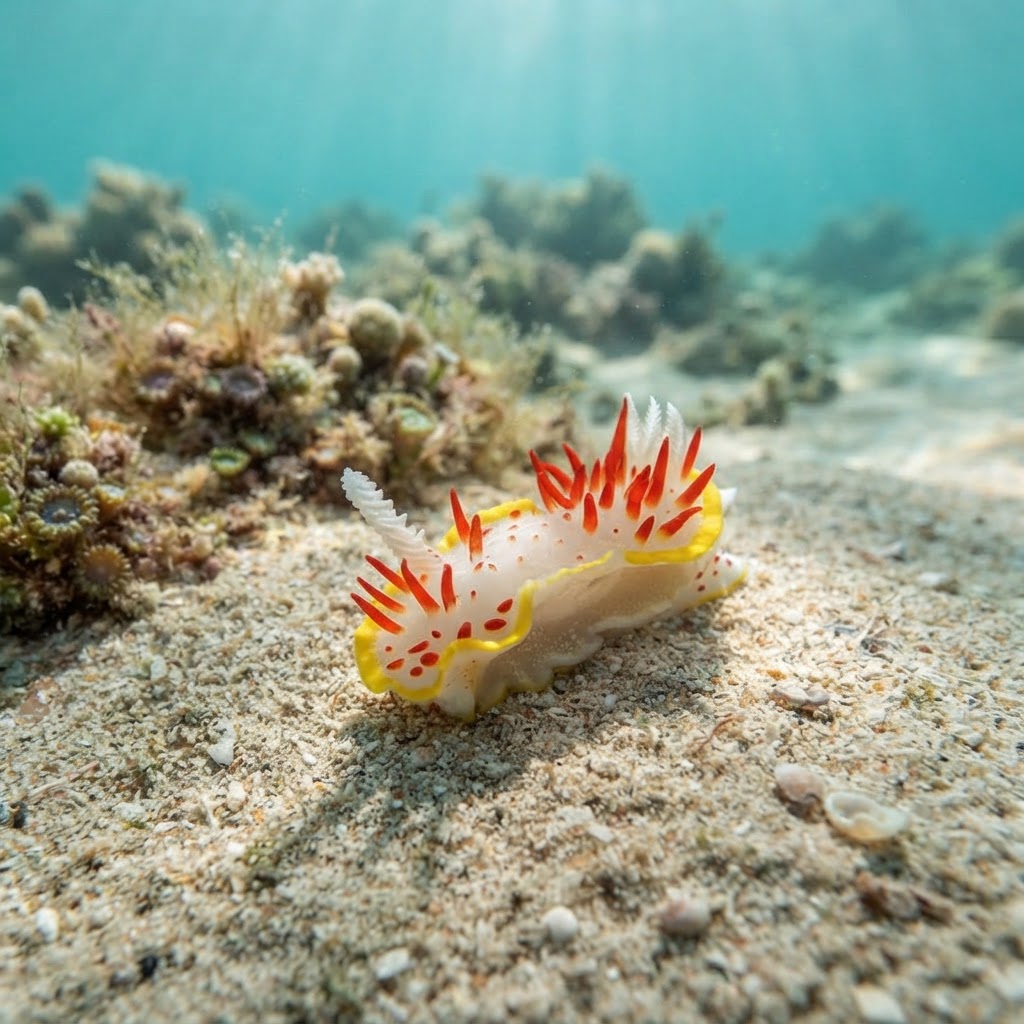
A tiny slug barely long enough to notice unless you are already scanning the substrate closely, with a translucent white to pale body marked by paired orange or rust-coloured spots along the back that give it its common name. The mantle edge often carries a fine dark or yellow line, and the rhinophores (the paired sensory stalks on the head) are usually tipped in a contrasting colour. Its small size means most divers spot it only when a guide points it out on a rubble or sponge-covered patch of reef.
Divers find it moving slowly across rubble, sponge patches or algae-covered rock, grazing on the tiny food sources it needs to survive rather than reacting to the presence of a torch or camera. It shows no defensive display worth noting and simply continues its slow crawl when approached, making it an easy macro subject if you can first find it. Best located during a deliberate slow-paced reef scan rather than a drift or wide-angle dive.
Like other members of the sea slug group it likely gets some of its bright pigment from the sponges it feeds on, a trait common across the chromodorididae family used both for camouflage and as a warning to predators.
Sightings show no detectable seasonal pattern, and the observed water temperature range of 25.4 to 31.4C spans typical tropical conditions year-round, so there is no strong reason to favour one month over another.
Reef neighbours a diver could mistake it for. Use the identification notes above to tell them apart.
Logged sightings cluster in the Philippines, especially around Luzon, with an additional record from Queensland, Australia. It is an uncommon find even at the sites where it turns up, so treat any sighting as a lucky one rather than something to plan a whole dive around.
Mapping where Twinspot Rainbow Dorid is logged…
Most logged sightings come from Luzon in the Philippines, with a further record from Queensland, Australia. It is an uncommon find at any of these sites, so spotting one takes a careful eye on the reef floor.
There is no detected seasonal pattern for this species, and it has been recorded in water from 25.4 to 31.4C, so it can turn up on tropical reefs at any time of year.
Look for a small translucent white to pale-bodied slug with paired orange or rust spots along its back and contrasting tips on its rhinophores. Its tiny size means it is usually spotted during a slow, close scan of rubble or sponge-covered reef rather than at a glance.
No, it poses no danger to divers. It has no sting or bite of concern and simply continues grazing when approached.
Exact size data is not available, but like most species in the chromodorididae family it is a small nudibranch best found through close, deliberate reef scanning rather than spotted from a distance.
Site and sighting data is aggregated from diver logs, iNaturalist and GBIF. For taxonomy and conservation status:
Blue Dragon
3,163 sites