Taeniamia biguttata
A small, secretive reef cardinalfish with paired body spots, comfortable in warm 27-29C tropical water year-round.
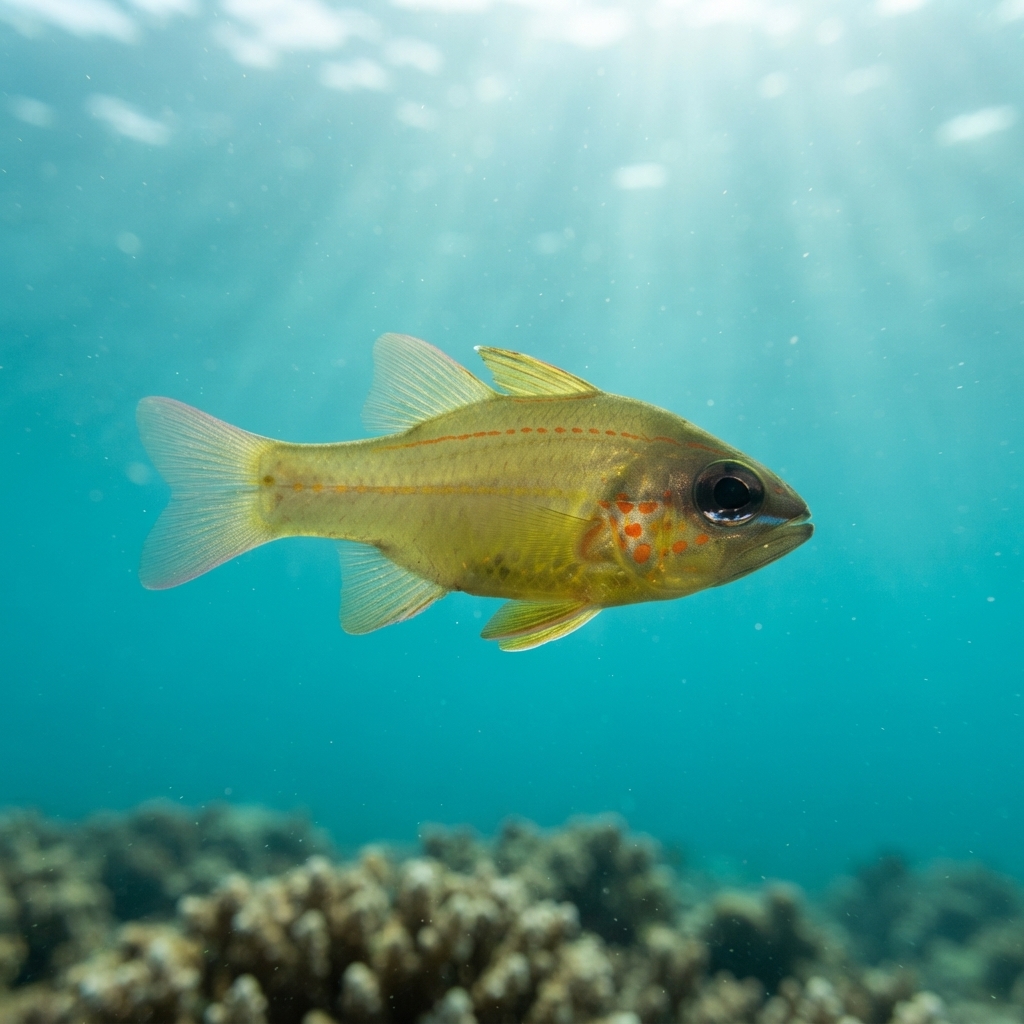
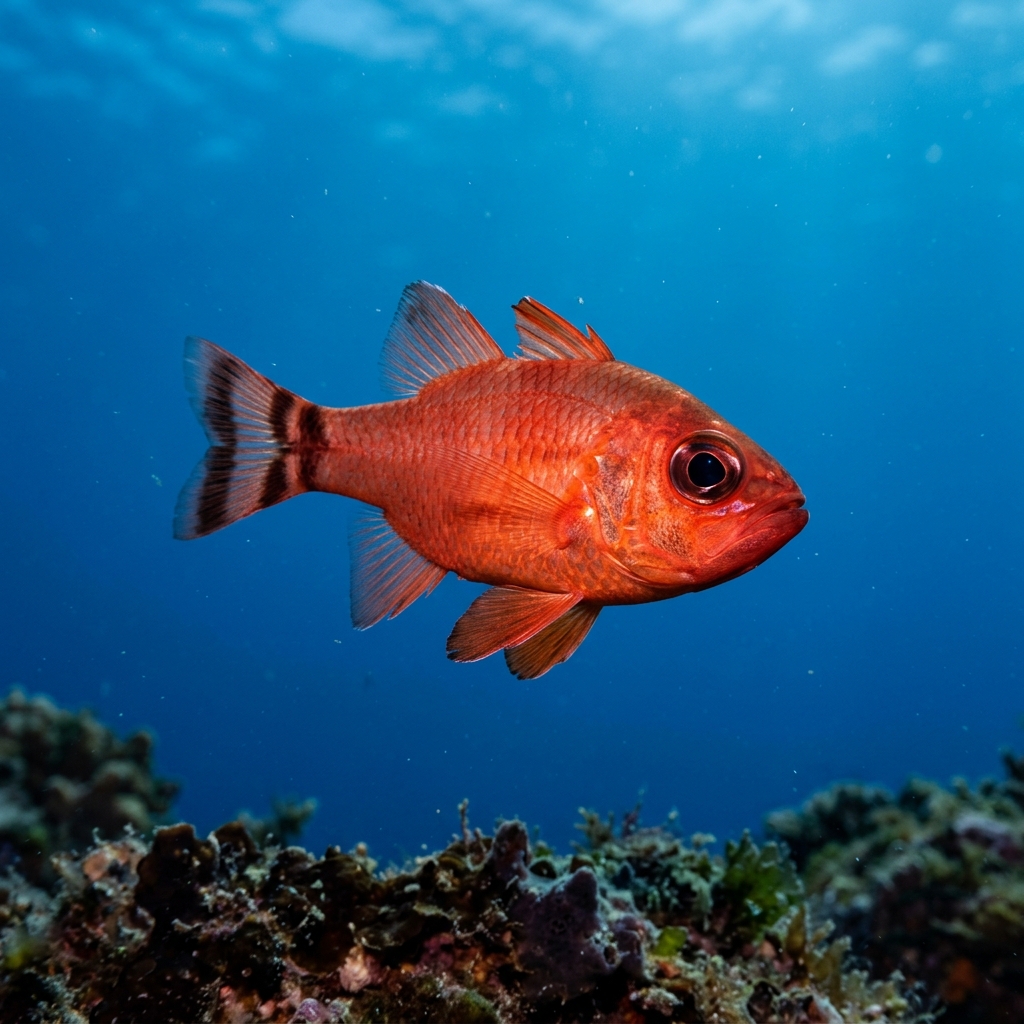
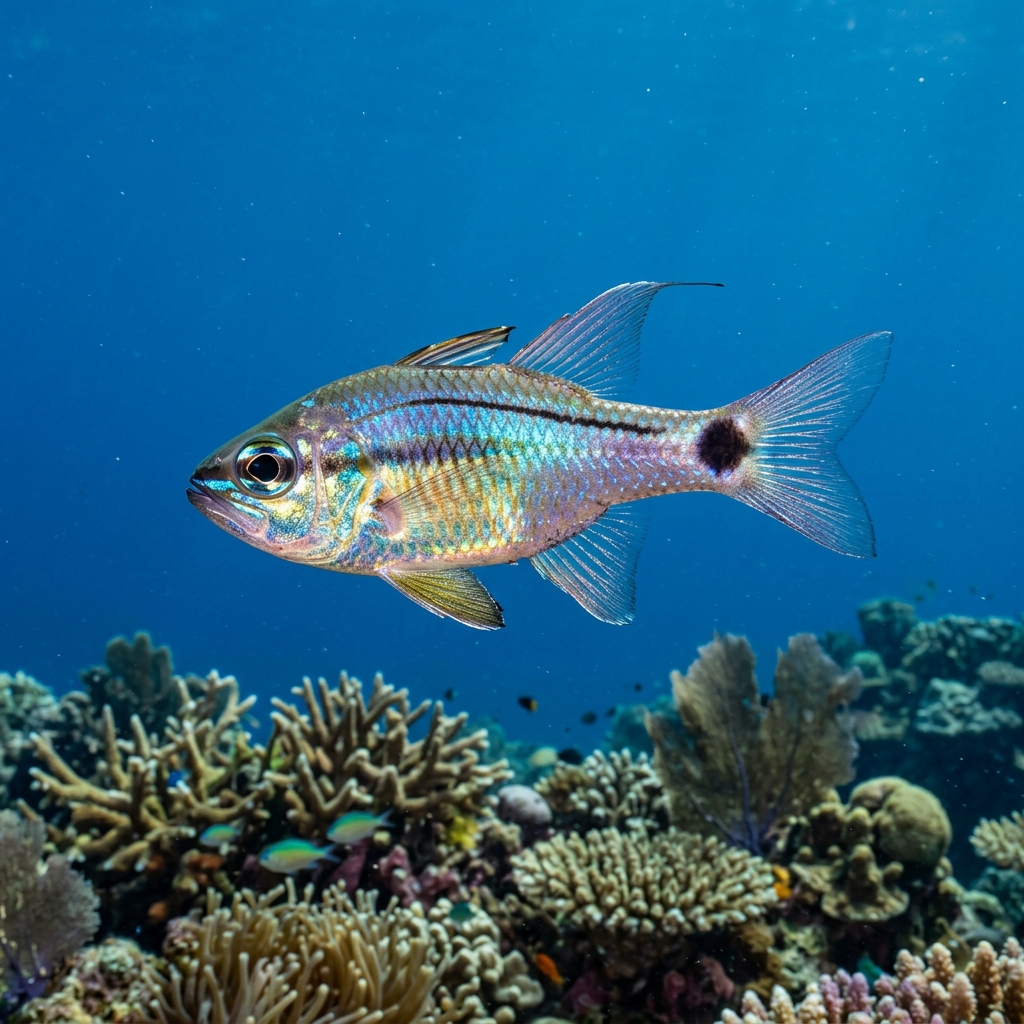
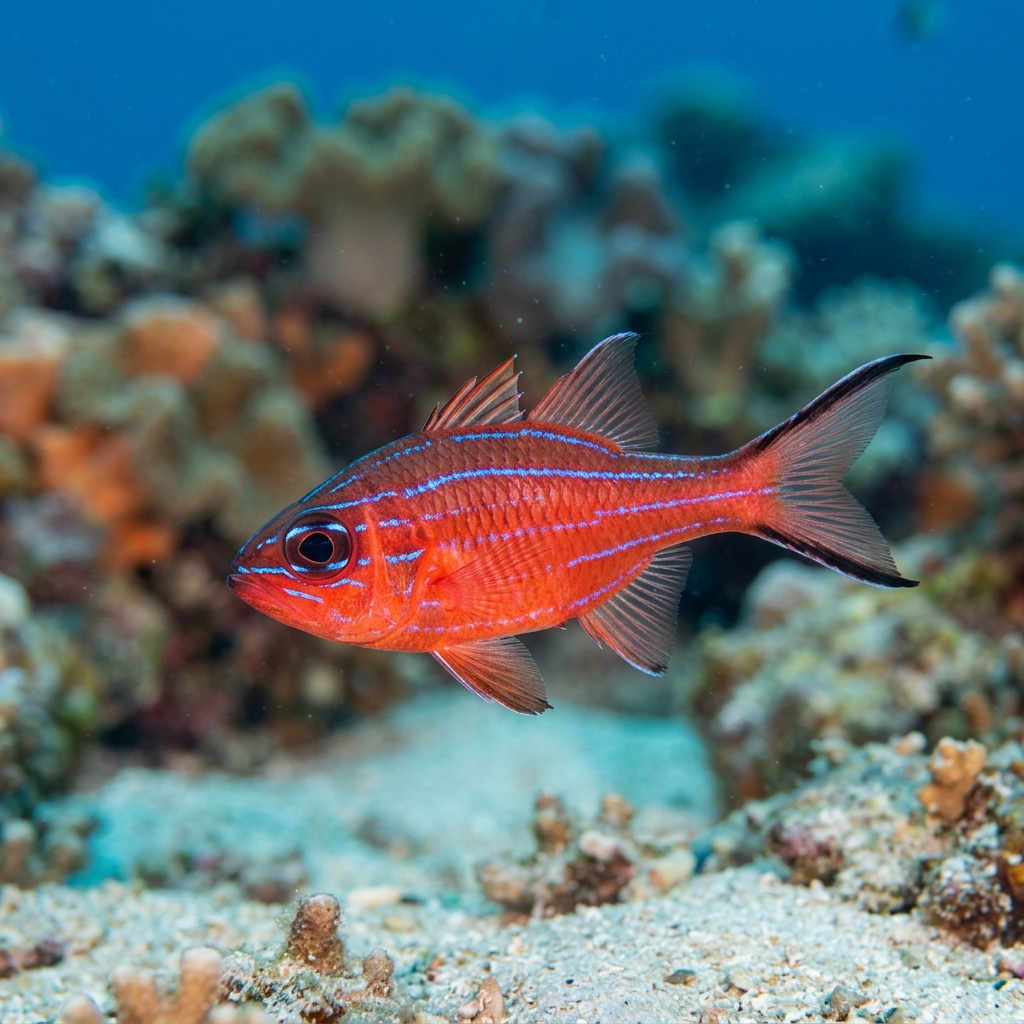
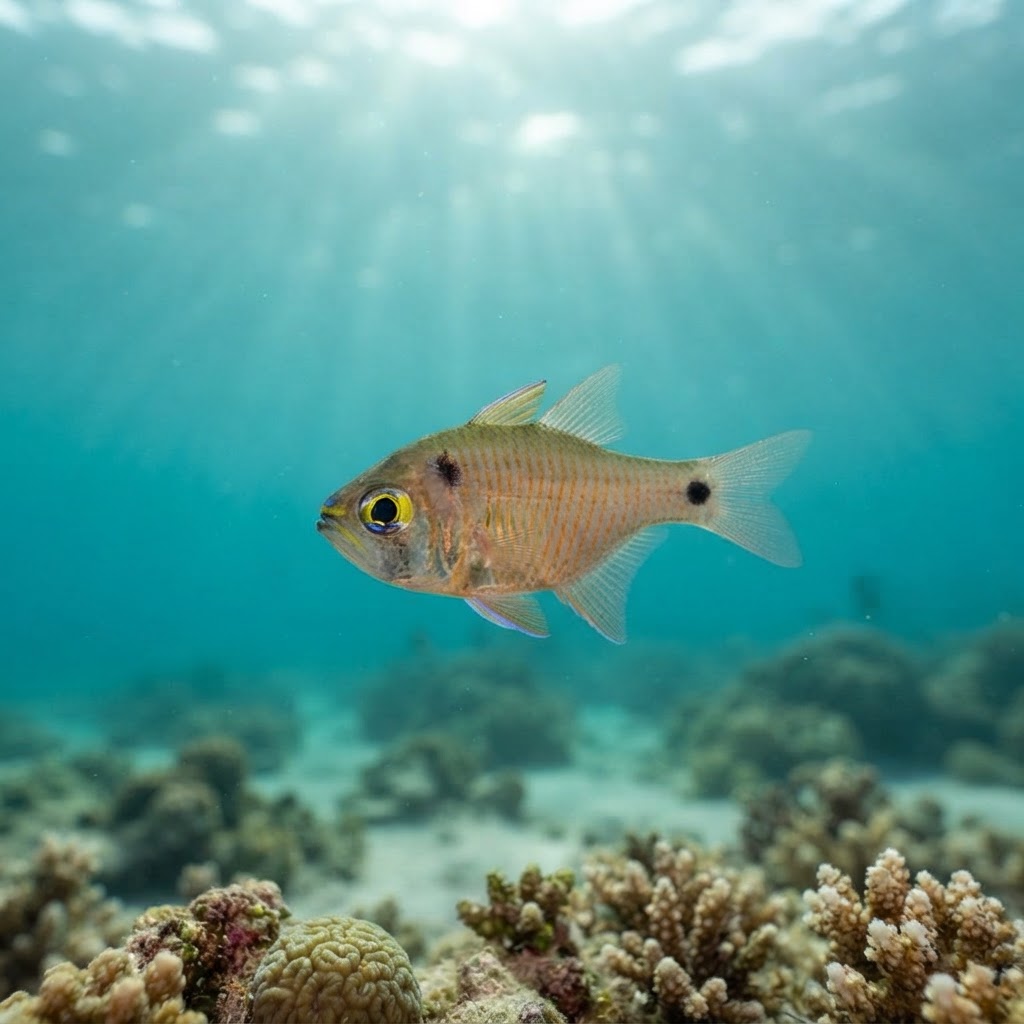
Small and compact at around 8 cm, with a pale reddish-brown to tan body that fades to translucent toward the tail. The name-giving feature is a pair of dark spots along the body, usually one behind the gill cover and another near the base of the tail, which helps separate it from plainer or single-spotted cardinalfish. It has the typical cardinalfish shape: a big-eyed, blunt head and two separate dorsal fins, and it tends to hang motionless rather than swim actively.
Typically seen hovering in small, loose groups near reef crevices, ledges or coral rubble rather than out in the open, keeping close to shelter it can dart into if threatened. Like most cardinalfish it is more active around dusk and after dark, when divers doing night dives are more likely to see it feeding away from cover. During the day it tends to sit still, relying on its subdued colouring to blend into shaded reef structure.
Cardinalfish in this family are mouth-brooders: males carry the fertilised egg mass in their mouth until the larvae hatch, so a male seen with a visibly swollen jaw may be guarding a clutch rather than feeding.
There is not enough logged data yet to identify a seasonal pattern, and its observed water-temperature niche of 26.9 to 29.3C is a stable year-round range on tropical reefs, so it is best treated as a year-round sighting rather than a seasonal one.
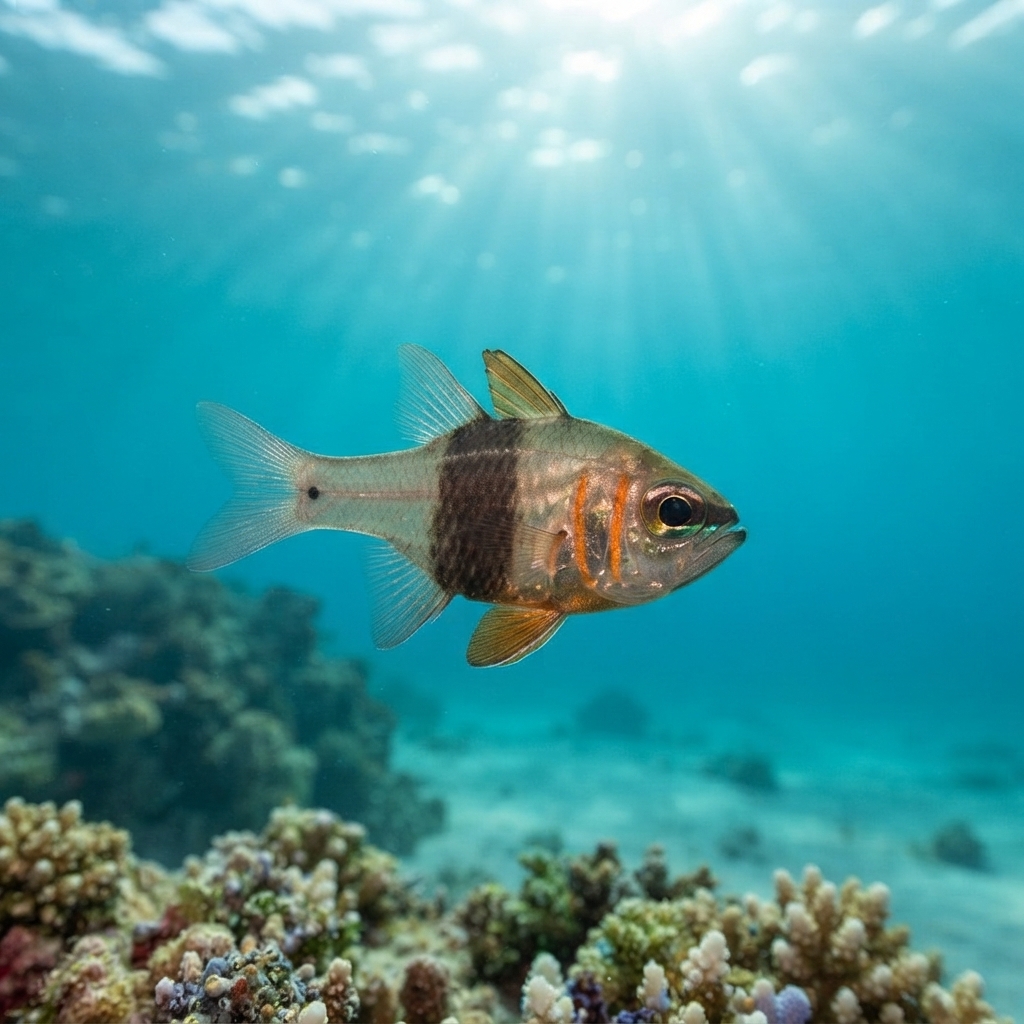
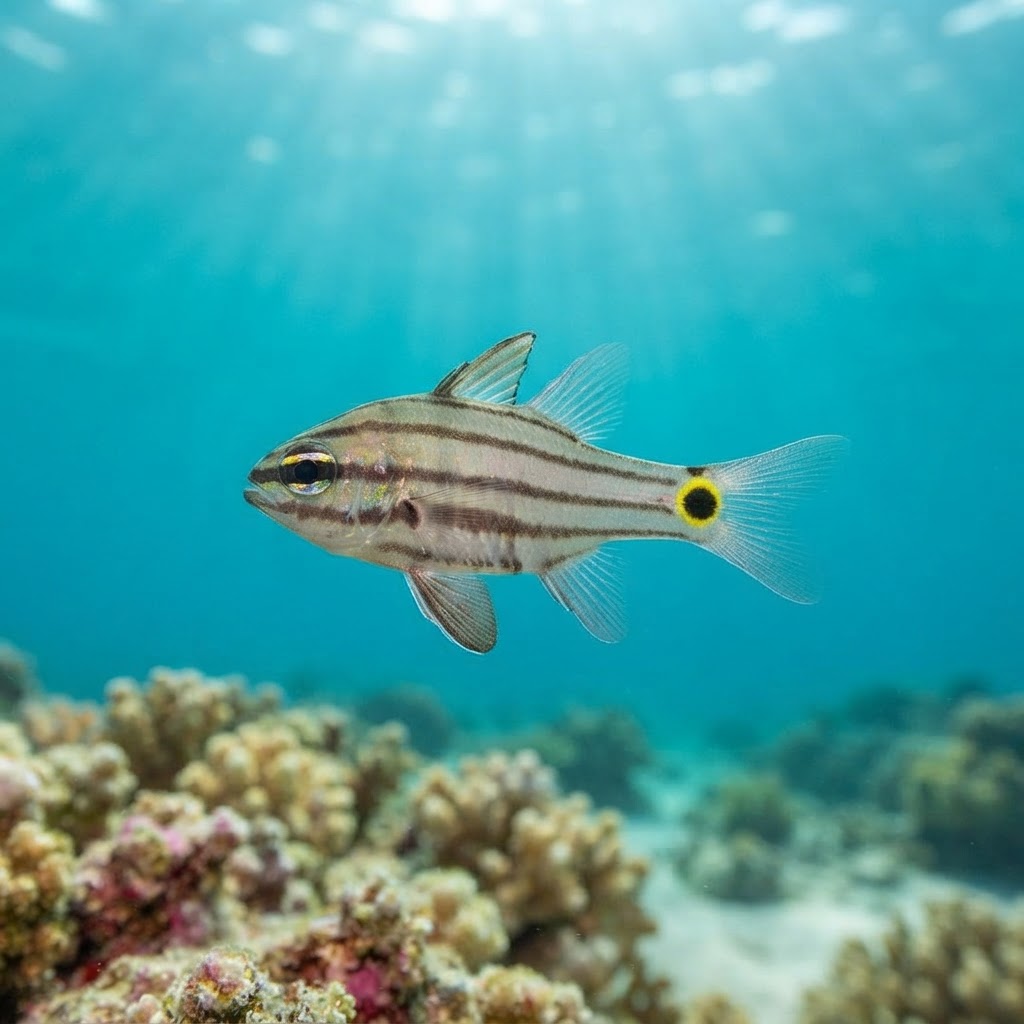
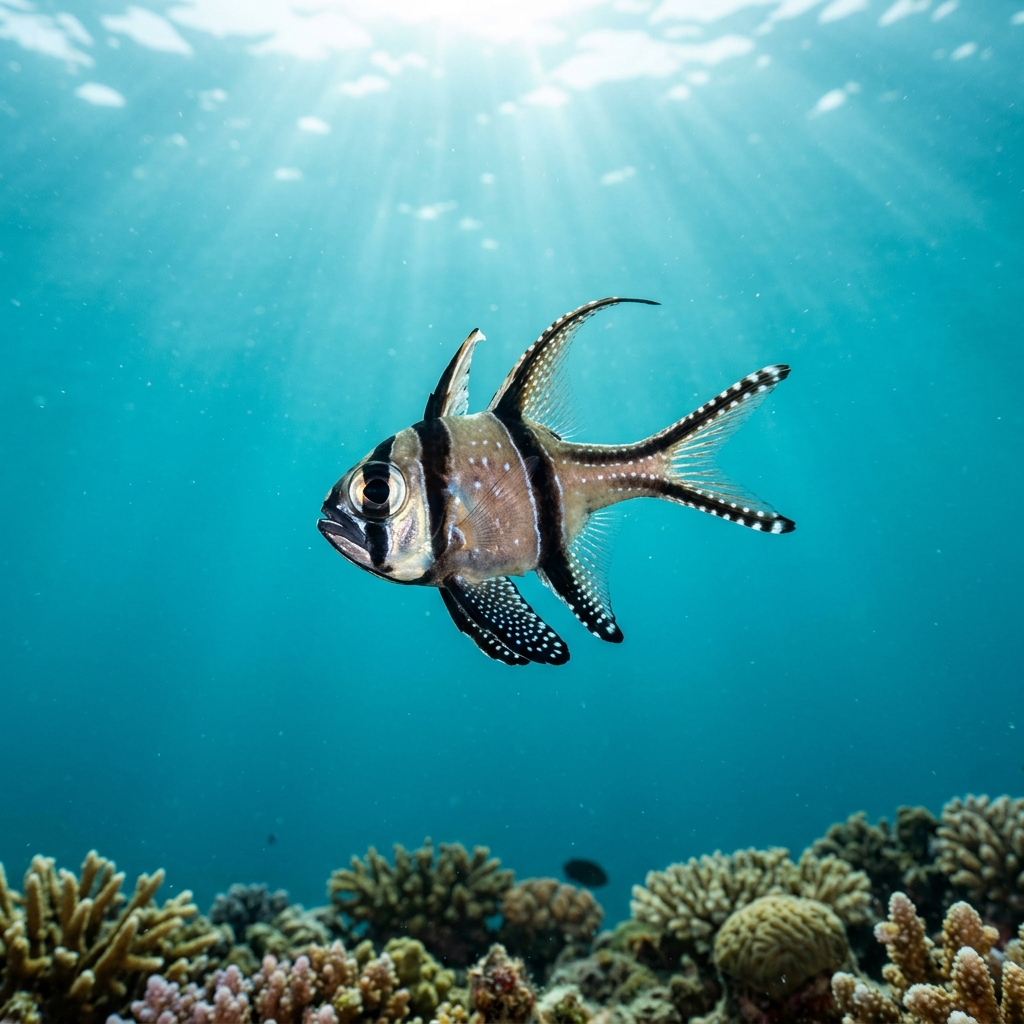
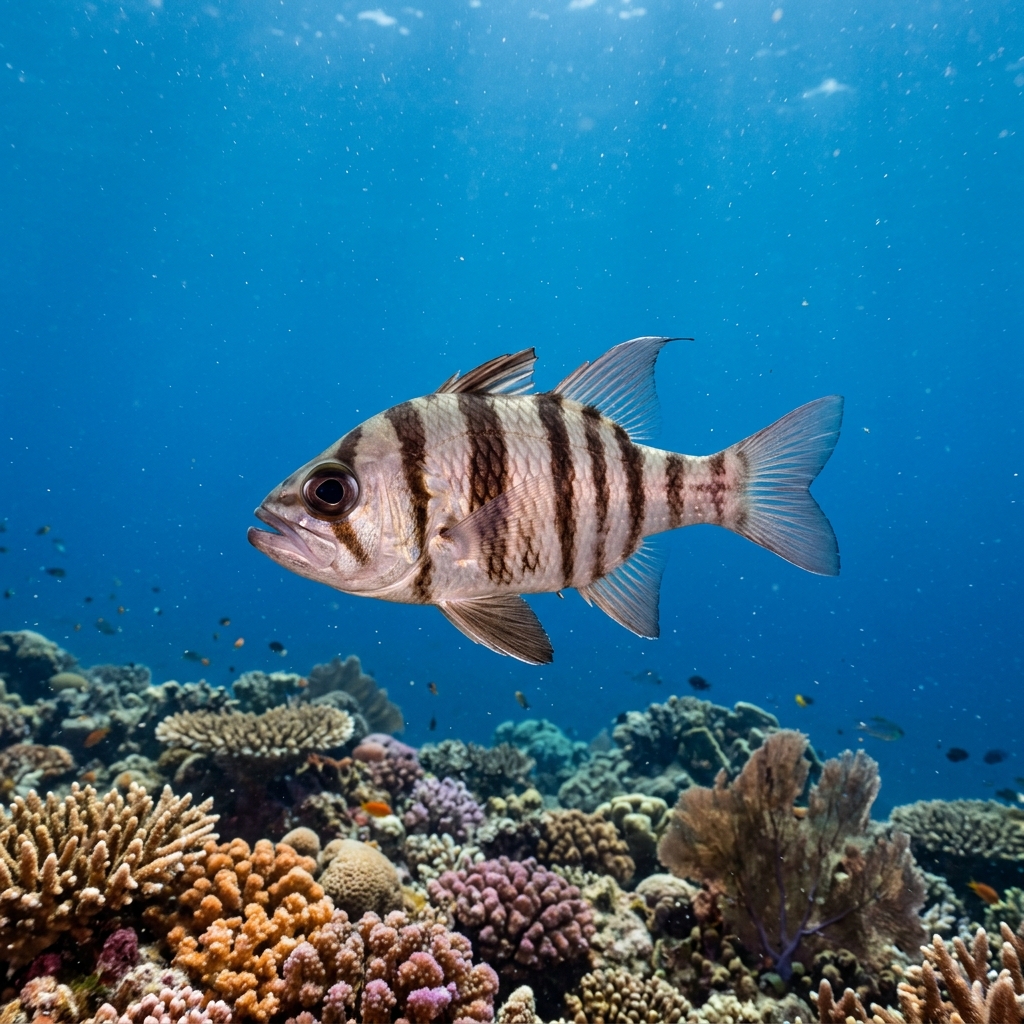
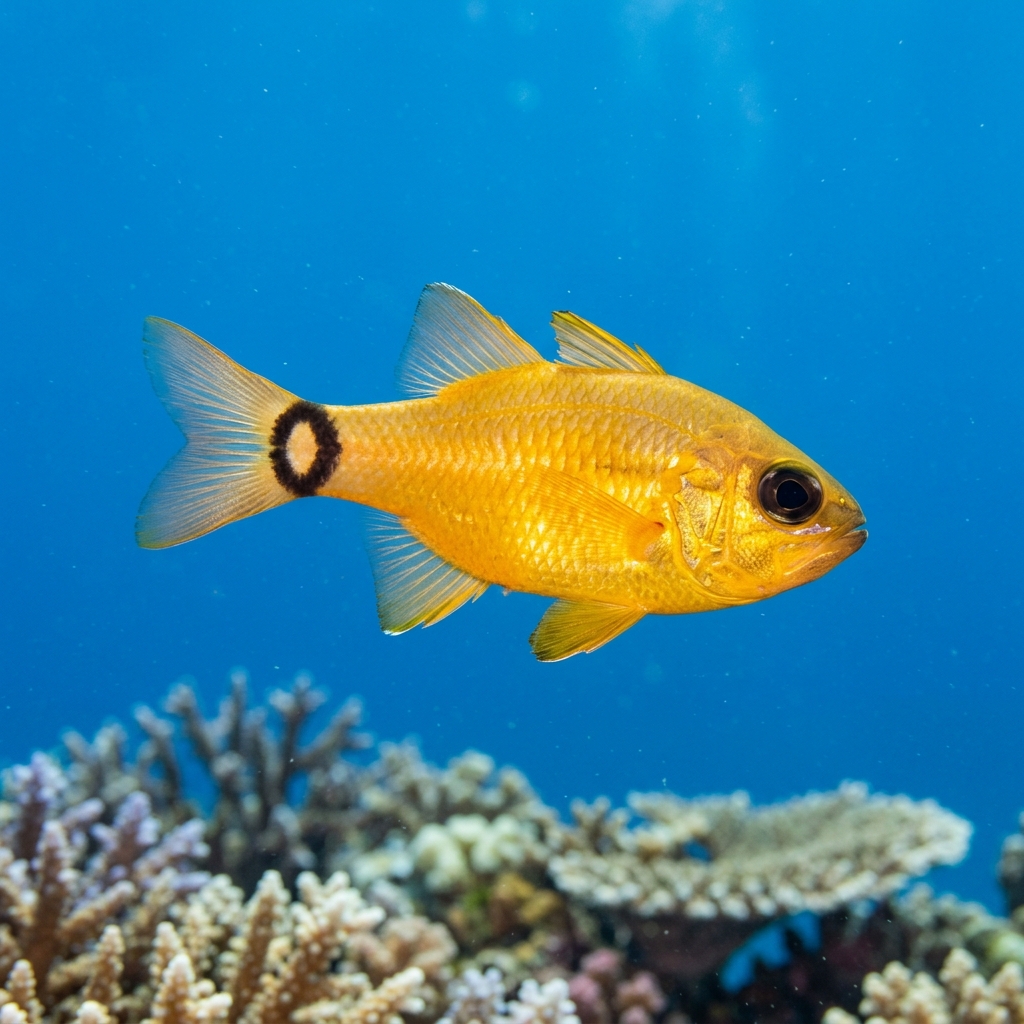
Reef neighbours a diver could mistake it for. Use the identification notes above to tell them apart.
Diver logs for this species are too sparse right now to name reliable regions or countries. Check back as more sightings are recorded, or look for it on typical cardinalfish habitat: reef crevices, overhangs and rubble patches across the tropical Indo-Pacific.
Mapping where Twinspot Cardinalfish is logged…
Look for a small, reddish-tan cardinalfish around 8 cm long with two distinct dark spots, one near the gill cover and one near the tail base. It hovers close to reef shelter rather than swimming in the open, which along with the spot pattern helps separate it from similar cardinalfish.
They stay small, reaching around 8 cm in length, which is typical for cardinalfish and one reason they are easy to overlook against a busy reef background.
There is not enough logged sighting data to point to a specific season, and its 26.9 to 29.3C temperature niche is a year-round condition on tropical reefs, so it is best approached as a species you can look for at any time of year.
Like other cardinalfish, males are mouth-brooders, carrying the egg mass in their mouth until the young hatch. Spotting a male with an obviously bulging jaw on a dive is often a sign he is guarding a brood rather than feeding.
Site and sighting data is aggregated from diver logs, iNaturalist and GBIF. For taxonomy and conservation status:
Iridescent Cardinalfish
1,781 sites