Meiacanthus geminatus
A tiny fanged blenny logged in Sabah, Malaysia, in warm 28-29C water year-round; here's how to spot one on the reef.
Safety warning
Bites are rare and only happen if the fish is grabbed or cornered, but the venom delivered through those fangs can cause sharp, brief pain. Keep hands away from reef holes and rubble where it shelters, and there is no reason to handle one.
If you're bitten
Venomous bite (mild)General first-aid guidance, not a substitute for professional medical care. In an emergency, call your local emergency number.
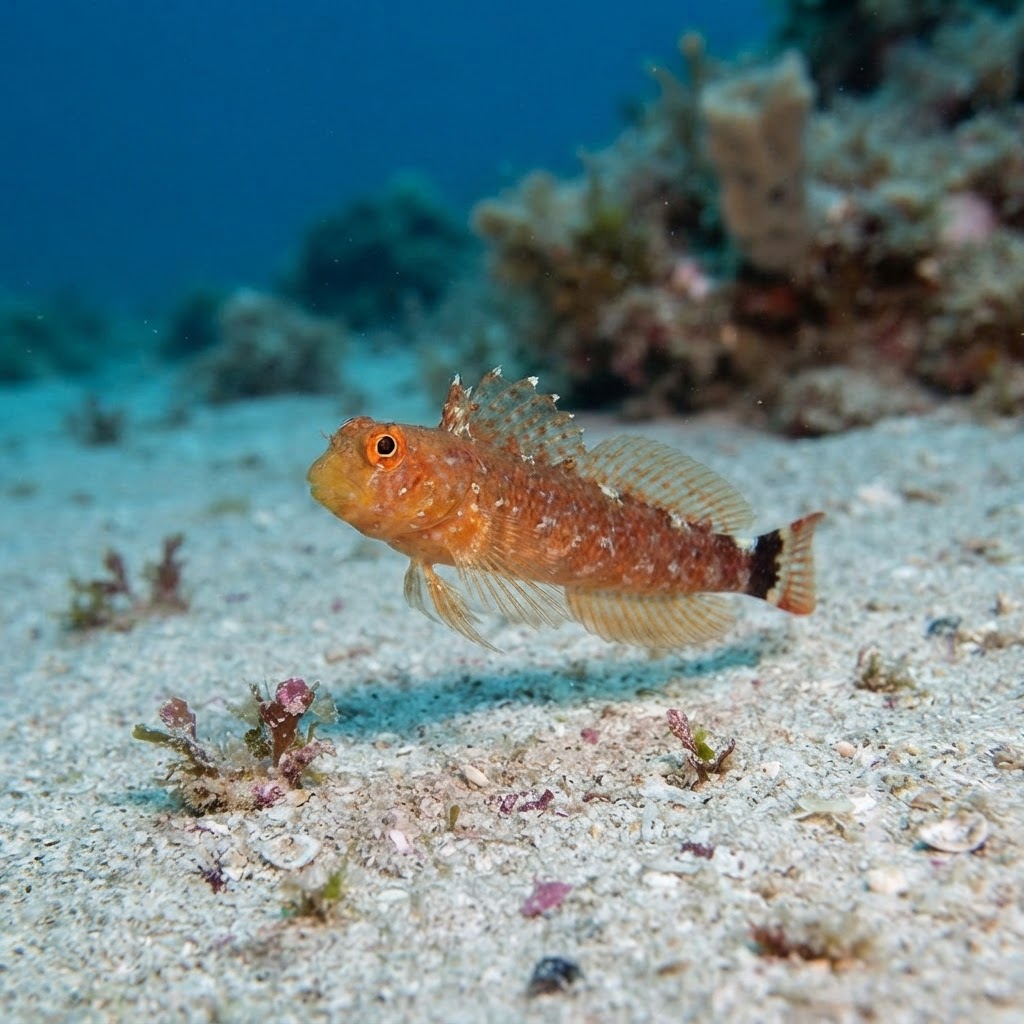
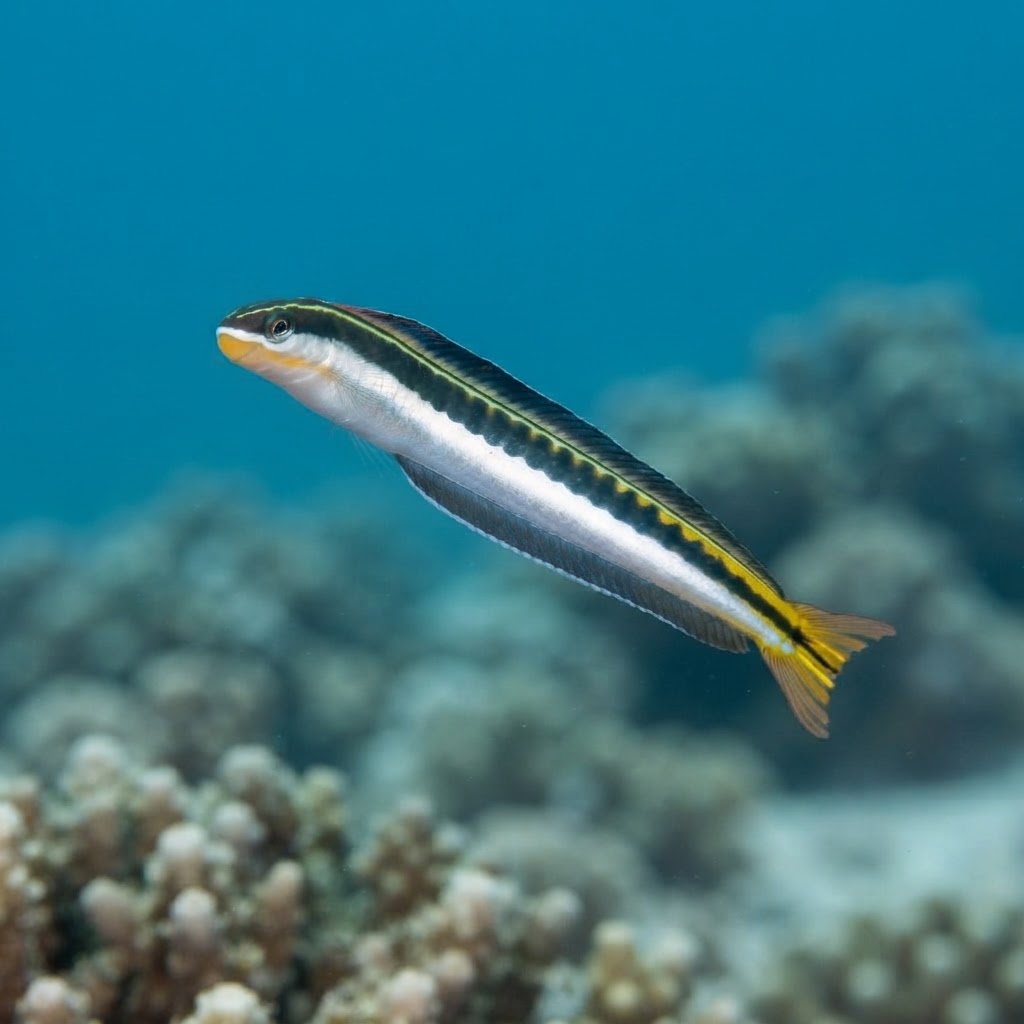
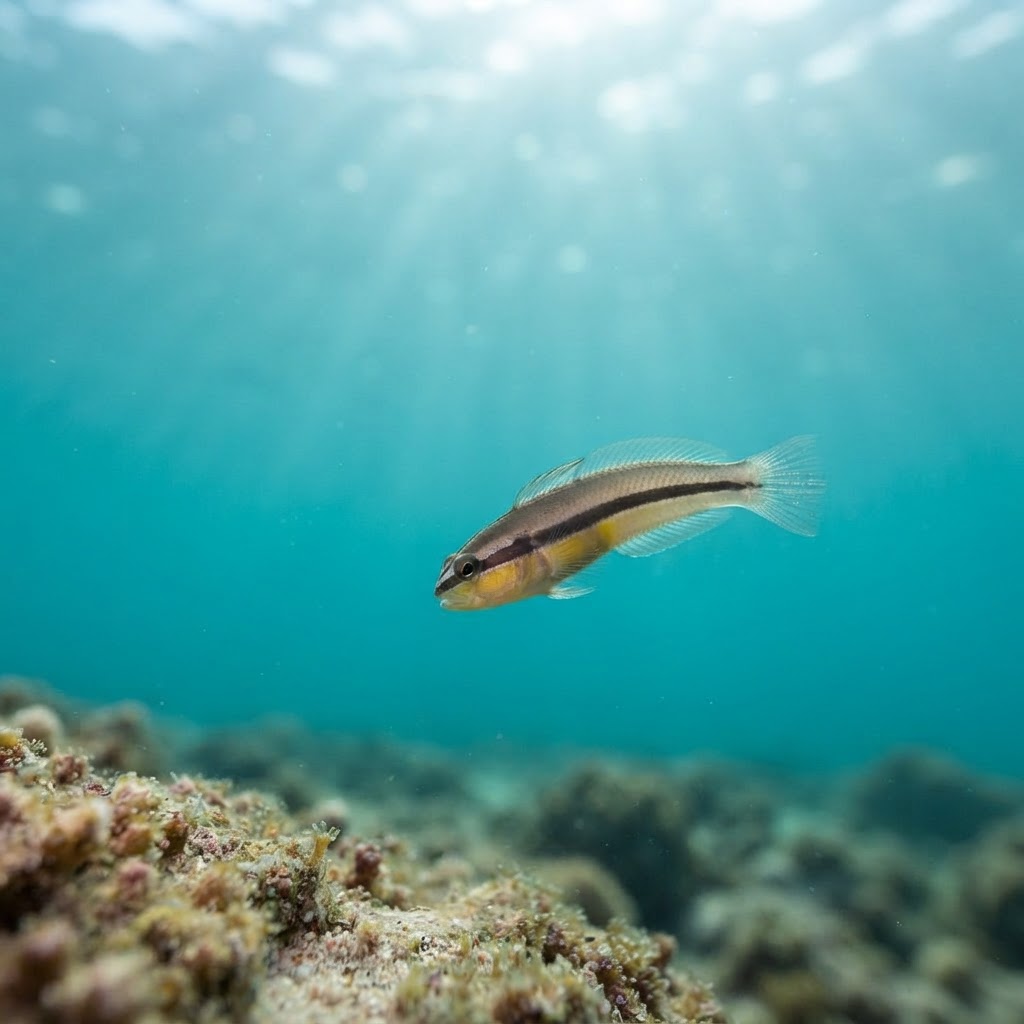
A slim, elongated blenny barely bigger than a finger, topping out around 4 cm, with a soft yellow to pale body and a rounded head that gives it a permanently curious expression. Look for it hovering just above a hole in the reef rather than resting flat like most blennies, since it swims with a distinctive fluttering, almost eel-like motion. The paired fangs that give the genus its name are hidden until it feels threatened, so they are not a reliable field mark.
Divers usually spot it hovering a short distance above its burrow, ready to dart back in if approached too quickly, then re-emerge once things settle. It picks at plankton and small invertebrates in the water column rather than grazing the reef itself, and it tends to stay close to a single patch of rubble or coral for cover. Logged as uncommon at its known site, so it takes a patient, slow-moving diver to pick one out.
Fangblennies use their venomous fangs purely in self-defence, and several harmless reef fish mimic their colouring to borrow that protection without carrying the venom themselves.
Water temperature at the known site sits in a narrow 28.4 to 29.2C band, and there is no detected seasonal pattern, so it is a year-round sighting rather than a seasonal one. Plan the dive around Sabah's general conditions rather than a specific month.
Reef neighbours a diver could mistake it for. Use the identification notes above to tell them apart.
Sightings are concentrated in Sabah, Malaysia, currently the only country with confirmed logs for this species. Divers looking for it should focus on reef sites in that region rather than expecting it elsewhere in the Coral Triangle.
Mapping where Twin Fangblenny is logged…
The only confirmed sightings logged so far are in Sabah, Malaysia, making it a regional specialty rather than a widespread find.
There's no detected season for this species; it's recorded in consistently warm water between 28.4 and 29.2C, so any time of year in Sabah works.
It carries venomous fangs used defensively, and a bite can sting sharply if the fish is handled or cornered. Left alone, it poses no real risk to divers.
Look for a slender, pale yellowish blenny around 4 cm long hovering just above a burrow, moving with a fluttering swim rather than perching flat on rock.
It's a small species, typically reaching about 4 cm in length, so it's easy to miss without a close, slow look at the reef.
Its venomous fangs are so effective as a deterrent that several other reef fish species mimic its colour pattern purely to avoid being eaten, without having any venom themselves.
Site and sighting data is aggregated from diver logs, iNaturalist and GBIF. For taxonomy and conservation status:
Rusty Blenny
2,605 sites