Jorunna rubescens
A velvety white nudibranch dotted with brown, most often logged around Visayas and Okinawa in water near 25-30C, year-round.
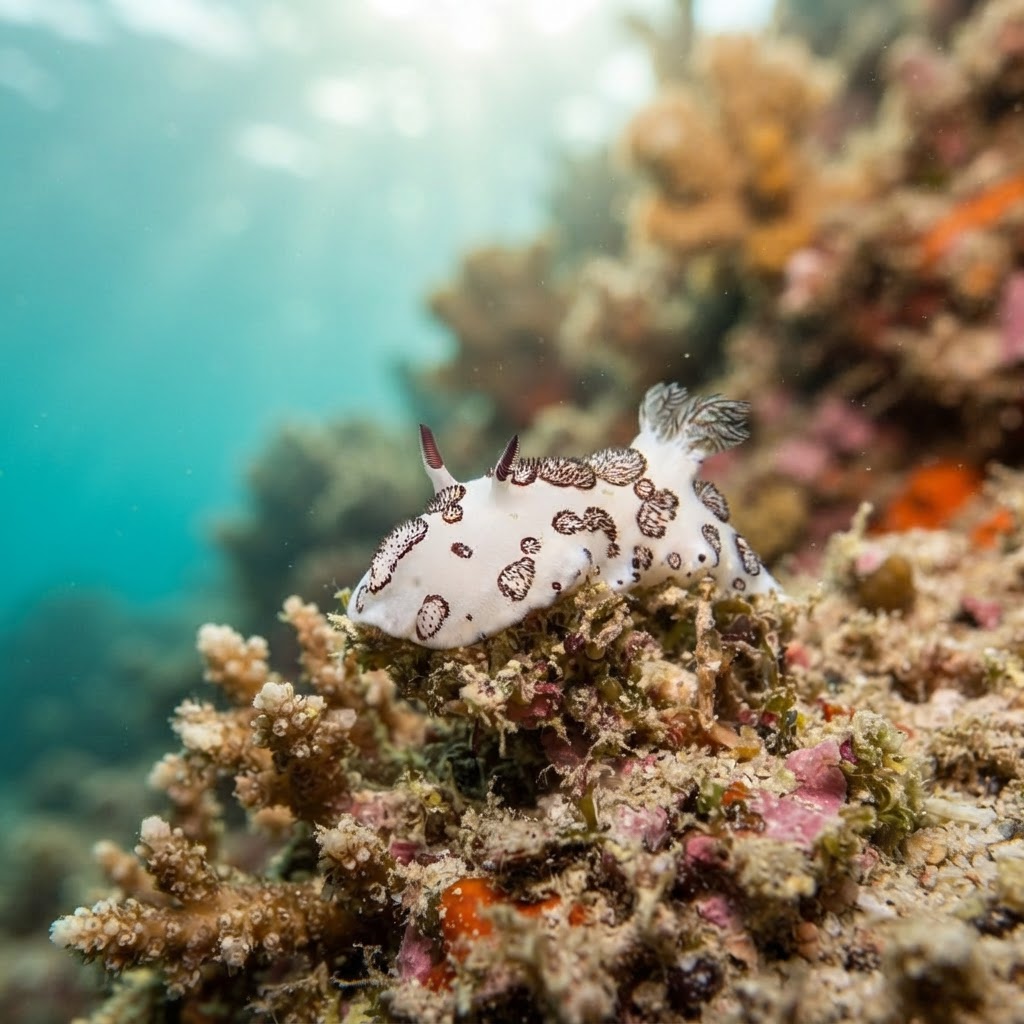
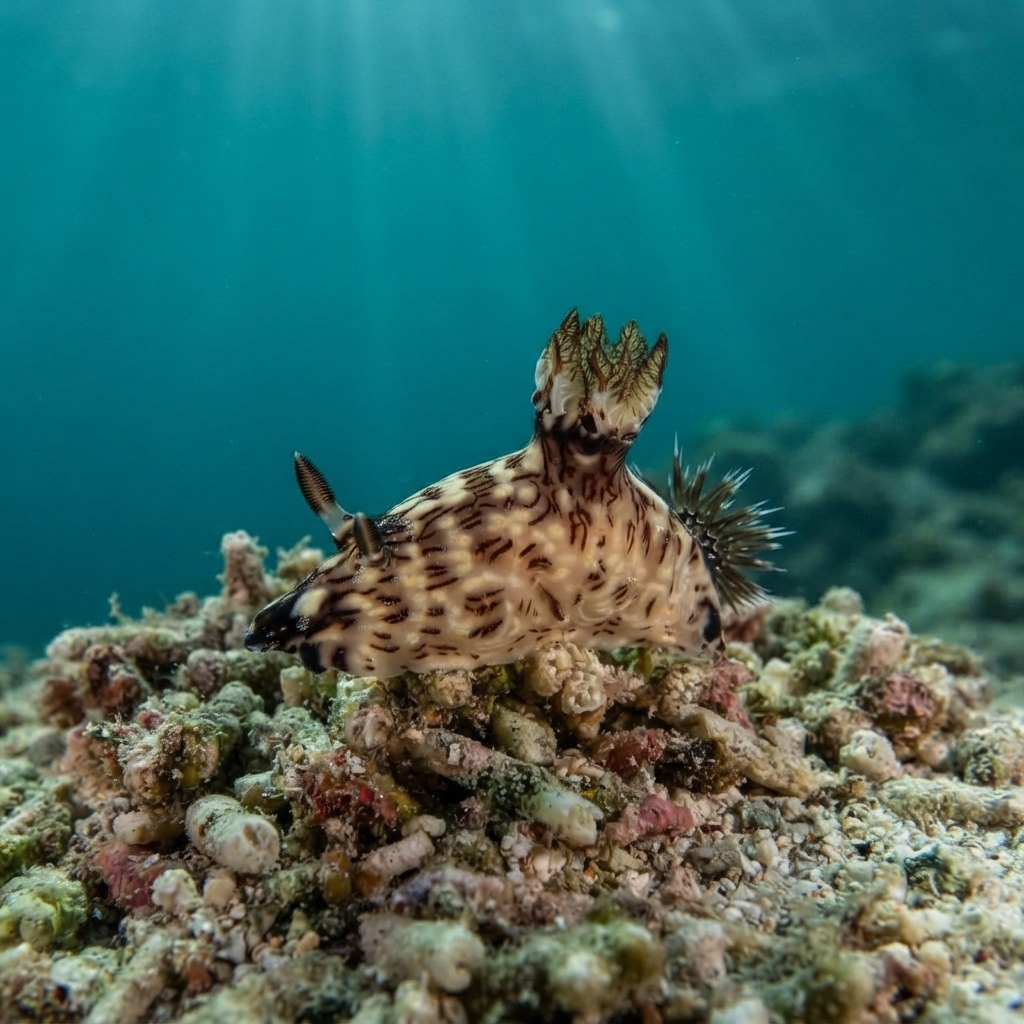
Look for a plump, oval nudibranch about 11 cm long with a velvety-textured white to cream body covered in small brown to grey speckles. The surface is studded with fine tubercles (bumpy projections) that give it a granular, turret-like texture rather than a smooth finish. Its rhinophores (the paired sensory horns on the head) and gill plume at the rear are typically pale with darker tips, and it moves slowly across the substrate rather than swimming.
Divers usually find it parked on sponge-covered rubble or reef substrate during the day, grazing slowly and barely reacting to a torch or a close look. It's not a fast mover and won't flee when approached, making it an easy macro subject once you spot the speckled pattern against the reef. Most logs describe it as an uncommon find rather than a guaranteed one, so it rewards divers who take time scanning low-light crevices and sponge patches.
Like other dorid nudibranchs, it likely feeds on sponges, rasping away tissue with a specialised radula, which is why it's so often found sitting directly on sponge-encrusted rubble.
Sightings show no clear seasonal pattern, and it turns up year-round on the reefs where it's found. It sits comfortably in the 24.8 to 30.8C range typical of tropical Indo-Pacific reefs, so there's no need to time a trip around water temperature.
Reef neighbours a diver could mistake it for. Use the identification notes above to tell them apart.
Most reliably logged in the Philippines, especially across Visayas, with strong follow-up numbers in Indonesia's Bali and Maluku regions. Japan's Okinawa and Ryukyu Islands and Taiwan's Kenting are also solid bets, with occasional sightings reported from Reunion and Timor-Leste.
Mapping where Turret Velvet Dorid is logged…
Best chances are in the Philippines, particularly Visayas, with good follow-up sightings in Bali and Maluku in Indonesia, plus Okinawa in Japan and Kenting in Taiwan.
There's no strong season in the data, it's logged year-round on reefs sitting between roughly 25 and 31C, so any time you're diving the Indo-Pacific is fair game.
Look for a velvety white to cream body about 11 cm long, covered in fine brown speckles and small raised bumps that give it a textured, granular look rather than a smooth surface.
They reach around 11 cm in length, a solid mid-sized nudibranch that's easy to spot once you know the speckled, velvety pattern to look for.
No, they pose no threat to divers. They move slowly across the reef and can be observed closely without any risk.
Site and sighting data is aggregated from diver logs, iNaturalist and GBIF. For taxonomy and conservation status:
Light-spotted Aegires
3,168 sites