Tubulophilinopsis pilsbryi
Uncommon muck-diving find, most reliably logged around Sihanoukville, Cambodia and Bali in warm 23-30C water year-round.
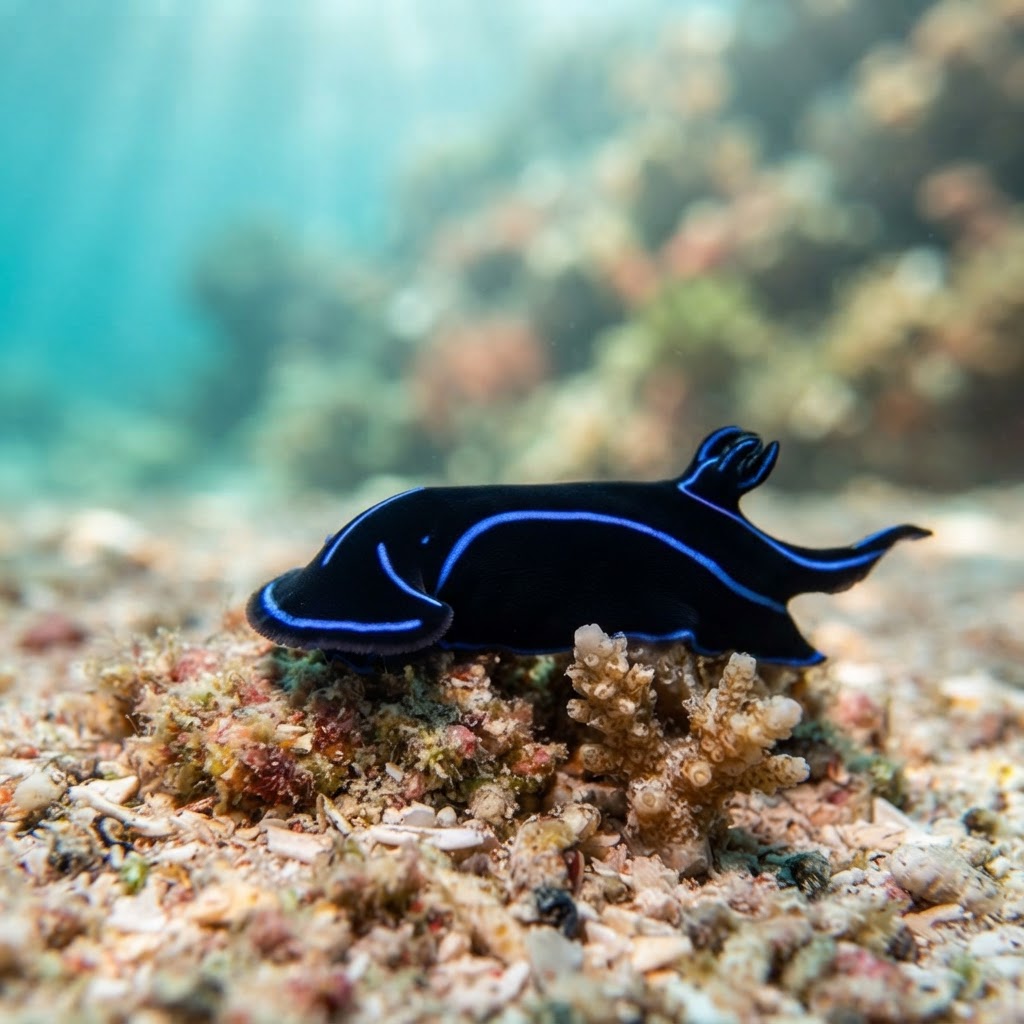
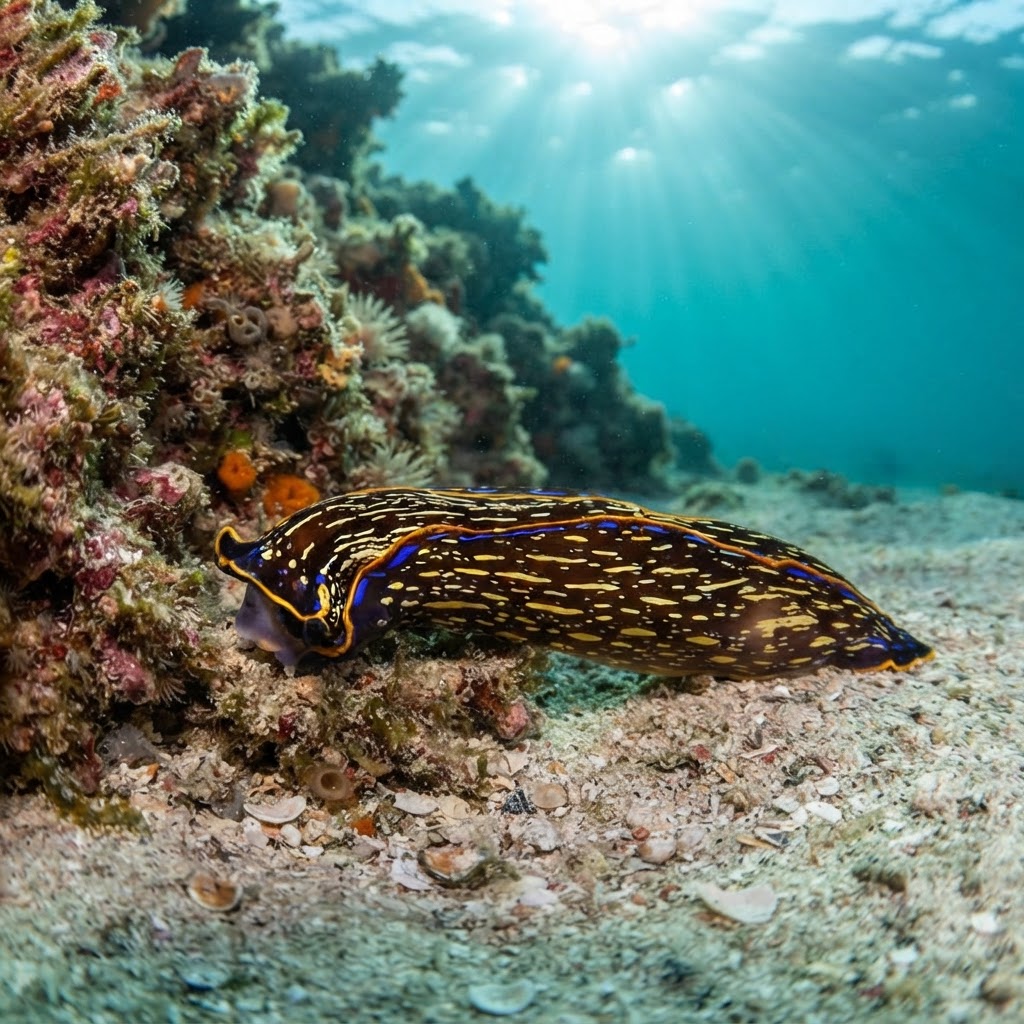
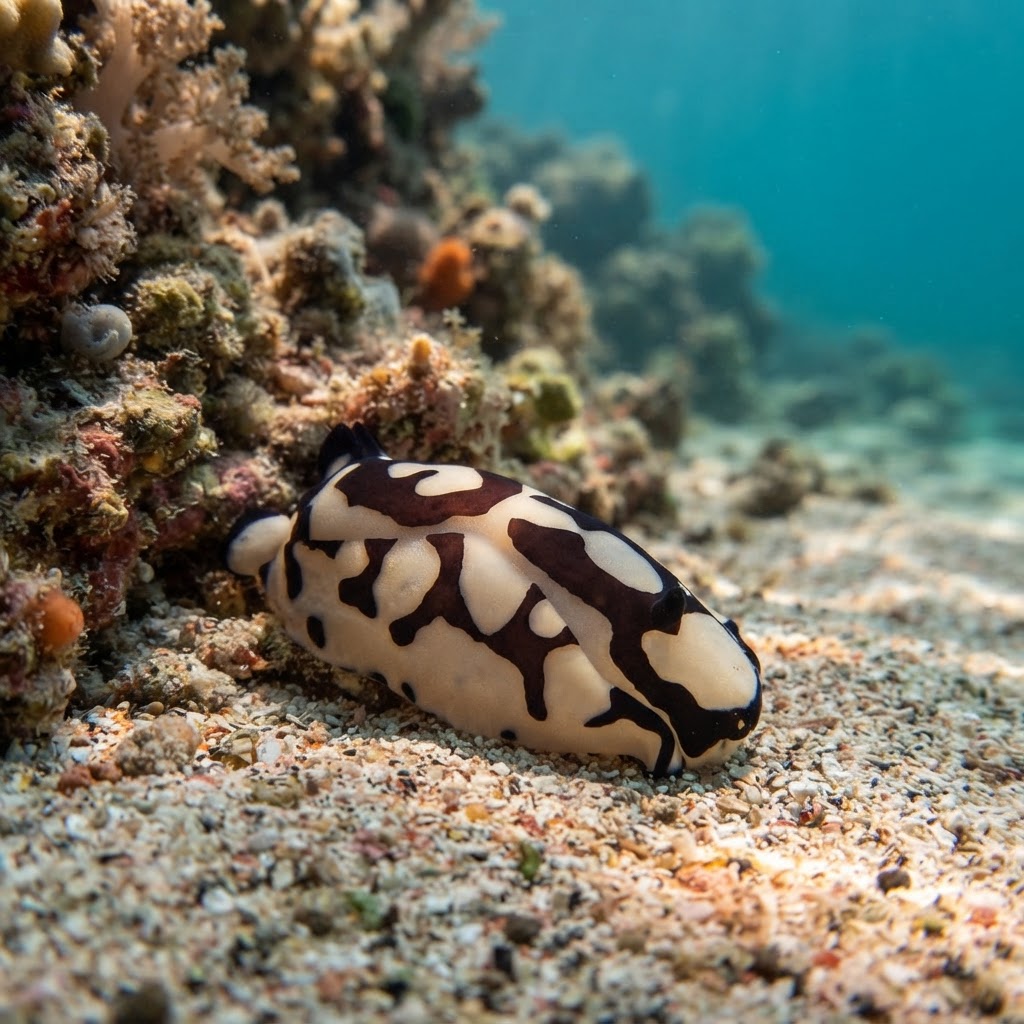
A small, soft-bodied headshield slug with a smooth, rounded body and no external shell visible, gliding low over sand and rubble. Look for the flattened head shield at the front end, used to plough through silt, and a body colour pattern that stands out against dark benthic substrate. Size in the water reads small and easy to miss unless you are scanning slowly and close to the bottom.
Found cruising slowly over sand, silt and rubble patches rather than on hard coral, usually on muck-style dives where divers are already looking down at the substrate. It shows no particular reaction to divers, continuing to plough through the sediment with its head shield as it hunts. Most sightings come from divers doing careful, slow-paced bottom scans rather than reef cruising.
Like other aglajids, it likely uses its flattened head shield to burrow into soft sediment while hunting other small invertebrates buried below the surface.
No clear seasonal pattern shows up in the data, and its comfort range of 23.1 to 29.7C spans warm tropical and subtropical reefs all year, so any month is fair game where it's found.
Reef neighbours a diver could mistake it for. Use the identification notes above to tell them apart.
Most consistently logged around Sihanoukville, Cambodia, with strong showings in Bali, Indonesia and across the Visayas and Luzon in the Philippines. It also turns up reliably in Okinawa and the Ryukyu Islands in Japan and around Eilat, Israel, with a scattering of sightings in Saipan, Northern Mariana Islands, and Queensland, Australia.
Mapping where Pilsbry's Head Shield Slug is logged…
It's most often logged around Sihanoukville in Cambodia, with reliable sightings in Bali, Indonesia, and across the Philippines' Visayas and Luzon regions. Okinawa in Japan and Eilat in Israel also produce regular records.
There's no detected seasonal pattern, and it's found in water from about 23 to 30C, so it's a year-round sighting wherever it occurs rather than a seasonal specialty.
Look for a small, smooth-bodied headshield slug moving slowly across sand or rubble, with a flattened shield-like front end it uses to plough through sediment. It's easiest to spot with a slow, close scan of the substrate rather than mid-water.
No, it poses no danger to divers. It's a small, soft-bodied slug with no sting or bite risk, so you can observe it closely without concern.
Exact size figures aren't well documented for this species, but like related headshield slugs it stays small, typically only a few centimetres, and is easy to overlook on the reef floor.
Site and sighting data is aggregated from diver logs, iNaturalist and GBIF. For taxonomy and conservation status:
Light-spotted Aegires
3,168 sites