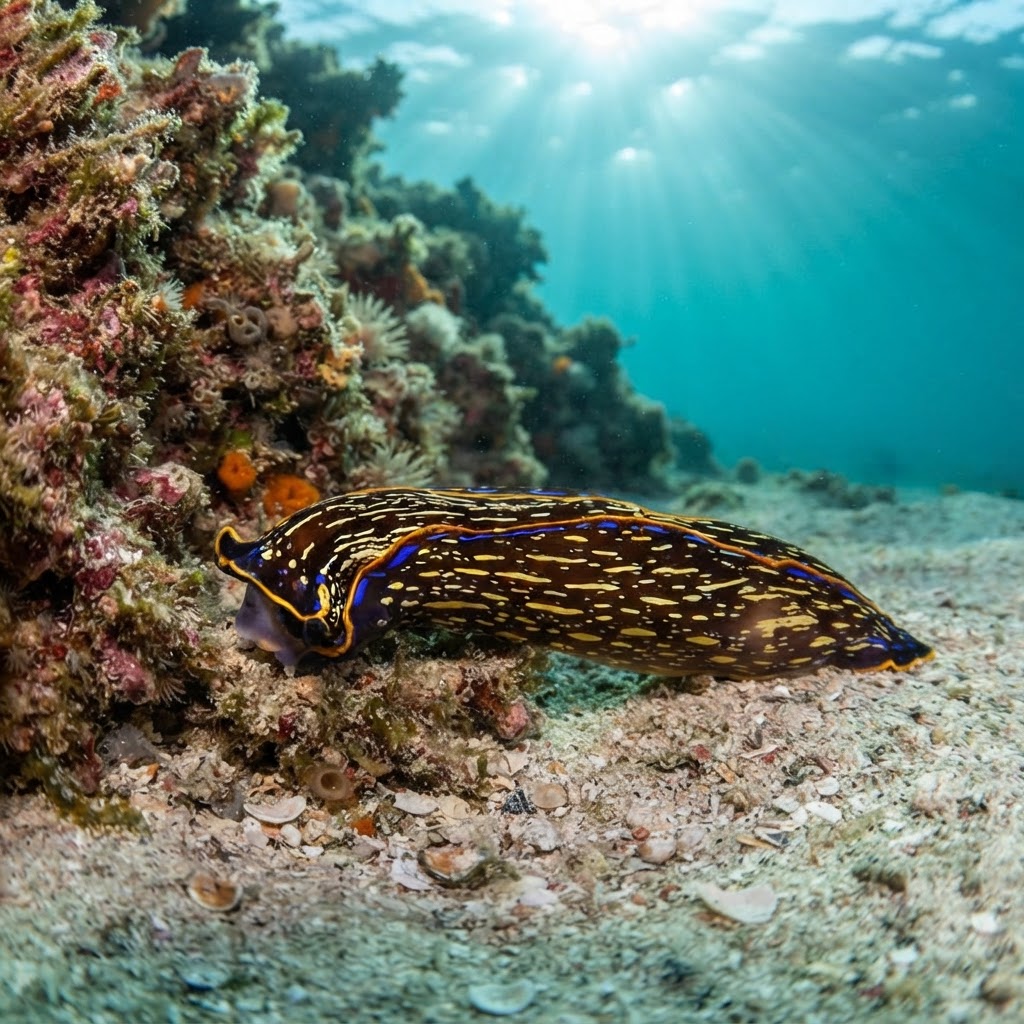
Navanax inermis
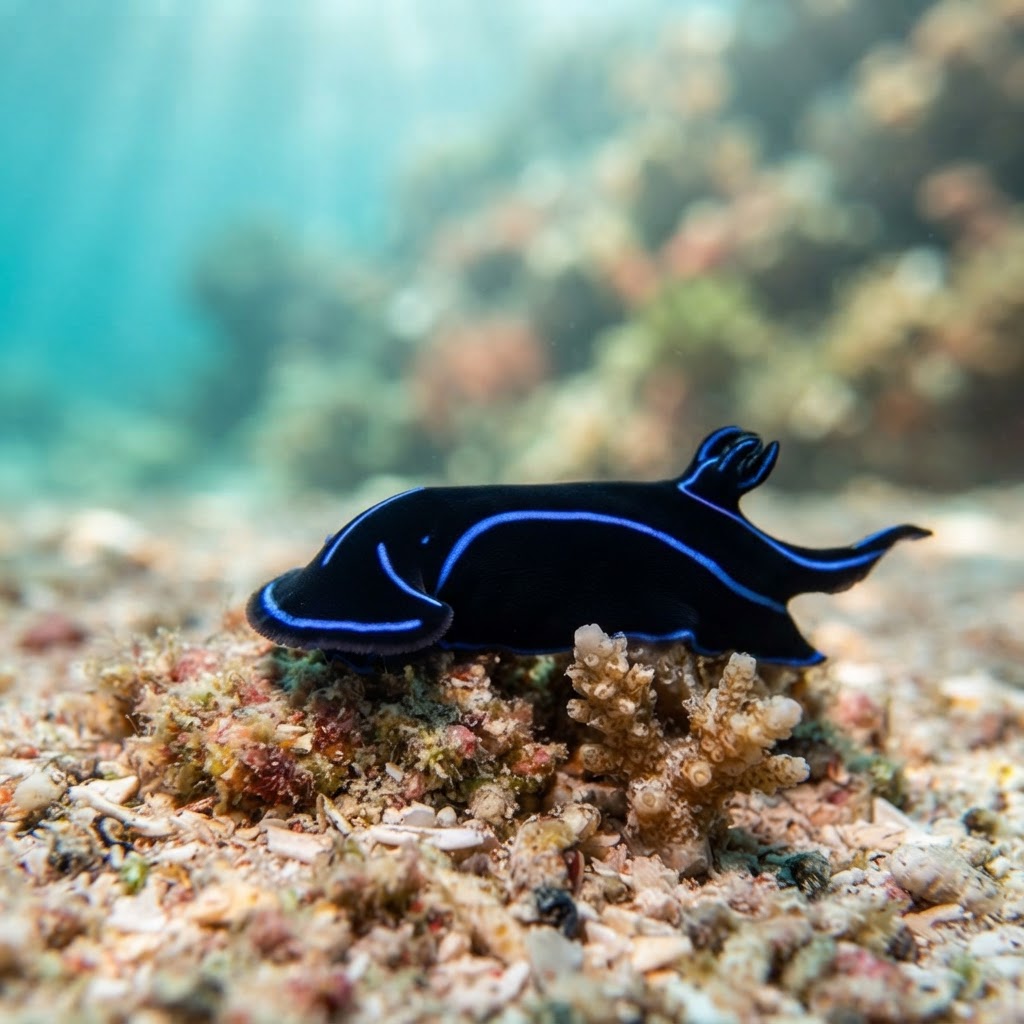
Look for a slender dark slug with electric blue lines gliding over sand in California’s cool 13-19°C waters, most reliably in California kelp forests.
Look for a long, slender slug up to 15 cm, dark brown to black with bold blue and orange-edged lines running the length of the body. The head end flares into a rounded shield rather than tapering to a point, and there are no external gills or rhinophores (the small sensory horns many sea slugs have) breaking up the smooth outline. It moves slowly across sand and mud rather than clinging to rock or reef structure.
Divers usually find it cruising slowly over open sand or mud, often at night or in low light, hunting other slugs and small snails rather than grazing algae like many of its relatives. It shows no concern about divers and won't react defensively if approached, so a slow fin kick and a light are usually all it takes for a good look. Expect to find it solo, working a patch of open bottom rather than tucked into crevices.
It's an active predator of other sea slugs and snails, tracking their mucus trails across the sand and engulfing prey whole with an oversized, stretchy mouth, unusual behaviour for a group mostly known for grazing.
Sightings run year-round with no strong seasonal pattern in the data, matching its comfort range of roughly 13 to 19 degrees C, which covers California's cooler diving months as well as summer. Divers log it uncommonly at most sites, so persistence across multiple dives beats timing any particular month.
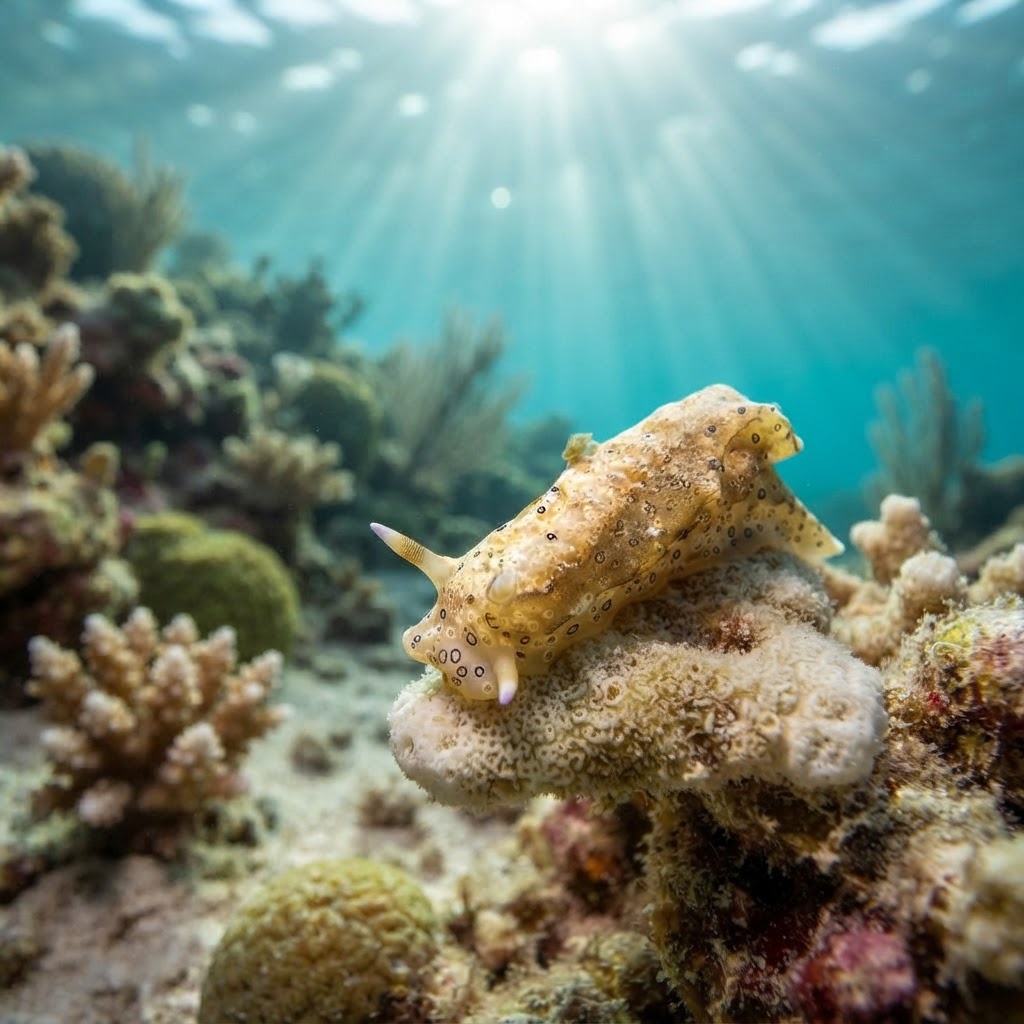
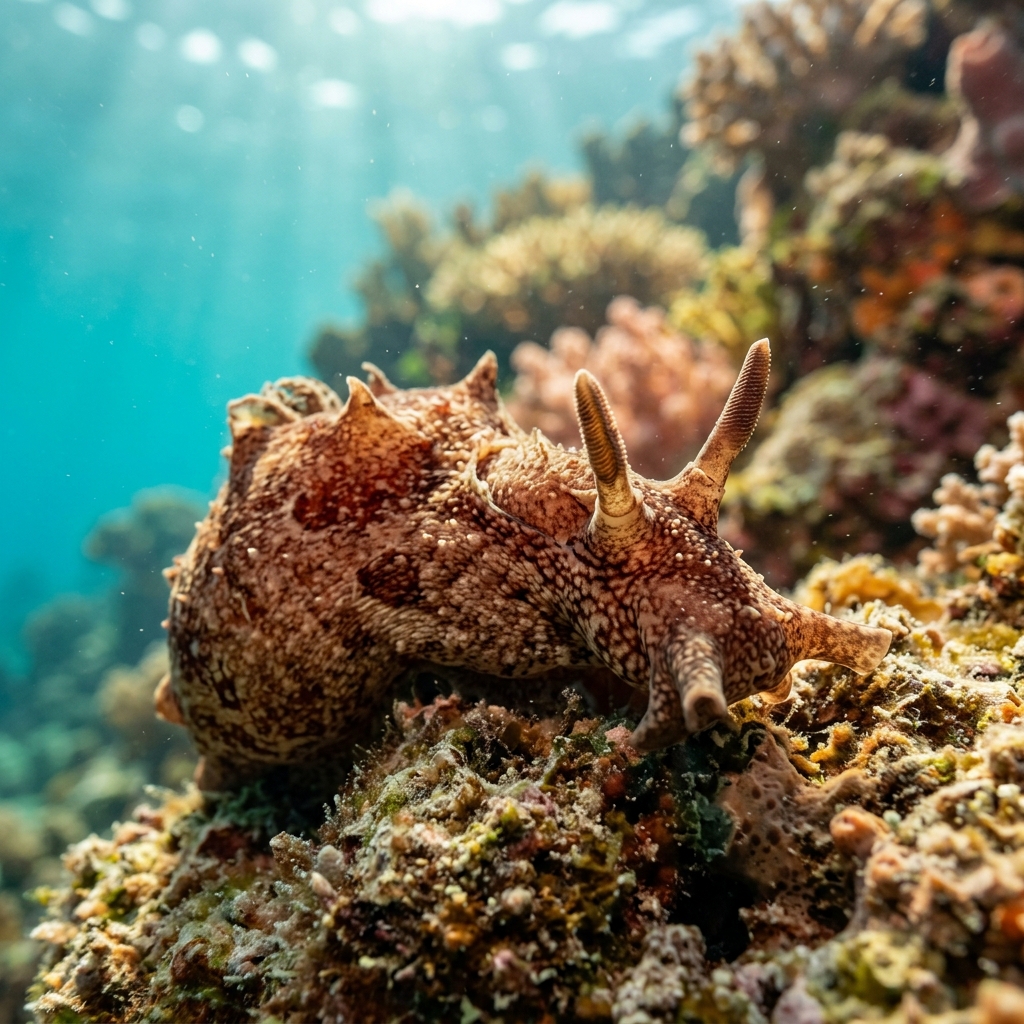
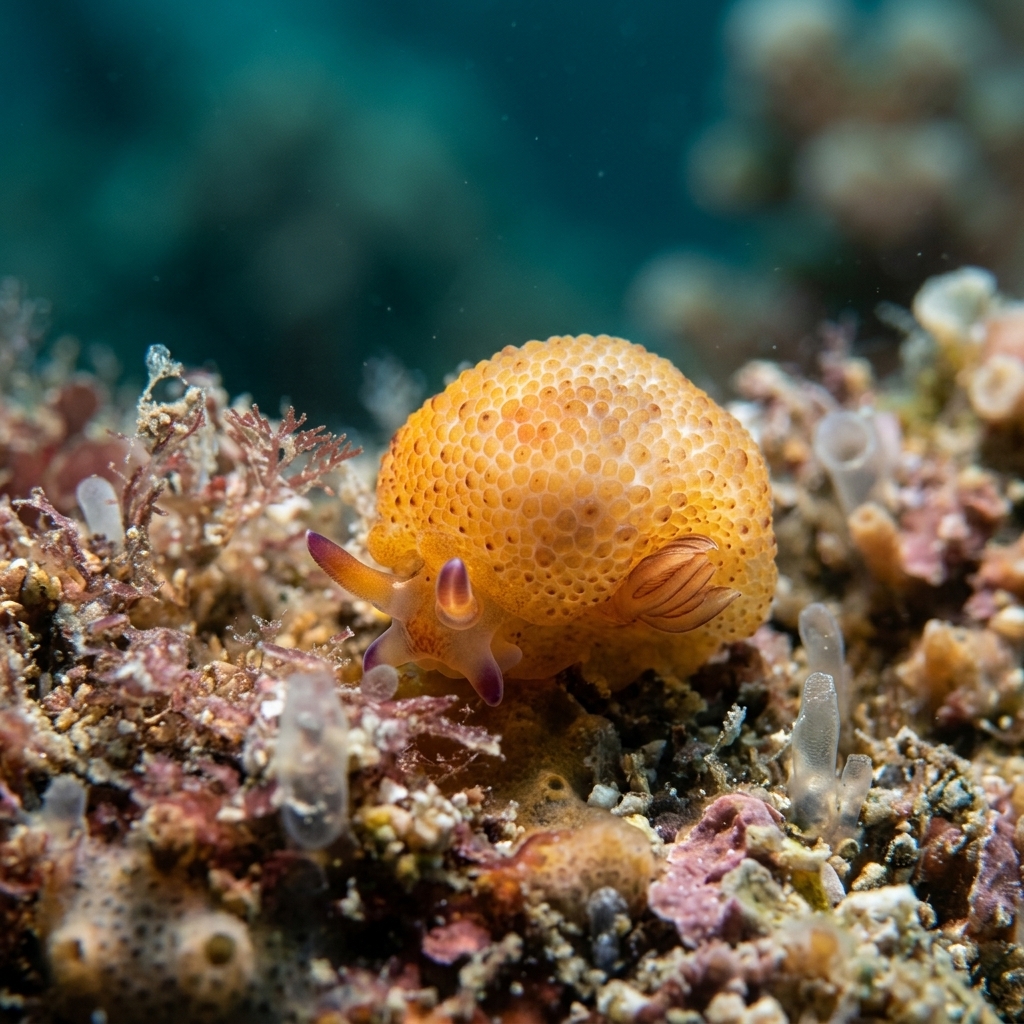
Reef neighbours a diver could mistake it for. Use the identification notes above to tell them apart.
Most reliably found in California, especially through sites across the state, with a further population logged along Baja California in Mexico. It's a sand and mud specialist, so look at the flatter, silty patches between reef and kelp rather than on rocky structure itself.
Mapping where Navanax is logged…
California is the strongest region for sightings, logged at sites across the state, with additional records from Baja California in Mexico. It favours sandy and muddy patches near reef and kelp rather than open water or rocky wall.
There's no clear seasonal pattern in the data, so it's considered a year-round sighting in the 13 to 19 degrees C range typical of California and Baja diving. Night dives over sand often turn up better views since it's most active hunting in low light.
Look for a slender dark slug up to 15 cm with bold blue and orange-edged stripes running its length and a rounded, shield-like head with no visible gills or horns. It moves slowly across open sand rather than climbing over reef structure.
They typically reach around 15 cm in length, making them one of the larger slugs a diver is likely to spot cruising open sand in California waters.
Unlike most sea slugs that graze algae or sponges, it actively hunts other slugs and snails, following their mucus trails across the sand and swallowing prey whole with a highly stretchable mouth.
No, they pose no threat to divers and have no known sting or bite risk. They'll simply keep gliding across the sand if you stop to look.
Site and sighting data is aggregated from diver logs, iNaturalist and GBIF. For taxonomy and conservation status:
Light-spotted Aegires
3,168 sites