Tubulophilinopsis lineolata
A striped headshield slug logged along Victoria, Australia's cool reefs in 14.8-22.0C water, usually uncommon to rare on any given dive.
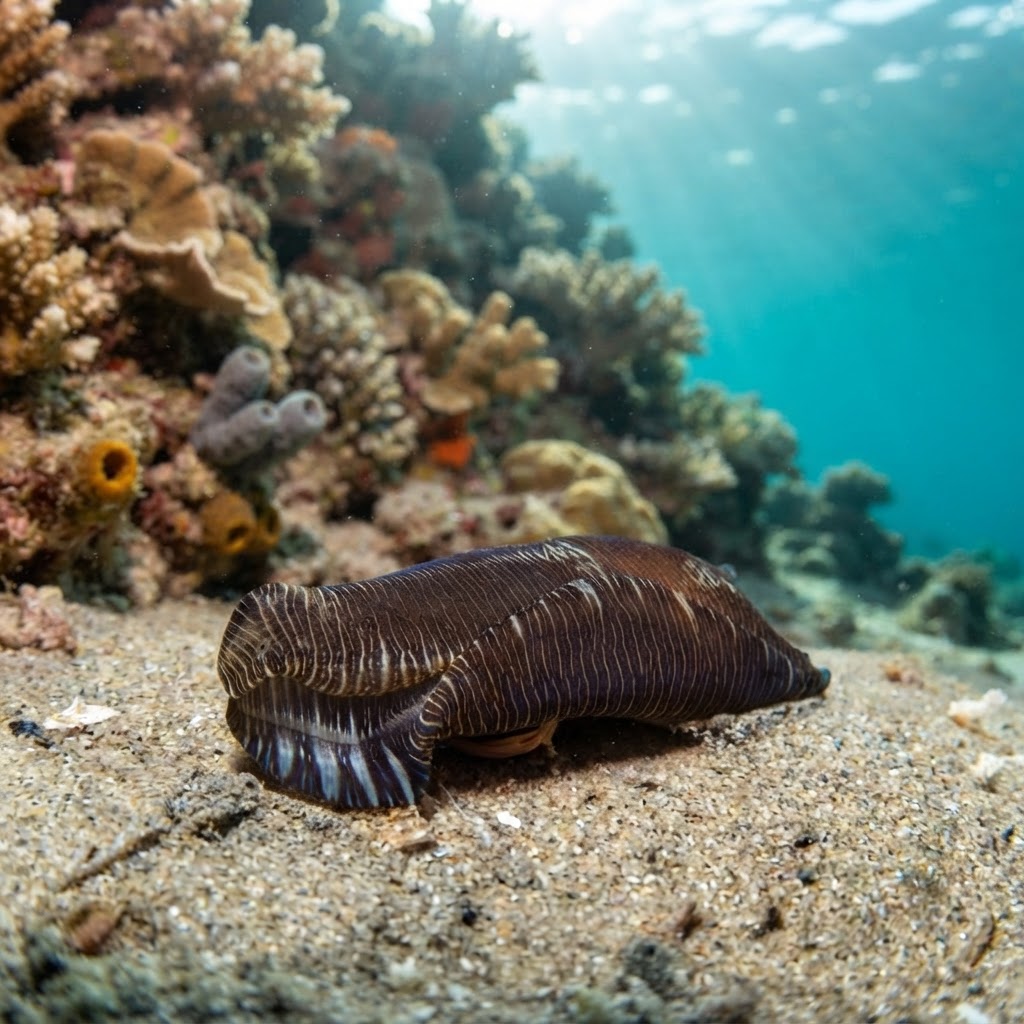
A slender headshield slug with fine longitudinal stripes running the length of its body, giving it a linear, almost pin-striped look against plain rock or sand. The body is soft and elongated with a rolled, shield-shaped head end rather than a hard shell, and it moves in a low, gliding crawl across the substrate. Size in the water is modest, more of a careful-eye find than something that jumps out at you.
Divers typically find it crawling slowly over rock, rubble or sandy patches rather than swimming, using its rolled headshield to plough through the top layer of sediment as it searches for food. It shows no reaction to divers beyond its usual unhurried pace, making it an easy subject for macro photography once spotted. Like most headshield slugs it is most often picked out on slower, close-focus dives rather than during a fast reef swim.
Headshield slugs in this family are predators that hunt other small snails and slugs, using the broad shield-like head to plough into sediment and detect prey by touch and chemical cues rather than sight.
Sightings span a wide temperature range, 14.8 to 22.0 C, and there is not enough monthly data to show a clear season, so treat it as a year-round possibility on Victoria's cool-water reefs. Plan around good visibility and slow, careful searching rather than a specific month.
Reef neighbours a diver could mistake it for. Use the identification notes above to tell them apart.
Every logged site for this slug sits in Australia, with Victoria the clear stronghold, this is currently the place to look for it. Divers working the temperate reefs and rubble patches of Victoria have the best odds, even if sightings there are still an uncommon to rare find on any single dive.
Mapping where Fine-lined Tubulophilinopsis is logged…
All confirmed sightings come from Australia, with Victoria standing out as the main region where divers have logged it on temperate reef and rubble sites.
There is no strong seasonal pattern in the sighting data, and it has been recorded across a broad 14.8 to 22.0 C temperature range, so it is best treated as a year-round possibility in Victoria's waters.
Look for a slender, soft-bodied slug with fine stripes running along its length and a rolled, shield-like head rather than a visible shell. It moves in a slow crawl over rock or sediment, which helps separate it from faster-swimming slugs.
No, it poses no danger to divers and can be observed and photographed up close without any risk.
It is logged as uncommon at most of its known sites and rare at the rest, so finding one takes a slow, deliberate search rather than a casual glance at the substrate.
Site and sighting data is aggregated from diver logs, iNaturalist and GBIF. For taxonomy and conservation status:
Light-spotted Aegires
3,168 sites