Lupocyclus philippinensis
Spot true crabs on reefs in Milne Bay, the Visayas and Bali, uncommon but findable year-round in 25 to 31C water.
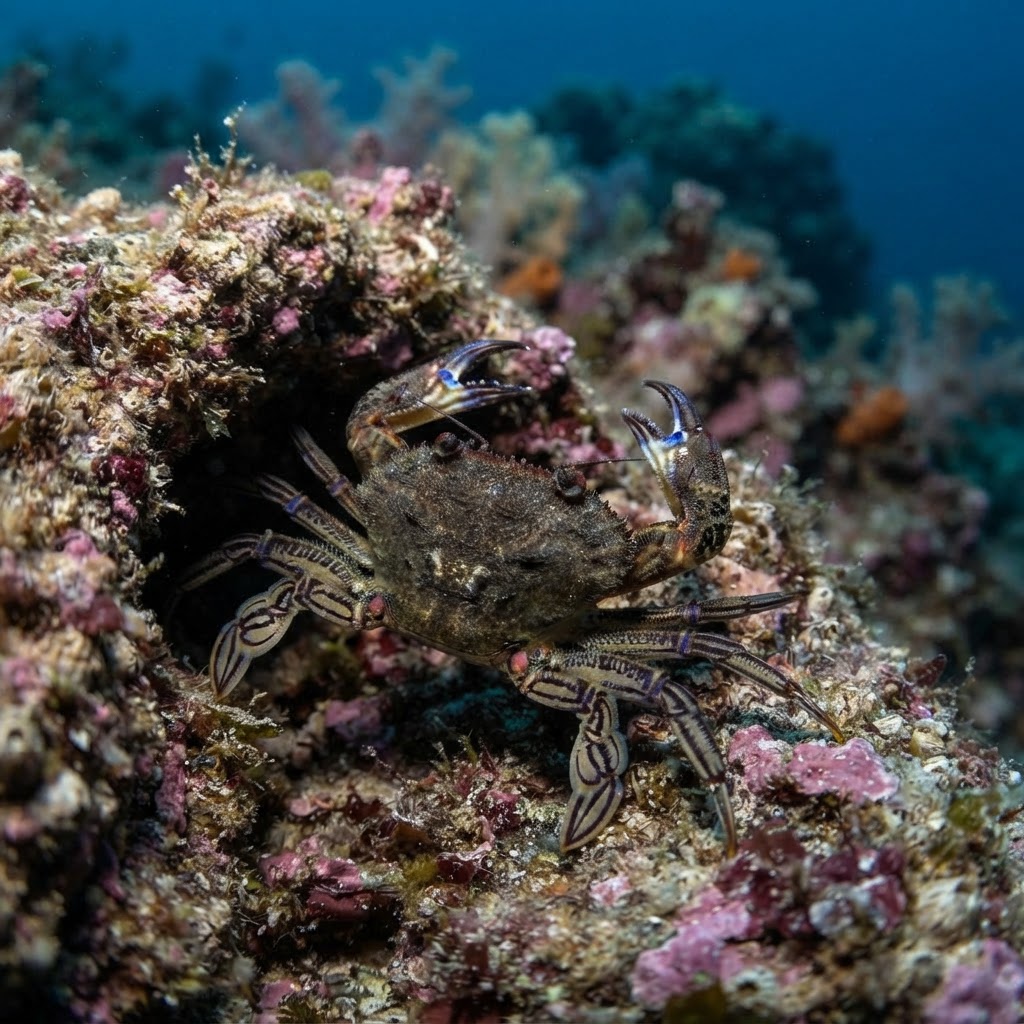
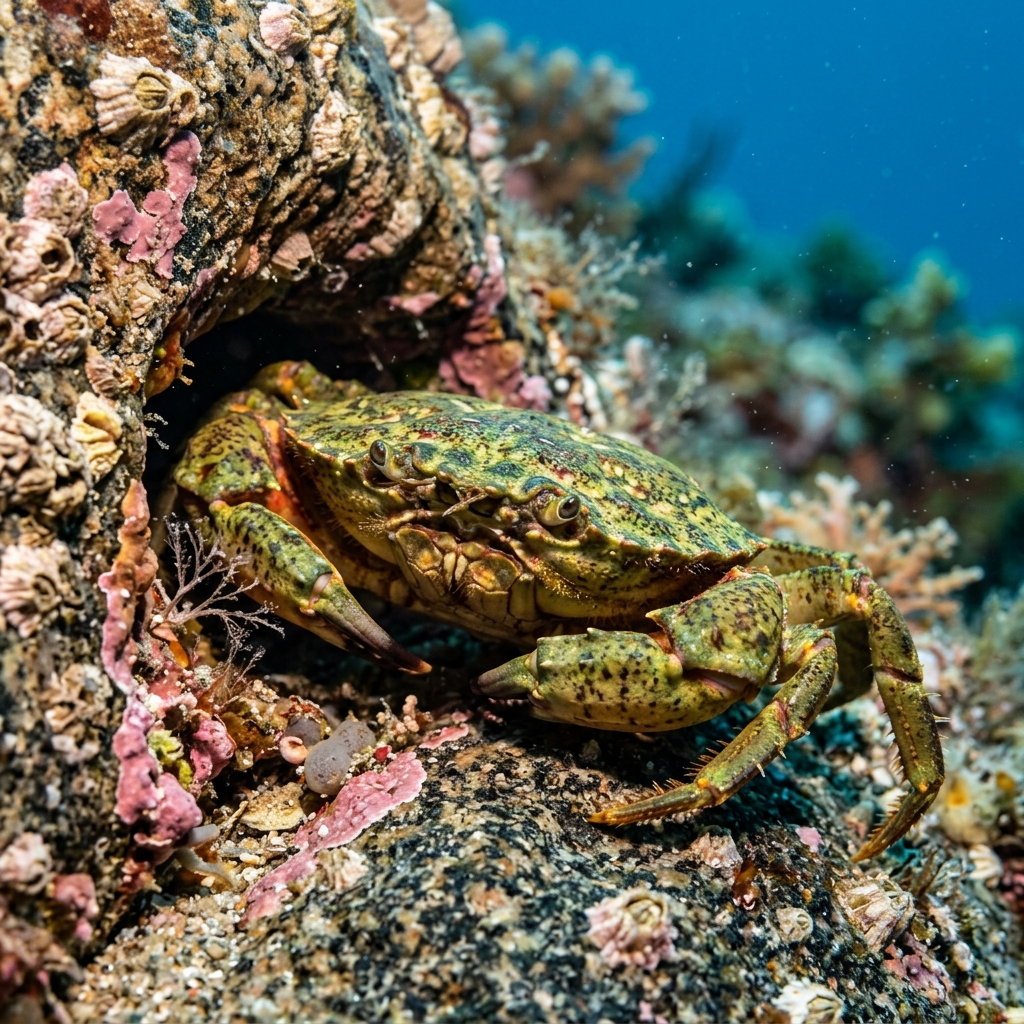
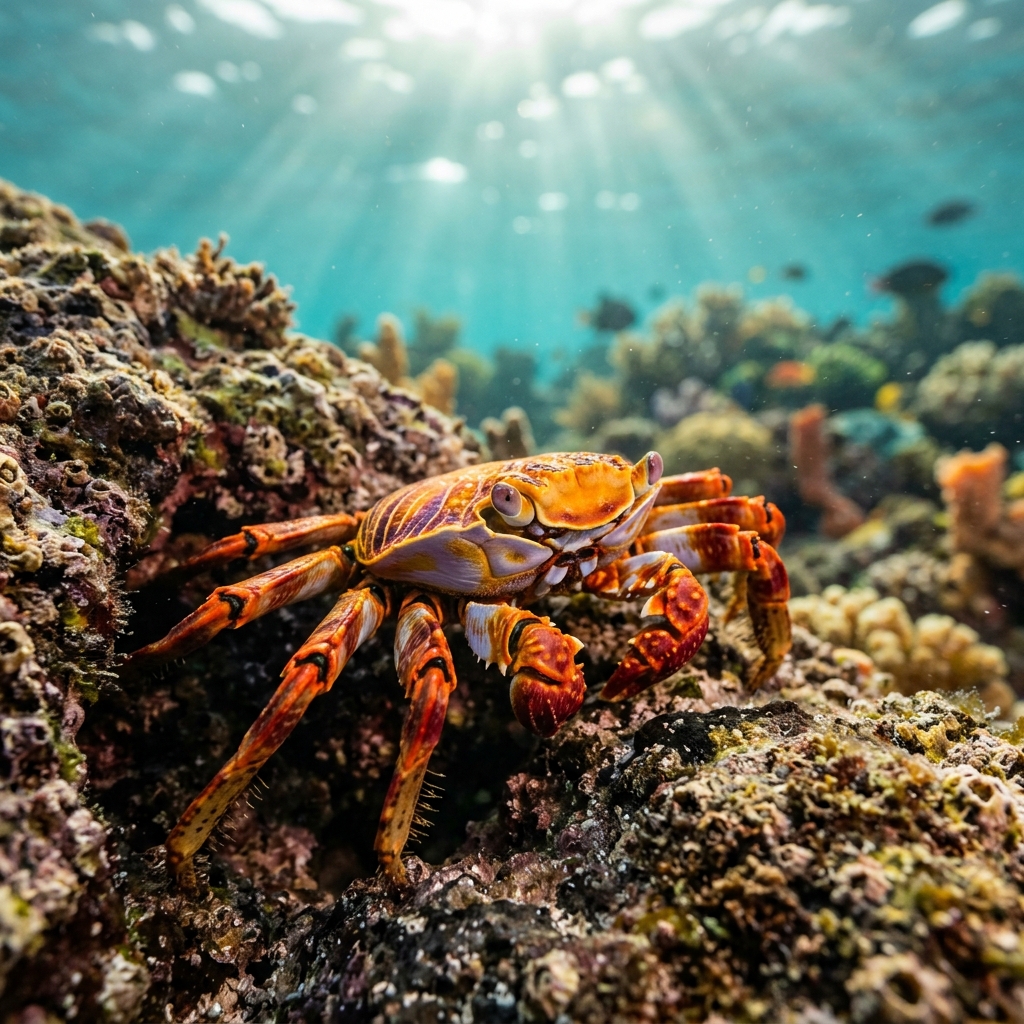
Look for a broad, flattened shell (carapace) in mottled brown or olive tones that blends into rubble and reef debris. The rear pair of legs is flattened into paddles for swimming, a giveaway that separates it from the slower, rounder hermit and decorator crabs sharing the same reef. Size in the water is modest, easily overlooked unless you're scanning ledges and crevices closely.
Divers typically find it tucked into rubble, crevices or under coral ledges rather than out in the open, using its flattened swimming legs to dart for cover when disturbed. It tends to sit still and rely on its mottled colouring to disappear against the substrate, so slow, close-focus scanning of reef nooks is what turns up a sighting.
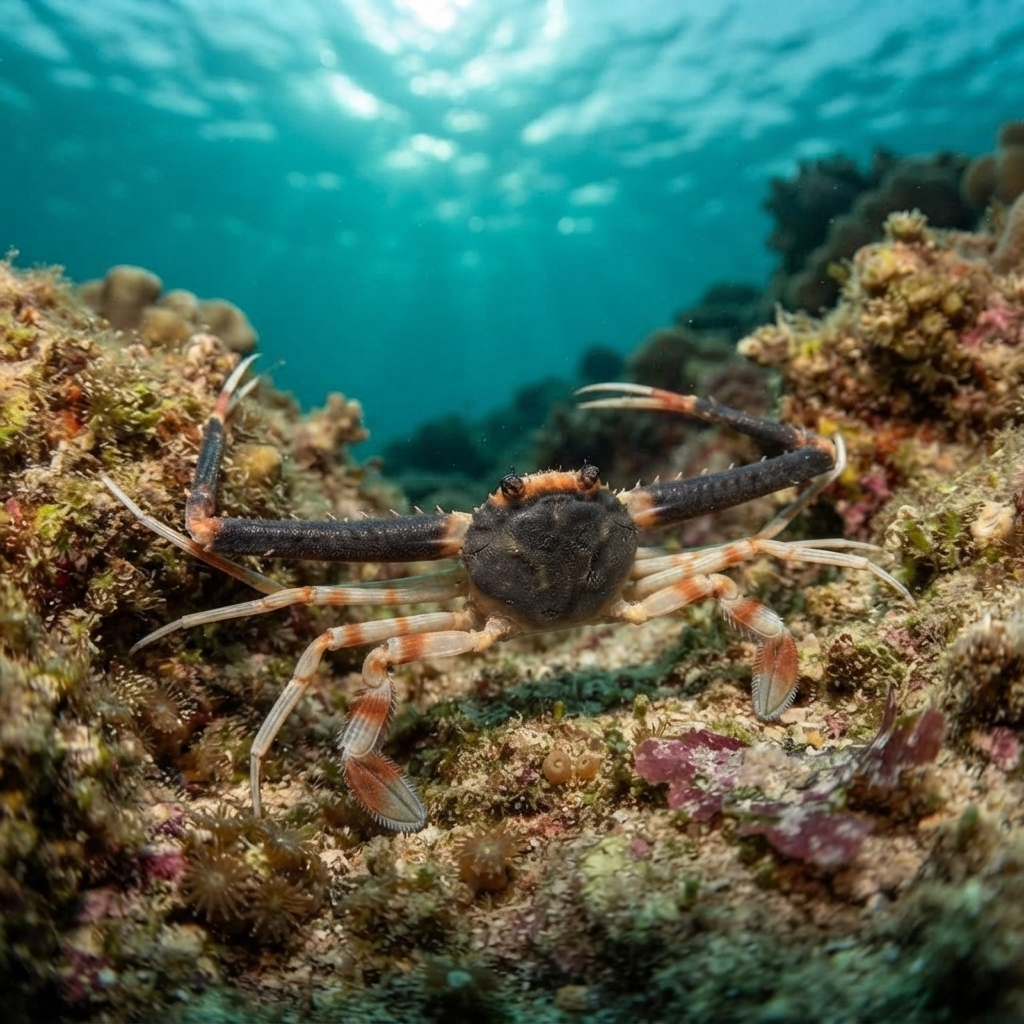
The paddle-shaped rear legs that mark it out as a swimming crab (family Portunidae) let it move through open water in short bursts, a trait most reef crabs lack.
Sightings show no clear seasonal pattern, and warm water in the 25.4 to 31.4C range holds steady year-round across its Indo-Pacific range, so any month is fair game.
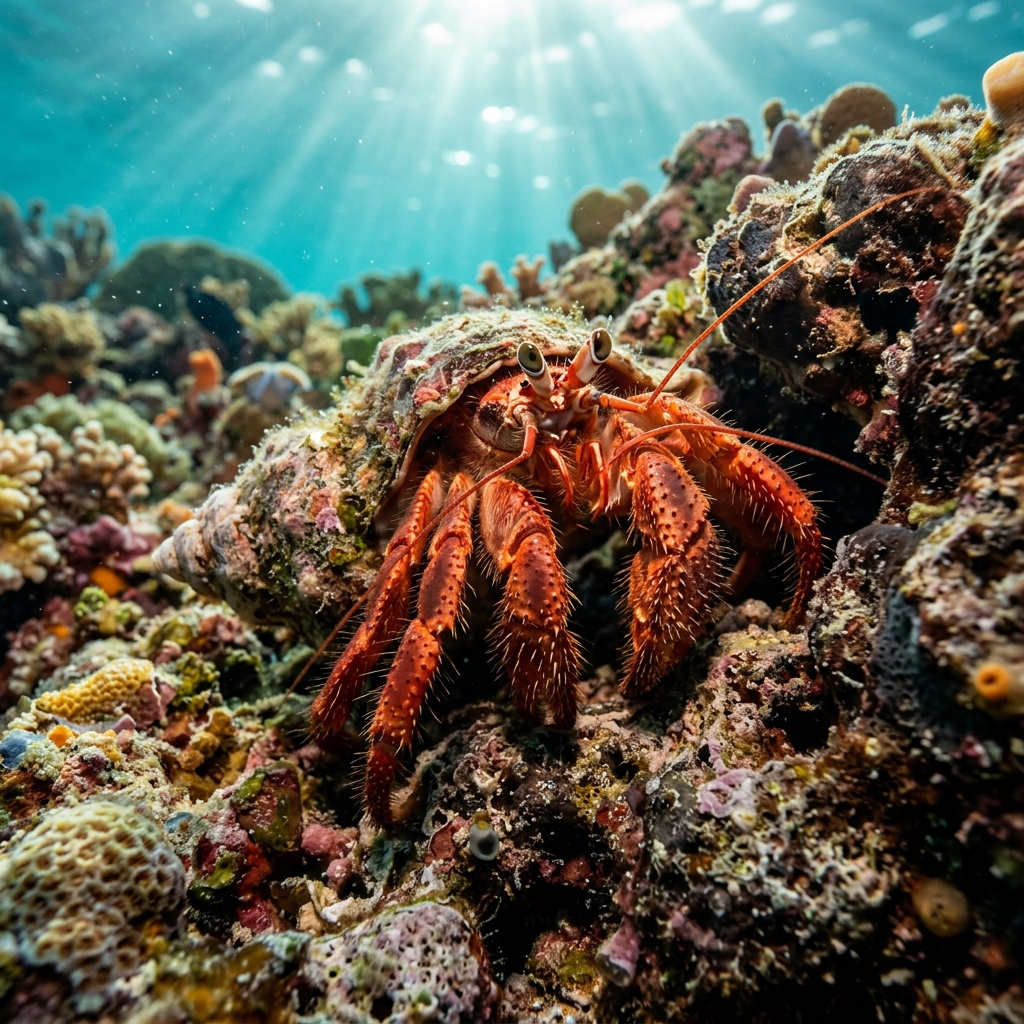
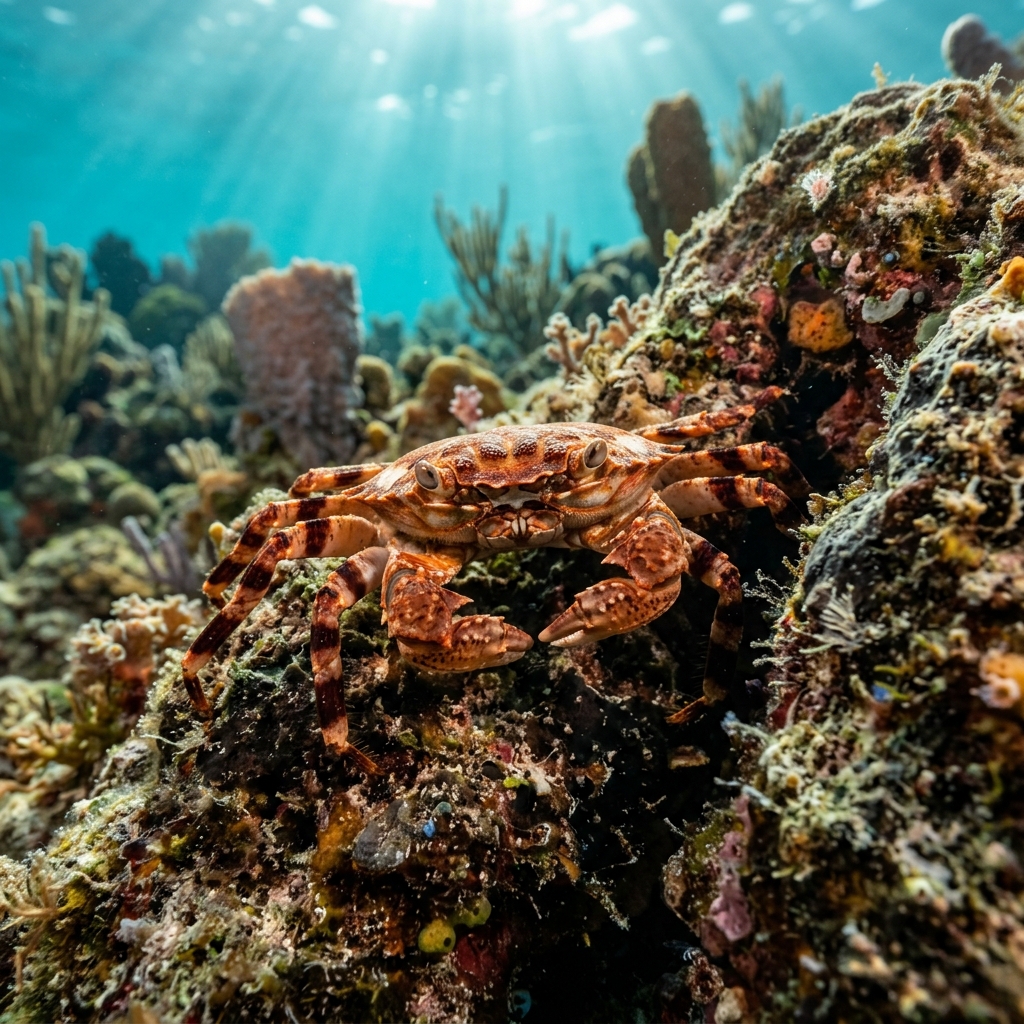
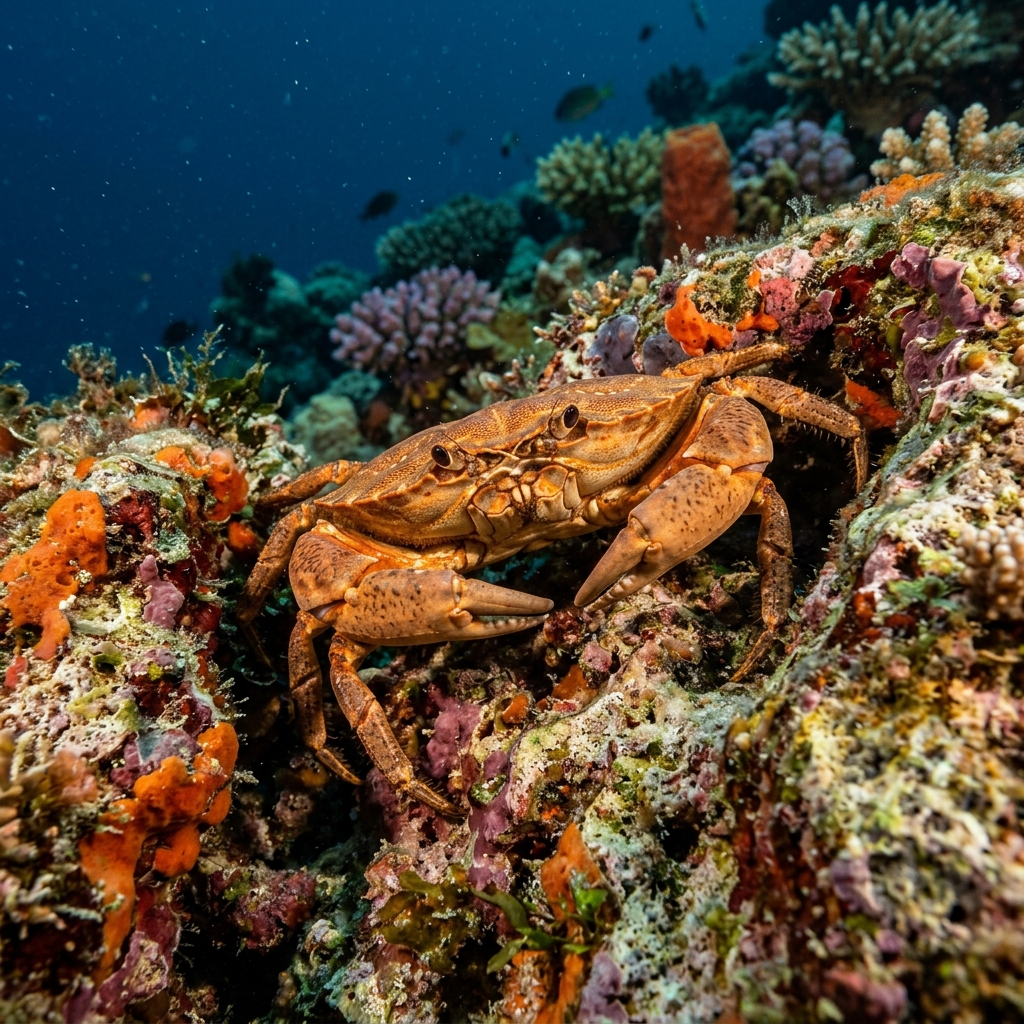
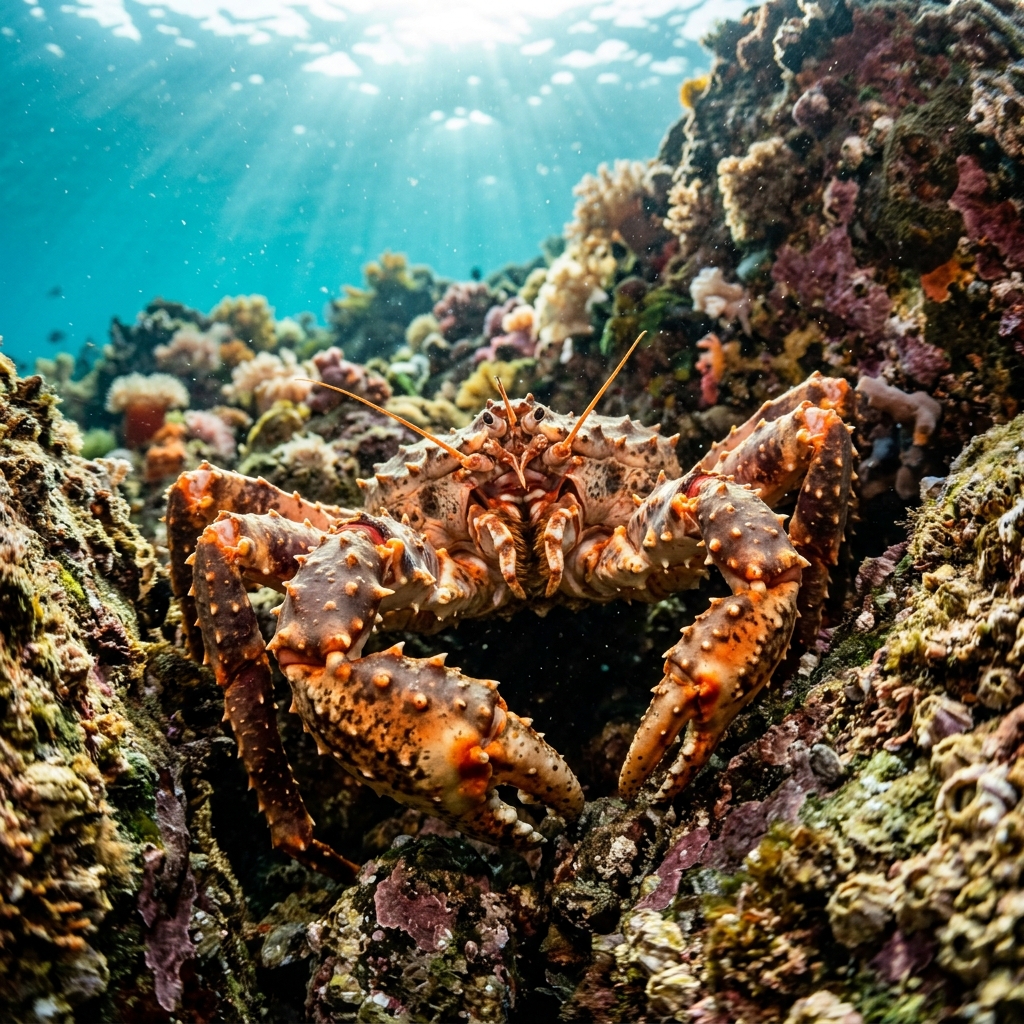
Reef neighbours a diver could mistake it for. Use the identification notes above to tell them apart.
Most consistently logged in Milne Bay, Papua New Guinea, with further sightings across the Visayas and Luzon in the Philippines and in Bali, Indonesia. All records so far come from these three countries, so divers chasing this species should focus their search on Indo-Pacific reef sites in those regions.
Mapping where True Crabs is logged…
Best logged around Milne Bay in Papua New Guinea, plus sites in the Visayas and Luzon in the Philippines and Bali in Indonesia. Sightings are uncommon everywhere they occur, so treat any encounter as a bonus find rather than a guarantee.
There's no detected seasonal pattern, so sightings happen year-round. Warm reef water between roughly 25 and 31C suits it in every month recorded so far.
Check for a flattened, mottled shell and paddle-shaped rear legs built for swimming, usually spotted tucked into rubble or reef crevices. It's easy to mistake for other reef crabs at a glance, so the paddle legs are the key tell.
No, they pose no danger to divers. They're small, retreat into cover when approached, and have no venom or aggressive defence worth worrying about.
They belong to the swimming crab family, meaning their back legs are flattened into paddles rather than simple walking legs, letting them swim in short bursts, unlike most reef-dwelling crabs that only crawl.
Site and sighting data is aggregated from diver logs, iNaturalist and GBIF. For taxonomy and conservation status:
European Green Crab
2,469 sites