Cheilinus trilobatus
Reef fish common across the Maldives and Seychelles, logged year-round in 25-29°C water on shallow coral reefs.
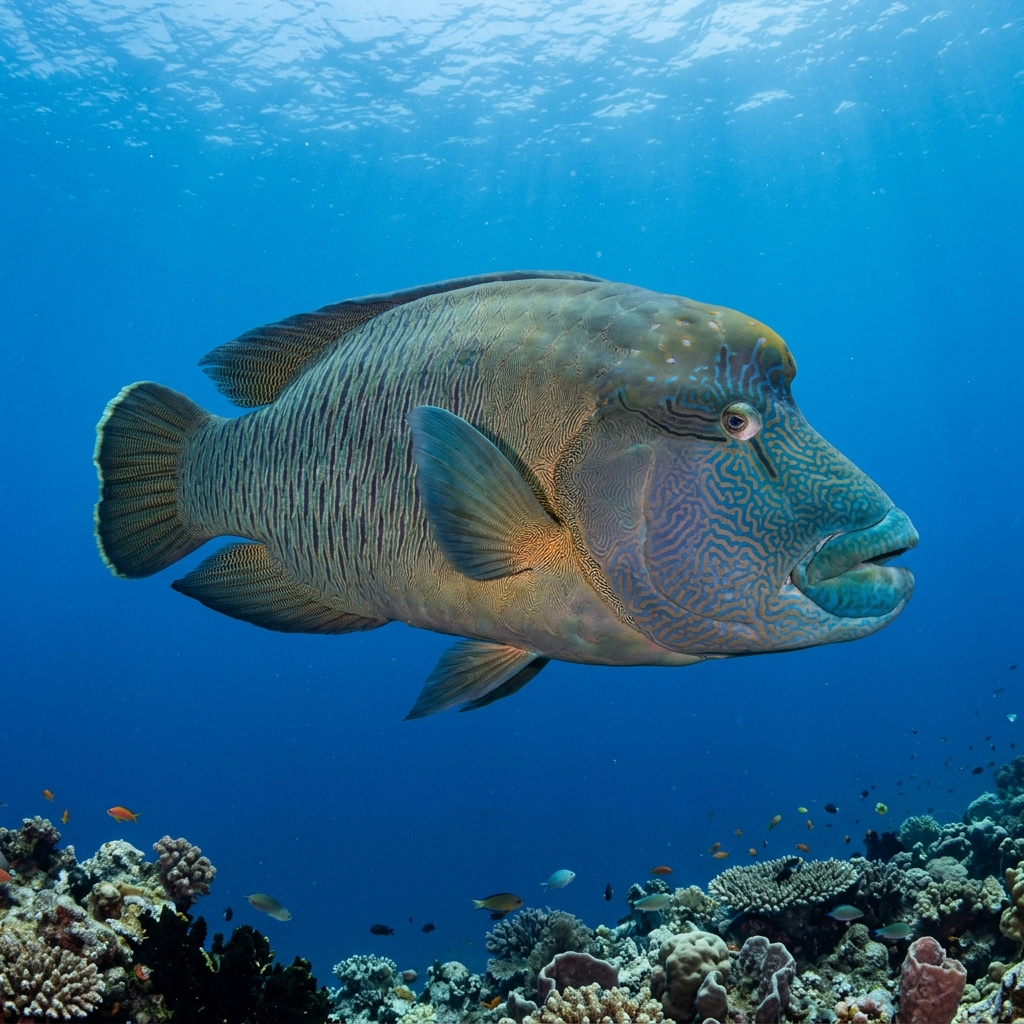
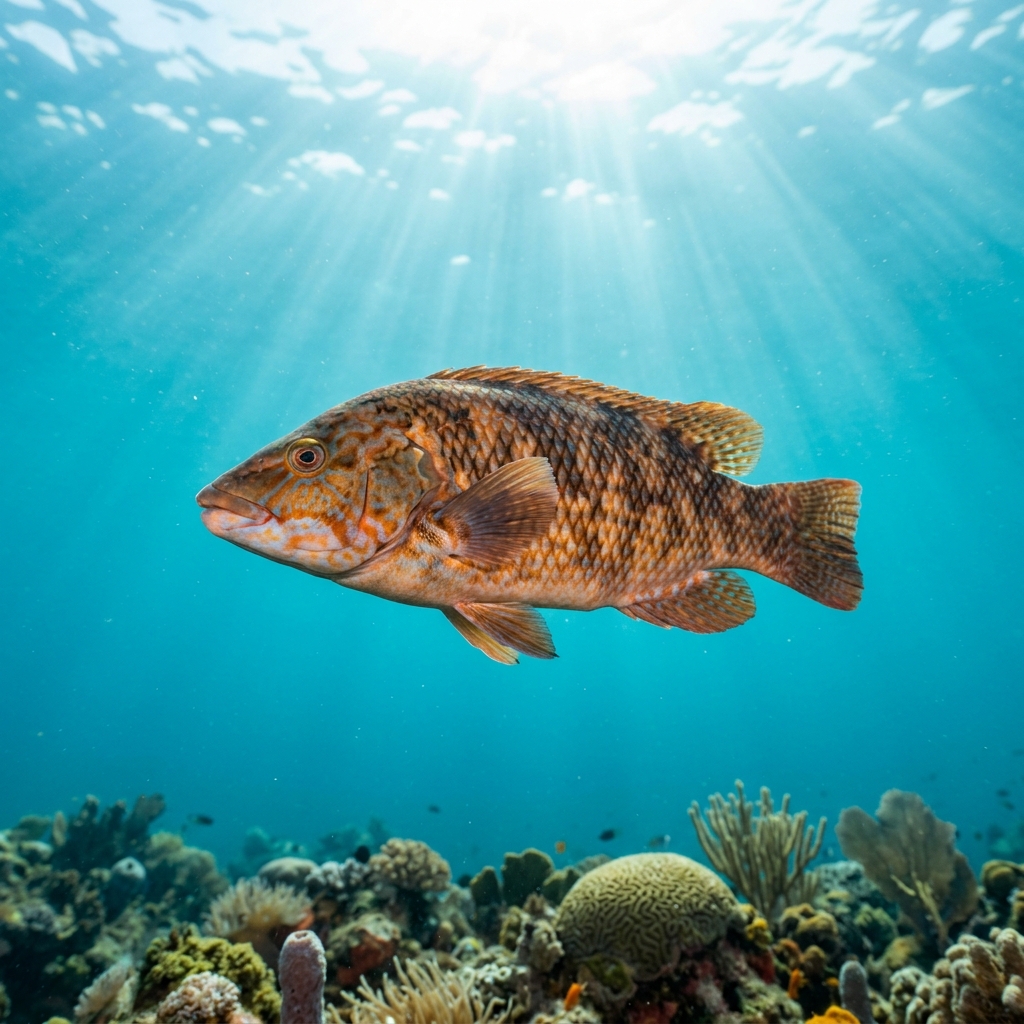
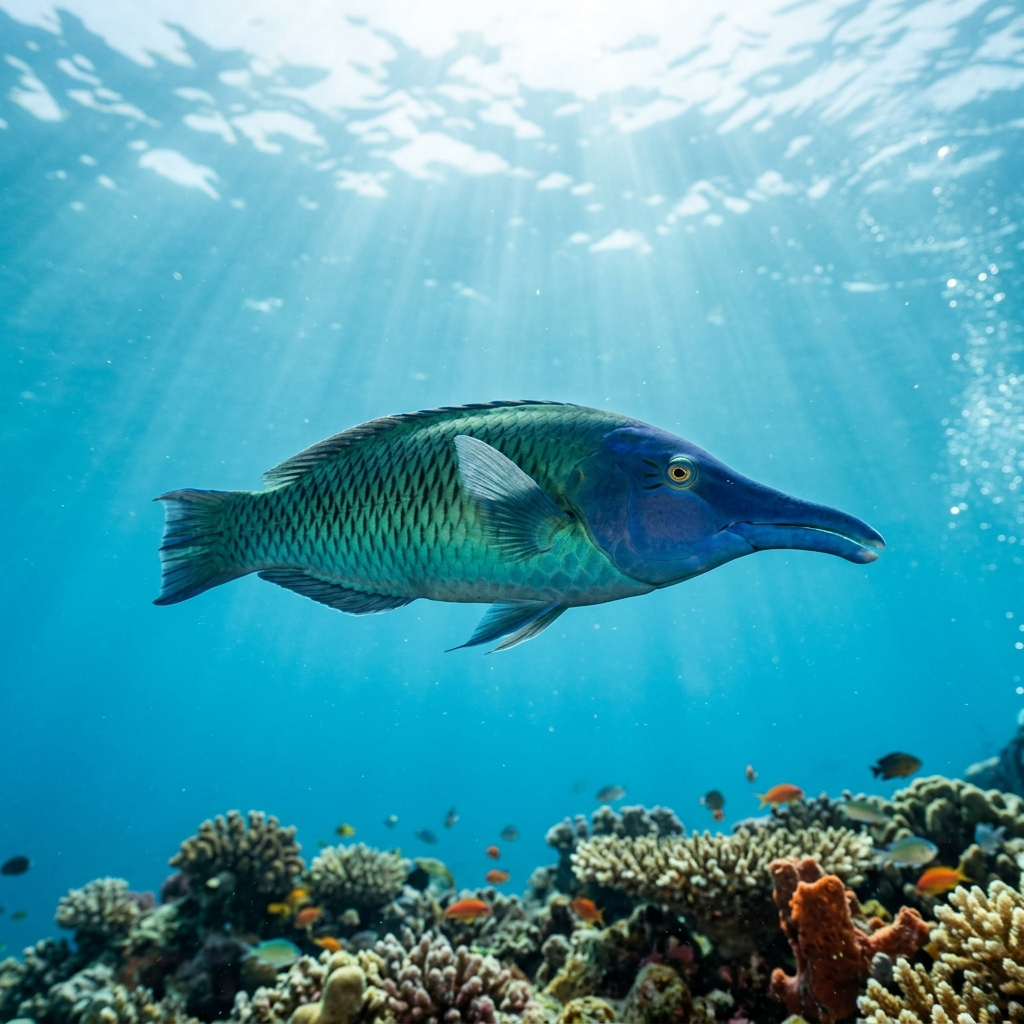
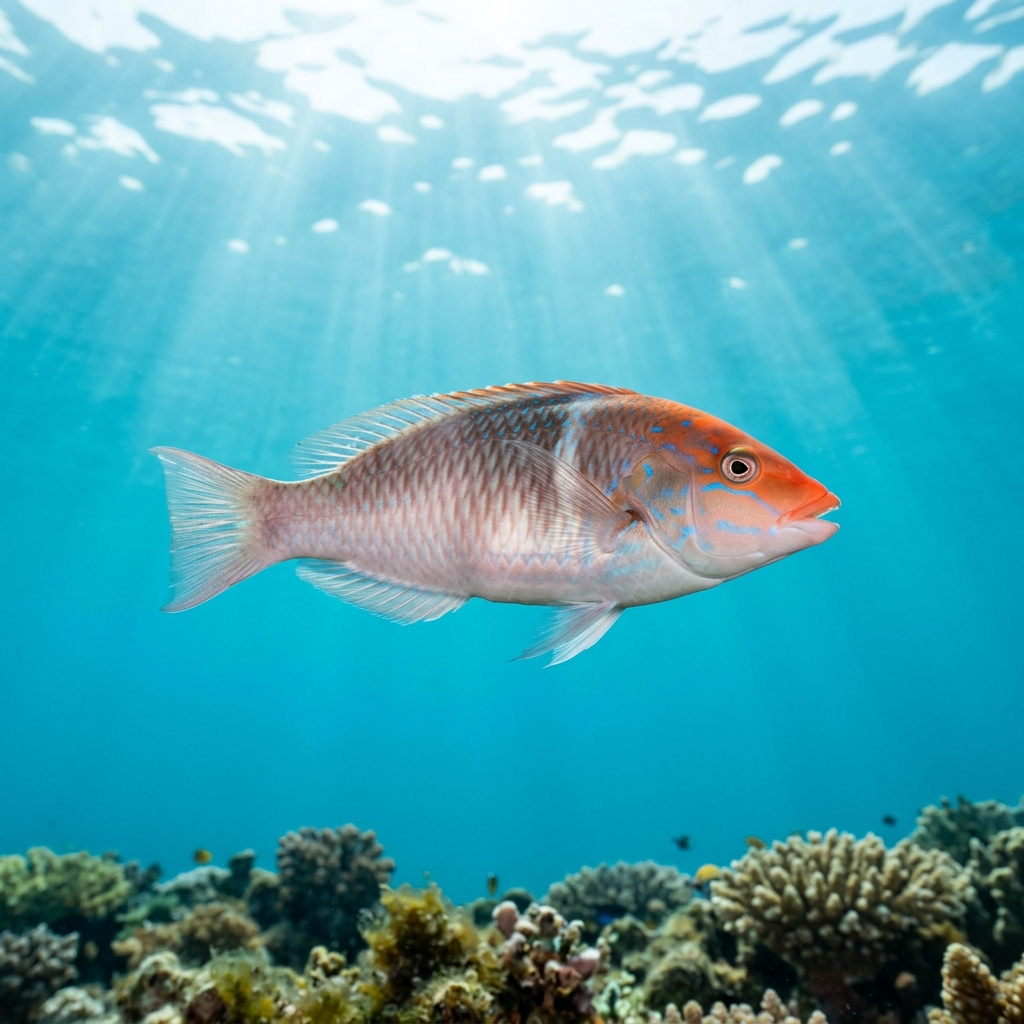
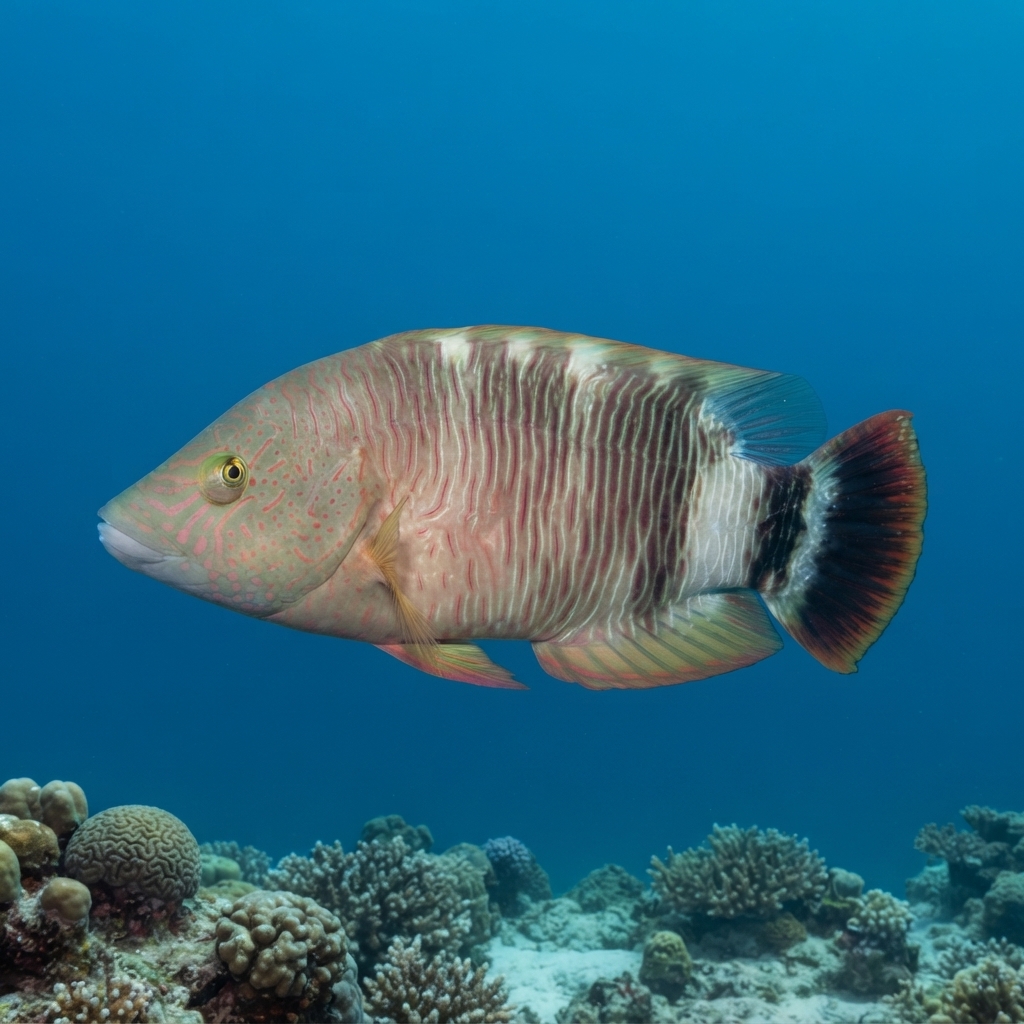
Chunky, torpedo-shaped body around 31 cm, usually reddish-brown to olive with irregular pale blotches and a scribbled pattern on the head. It has a blunt snout and thick lips typical of the wrasse family, and the tail often shows a faint pale margin that gives the species its name. Colour can shift with mood and habitat, so look for the mottled body pattern and stocky build rather than any single bold stripe.
Typically seen cruising slowly over reef flats and slopes or hovering near coral heads and rubble patches, picking at small invertebrates. It tends to keep a cautious distance from divers rather than fleeing outright, and sightings are usually one or two fish rather than groups, most often logged as an uncommon rather than everyday encounter.
Like many wrasses, it hunts by flipping over rubble and small rocks to expose hidden crustaceans and molluscs, a feeding style worth watching for on sandy reef margins.
No clear seasonal pattern shows up in sightings, and it's comfortable across a 25 to 29°C range, so it's a year-round fixture on the reefs where it occurs.
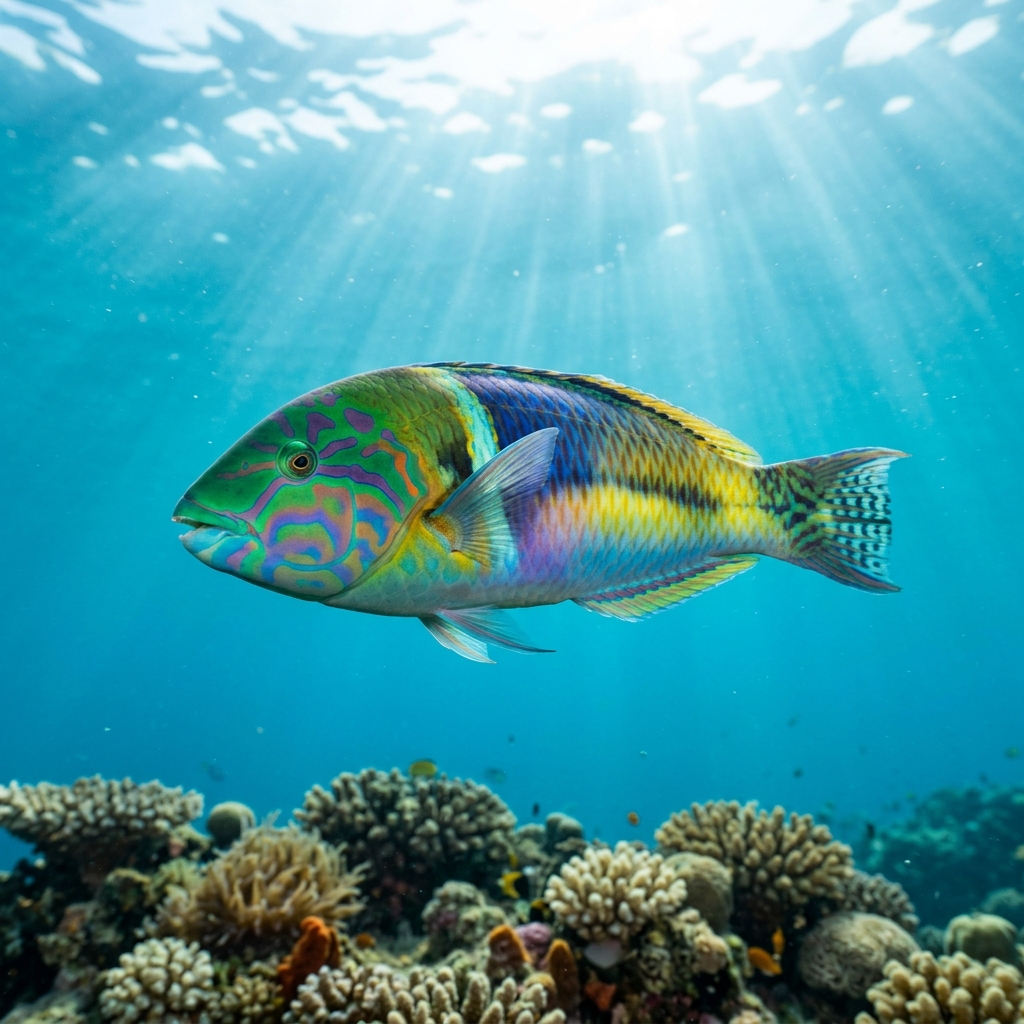
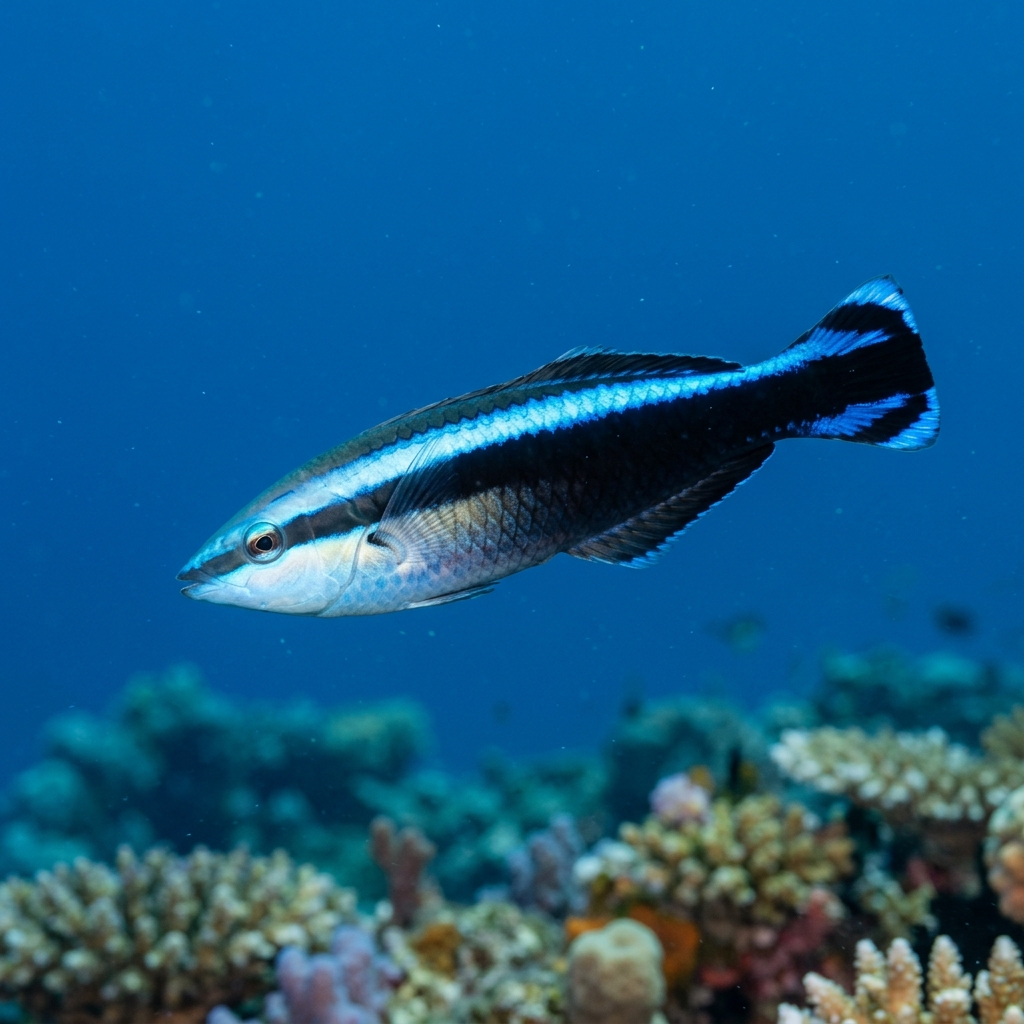
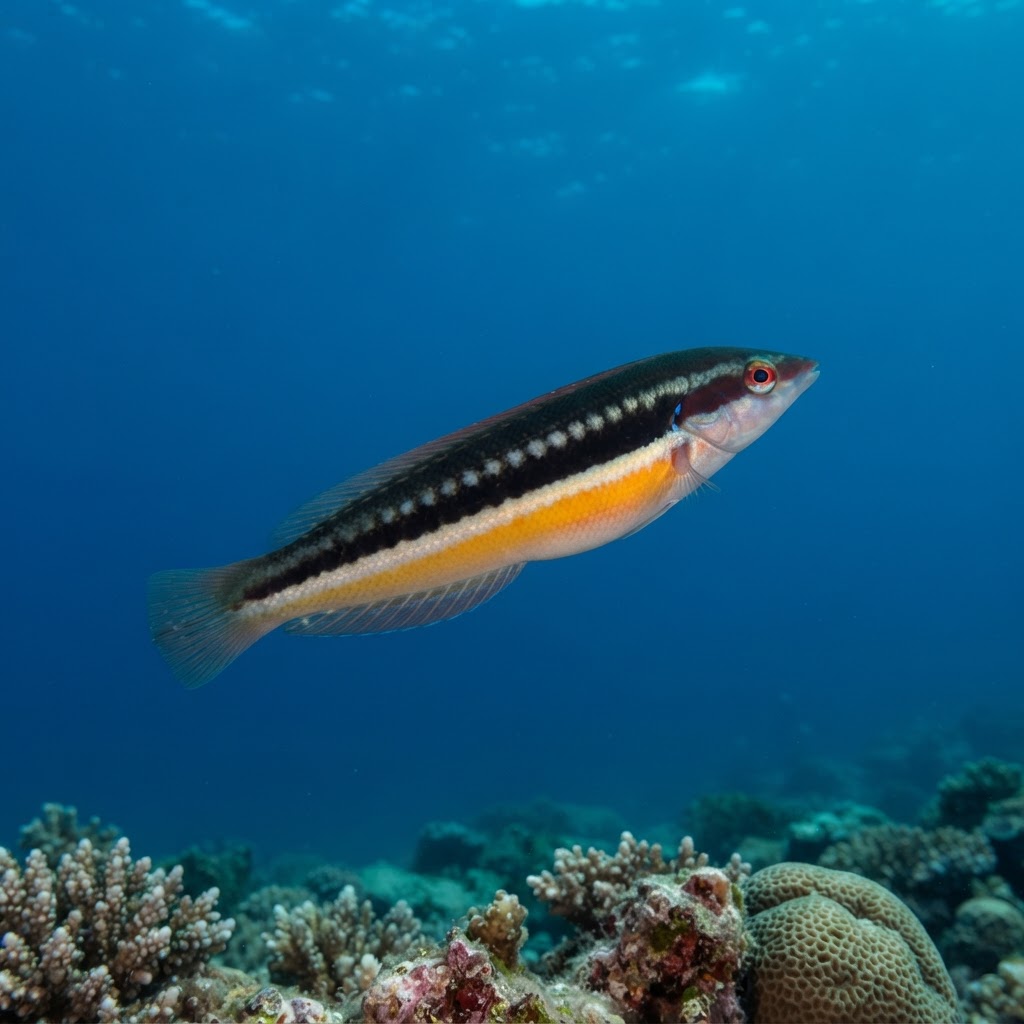
Reef neighbours a diver could mistake it for. Use the identification notes above to tell them apart.
Most reliably logged in the Maldives, especially the Central Atolls, and a strong presence in Malaysia across Peninsular Malaysia's east coast and Sabah. Also a regular sighting in the Seychelles' Inner Islands, French Polynesia's Society Islands, and reef sites across Mauritius, the Philippine Visayas, Thailand, and Okinawa in Japan.
Mapping where Tripletail Wrasse is logged…
The Maldives, particularly the Central Atolls, offers the most consistent sightings, alongside strong populations in Malaysia's Peninsular east coast and Sabah. Divers also regularly log it in the Seychelles' Inner Islands, French Polynesia's Society Islands, and reefs in Mauritius, the Philippines, Thailand, and Japan.
There's no strong seasonal pattern in sightings, and it tolerates a wide 25 to 29°C range, so it turns up on tropical reefs throughout the year.
Look for a stocky, torpedo-shaped fish around 31 cm long with a reddish-brown to olive body covered in pale blotches and a scribbled head pattern. The blunt snout and thick lips are classic wrasse features, and it's usually seen alone or in pairs cruising slowly over reef structure.
They typically reach about 31 cm, making them a mid-sized reef wrasse, noticeably smaller and less bulky than a Napoleon Wrasse.
They're carnivores that forage over reef flats and rubble, flipping small rocks to uncover crustaceans, molluscs, and other invertebrates hiding underneath.
Site and sighting data is aggregated from diver logs, iNaturalist and GBIF. For taxonomy and conservation status:
Bird Wrasses
3,632 sites