Balistidae spp.
Spot triggerfish across the Maldives, Egyptian Red Sea, and Indo-Pacific reefs. Present year-round in 24-29 °C waters. Here's where and how to find them.
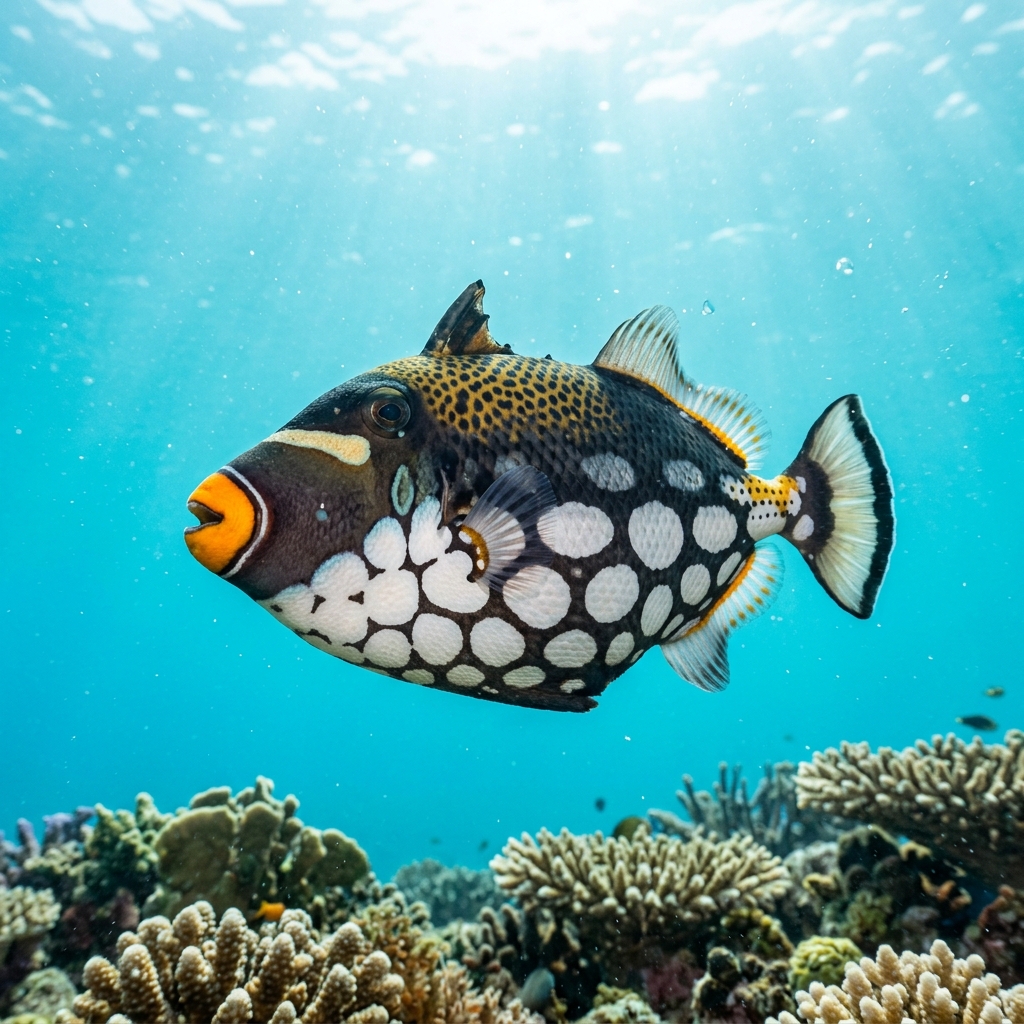
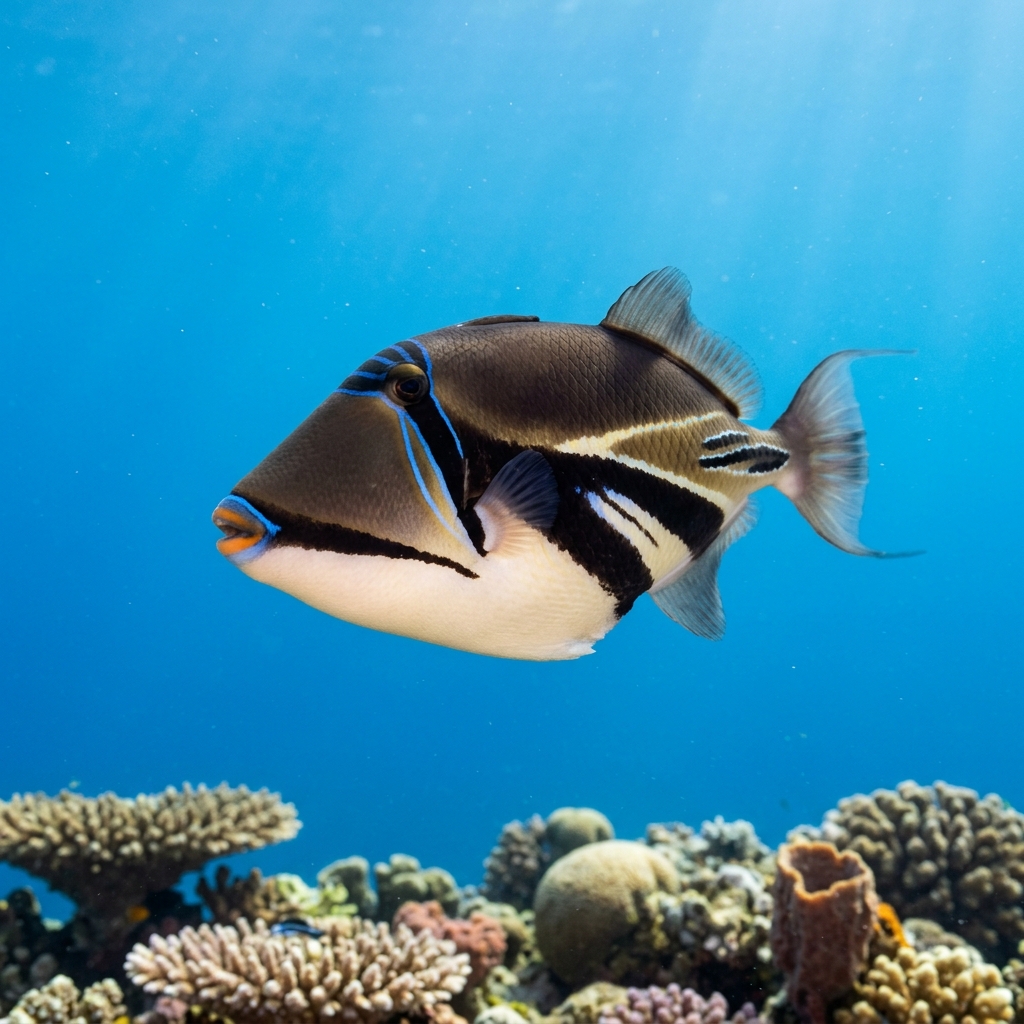
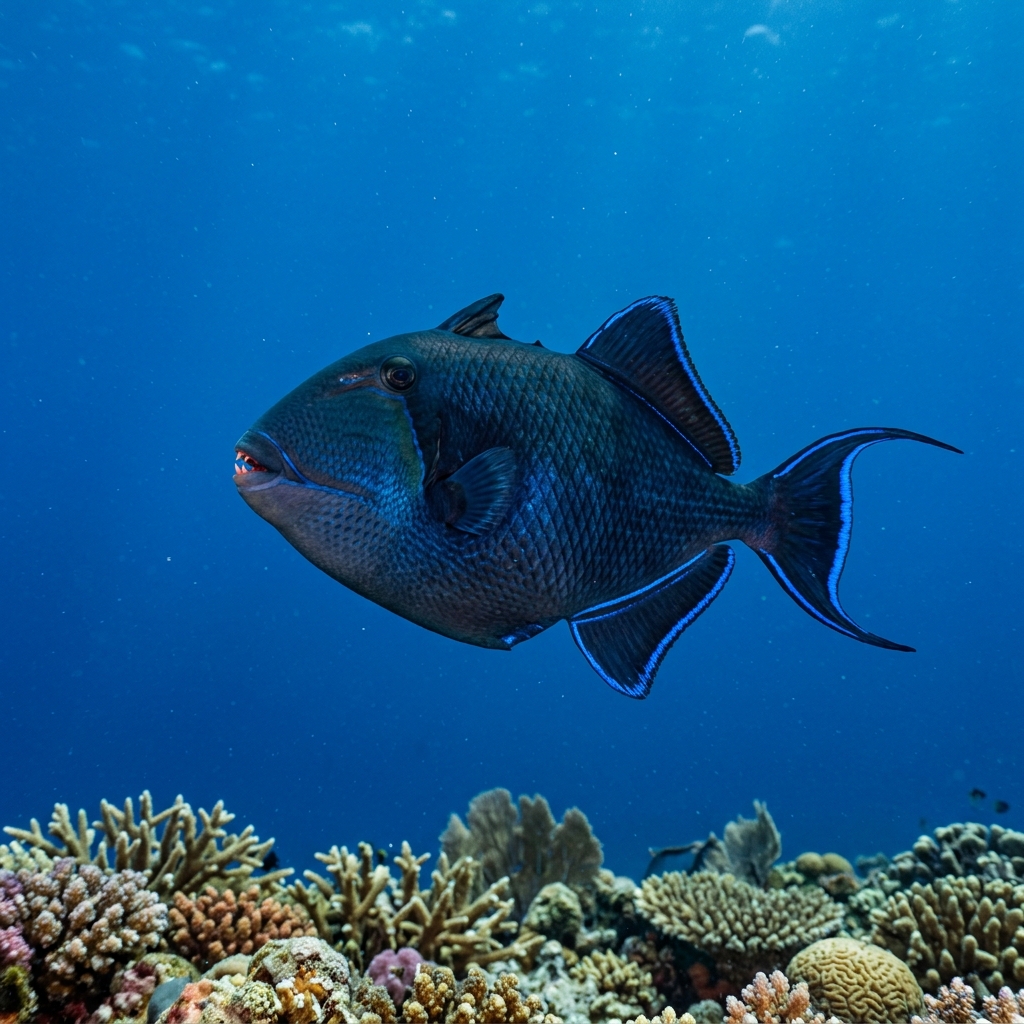
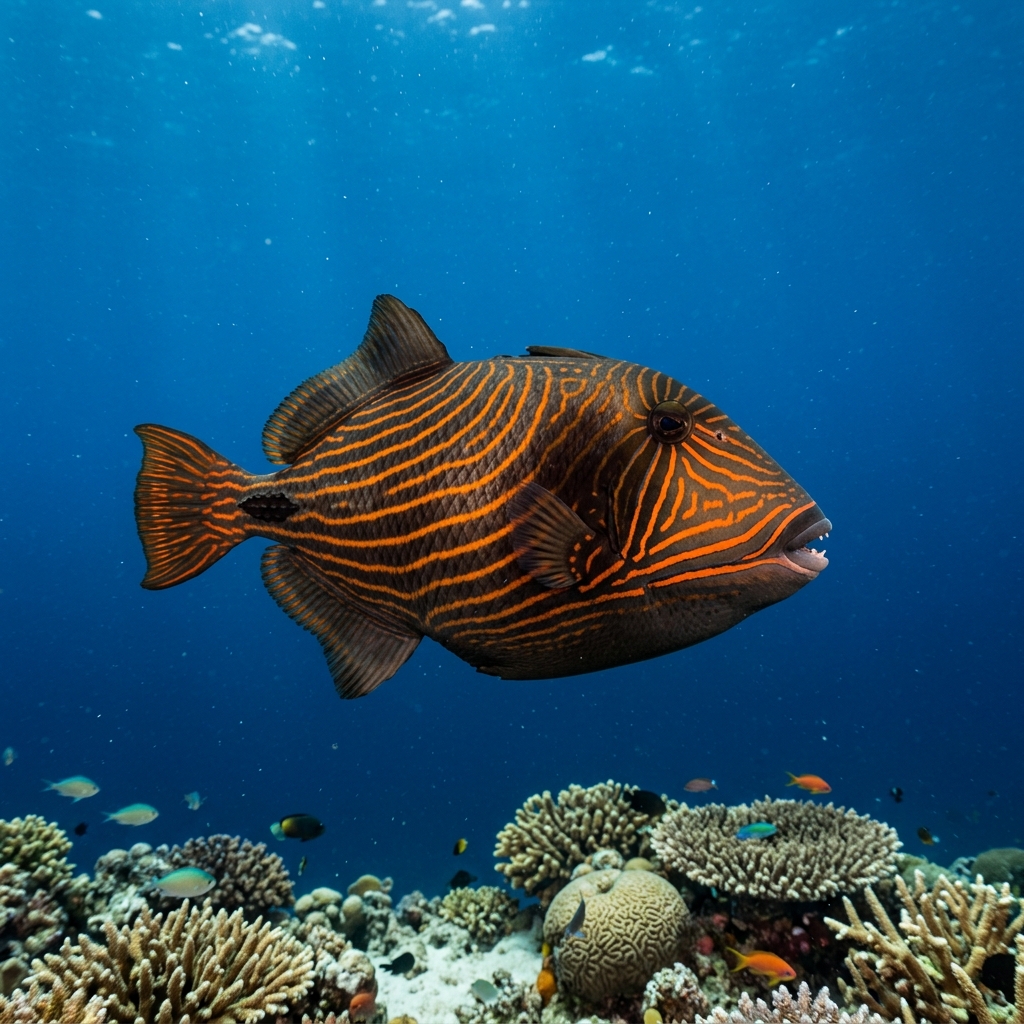
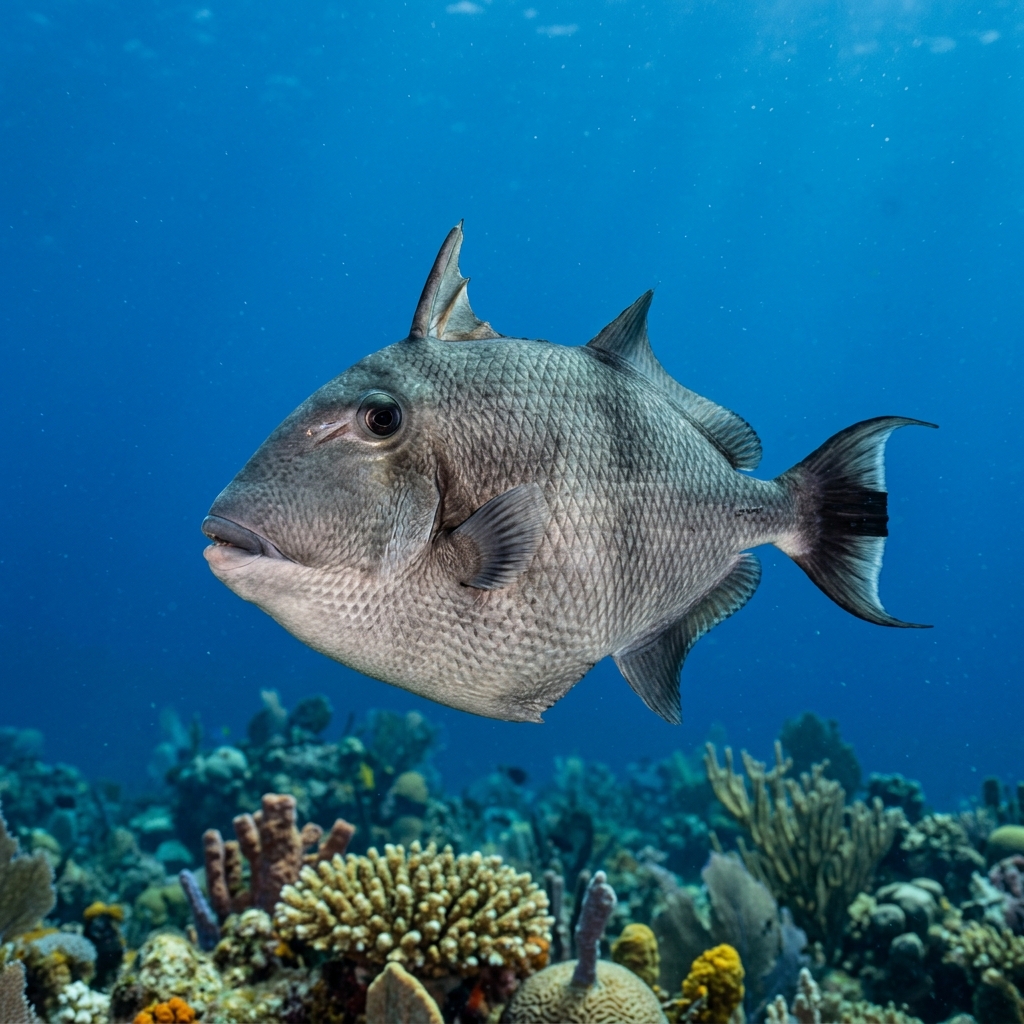
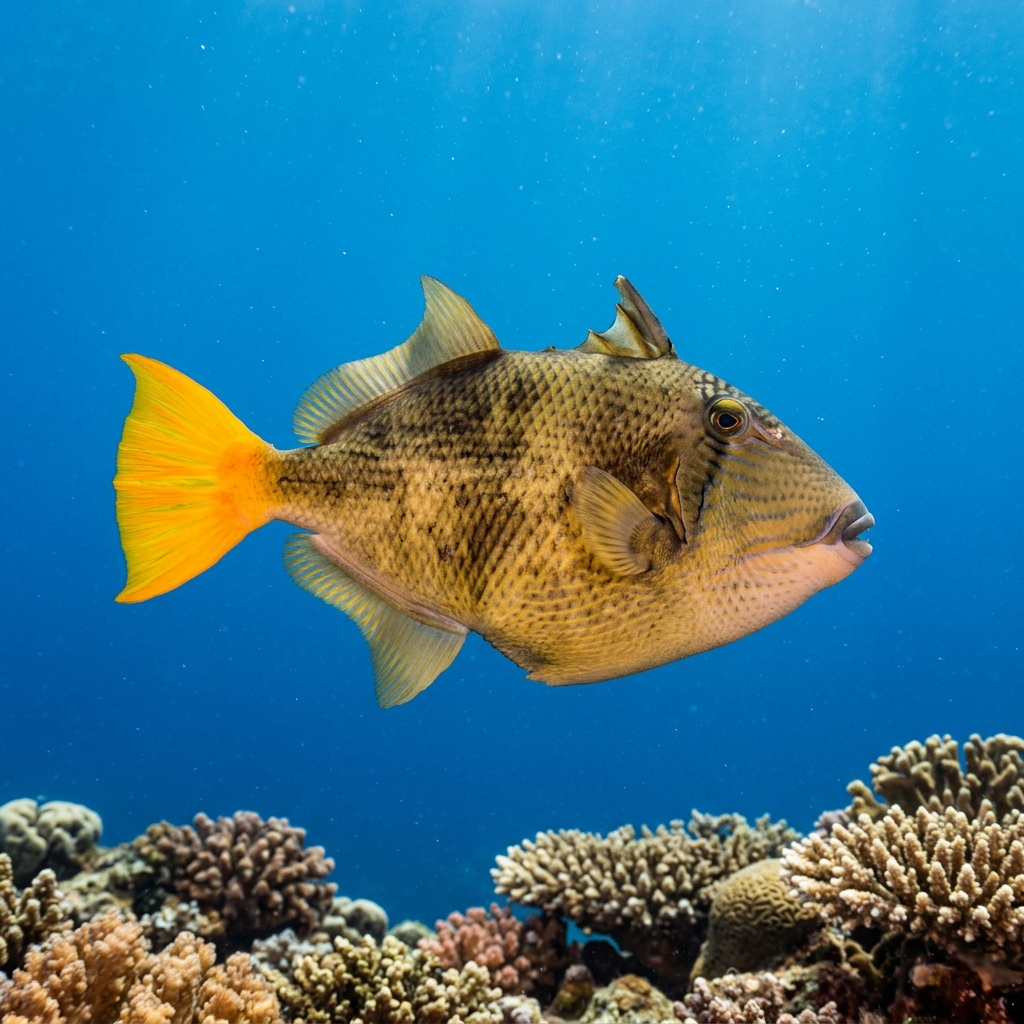
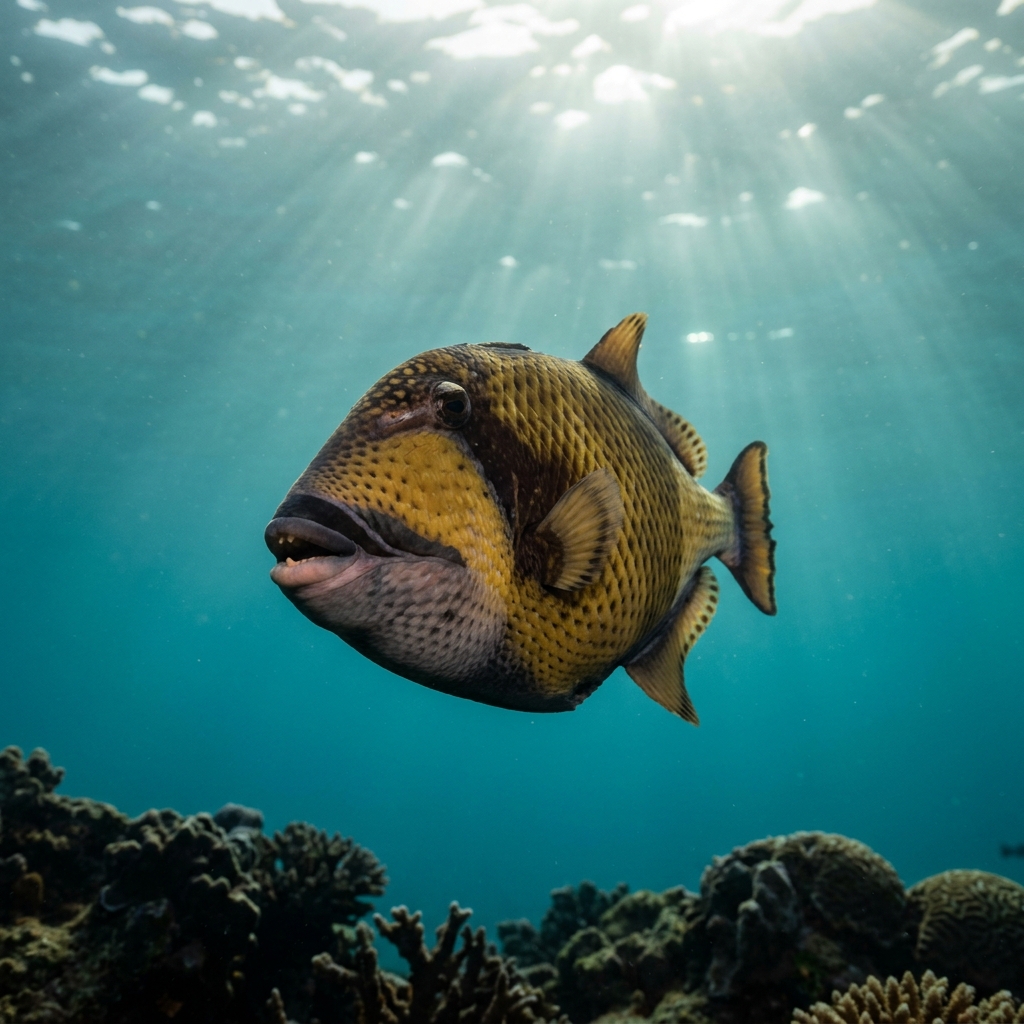
Triggerfish share a distinctive compressed, oval body with a blunt snout, small mouth, and tough leathery skin that sets them apart from most reef fish at a glance. The giveaway is their locomotion: they row themselves along using rippling dorsal and anal fins rather than sweeping their tail, giving them a hovering, purposeful look. Patterns vary wildly across the family, from geometric spots and bold stripes to solid blacks and electric blues, but the body shape stays consistent. Juveniles in many species are more intensely patterned than adults, showing vivid spots, contrasting bands, or metallic hues that fade or shift with age.
Triggerfish are typically seen patrolling reef flats and rubble zones, often foraging alone and moving with deliberate confidence. Most species are alert to divers but not particularly skittish; they may hold their ground and eye you cautiously before moving off. Their strong teeth and determined nature make them a forceful presence on the reef, and some species, particularly when nesting, can become openly assertive toward anything that enters their territory.
The 'trigger' in their name is functional: the stout first dorsal spine locks upright and can only be released by depressing the smaller second spine behind it, a mechanism triggerfish use to wedge themselves into reef crevices so tightly that even a determined predator cannot pull them free.
In the Northern Hemisphere, triggerfish are present year-round, which makes sense given they thrive in water between 24 and 29 °C, the typical range of tropical reefs throughout the year. Southern Hemisphere sightings concentrate between July and January, aligning with the warmer austral months.
Reef neighbours a diver could mistake it for. Use the identification notes above to tell them apart.
Most commonly logged in Egypt (particularly around Sharm el Sheikh and Marsa Alam) and the Maldives, especially in the Male and Ari Atolls, which together account for a substantial share of all recorded sightings. Strong populations are also well documented across Indonesia (Bali and Sulawesi), the Philippines (Visayas and Palawan), and Mexico's Baja California. If you're choosing a destination specifically for triggerfish, the Red Sea and central Indo-Pacific give you the best odds.
Mapping where Triggerfish is logged…
Triggerfish are logged at dive sites across nearly 40 countries, with the highest concentration of sightings in Egypt's Red Sea (Sharm el Sheikh and Marsa Alam), the Maldives (Male and Ari Atolls), Indonesia, the Philippines, and Mexico's Baja California. They're a reliable sight on most healthy tropical reef systems throughout the Indo-Pacific and Red Sea.
In the Northern Hemisphere they're present year-round, so there's no single peak season to chase. In the Southern Hemisphere, sightings are most concentrated between July and January, tracking the warmer water months. They're most comfortable in water temperatures of around 24 to 29 °C.
Look for a stocky, compressed oval body with a blunt snout and small mouth, combined with an unusual swimming style: they row with rippling dorsal and anal fins rather than using their tail. Colours and patterns vary enormously across species, but that body shape and rowing movement are consistent across the whole family.
As a family, triggerfish are not considered dangerous to divers. However, several species, most notably the titan triggerfish, will actively defend a nest territory and can bite hard enough to damage equipment or skin. If a triggerfish begins circling you or making short aggressive passes, swim away horizontally rather than ascending through its territory.
The first dorsal spine is large and rigid; it locks erect and can only be released by pressing down the shorter second spine directly behind it, like a trigger on a pistol. Triggerfish use this mechanism to wedge themselves so firmly into reef crevices at night, or when threatened, that predators cannot extract them.
The family Balistidae includes around 40 recognised species. They range from smaller reef species under 30 cm to large species like the titan triggerfish, which can reach 75 cm. Divers most frequently encounter species in the Indo-Pacific, Red Sea, and eastern Pacific, though several species are also found in the Atlantic.
Site and sighting data is aggregated from diver logs, iNaturalist and GBIF. For taxonomy and conservation status:
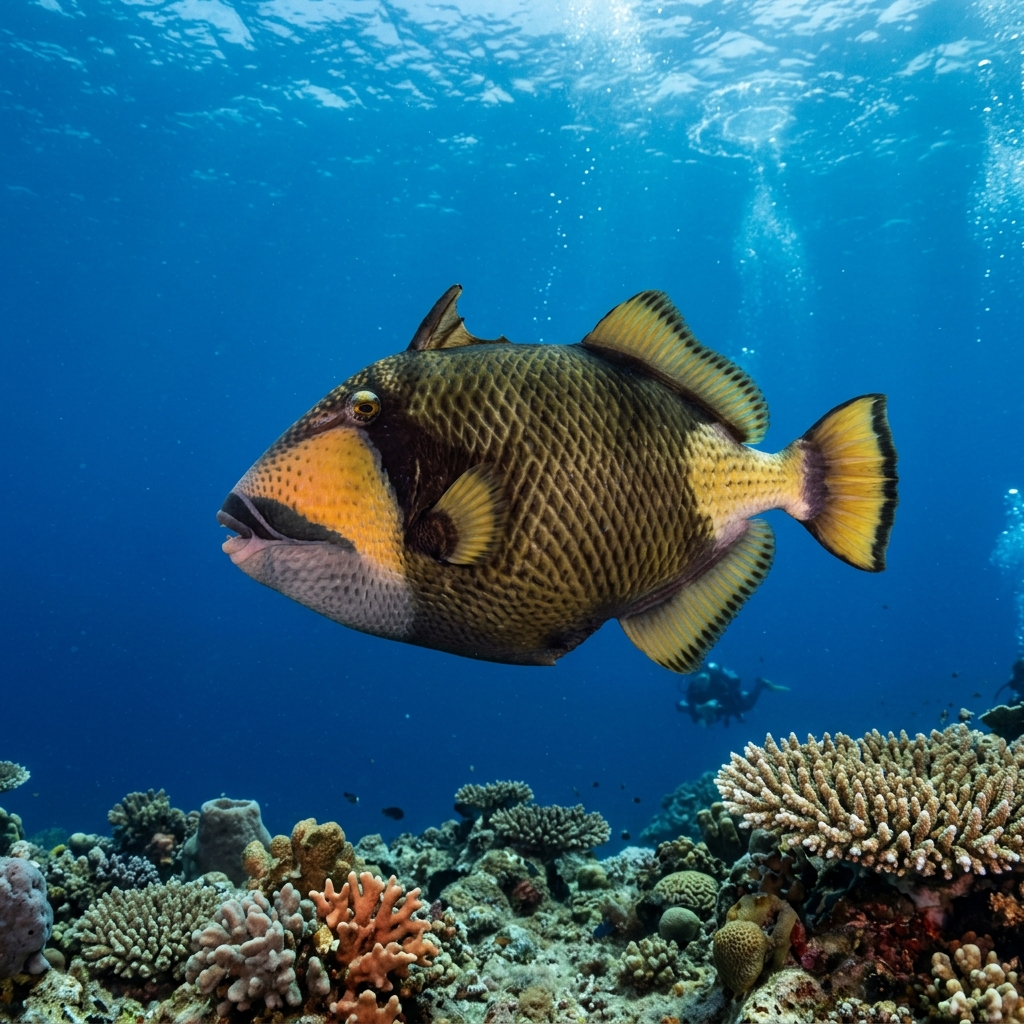
Balistoides viridescens
Lagoon Triggerfish
2,435 sites