Rhinecanthus aculeatus
Spot the Lagoon Triggerfish in the Maldives and French Polynesia. Distinctive geometric markings, bold attitude, and a habit of jet-blasting sand for prey.
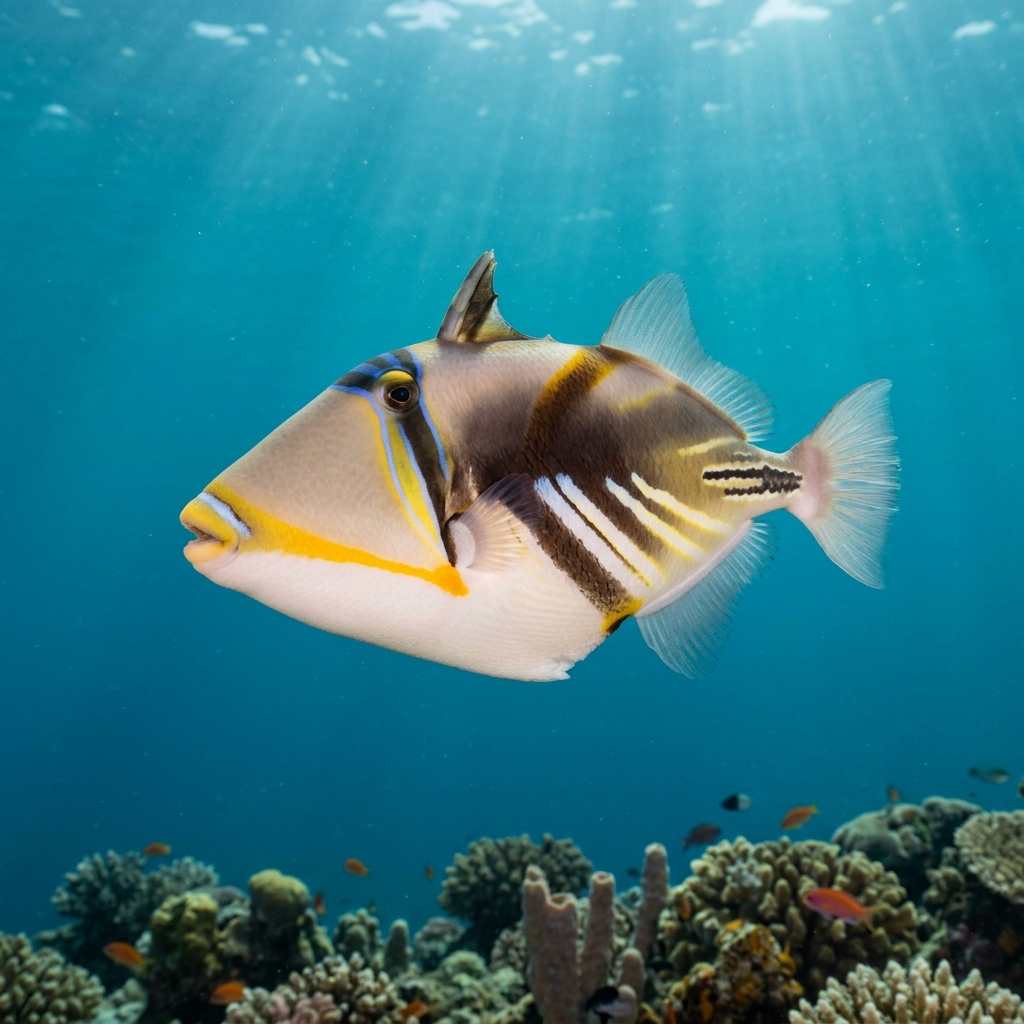
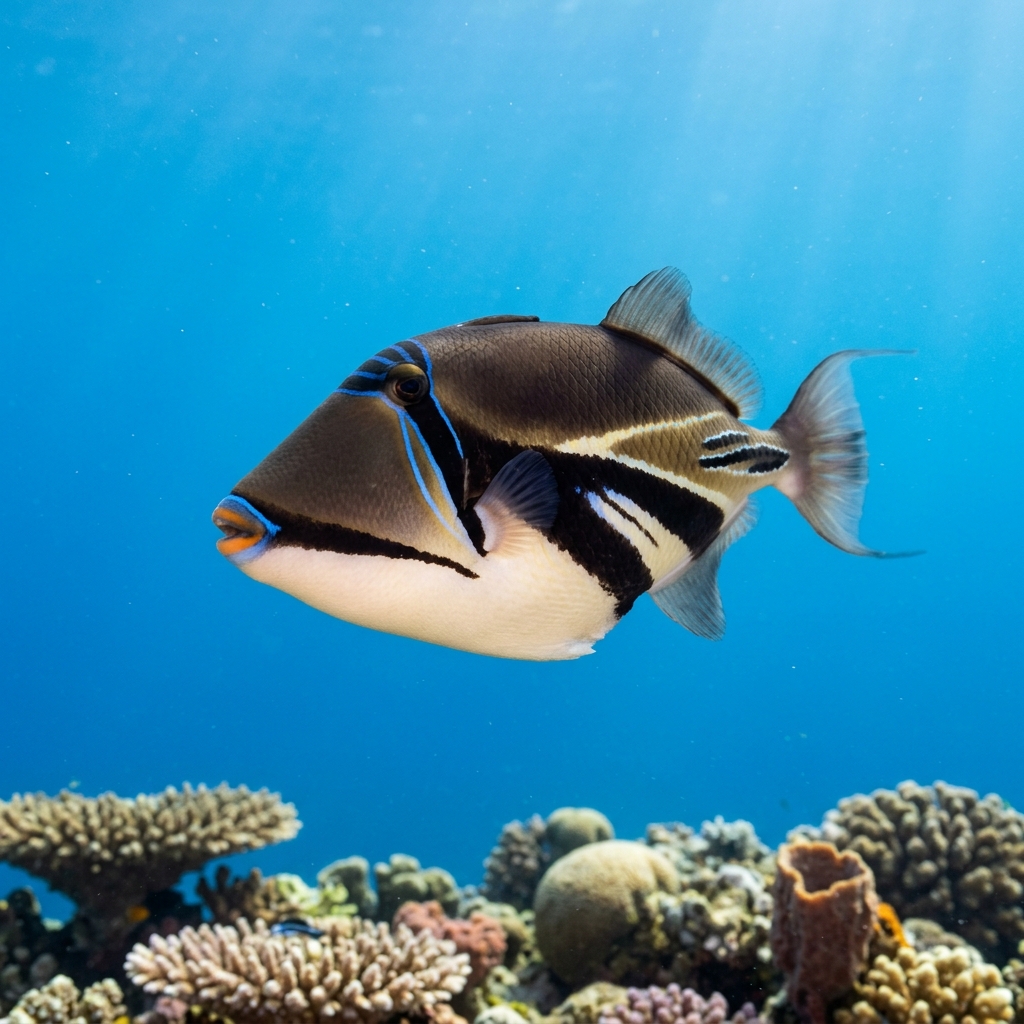
A compact, laterally flattened fish around 20 cm long, the Lagoon Triggerfish is unmistakable once you learn its pattern: a white body with a broad black patch across the face, a yellow-green band running from the pectoral fin to the mouth, and a tail end marked with diagonal black streaks on a pale background. The triggerfish body shape itself is a give-away, deep and oval with small, set-back fins and a pointed snout. Juveniles share the same basic geometry but show a more muted, brownish version of the adult pattern.
Expect to find it working the shallower reef flat or rubble zones during the day, nose-down and busy, often blowing sharp jets of water into the sand to flush out hidden invertebrates. It is curious and will sometimes drift closer to check you out, but during breeding season it will defend its patch assertively, swimming directly towards an intruder with intent. That direct approach is a clear signal to back off and give it space rather than hold your ground.
The jet-blasting feeding method is worth watching closely: it tilts on its side and fires a precise stream of water to uncover crabs, worms, and urchins buried just beneath the surface, then uses its strong beak-like teeth to crunch through hard-shelled prey.
In Northern Hemisphere destinations such as the Maldives, Hawaii, and Okinawa, sightings concentrate between December and April. In Southern Hemisphere locations like Queensland and French Polynesia, they spread broadly from July through to April, covering much of the year.
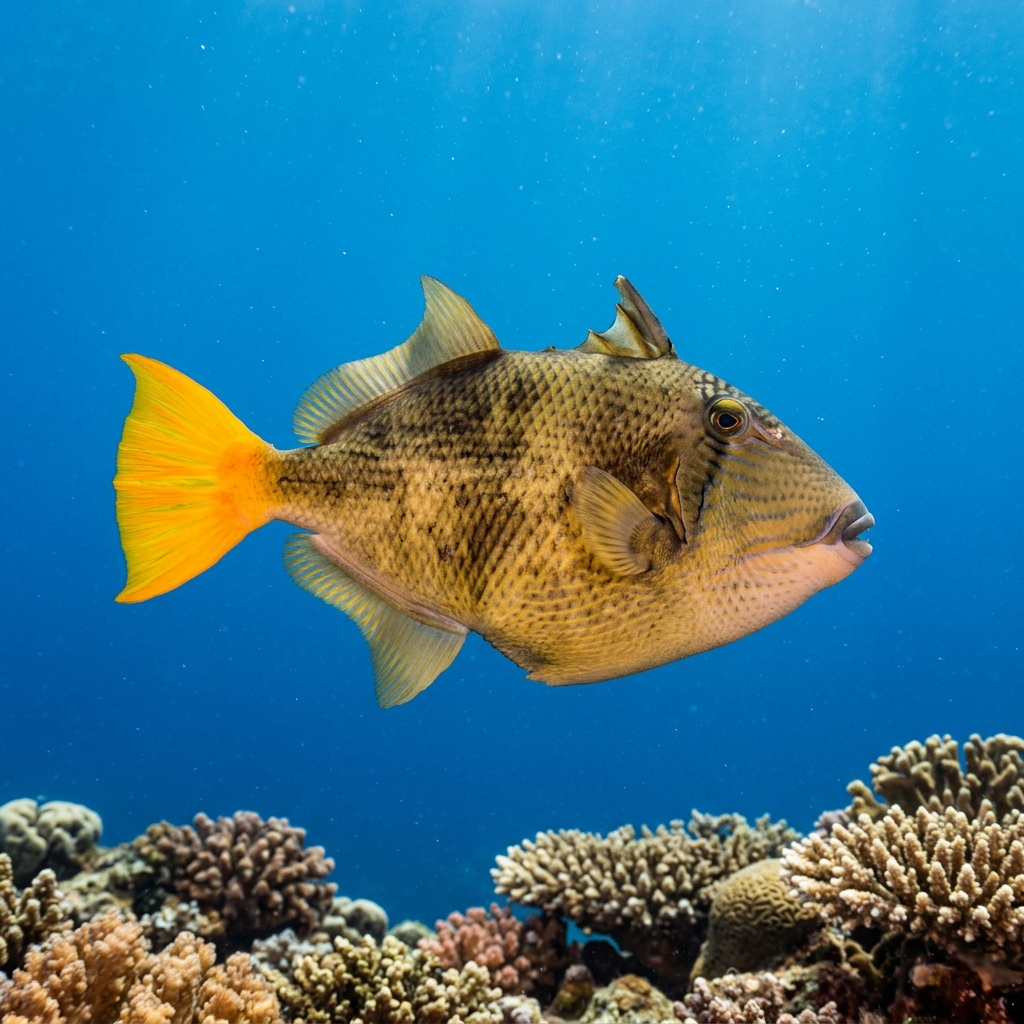
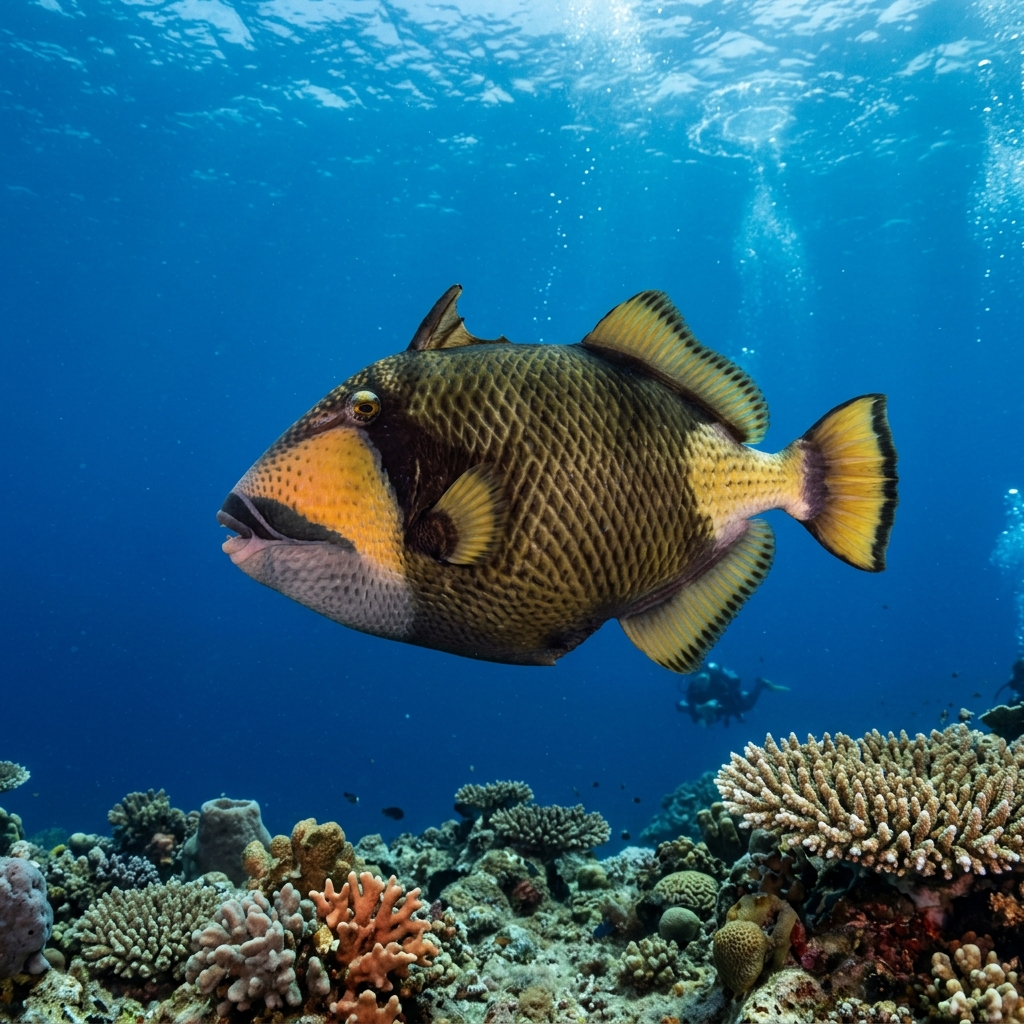
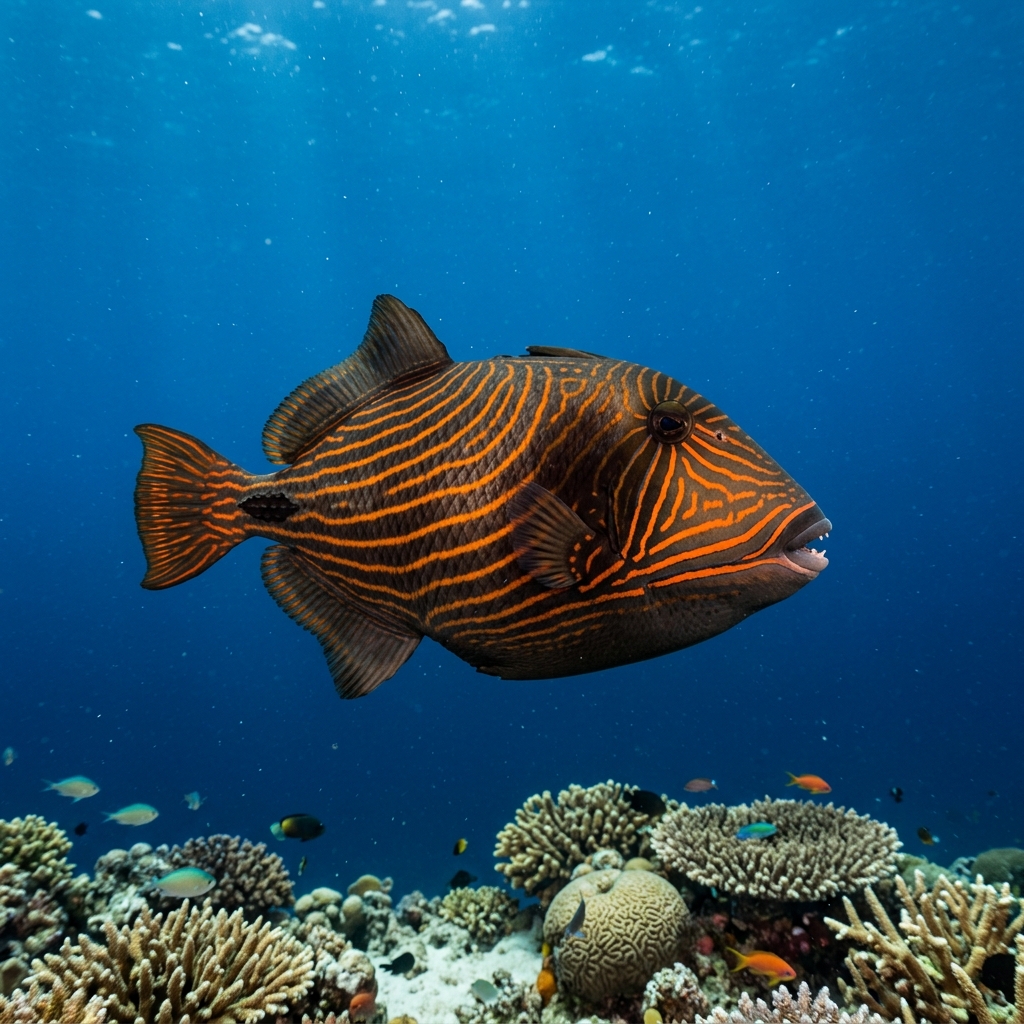
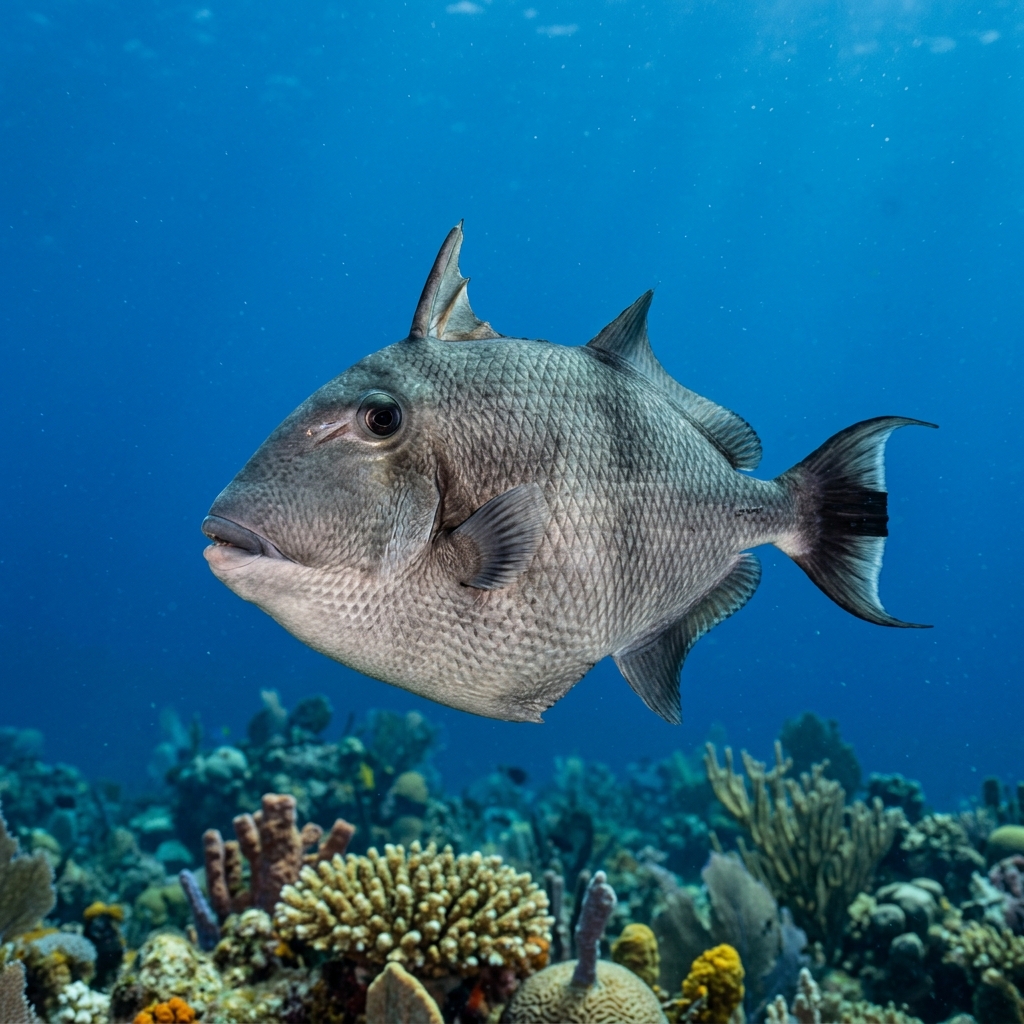
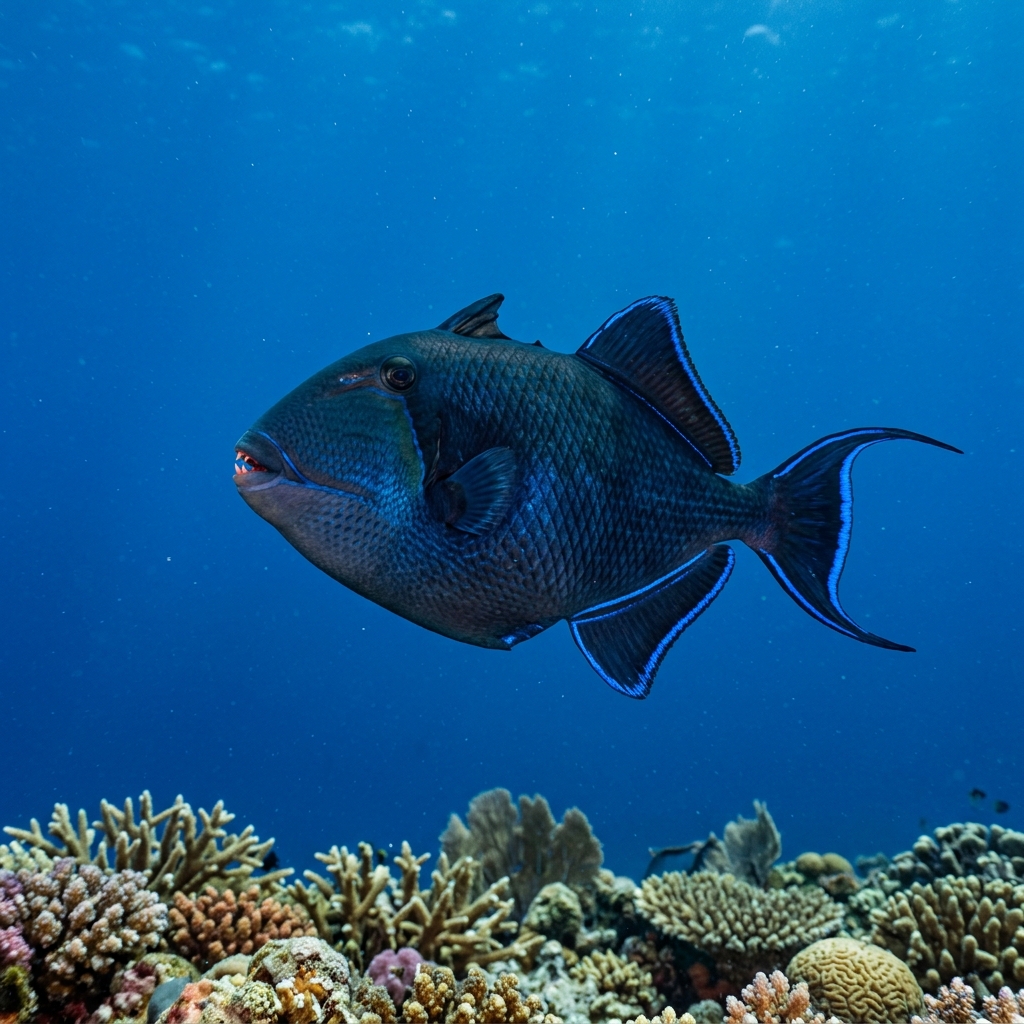
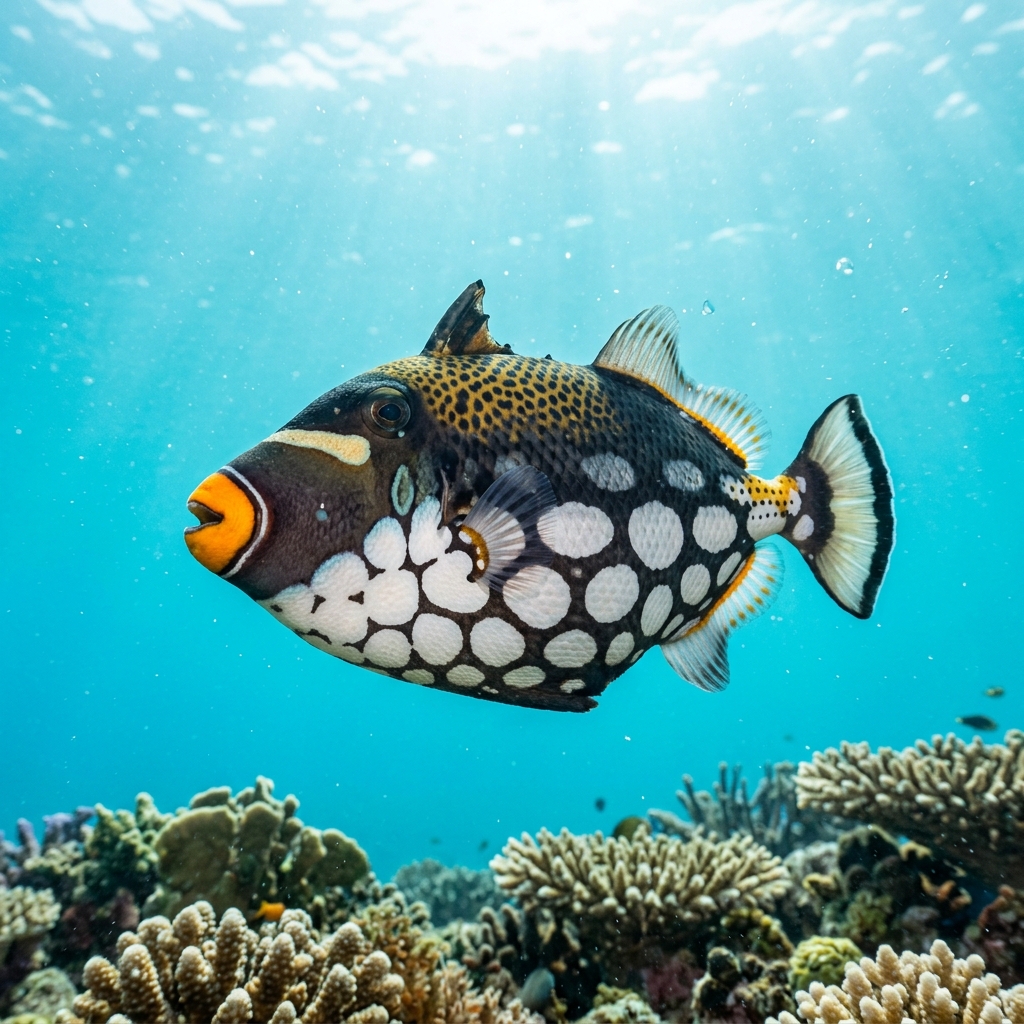
Reef neighbours a diver could mistake it for. Use the identification notes above to tell them apart.
Most commonly logged in the Maldives, where it turns up across the Male and Ari Atolls and the North and Central Atolls in particular. Strong sighting records also come from the Philippines (especially Palawan and Apo Reef), Indonesia, Australia's Queensland coast, and French Polynesia around Tahiti. Hawaii, Okinawa, and the Seychelles round out the top locations globally.
Mapping where Lagoon Triggerfish is logged…
They are most reliably encountered in the Maldives, particularly around the Male and Ari Atolls. The Philippines, Indonesia, Queensland in Australia, Tahiti in French Polynesia, and Hawaii are also well-documented locations. They favour shallow reef flats and lagoon edges across the Indo-Pacific.
In Northern Hemisphere destinations such as the Maldives, Okinawa, and Hawaii, December through April is the peak window. Across Southern Hemisphere sites like Queensland and French Polynesia, sightings are spread from July to April, making it a broadly accessible animal for much of the year.
Look for a white body with a bold black mask across the face, a yellow-green band running from below the pectoral fin up to the mouth, and diagonal black streaks near the tail. The deep oval body shape and small set-back fins are typical of all triggerfish, but the geometric facial patterning is unique to this species.
They are not considered dangerous, but during breeding season they will defend their territory by swimming directly at a perceived intruder. If one heads straight for you, the sensible move is to calmly back away rather than hover in place. Bites are rare but the teeth are strong.
They typically reach around 21 cm in length. That makes them a medium-small reef fish, noticeably smaller than the Titan Triggerfish but similar in overall shape and build.
They are carnivores that target hard-shelled invertebrates including crabs, urchins, and worms. A characteristic feeding behaviour is blasting jets of water from their mouth into sandy substrate to expose hidden prey before crushing it with their powerful beak-like teeth.
Site and sighting data is aggregated from diver logs, iNaturalist and GBIF. For taxonomy and conservation status:
Flagtail Triggerfish
2,287 sites