Sufflamen chrysopterum
Spot the Flagtail Triggerfish on Indo-Pacific reefs from the Maldives to the Philippines. ID tips, best seasons, and top dive regions.
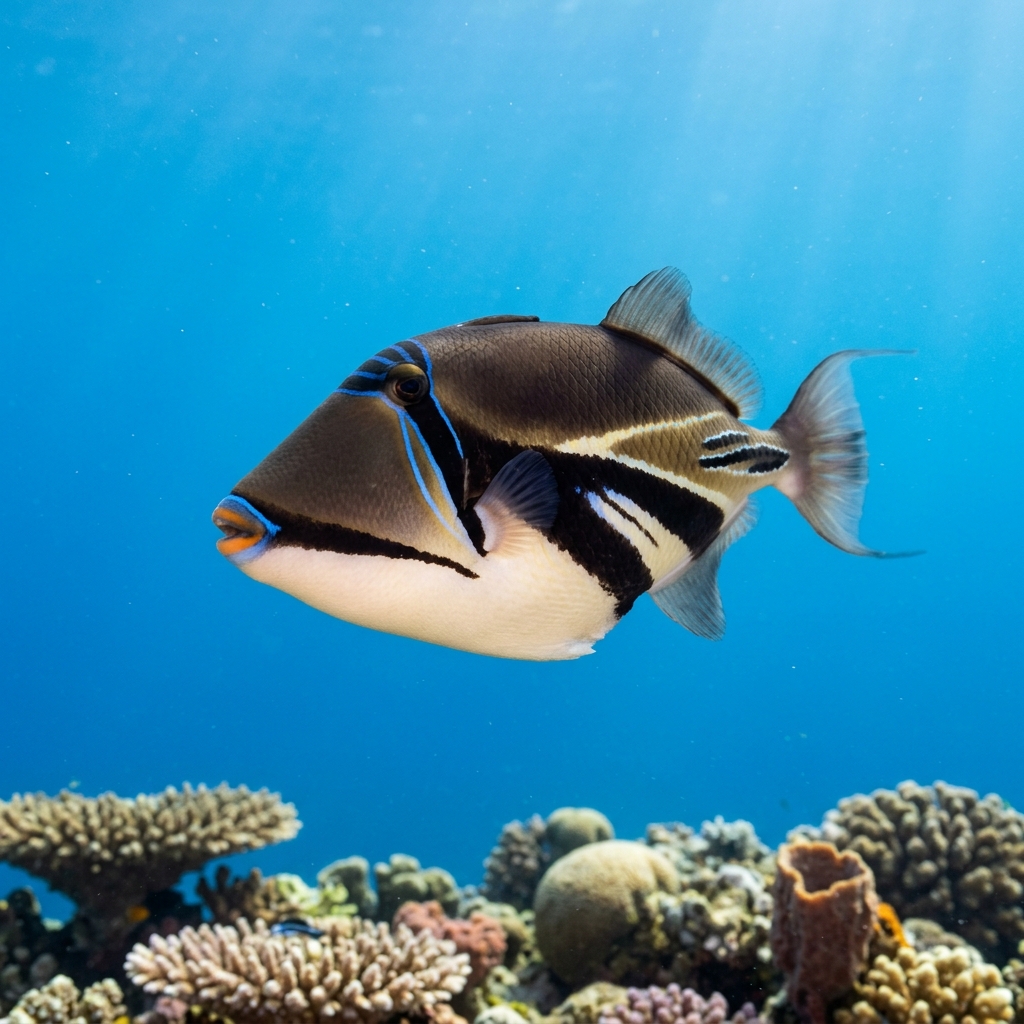
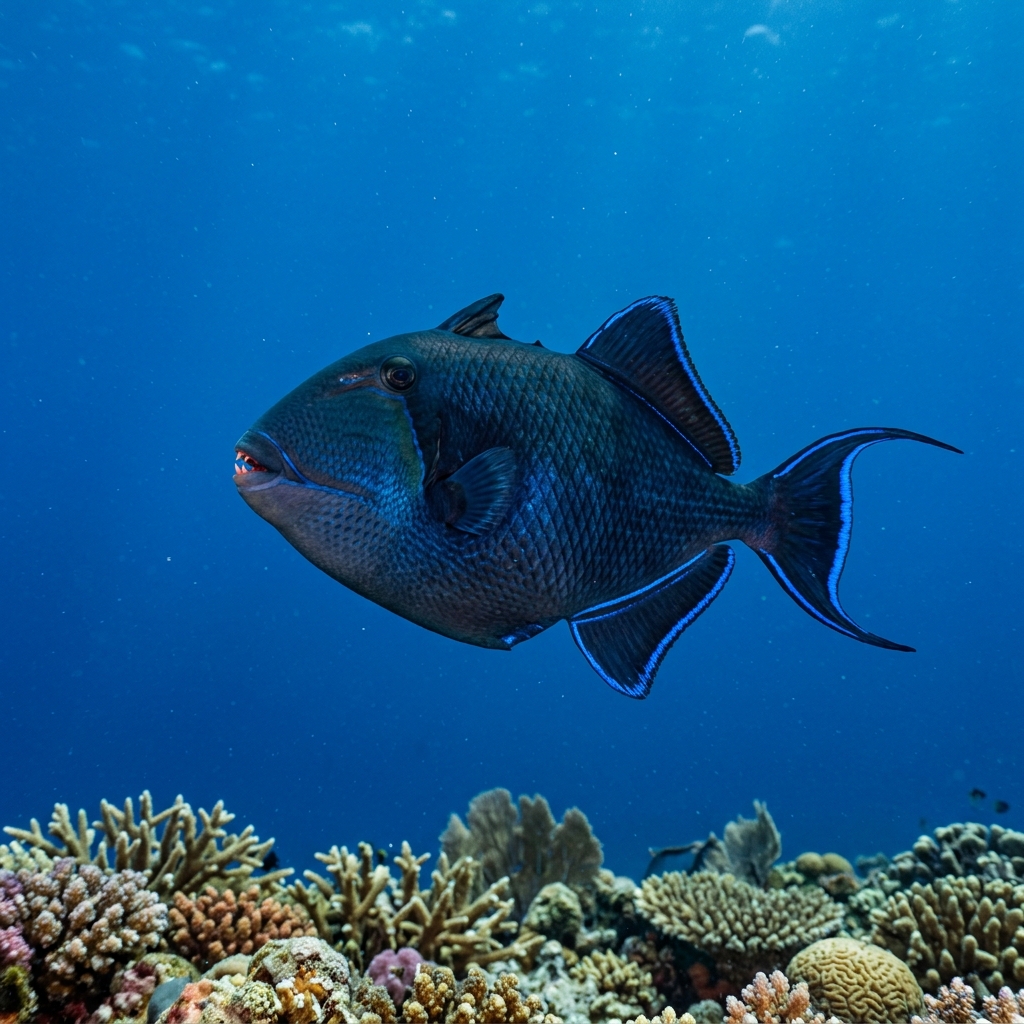
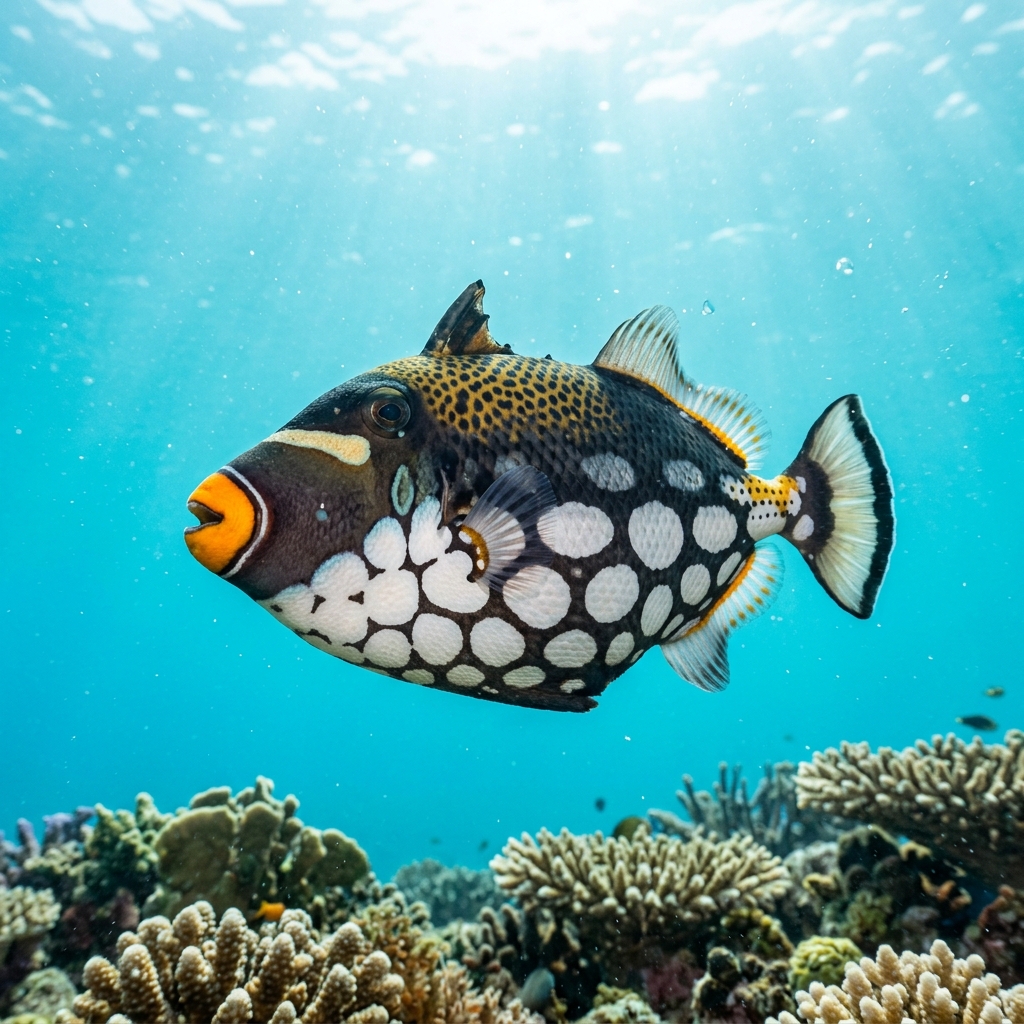
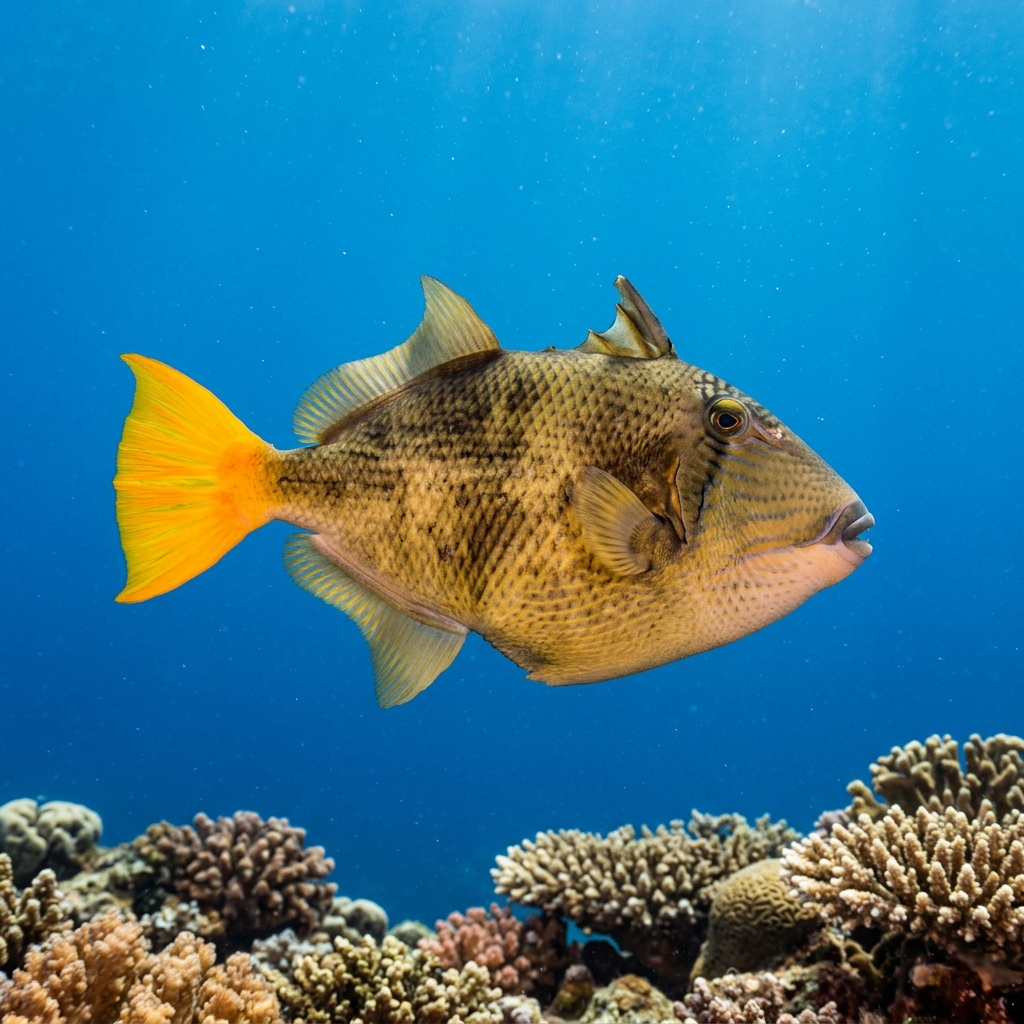
A medium-sized triggerfish reaching around 21 cm, with a brownish-olive body that fades to a pale or whitish tail base, that pale caudal peduncle (the narrow stalk just before the tail) edged with dark markings is the key feature to lock onto underwater. The tail itself shows bold dark margining that gives the fish its name. Look for the yellow-gold wash across the pectoral fin area and the compressed, oval body typical of triggerfish. Juveniles tend to be paler overall with less defined markings.
Typically encountered alone, picking methodically across the reef or rubble during the day in search of small invertebrates. One behaviour worth watching for is 'blowing', the fish forcefully jets water from its mouth into sand or rubble to flush out hidden prey. Around divers it is generally unhurried and indifferent, though it may drift slowly away if approached too closely, and individuals defending a nest during breeding can become more territorial.
The blowing behaviour is a clever foraging trick: by directing a precisely aimed jet of water into loose substrate, the fish uncovers buried worms, crustaceans, and molluscs that would otherwise stay hidden.
In Southern Hemisphere destinations such as Queensland and parts of Indonesia, it is present year-round. In Northern Hemisphere sites, the Maldives, Thailand, the Philippines, and Hawaii, sightings concentrate from November through September, with a quieter period around October.
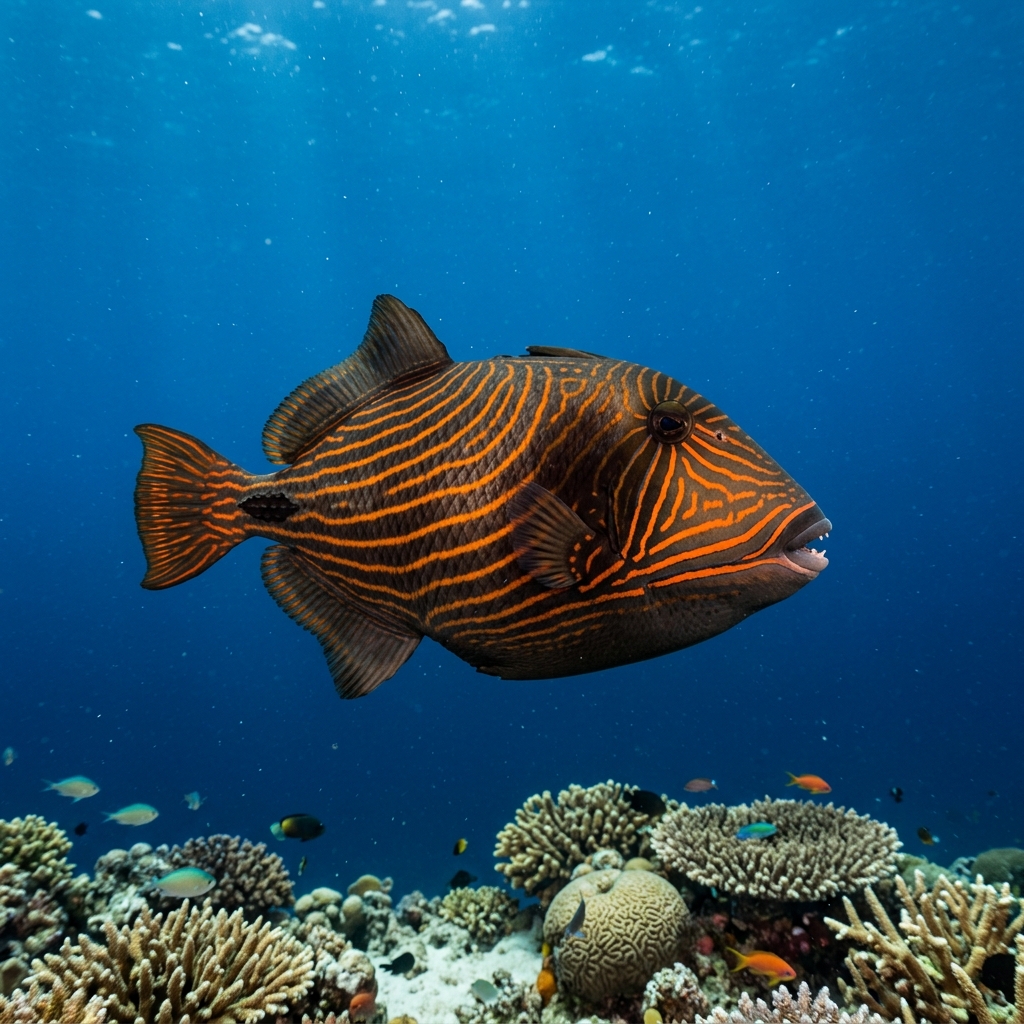
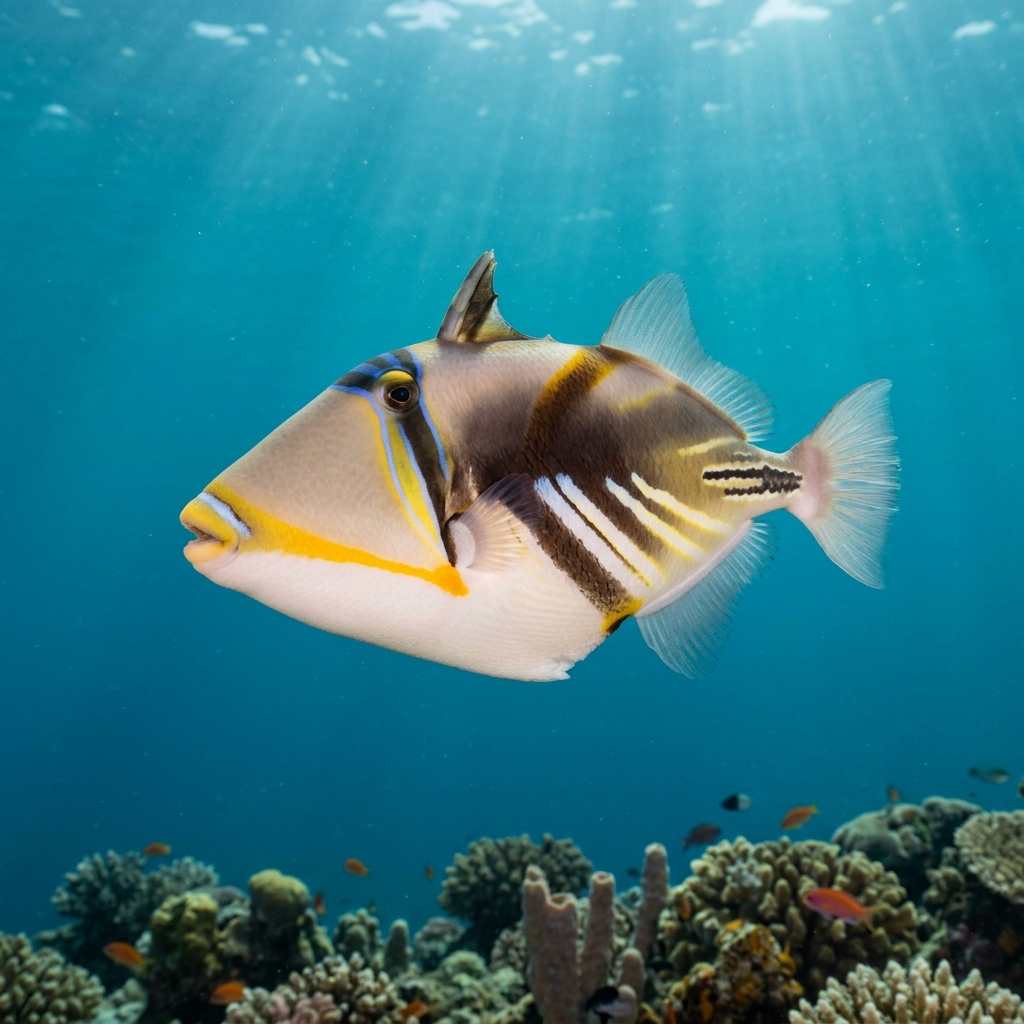
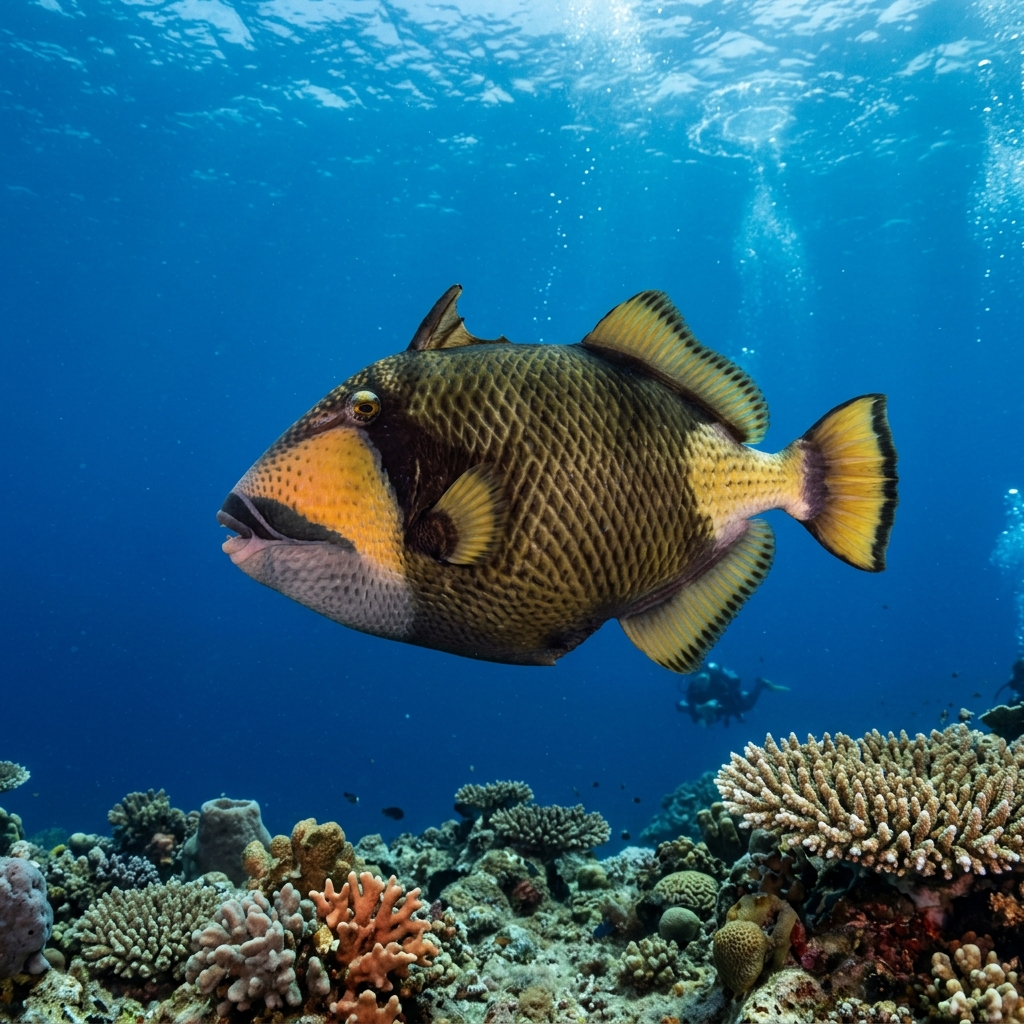
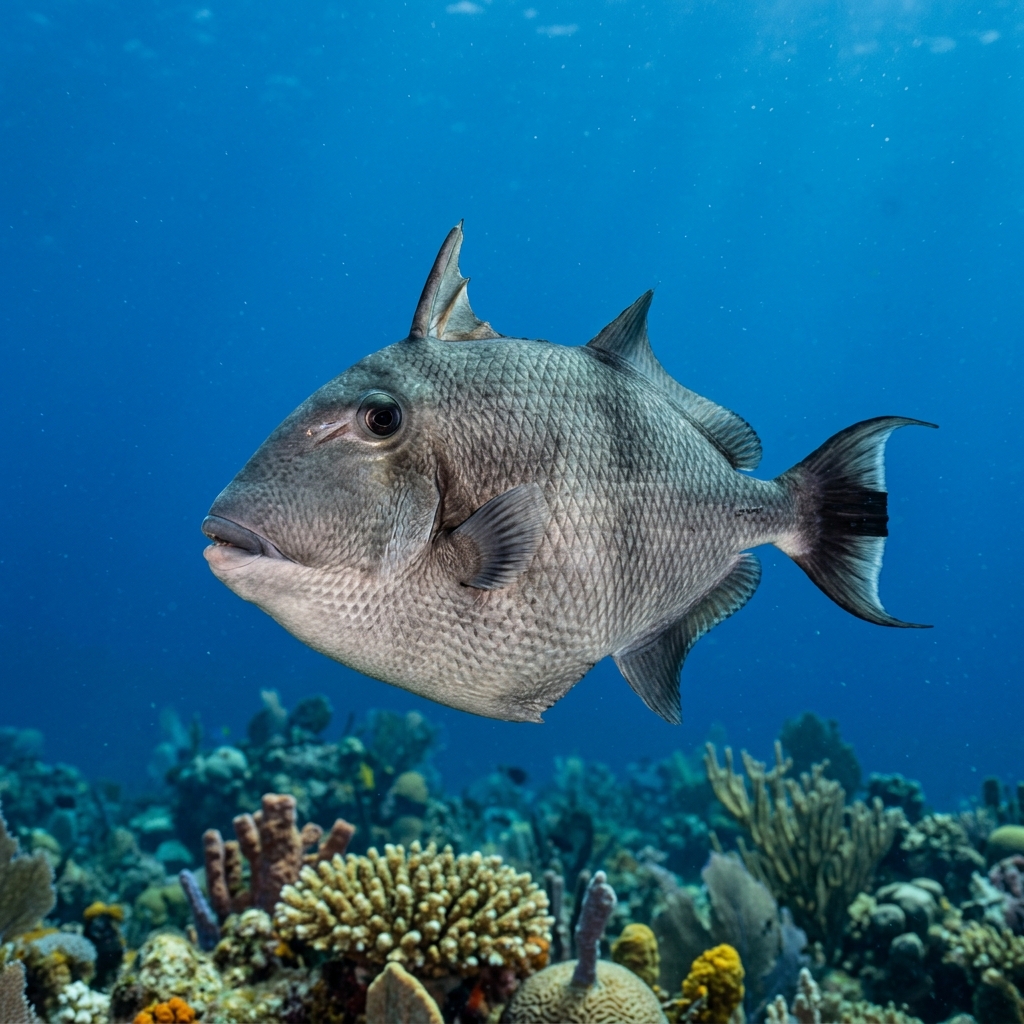
Reef neighbours a diver could mistake it for. Use the identification notes above to tell them apart.
Most commonly logged across the Indo-Pacific, with the strongest presence in the Maldives, particularly the Male and Ari Atolls and the North and Central Atolls, followed by Indonesia (especially Bali, Lombok, and the Banda Sea region) and the Philippines (Visayas). It also turns up reliably in Thailand, Malaysia, and across Queensland, Australia, and is well represented in Hawaii.
Mapping where Flagtail Triggerfish is logged…
The Maldives, especially the Male, Ari, and North-Central Atolls, is the most consistently logged region. Indonesia (Bali, the Banda Sea, Maluku, and Papua), the Philippines (Visayas), Thailand, Malaysia, Queensland in Australia, and Hawaii all have strong records. It spans a wide stretch of the Indo-Pacific reef system.
In Southern Hemisphere locations such as Queensland and Indonesia it is present throughout the year. In the Northern Hemisphere, the Maldives, Thailand, Philippines, and Hawaii, sightings are concentrated between November and September, so that window covers most of the prime dive season in those regions.
Focus on the tail end: a pale or whitish caudal peduncle bounded by dark markings is the standout field mark. The body is brownish-olive with a yellow-gold flush near the pectoral fins. At around 21 cm it sits in the mid-size range for triggerfish and has the typical compressed oval shape of the family.
Typical adults reach around 21 cm, making them a mid-sized member of the triggerfish family. They have the stocky, laterally compressed body shape common to all triggerfish.
No, they are not considered dangerous. They are generally indifferent or mildly cautious around divers and will usually move away rather than confront you. Like most triggerfish, individuals guarding a nest during breeding season can become more assertive, so it is worth giving them space if you notice territorial behaviour.
Site and sighting data is aggregated from diver logs, iNaturalist and GBIF. For taxonomy and conservation status:
Lagoon Triggerfish
2,435 sites