Tridacna elongatissima
Rare giant clam relative logged in Mozambique and South Africa. Here's where divers spot Elongate Giant Clam and how to recognise it.
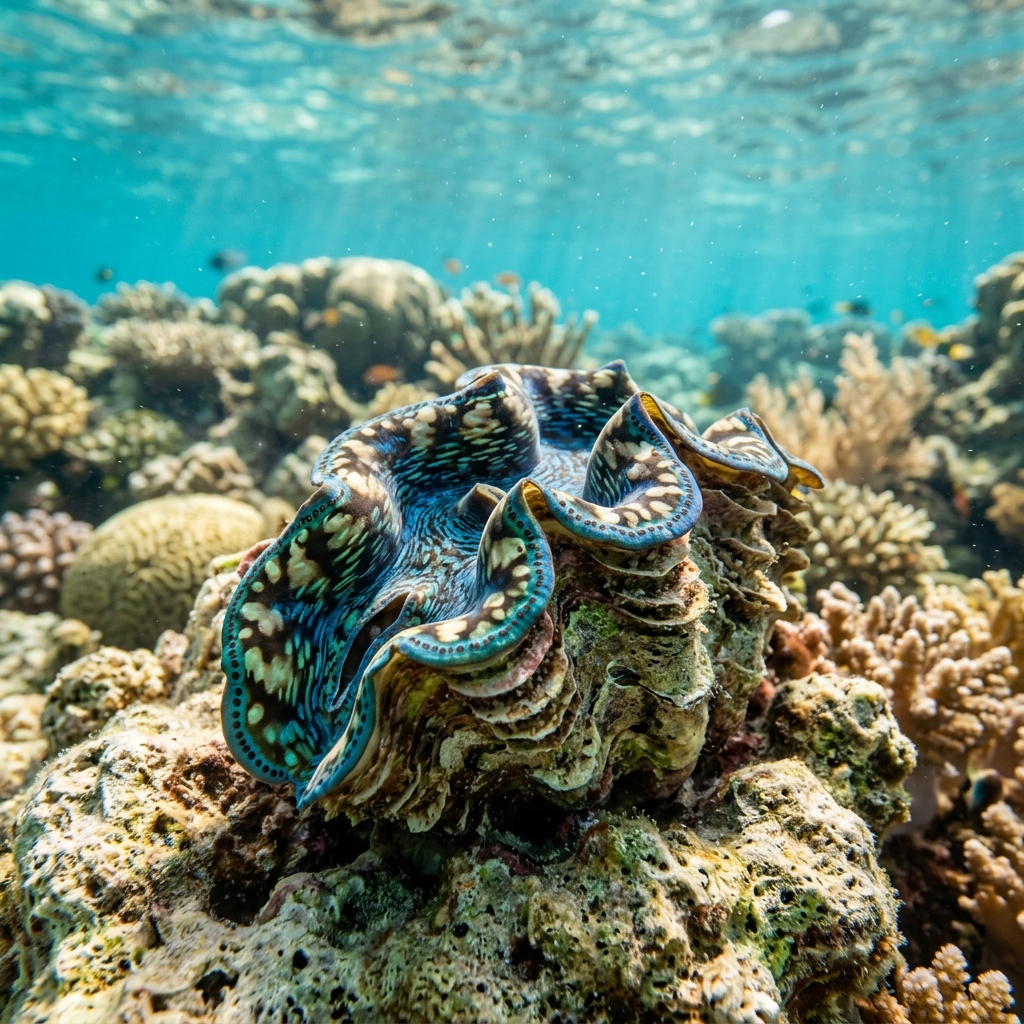
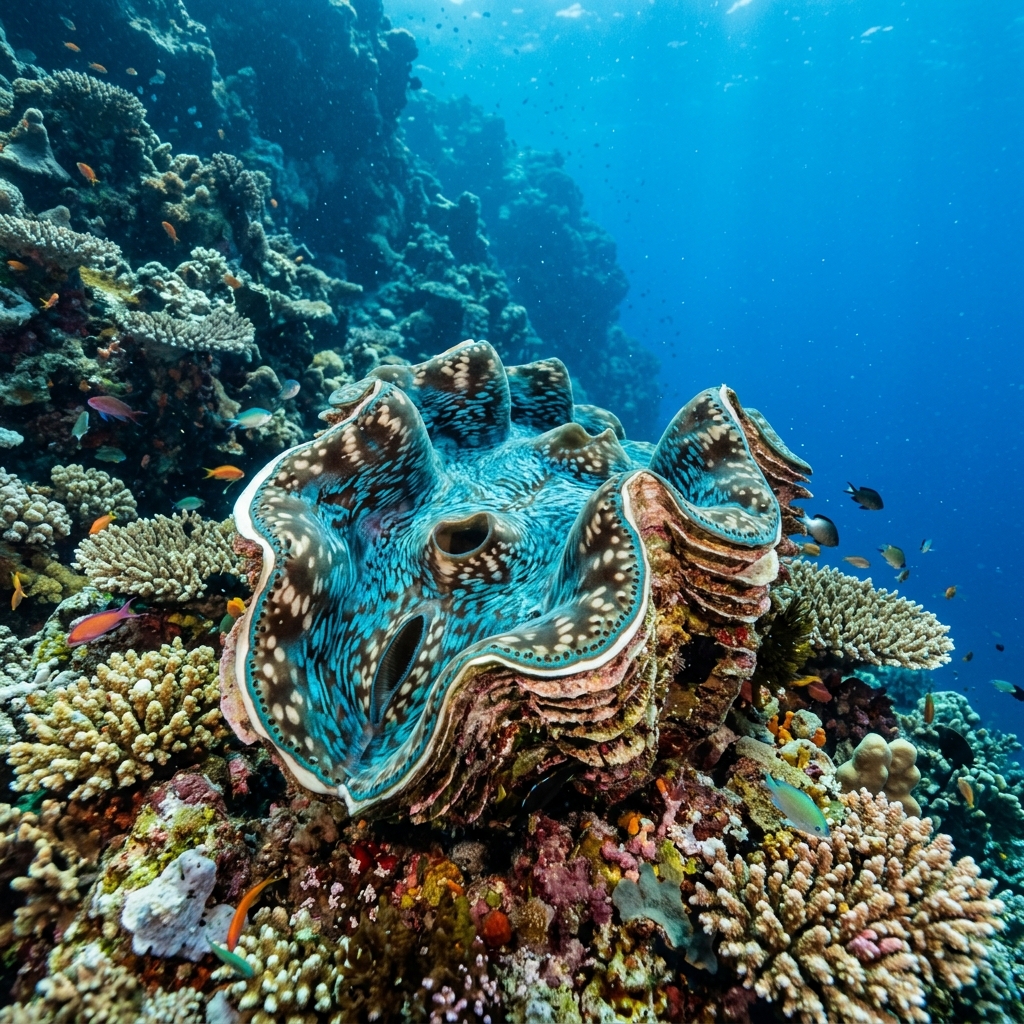
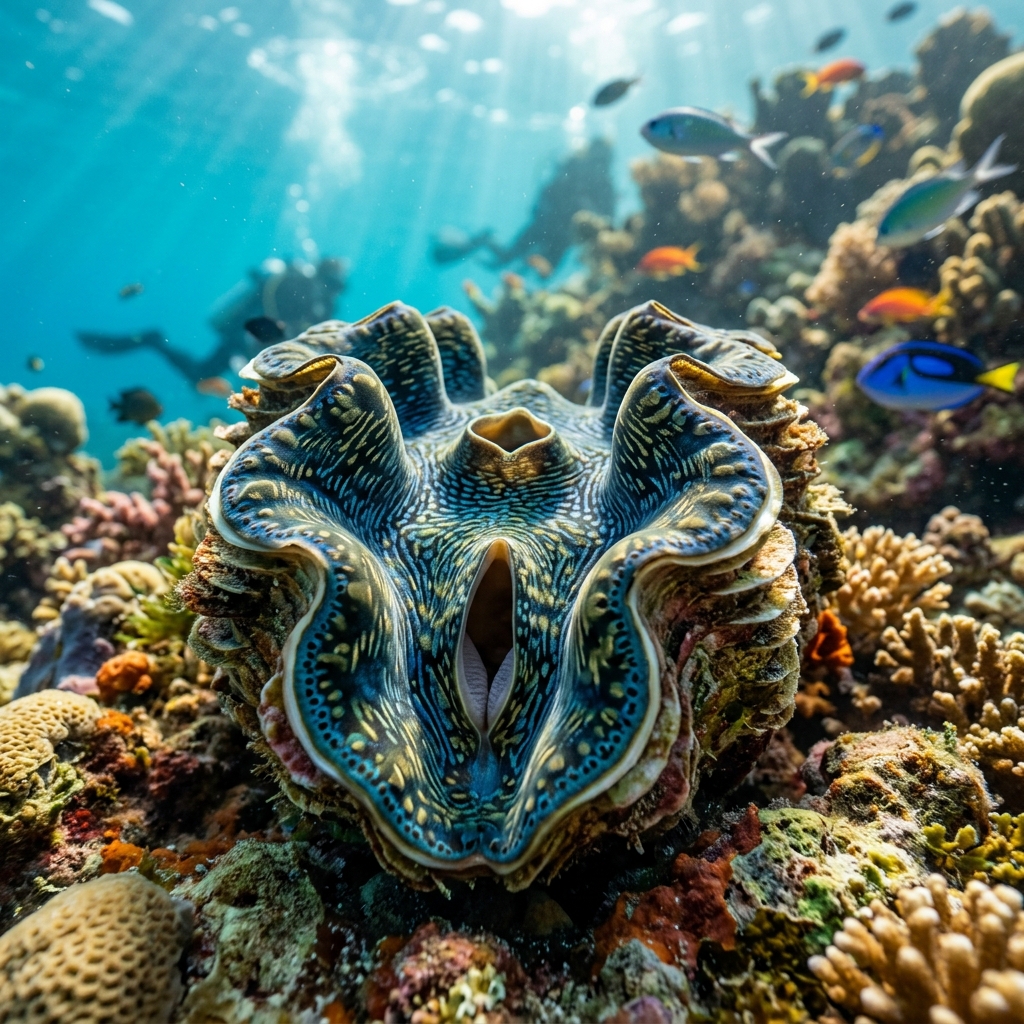
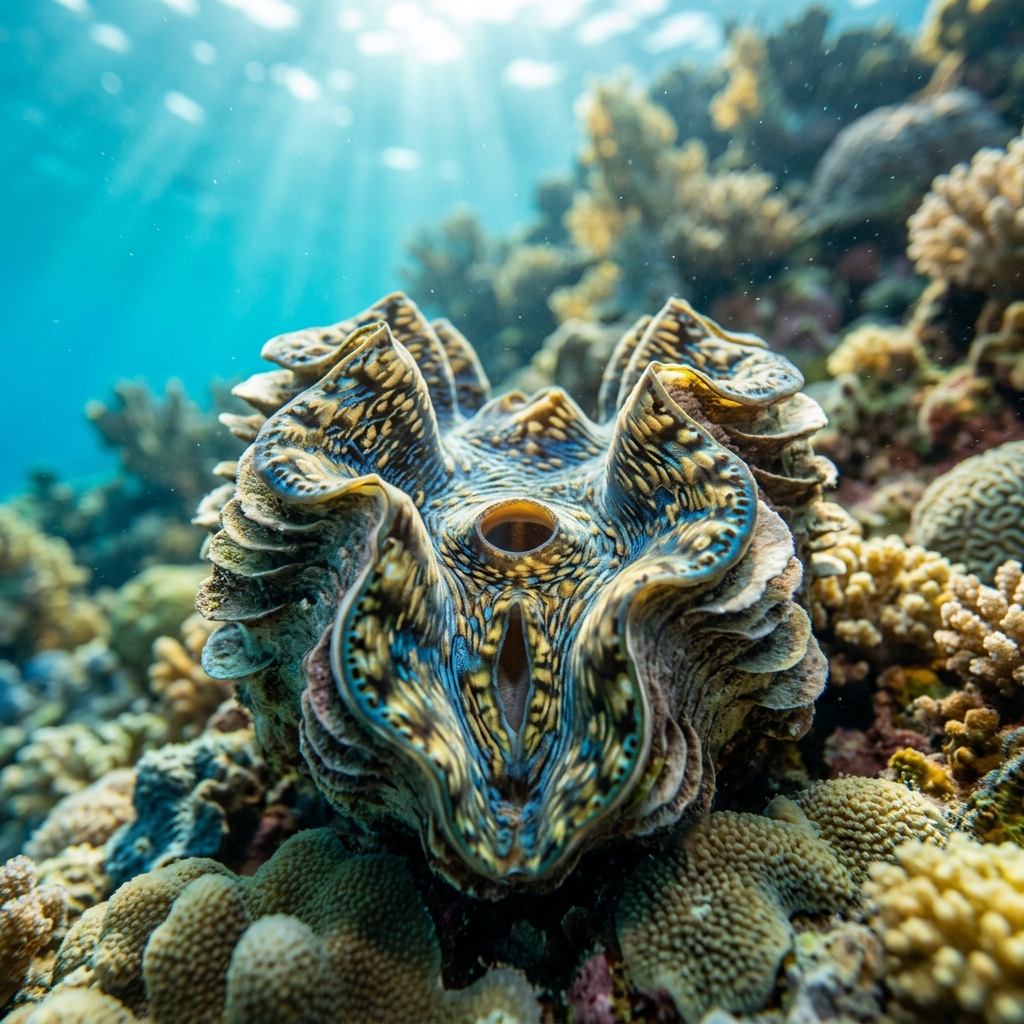
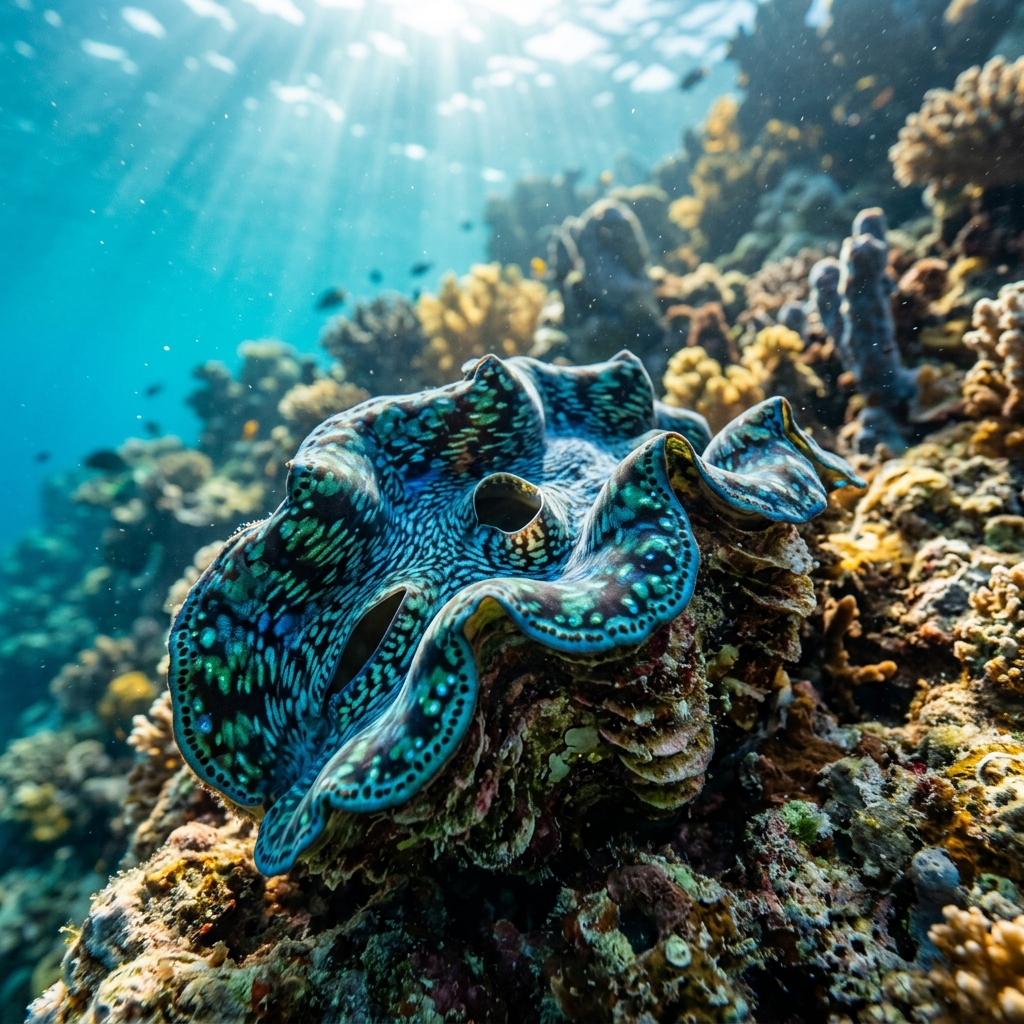
An elongated giant clam shell is the key field mark: proportionally longer and narrower than the more familiar giant clam, with a noticeably stretched, oval outline rather than a rounded one. The fleshy mantle visible between the shell valves carries the iridescent blue, green, or brown patterning common to tridacnid clams, though the specific pigmentation varies between individuals. It sits anchored to hard substrate, so look down on reef flats and rubble zones in warm, shallow water. The elongate shell shape, once you have a common giant clam for comparison, is distinctive enough to make a confident ID.
Like all tridacnid clams, it spends its adult life fixed to one spot on the reef, opening its valves to expose the mantle to light and filter water. When a diver approaches closely or casts a shadow over it, the valves close slowly but firmly. There is nothing to observe in terms of active movement, but the mantle colouration and the shell's proportions reward a slow, close look.
Tridacnid clams host photosynthetic algae called zooxanthellae living inside their mantle tissue, which contribute a significant portion of the clam's nutrition directly from sunlight. This symbiosis is why the mantle is always oriented upward toward the light.
There is not enough monthly sighting data to point to a particular season, so treat it as a year-round target. Observed water temperatures at sighting sites run from about 22 to 27 °C, consistent with the warm temperate to tropical conditions found year-round in southern Mozambique and the KwaZulu-Natal coast.
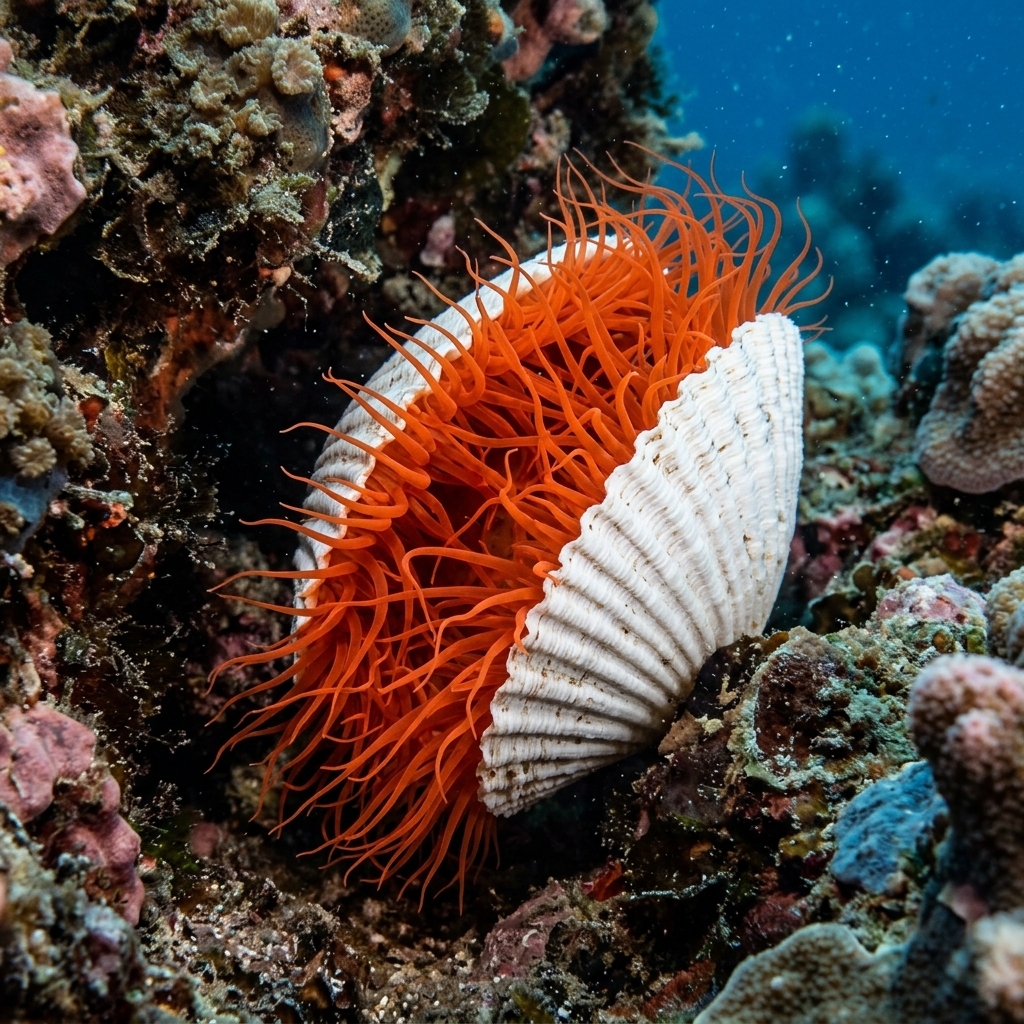
Reef neighbours a diver could mistake it for. Use the identification notes above to tell them apart.
Most dive-site records come from the western Indian Ocean, with the strongest concentration in Ponta do Ouro, Mozambique, followed closely by the Durban and North Coast region of South Africa. A smaller number of sightings have been logged around Saint-Gilles-les-Bains on Réunion, making that island a useful third option for divers already visiting the area.
Mapping where Elongate Giant Clam is logged…
Diver records place it primarily in Ponta do Ouro in Mozambique and along the Durban and North Coast in South Africa, with a handful of observations from Réunion. All three locations sit in the warm western Indian Ocean, consistent with the species' warm-water requirements.
No clear seasonal peak has emerged from available sighting data, so it can be targeted year-round. Water temperatures at documented sites range from roughly 22 to 27 °C, which covers most of the year across southern Mozambique and the KwaZulu-Natal coast.
Focus on shell shape: it is noticeably more elongated and narrower than a common giant clam, looking stretched rather than rounded. The exposed mantle shows iridescent colouration typical of tridacnid clams. Having another tridacnid nearby for comparison makes the proportional difference much easier to see.
No. Despite old folklore about giant clams trapping divers, tridacnid clams close their valves slowly and pose no realistic threat. You are far more likely to accidentally damage the clam than the other way around, so keep fins and hands clear.
Site and sighting data is aggregated from diver logs, iNaturalist and GBIF. For taxonomy and conservation status:
Elongate Clam
2,091 sites