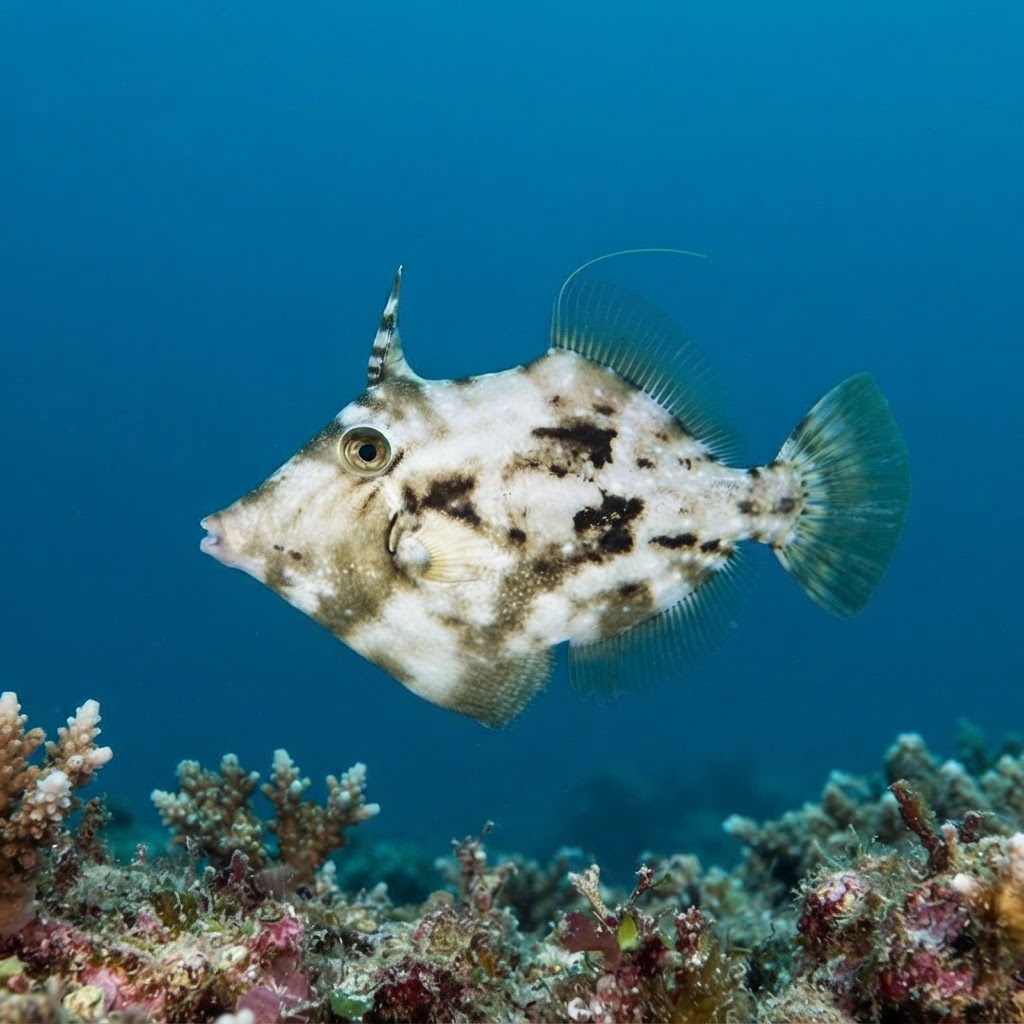
Stephanolepis hispida
Spot this small oval filefish off Tenerife, Lanzarote or Florida in waters as cool as 10C - here's how to find and ID it.
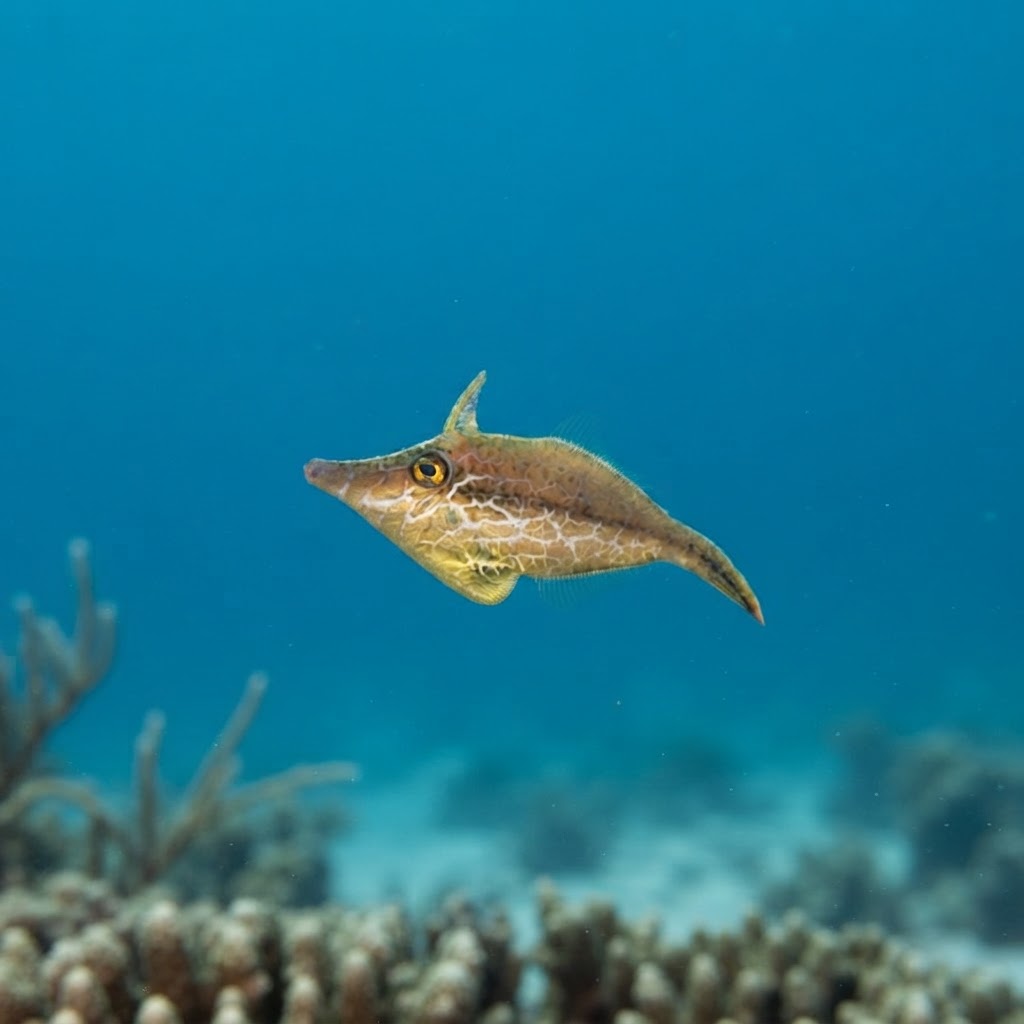
Compact, oval, and laterally flattened, this fish tops out around 25 cm but most divers see smaller individuals tucked against rock or reef. Its skin has a rough, sandpaper-like texture and mottled brown, grey, or olive patterning that shifts to blend with the background, and a thin retractable spine sits just above the eye where a dorsal fin would normally start. Males tend to show darker blotching and slightly longer trailing fin rays than the plainer, more uniformly toned females.
Look for it hovering low and slow near rocky ledges, sponge patches, or reef rubble, often angling its body to match the background rather than bolting. It is not a strong swimmer and relies on camouflage and that erectile spine over the eye to deter predators rather than speed, so it will often let a diver get a close, patient look before drifting off. Most sightings are single fish rather than groups, picked out more by a careful scan than by movement.
That spine above the eye can be locked upright to wedge the fish into a crevice, making it hard for a predator, or a diver's hand, to pull it out.
Sightings show no clear seasonal pattern, and with a temperature range stretching from 10.2 to 27.0 C it tolerates everything from cool Atlantic winters to warm tropical summers, so divers log it year-round.
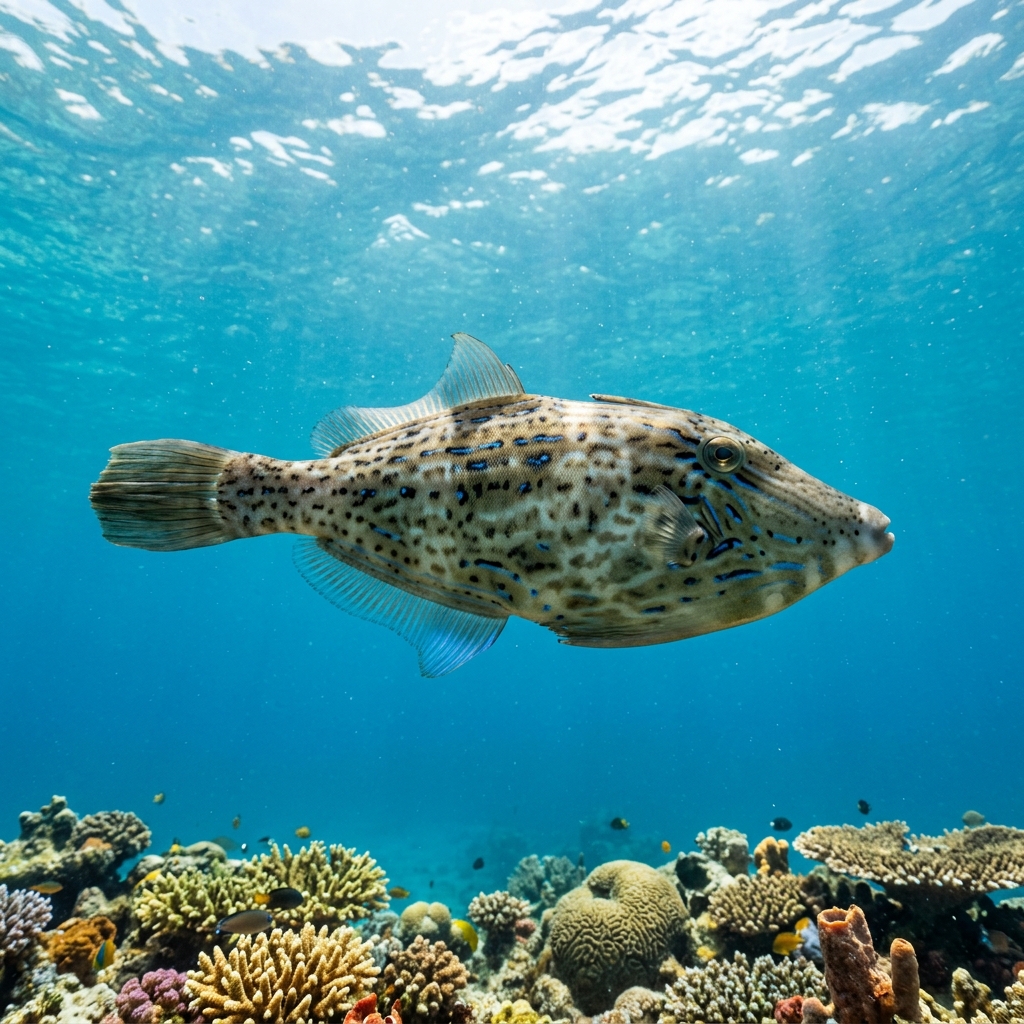
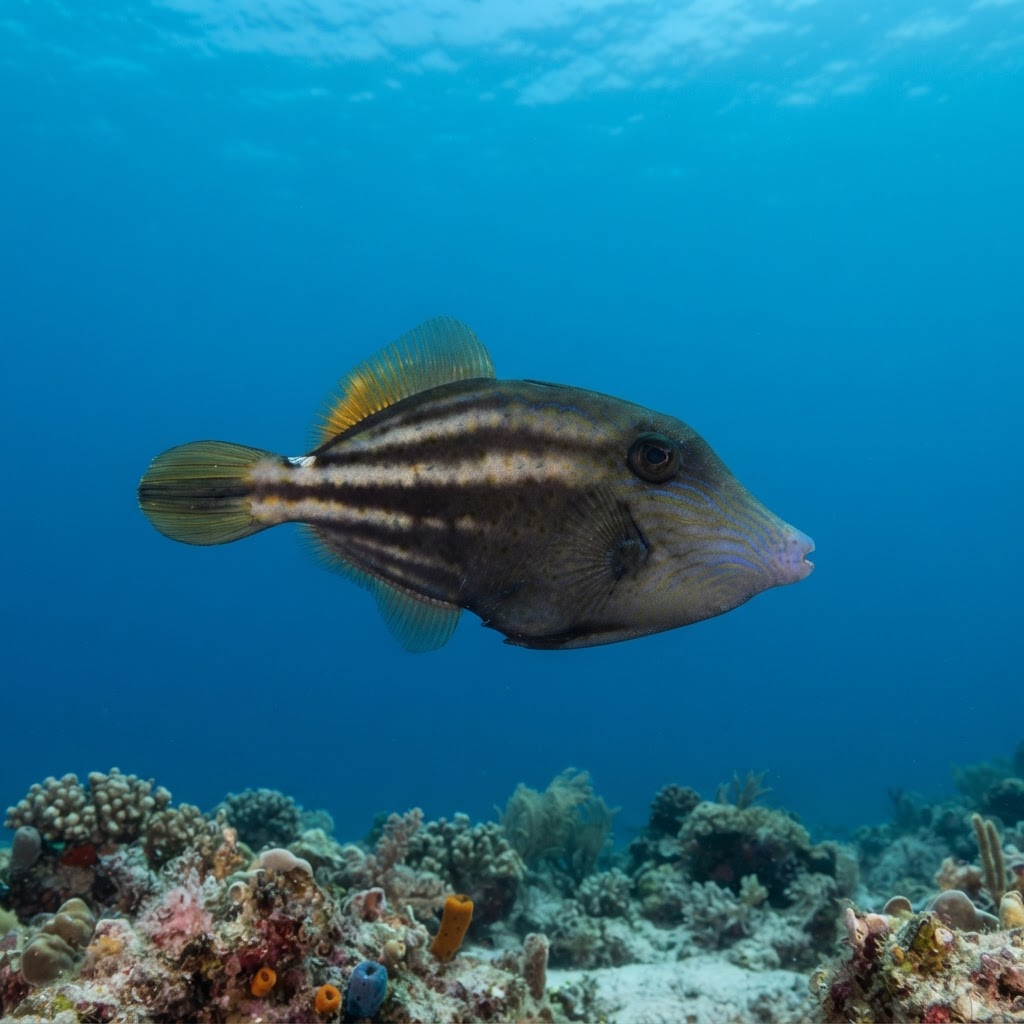
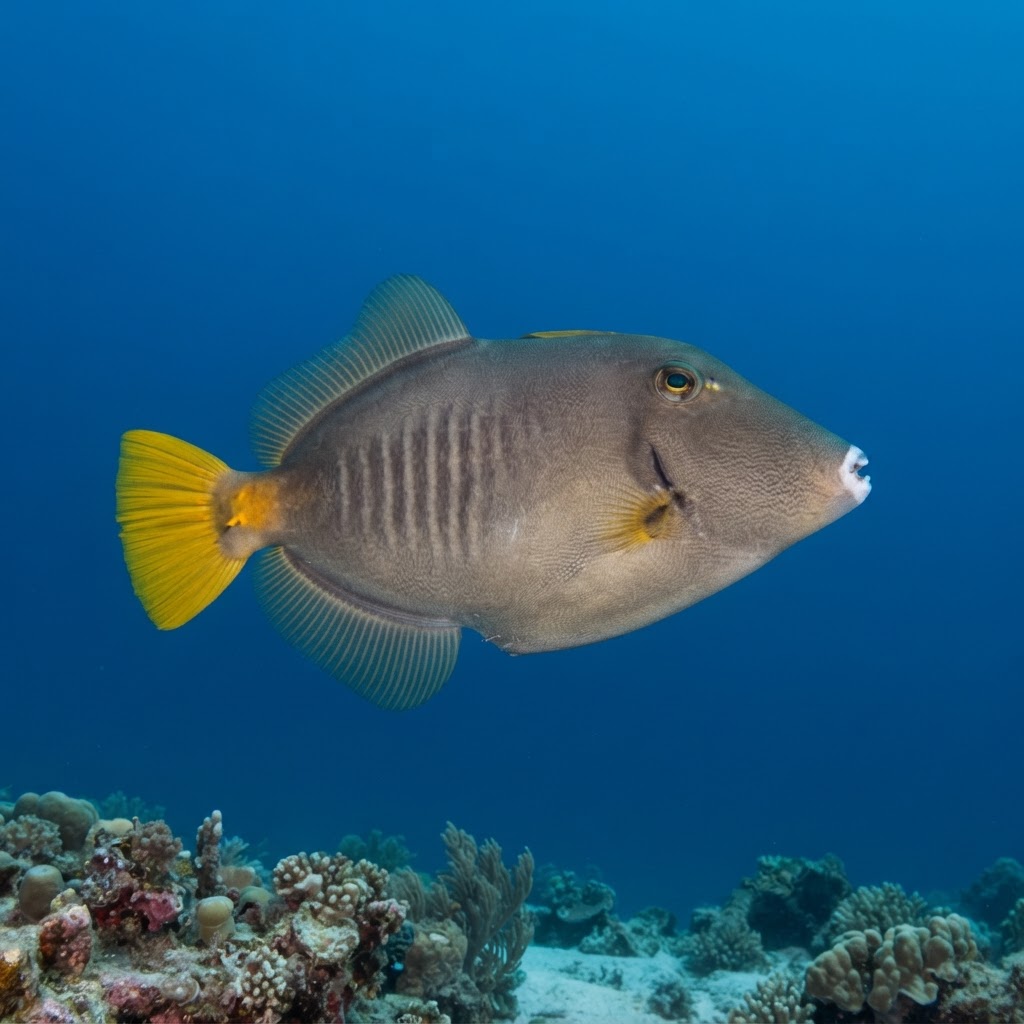
Reef neighbours a diver could mistake it for. Use the identification notes above to tell them apart.
This is a Canary Islands specialty, with strong numbers logged in Tenerife, Lanzarote, Gran Canaria, El Hierro, Fuerteventura, and La Palma, and it also turns up reliably along Florida's reefs and wrecks in the United States. Cape Verde, particularly around São Vicente, is another dependable spot, with smaller numbers reported from Brazil, Senegal, and Canada.
Mapping where Planehead Filefish is logged…
The Canary Islands are the strongest bet, especially Tenerife, Lanzarote, Gran Canaria, El Hierro, Fuerteventura, and La Palma. Florida in the United States and São Vicente in Cape Verde are also reliable spots.
There's no strong seasonal pattern in sightings, so it's a year-round encounter. Its wide temperature tolerance, from around 10 to 27 C, means it stays put through cool and warm seasons alike.
Look for a small oval, laterally flattened body with rough skin and mottled brown or olive camouflage, usually hovering close to rock or reef structure. A thin spine sits above the eye instead of a typical dorsal fin.
They reach around 25 cm, though many divers encounter smaller individuals tucked against reef or rubble.
No, they pose no threat to divers. They rely on camouflage and a locking eye-spine for defence rather than any aggressive behaviour.
They can lock an erectile spine above the eye upright, wedging themselves into crevices so tightly that predators struggle to pull them free.
Site and sighting data is aggregated from diver logs, iNaturalist and GBIF. For taxonomy and conservation status:
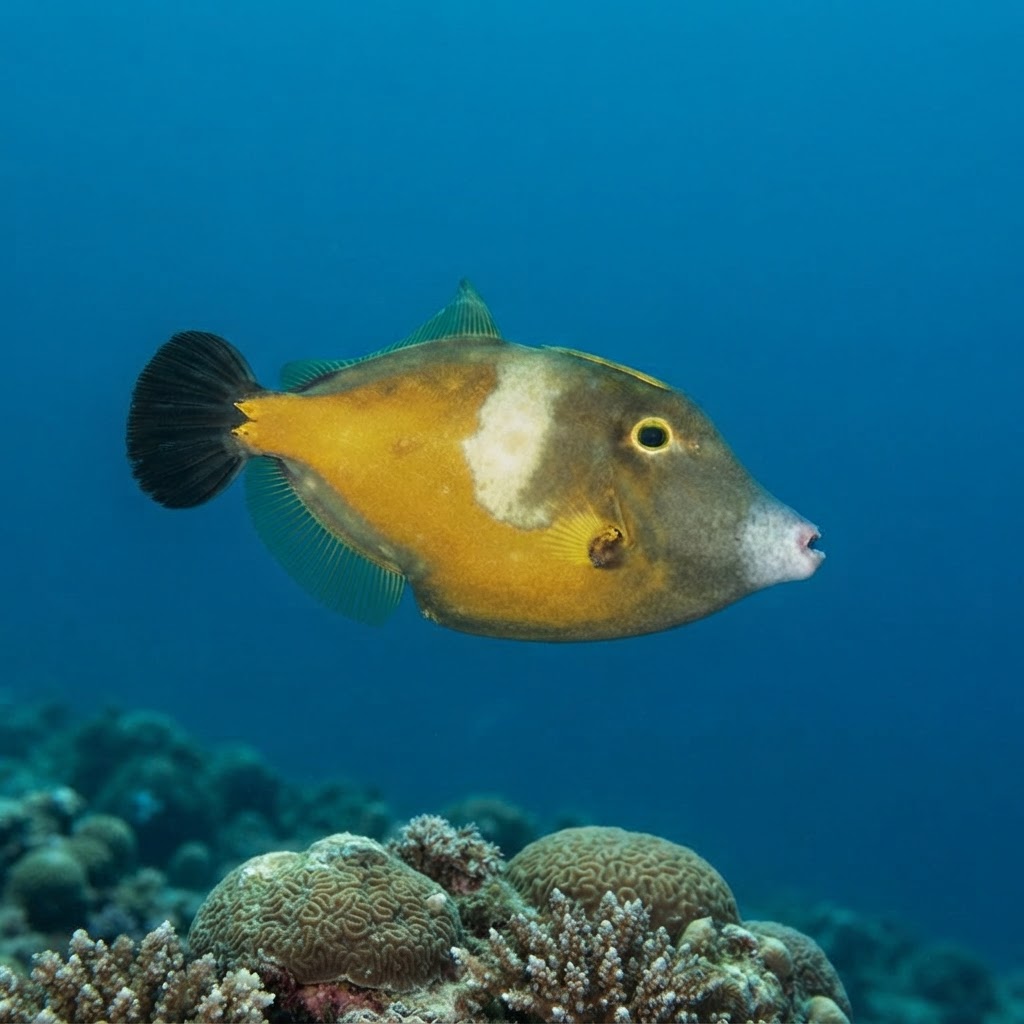
Whitespotted Filefish
666 sites