Aluterus scriptus
Spot scrawled filefish across Florida, the Maldives and the Egyptian Red Sea. Learn what to look for and when to dive with this widely logged but elusive species.
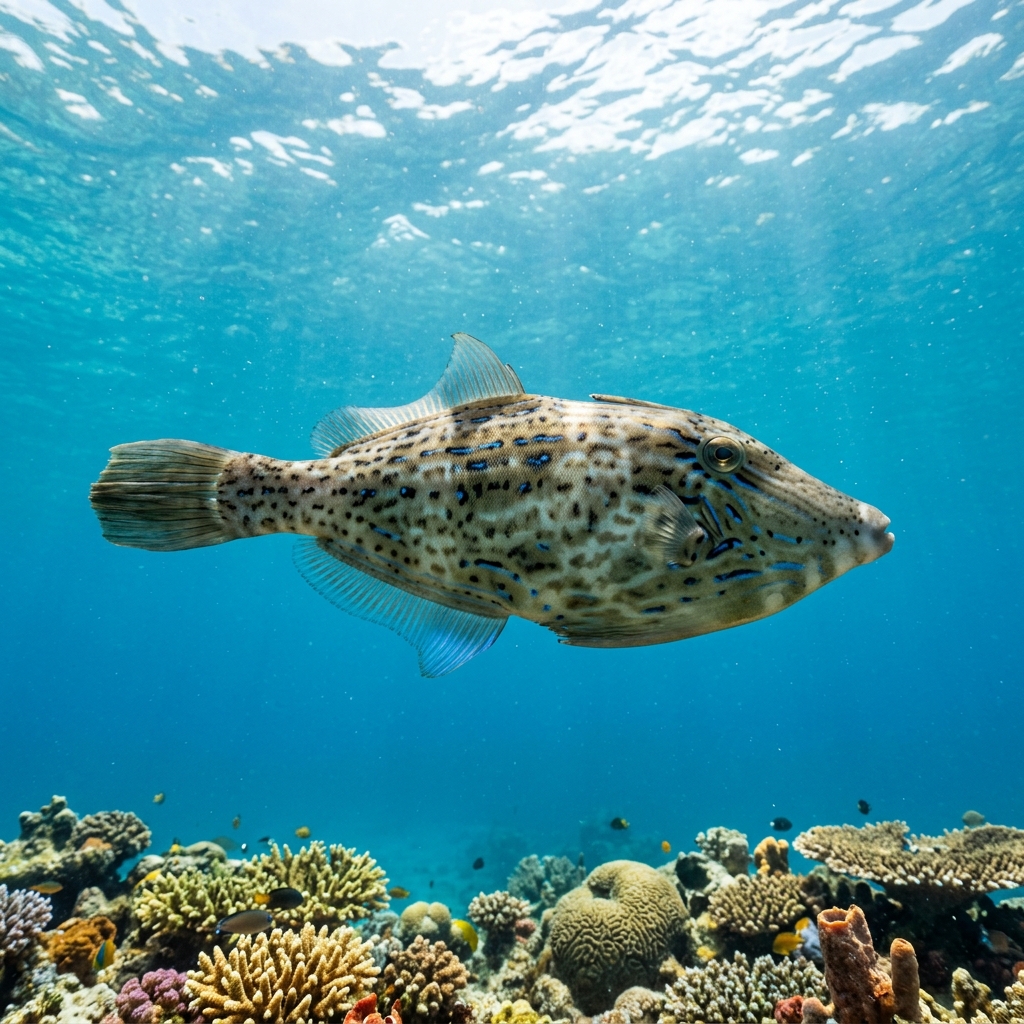
A large, laterally compressed fish with a distinctly elongated body and a long, drooping tail that gives it an almost leaf-like silhouette in the water. The base colour is pale grey or tan, overlaid with a dense scrawl of irregular blue or blue-green lines and dark spots, the pattern that gives the species its name. Look for the pronounced spine on the forehead, characteristic of filefish, and the tiny, upturned mouth at the tip of a notably long snout. Juveniles are more uniformly yellowish-tan with a faint pattern, easily dismissed as drifting vegetation until they move.
Scrawled filefish are typically seen drifting alone in open water or hanging at an angle among gorgonians and soft corals, mimicking floating debris or dead leaves. They are generally unhurried and tolerate a careful approach, though they will slowly angle away if you push too close. Most sightings are in shallower reef zones rather than at depth, and encounters tend to be solitary rather than in groups.
When threatened, the scrawled filefish can rapidly change the intensity of its body pattern, darkening or fading the blue scrawls to better match the background. Combined with its drifting posture, this makes it one of the more accomplished camouflage artists on the reef despite its considerable size.
In the Northern Hemisphere it appears year-round with no concentrated peak, which fits its preference for warm tropical water between 24 and 29 °C. Southern Hemisphere divers see it most often between September and May, broadly the austral spring through early autumn.
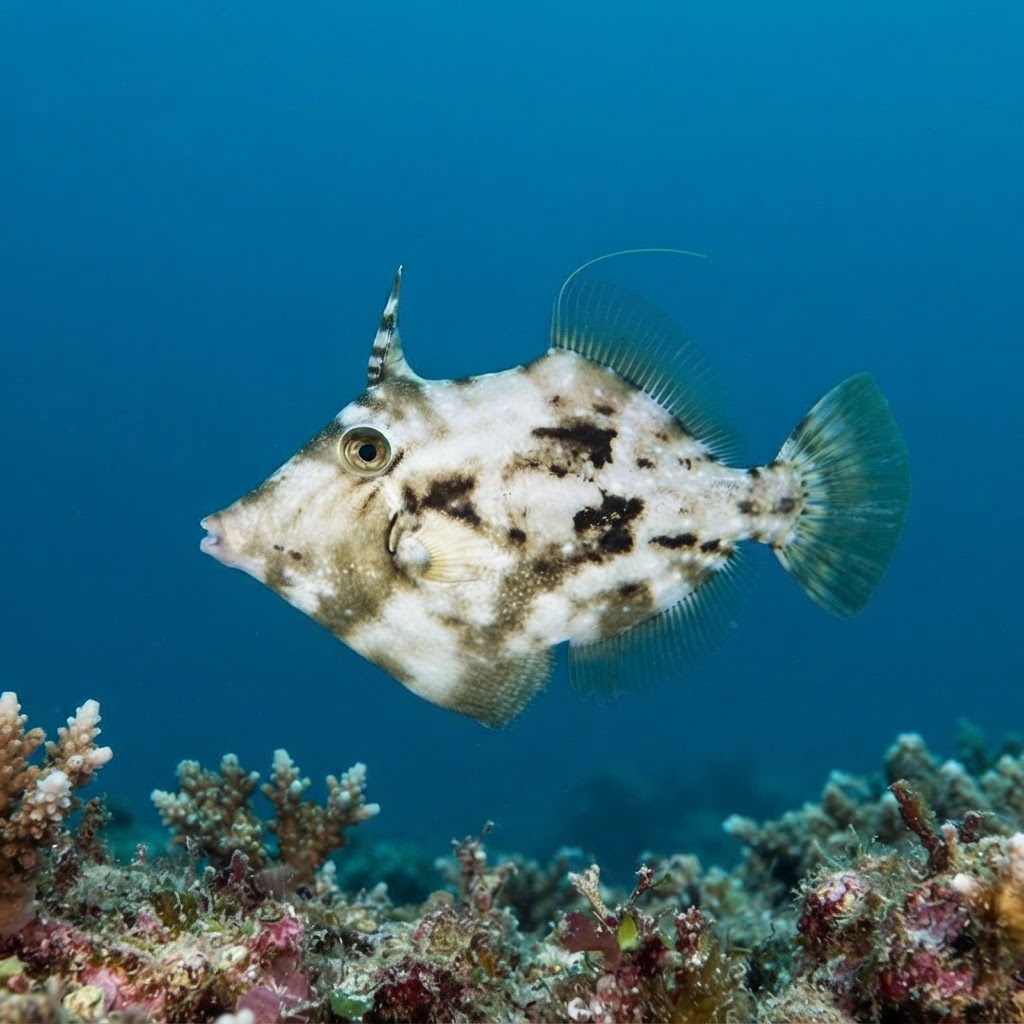
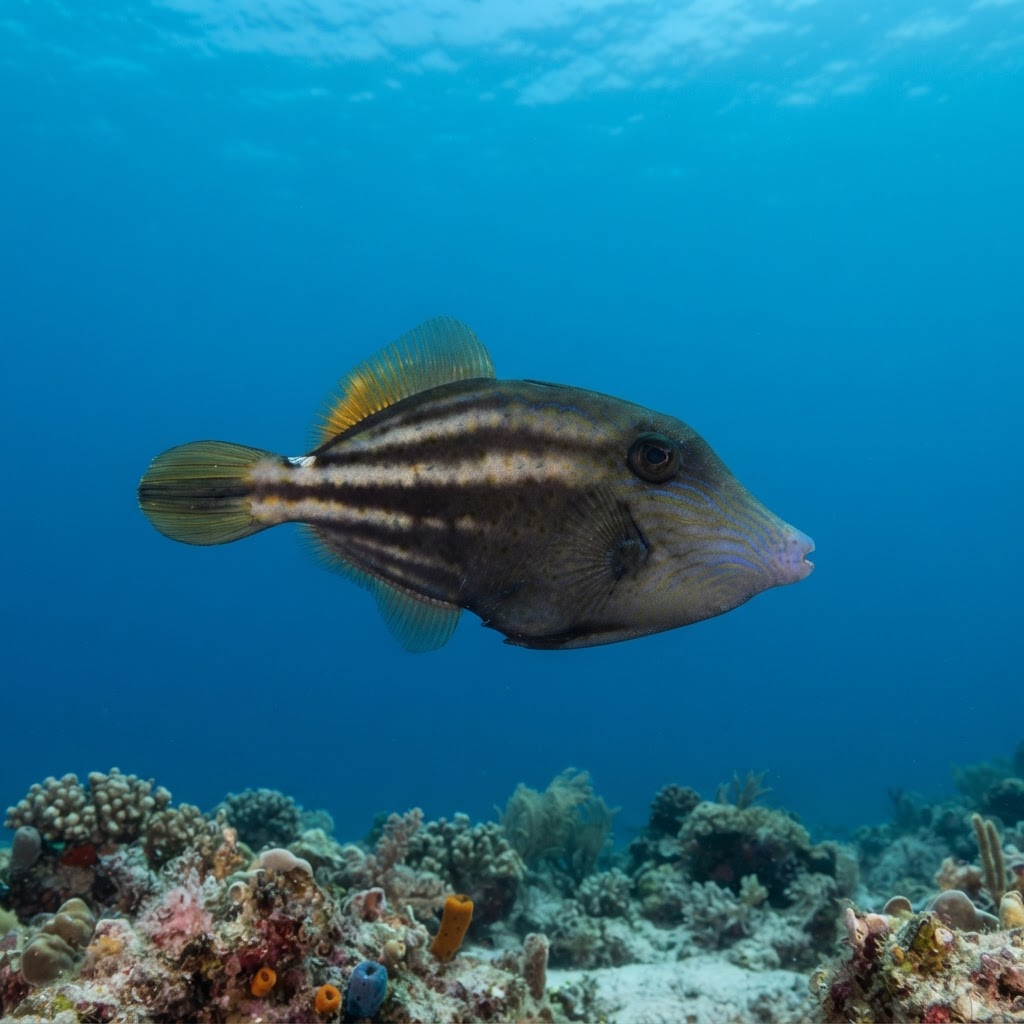
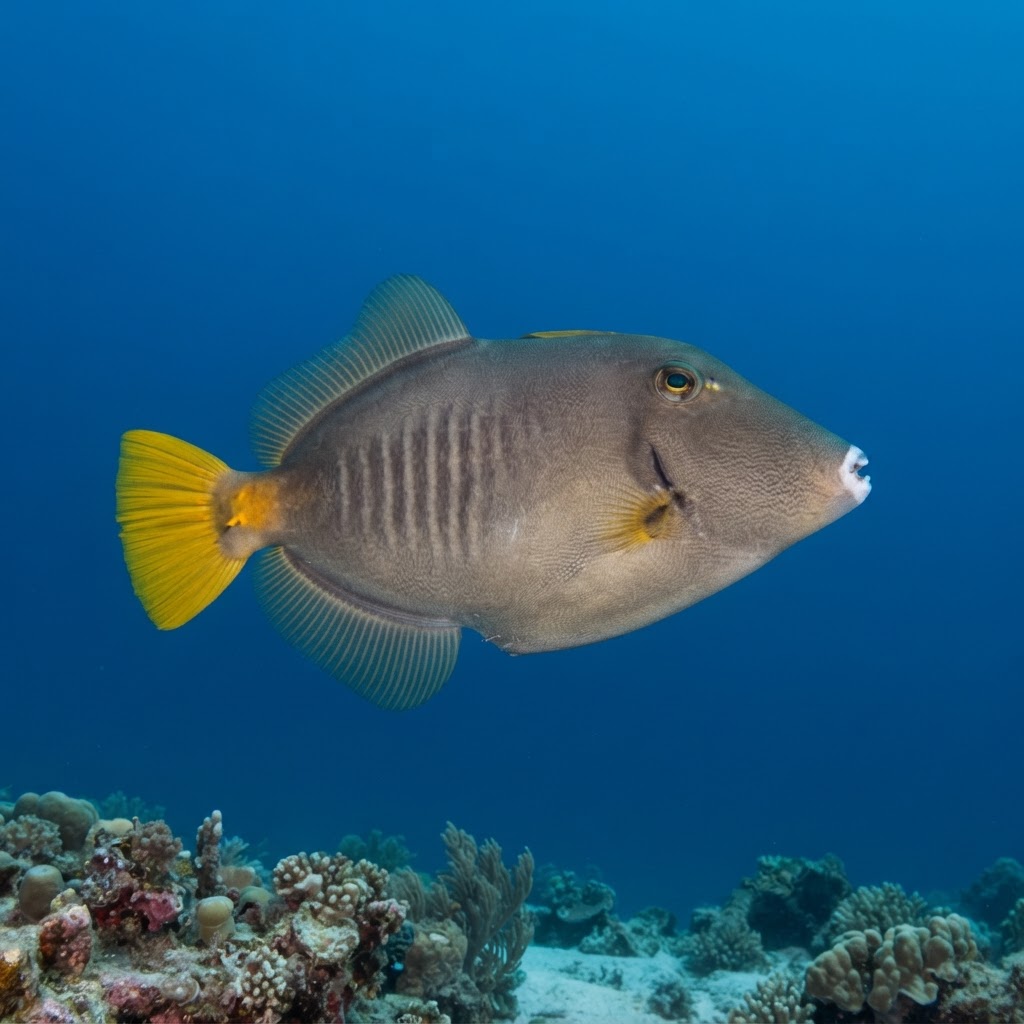
Reef neighbours a diver could mistake it for. Use the identification notes above to tell them apart.
Most consistently logged across Florida and the wider Caribbean, particularly the Yucatán Peninsula and Grenada Island, and throughout the Indo-Pacific, with strong records from the Maldives, the Egyptian Red Sea around Marsa Alam and Sharm el Sheikh, and Indonesian and Malaysian waters. The United States, Egypt, and the Maldives account for the largest number of distinct dive sites where it has been recorded. Bonaire, Roatán in Honduras, and Pulau Tioman in Malaysia are also reliable hunting grounds.
Mapping where Scrawled Filefish is logged…
They have been logged at dive sites across a wide spread of tropical destinations. The most reliable regions include Florida and the US Caribbean, the Yucatán Peninsula, Grenada, the Maldives, the Egyptian Red Sea, and parts of Southeast Asia including Malaysia and Indonesia. Bonaire and Roatán are also solid bets.
In the Northern Hemisphere they are present year-round, so there is no single best season, any warm-water trip to the Caribbean or Red Sea can turn one up. In the Southern Hemisphere, sightings concentrate between September and May.
Look for a large, flat-bodied fish with a long drooping tail, a long upturned snout, and a pale body covered in irregular blue scrawling lines and dark spots. The elongated silhouette and distinctive scrawled pattern are unlike anything else on the reef. The forehead spine is small but visible on a close look.
Scrawled filefish are among the largest members of the filefish family, commonly reaching around 75 cm in length, and some individuals can exceed 90 cm. In the water they read as a notably large, flat, slow-moving fish, bigger than most divers expect when they first encounter one.
Most divers who log them describe the encounter as uncommon rather than routine, meaning you may go several dives without seeing one even at sites where they are known to occur. They are logged as common at only a small fraction of sites, so a sighting is always worth noting in your log.
Site and sighting data is aggregated from diver logs, iNaturalist and GBIF. For taxonomy and conservation status:
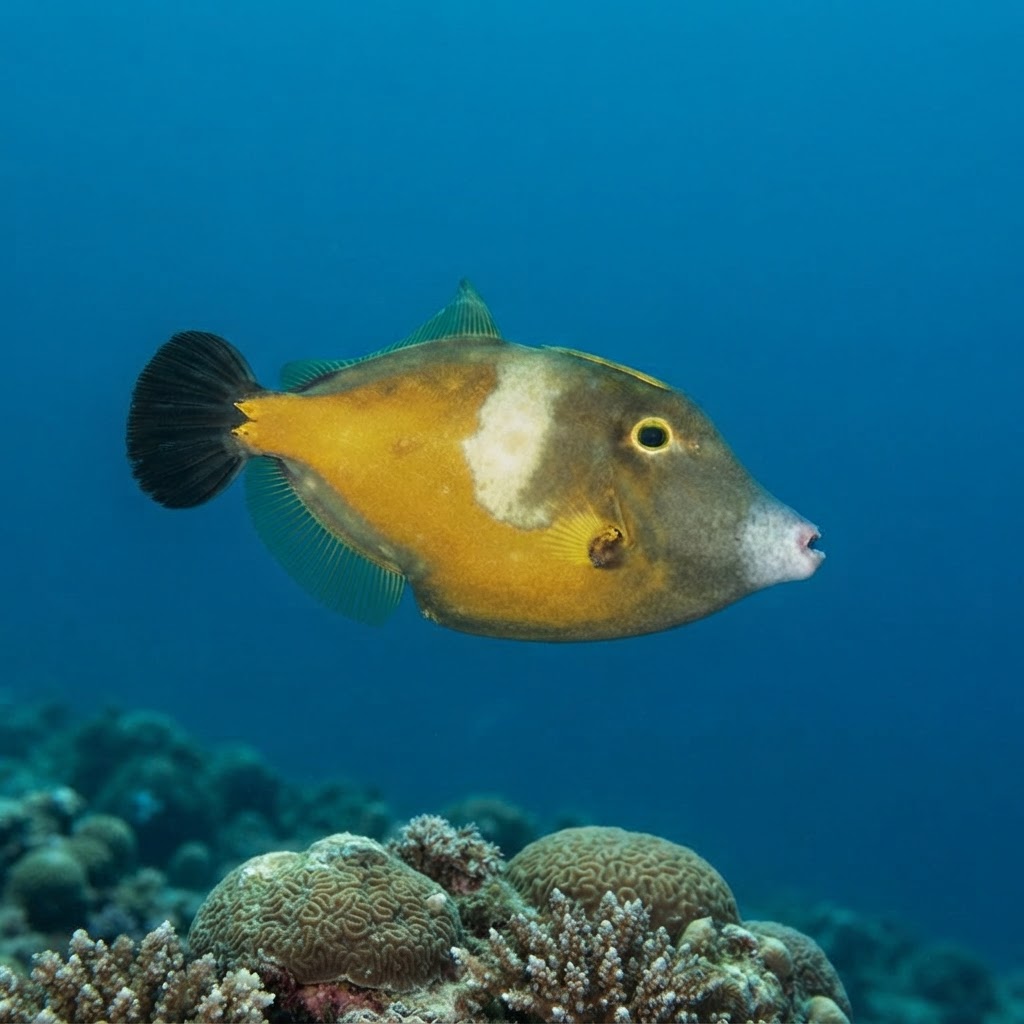
Whitespotted Filefish
666 sites