Monacanthidae spp.
Uncommon but widespread reef companions, filefish turn up year-round from Florida's Carolinas to the Maldives' Northern Atolls.
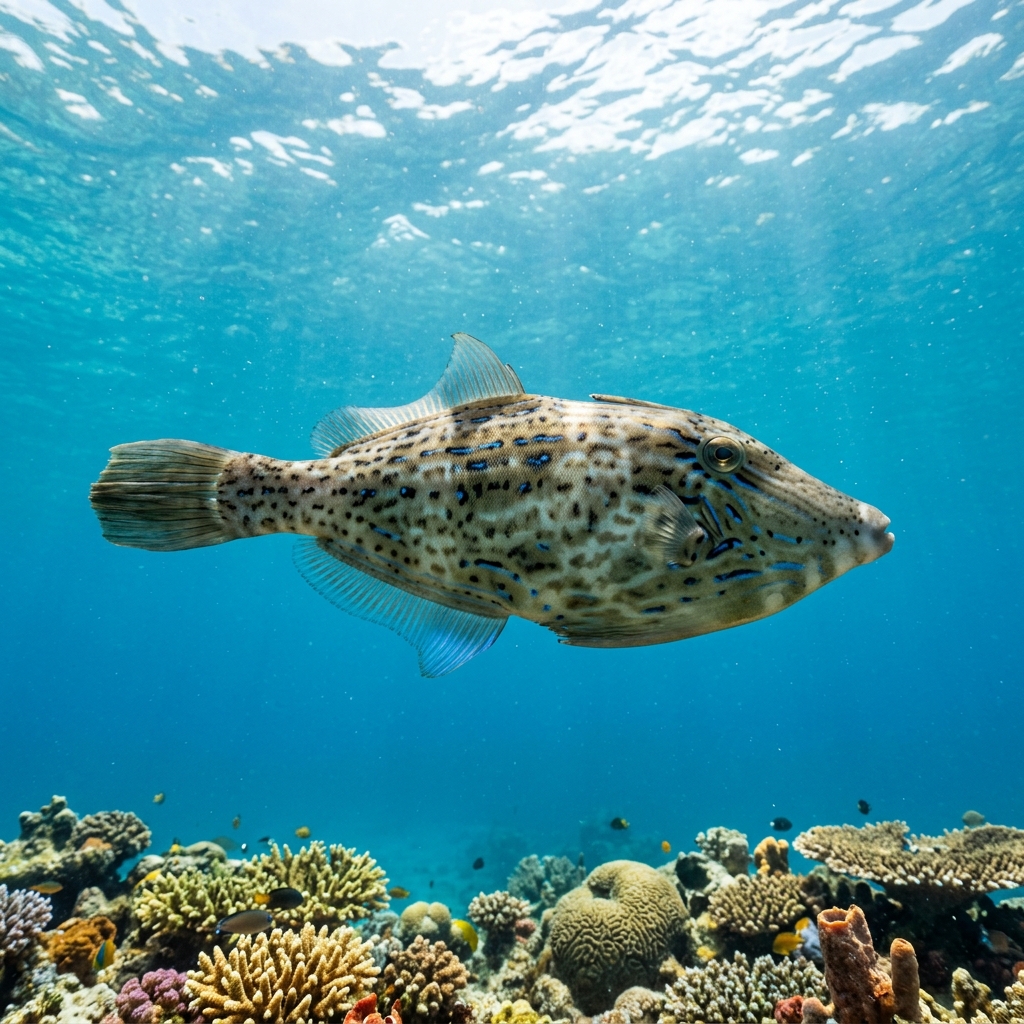
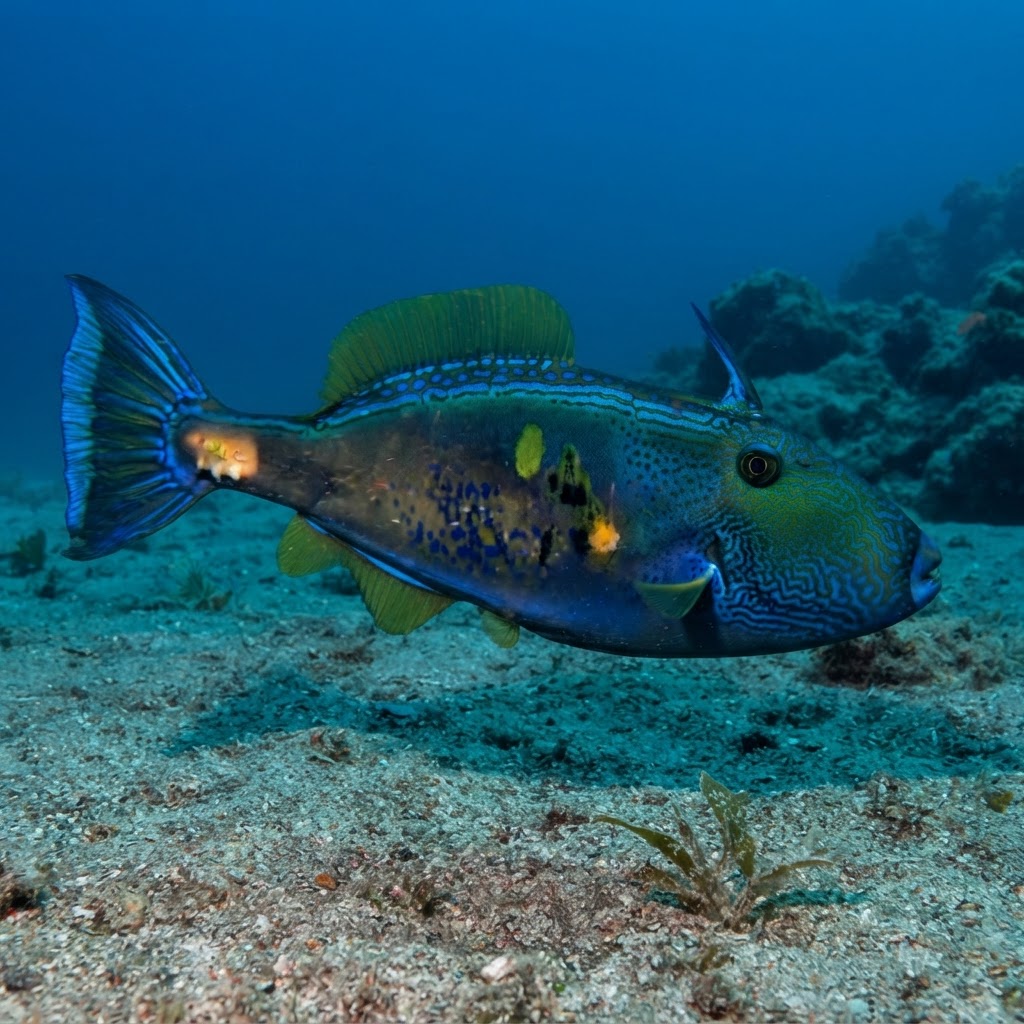
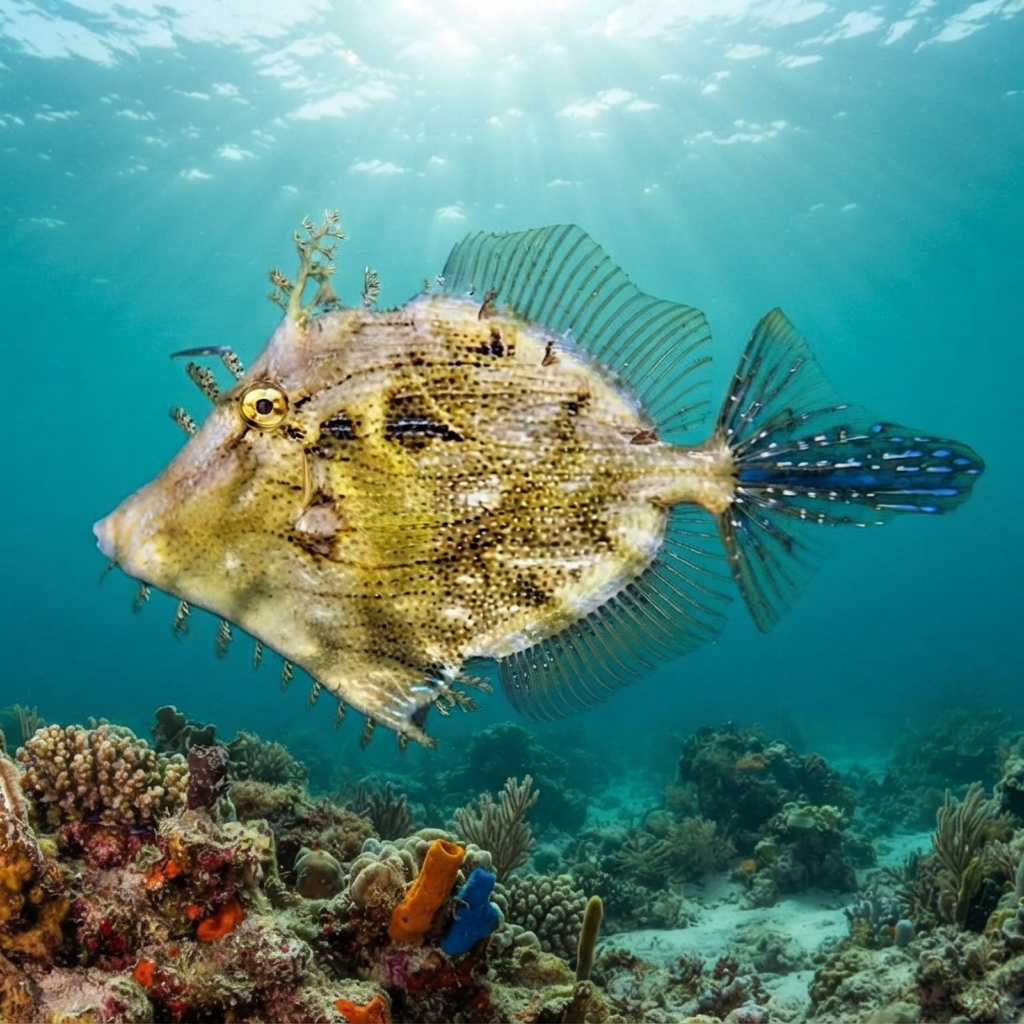
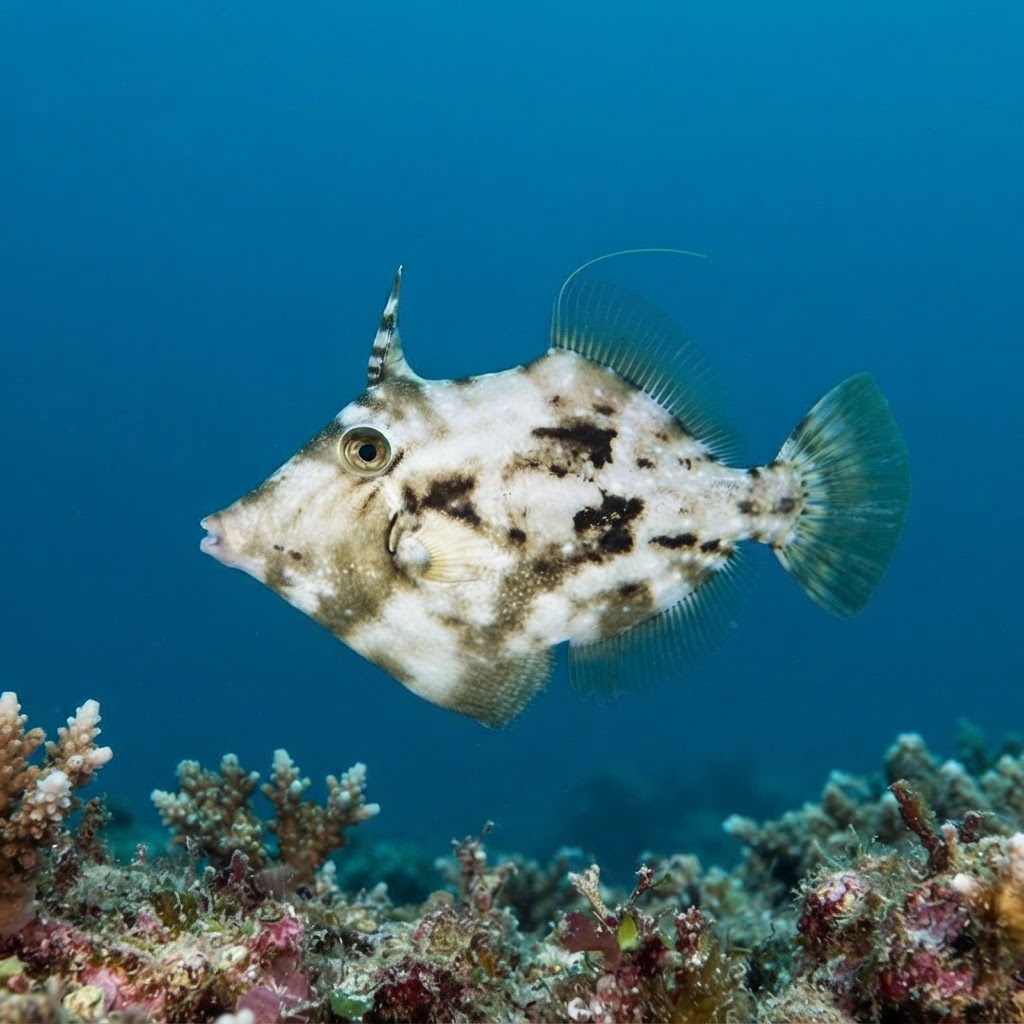
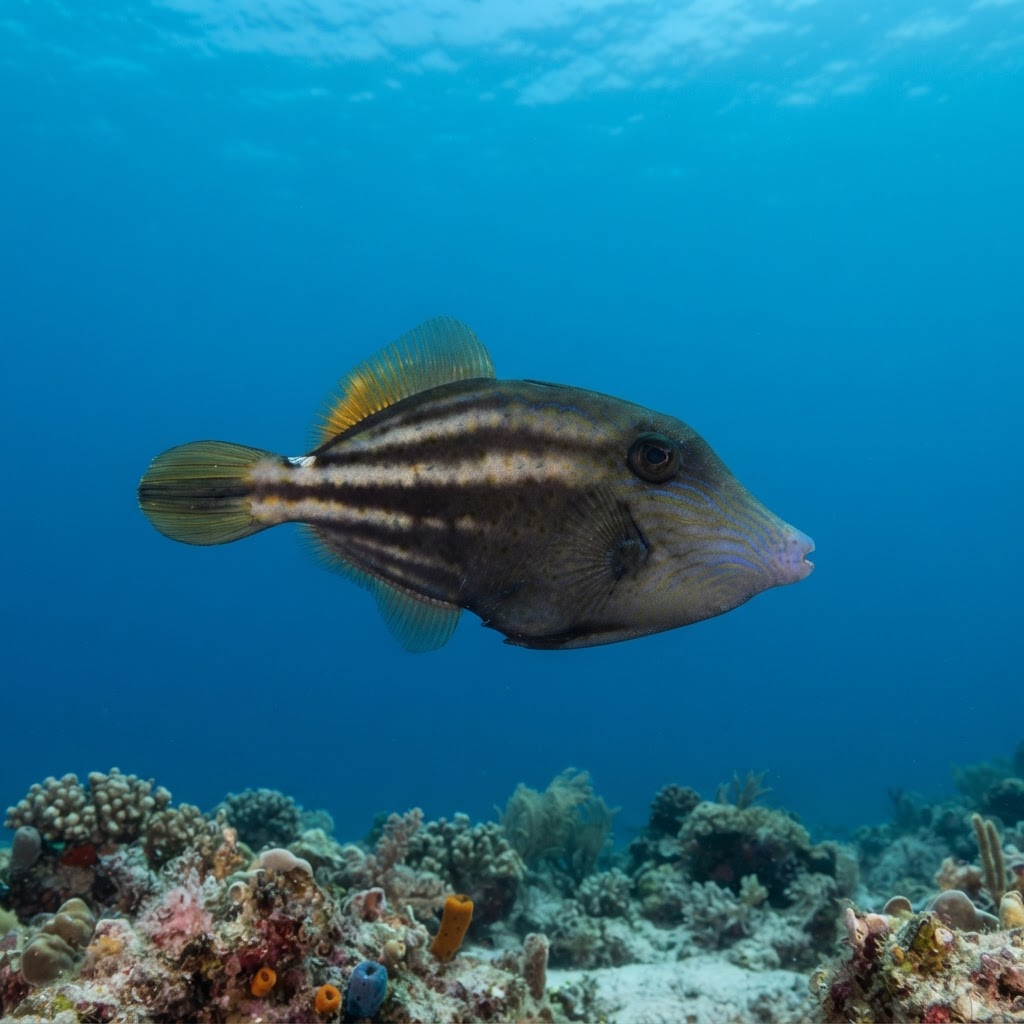
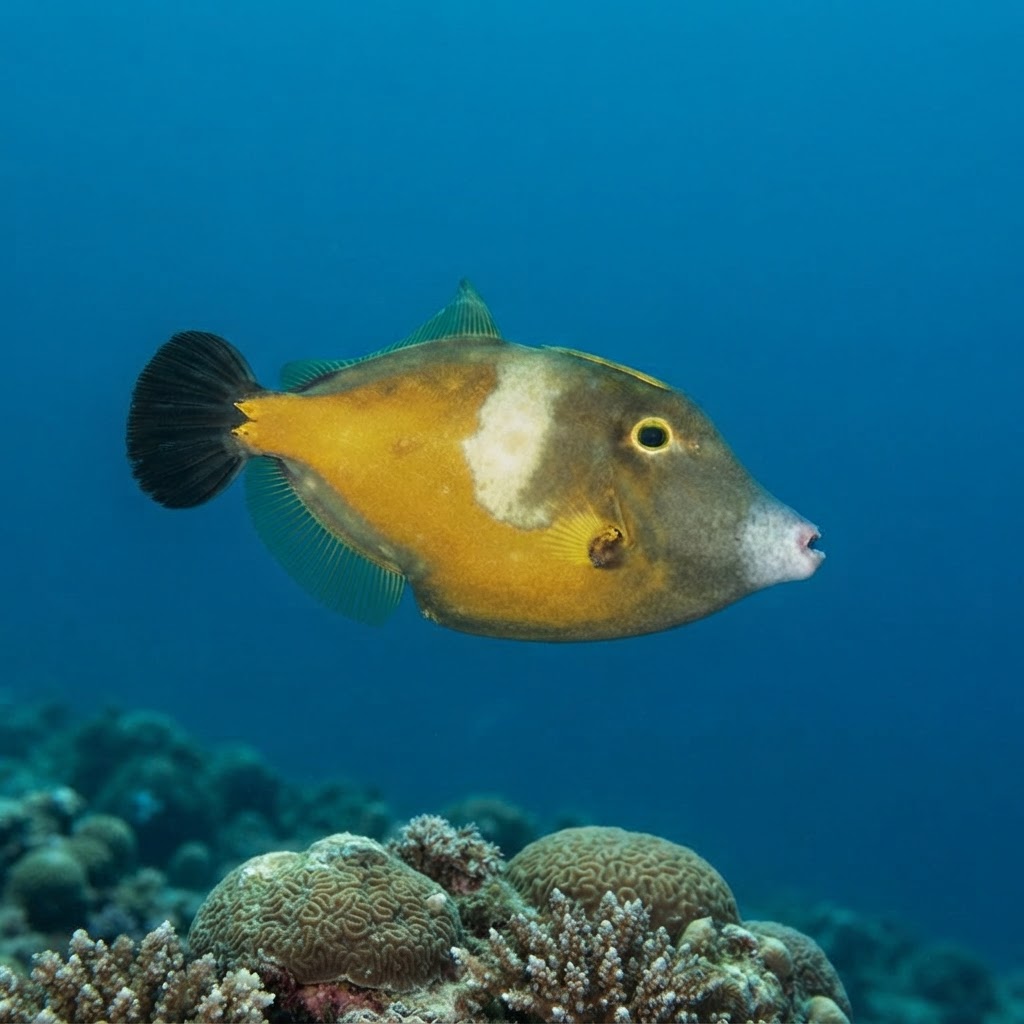
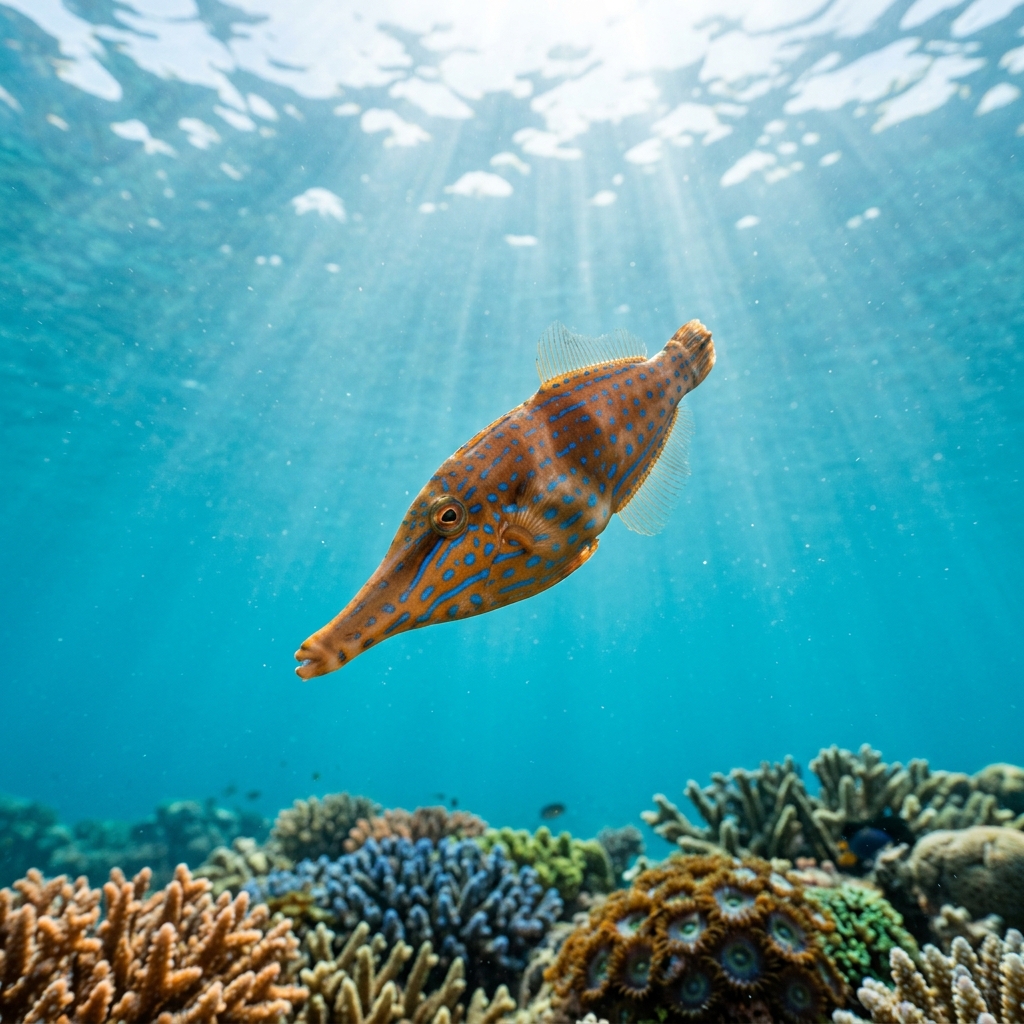
Look for a laterally flattened, almost leaf-shaped body that lets them hang motionless in the water column, often tilted head-down. The skin has a rough, sandpaper-like texture (hence the name) rather than obvious scales, and a single thin spine sits just behind the head where a dorsal fin would otherwise be. Colours and patterns vary hugely between species, from mottled browns and greens to bold spots or stripes, which is exactly how many are camouflaged against gorgonians, sponges, and seagrass. Many species can shift shade slightly to blend with whatever they're resting against.
Expect a slow, almost hesitant swimmer that relies on stillness and camouflage rather than speed, often spotted hovering near soft corals, sponges, or weed where its shape and colour blend in. They're generally indifferent to divers and will often let you approach slowly for a close look before drifting off with a stiff, fin-flicking motion. Most sightings happen on the reef itself during the day, tucked among structure rather than out in open water.
That thin spine behind the head can be locked upright and wedged into a crevice, letting a startled filefish jam itself into a hole where a predator can't easily pull it out.
No clear seasonal pattern shows up in the data, and with a temperature range spanning roughly 15 to 29 C, different species are simply present on their home reefs and rocky habitats year-round. Plan around the destination's general dive season rather than a filefish-specific window.
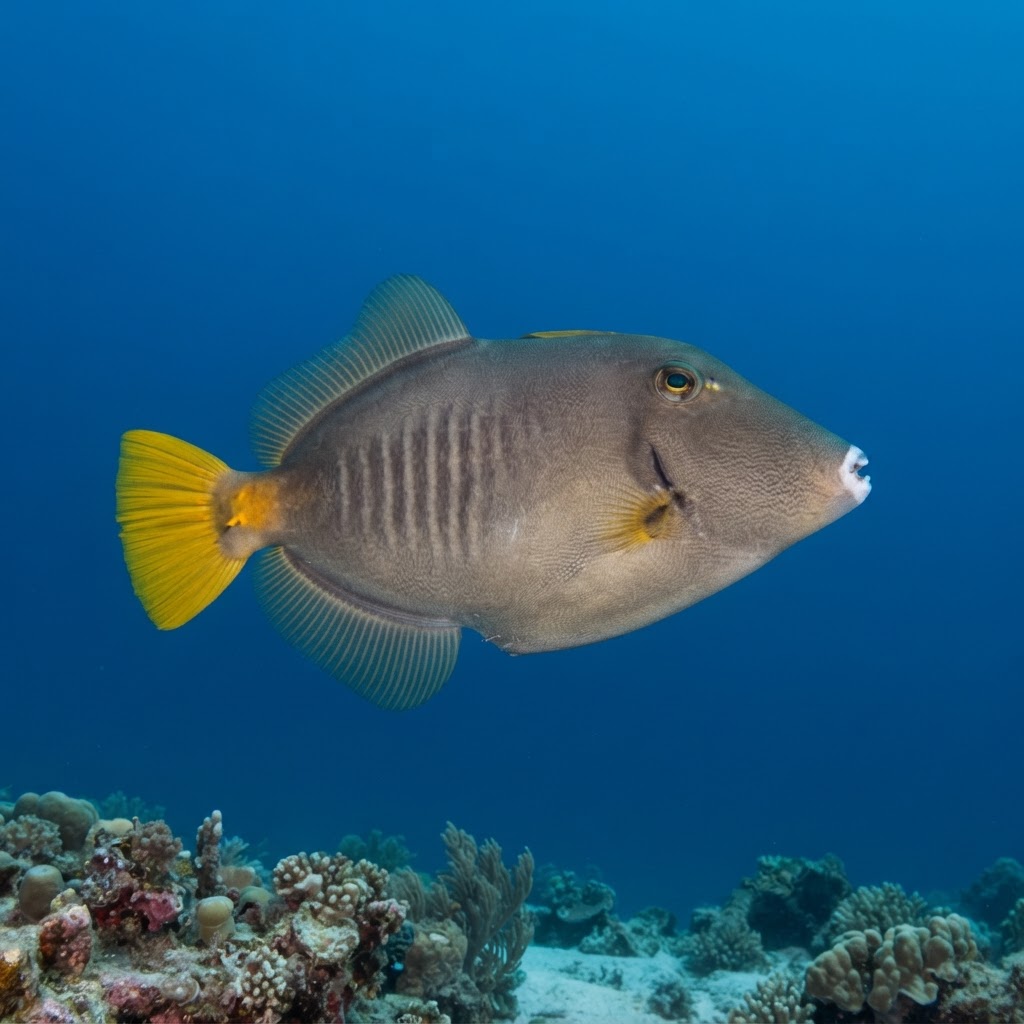
Reef neighbours a diver could mistake it for. Use the identification notes above to tell them apart.
Filefish show up across a huge spread of reef and temperate rock sites, with the strongest logging in Australia, the United States, Greece, the Maldives, Italy, the Philippines, Indonesia, and Turkey. Regionally, divers see them most in the Carolinas and Florida in the US, New South Wales, Queensland, and Western Australia in Australia, the Northern Atolls of the Maldives, Central Japan, and Luzon in the Philippines. Most sites report them as uncommon rather than a guaranteed sighting, so treat any encounter as a nice bonus rather than the dive's headline.
Mapping where Filefish is logged…
They're logged widely across Australia, the United States, Greece, the Maldives, Italy, the Philippines, Indonesia, and Turkey, with regional hotspots including the Carolinas and Florida, New South Wales and Queensland, and the Maldives' Northern Atolls.
There's no strong seasonal pattern in the data, and they tolerate a wide temperature range, so they're generally around year-round wherever they're resident.
Look for a flattened, leaf-shaped body, rough sandpaper-like skin, and a single thin spine behind the head. They often hover at odd angles, using colour and shape to blend into soft corals or weed.
Size varies a lot by species within the family, from small reef dwellers to larger open-water types, so there's no single figure that fits the whole group.
No, they pose no danger to divers. They're slow, generally indifferent to divers, and rely on camouflage and hiding rather than any defensive strike.
They can lock an upright spine behind the head and jam themselves into a crevice, making it very hard for a predator to pull them back out.
Site and sighting data is aggregated from diver logs, iNaturalist and GBIF. For taxonomy and conservation status:
Whitespotted Filefish
666 sites