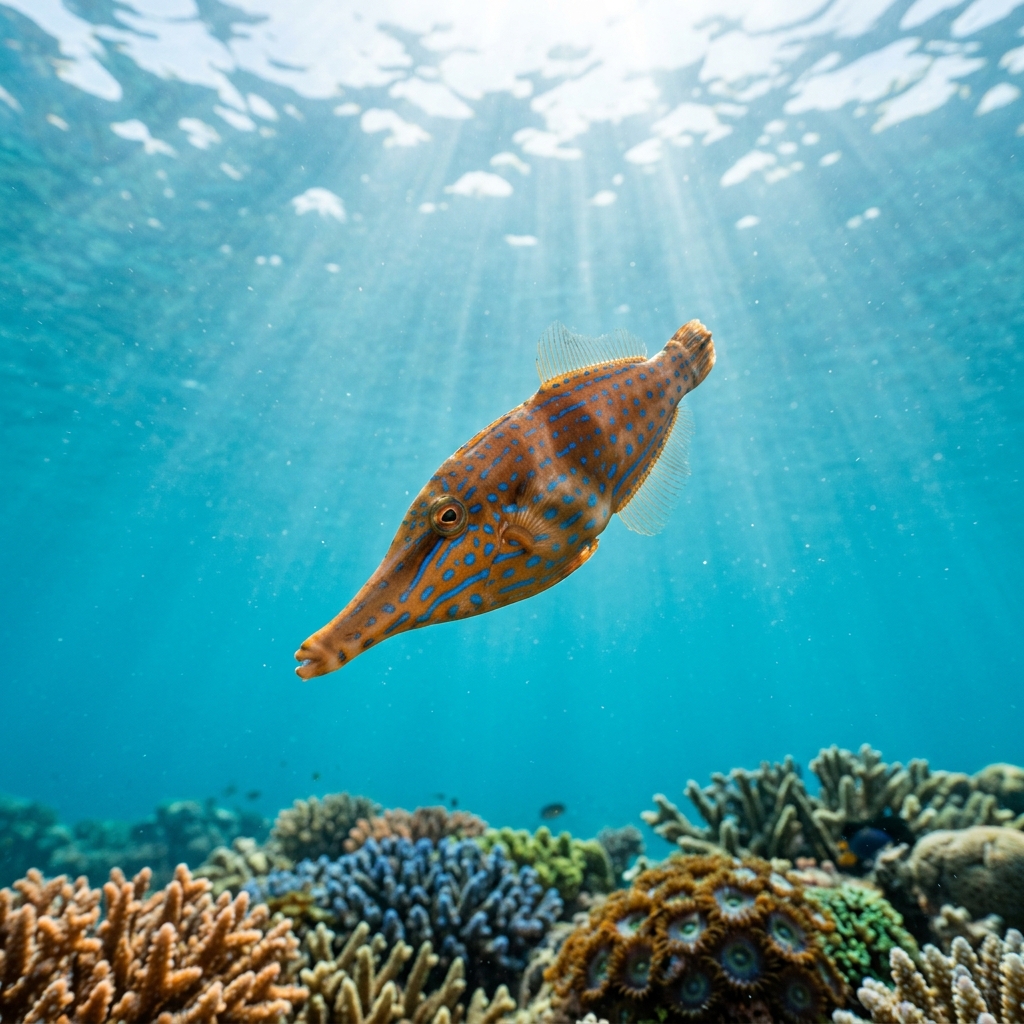
Oxymonacanthus longirostris
Spot the vivid orange-spotted longnose filefish across Seychelles, Mauritius, and Okinawa reefs. Here's how to find and identify it underwater.
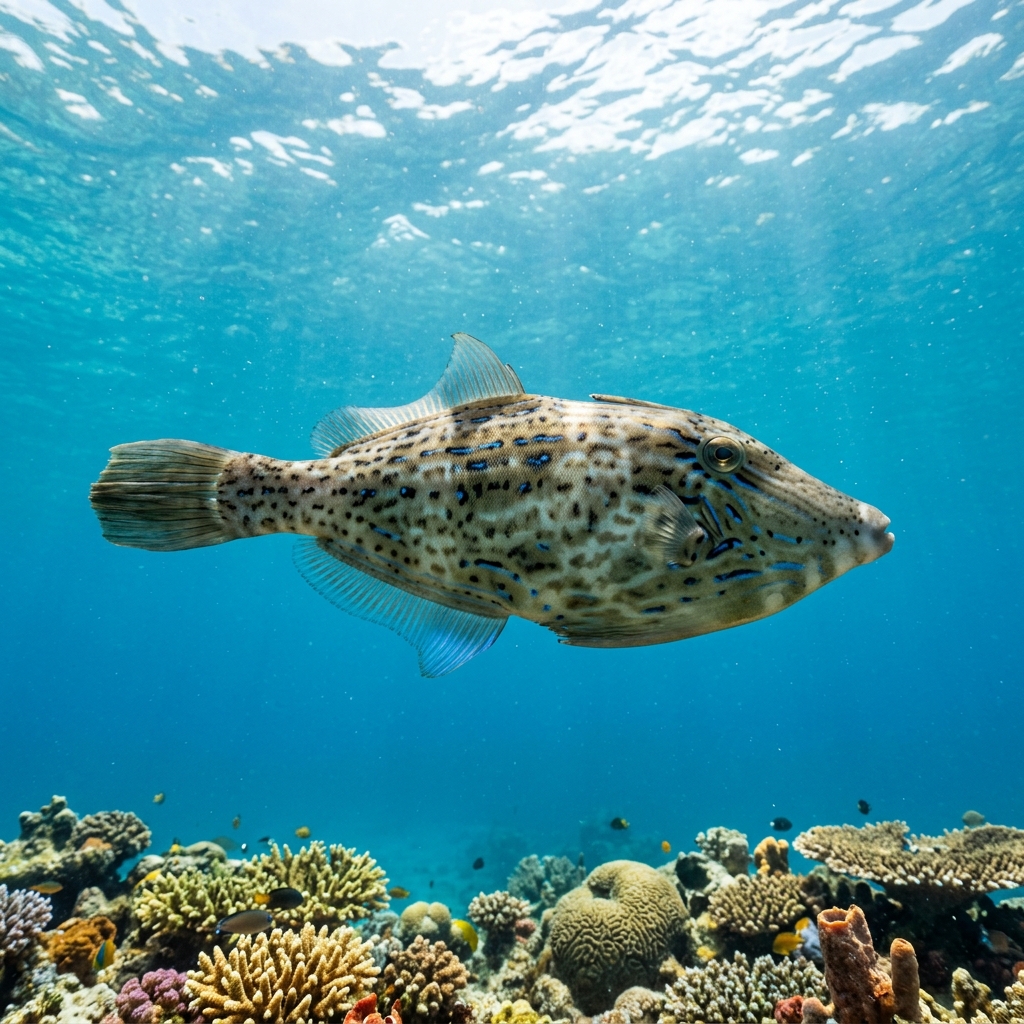
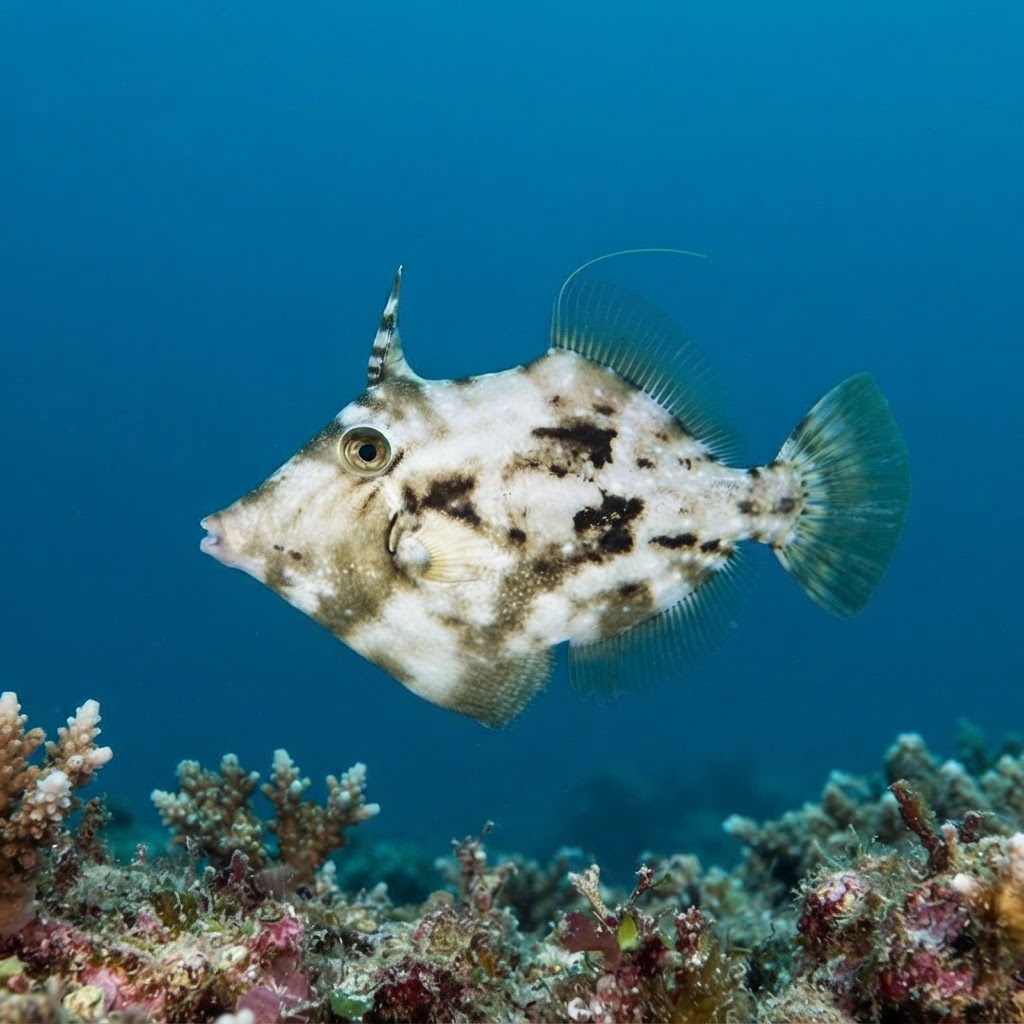
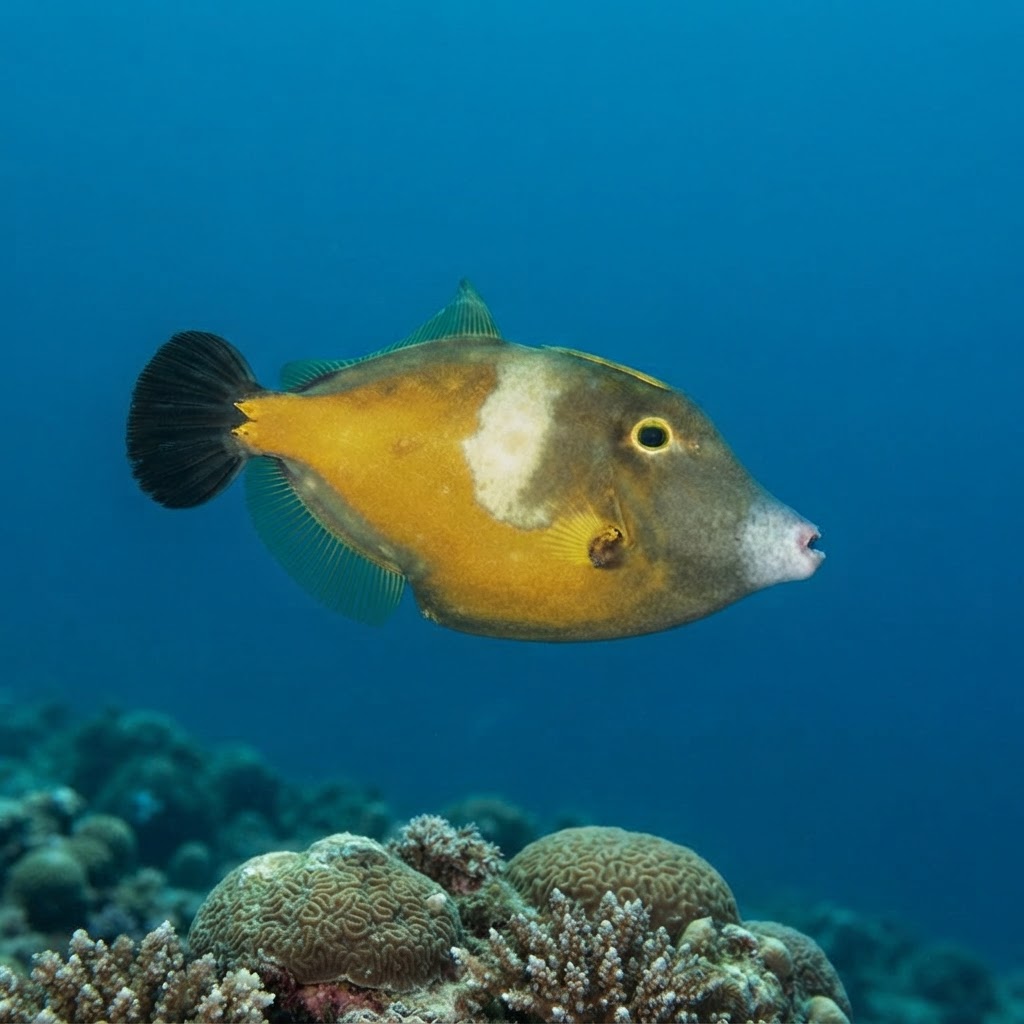
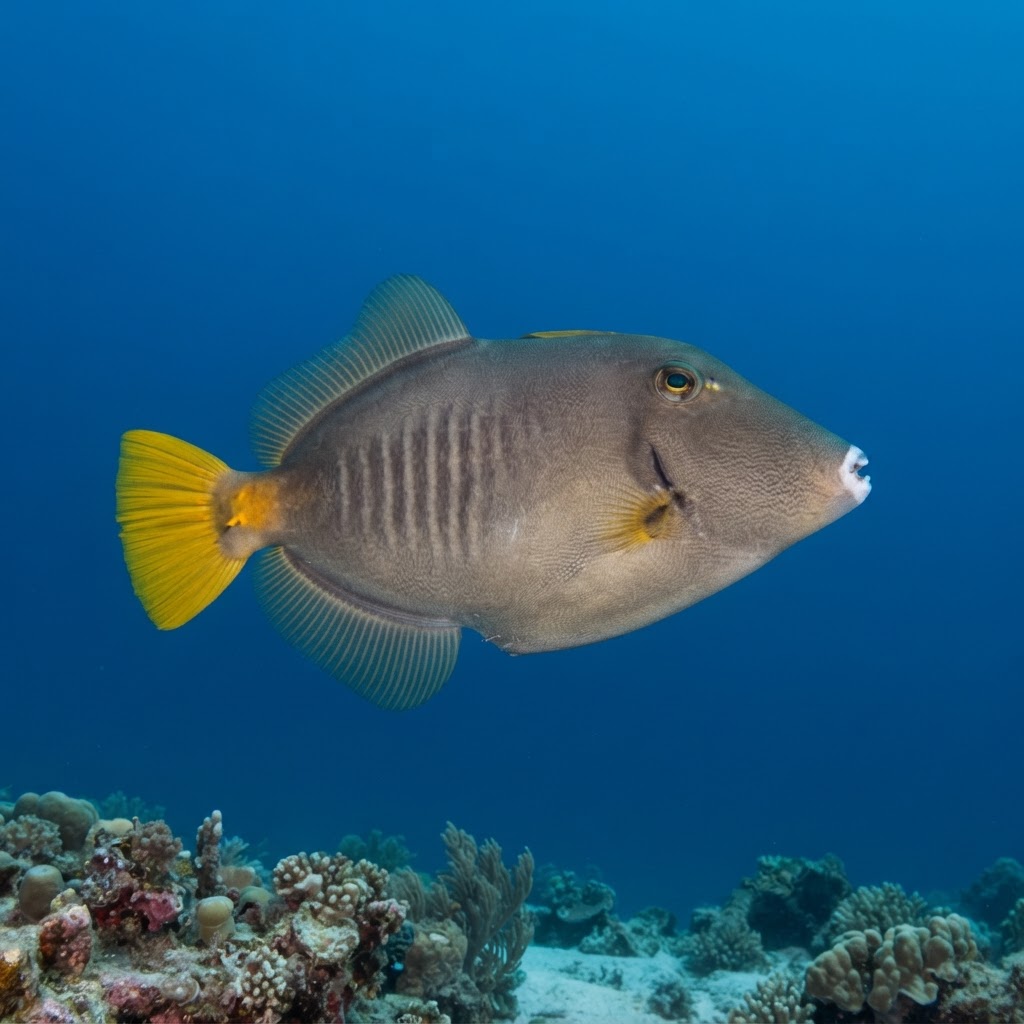
That elongated, pointed snout is the giveaway, no other filefish on an Indo-Pacific reef has quite that beak-like profile. The body is pale blue-grey to whitish, covered in vivid orange-yellow spots arranged in irregular rows, making it one of the more striking small reef fish once you know what to look for. It is a small, laterally compressed fish, roughly the shape of a squashed diamond, and it typically hovers nearly vertically among branching corals rather than swimming openly in the water column.
You will almost always find it in close association with branching Acropora corals, where it picks tiny polyps directly from the coral tips, a specialist feeding habit that explains why it rarely strays far from the reef structure. It tends to hover at an angle, nosing into coral branches, and is generally not particularly wary of divers who approach slowly. Sightings are typically of pairs or small groups rather than solitary individuals.
It is an obligate corallivore (coral polyp specialist), feeding almost exclusively on Acropora coral polyps. This extreme dietary specialisation means its fate is directly tied to the health of branching coral communities, which is a significant reason it carries a Vulnerable conservation status.
The data shows Southern Hemisphere sightings concentrate in April through June, so that austral autumn window is worth planning around in places like Mauritius and Réunion. The species occupies a warm-water niche of roughly 23 to 29 °C, which broadly aligns with tropical reef conditions year-round across much of its Indo-Pacific range.
Most consistently logged across Mauritius, the Seychelles, and Japan, with Praslin and La Digue in the Seychelles and the Okinawa Islands standing out as particularly reliable areas. Strong populations are also recorded in Australia's Queensland, Fiji's Viti Levu, and Vanuatu's Efate. Réunion and New Caledonia round out the Indo-Pacific spread.
Mapping where Longnose Filefish is logged…
The most sightings are recorded in Mauritius, the Seychelles, and Japan's Okinawa Islands. Queensland in Australia, Viti Levu in Fiji, and Efate in Vanuatu are also solid bets. It has a broad Indo-Pacific range, but Seychelles' Praslin and La Digue stand out as particularly well-documented hotspots.
In the Southern Hemisphere, sightings cluster in April through June. Across its wider tropical Indo-Pacific range, the species is present wherever water temperatures sit in the 23 to 29 °C band, which covers most of the year on healthy coral reefs.
Look for the unmistakable elongated, pointed snout and a pale body covered in bright orange-yellow spots. It hovers nearly vertically inside branching Acropora corals rather than swimming in open water. No other common Indo-Pacific filefish combines that beak shape with that spotted pattern.
They are a small reef fish, typically reaching around 10 to 12 cm in length. Their compressed, diamond-shaped body makes them look slightly larger in the water than they are, but they are noticeably small compared to most other filefish you will encounter.
It feeds almost exclusively on the polyps of Acropora corals, making it one of the more specialised feeders on the reef. This tight dietary link means it rarely ventures away from healthy branching coral and is rarely seen over bare reef or sandy areas.
They are listed as Vulnerable on the IUCN Red List. Their dependence on Acropora corals makes them highly exposed to coral bleaching events and reef decline. Populations can crash locally when coral cover drops, which is why sightings are uncommon even at sites where they are recorded.
The Longnose Filefish is listed as vulnerable by the IUCN. Observe from a distance, avoid touching or feeding it, and report sightings to local marine research organisations.
Listed as Vulnerable on the IUCN Red List, largely because its dependence on Acropora corals makes it highly sensitive to coral bleaching and reef degradation. Divers can help by reporting sightings through platforms like iNaturalist and practising careful buoyancy to avoid damaging the branching coral habitat it depends on.
Site and sighting data is aggregated from diver logs, iNaturalist and GBIF. For taxonomy and conservation status:
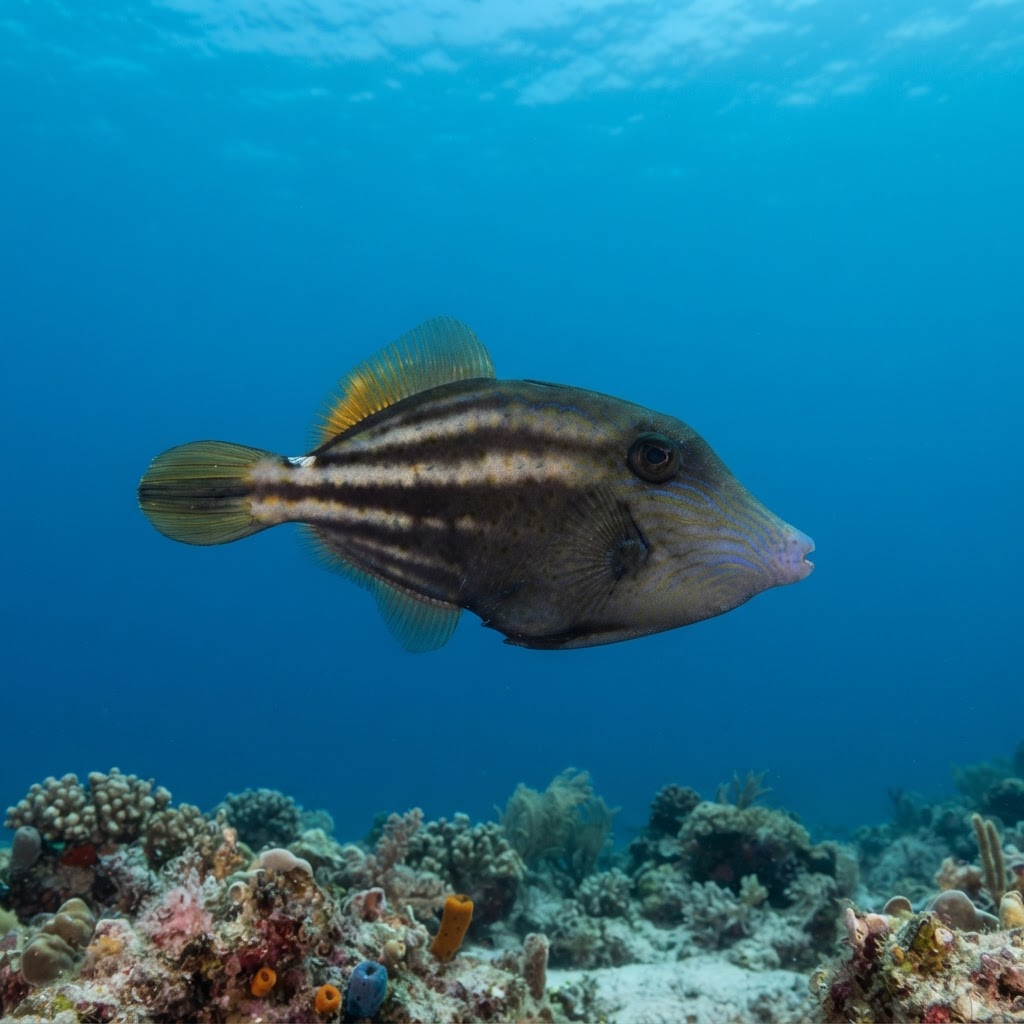
Orangespotted Filefish
836 sites