Cantherhines pullus
Small, shy and easy to miss: find orangespotted filefish year-round on reefs in Bonaire, Curacao and the Florida Keys at 23-28 C.
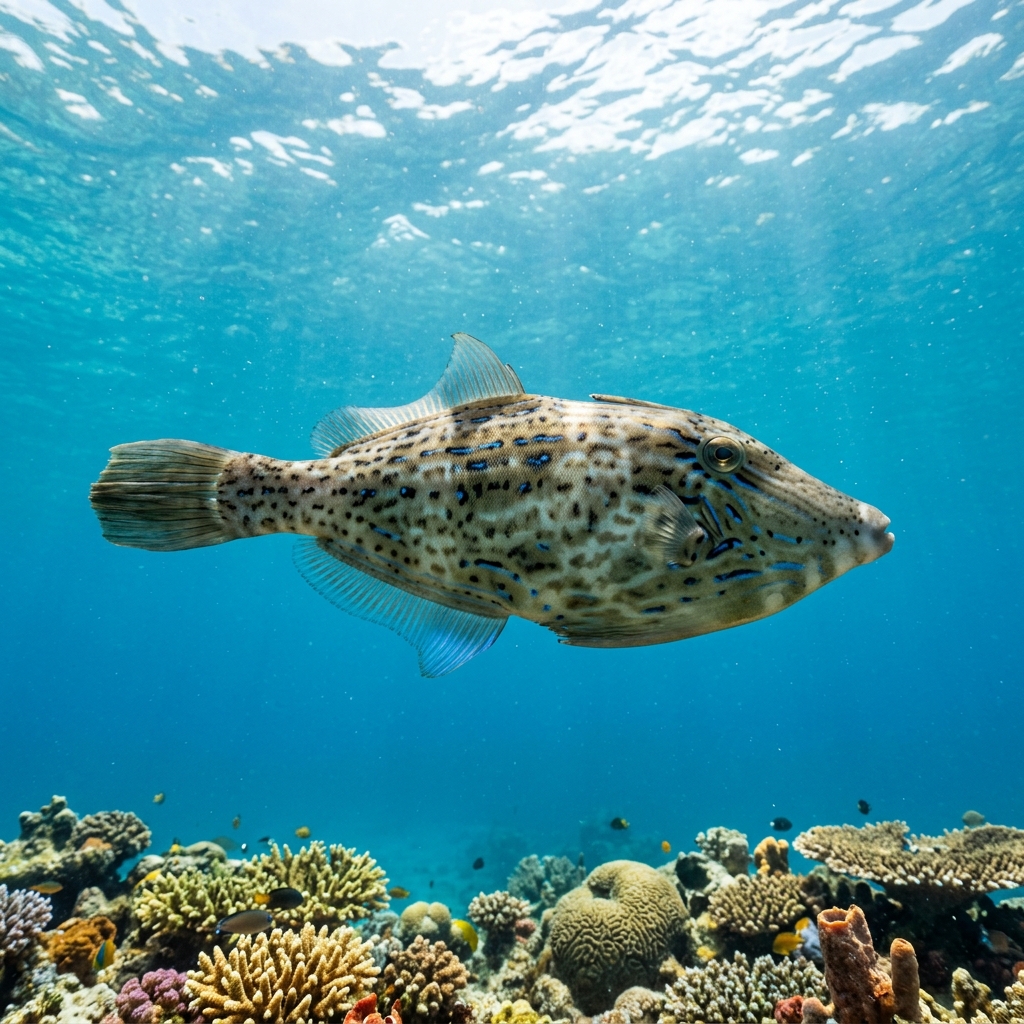
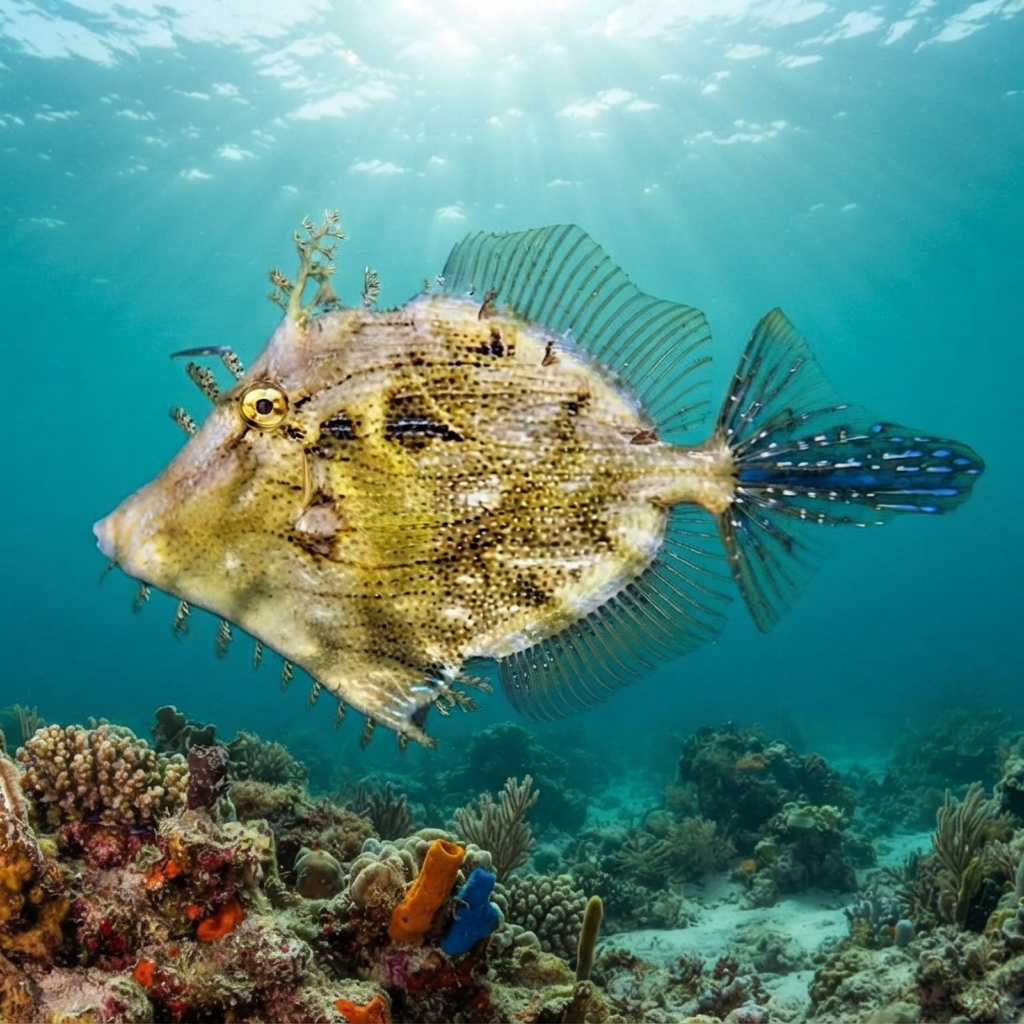
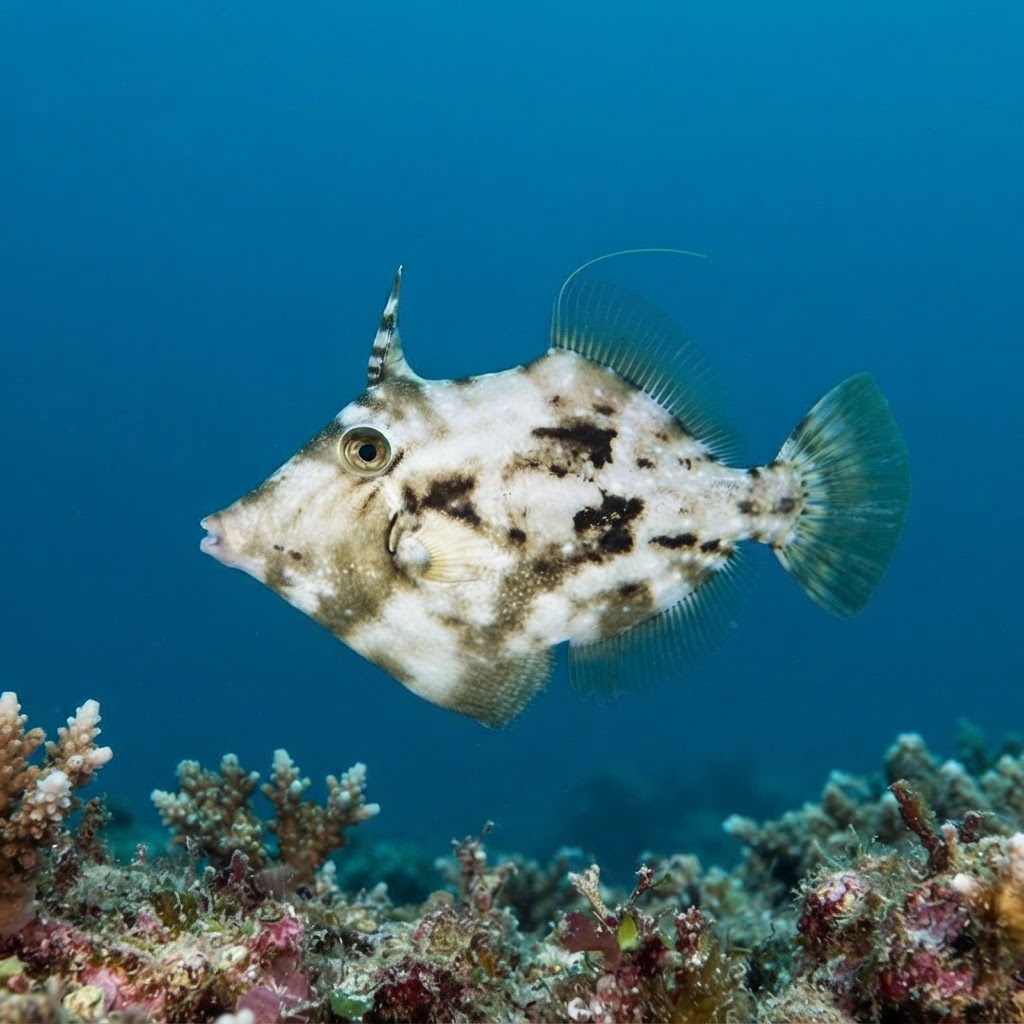
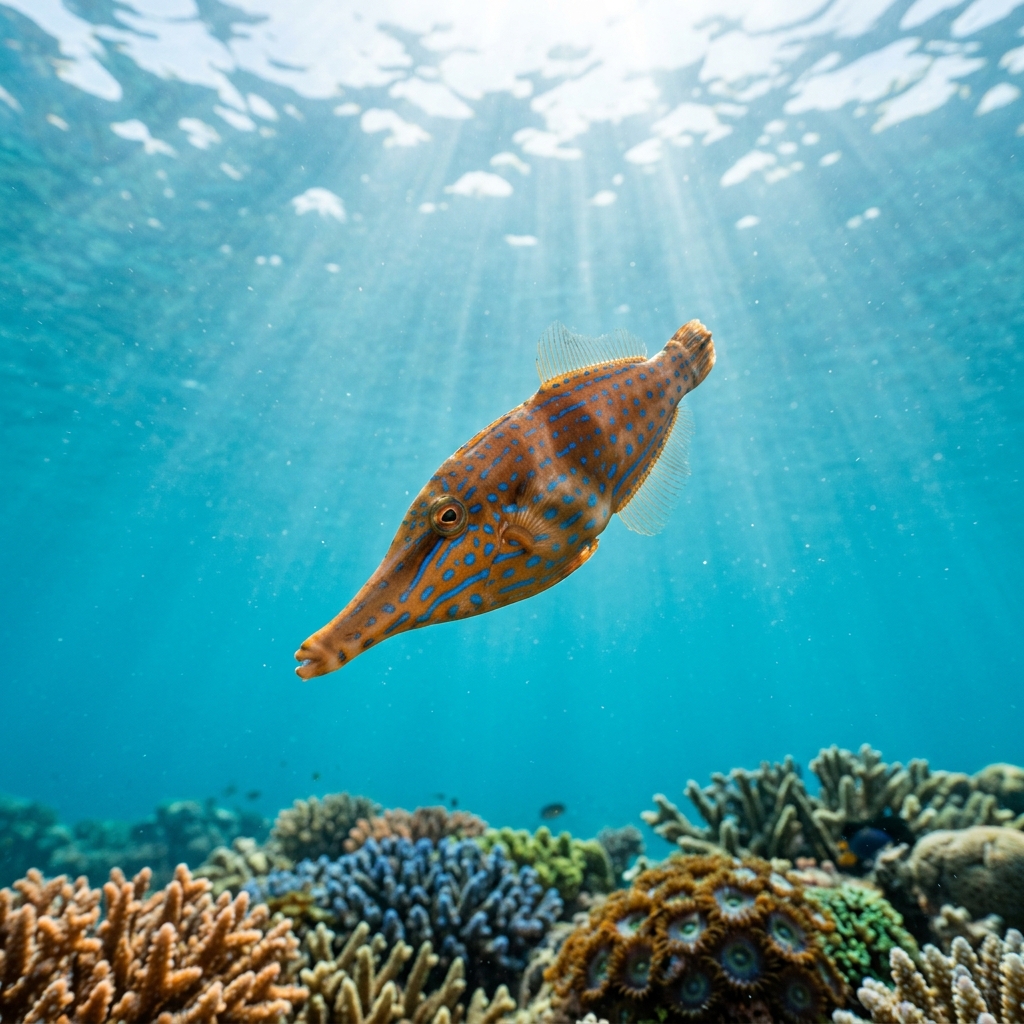
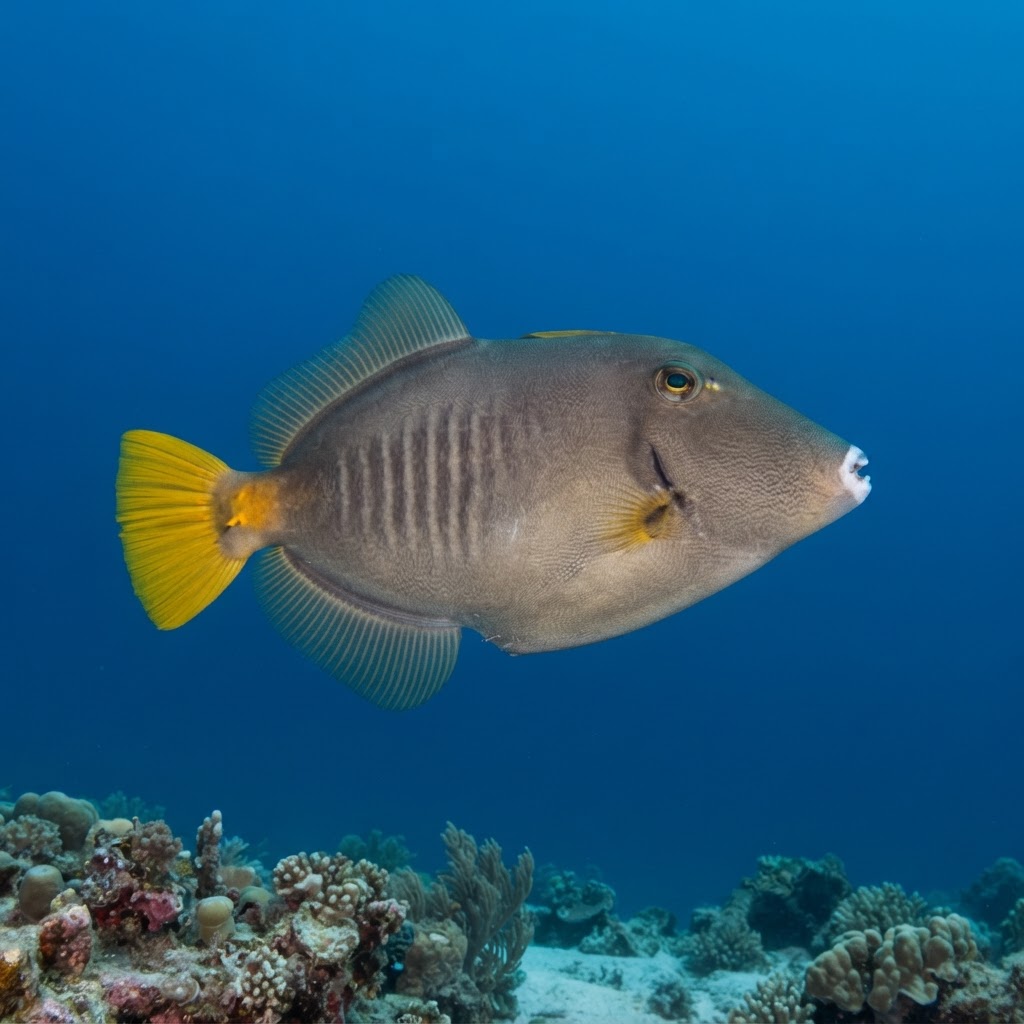
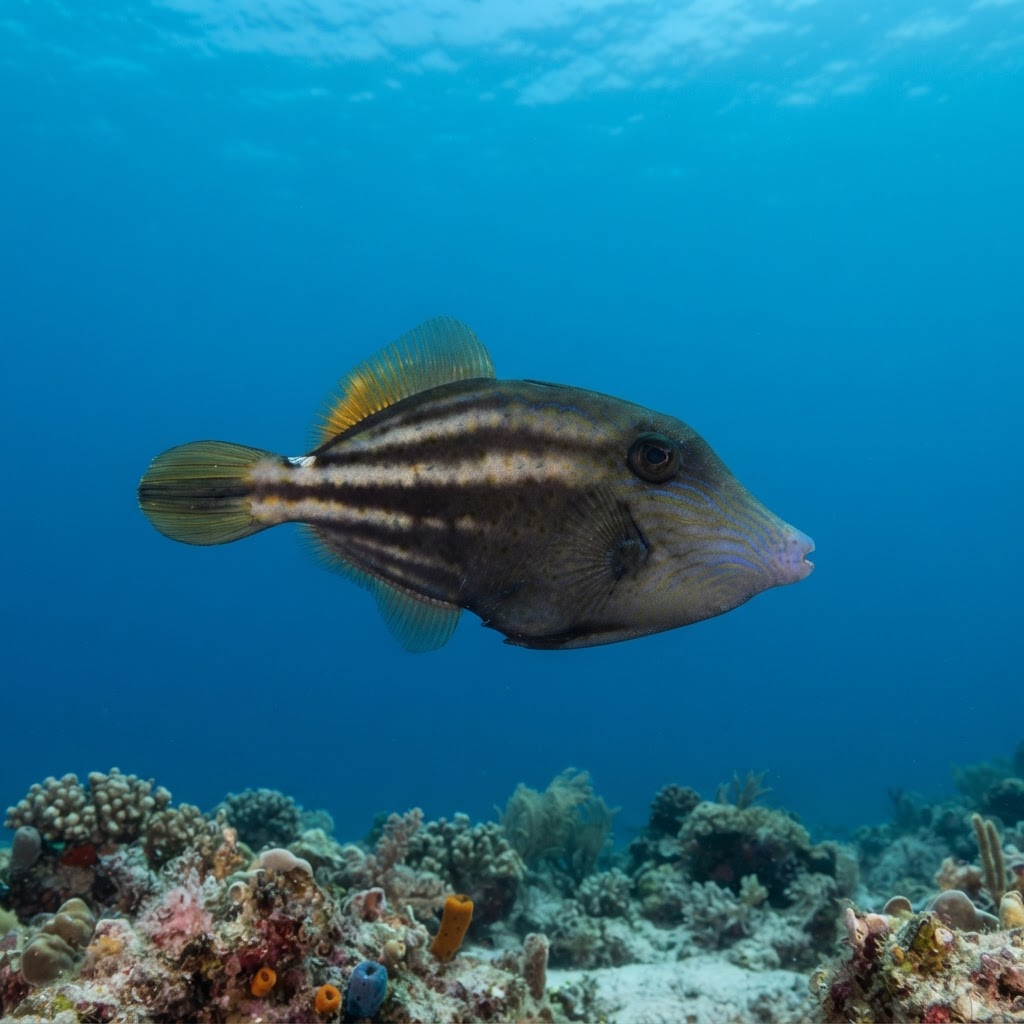
Small, laterally flattened body about the size of your palm, mottled grey-brown to olive with scattered orange spots concentrated toward the tail. Look for a compressed, almost oval profile and a small mouth set low on a slightly pointed snout, with a single retractable spine on top of the head rather than a true dorsal fin. It often hovers at an angle to the reef, tail-down, rather than swimming flat like most fish.
Divers typically find it hovering alone or in loose pairs close to coral heads and sponges, picking at algae and small invertebrates rather than actively foraging in the open. It tends to hold its ground rather than bolt, often tilting head-down or tail-down against the reef to blend in, and will slip behind a coral head if you get too close. Most sightings are logged as uncommon rather than common, so it rewards divers who slow down and look into crevices instead of just cruising past.
Like other filefish, it can lock a stiff dorsal spine upright and wedge itself into a reef crevice when threatened, making it hard for a predator, or a diver's hand, to pull it out.
No clear seasonal pattern shows up in sighting data, and with a comfortable range of 23.4 to 28 C it stays on Caribbean reefs year-round, so any month works for a dive trip.
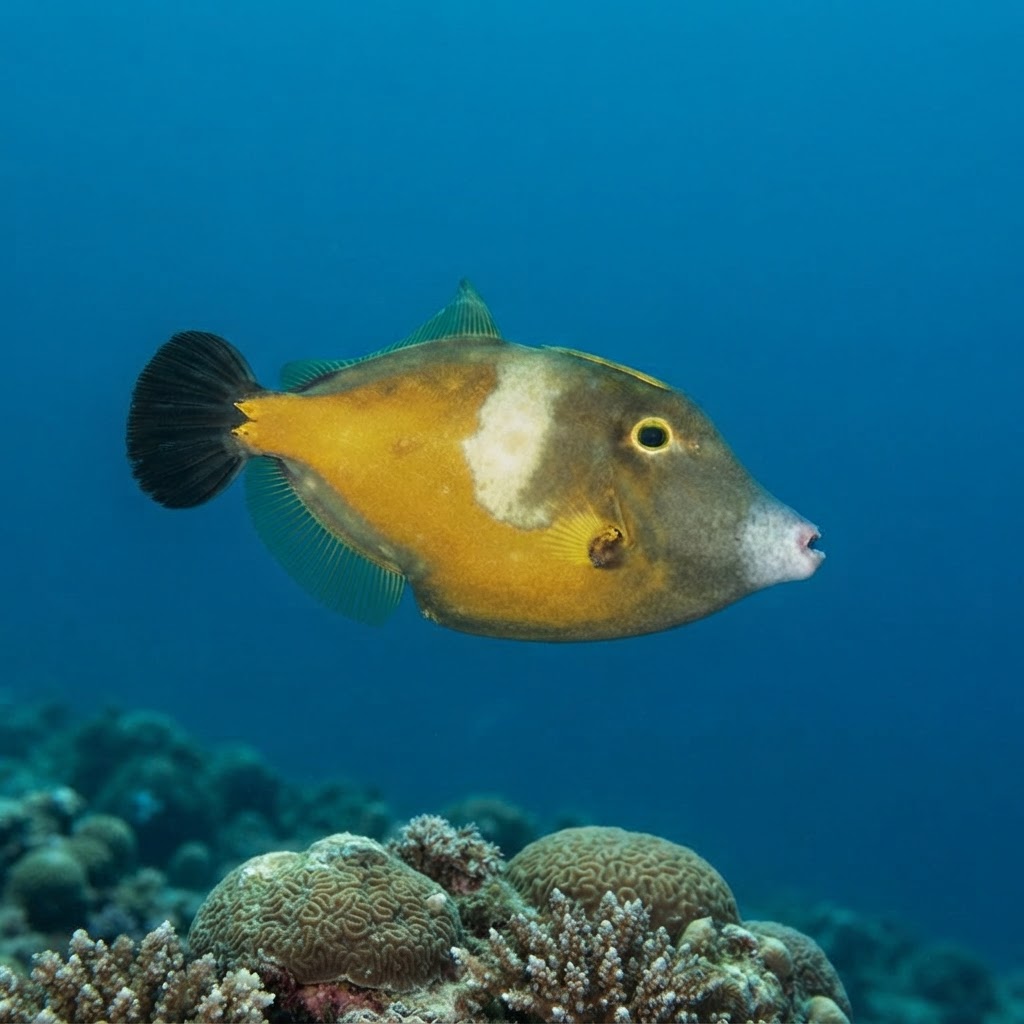
Reef neighbours a diver could mistake it for. Use the identification notes above to tell them apart.
This is a Caribbean-wide reef fish, most reliably logged in the US Virgin Islands, Florida, and the Yucatan Peninsula in Mexico, with strong numbers also reported from Bonaire's leeward coast, the British Virgin Islands around Tortola, and Curacao. Grenada and the Bay Islands of Honduras round out the range, so any healthy Caribbean reef with some coral cover is worth checking.
Mapping where Orangespotted Filefish is logged…
They turn up across the Caribbean, with the strongest logs from the US Virgin Islands, Florida, Mexico's Yucatan Peninsula, Bonaire and the British Virgin Islands. Curacao, Grenada and Honduras's Bay Islands also produce regular sightings on reef dives.
There is no strong seasonal pattern in sighting data, and warm reef temperatures of 23 to 28 C hold year-round across its Caribbean range, so you can plan a trip any month and have a fair shot.
Look for a small, flattened, oval-bodied fish around 14 cm with mottled brown-olive skin and scattered orange spots, especially near the tail. It has a single spine on top of its head instead of a normal dorsal fin and often rests at an angle against the reef rather than swimming level.
They are a small reef species, typically reaching around 14 cm in length, so most sightings are of a fish roughly the size of an open hand tucked near coral.
No, they pose no threat to divers. They are shy, small-mouthed reef feeders that will retreat into crevices rather than approach or defend territory aggressively.
It can lock a stiff spine upright on its head and jam itself sideways into a tight reef crevice, making it very difficult for a predator to extract once wedged in place.
Site and sighting data is aggregated from diver logs, iNaturalist and GBIF. For taxonomy and conservation status:
Whitespotted Filefish
666 sites