Tomoberthella martensi
Uncommon nudibranch turning up on macro dives across Sabah, Okinawa and Luzon in warm 23-30C water year-round.
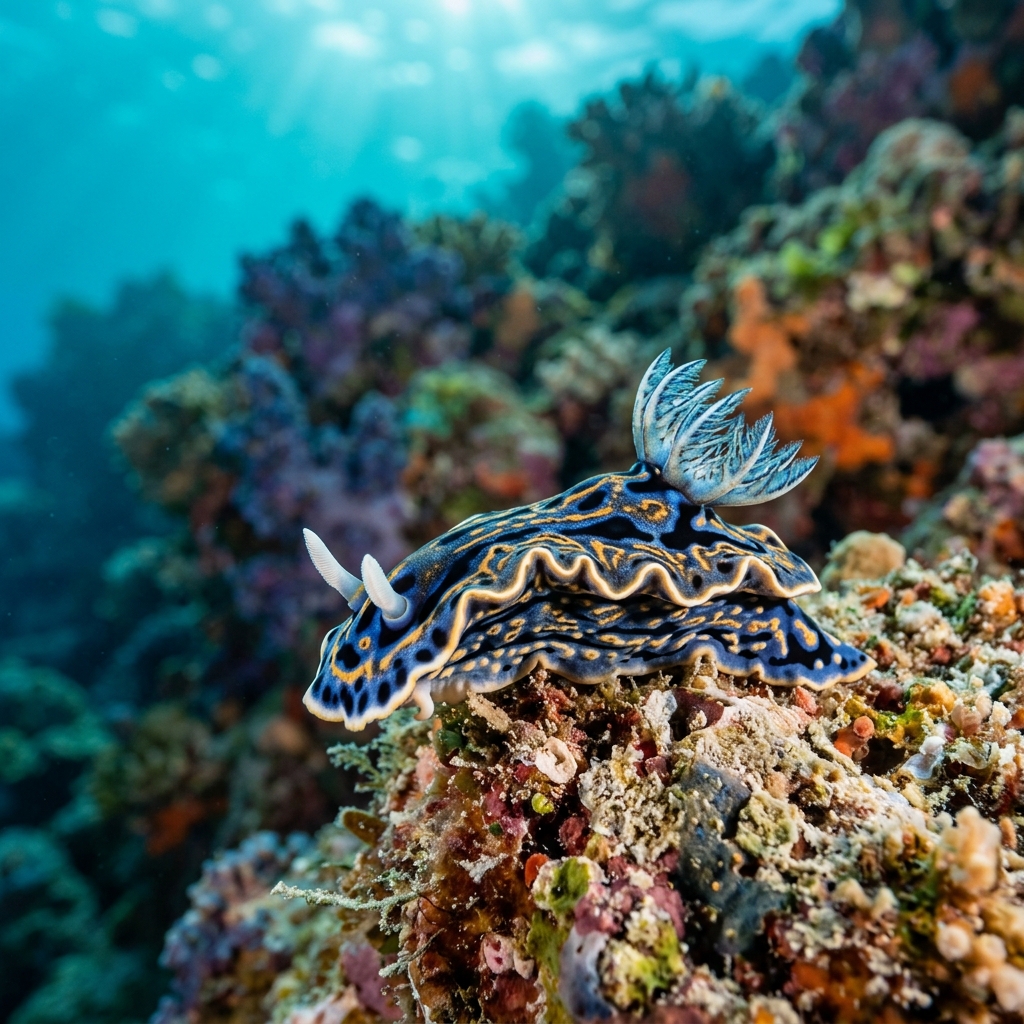
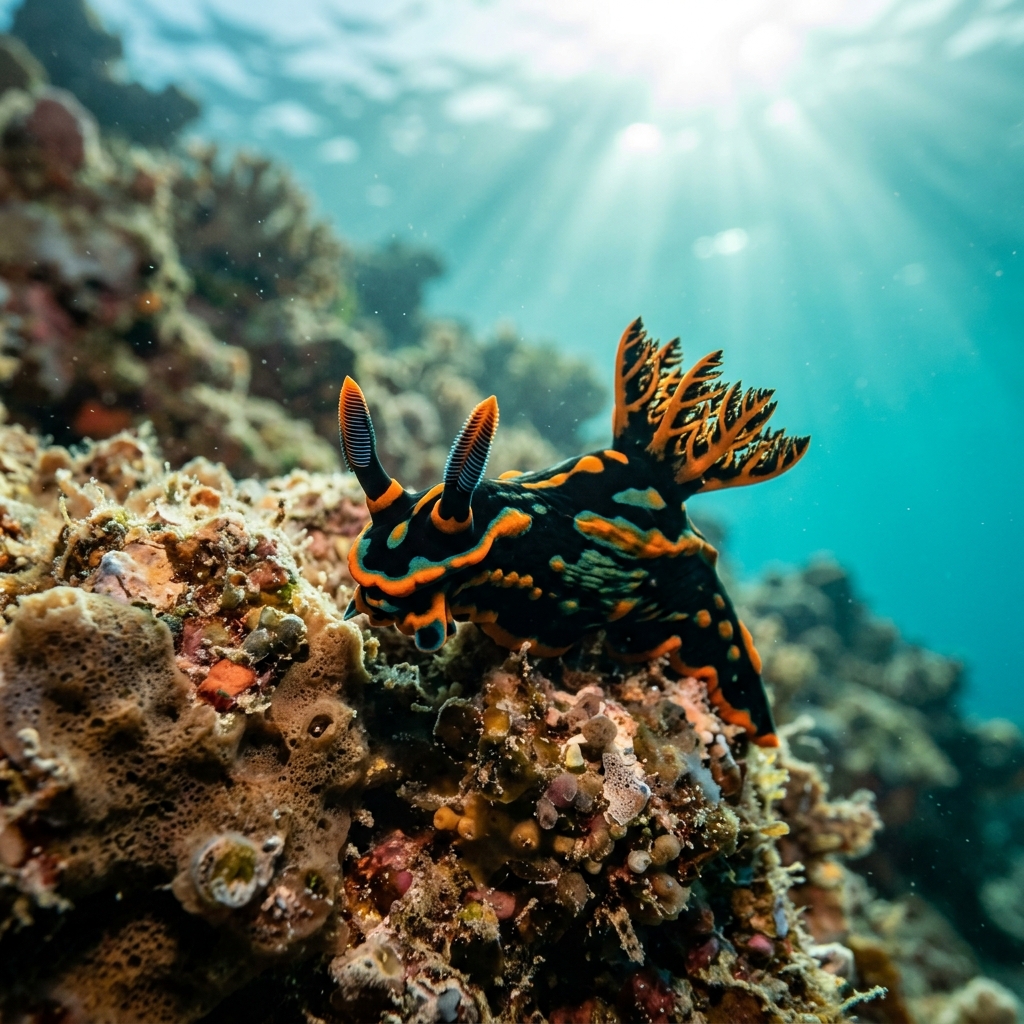
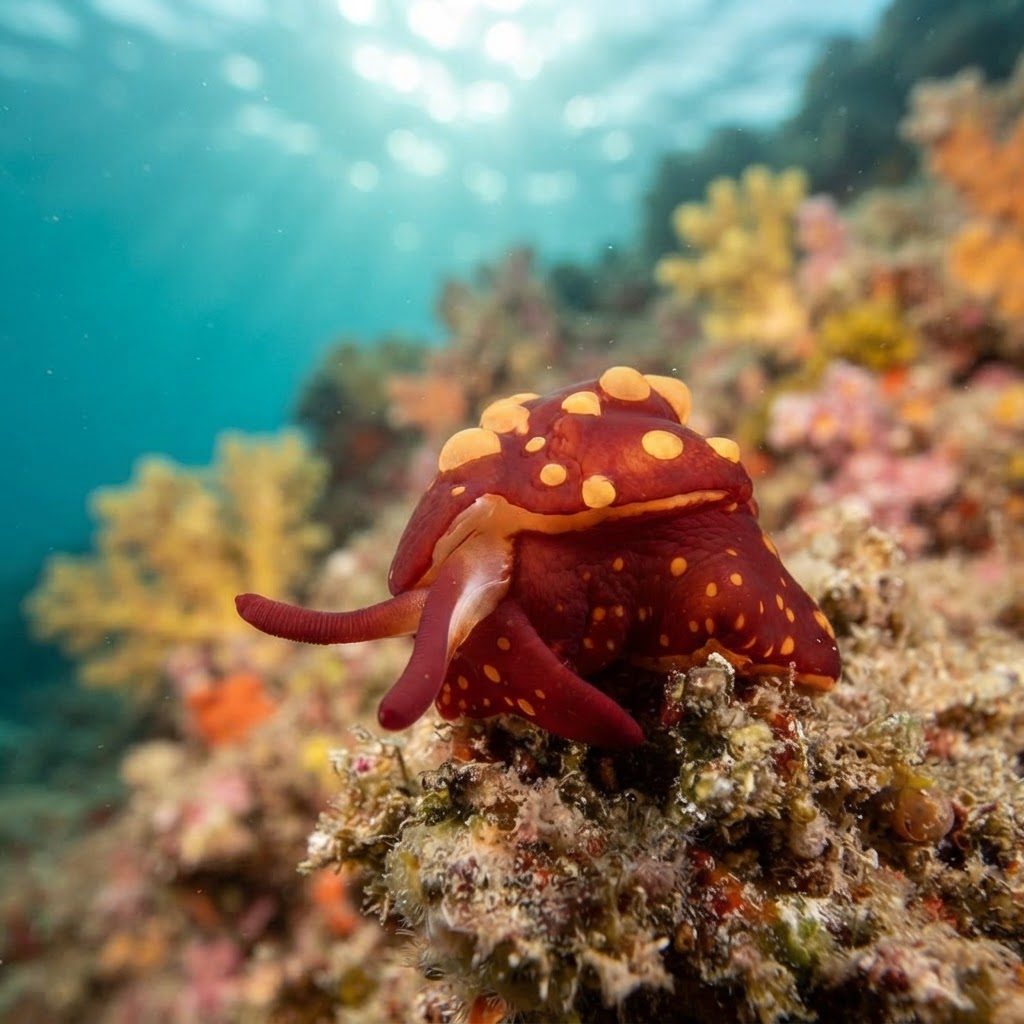
Look for a soft-bodied nudibranch grazing slowly across the substrate, its mantle mottled rather than boldly patterned like many reef nudibranchs. Size in the water tends toward the small end typical of the family, so a slow scan of rubble and sponge-covered rock is usually what turns it up. There is no bright warning colouration to key on here, which is itself a clue: if you have found a plain, slug-shaped animal moving deliberately over encrusting growth, you are probably looking at it.
Divers typically find it moving slowly across rock, rubble or sponge-encrusted surfaces during the day, doing the unhurried grazing that most sea slugs are built for. It shows no particular reaction to divers beyond continuing its crawl, making it an easy subject once spotted, the harder part is spotting it given how uncommon it is at most sites. Expect to find it on the bottom rather than in open water, usually during a slow macro-focused dive rather than a drift or wall dive.
Like other pleurobranchs, it lacks the external gill rosette of true dorid nudibranchs and instead breathes through a gill tucked under the right side of its mantle, which is part of why it reads as plainer underwater than its more flamboyant nudibranch cousins.
Sightings show no detectable seasonal pattern, so treat it as a year-round find rather than something tied to a particular month. It has been logged in water from about 22.8 to 30C, a range that covers most of the tropical and subtropical dive season across its known sites, which fits with divers turning it up throughout the year.
Reef neighbours a diver could mistake it for. Use the identification notes above to tell them apart.
Sabah in Malaysia is by far the strongest area for this species, with sightings spread across many sites there, well ahead of anywhere else in the data. Okinawa and the Ryukyu Islands in Japan and Luzon in the Philippines are the next most reliable regions, with smaller but consistent numbers also logged in Taiwan (Longdong and Kenting) and around Niue's Alofi coast. Hong Kong's Sai Kung and Reunion's Saint-Pierre round out the picture as occasional finds rather than strongholds.
Mapping where Tomoberthella Martensi is logged…
Sabah in Malaysia is the most reliable region by a clear margin, followed by Okinawa in Japan and Luzon in the Philippines. Smaller numbers turn up in Taiwan, Niue, Hong Kong and Reunion.
There is no clear seasonal pattern in the sightings, so it is a year-round find. It has been recorded in water from roughly 23 to 30C, a range that spans most of the diving calendar at its known sites.
Look for a small, soft-bodied nudibranch with a mottled, understated colour pattern crawling slowly over rock or sponge-covered substrate. It lacks the bright warning colours of many reef nudibranchs, so it is easy to overlook unless you are scanning closely.
Exact size figures are not well documented for this species, but like most members of the pleurobranch family it sits at the smaller end of nudibranch-type sea slugs typically found on macro dives.
As a pleurobranch rather than a true dorid nudibranch, it breathes through a single gill tucked beneath the right side of its mantle instead of the feathery gill rosette seen on many showier sea slugs.
Site and sighting data is aggregated from diver logs, iNaturalist and GBIF. For taxonomy and conservation status:
Blue Dragon
3,163 sites