Mycteroperca tigris
Barred grey-brown groupers logged across Honduras' Bay Islands and Grand Cayman, comfortable year-round in 25-28C reef water.
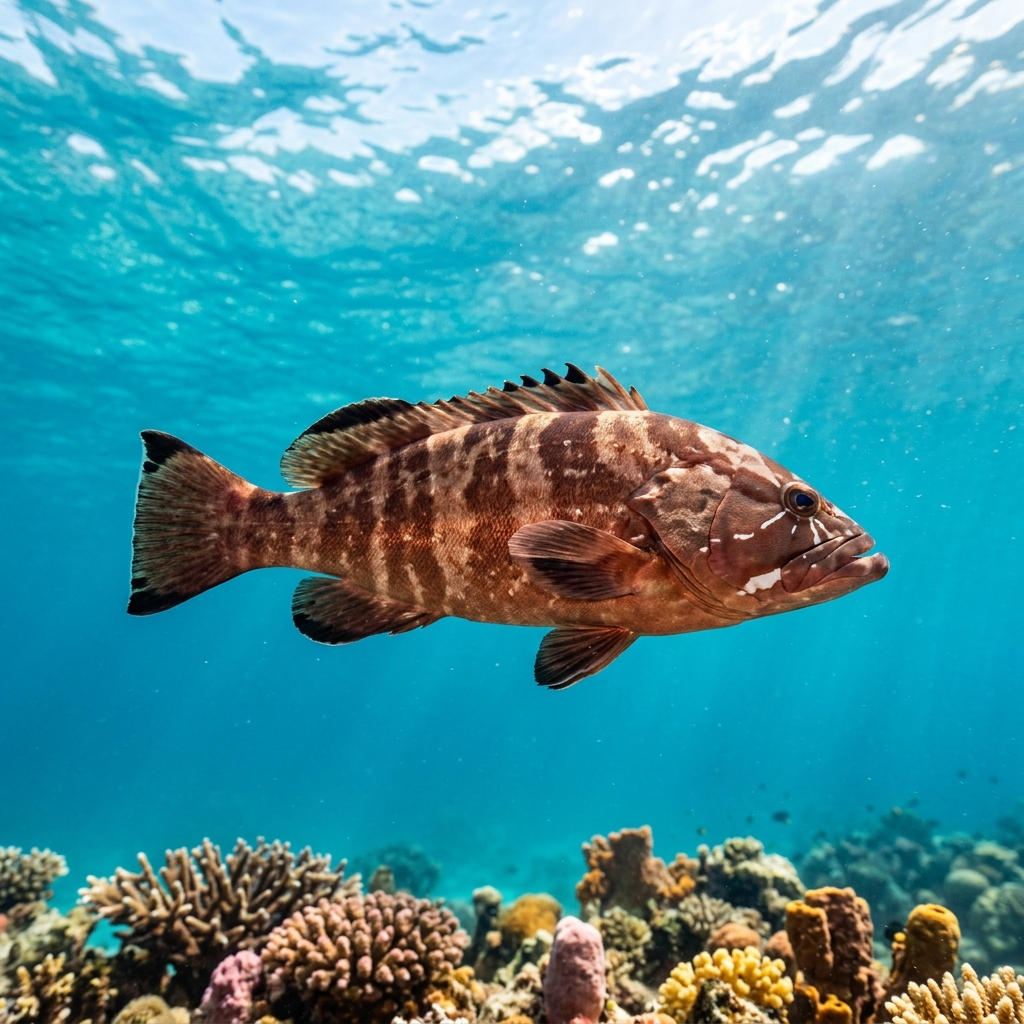
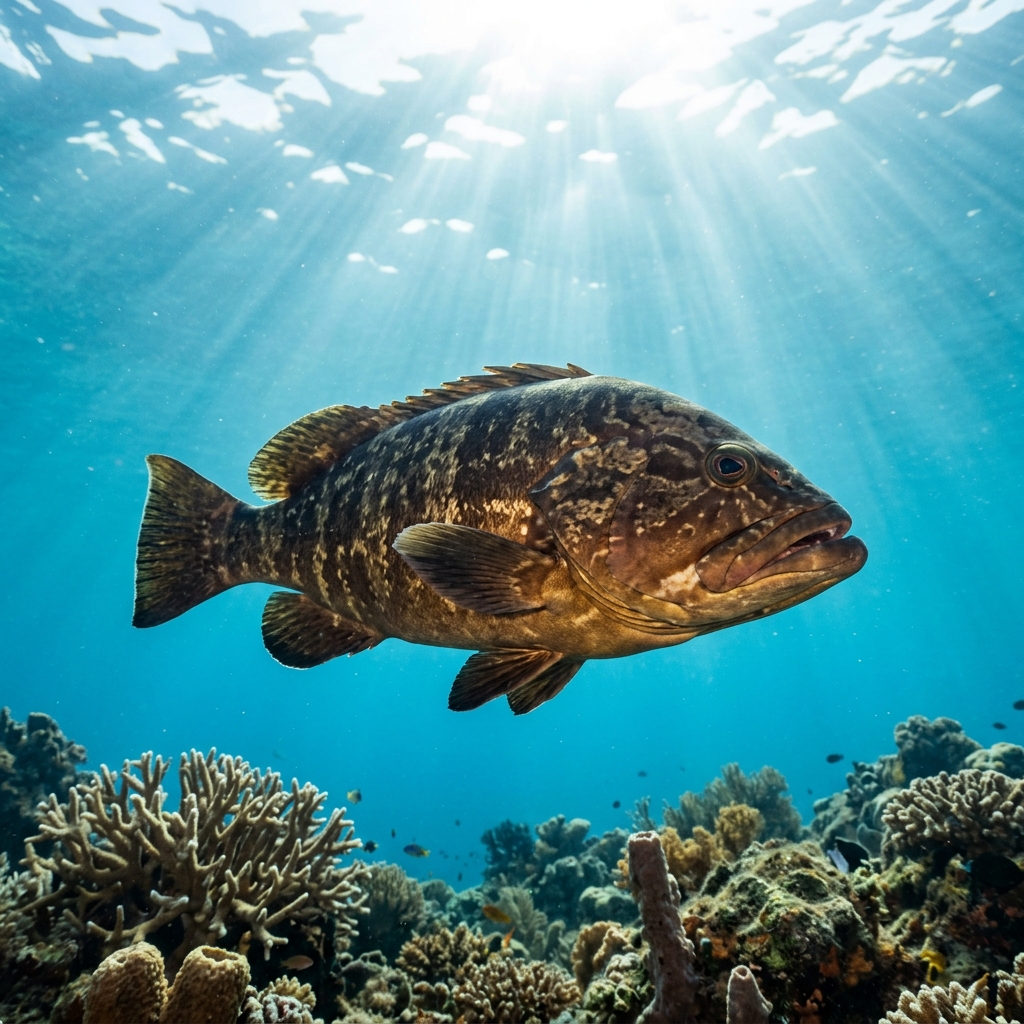
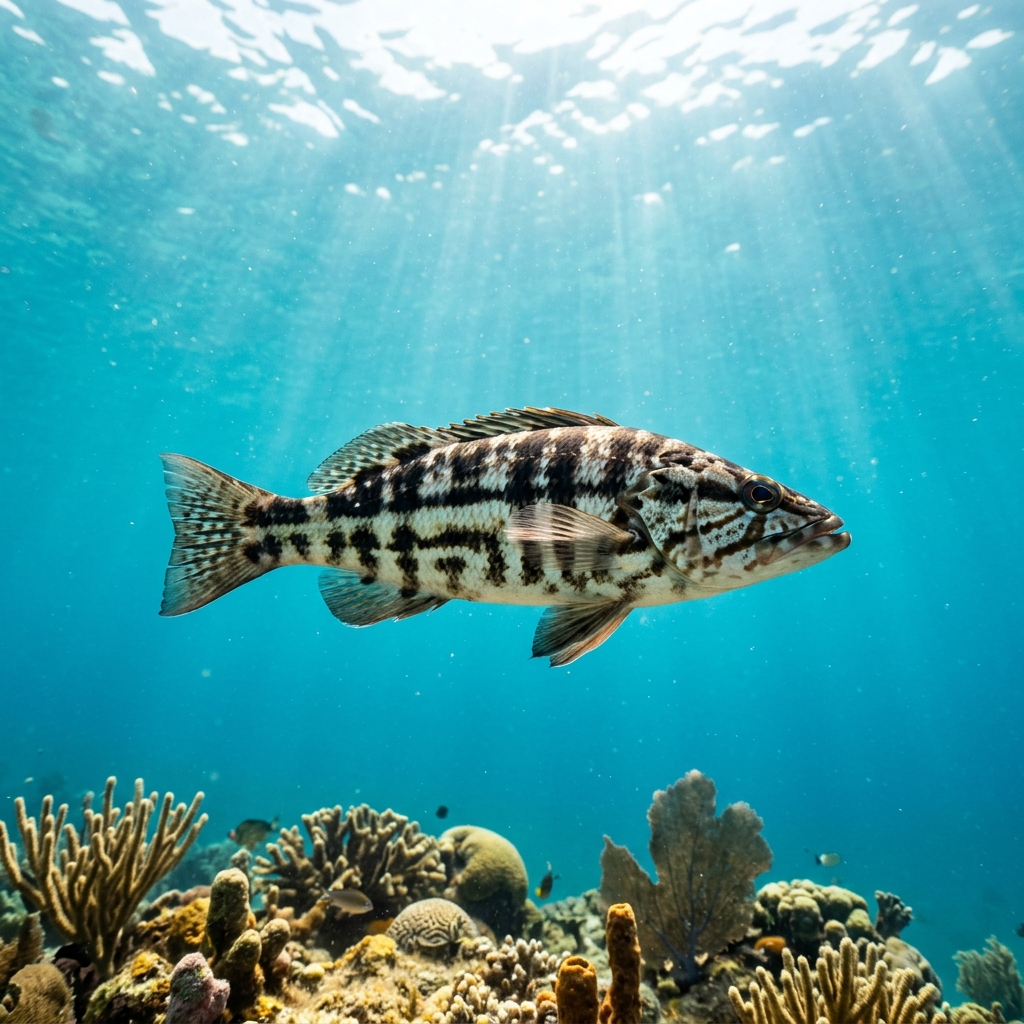
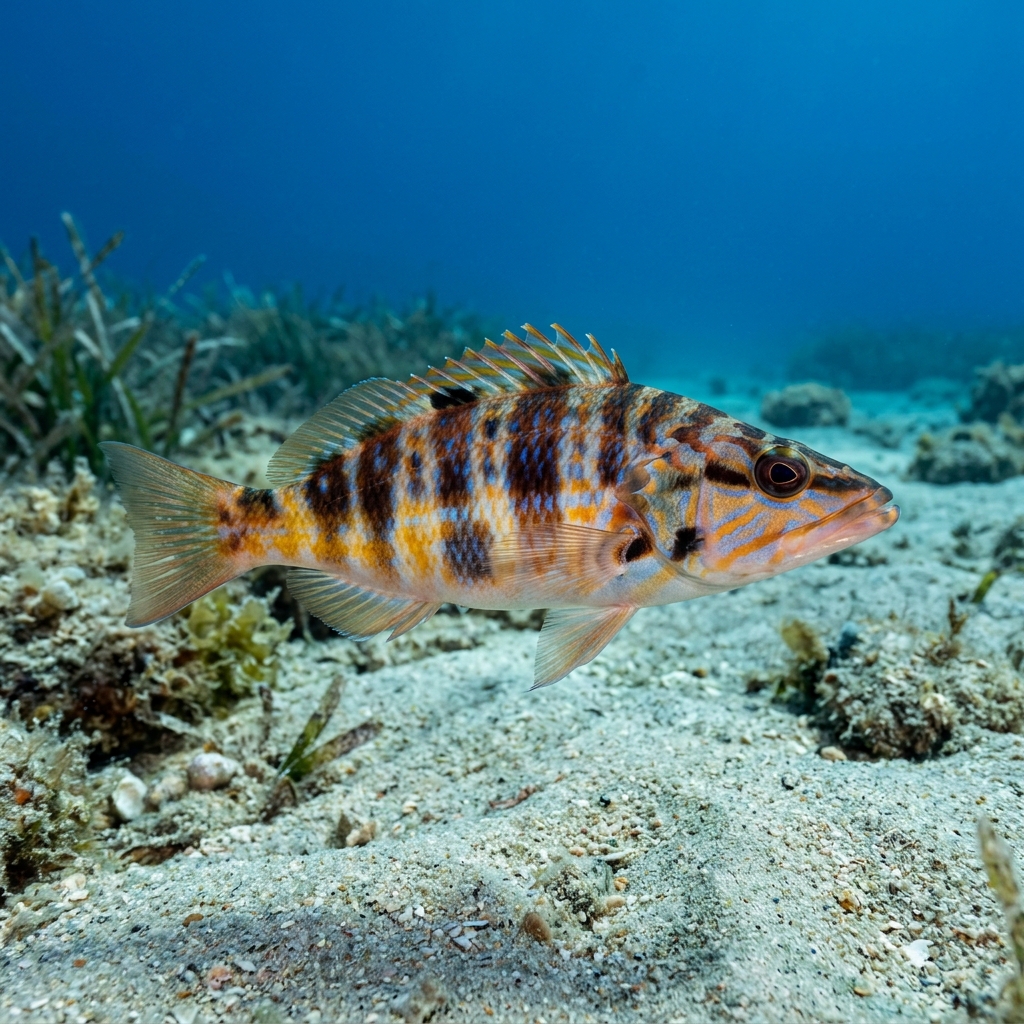
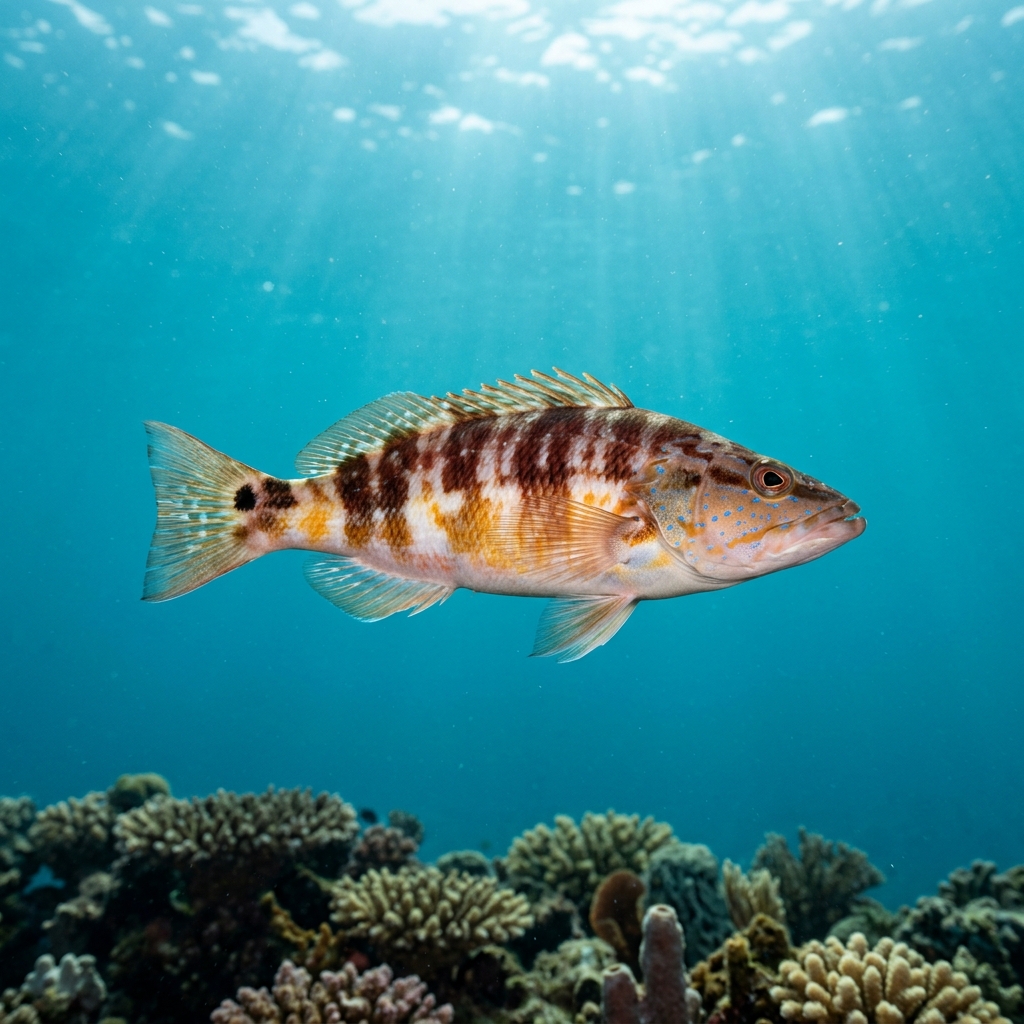
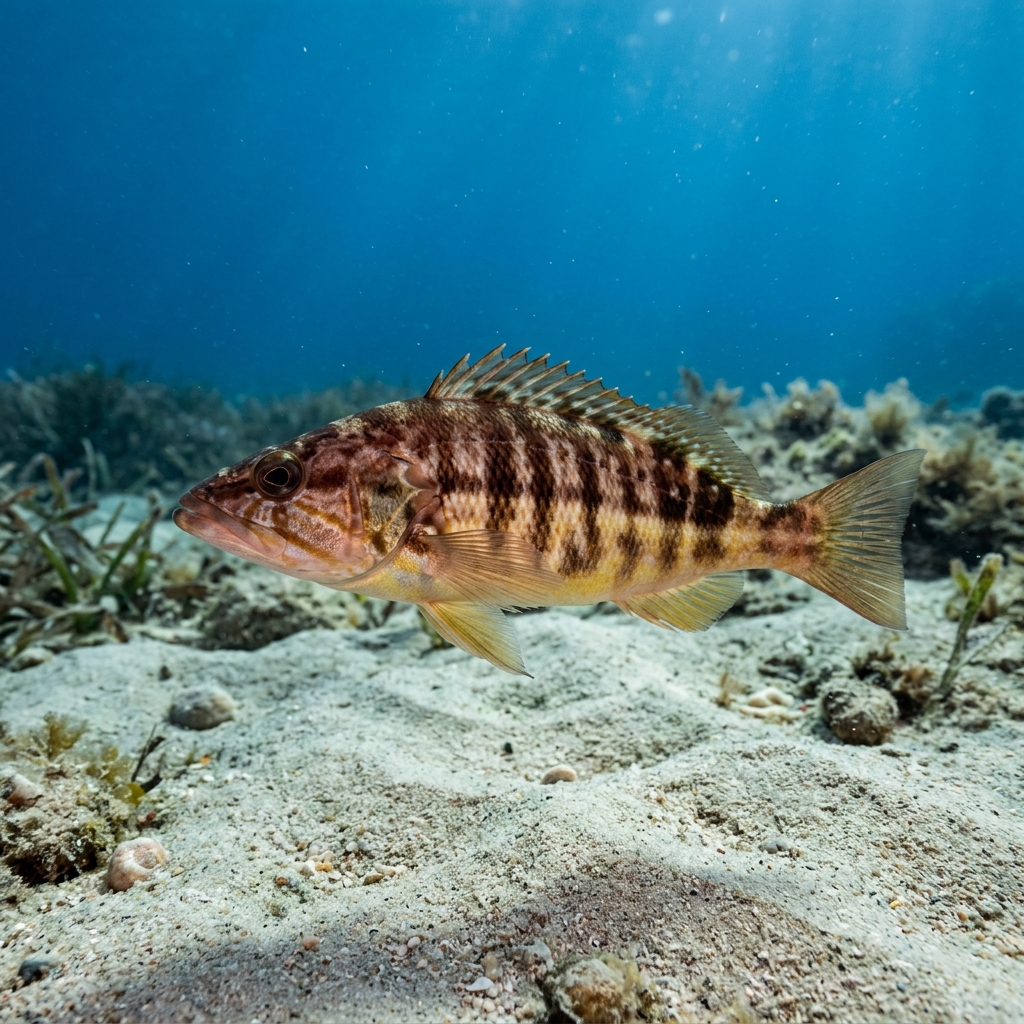
Grows to around 70 cm and shows a grey to olive-brown body crossed by dark diagonal bars that run down the sides, giving the tiger-stripe look the name refers to. The body is elongate and torpedo-shaped, typical of the grouper build, with a slightly concave profile between the eyes and snout. Look for two small dark spots near the tail base, just above and below the midline, which help separate it from similarly barred groupers.
Usually seen hovering or resting near reef structure, ledges and coral heads rather than out in open water, often sitting still enough to get a good look before it eases off. Divers log it most often as a solitary fish holding a patch of reef, occasionally hanging near cleaning stations or shadowing other predators during a hunt. It tends to be unbothered by divers at a reasonable distance but will move off into cover if approached too directly.
Like many groupers, it can shift its barring pattern from bold to faint depending on mood and surroundings, so the same fish can look quite different from one dive to the next.
No clear seasonal pattern shows up in the sighting data, and with a comfortable range of about 25 to 28C, reefs across these Caribbean sites hold them year-round.
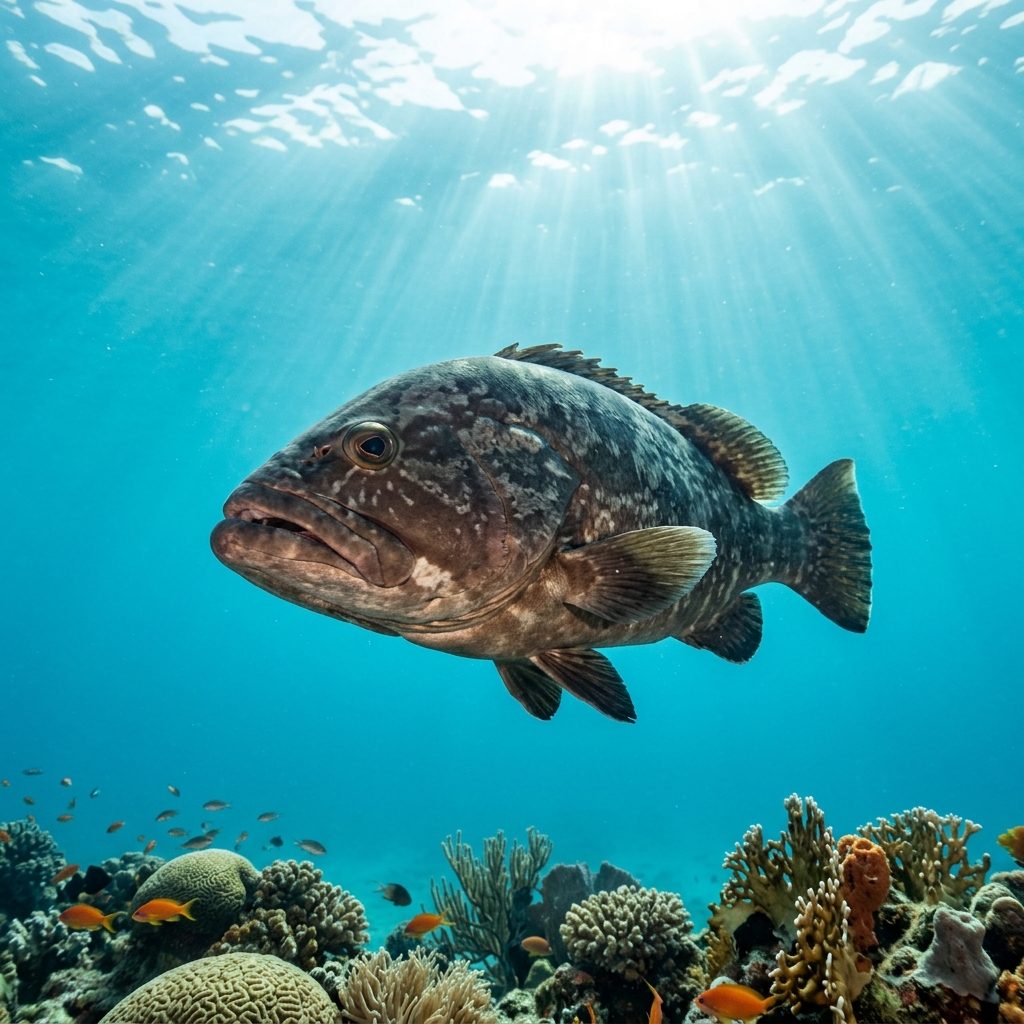
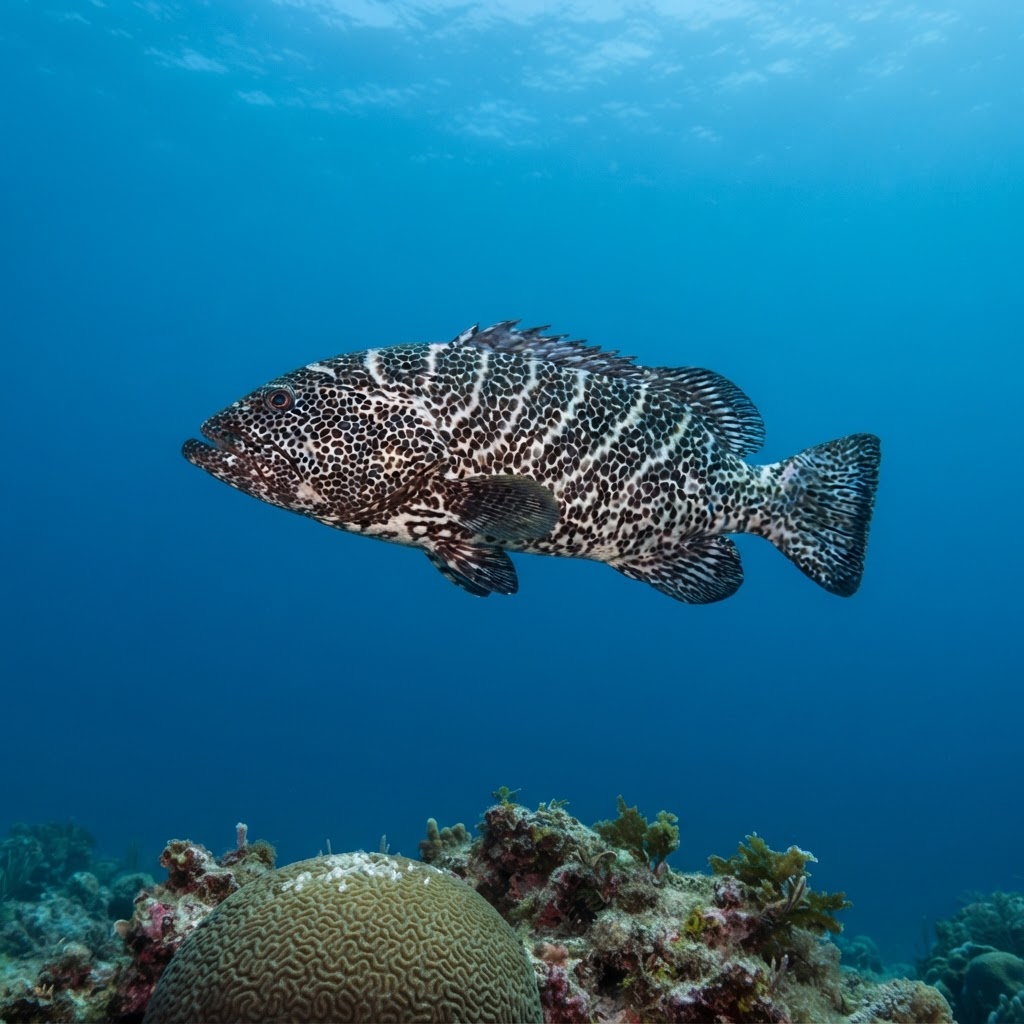
Reef neighbours a diver could mistake it for. Use the identification notes above to tell them apart.
Most reliably logged in the Bay Islands of Honduras and around Grand Cayman and Little Cayman in the Cayman Islands, with a solid presence in New Providence, Bahamas. Smaller but consistent sightings come from Lighthouse Reef in Belize and both Klein Bonaire and East Coast Bonaire in the Caribbean Netherlands.
Mapping where Tiger Grouper is logged…
The Bay Islands of Honduras and Grand Cayman and Little Cayman in the Cayman Islands are the most consistent locations, with regular sightings also in New Providence, Bahamas, Lighthouse Reef in Belize and around Bonaire.
There's no strong seasonal pattern in the data, so they're seen on Caribbean reefs throughout the year in water between roughly 25 and 28C.
Look for a grey-brown, torpedo-shaped fish around 70 cm with dark diagonal bars across the body and two small dark spots near the base of the tail. They're usually seen resting near reef structure rather than swimming in the open.
They typically reach around 70 cm in length, making them a mid-sized grouper you'll usually spot resting on ledges or coral heads between 10 and 40 metres.
No, they're not considered dangerous. They tend to hold their position or retreat into cover when divers approach rather than showing any aggression.
Site and sighting data is aggregated from diver logs, iNaturalist and GBIF. For taxonomy and conservation status:
Blacktip Grouper
2,726 sites