Malacoctenus tetranemus
A pint-sized blenny turning up on rocky reefs along Mexico's Pacific Coast in warm 22-29 C water, year-round and easy to miss.
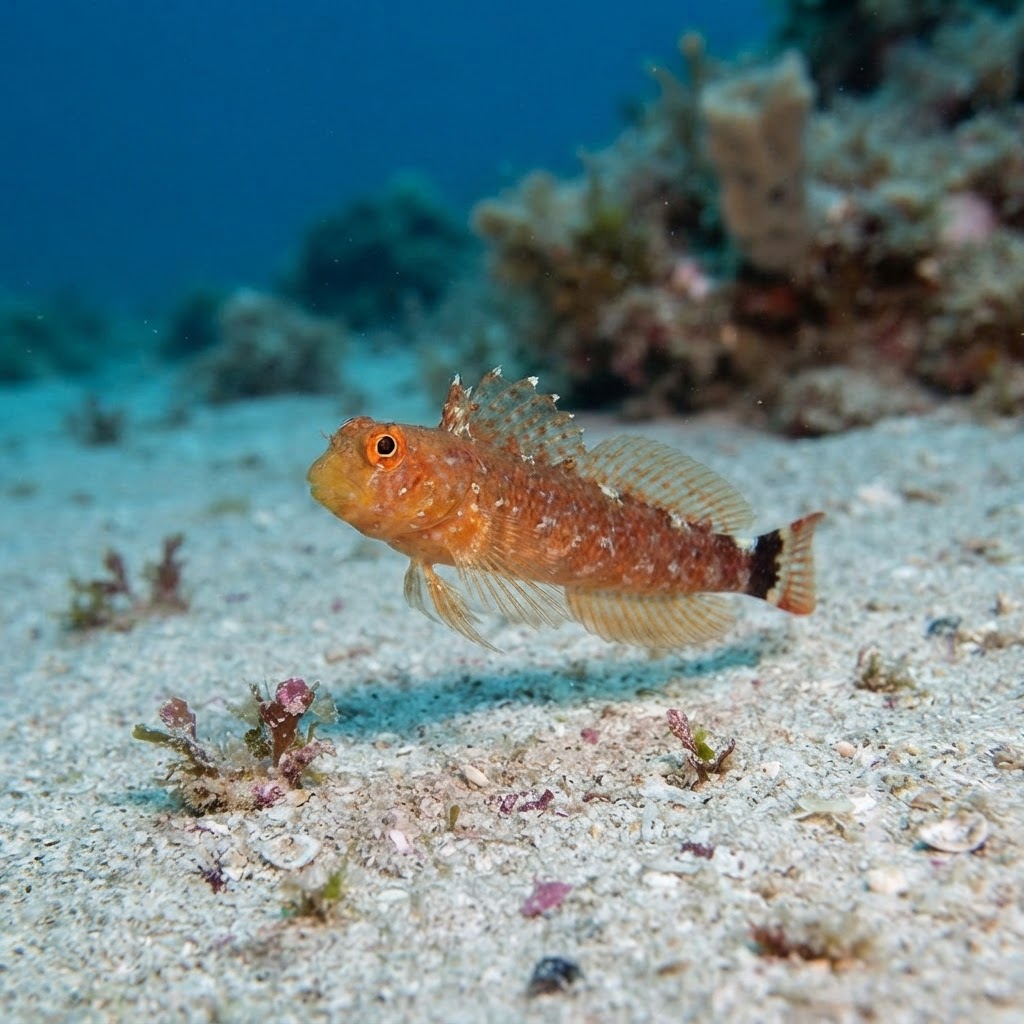
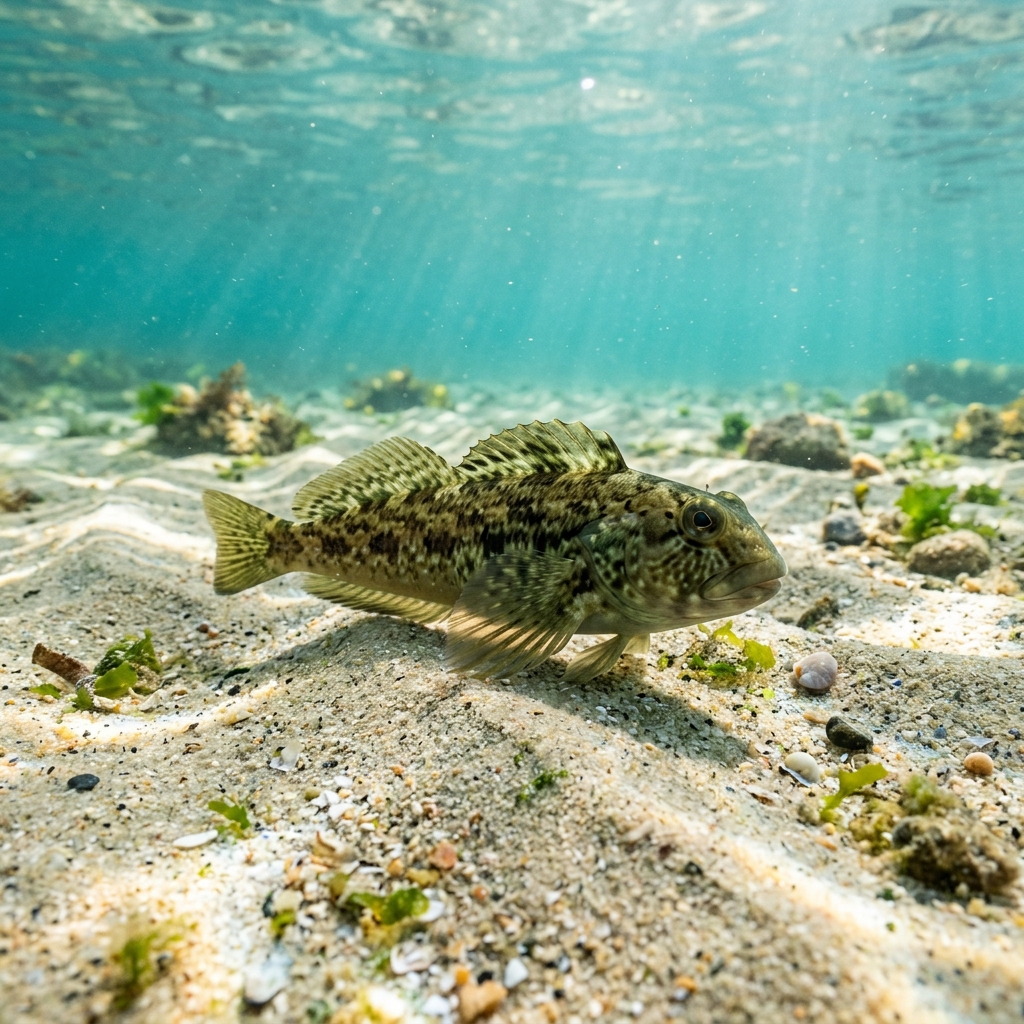
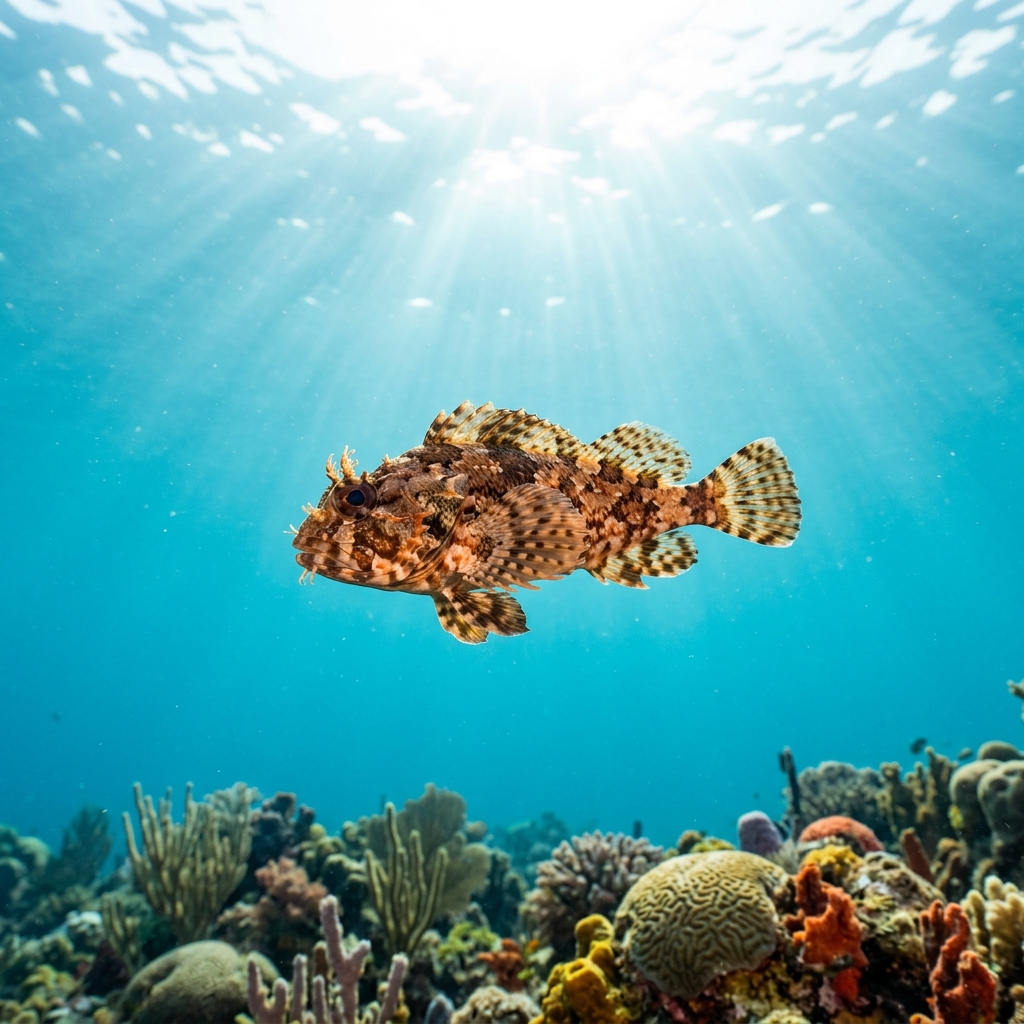
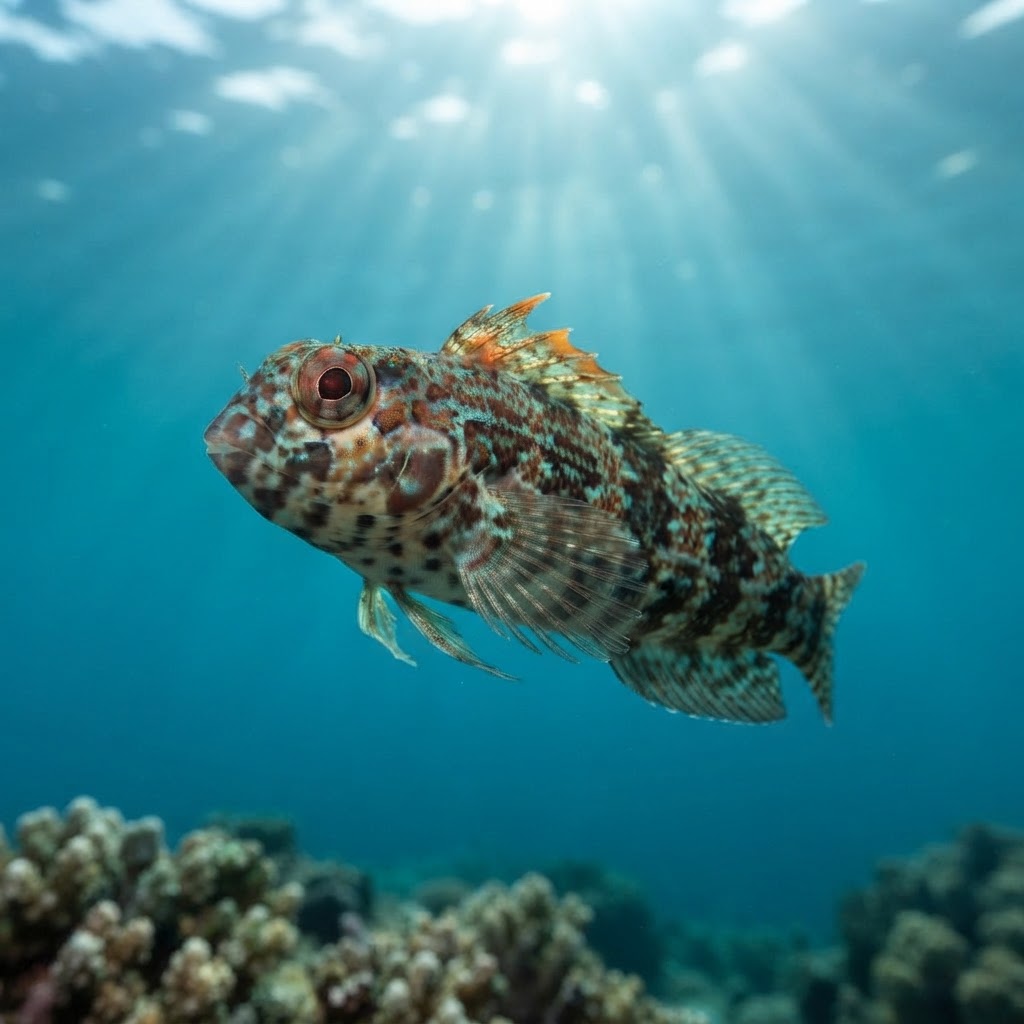
A tiny blenny, just 6 cm fully grown, with a mottled brown-and-cream body that blends straight into rock and rubble. Look for the small dark throat spot that gives it its name, plus perched pectoral fins propping it up on a ledge rather than swimming freely. It rests motionless on rock and coral rubble, so spotting one comes down to scanning close-up rather than looking for movement.
Typically seen perched still on rock or rubble rather than swimming in open water, using its pectoral fins to prop itself at an angle while it watches the reef. It tends to hold its position when divers approach rather than dart for cover, making it a patient subject for a macro lens if you spot it first. Most sightings come from close-focus scanning of rocky substrate rather than mid-water encounters.
Like other Malacoctenus blennies, it relies on camouflage rather than flight, staying put against mottled rock instead of bolting when a diver gets close.
No clear seasonal pattern shows up in the data, and its comfort range of 22.3 to 29.1 C spans warm water year-round across its Pacific Mexico and Galápagos range, so any month is fair game.
Reef neighbours a diver could mistake it for. Use the identification notes above to tell them apart.
Most reliably logged along Mexico's Pacific Coast, with additional sightings in Baja California, Mexico, and a smaller presence in the Galápagos Islands, Ecuador. It shows up as an uncommon find at most of these sites, so it rewards divers who slow down and check rocky ledges rather than cruise past them.
Mapping where Throatspotted Blenny is logged…
It's most commonly logged along Mexico's Pacific Coast and Baja California, with a smaller presence around the Galápagos Islands in Ecuador. Look on rocky reef substrate rather than open sand or coral.
There's no strong season in the sighting data, and its warm-water comfort range of roughly 22 to 29 C holds year-round across its Pacific Mexico range, so it's a fair bet on any dive trip there.
Look for a tiny, mottled brown blenny around 6 cm long perched motionless on rock or rubble, propped up on its pectoral fins with a small dark spot near the throat.
They stay small, topping out around 6 cm, which is typical for the Malacoctenus blenny group.
No. They're harmless, tiny reef fish with no venom or aggressive behaviour towards divers.
Site and sighting data is aggregated from diver logs, iNaturalist and GBIF. For taxonomy and conservation status:
Rusty Blenny
2,605 sites