Scartella cristata
Tiny, tufted and easy to miss: find Molly Miller blennies on shallow reefs in Florida, Malta and Tenerife, water 19-29C, year-round.
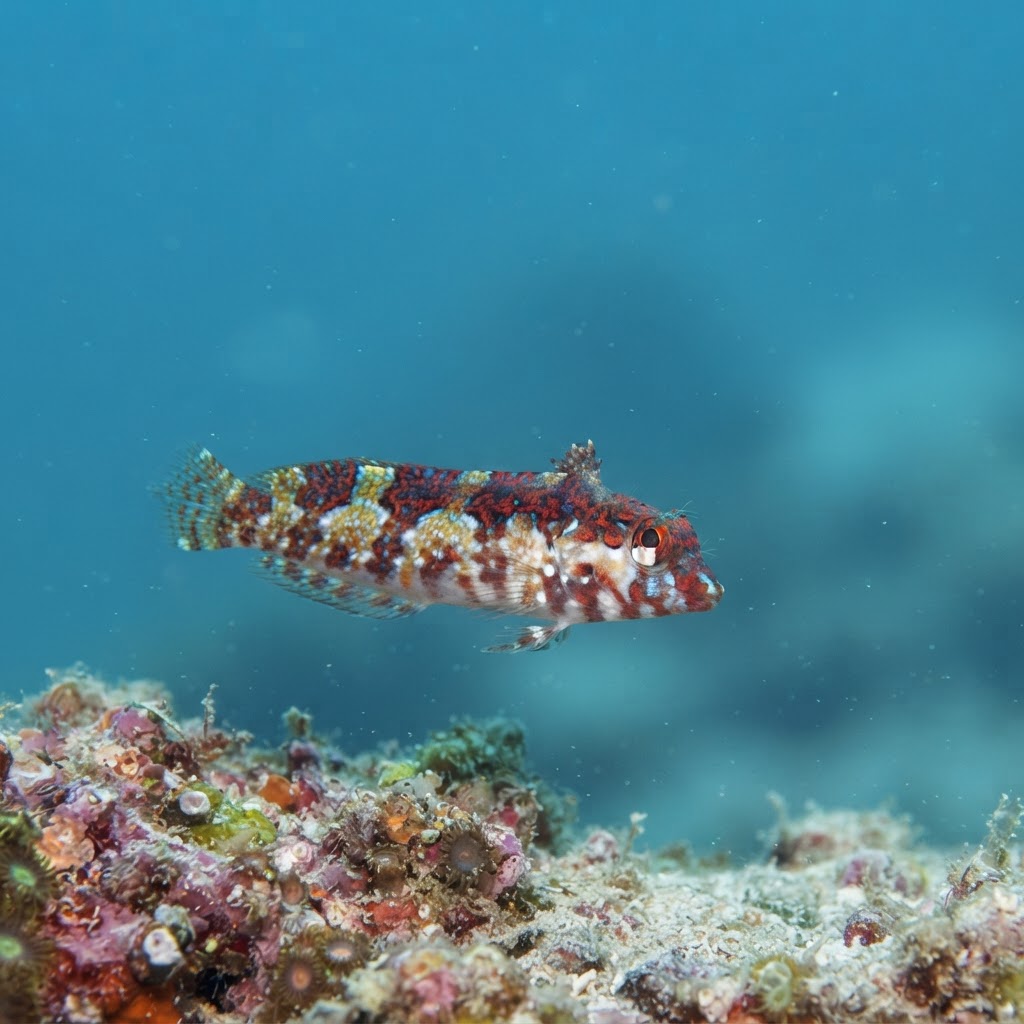
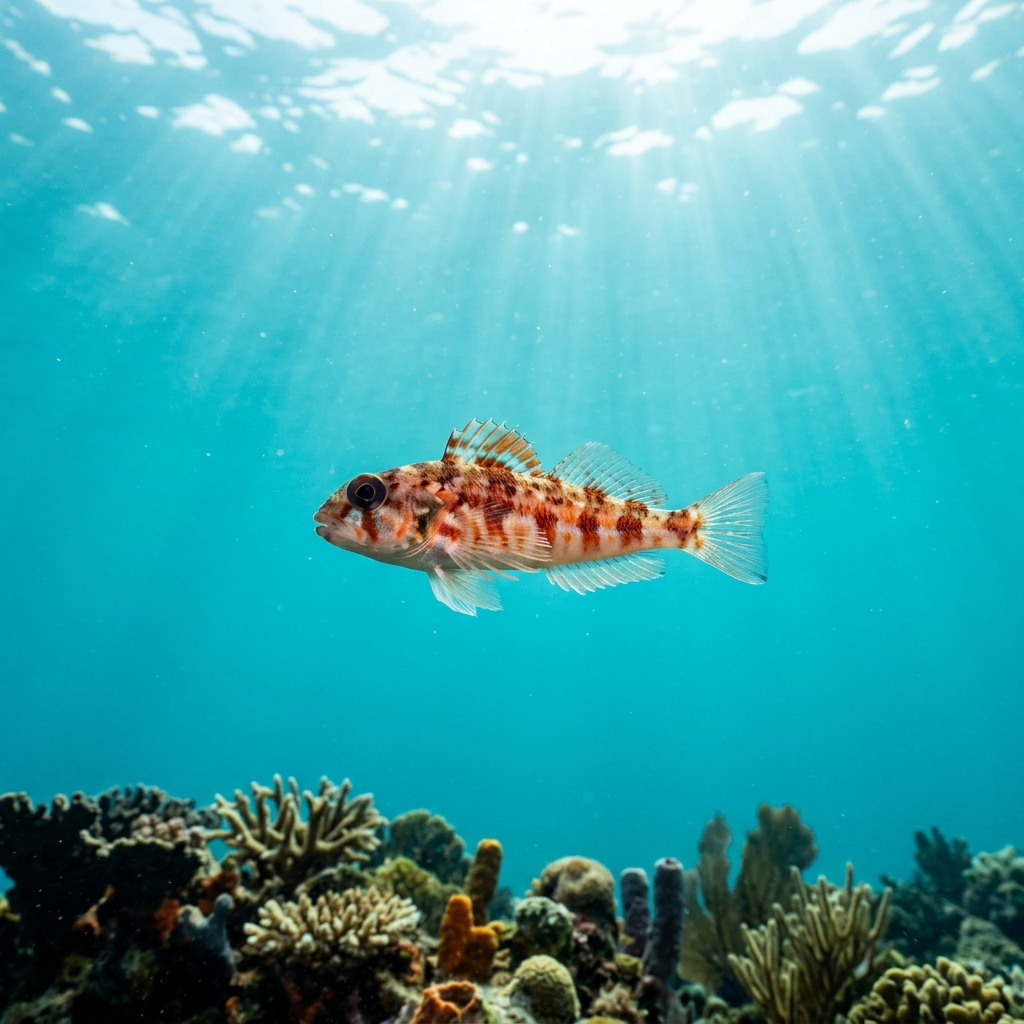
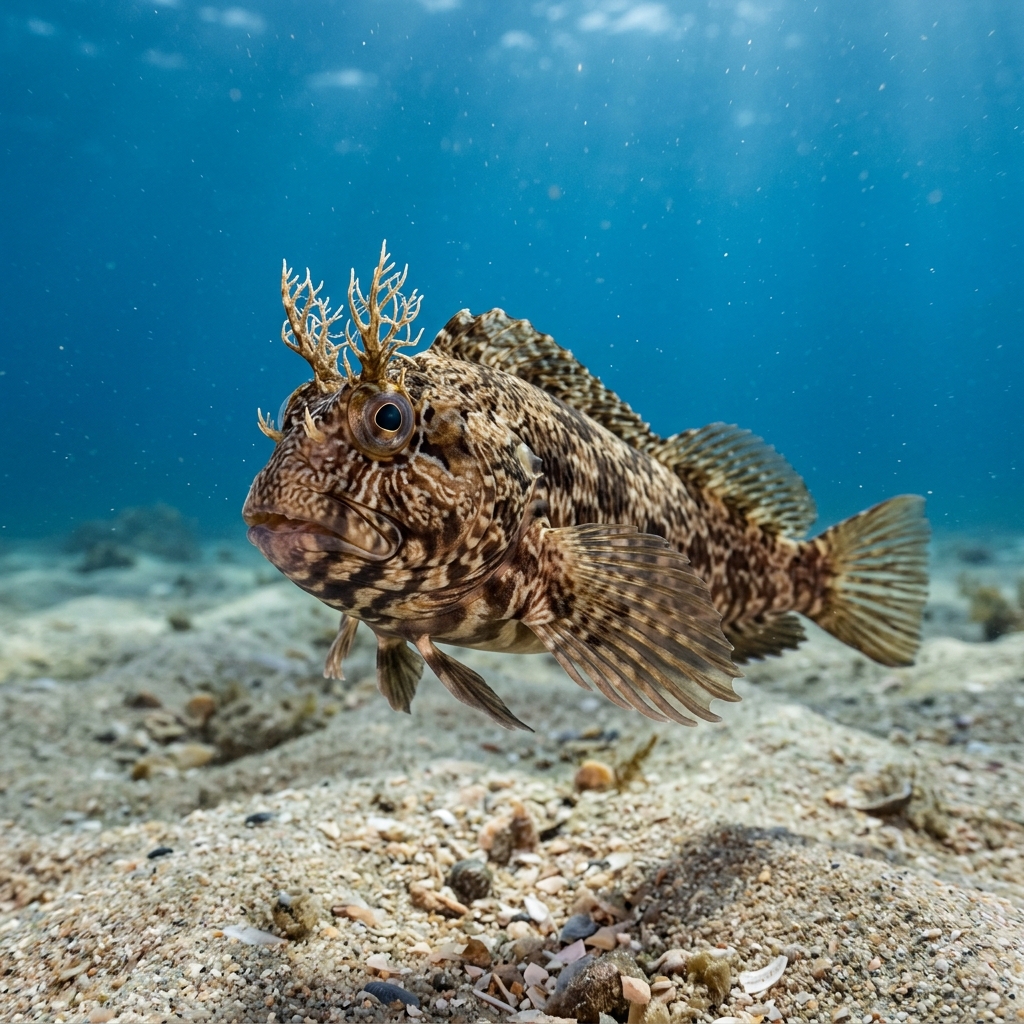
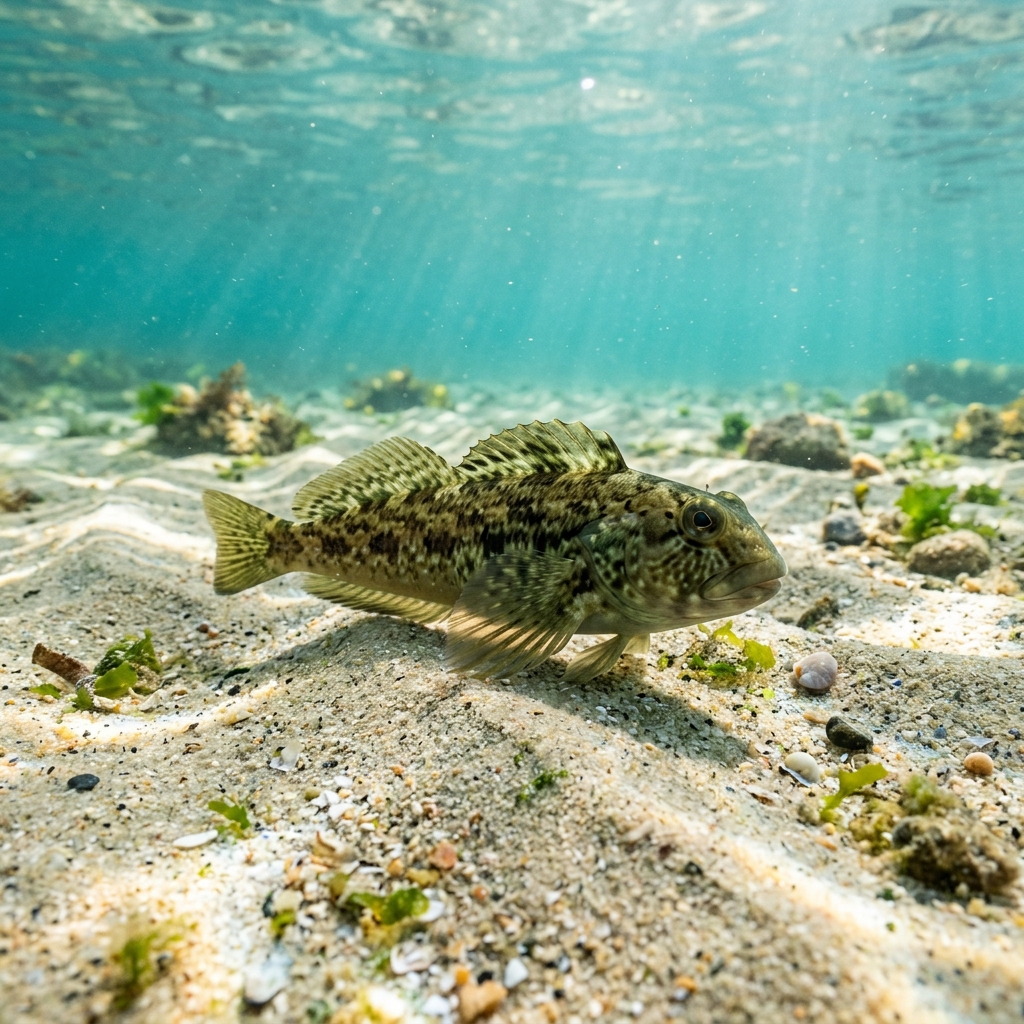
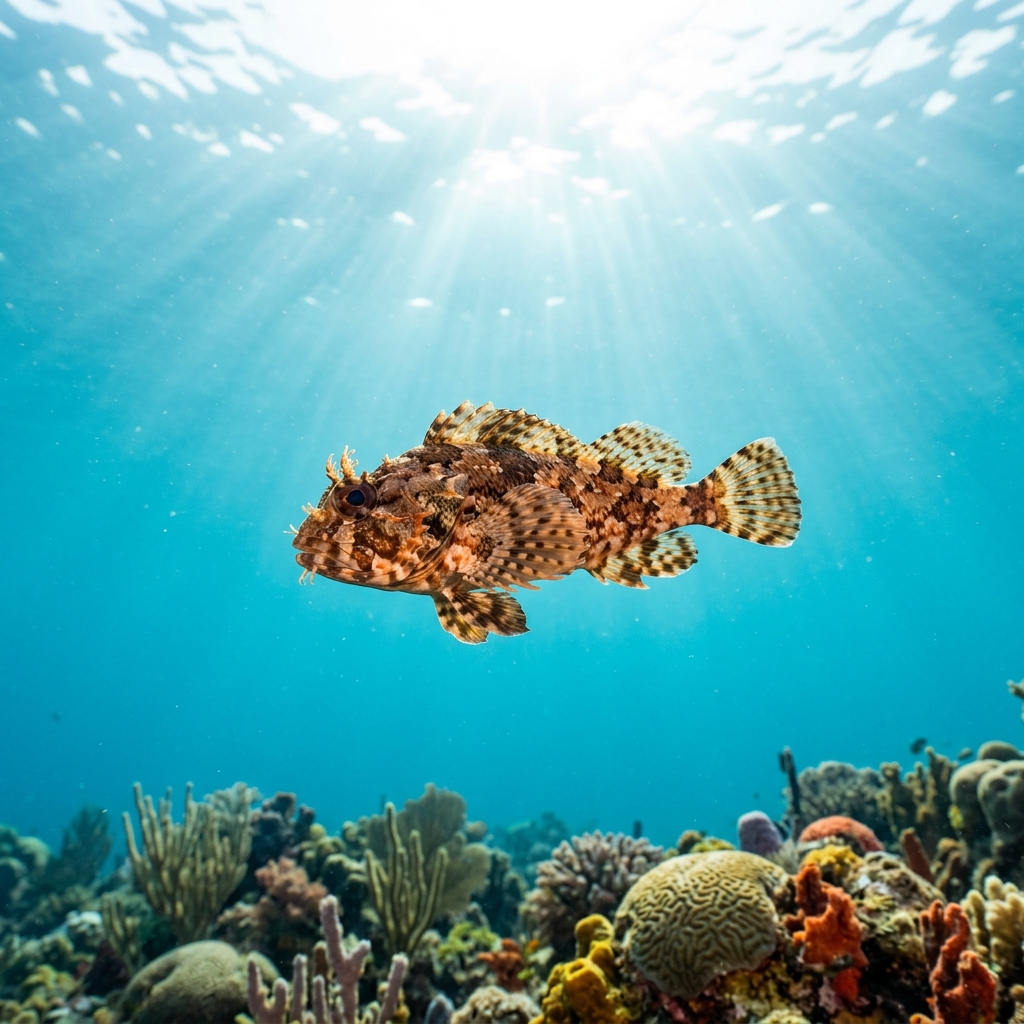
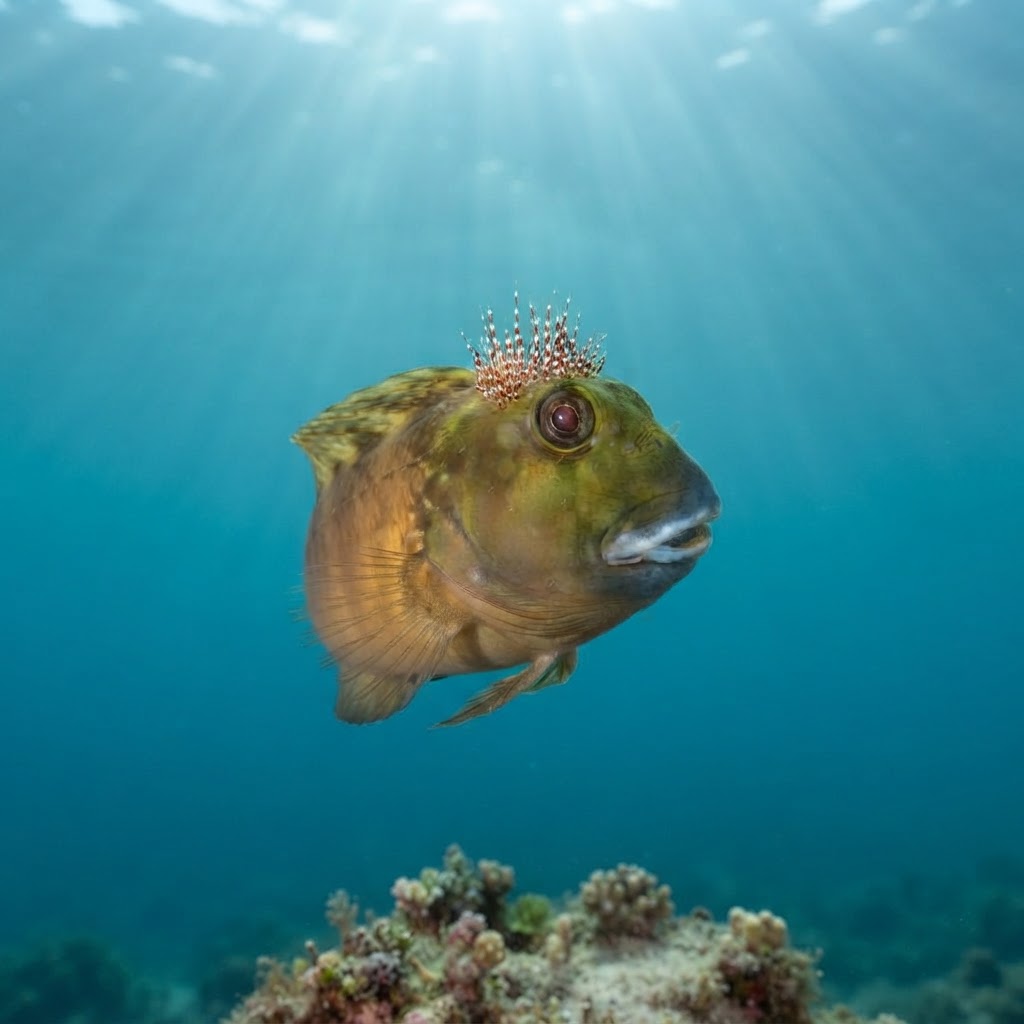
Small and stocky at around 8cm, with a mottled brown-to-olive body that blends into algae-covered rock. The giveaway is the pair of branched, feathery tufts (cirri) sitting above each eye like tiny antennae. It rests propped on its pectoral fins on ledges and rubble rather than swimming in open water, and the tail is short and rounded.
Look for it wedged into cracks, encrusted rubble and shallow rocky ledges in the top 10 metres, often near the surge zone where light and algae growth are strongest. It tends to sit still and watch rather than bolt, relying on its camouflage, then dart a short distance into the nearest crevice if you get too close. Divers usually spot it during a slow look at the substrate rather than mid-water, since it rarely strays far from its perch.
Those branched head tufts aren't just decoration: they help break up its outline against algae-covered rock, and combined with its habit of grazing algae off dead coral and rubble, it plays a small but steady role in keeping reef surfaces clean.
No clear season shows up in the sightings, and its comfort range of roughly 19 to 29C covers most of the year across its Mediterranean and Florida strongholds, so it's a fair bet on any dive at the right depth.
Reef neighbours a diver could mistake it for. Use the identification notes above to tell them apart.
Most commonly logged in Florida in the United States, with strong numbers also coming out of Malta, Tenerife and Lanzarote in the Canary Islands. It also turns up reliably in Murcia in Spain, along Turkey's Turquoise Coast, around Sicily, and on the French Riviera, so it's a fixture of Mediterranean and warm Atlantic dive sites rather than a rare find.
Mapping where Molly Miller is logged…
It's most frequently logged in Florida, and also shows up reliably in Malta, Tenerife, Lanzarote, Murcia in Spain, and along Turkey's Turquoise Coast. Shallow rocky and reef-associated sites in the Mediterranean and eastern Atlantic are your best bet.
There's no strong seasonal pattern in the sightings, and it tolerates water from about 19 to 29C, so it's around year-round at most of its regular sites rather than tied to a particular month.
Check for a small, mottled brown fish around 8cm long resting on rock or rubble in shallow water, with branched tufts above each eye. It perches on its pectoral fins rather than swimming freely, which helps separate it from more active reef fish nearby.
They're small, typically reaching around 8cm in length, which is one reason they're easy to swim past despite being fairly widespread.
No. They're harmless to divers, tend to hold still or retreat into crevices when approached, and pose no threat beyond a curious close-up look.
Site and sighting data is aggregated from diver logs, iNaturalist and GBIF. For taxonomy and conservation status:
Rusty Blenny
2,605 sites