Isurus oxyrinchus
One of the fastest sharks in the ocean, makos are a rare open-water encounter most commonly logged off Florida and the US East Coast. Here's what divers need to know.
Safety warning
Makos are classified as dangerous to divers and should be treated with serious respect. Their speed means any aggressive response is almost impossible to predict or avoid. Maintain a calm, upright posture, avoid erratic movements, never position yourself between the shark and open water, and exit the water smoothly if it makes repeated close passes or its behaviour escalates. These are not animals to approach, touch, or attempt to feed.
If you're bitten
BiteGeneral first-aid guidance, not a substitute for professional medical care. In an emergency, call your local emergency number.
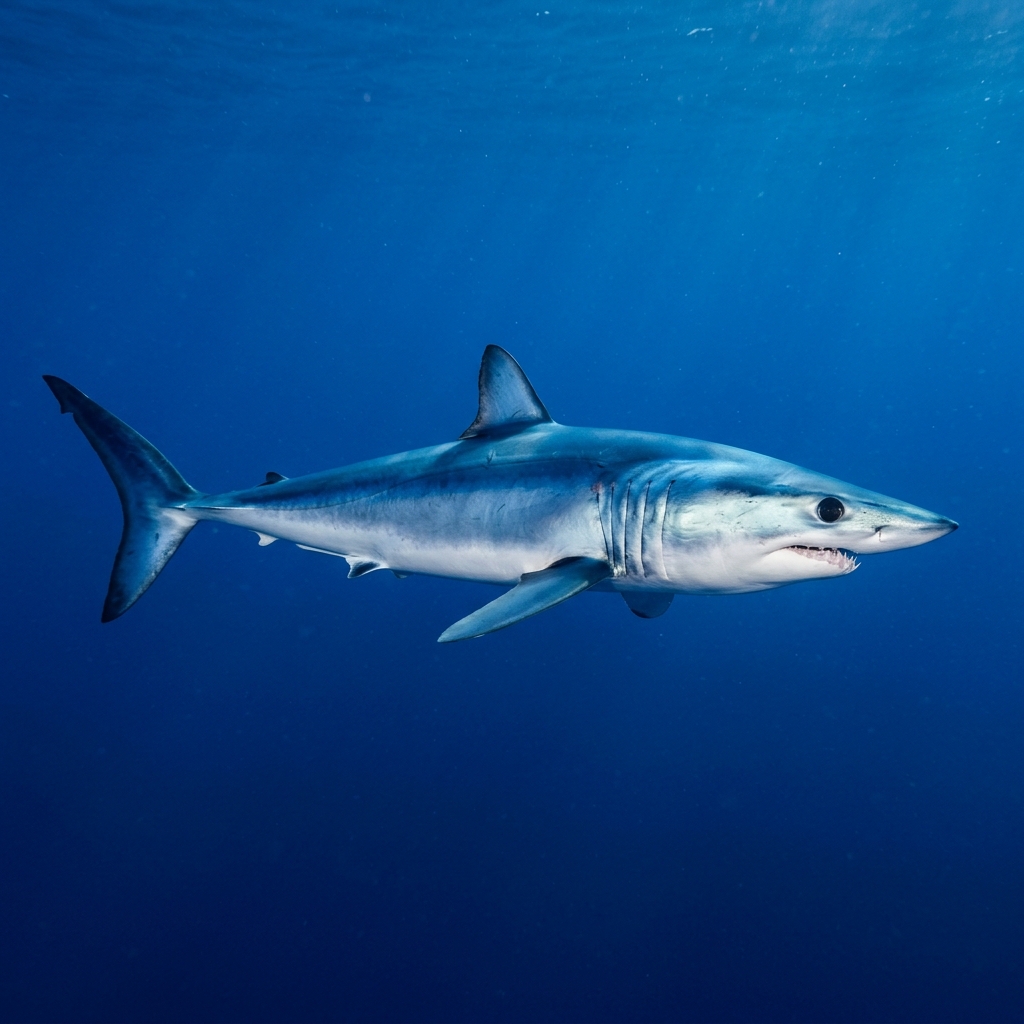
Few sharks are as immediately distinctive underwater: a torpedo-shaped body, deep cobalt-blue back, brilliant white underside, and a pointed conical snout set it apart from any reef shark. The crescent-shaped tail (lunate caudal fin) is a key field mark, as are the large black eyes and long curved teeth visible even with the mouth closed. At typical encounter distances it reads as a very large, slender, fast-moving shark with almost no body undulation. Large individuals are almost certainly female, males being noticeably shorter and slimmer.
Bold and perpetually in motion, makos rarely slow down long enough for a prolonged look. When one does appear, expect close, fast passes as it sizes you up, its speed allowing it to cover the distance between you and the open blue in seconds. Encounters are typically brief because these wide-ranging sharks are constantly moving, but the inquisitive passes can feel very direct before the shark simply accelerates away and vanishes.
Makos are endothermic (warm-blooded) sharks, able to raise their body temperature above that of the surrounding water, which is a key reason they can sustain such exceptional burst speeds and range so widely across cool temperate oceans.
There is not enough sighting data to identify a reliable season, so encounters should be treated as possible year-round. The species tolerates a broad temperature range of roughly 10 to 24 °C, which spans temperate to warm-temperate waters across its recorded range.
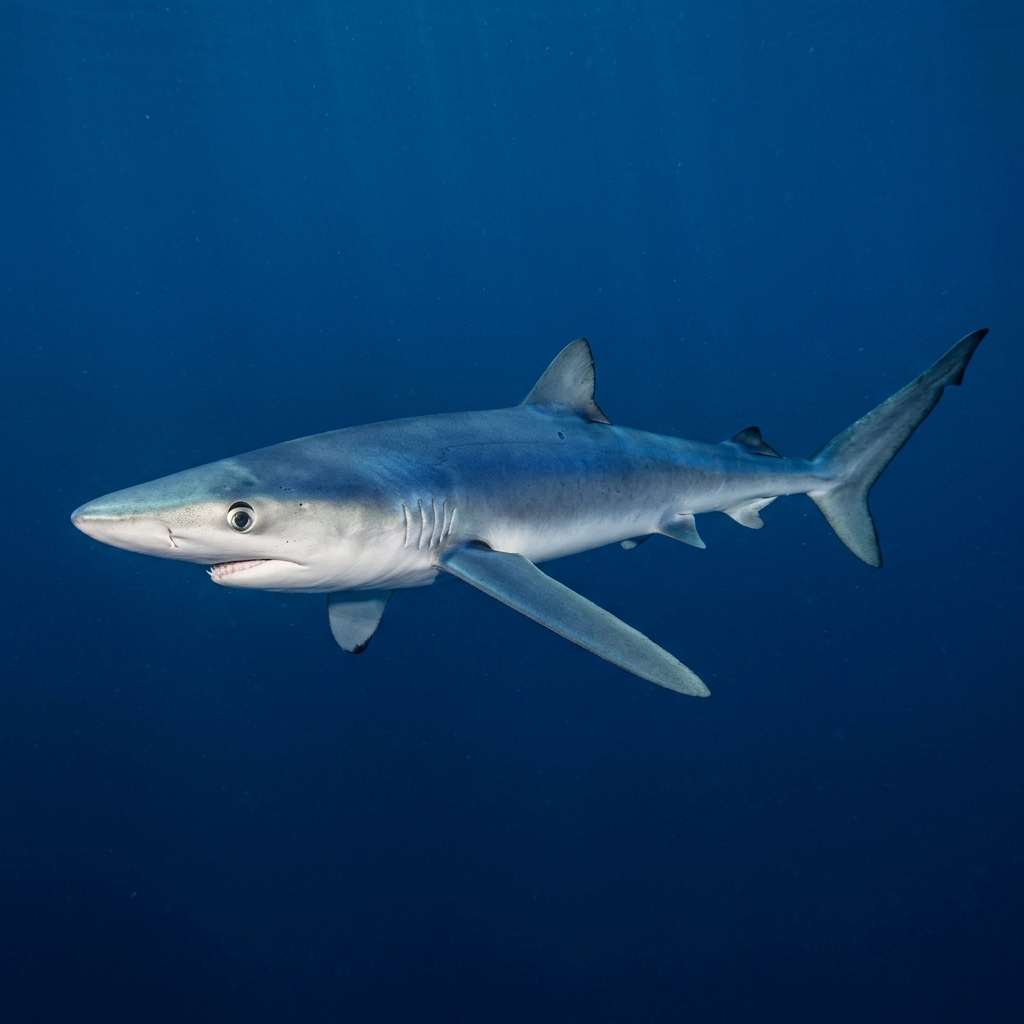
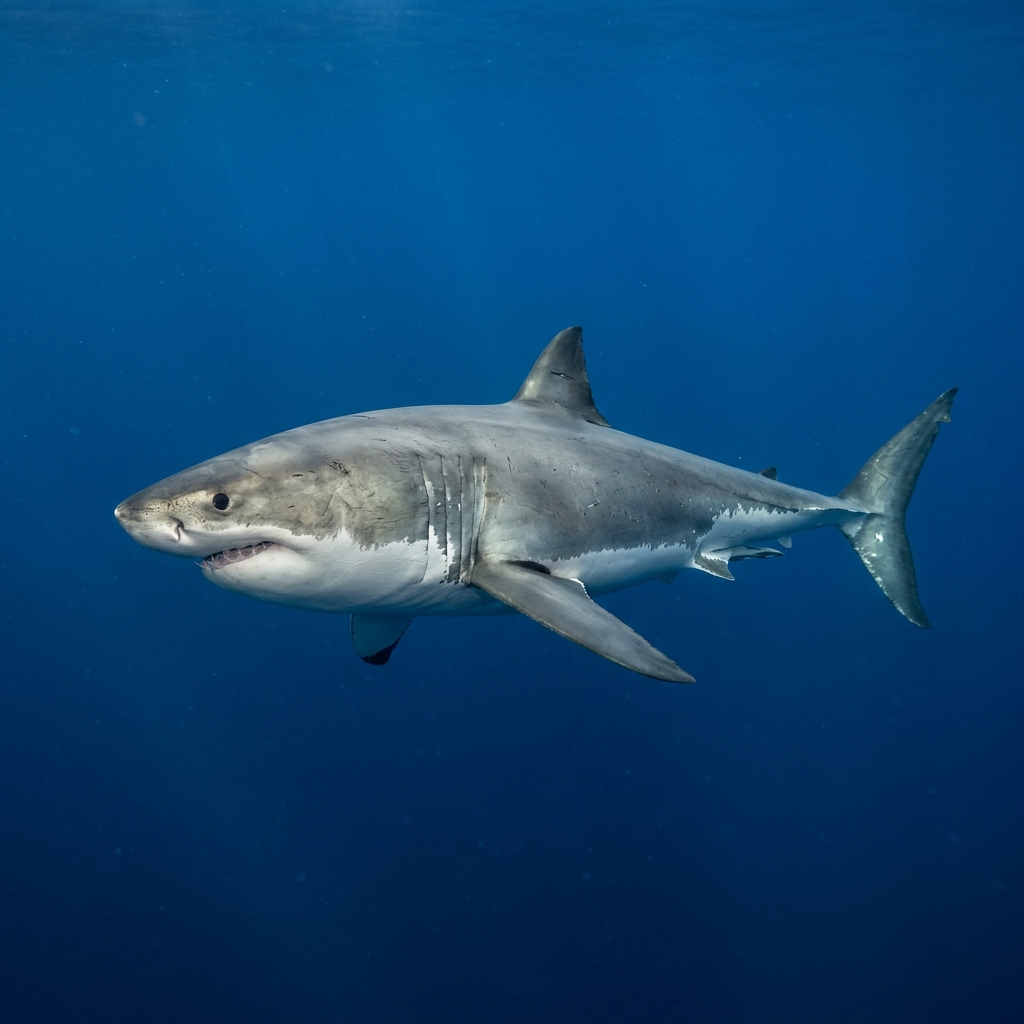
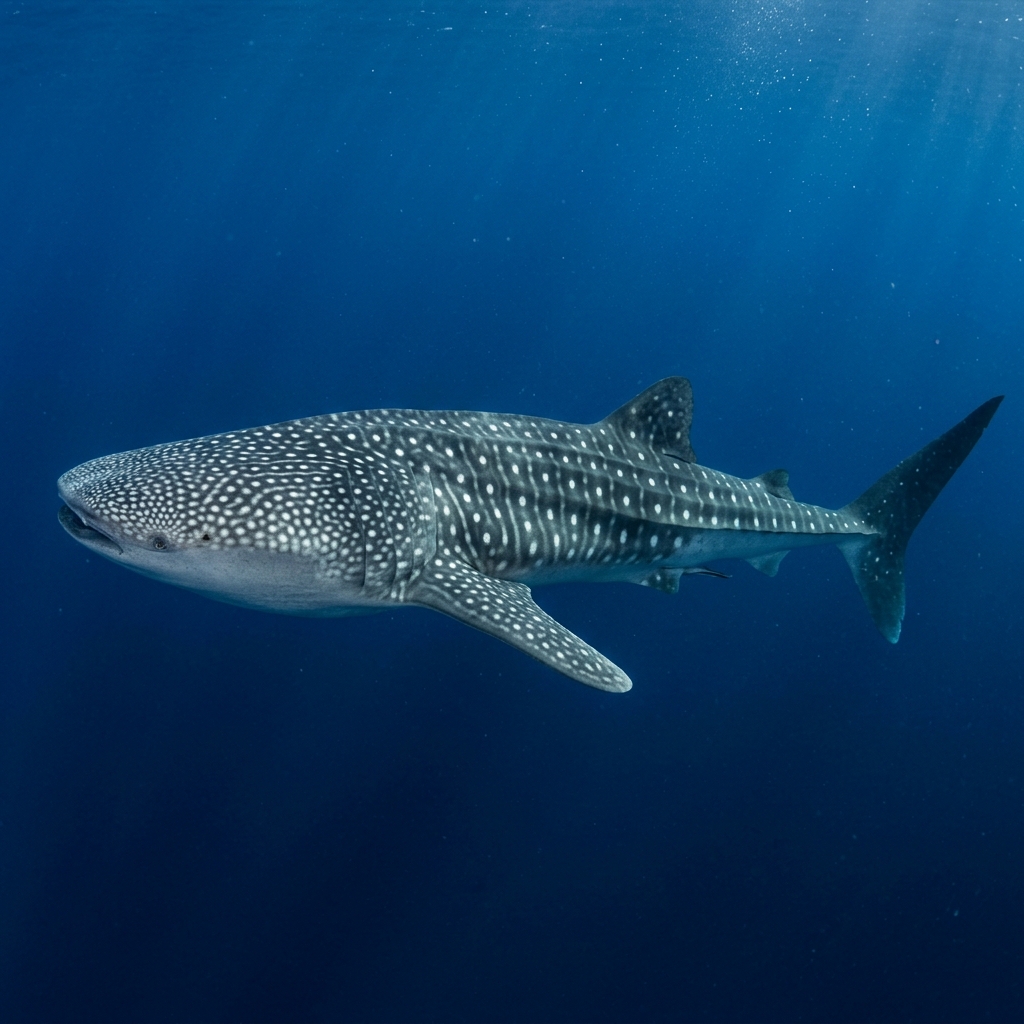
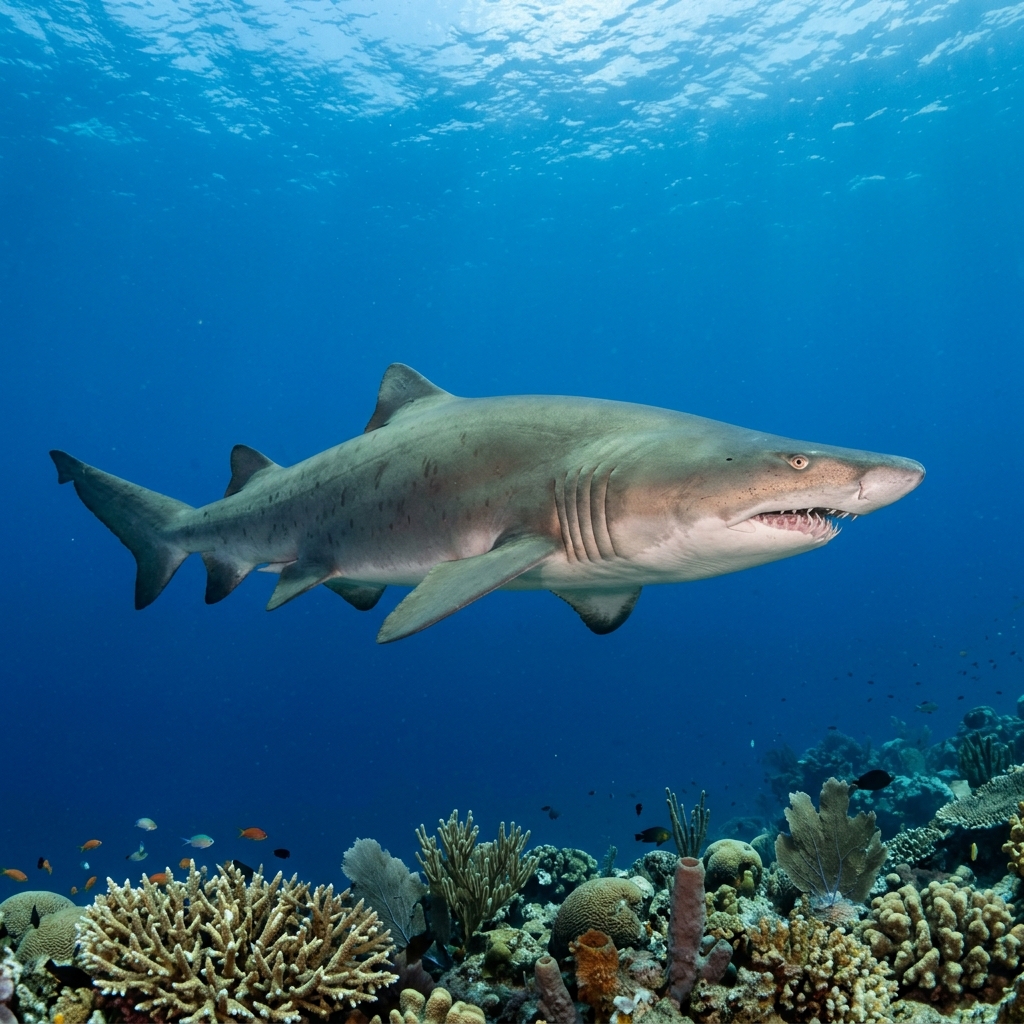
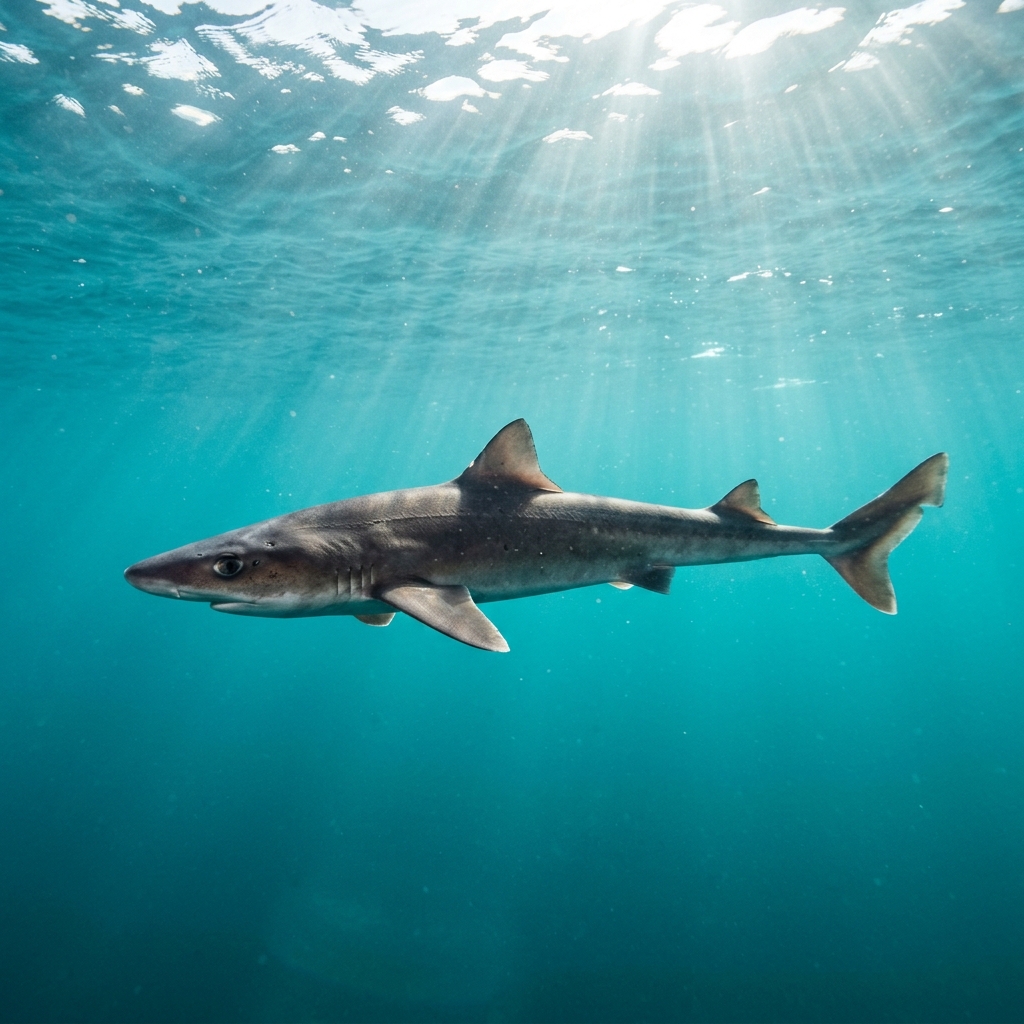
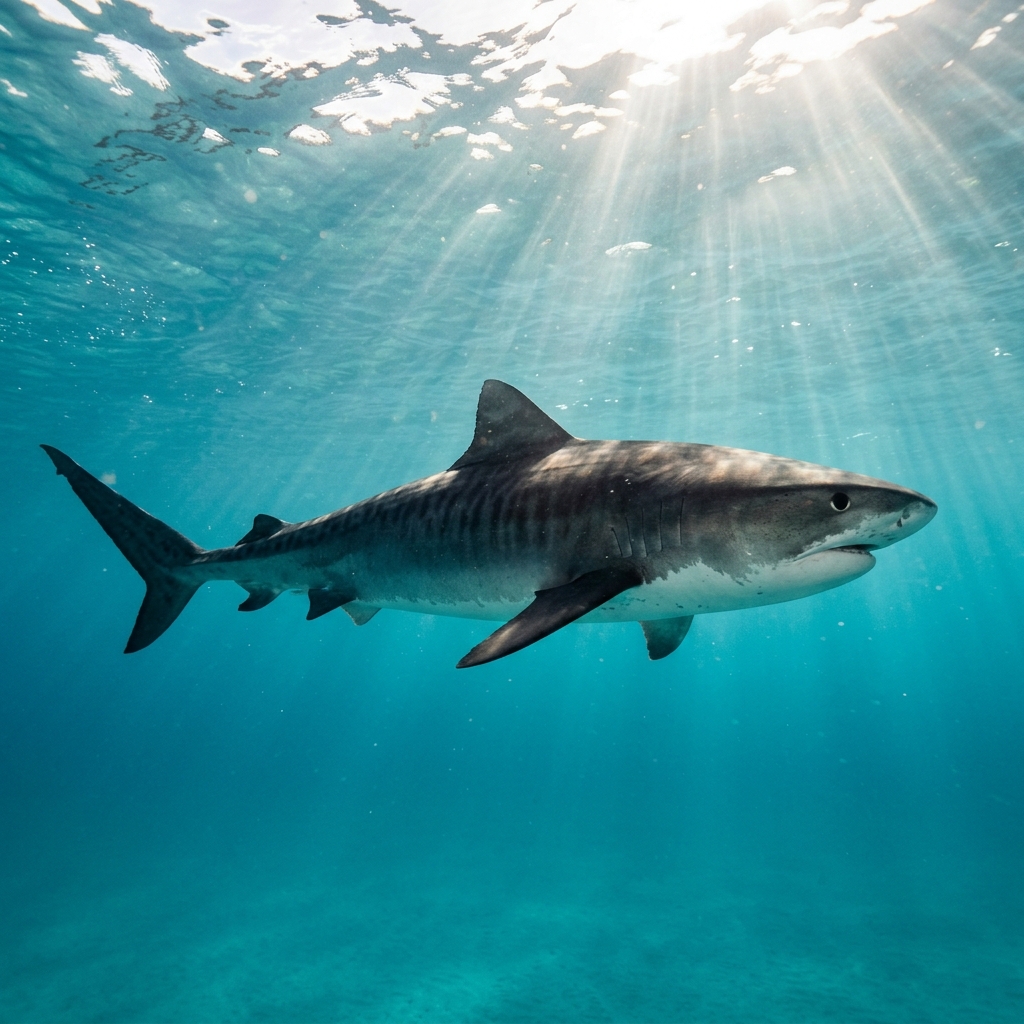
Reef neighbours a diver could mistake it for. Use the identification notes above to tell them apart.
Sightings are most commonly logged in the United States, with Florida and the Southeast accounting for the strongest concentration of records. European waters also feature in the range, particularly around the Mediterranean coastlines of Greece, Italy, Croatia, and Turkey, though confirmed diver encounters remain very rare everywhere. As a wide-ranging pelagic species, any mako encounter tends to happen in open ocean rather than at a fixed dive site.
Mapping where Mako Shark is logged…
Makos are pelagic, so encounters happen in open ocean rather than at predictable reef sites. The most sightings are logged in US waters, particularly off Florida and the Southeast. The Mediterranean, including Greece, Italy, and Croatia, falls within the range, but confirmed diver encounters are extremely rare everywhere.
There is no defined season backed by enough sighting data to give reliable months. Makos tolerate water temperatures from around 10 to 24 °C, so they move through temperate and warm-temperate zones year-round. Treat any encounter as opportunistic rather than seasonal.
Yes. Makos are bold, fast, and unpredictable. They have been involved in attacks on humans and boats. In the water, stay calm, avoid sudden movement, keep the shark in sight, and exit smoothly if it shows repeated interest. Do not attempt to touch or feed one.
Both are slender, open-ocean sharks with blue colouring, but a mako is much more powerfully built with a shorter snout and a crescent-shaped tail. Blue sharks have extremely long pectoral fins and a longer, narrower snout. The mako's body is deeper through the middle and it moves with noticeably more speed and purpose.
Shortfin makos typically reach around 310 cm in length, with the largest confirmed individuals exceeding 400 cm. Large specimens are almost always female, as females grow significantly bigger than males. They are among the heaviest of the open-ocean sharks.
Yes, the shortfin mako is listed as Endangered on the IUCN Red List. Populations have declined sharply due to bycatch in commercial longline fisheries and slow reproduction. They are now a protected species in several jurisdictions, and international fishing quotas have been introduced in the Atlantic.
The Mako Shark is listed as endangered by the IUCN. Observe from a distance, avoid touching or feeding it, and report sightings to local marine research organisations.
Mako sharks are listed as Endangered on the IUCN Red List, driven primarily by overfishing and bycatch in commercial longline fisheries. If you encounter one, report the sighting with as much detail as possible to citizen-science platforms; data from diver observations contributes directly to understanding where populations remain.
Site and sighting data is aggregated from diver logs, iNaturalist and GBIF. For taxonomy and conservation status:
Tiger Shark
1,616 sites