Stegastes planifrons
Dark, territorial and everywhere on Caribbean reefs, watch for the pale flank spots in Bonaire, the Bay Islands and Grand Cayman.
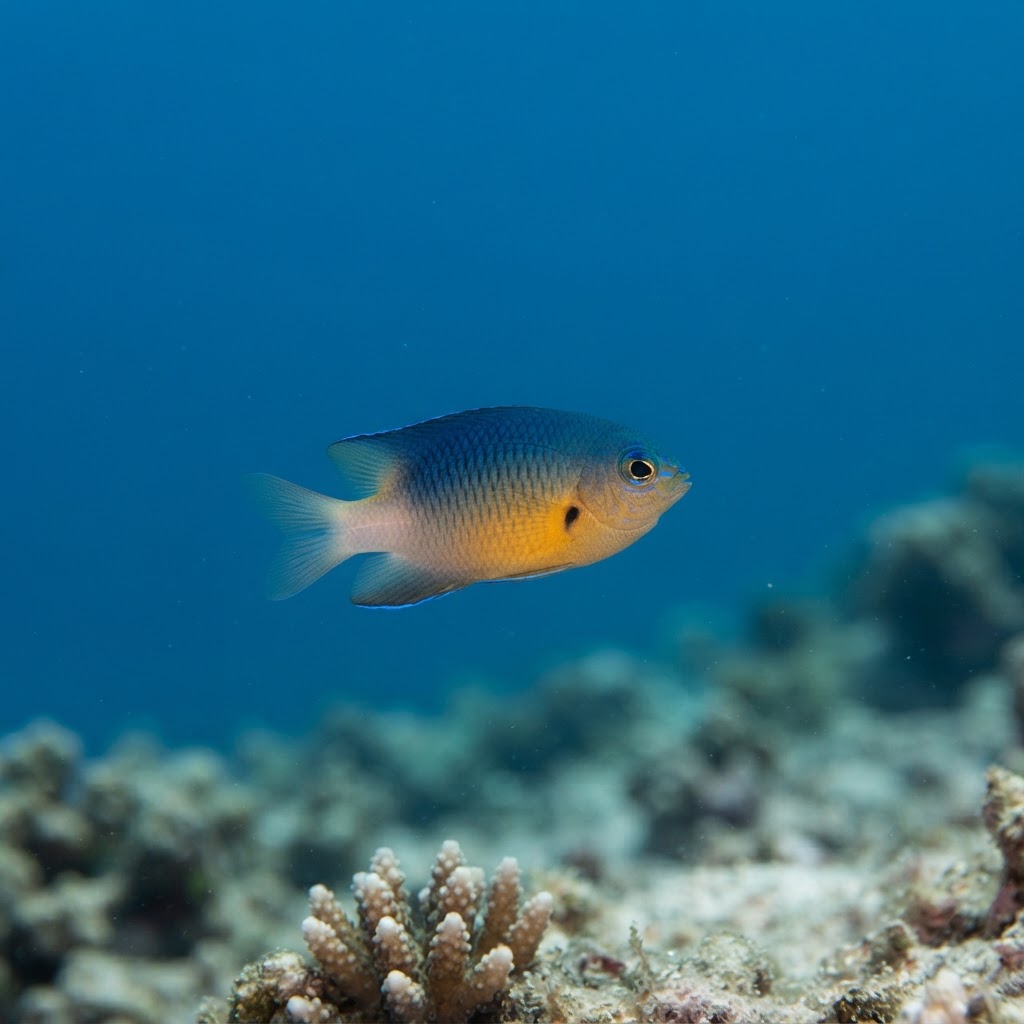
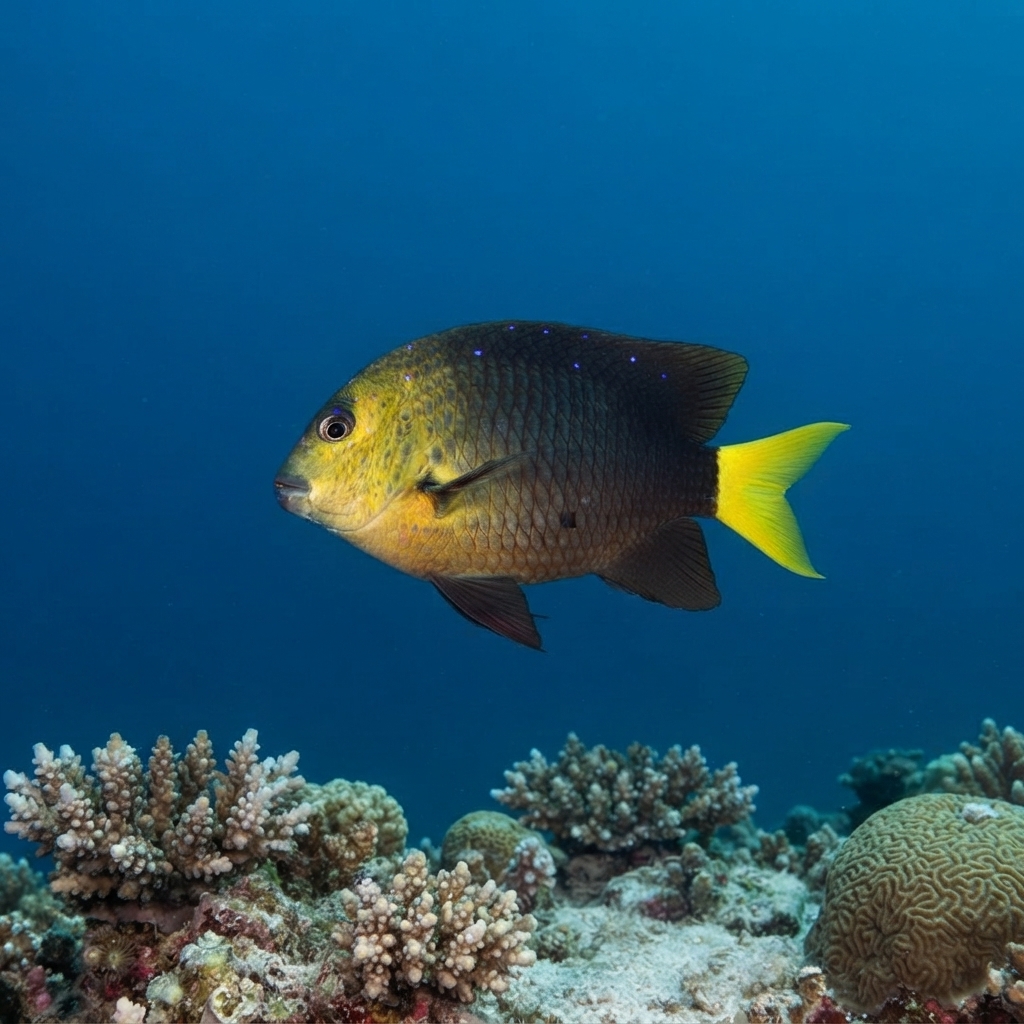
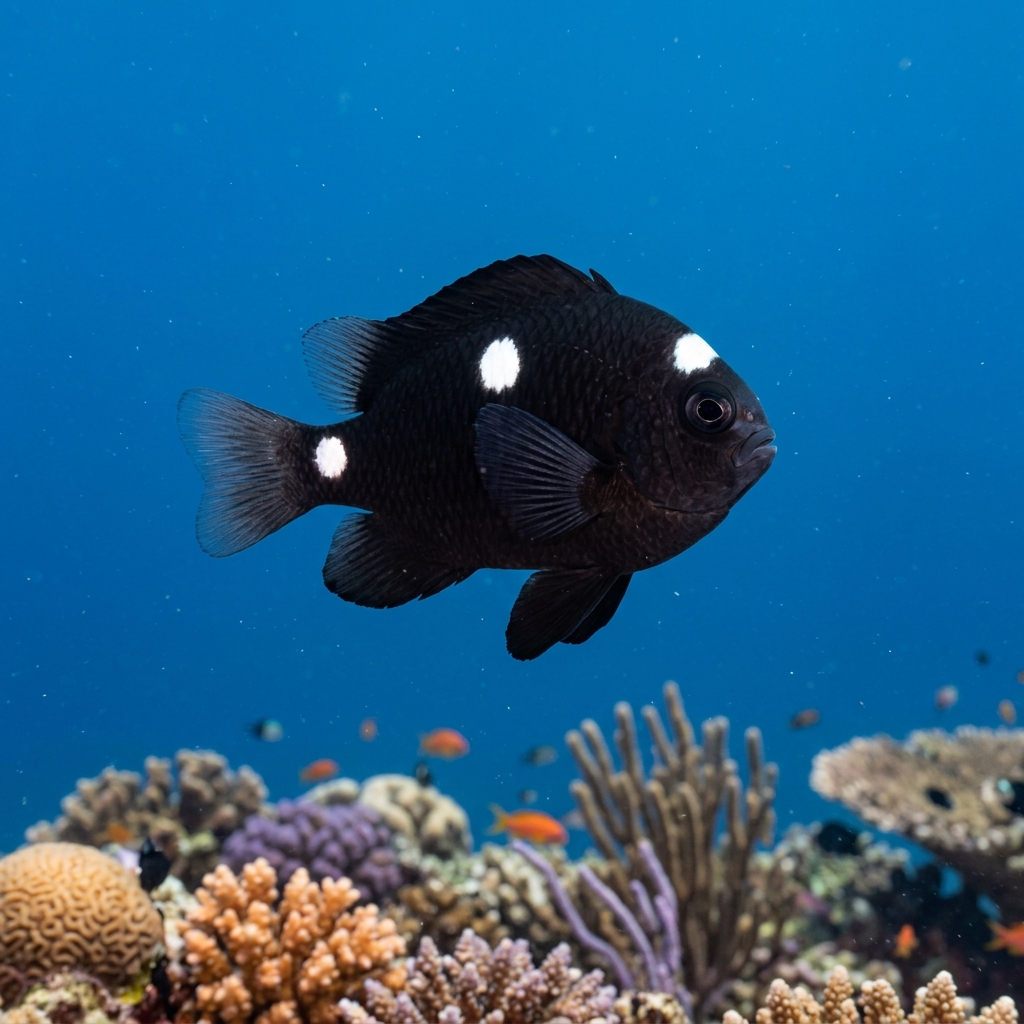
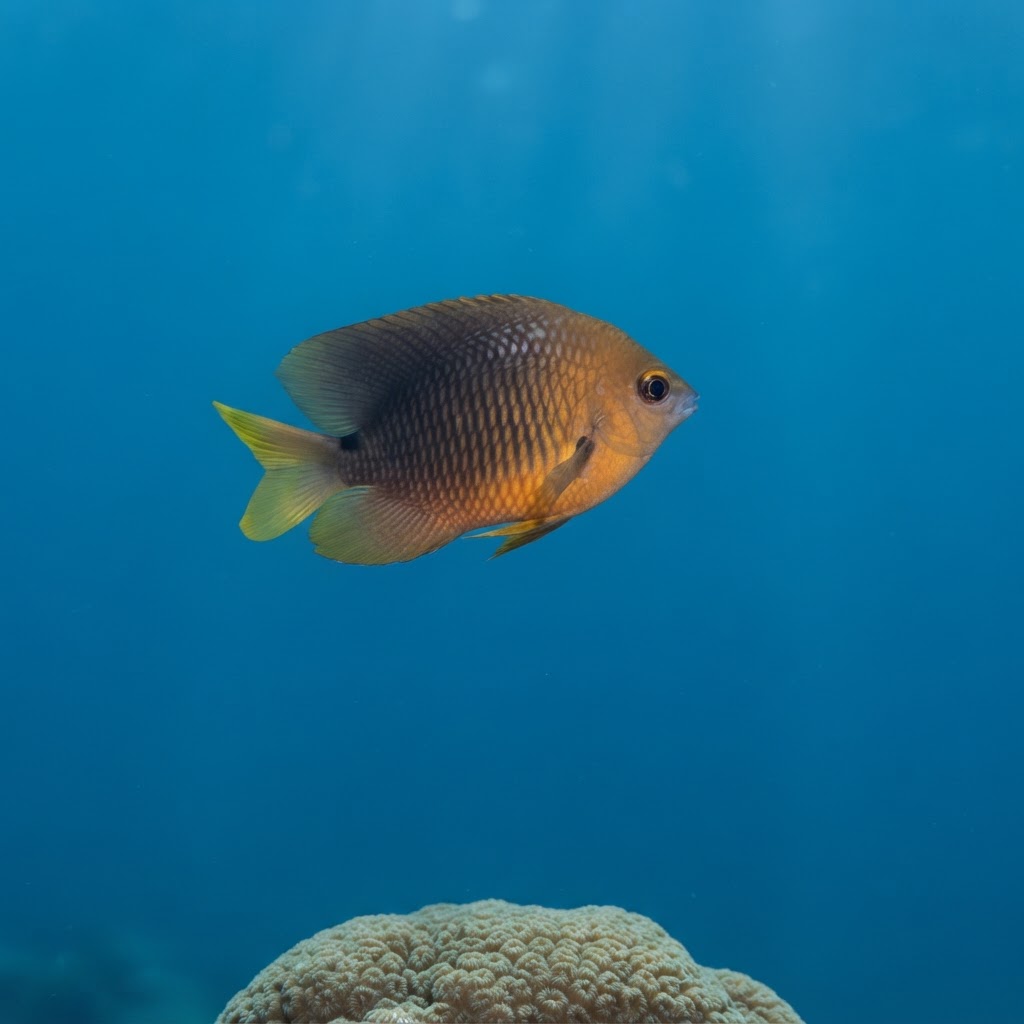
A small, deep-bodied fish around 9 cm, dark brown to almost black with a pale yellowish spot on the upper flank near the tail and a fainter spot near the eye, giving the three-spot pattern once you look closely. The body is oval and flattened side to side, with a blunt snout and a habit of hovering just above a patch of reef it clearly considers its own. Juveniles are more strikingly marked, with bright yellow bodies and a vivid blue-spotted head that fades as they mature.
Look for it hovering low over a small territory of algae-covered rock or dead coral, darting out to chase off anything that strays too close, including passing divers who get too near its patch. It feeds by picking at the algal mat it cultivates and defends, and it is active through the day rather than concentrated at dawn or dusk. Most sightings come from shallow to mid reef depths where these algal turfs are easiest to maintain.
It actively farms a patch of algae on the reef, biting back competing coral and invertebrates to keep its turf growing, which makes it one of the few reef fish that noticeably reshapes the coral around it.
No clear seasonal pattern shows up in sightings, and with a comfortable range of about 25.6 to 28.2C on the reefs it dives, it is present and active year-round.
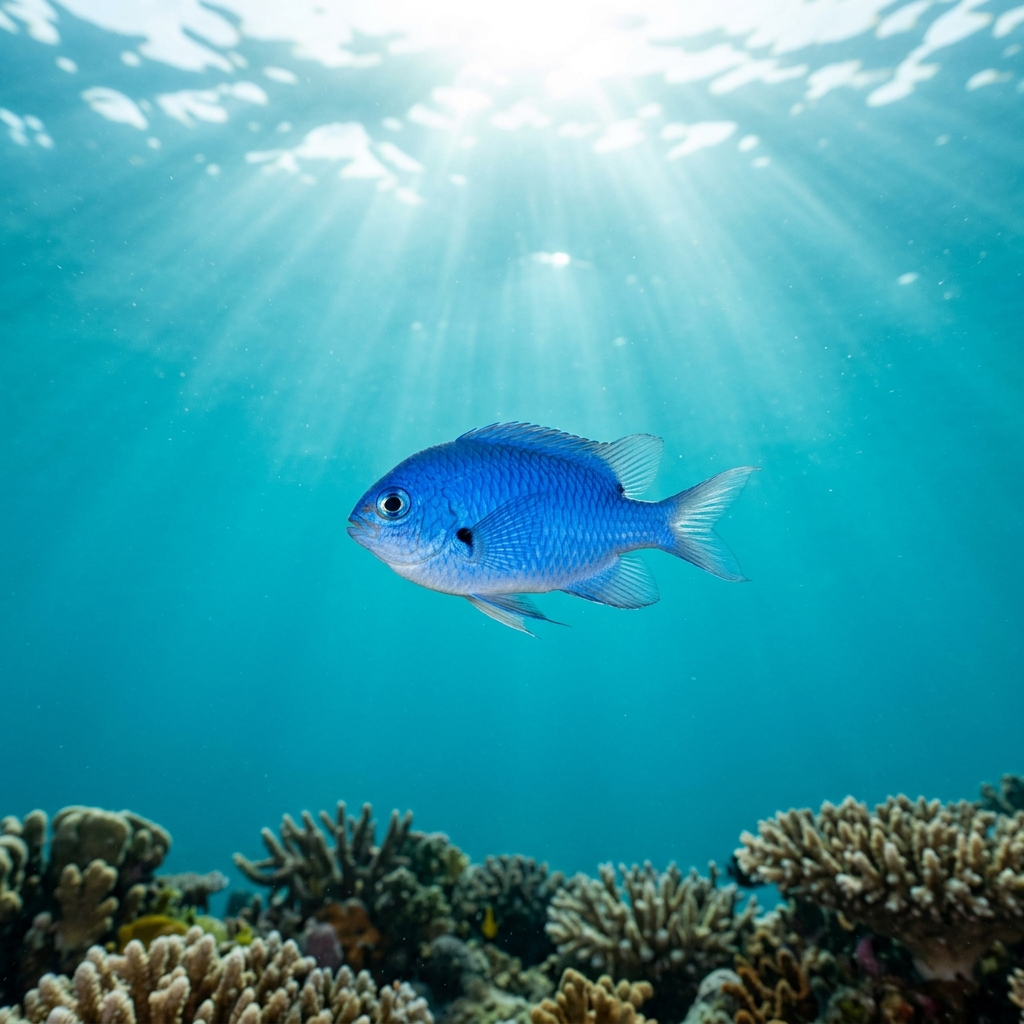
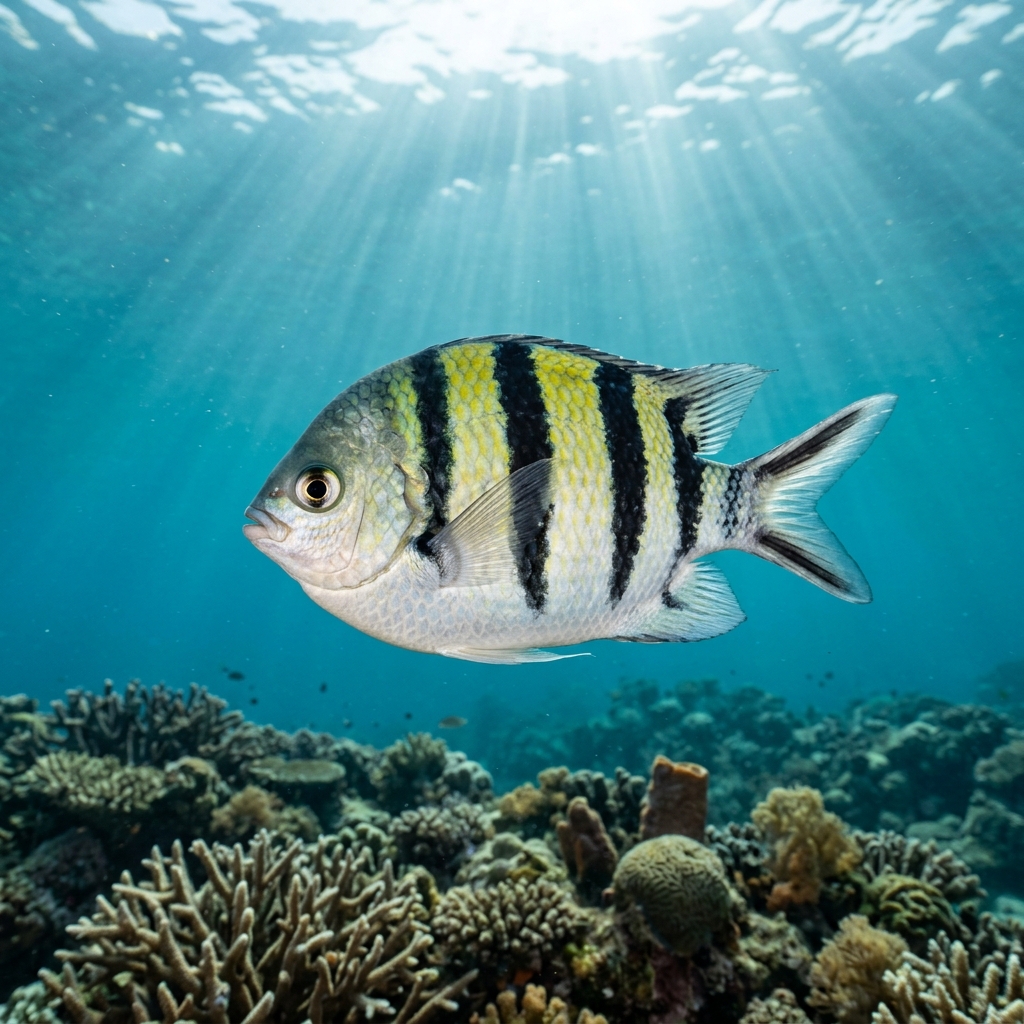
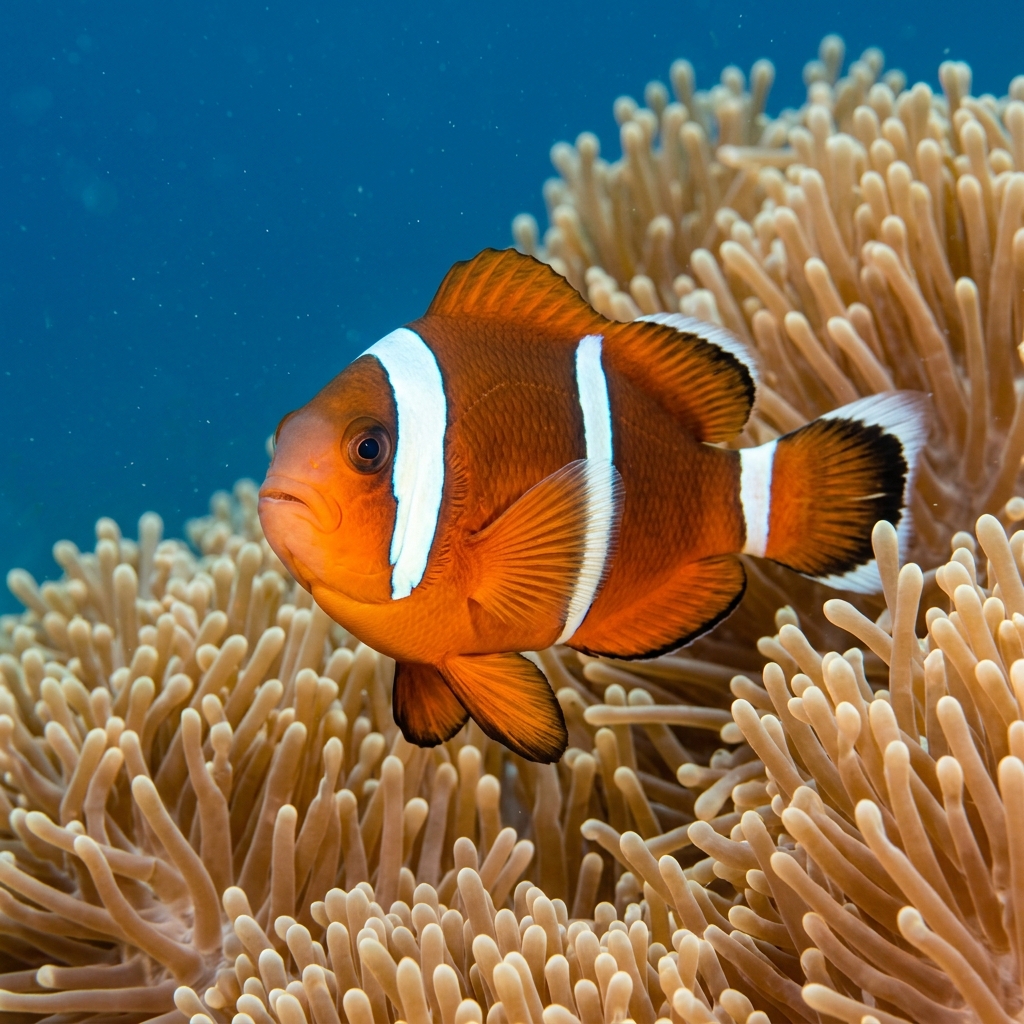
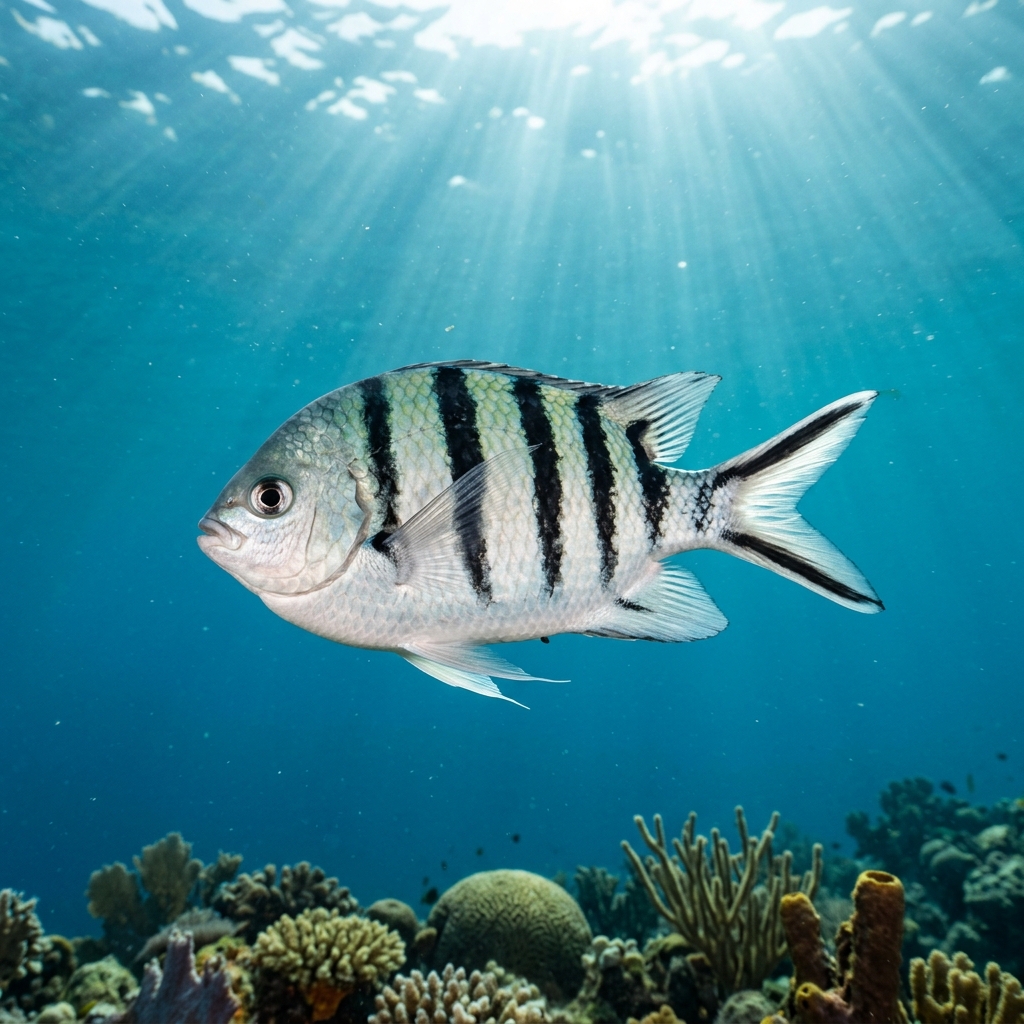
Reef neighbours a diver could mistake it for. Use the identification notes above to tell them apart.
This is a Caribbean reef regular, most often logged in the Bay Islands of Honduras and along Bonaire's Leeward Coast, with strong numbers also on Grand Cayman, Mexico's Yucatán Peninsula and Florida reefs. Curacao, the US Virgin Islands and Grenada round out the list, so on almost any shallow Caribbean reef dive you have a decent chance of finding one guarding its patch.
Mapping where Threespot Damselfish is logged…
They turn up across the Caribbean, with the strongest sightings in the Bay Islands of Honduras, along Bonaire's Leeward Coast, and around Grand Cayman. Mexico's Yucatán Peninsula and Florida also produce regular sightings.
There is no strong season for this one. Water in its comfort range of roughly 25.6 to 28.2C holds year-round on Caribbean reefs, so sightings are consistent across the year.
Look for a small, dark brown to blackish fish with a pale spot on the upper flank near the tail and a fainter spot near the eye. It typically hovers close to a patch of reef it is actively defending rather than swimming freely in open water.
They max out around 9 cm, making them one of the smaller damselfish you will meet on a Caribbean reef, though their territorial attitude makes them seem larger.
They actively farm algae on a patch of reef, biting and killing coral tissue at the edges to expand their turf. This makes them unusually influential for their size in shaping local coral cover.
Site and sighting data is aggregated from diver logs, iNaturalist and GBIF. For taxonomy and conservation status:
Dascyllus
3,697 sites