Scolopsis trilineata
Silvery reef fish with dark eye lines, most reliably spotted around Fiji's Mamanuca Islands and Nouméa in New Caledonia year-round.
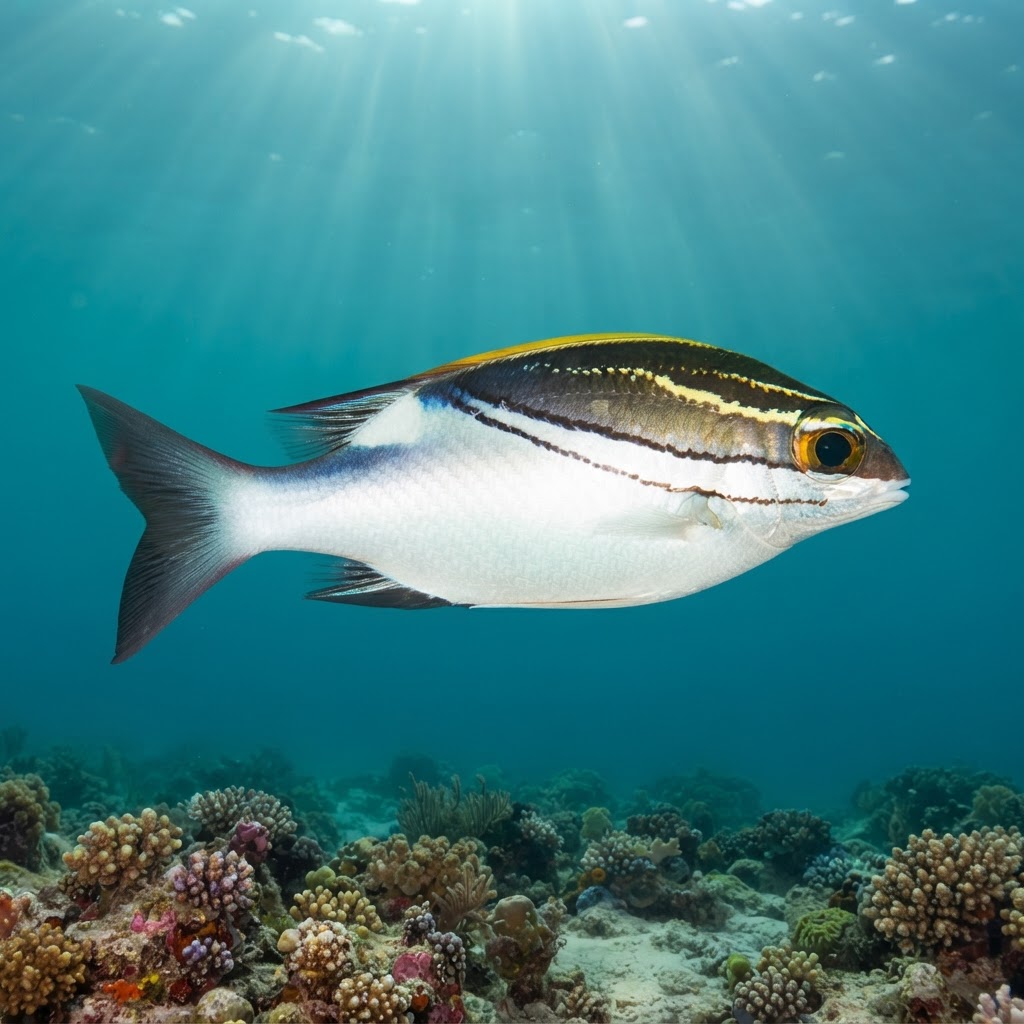
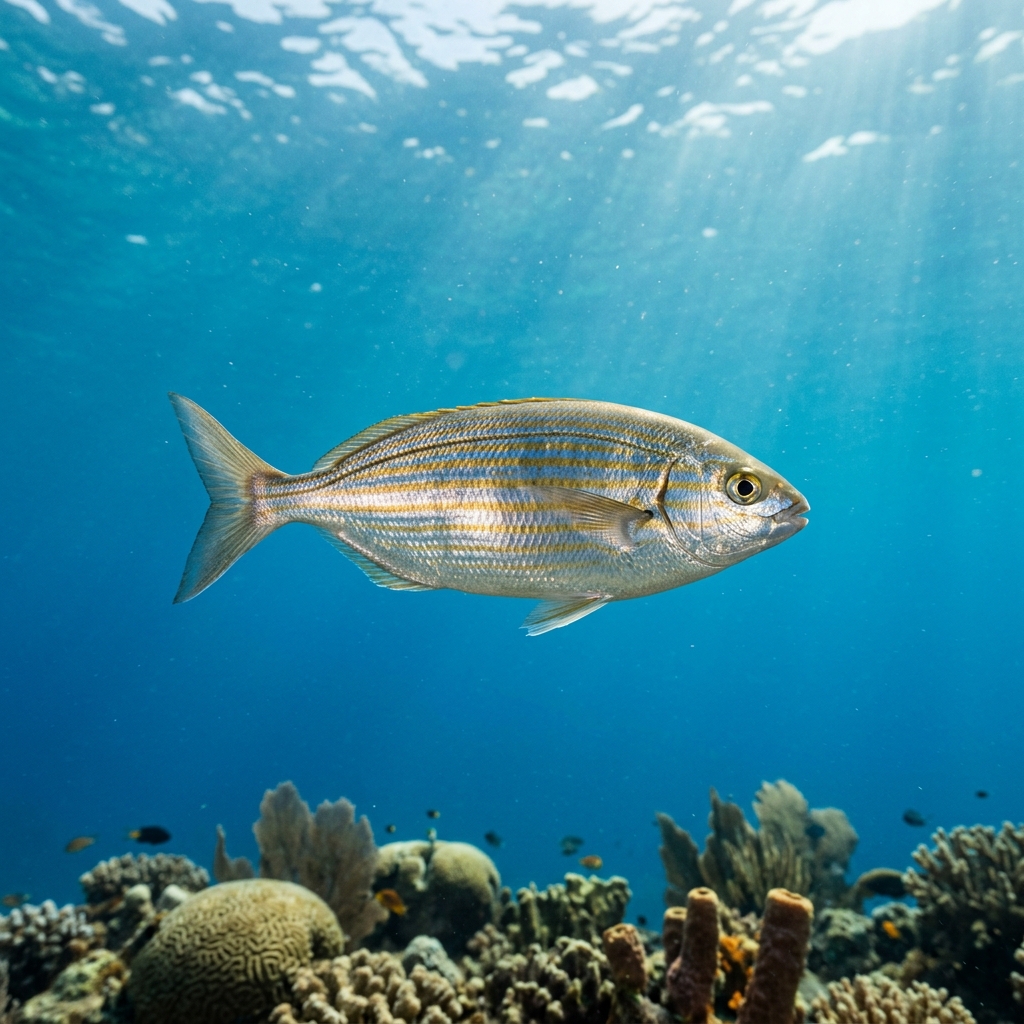
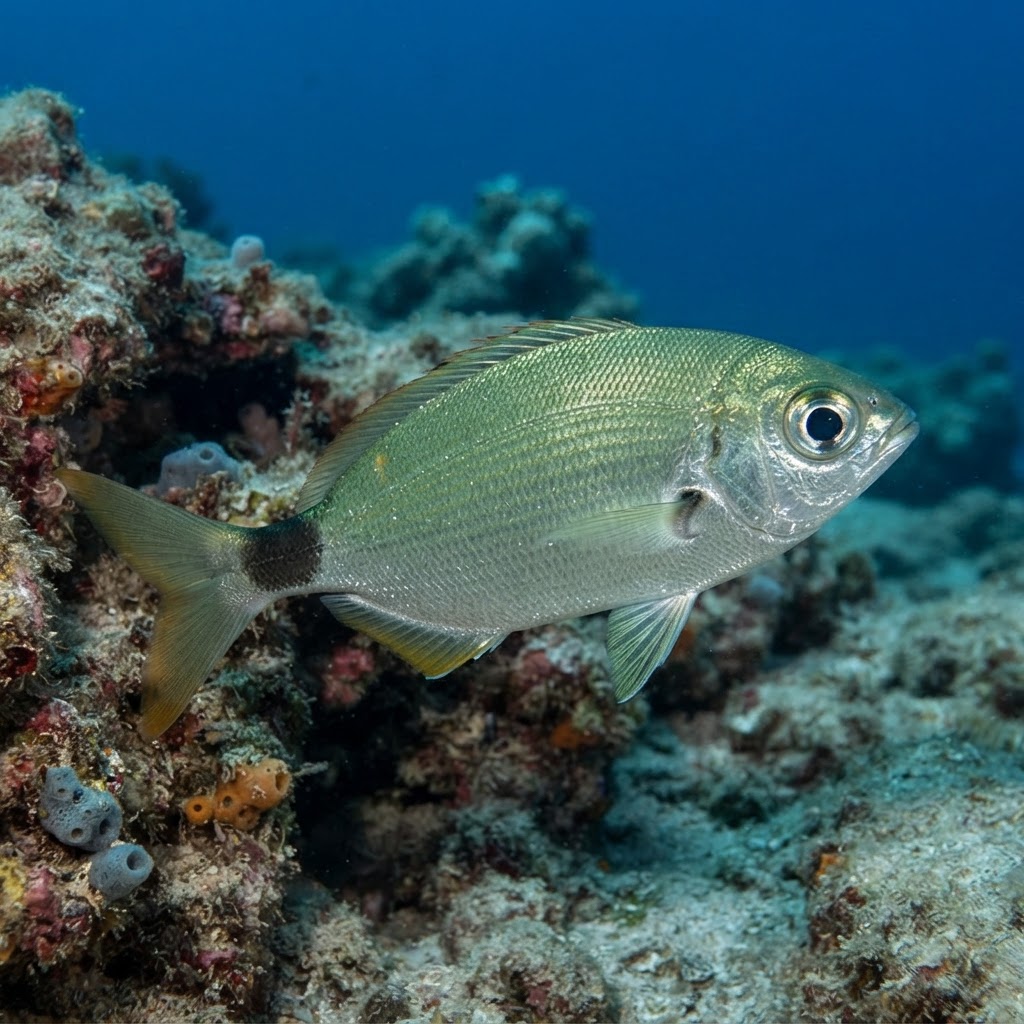
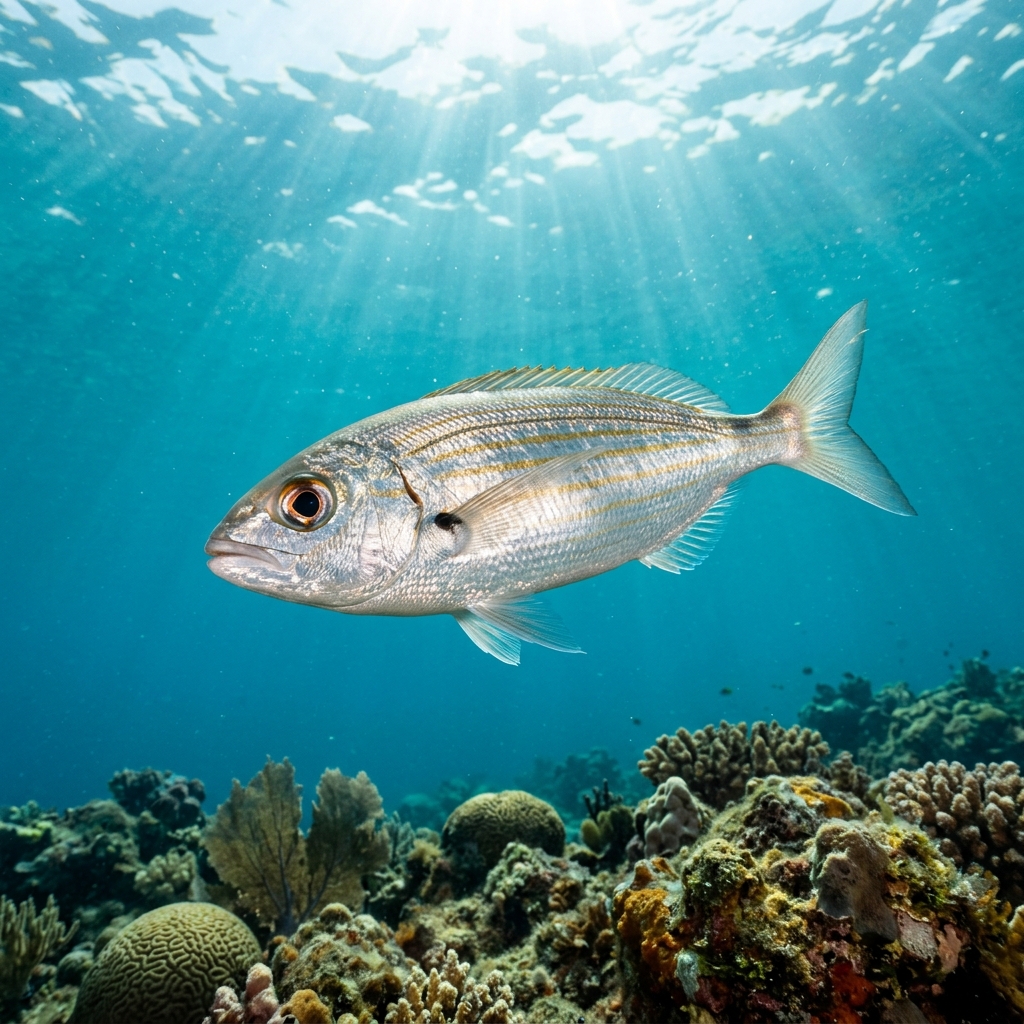
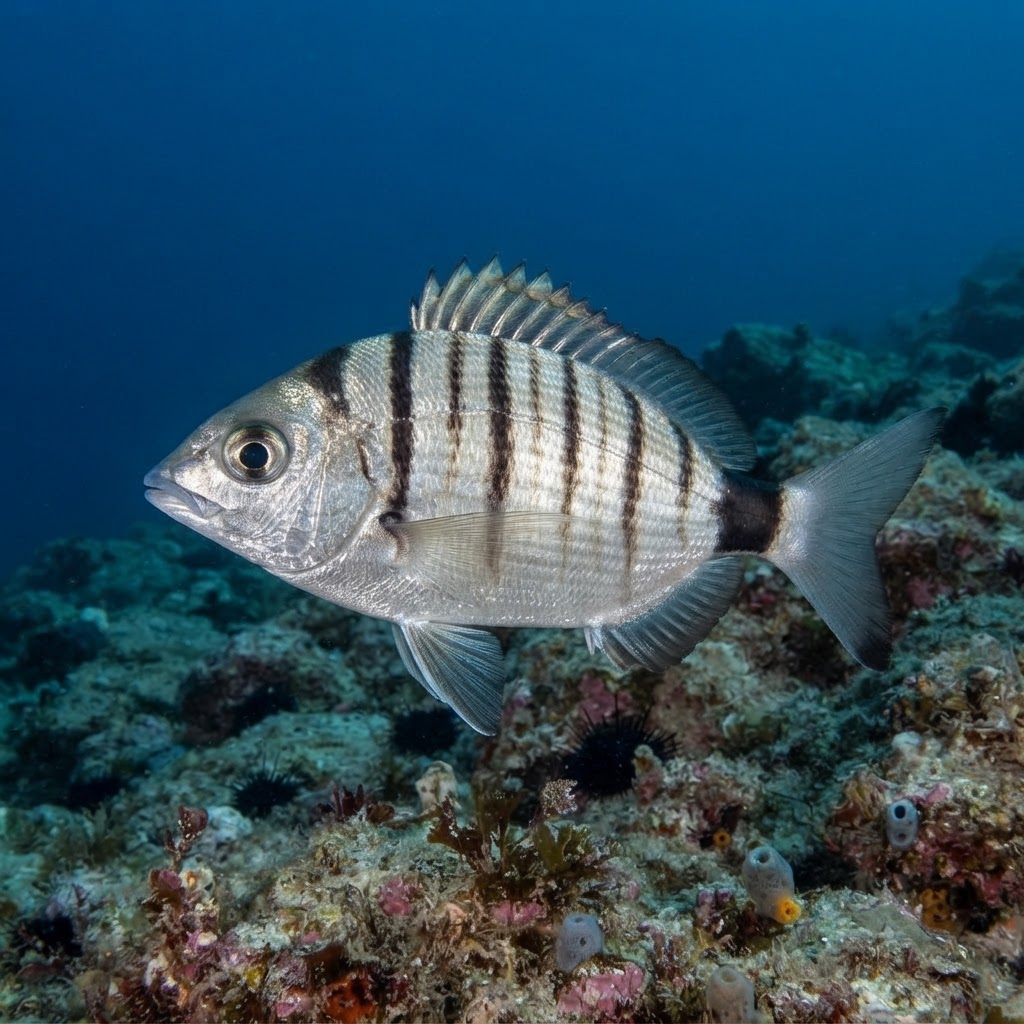
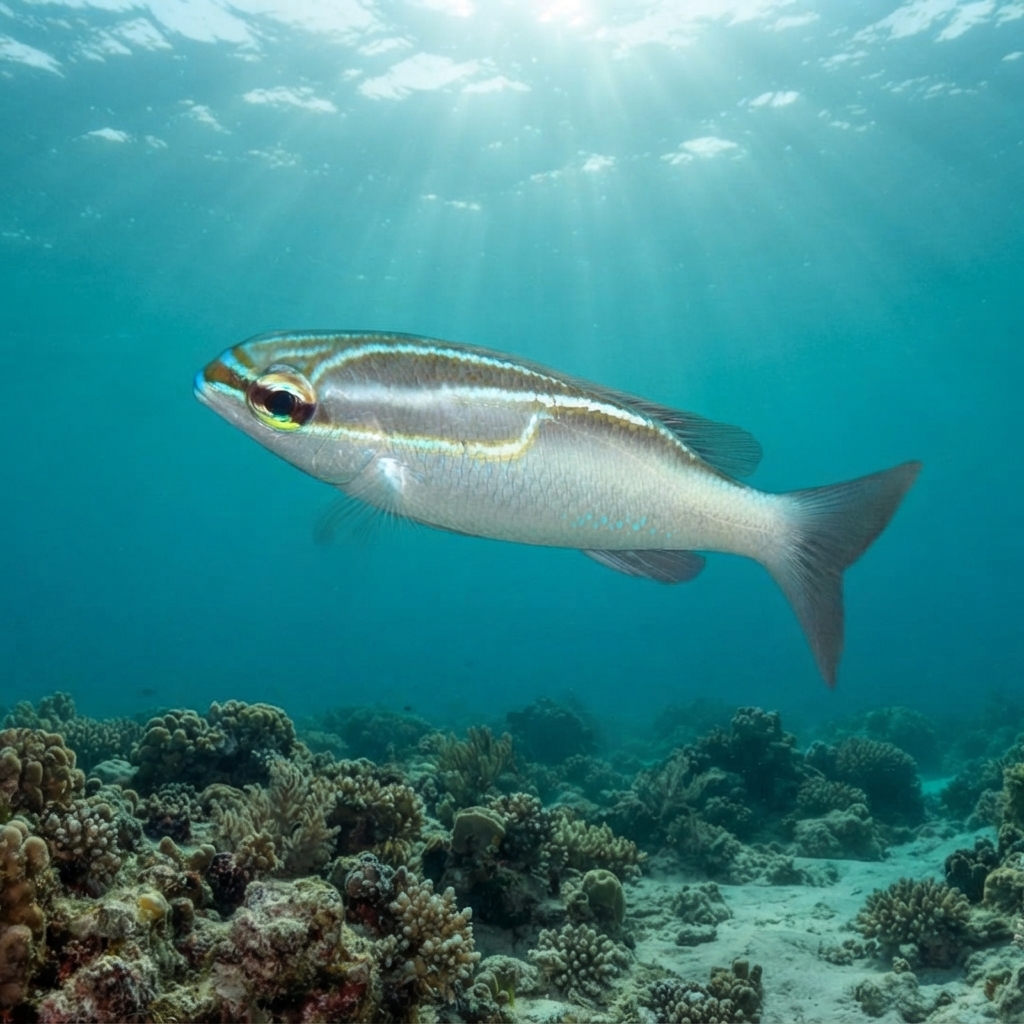
Look for a slim, silvery-white fish around 18 cm with a pointed snout typical of bream. The name-giving marks are dark lines running from the eye, most visible as a bold diagonal bar or two through the eye area against the pale body. It usually hovers just above the reef structure rather than tucking into it, making that eye pattern the quickest way to separate it from the many other small reef fish sharing the same water.
Divers typically find it hovering singly or in loose company over coral rubble and reef flats rather than schooling tightly, picking at small invertebrates on and around the substrate. It tends to keep a bit of distance rather than approach divers, drifting off to the next patch of reef if you get too close, so a slow approach gives the best look at those eye markings.
As a monocle bream, it feeds mainly by sifting through sand and rubble for small invertebrates, which makes it a useful indicator of a reef with healthy sediment life rather than just bare rock or coral.
No clear seasonal pattern shows up in the sightings, and with a comfortable range of roughly 26.5 to 29.3 C, it is present on these reefs year-round rather than tied to a particular month.
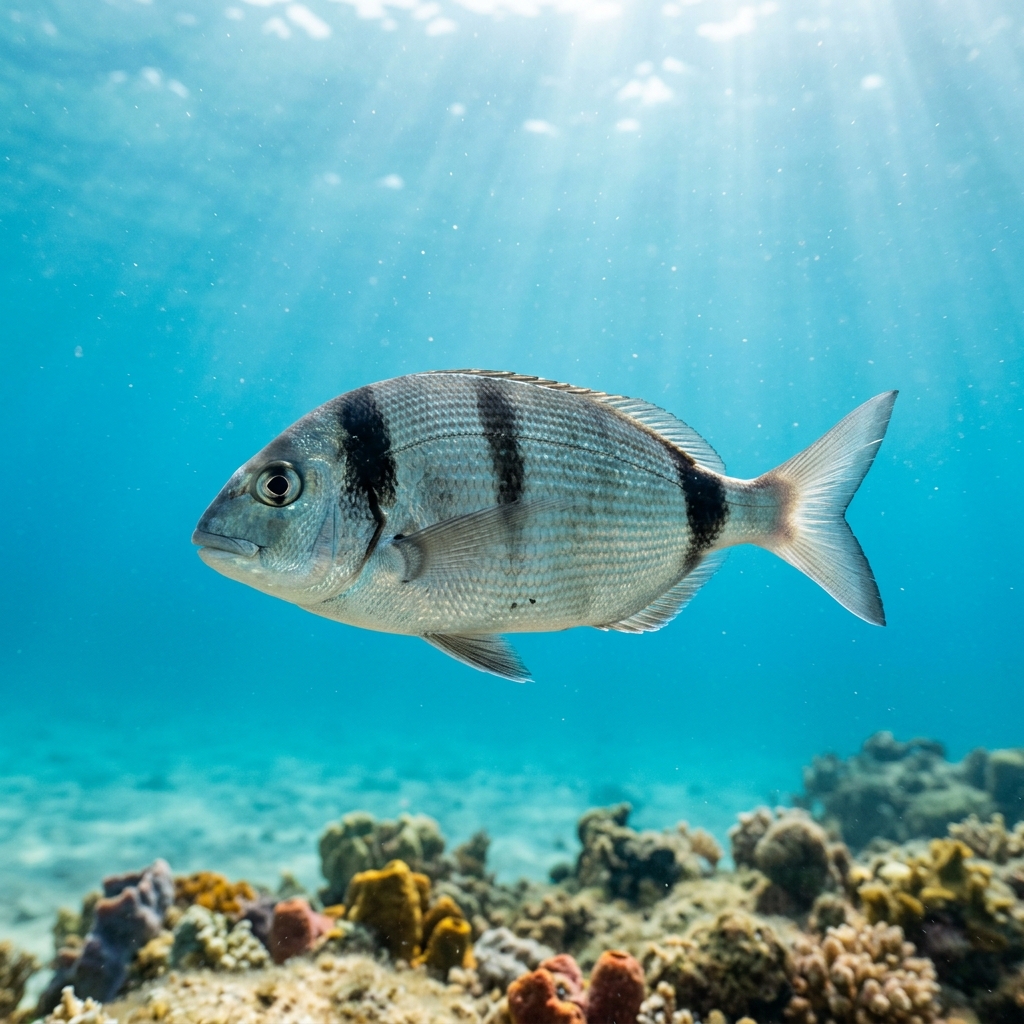
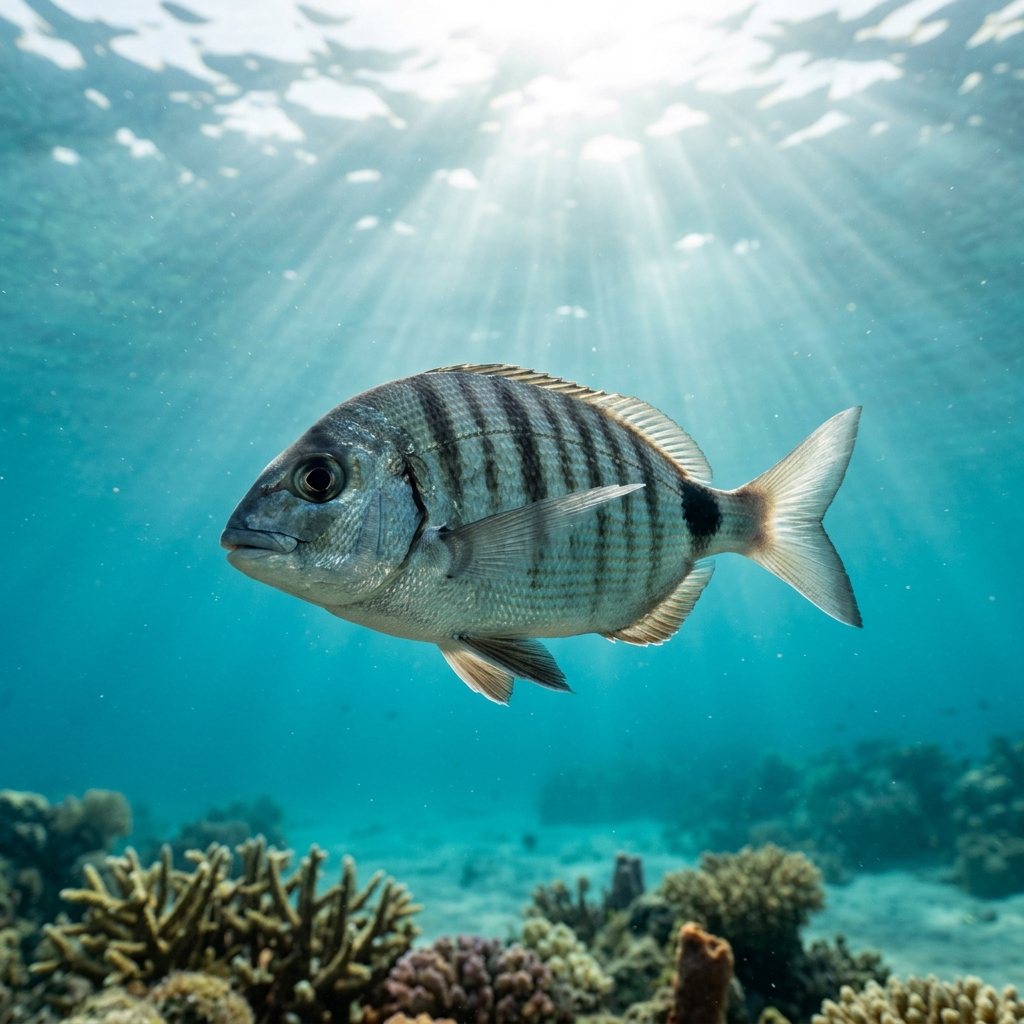
Reef neighbours a diver could mistake it for. Use the identification notes above to tell them apart.
Most reliably logged in Fiji, particularly around the Mamanuca Islands and the Yasawa Islands, and a strong second spot in Nouméa, New Caledonia. Smaller numbers turn up around Koror and Malakal in Palau and in Nusa Tenggara, Indonesia, so it is worth watching the reef there too, though sightings are less frequent.
Mapping where Threeline Monocle Bream is logged…
Fiji is the strongest area, especially the Mamanuca and Yasawa Islands, with Nouméa in New Caledonia also a reliable spot. Smaller numbers are logged around Palau's Koror and Malakal region and in Nusa Tenggara, Indonesia.
There is no strong seasonal pattern in the sightings, and the species sits comfortably in warm water between about 26.5 and 29.3 C, so it can be seen on these reefs at any time of year.
Check for a slender, silvery fish about 18 cm long with a pointed snout and one or two dark diagonal lines running through the eye. It usually hovers over rubble or reef flats rather than hiding in coral heads.
They typically reach around 18 cm in length, a modest size that keeps them easy to overlook against busier, more colourful reef fish nearby.
They feed by sifting sand and rubble for small invertebrates, a foraging style typical of monocle breams that makes them a small but steady presence around reef flats and rubble zones.
Site and sighting data is aggregated from diver logs, iNaturalist and GBIF. For taxonomy and conservation status:
Saddled Bream
3,846 sites