Pentapodus trivittatus
Slender reef fish with racing stripes, logged from Sabah to Palawan and Palau in 27.8-29.3C water year-round.
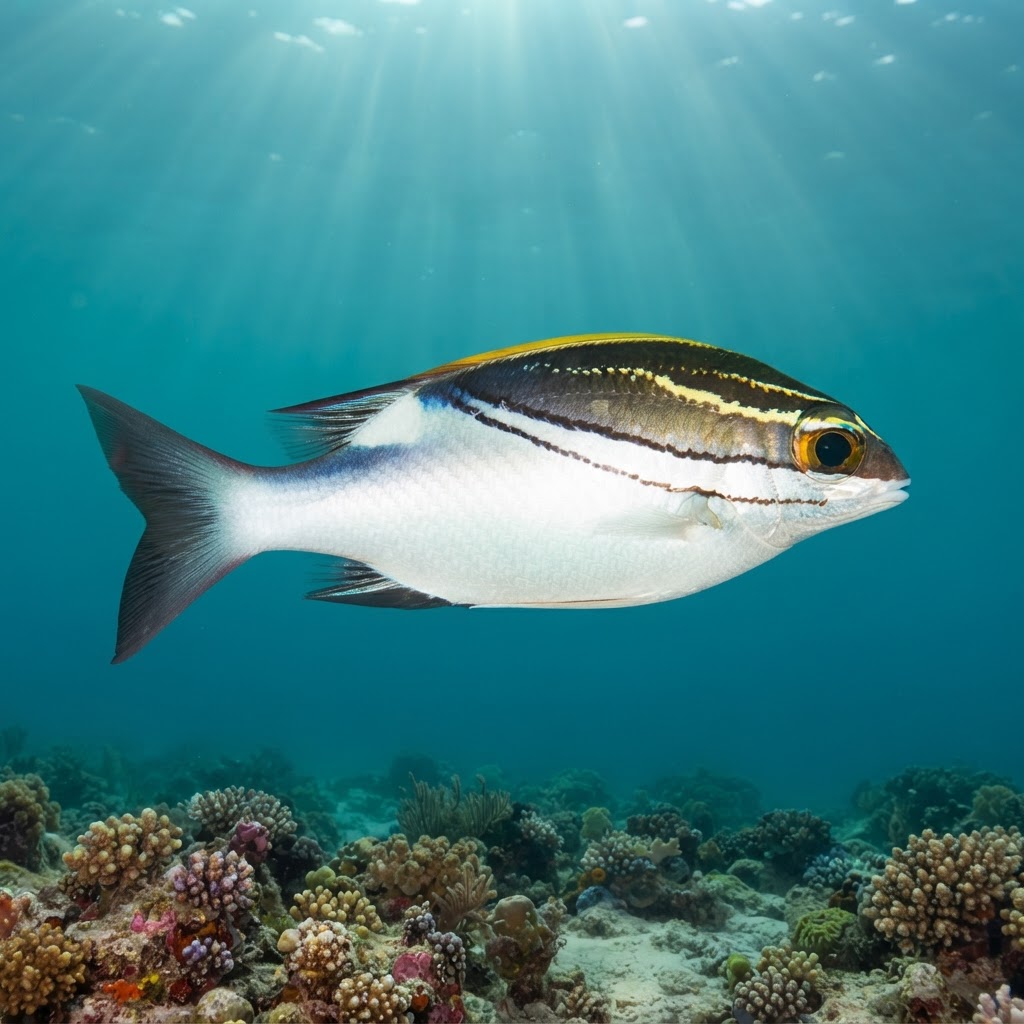
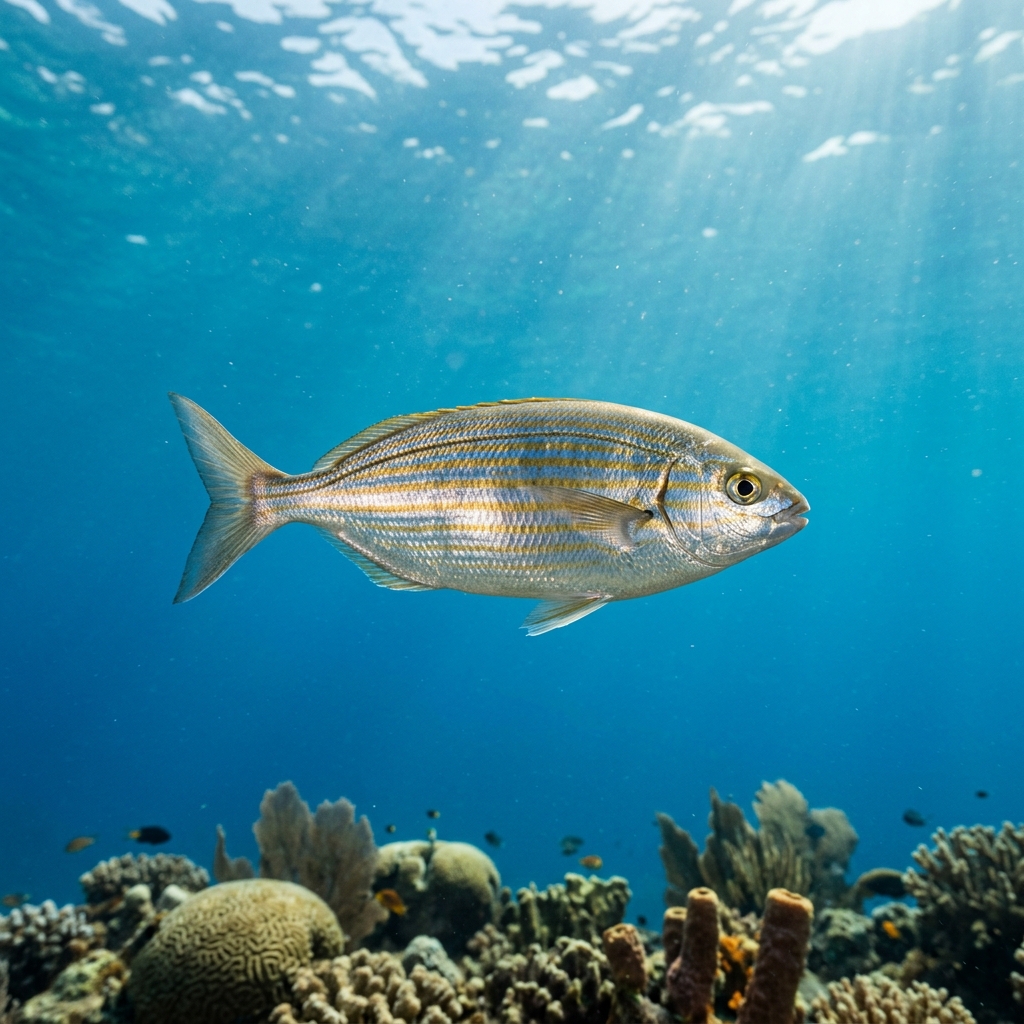
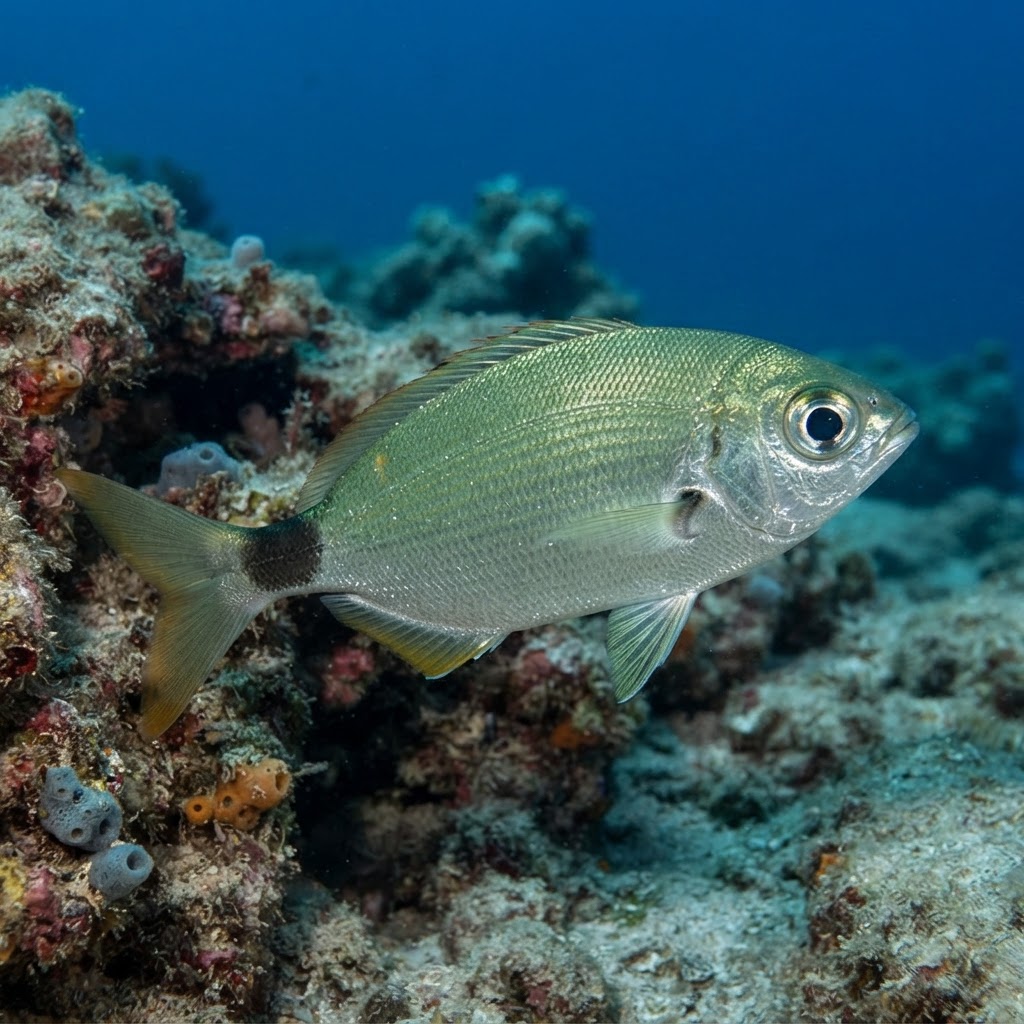
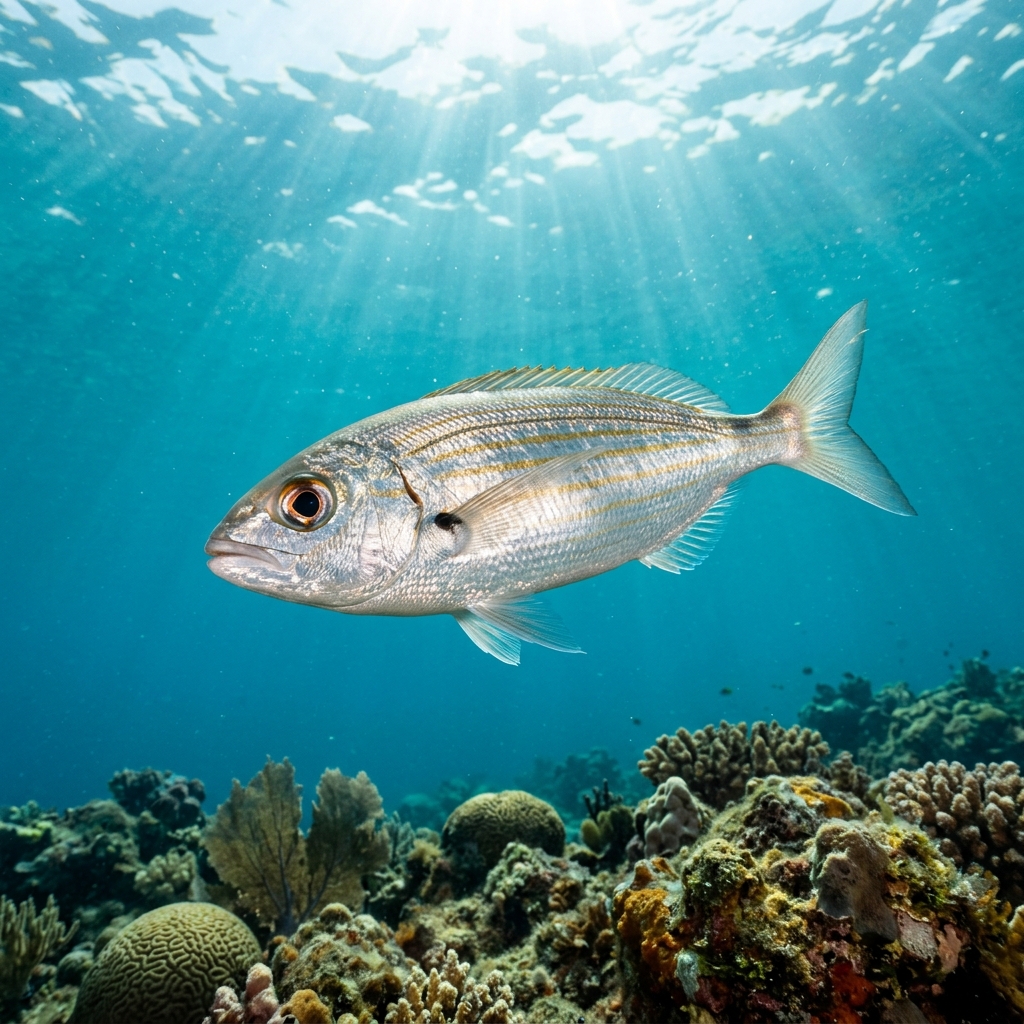
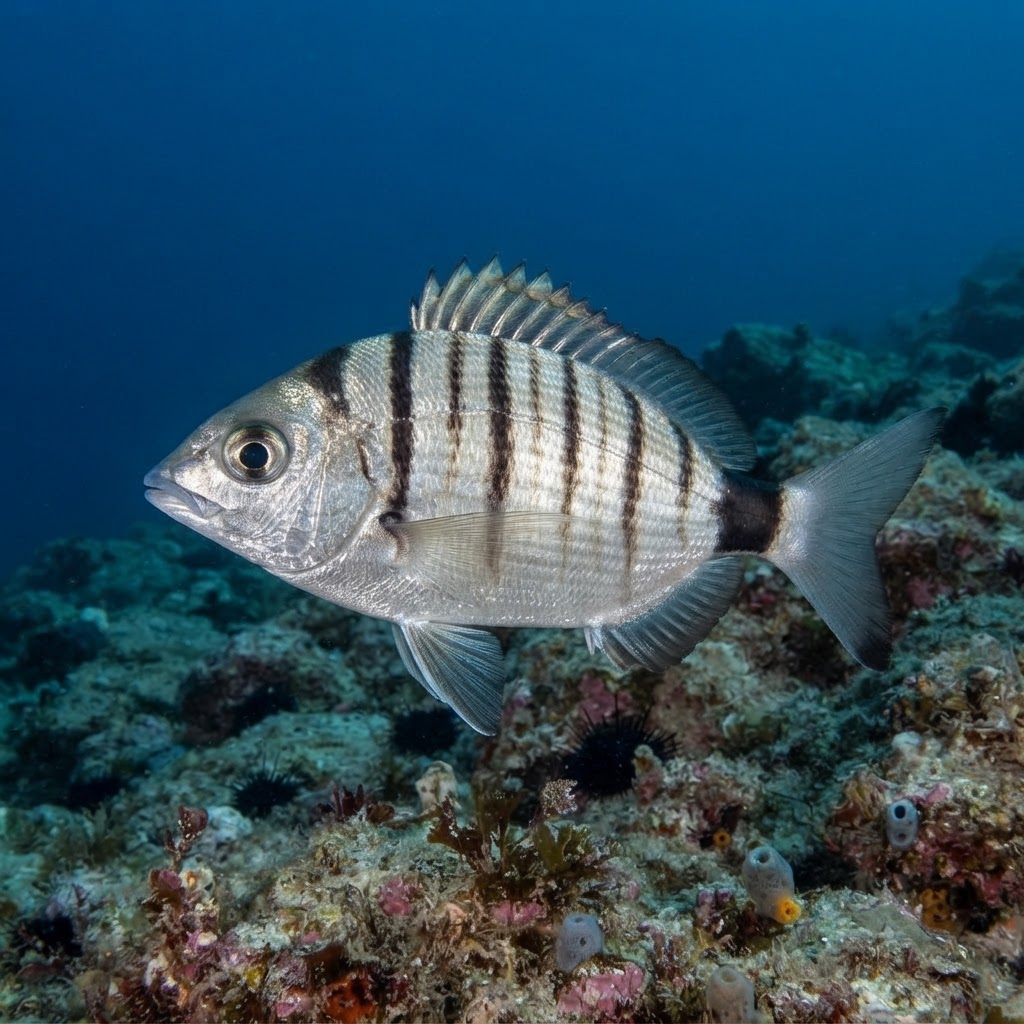
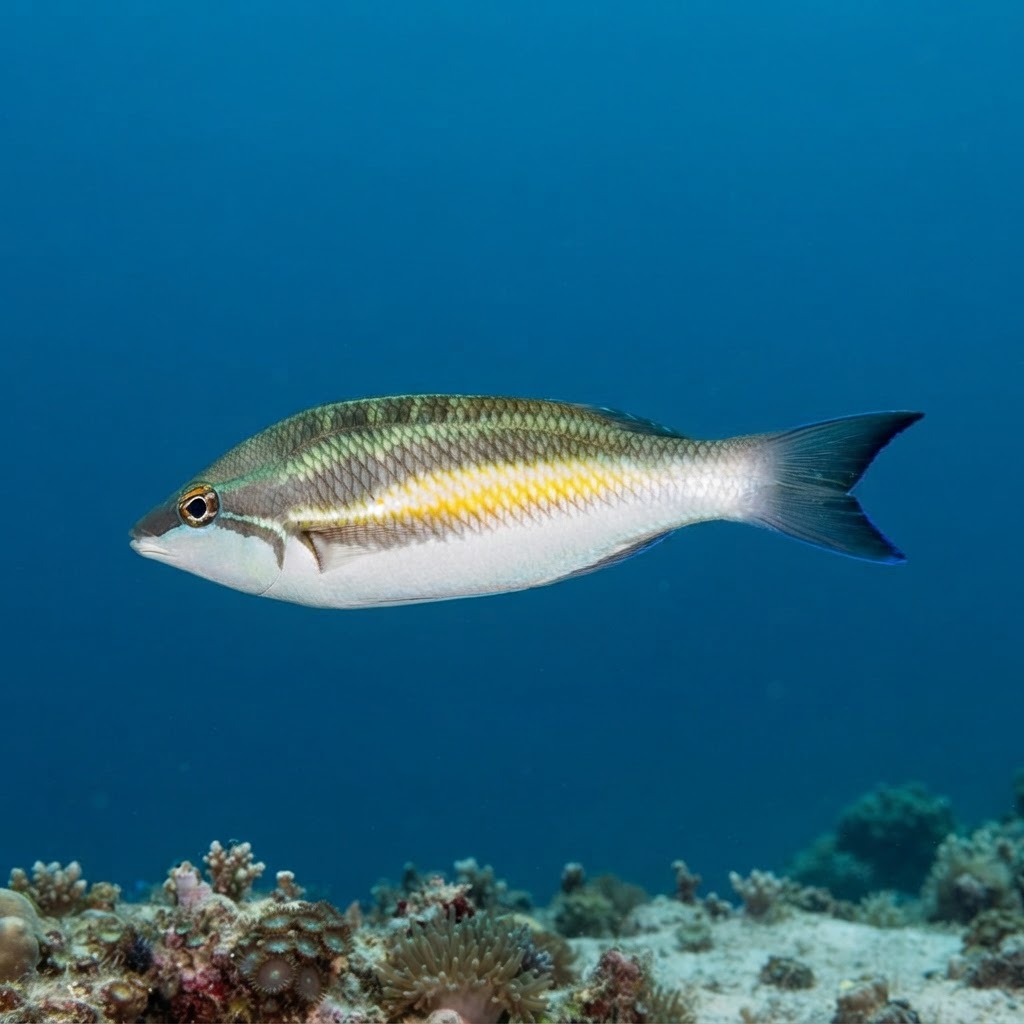
A slim, torpedo-shaped fish around 19 cm with a silvery-white body cut by three dark horizontal stripes running from head to tail. The tail fin is deeply forked with elongated filament tips, giving it the whiptail look divers key on. It hovers just off the reef in loose groups rather than hugging the substrate, which sets it apart from the flatter-bodied butterflyfish it sometimes gets lumped in with.
Look for it drifting in loose, unhurried groups a little above the reef, picking at small invertebrates in the water column rather than digging in the sand. It is generally unbothered by divers, holding its position or drifting off slowly rather than bolting, which makes it an easy fish to get a good look at on a normal reef dive. Most sightings come from shallow to mid-depth reef slopes rather than deep drop-offs.
Its stretched, filamentous tail lobes are the giveaway feature that separates whiptails from the deeper-bodied butterflyfish and bream they get filed alongside on many dive logs.
No strong seasonal pattern shows up in the sightings, and with a temperature niche of 27.8 to 29.3C it is sitting in stable warm reef water year-round. Plan around dive conditions at your chosen site rather than a particular month.
Reef neighbours a diver could mistake it for. Use the identification notes above to tell them apart.
This is a reliable sighting across Sabah in Malaysia and Palawan in the Philippines, with strong numbers also logged in Java and Raja Ampat in Indonesia and around Koror and Malakal in Palau. Sulawesi and Bali round out the Indonesian sites, and it turns up occasionally in Papua New Guinea, but Sabah and Palawan are where divers report it most consistently.
Mapping where Three-striped Whiptail is logged…
Sabah in Malaysia and Palawan in the Philippines are the most consistent spots, with good numbers also reported from Java and Raja Ampat in Indonesia and around Koror and Malakal in Palau.
There is no clear season in the sighting data, and it lives in consistently warm reef water between 27.8 and 29.3C, so it is present year-round wherever it occurs.
Look for a slender silvery fish about 19 cm long with three dark horizontal stripes and a deeply forked tail with filament tips. It typically hovers in small loose groups just off the reef rather than sitting on the bottom.
They reach around 19 cm, a slim mid-sized reef fish that is easy to overlook until you notice the striped pattern and long tail filaments.
No. It is a harmless, non-aggressive reef fish that will simply drift away from divers at a relaxed pace rather than react defensively.
Most divers who spot it describe it as uncommon rather than common, though at some sites in Sabah and Palau it turns up often enough to be considered a reliable sighting.
Site and sighting data is aggregated from diver logs, iNaturalist and GBIF. For taxonomy and conservation status:
Saddled Bream
3,846 sites