Ovalipes trimaculatus
Sandy-bottom crab logged around Puerto Madryn and South Africa's Western Cape in cool 13-20C water, year-round and uncommon.
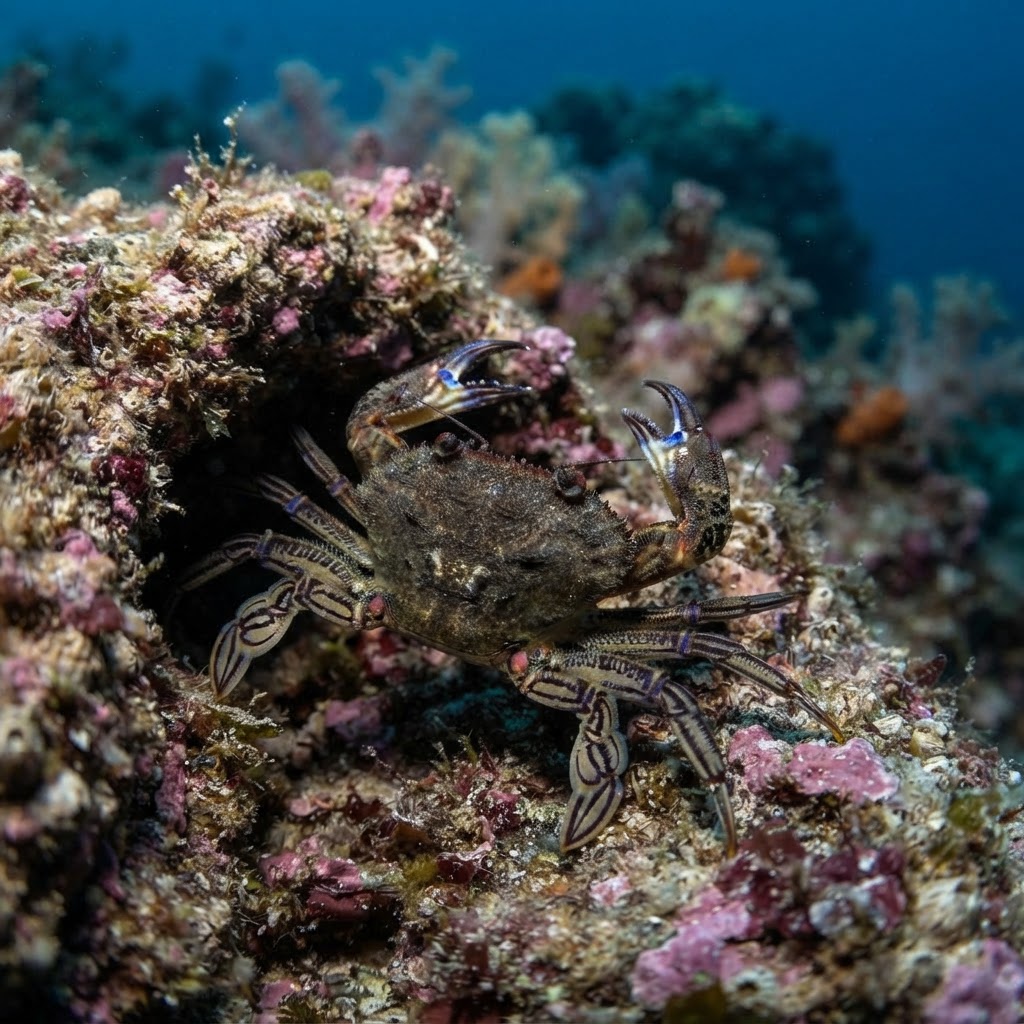
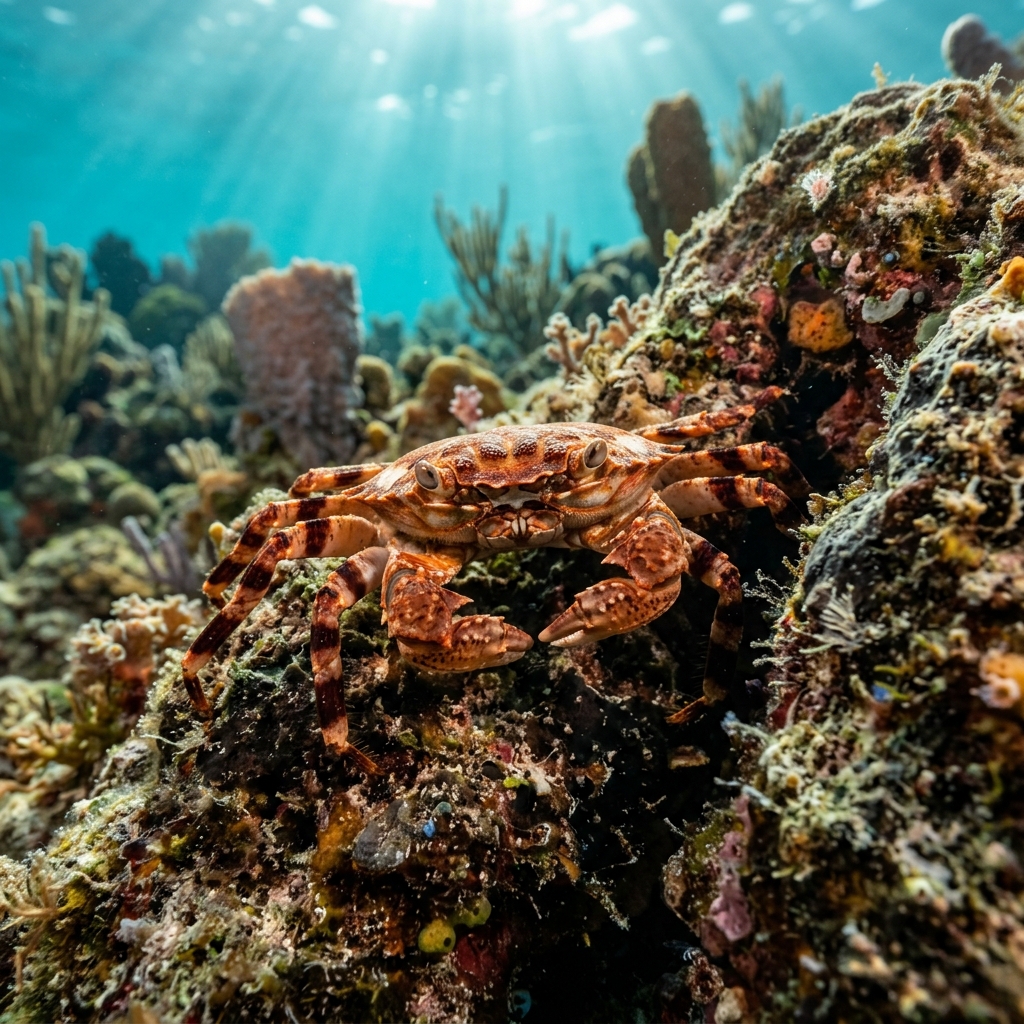
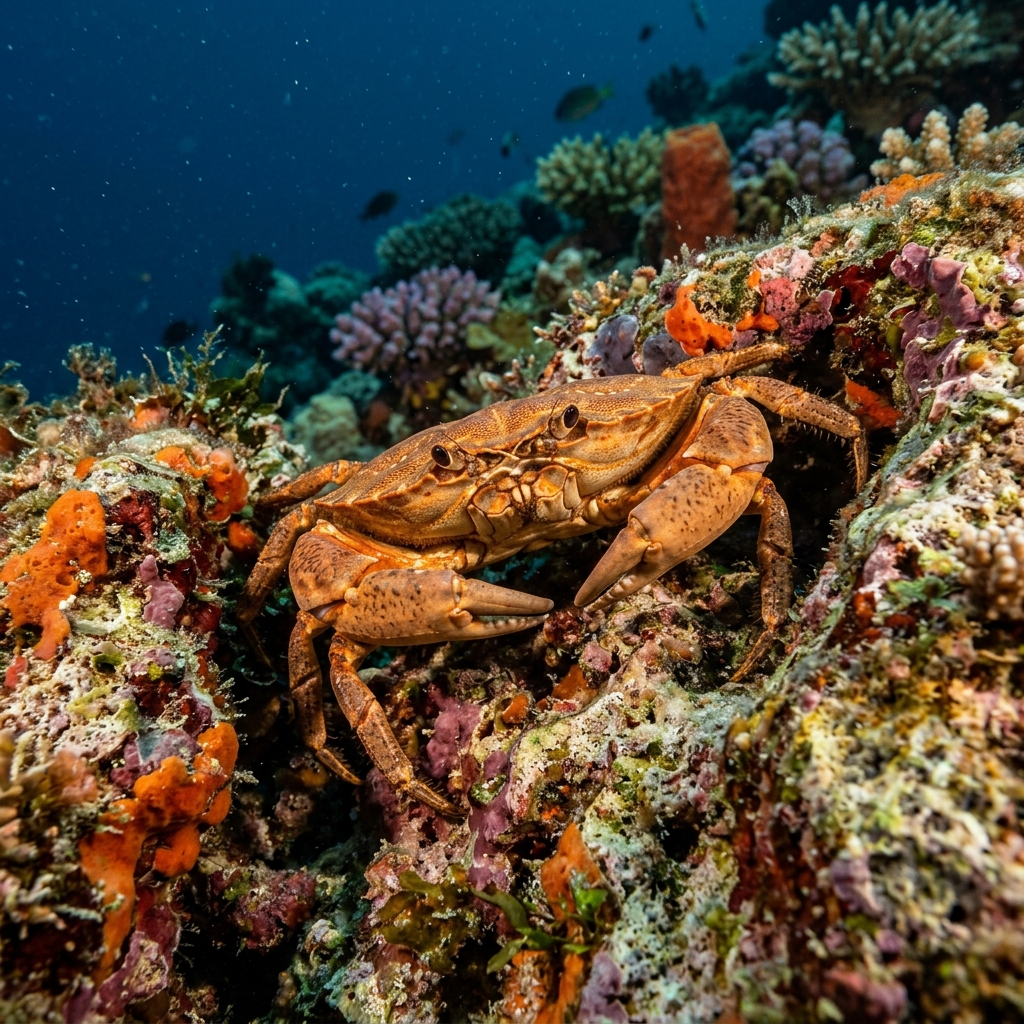
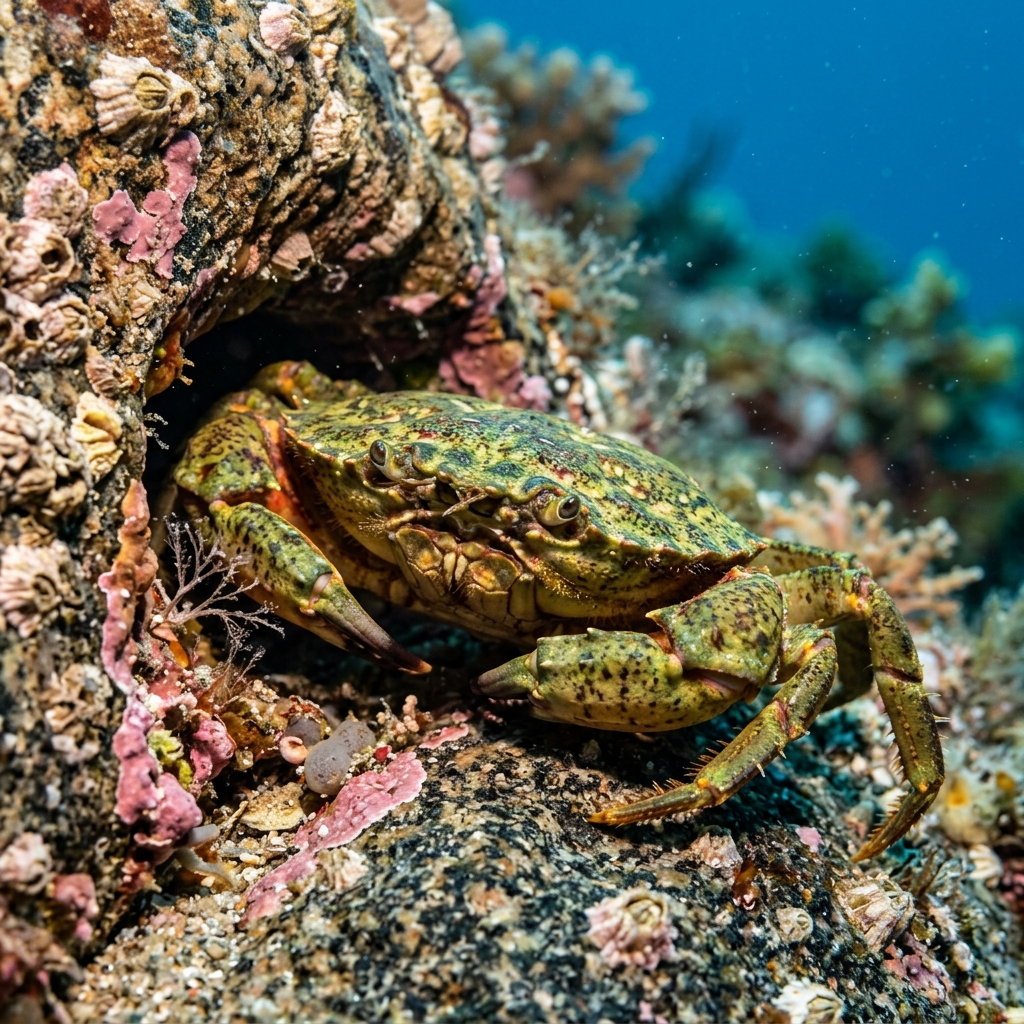
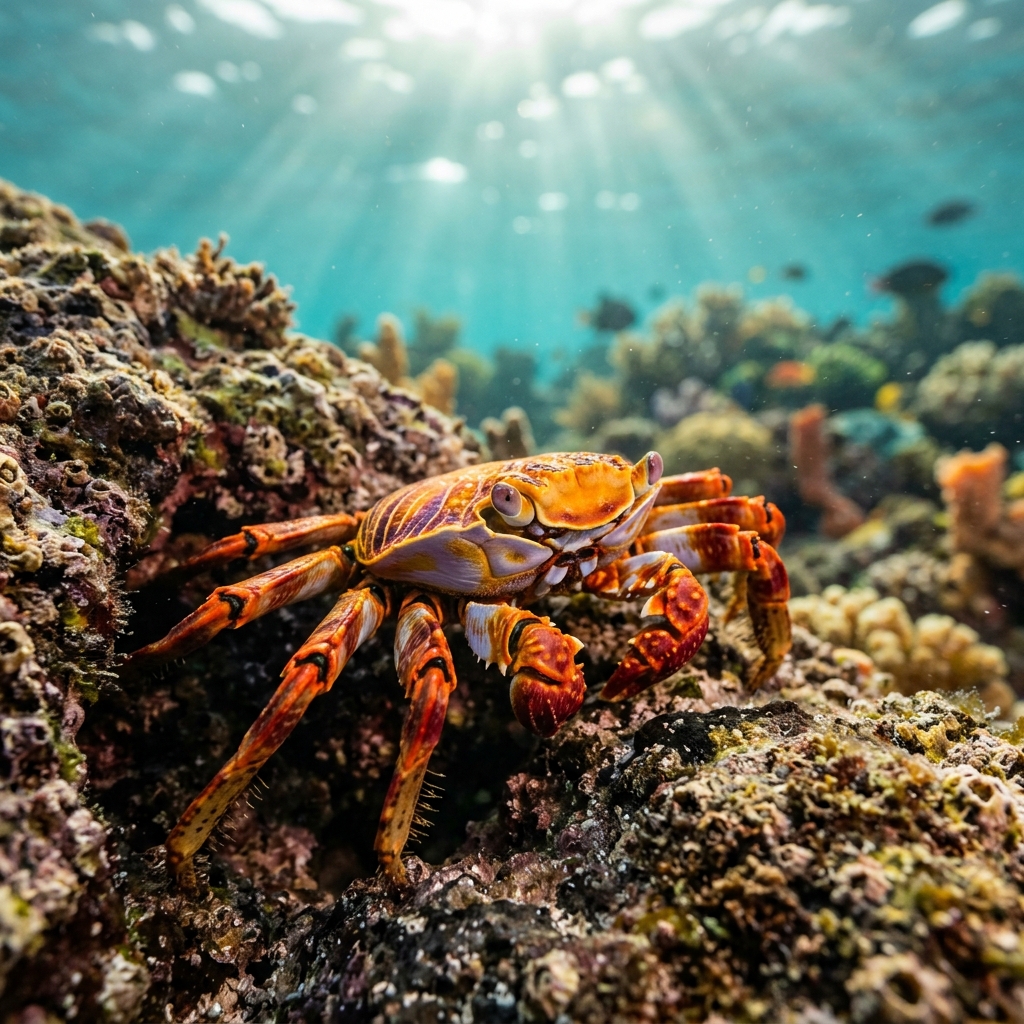
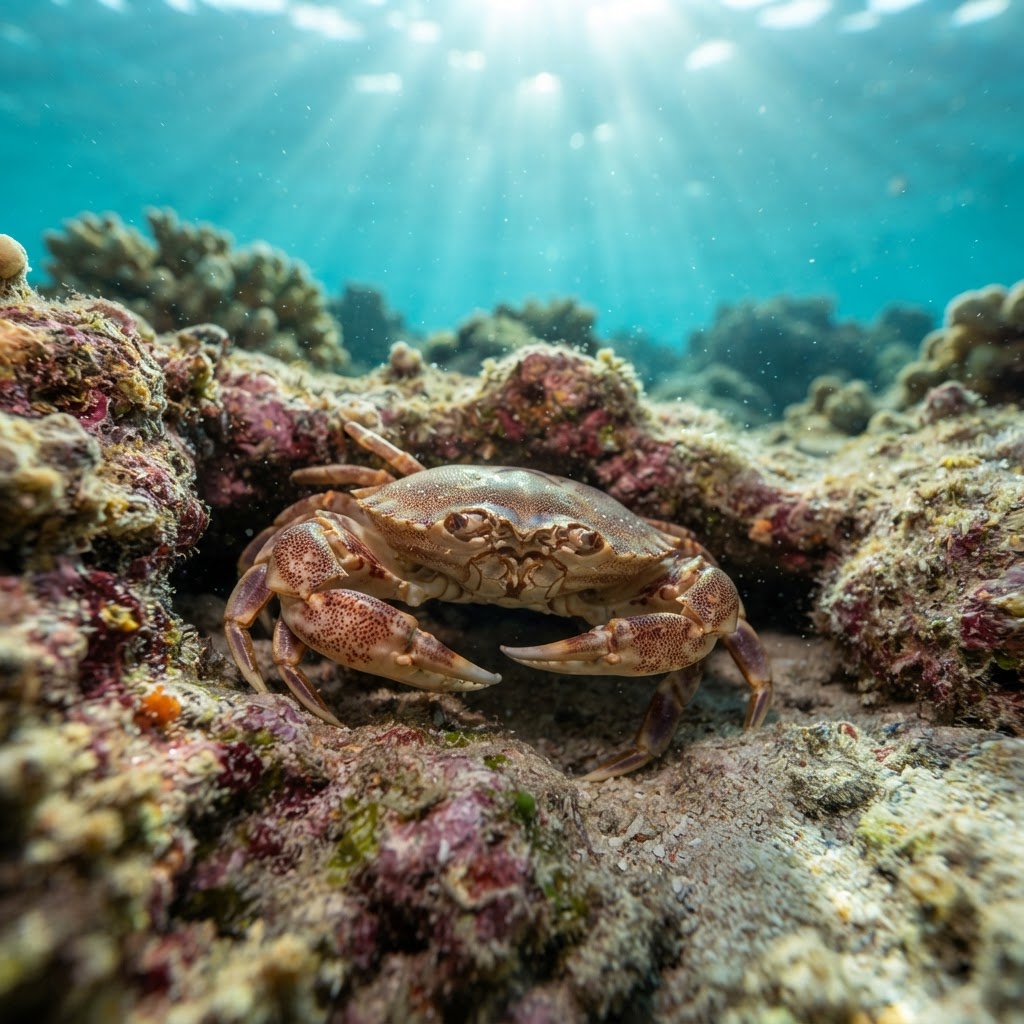
Look for a fan-shaped, mottled sandy-to-grey shell about the width of your palm, flattened for burrowing into sediment. The giveaway is a trio of dark spots across the rear of the carapace, which is where the common name comes from. The last pair of legs are paddle-shaped for swimming, and it tends to sit low and half-buried rather than perched on rock or coral.
Divers mostly find it sitting still on or partly buried in sand, using its flattened shell and paddle-like rear legs to disappear into the substrate rather than swim off. It is not a fast mover once settled and tends to stay put as you approach, making it an easy, low-drama macro subject rather than a chase. Most logs describe single individuals rather than groups, so treat any sighting as a bit of a find even at sites where it is regular.
Those flattened back legs are proper swimming paddles, letting this crab lift off the bottom and swim in short bursts when disturbed instead of just scuttling, a trick most bottom-dwelling crabs cannot pull off.
Sightings are spread across the year with no clear seasonal peak in the data, which fits a crab comfortable in a fairly cool 13.1 to 19.6C range. Plan around your destination's general dive season rather than chasing a particular month for this species.
Reef neighbours a diver could mistake it for. Use the identification notes above to tell them apart.
Most reliably logged around Puerto Madryn in Argentina and the Western Cape in South Africa, with a smaller but consistent presence at Pucusana in Peru and at least one site in Coquimbo, Chile. These are cool-water, sandy or mixed-bottom sites rather than tropical reef, so this is a temperate-water find rather than a coral-reef one.
Mapping where Three-spot Swimming Crab is logged…
Best chances are around Puerto Madryn in Argentina and the Western Cape in South Africa, both strong areas for this species. Pucusana in Peru and Coquimbo in Chile also have logged sightings, making it a South Atlantic and Southeast Pacific find overall.
There is no strong seasonal pattern in the sightings, so it is effectively a year-round find within its 13.1 to 19.6C temperature range. Go by your destination's usual dive conditions rather than a specific month.
Check the rear of the shell for three dark spots on a mottled sandy or grey carapace, plus paddle-shaped back legs used for swimming rather than walking. It usually sits low on sand, half-buried, rather than climbing over rock or coral.
No, it poses no danger to divers. It is a small, sand-dwelling crab that will simply sit still or paddle away if disturbed.
Unlike most crabs, it can actually swim short distances using its flattened, paddle-shaped rear legs instead of only walking or scuttling. This lets it lift off the sand quickly if it feels threatened.
Site and sighting data is aggregated from diver logs, iNaturalist and GBIF. For taxonomy and conservation status:
European Green Crab
2,469 sites