Dicotylichthys punctulatus
Spot this spiny, big-eyed reef fish in New South Wales, where it's a steady, if uncommon, find year-round in 18.5-24.5C water.
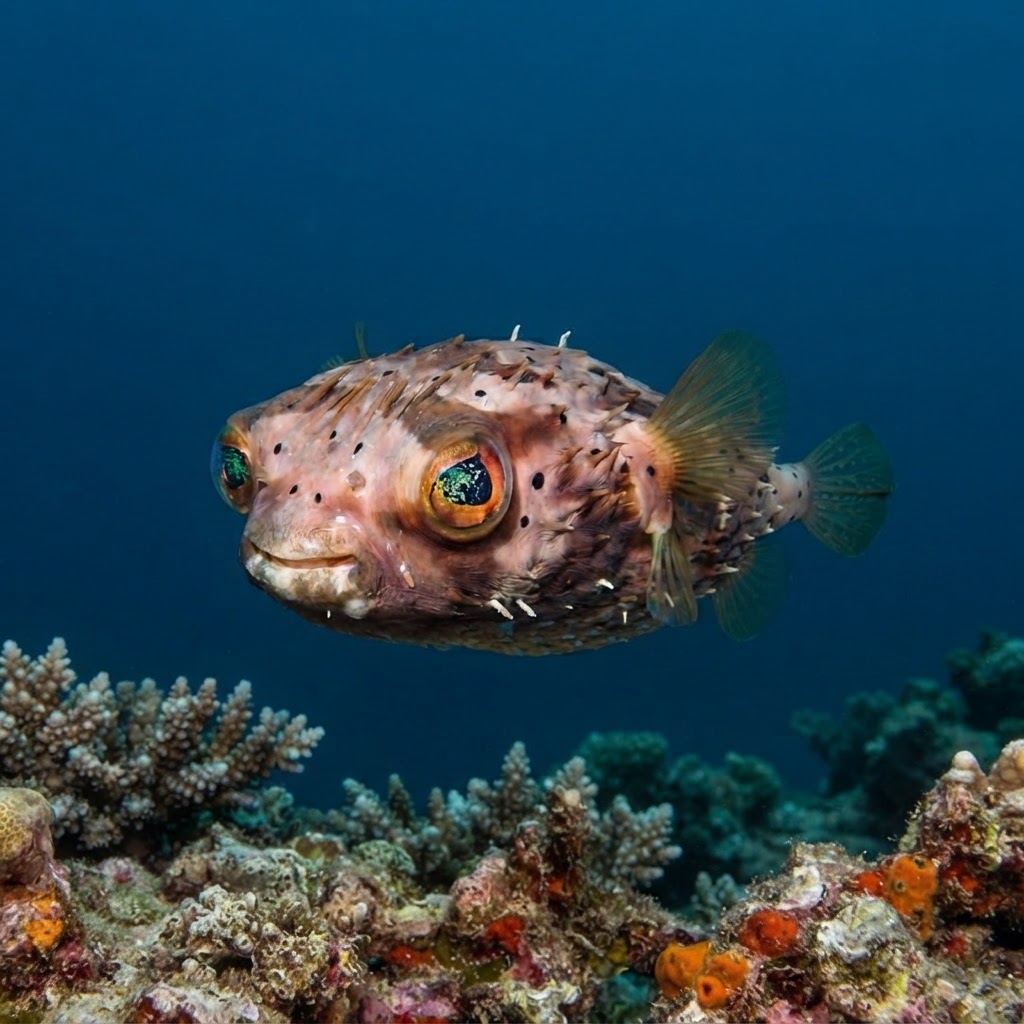
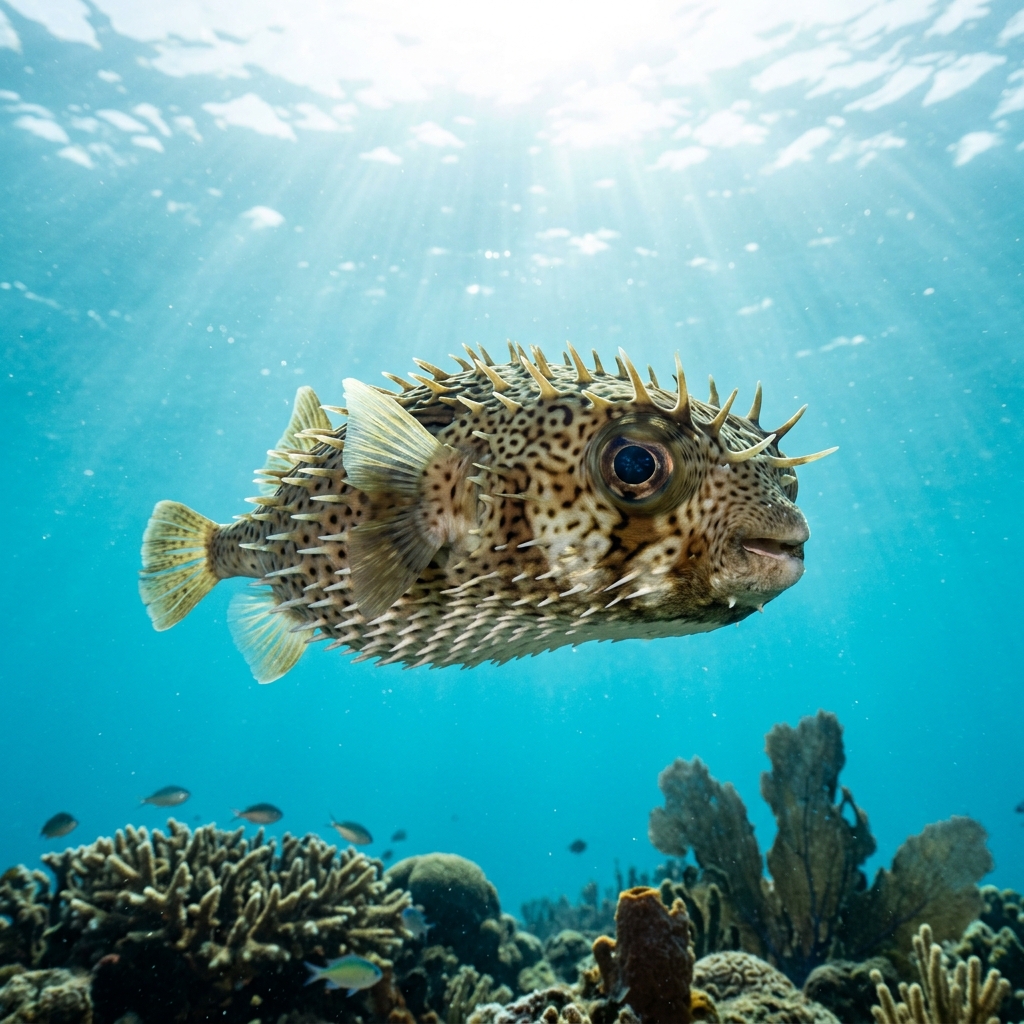
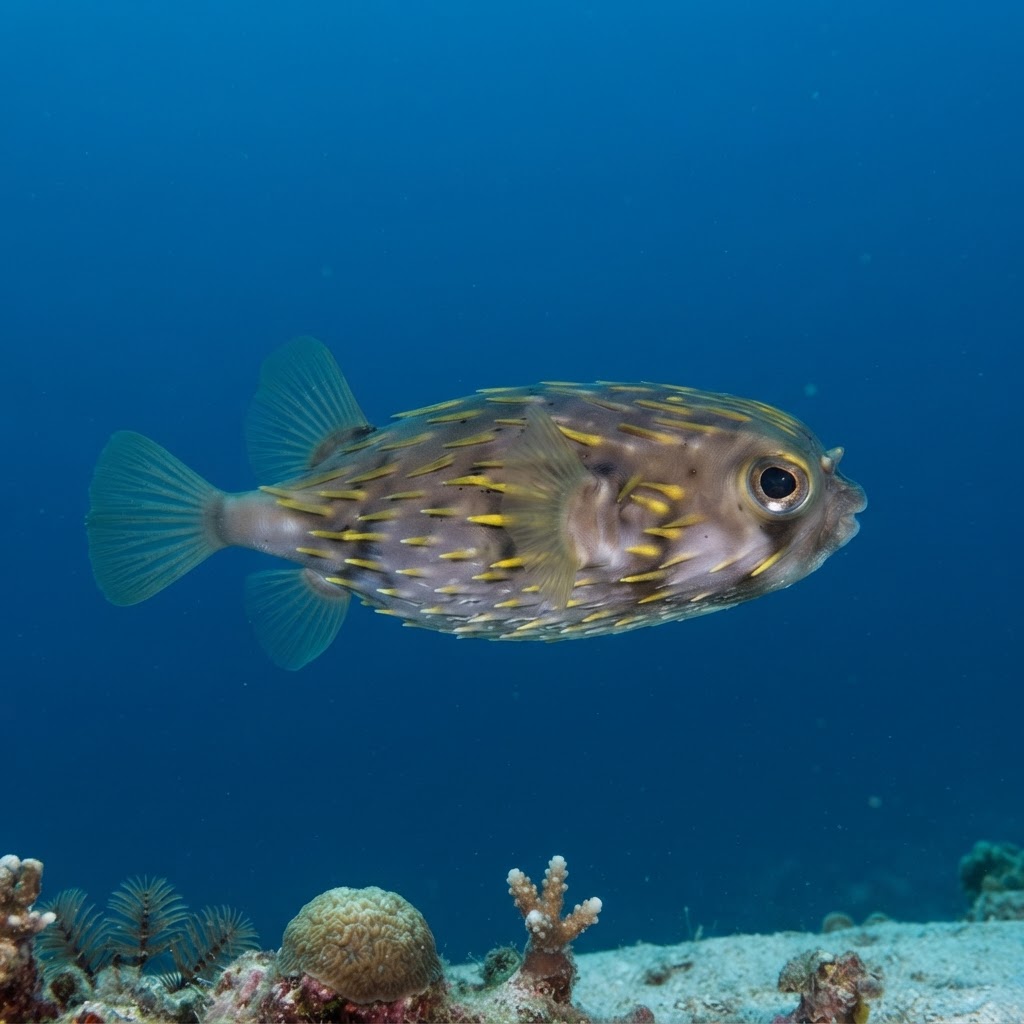
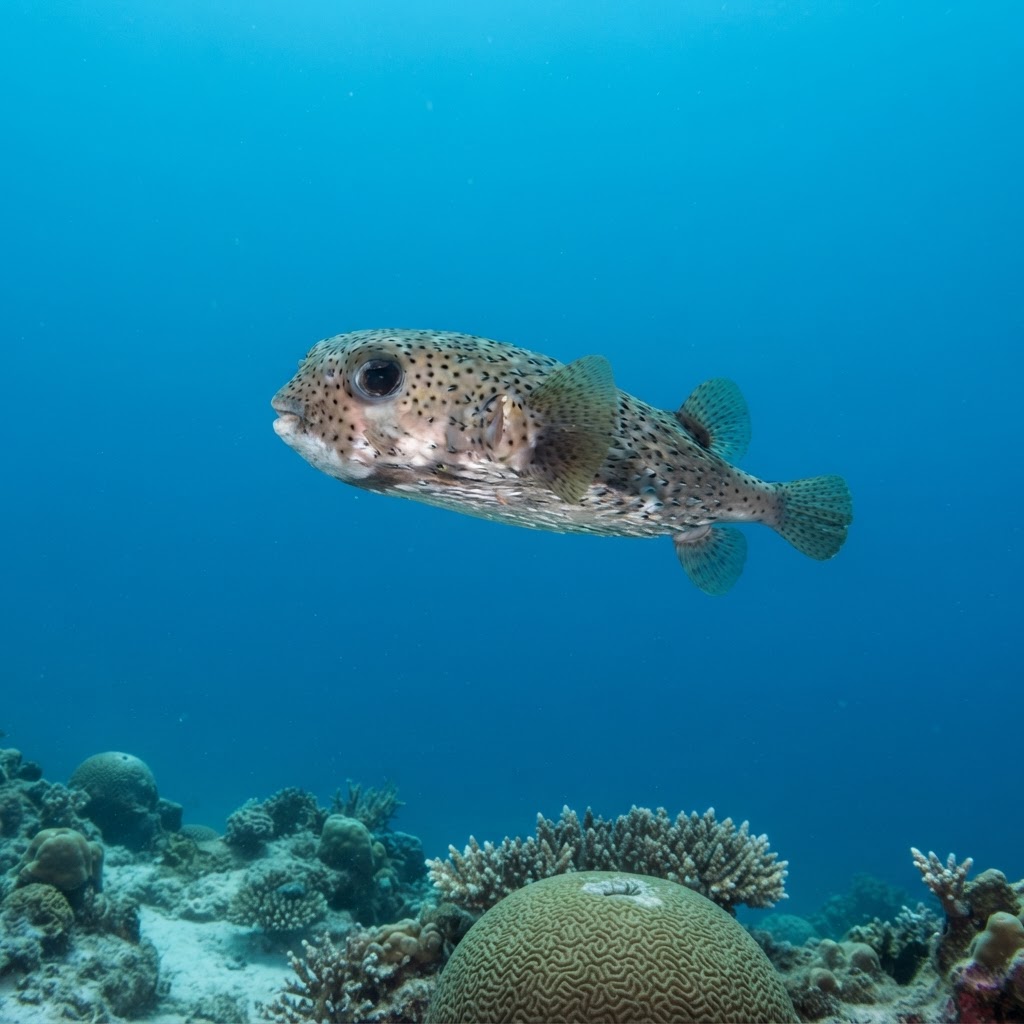
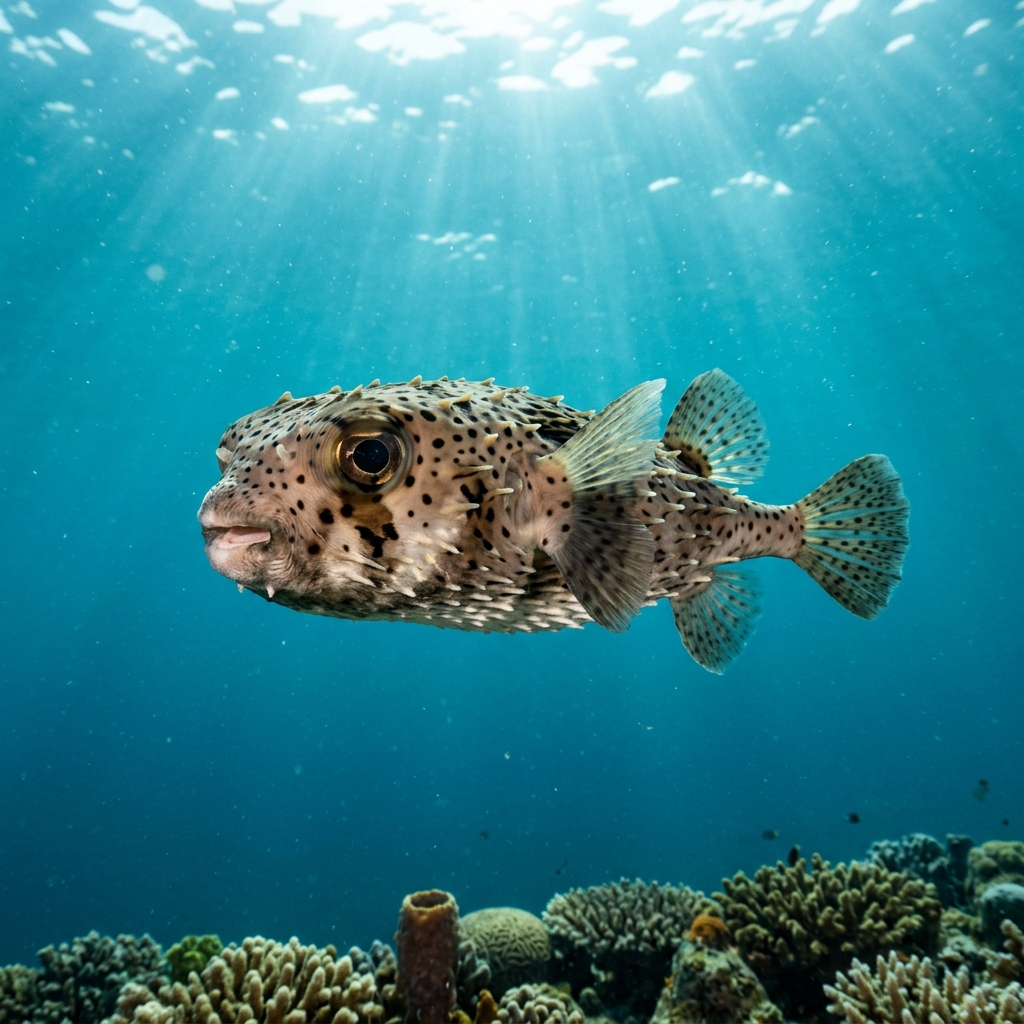
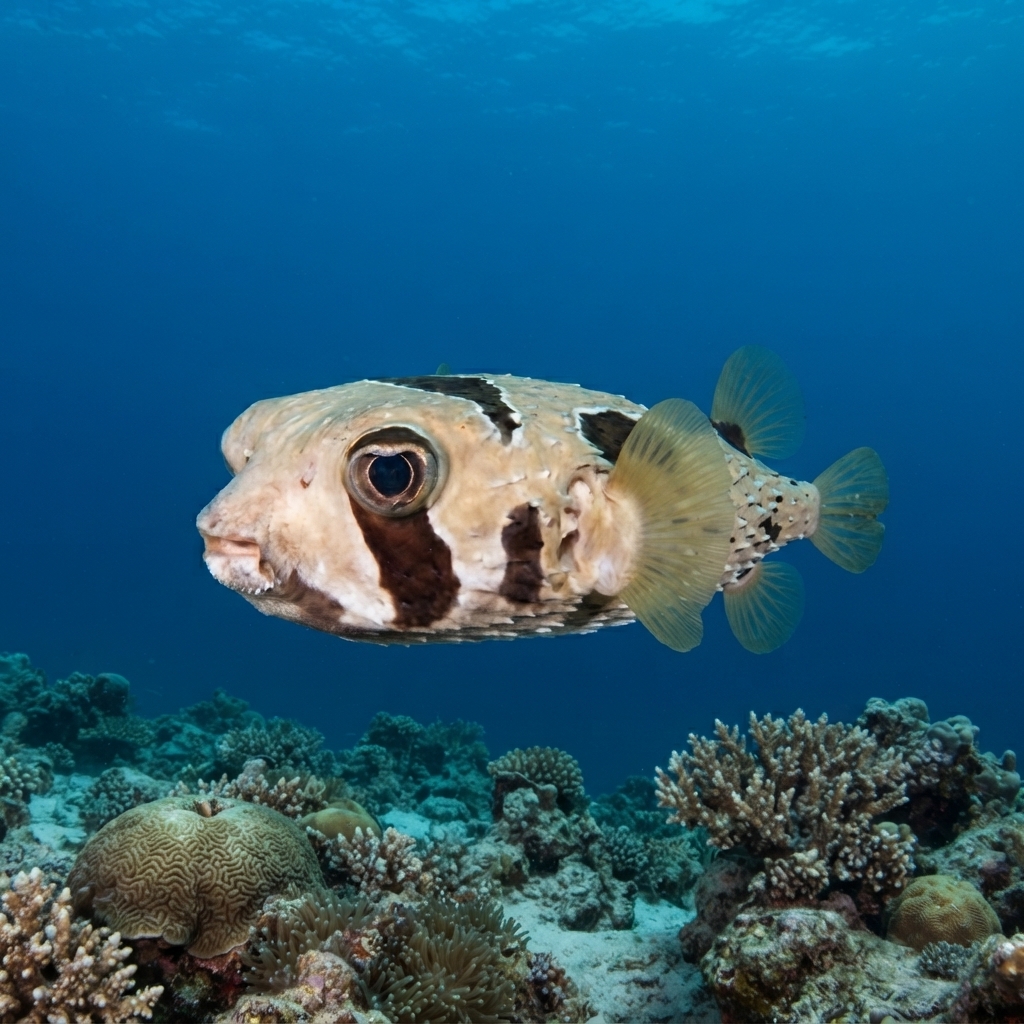
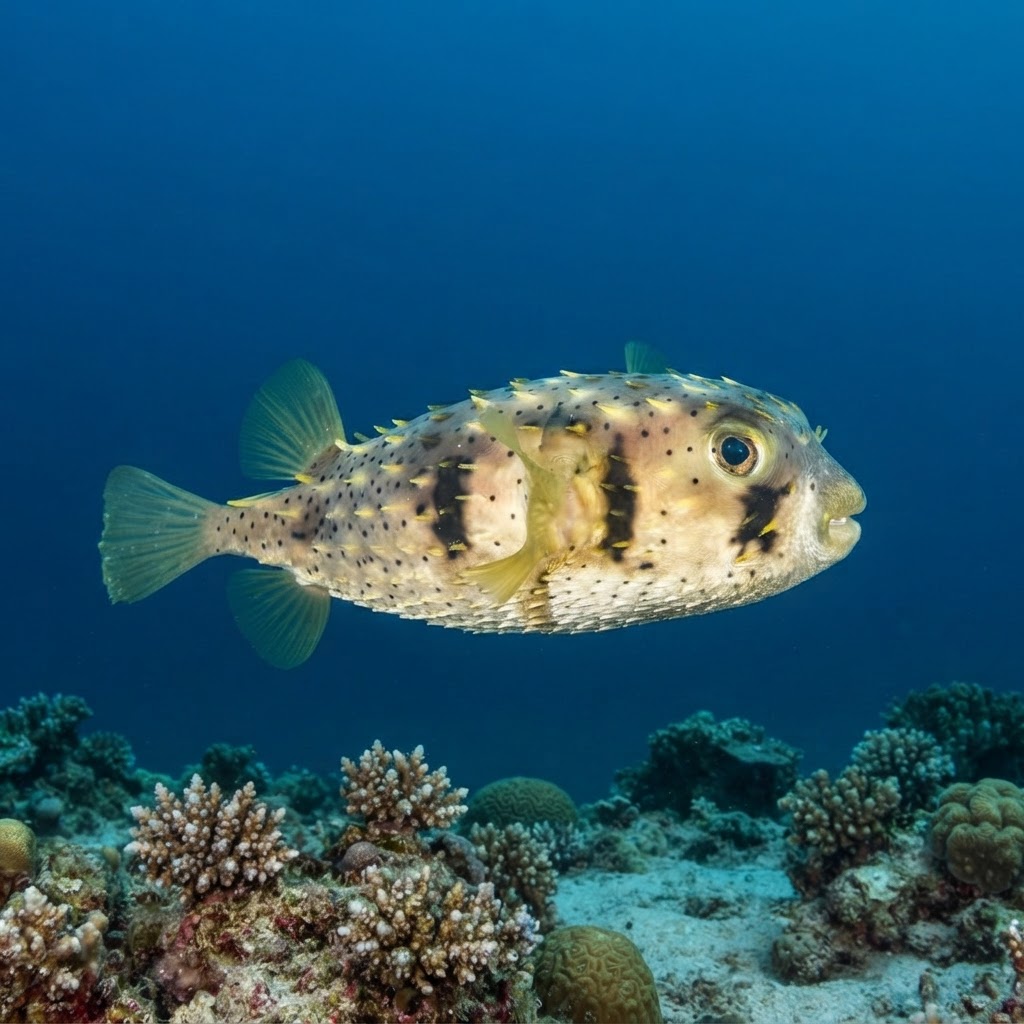
Chunky, rounded body covered in short spines that lie flat unless the fish puffs up, with a pale to yellowish background scattered with small dark spots. Large, almost owlish eyes and a blunt, beaked mouth give it a slightly comical face. Reaches about 28 cm, and it's often seen hovering or resting close to structure rather than swimming in open water.
Divers most often find it tucked under ledges or hovering slowly near reef structure, using its slow, deliberate fin beats rather than any burst of speed. It tends to be unbothered by divers, often letting you get a close look before easing off into a crevice. Most sightings come from daytime reef dives rather than night dives, though like other porcupinefish it may be more active after dark.
Like other porcupinefish, it can inflate itself by gulping water when threatened, locking its spines outward as a last-resort defence against predators.
No clear seasonal pattern shows up in the sightings, so treat it as a year-round find. Its comfort range of 18.5 to 24.5 C spans the typical temperate NSW reef conditions across most of the year.
Reef neighbours a diver could mistake it for. Use the identification notes above to tell them apart.
This is very much an Australian speciality, most reliably logged along New South Wales, with sites around Sydney and further up and down the coast turning up frequent sightings. Queensland sites also produce it, though less consistently than the NSW rocky reefs.
Mapping where Three-barred Porcupinefish is logged…
New South Wales is the standout region, with a strong scatter of sightings across its reef sites, while Queensland also has recorded sightings. Outside Australia it isn't a reliably logged species.
There's no strong seasonal pattern in the sighting data, so it can turn up on any dive through the year. It suits water between 18.5 and 24.5 C, which covers most of the NSW dive season.
Look for a rounded, spiny body with a pale background and small dark spots, big eyes, and a beaked mouth. It's usually seen resting near reef structure rather than out in open water, growing to around 28 cm.
They typically reach about 28 cm in length, making them a solidly sized but not huge reef fish.
No, they're not considered dangerous to divers. They rely on spines and inflation as defence against predators rather than posing any threat to people.
When threatened, it can gulp water to inflate its body, forcing its spines to stand outright as a defence that makes it far harder for a predator to swallow.
Site and sighting data is aggregated from diver logs, iNaturalist and GBIF. For taxonomy and conservation status:
Long-spine Porcupinefish
1,222 sites