Chilomycterus schoepfii
Small, spiny, and puffball-round: find striped burrfish on shallow reefs from the Carolinas to Cuba year-round in 15-29C water.
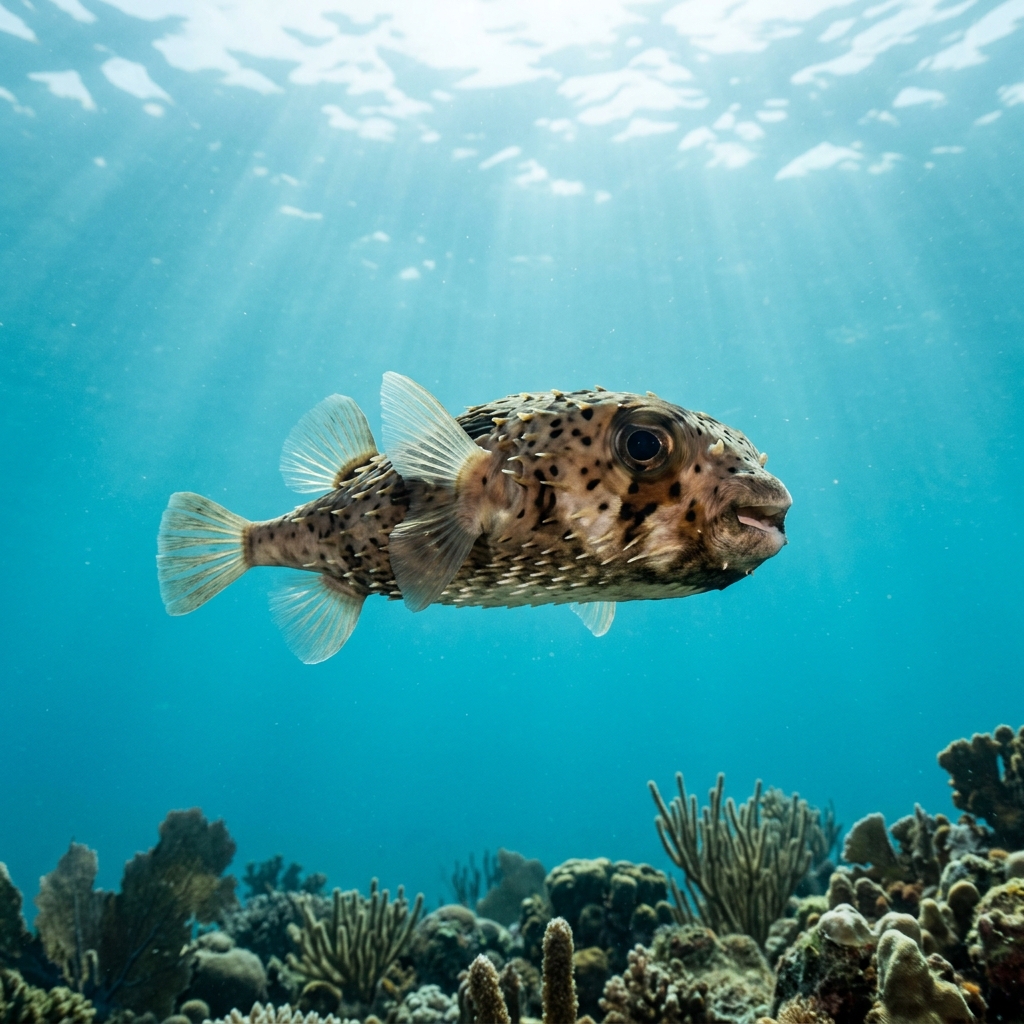
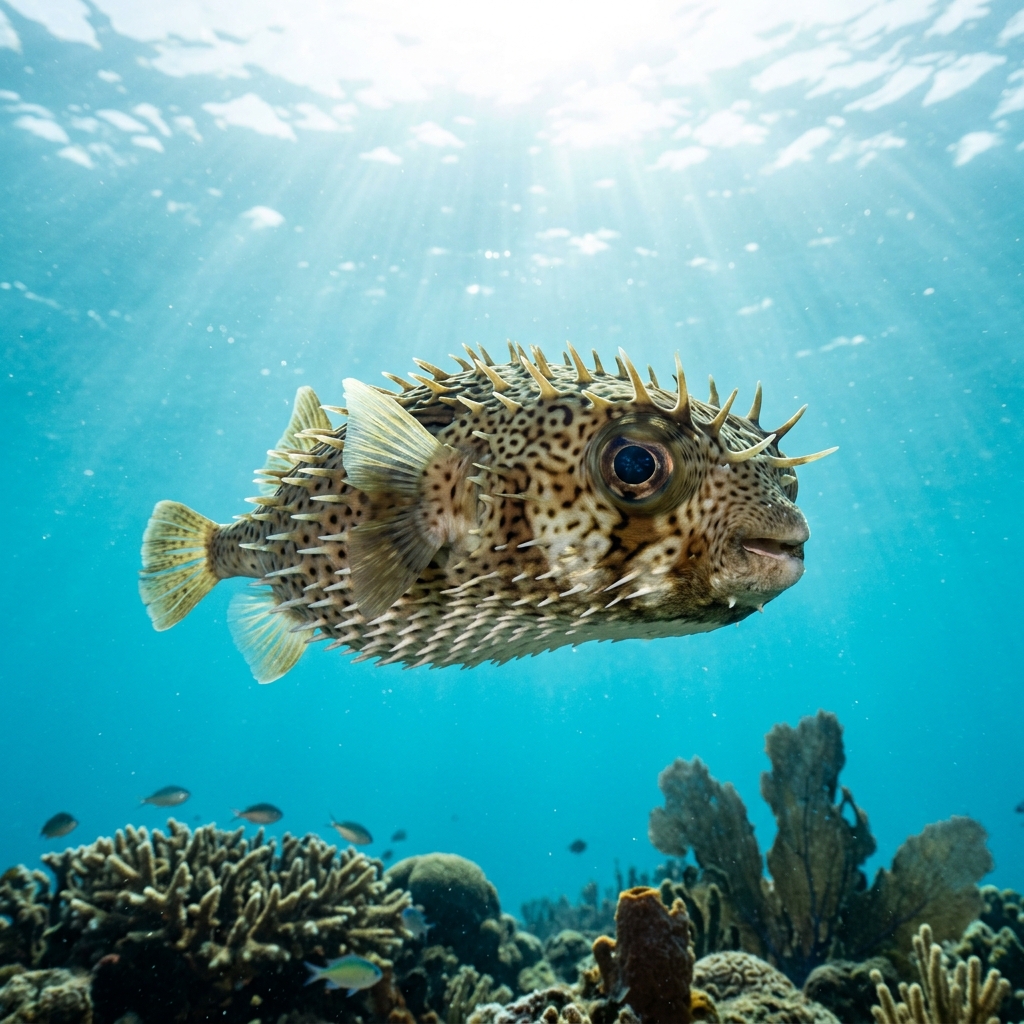
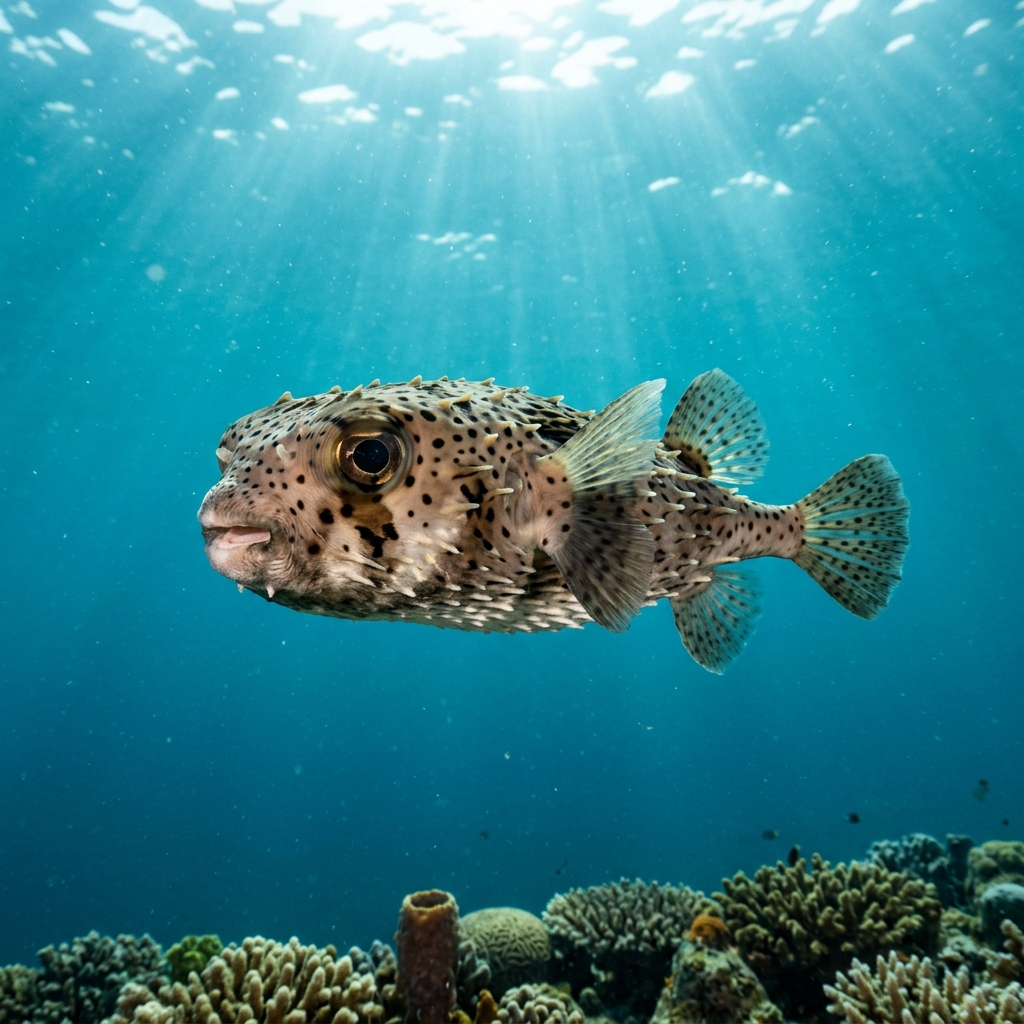
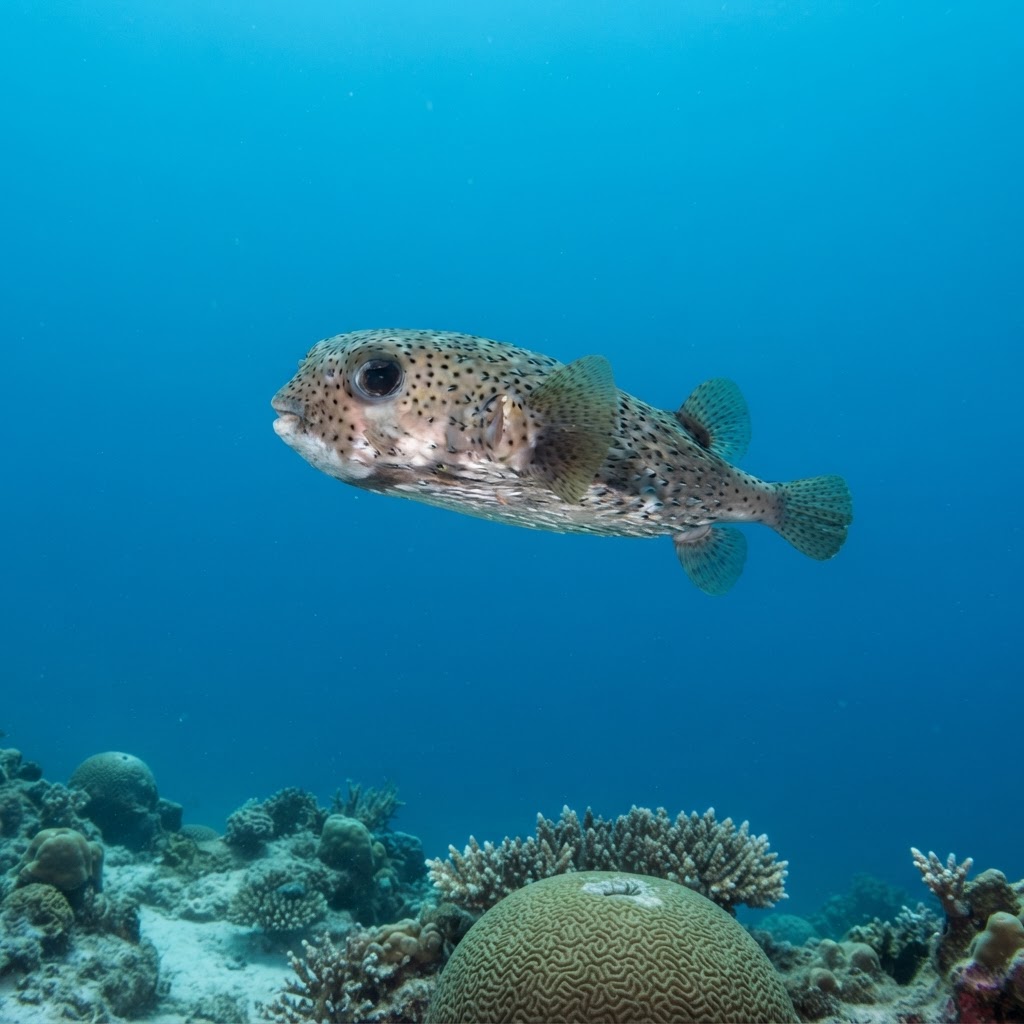
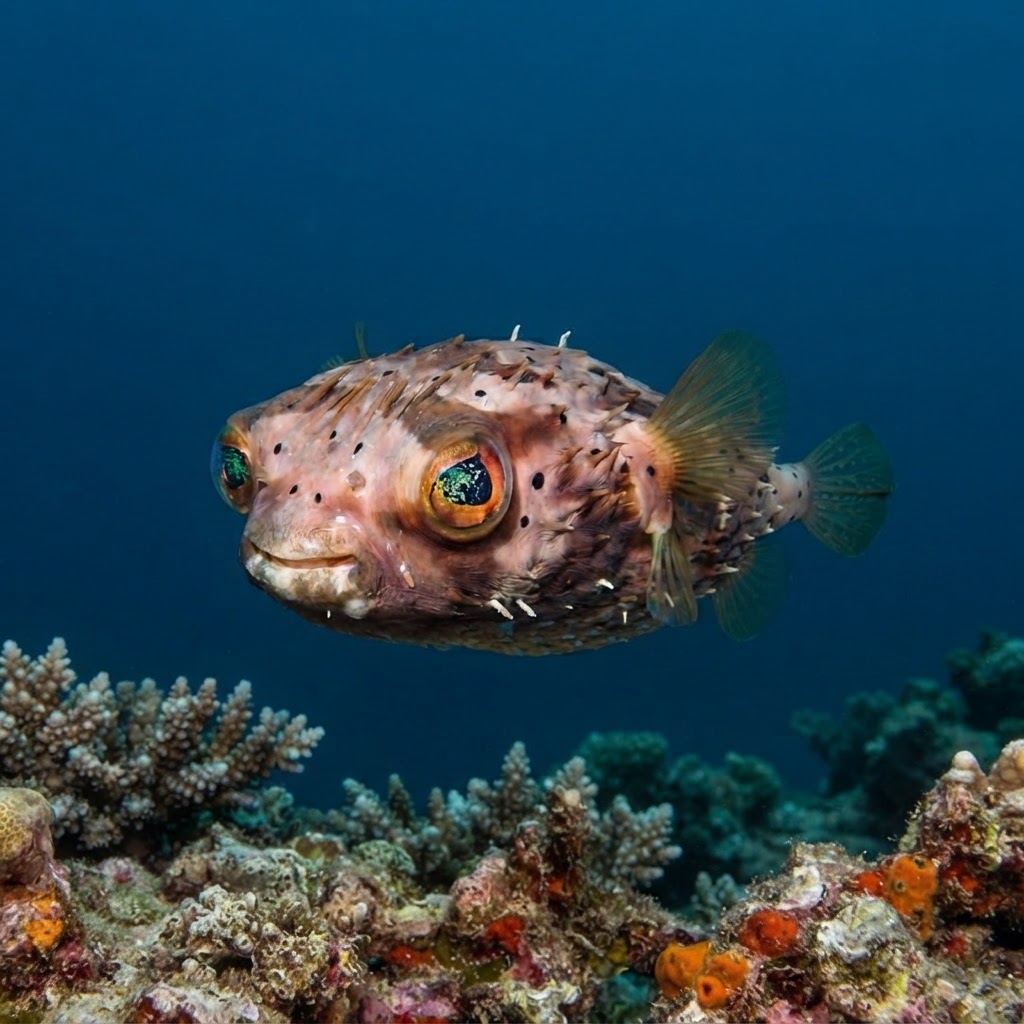
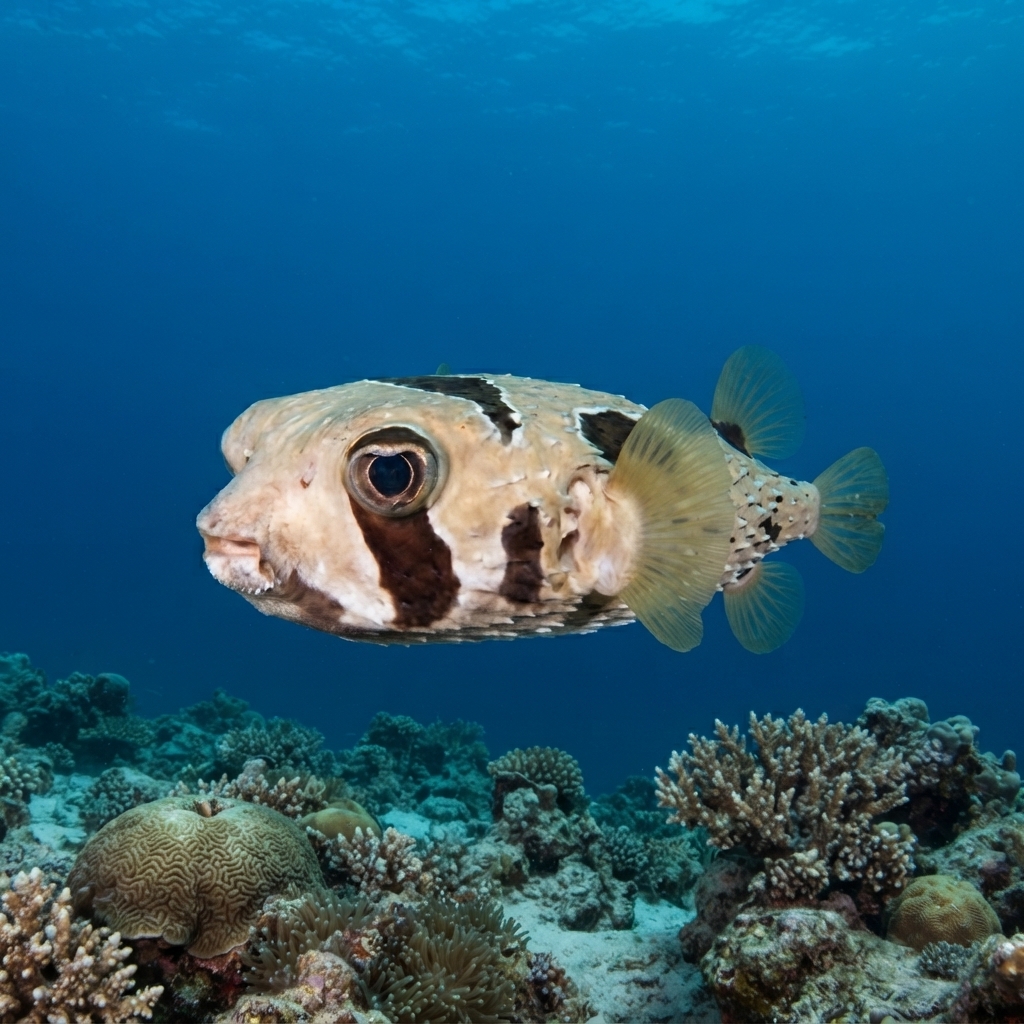
A short, almost spherical body covered in short, permanently erect spines gives this fish an unmistakable pufferball silhouette, rarely more than 18 cm long. Look for a pale yellow-green to olive body scattered with dark spots and faint stripe-like markings, plus large eyes set on a blunt face. Unlike true pufferfish, the spines stay fixed upright whether the fish is relaxed or startled, rather than lying flat and inflating on demand.
Divers usually find this one sitting still or moving slowly over sand patches, seagrass, and shallow reef edges rather than out in open water. It tends to hold its ground when approached, relying on its spiny armour instead of fleeing, which makes it an easy, unhurried subject for a photo. Most sightings are in the shallow 1 to 11 m band, often tucked near structure during the day.
Those spines are fixed in place, not inflatable like a true pufferfish's, so the defence works whether or not the fish has taken on water or air.
No clear seasonal pattern shows up in the data, and with a comfortable range from about 15 to 29C it turns up on shallow reefs and grass beds throughout the year.
Reef neighbours a diver could mistake it for. Use the identification notes above to tell them apart.
Most reliably logged in the United States, especially the Carolinas and Florida, with strong showings in Cuba's Jardines del Rey and Canarreos Archipelago. Also a regular find along Colombia's Caribbean coast, in Venezuela, and around the Bahamas, Belize, and the Dominican Republic.
Mapping where Striped Burrfish is logged…
Best logged across the United States, particularly the Carolinas and Florida, plus Cuba's Jardines del Rey and Canarreos Archipelago. Colombia's Caribbean coast, Venezuela, the Bahamas, and Belize also produce regular sightings.
There is no strong seasonal signal in the sighting data, and its wide temperature tolerance (roughly 15 to 29C) means it can be found on shallow reefs year-round.
Look for a small, rounded body covered in short, fixed spines, an olive to yellow-green colour, and scattered dark spots. It rarely exceeds 18 cm and tends to sit still near sand or reef structure rather than swim actively.
They top out around 18 cm, making them one of the smaller members of the porcupinefish family divers encounter on shallow reefs.
No, they pose no threat to divers. Their defence is passive, fixed body spines rather than any aggressive behaviour, and they typically just hold still when approached.
Site and sighting data is aggregated from diver logs, iNaturalist and GBIF. For taxonomy and conservation status:
Long-spine Porcupinefish
1,222 sites