Diodon liturosus
Spot this spiny reef dweller in the Maldives' Central Atolls or Phuket, year-round in 25-29C water. Here's how to tell it apart.
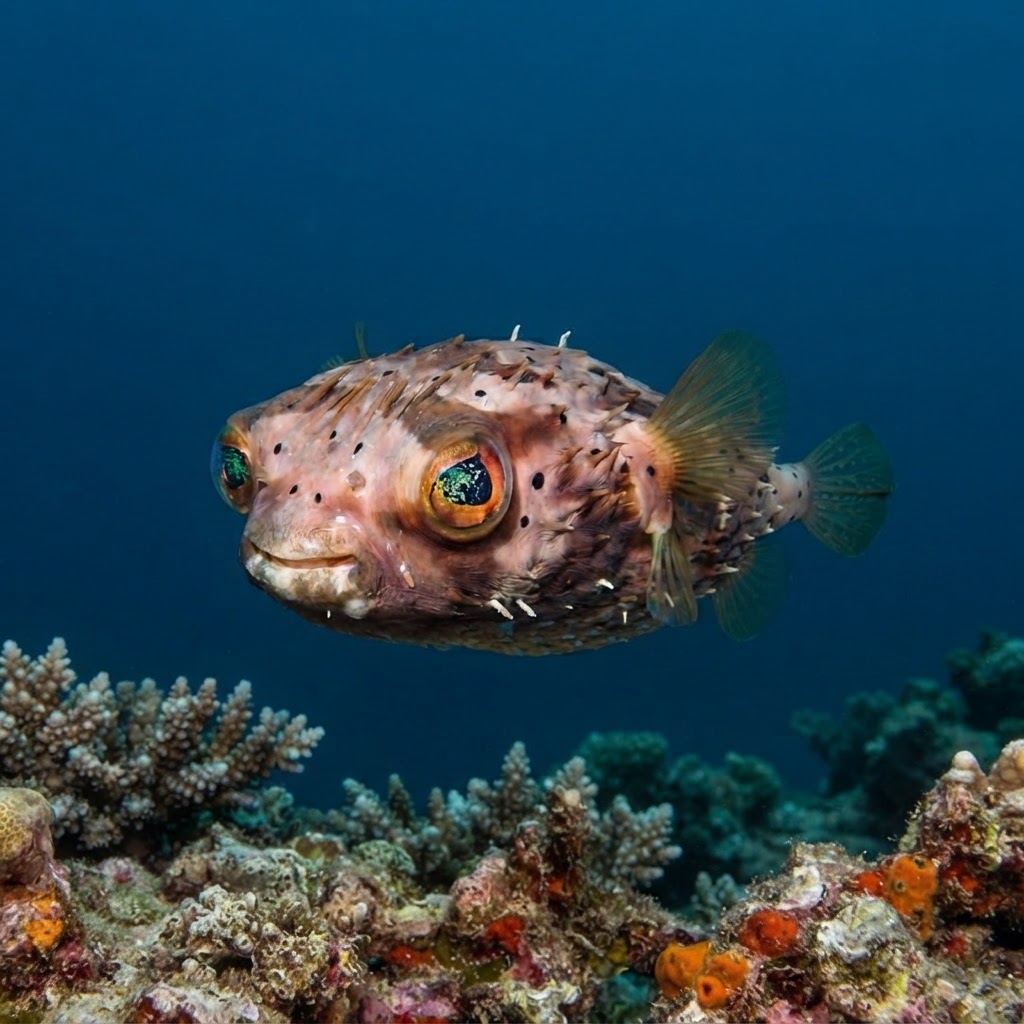
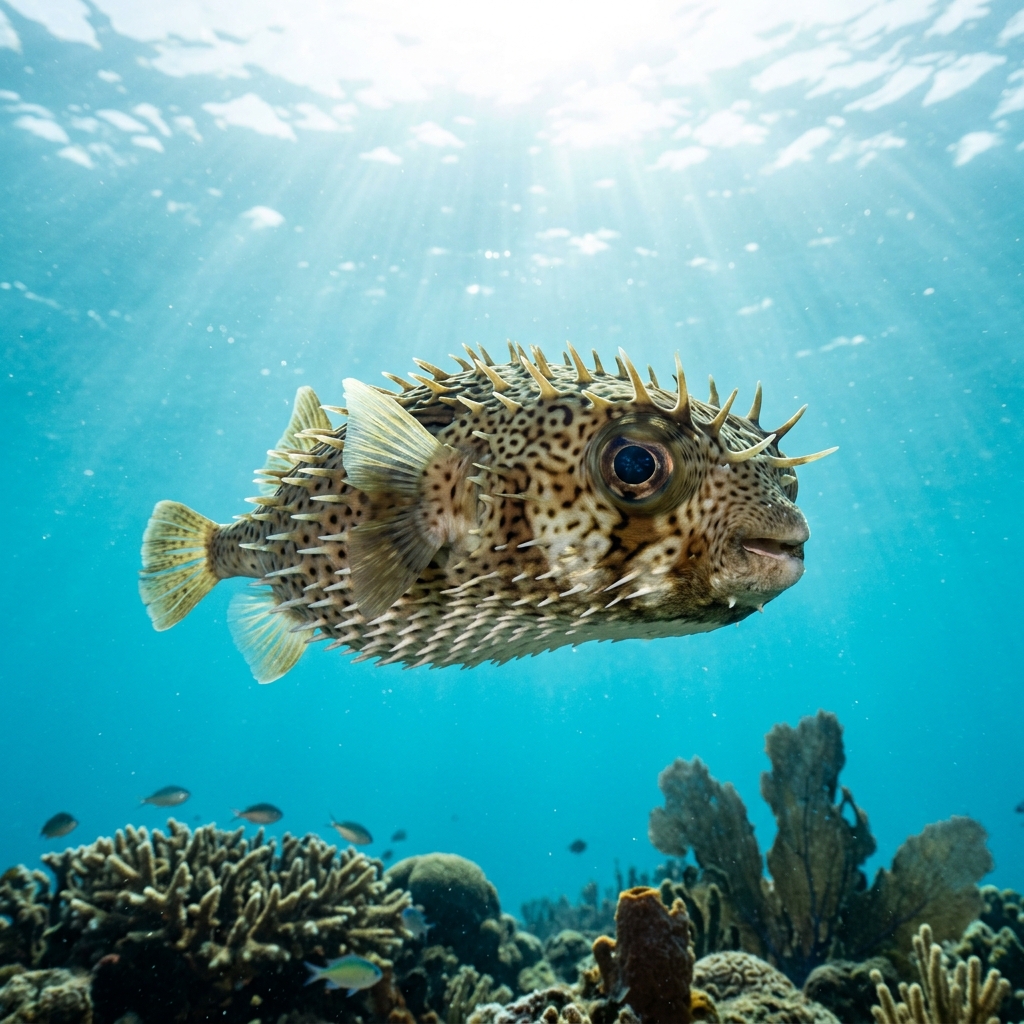
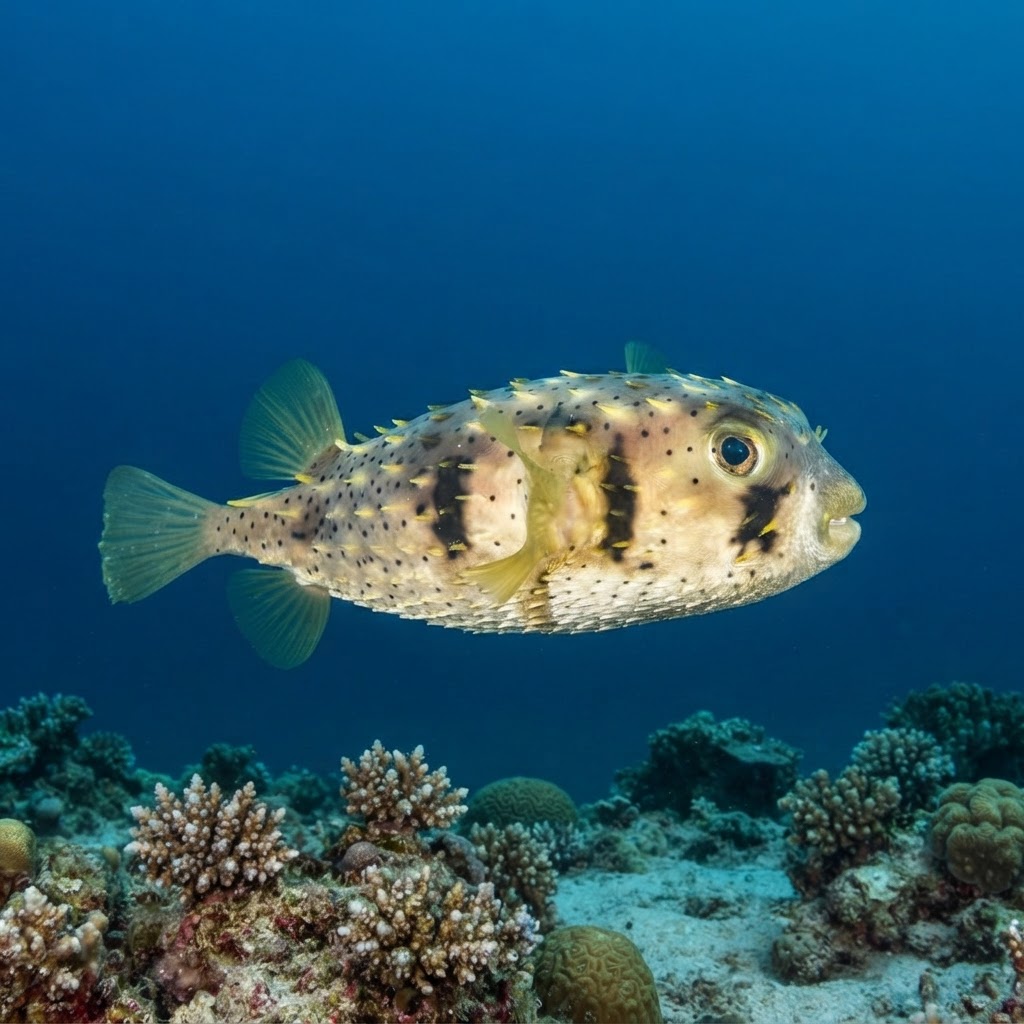
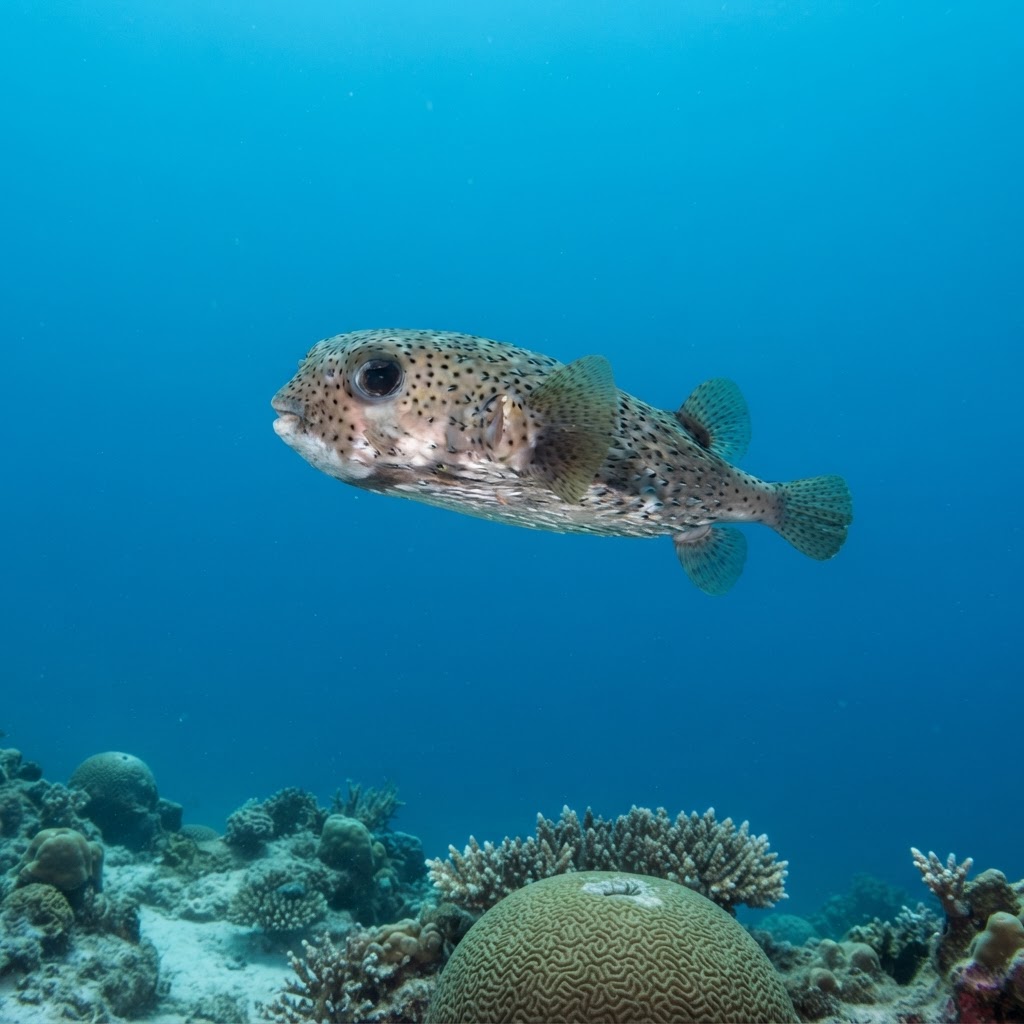
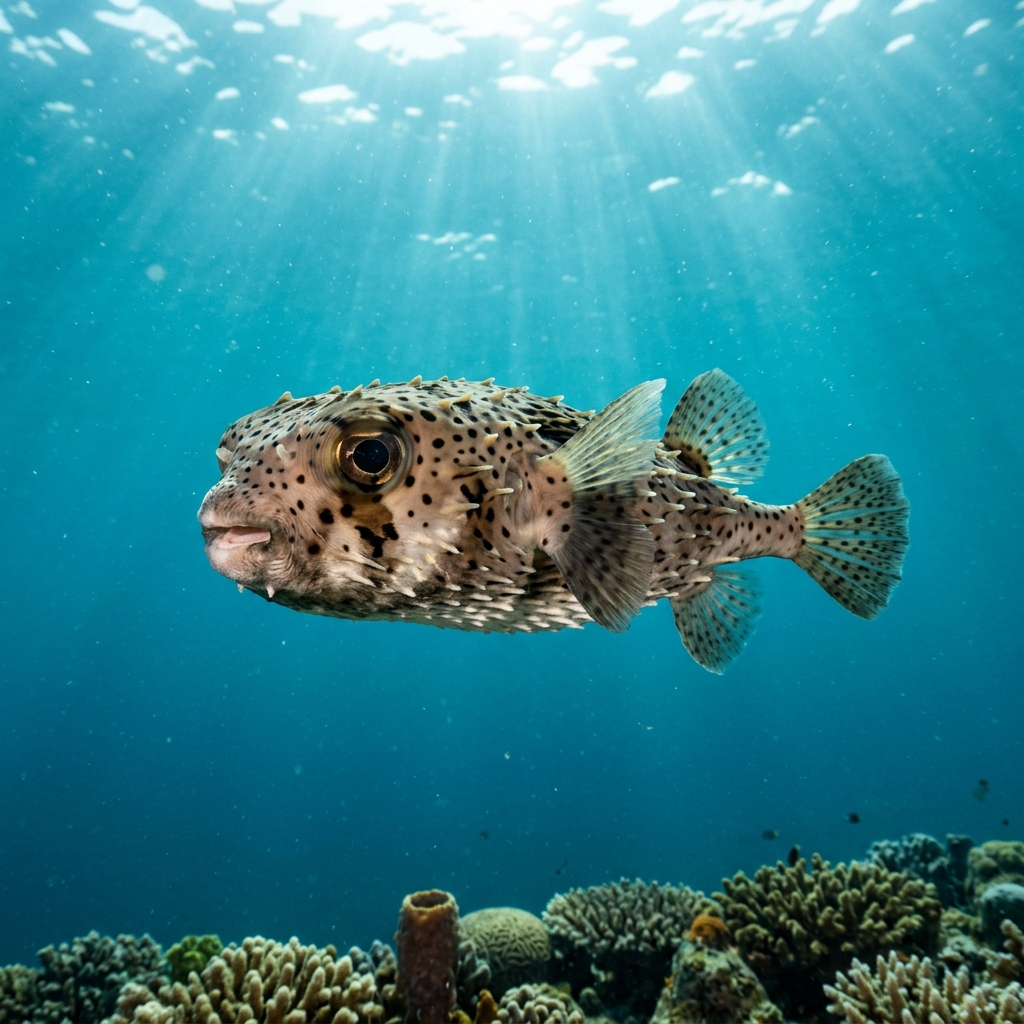
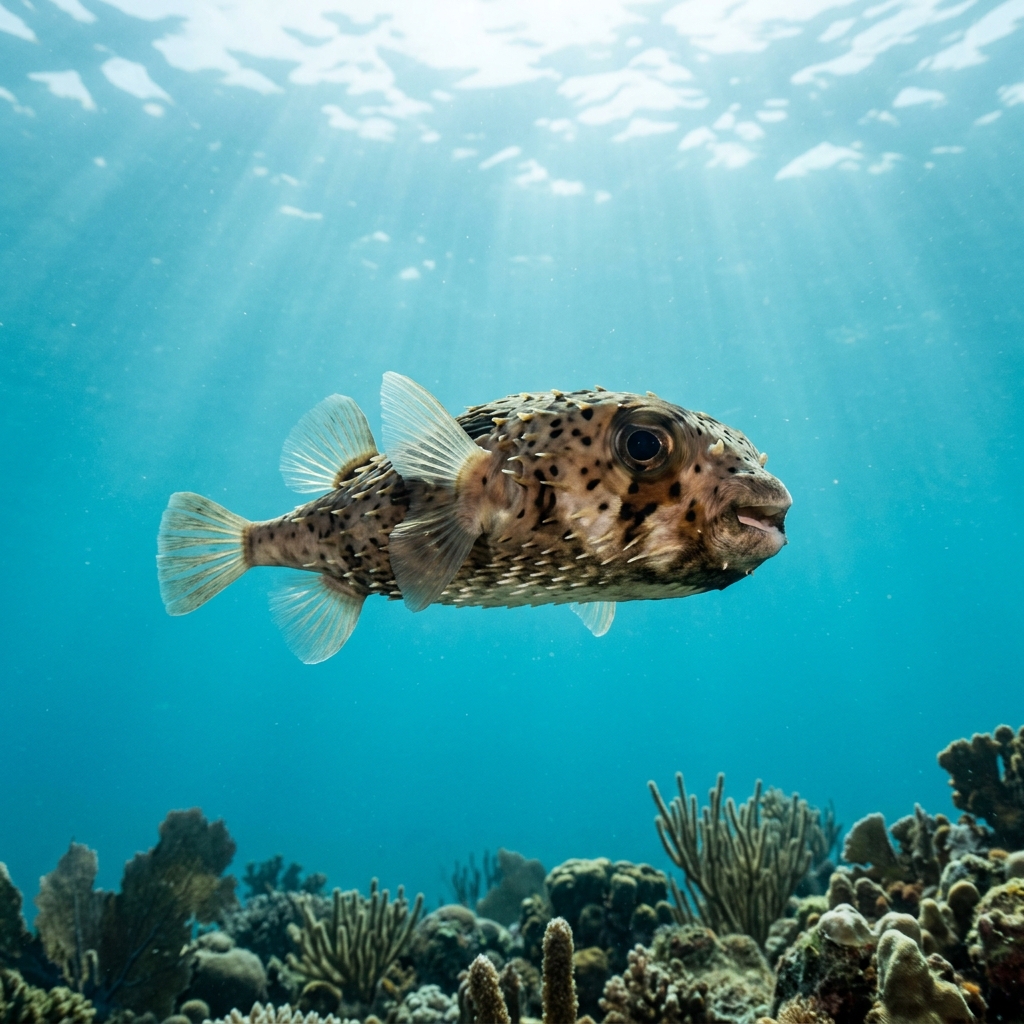
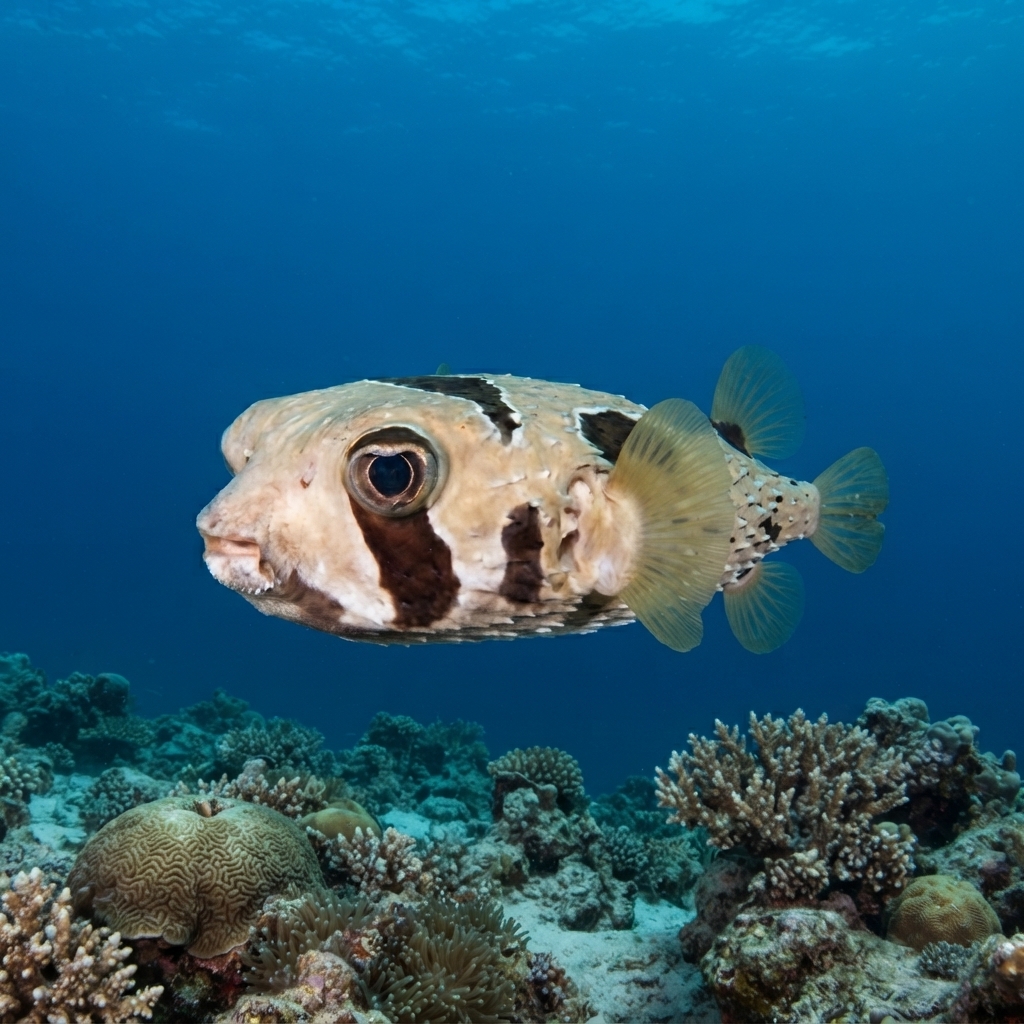
Chunky, balloon-bodied fish up to 45 cm with a pattern of large dark brown blotches scattered over a paler yellow-brown body, distinct from the smaller speckling of its relatives. Long spines lie flat against the body until it feels threatened, when they stand upright and the whole fish puffs into a spiny ball. Big, almost cartoonish eyes and a blunt beak-like mouth give it away even at a distance, and it's usually seen hovering motionless rather than swimming with purpose.
Usually found tucked under ledges, in small caves, or hovering close to coral heads by day, often solo and doing very little, since it's a slow, deliberate swimmer that relies on camouflage rather than speed. Divers who approach slowly can usually get a close look without it bolting, though it may drift a short distance into cover if crowded. More active foraging happens after dark, when it hunts crabs, molluscs, and sea urchins with that hard beak-like mouth.
Those fused, beak-like jaws are built to crush hard-shelled prey like crabs and sea urchins, and the same jaw structure is what lets porcupinefish crack through shell that would stop most reef fish cold.
No clear seasonal pattern shows up in sightings, and with a comfort range of roughly 25 to 29C it stays on tropical reefs year-round, so any month at these sites is fair game.
Reef neighbours a diver could mistake it for. Use the identification notes above to tell them apart.
Most reliably logged in the Maldives, especially the Central Atolls, with strong numbers also out of Thailand around Phuket and Koh Tao, and Malaysia's Sabah and east coast Peninsular sites. It also turns up steadily in the Seychelles' Inner Islands, the Philippine Visayas, Indonesia, Oman's Daymaniyat Islands, and South Africa.
Mapping where Black-blotched Porcupinefish is logged…
The Maldives' Central Atolls are the most consistent spot, alongside Phuket and Koh Tao in Thailand and Sabah in Malaysia. The Seychelles' Inner Islands, the Philippine Visayas, and Oman's Daymaniyat Islands also produce regular sightings.
There's no strong season in the sighting data, and it tolerates warm tropical water year-round, so it's a fair bet on any month at the right reefs.
Look for a rounded, spiny body up to 45 cm with large irregular dark blotches over a tan or yellowish base, plus oversized eyes and a fused beak-like mouth. It's usually still, tucked near a ledge or coral head rather than out swimming in open water.
They typically reach around 45 cm in length, making them one of the larger porcupinefish divers encounter on tropical reefs.
No, they pose no real threat to divers and will simply retreat or puff up defensively if disturbed rather than attack. The main hazard is to would-be predators, since the raised spines and toxic skin are aimed at fish and sharks, not people.
Site and sighting data is aggregated from diver logs, iNaturalist and GBIF. For taxonomy and conservation status:
Long-spine Porcupinefish
1,222 sites