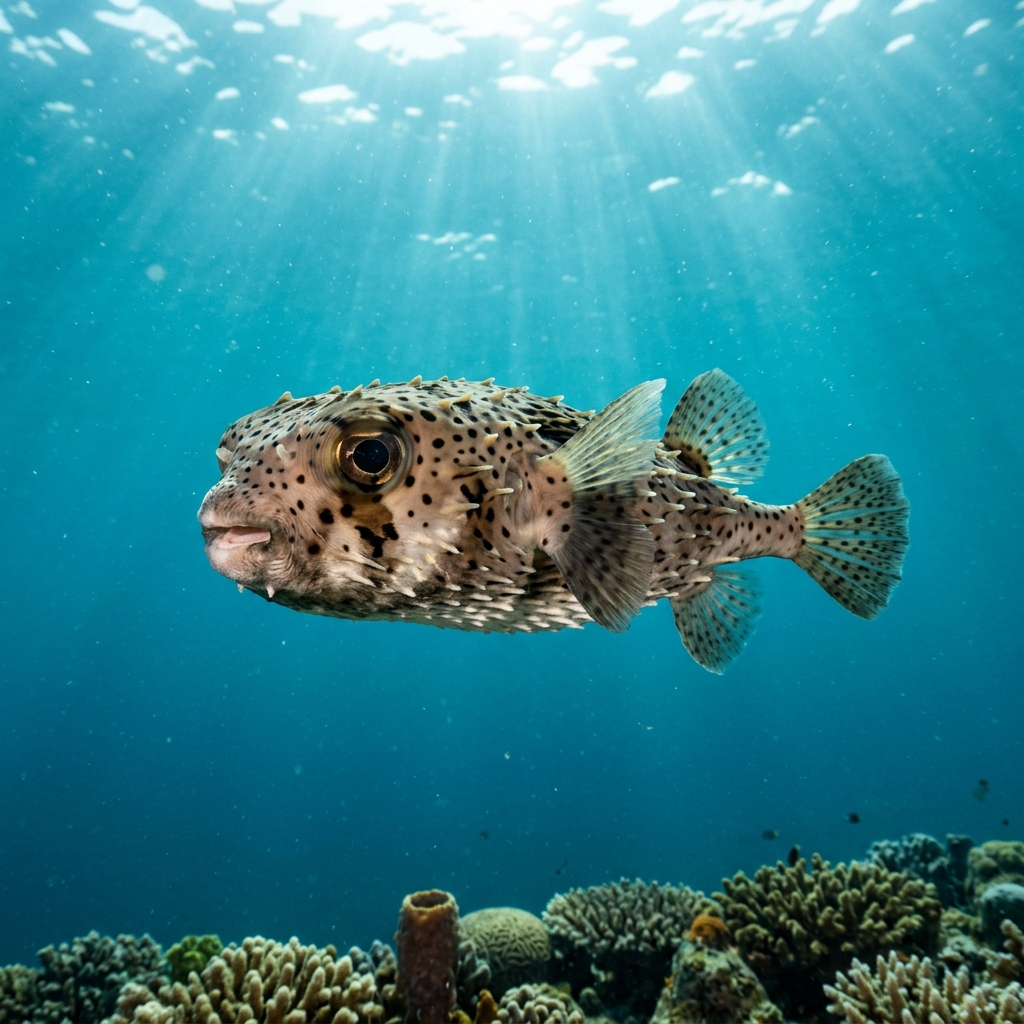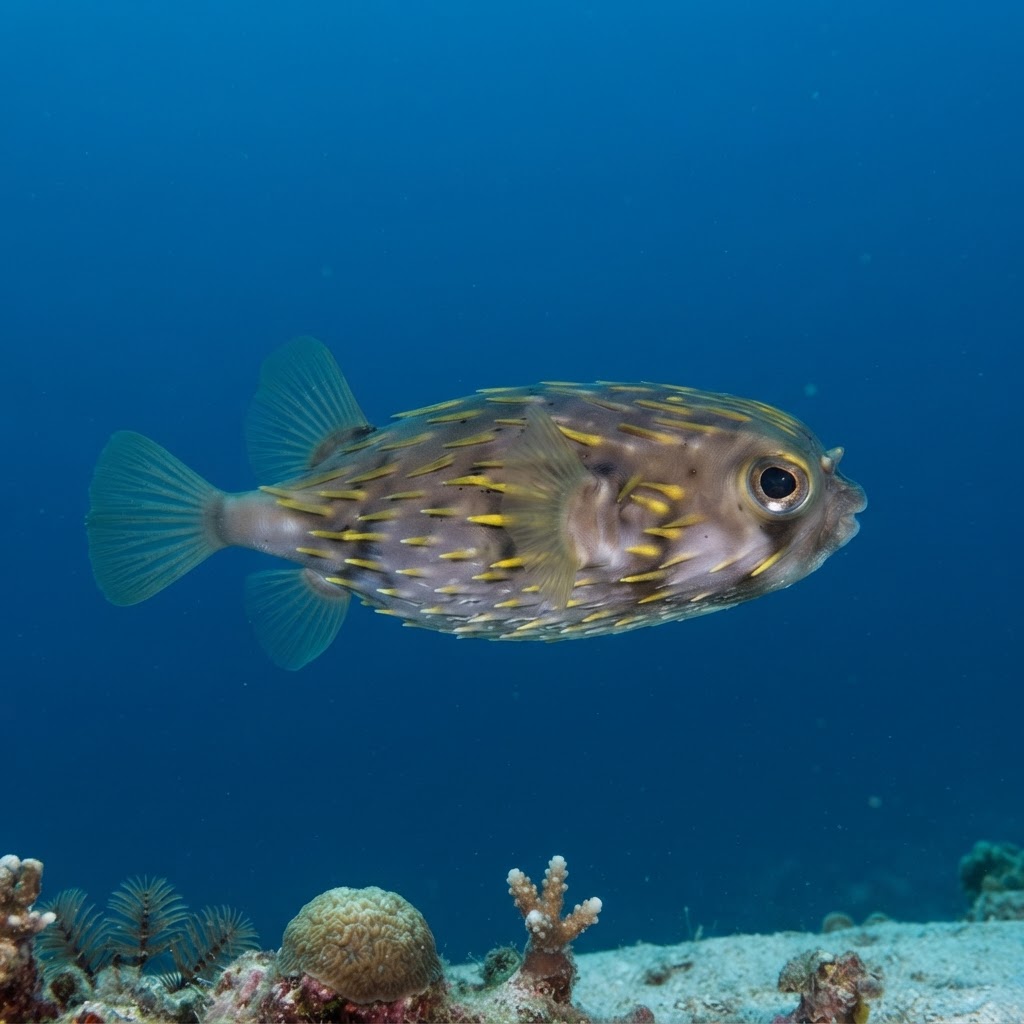
Diodon nicthemerus
Spiny little pufferfish with big eyes, commonly logged in Victoria and Western Australia at 15 to 22C, year-round on temperate reefs.
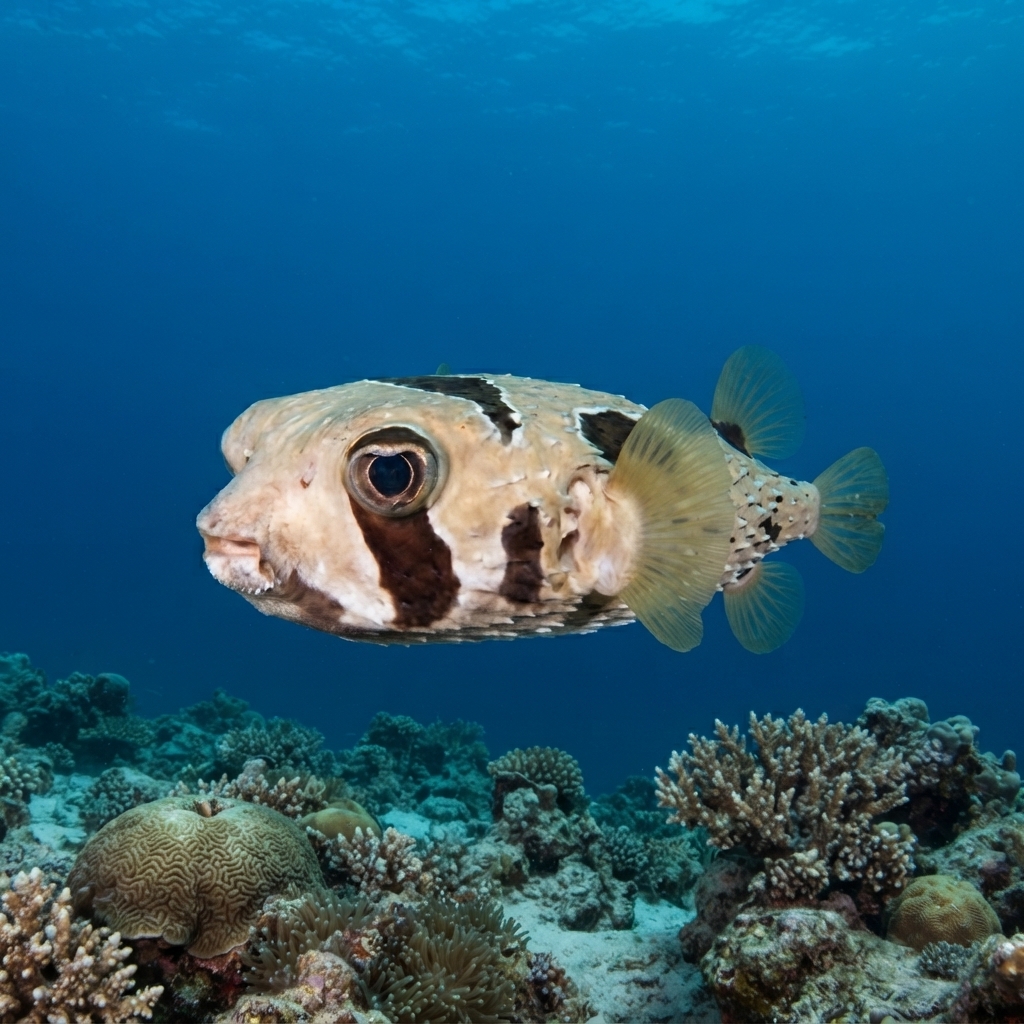
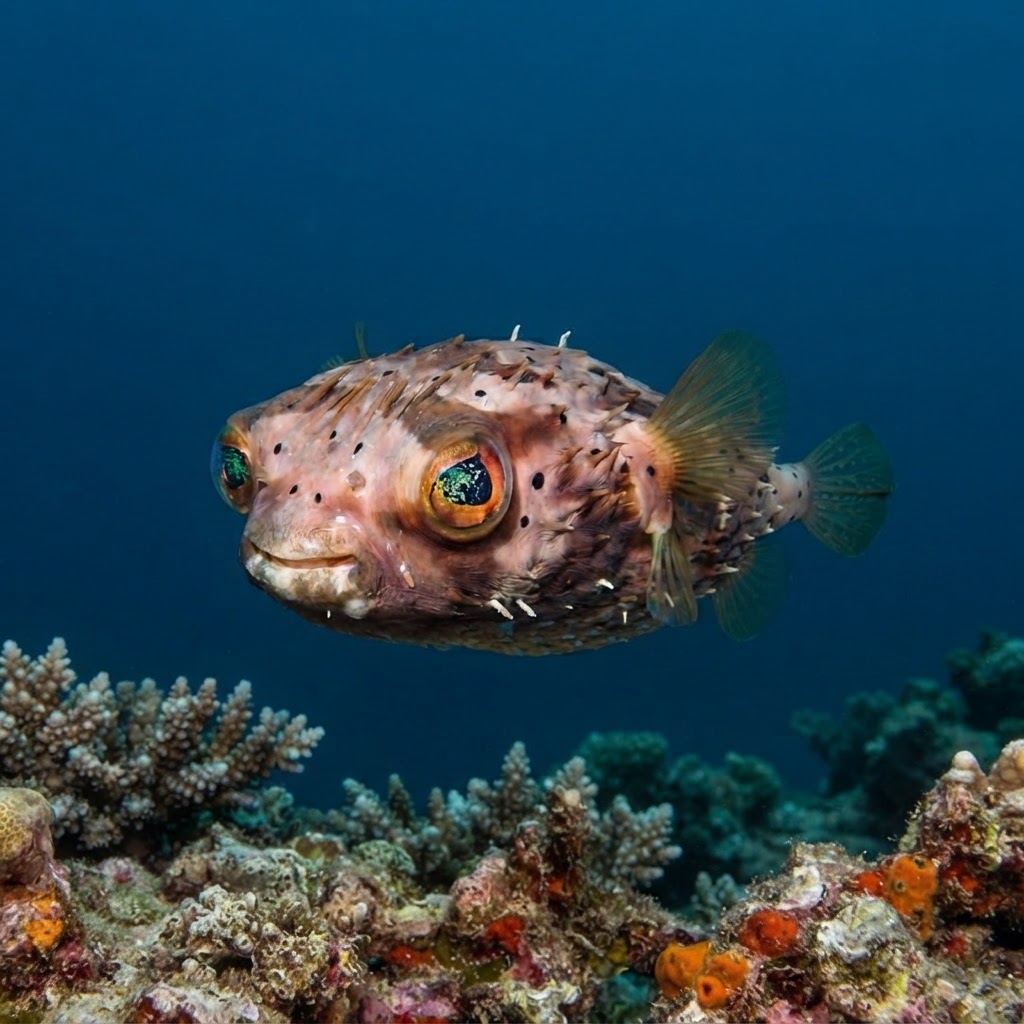
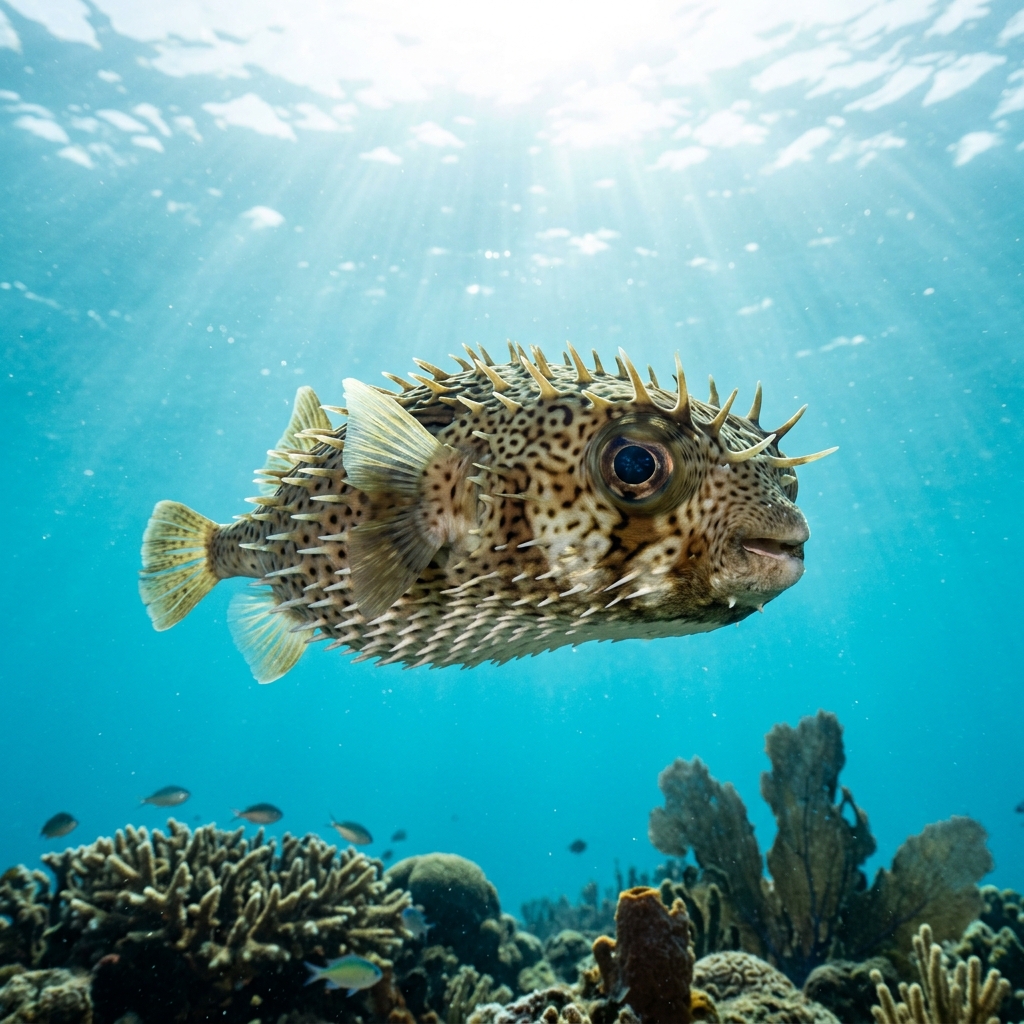
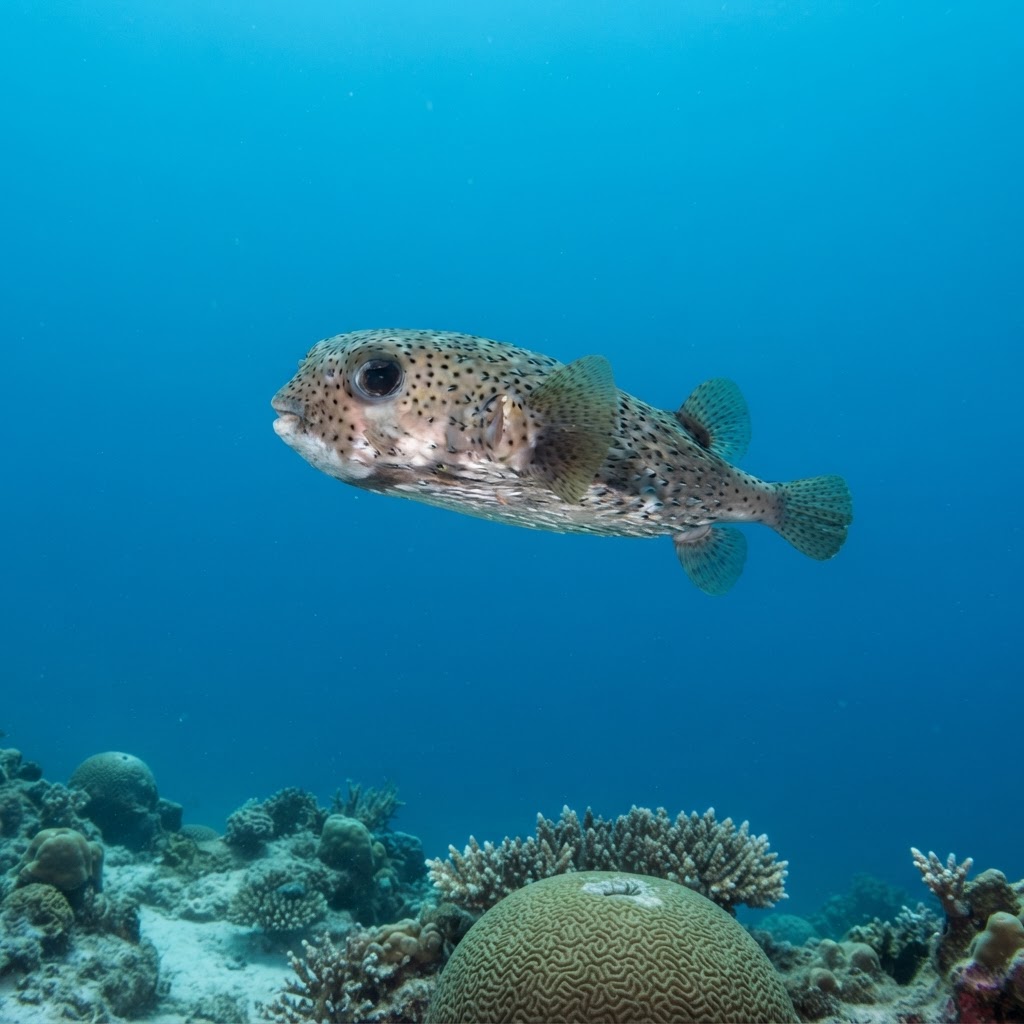
Compact, rounded body up to about 28cm covered in fine, slender spines that lie flat until the fish puffs up. Pale grey to yellowish-brown with scattered dark blotches and a few larger dark spots along the back, plus a distinctive big-eyed, blunt-nosed face. Swims with slow, deliberate fin flutters rather than a sleek glide, which combined with the boxy shape makes it easy to pick out against rock and sponge-covered reef.
Divers most often find it tucked under ledges, in kelp-fringed rocky crevices or resting on sponge gardens by day, moving out more actively at dusk and at night. It is a slow, unhurried swimmer that relies on its spines and its ability to inflate rather than fleeing, so it will often let a diver get a close, patient look before easing away. Most encounters are single fish rather than groups, and it is logged as uncommon to rare at the majority of sites where it appears.
Like other porcupinefish, it can gulp water to inflate its body and erect its spines when threatened, turning a slim, easy target into a spiny ball too awkward for most predators to swallow.
Sightings show no strong seasonal pattern, so it is logged year-round across its Australian range. It sits comfortably in cool temperate water from about 15 to 22C, which covers most of the diving season in Victoria, South Australia and Tasmania.
Reef neighbours a diver could mistake it for. Use the identification notes above to tell them apart.
This is an Australian speciality, most logged in Victoria and Western Australia, with a solid presence in South Australia and Tasmania too. It turns up on temperate reef and rocky-reef sites right across the southern Australian coastline, usually as a scattered, low-density sighting rather than a guaranteed spot.
Mapping where Slender-spined Porcupine Fish is logged…
It is an Australian endemic, most reliably logged on temperate reef sites in Victoria and Western Australia, with further sightings in South Australia and Tasmania.
There is no strong season in the sighting data, so it is seen year-round. It favours cool water between about 15 and 22C, which matches typical diving conditions across southern Australia most of the year.
Look for a rounded, spiny body up to around 28cm, pale mottled colouring with dark blotches, big eyes and a slow, fluttering swim. It is often resting under ledges or on sponge-covered rocky reef rather than out in open water.
They reach roughly 28cm in length, a compact, rounded build rather than an elongated one, making them one of the smaller members of the porcupinefish family.
No, they pose no real threat to divers. Their defence is inflating their body and raising their spines rather than being aggressive, so they are safe to observe from a normal, non-touching distance.
It can swallow water to puff up into a spiny ball, a classic porcupinefish trick that makes it awkward for most predators to tackle even though it is otherwise a slow swimmer.
Site and sighting data is aggregated from diver logs, iNaturalist and GBIF. For taxonomy and conservation status:
Long-spine Porcupinefish
1,222 sites