Chilomycterus reticulatus
Spot the Spotfin Burrfish across Florida, Roatán and the Galápagos. Here's how to ID it, when to look, and what makes it stand out from other porcupinefish.
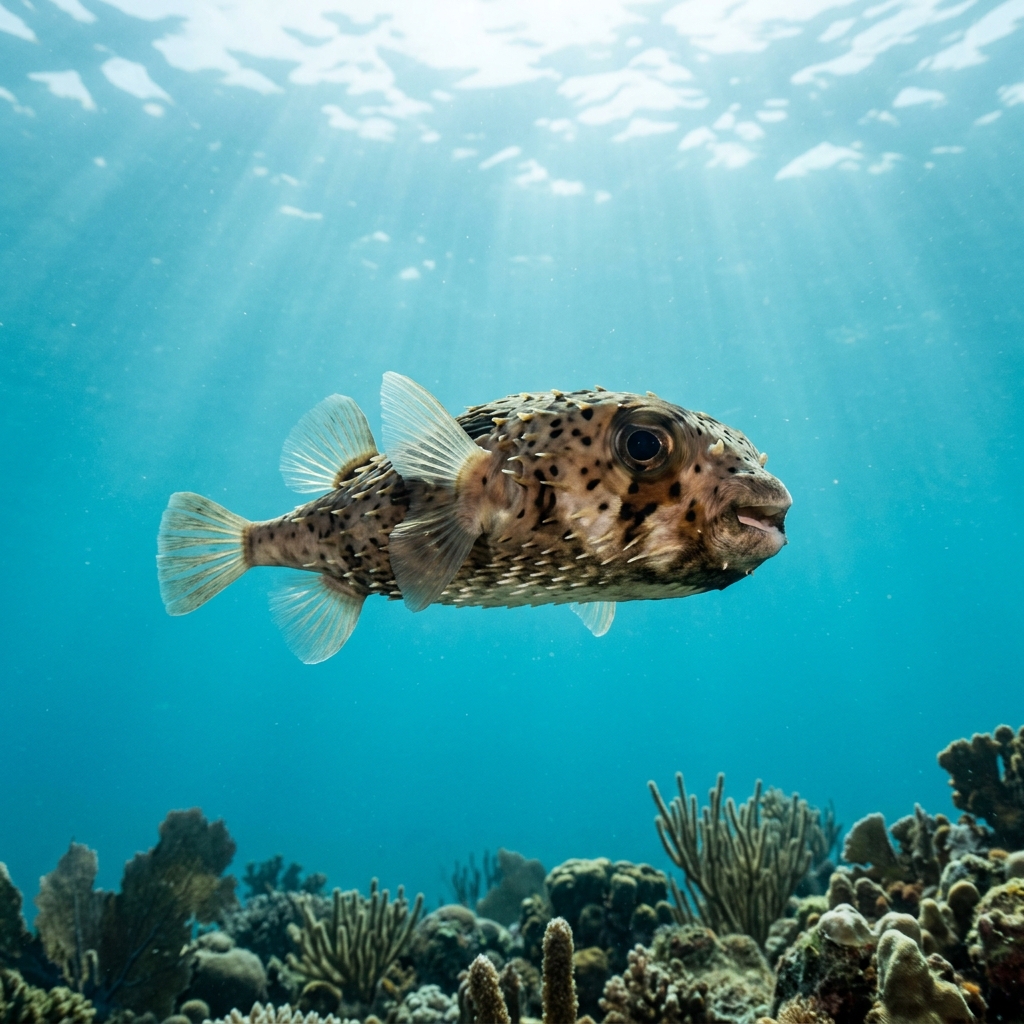
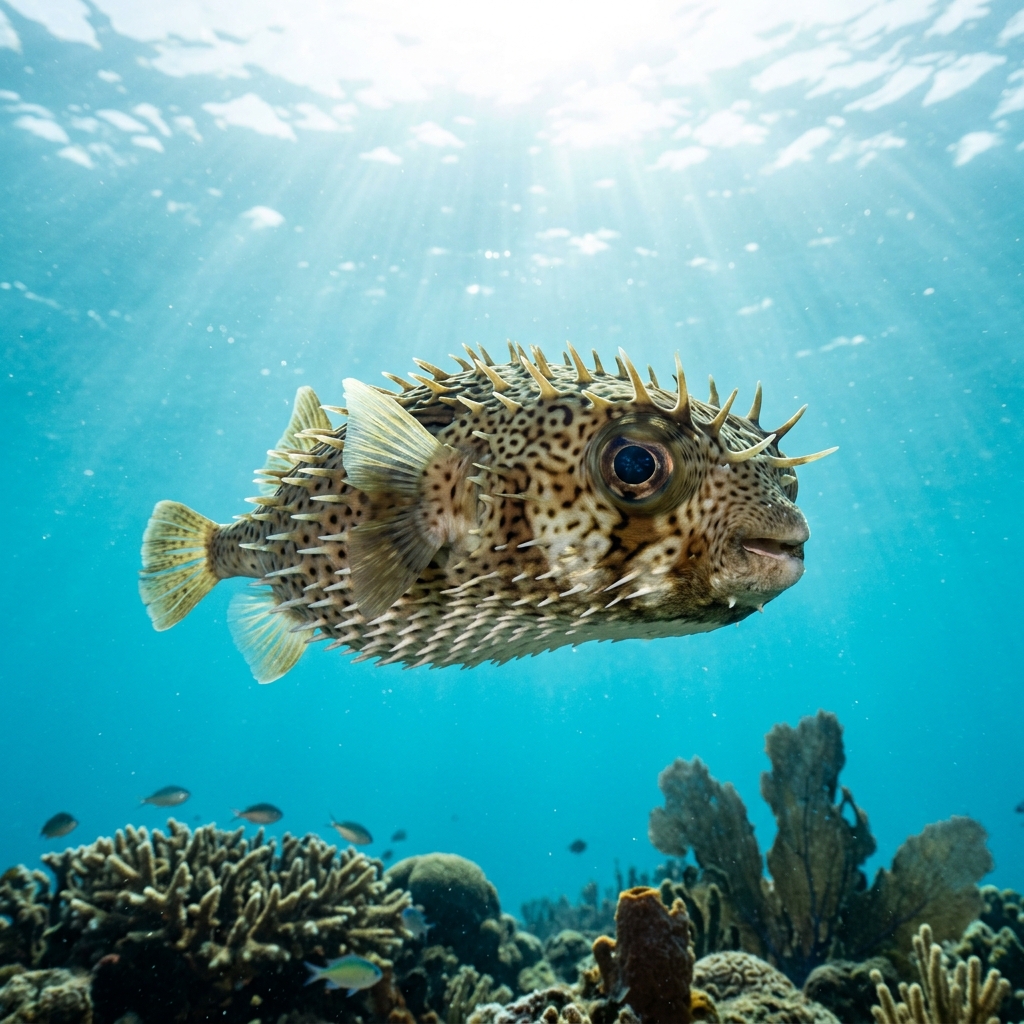
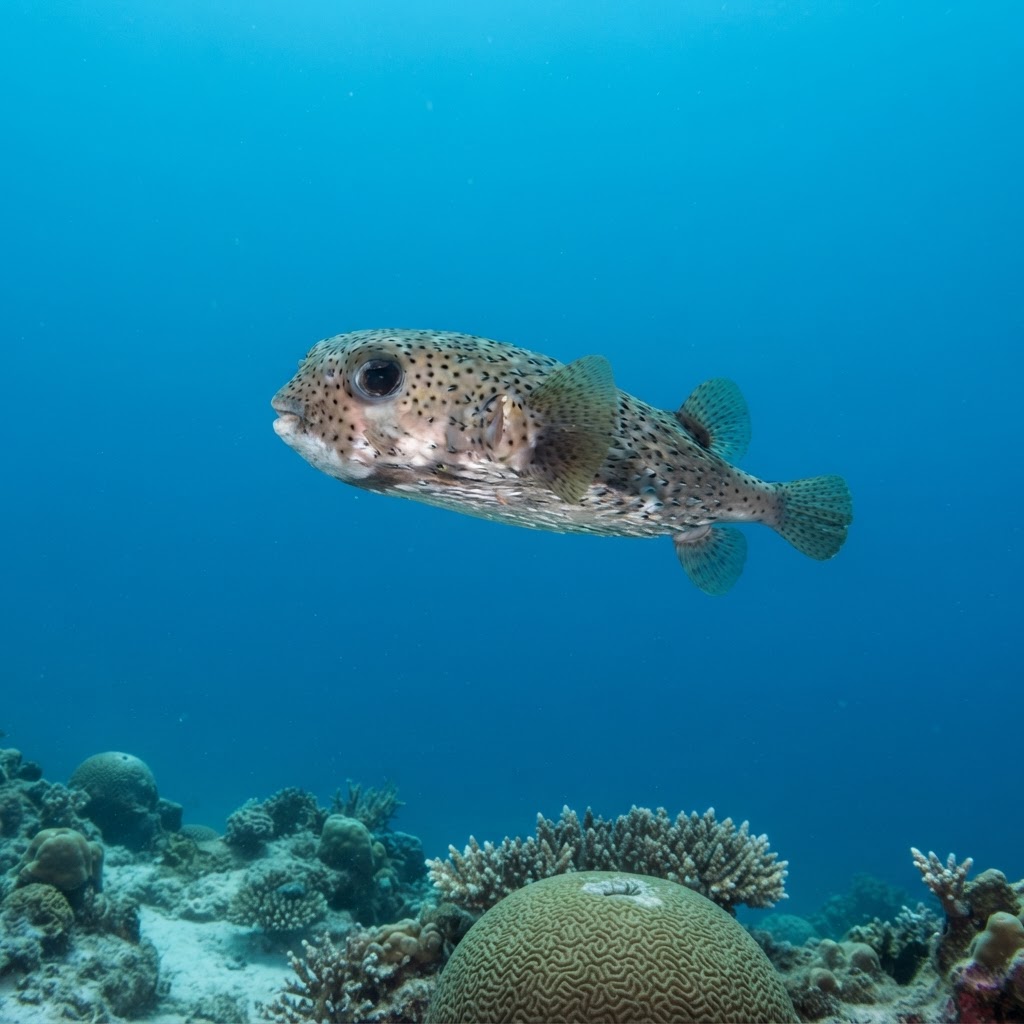
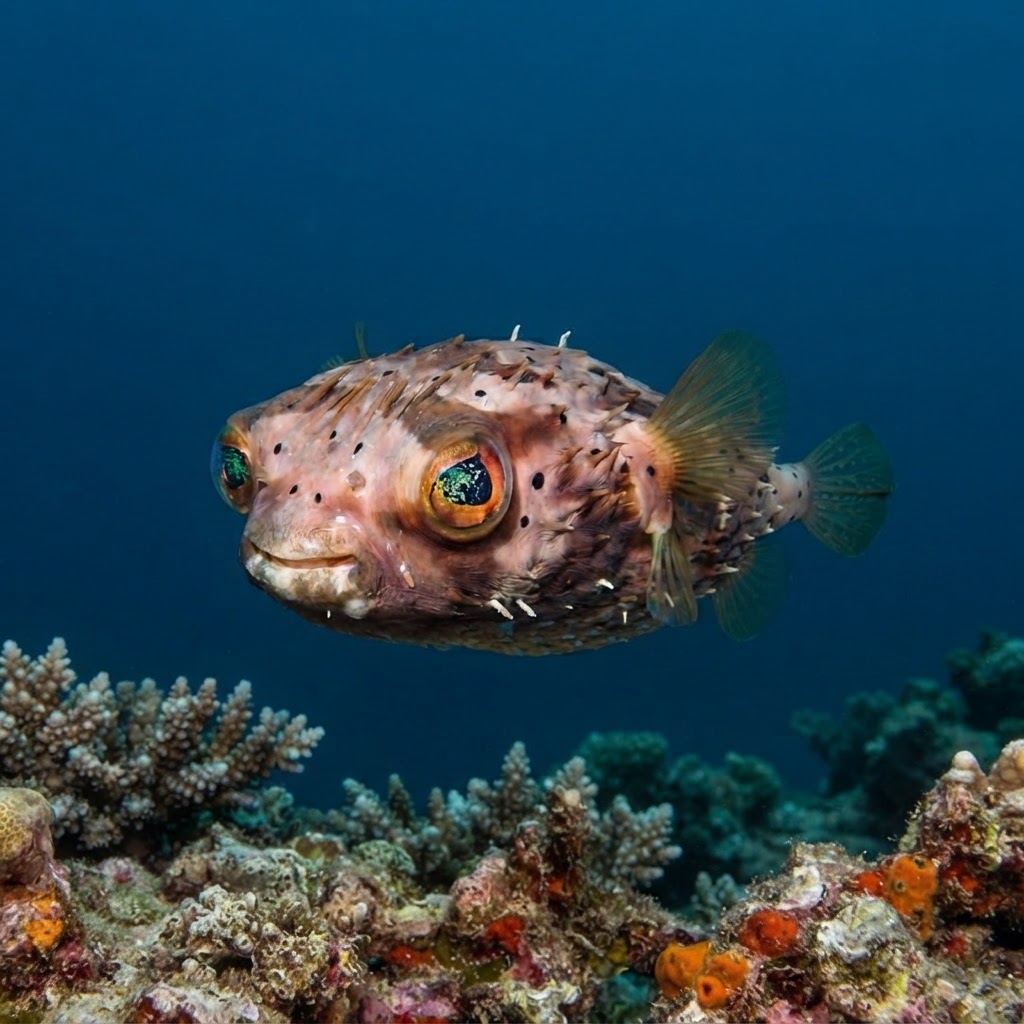
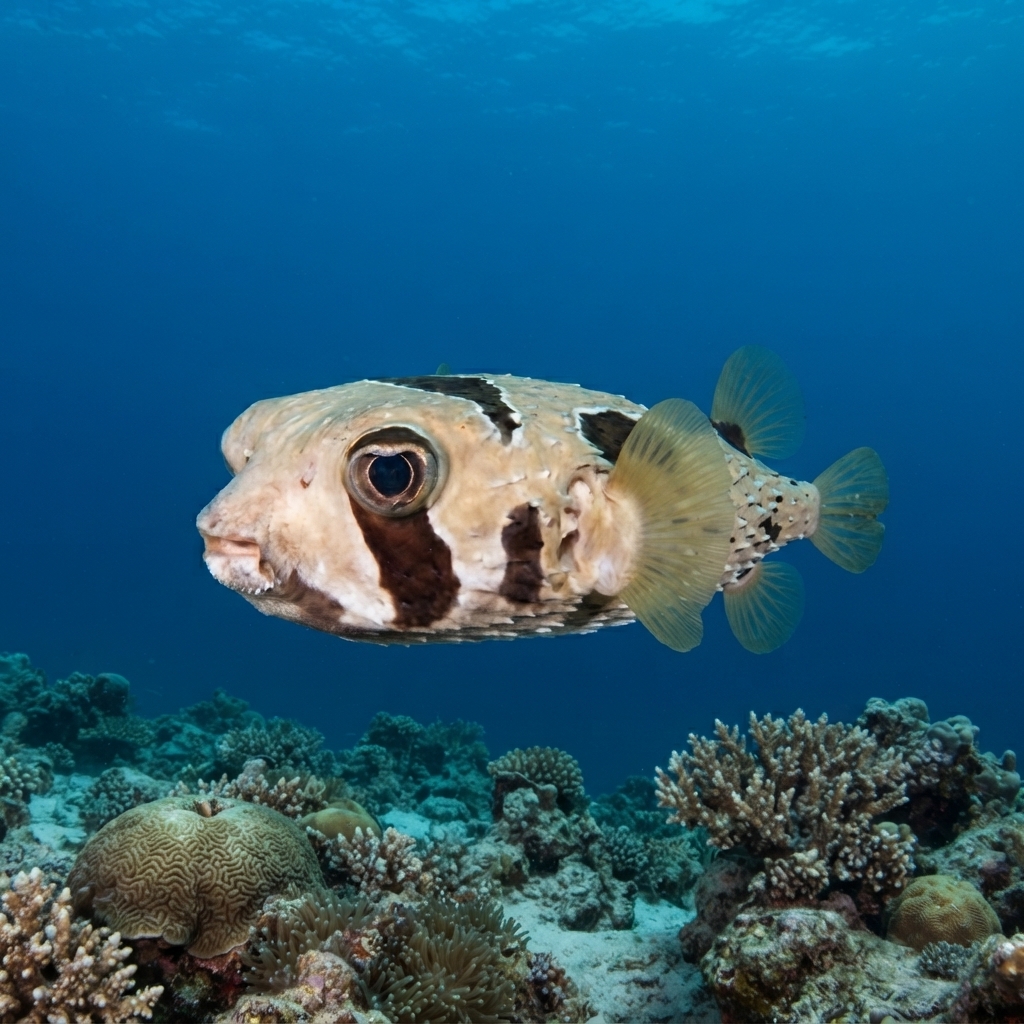
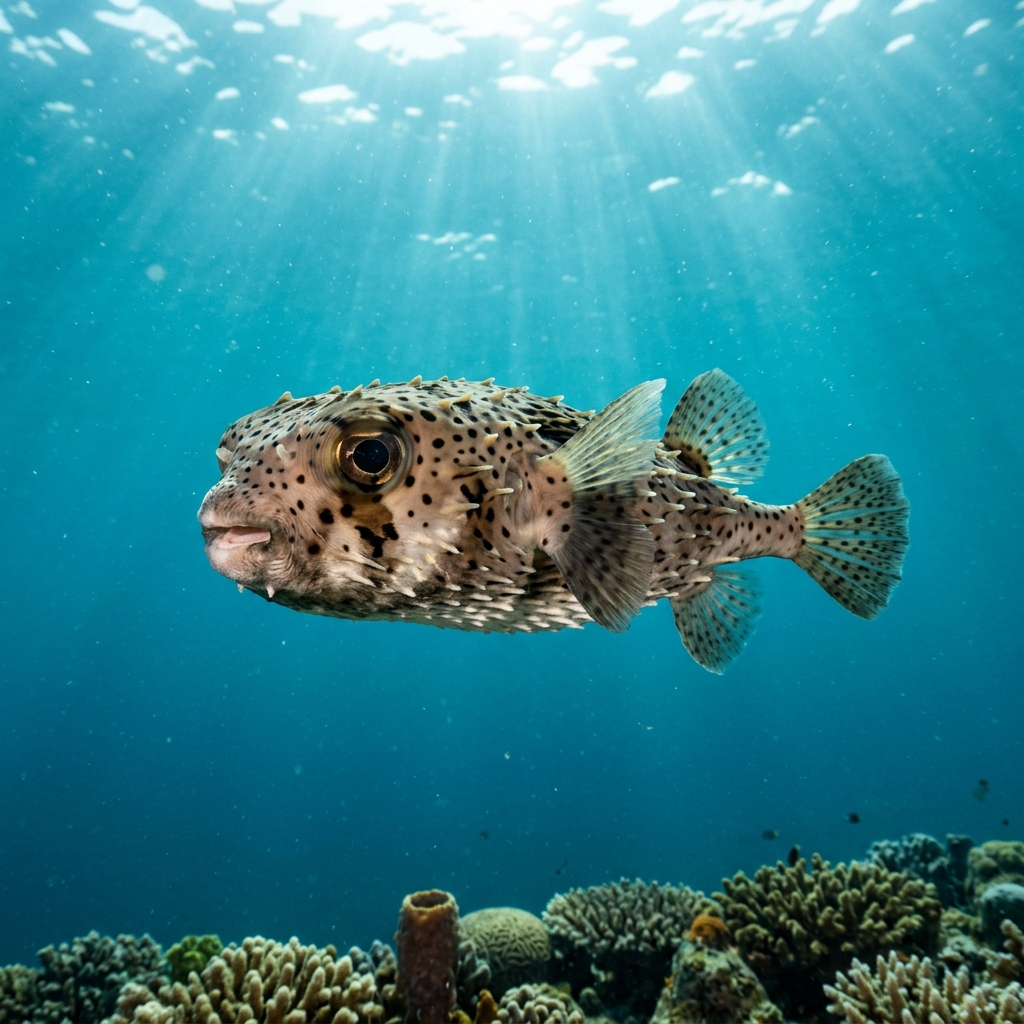
Short, round-bodied and covered in fixed (non-erectable) spines that stand permanently upright, the spotfin burrfish has a bold dark-reticulated (net-like) pattern of brown lines over a pale yellow-cream background. Large, dark-rimmed eyes give it a wide-eyed look that helps separate it from the smoother-skinned porcupinefish. A distinctive dark spot at the base of the dorsal fin is the key field mark, particularly useful when the fish is not fully inflated. Overall colouration tends to be duskier than close relatives, with the reticulated lines running right across the body.
Spotfin burrfish tend to rest in sheltered spots among rocky outcrops, coral rubble, or reef crevices, often wedged into a corner where they can observe their surroundings. They are generally calm around divers and hold their position rather than bolting, which makes a close approach achievable if you move slowly. Like all burrfish, they can inflate their body when threatened, so avoiding sudden movements is good practice.
Unlike porcupinefish, whose spines lie flat at rest and only rise when the fish inflates, the spotfin burrfish's spines are permanently erect no matter what. The fish never needs to inflate for its spines to be a deterrent.
In Northern Hemisphere sites, sightings concentrate between December and August, suggesting a preference for the warmer months of late winter through summer. The species is comfortable across 22 to 29 °C, so in reliably warm tropical destinations like Roatán and Cape Verde it can turn up at most times of year.
Reef neighbours a diver could mistake it for. Use the identification notes above to tell them apart.
Most commonly logged in Florida and the wider US Southeast, and in Roatán, Honduras, where diver sightings are especially strong. Cape Verde, Brazil, Mexico, Ecuador's Galápagos Islands, and Senegal all contribute solid records, making this a widely distributed Atlantic and eastern Pacific species. The Galápagos and Baja California sites in Mexico are particularly notable for eastern Pacific encounters.
Mapping where Spotfin Burrfish is logged…
Strong populations are logged across Florida and the US Southeast, Roatán in Honduras, and Cape Verde. Brazil, the Galápagos Islands, Baja California in Mexico, and Dakar in Senegal also produce regular sightings, covering both the Atlantic and eastern Pacific.
In Northern Hemisphere destinations, sightings peak between December and August. At consistently warm tropical sites, such as Roatán or Cape Verde, the fish's tolerance for water temperatures from around 22 to 29 °C means encounters are possible across much of the year.
Look for a small, rotund fish with permanently erect spines covering the body and a distinctive dark spot at the base of the dorsal fin. The body is pale cream or yellow with a dark brown net-like pattern. The fixed spines distinguish it immediately from porcupinefish, whose spines only rise when the fish inflates.
No, spotfin burrfish pose no meaningful risk to divers. They are calm animals that generally hold their position. Simply avoid cornering or touching them so they do not inflate, which is stressful for the fish.
Most divers who log this species at a given site class it as uncommon rather than common. It is not a fish you can reliably expect on every dive, but at well-known hotspots like Roatán and Florida reef sites it turns up regularly enough to be a realistic target.
Site and sighting data is aggregated from diver logs, iNaturalist and GBIF. For taxonomy and conservation status:
Striped Burrfish
921 sites